
Simple Kitchen Designs for Small Kitchens: Beautiful, Budget-Friendly & Easy to Achieve
Simple kitchen designs for small kitchens prove that beautiful, functional spaces don’t require elaborate details, expensive materials, or complex installations. In fact, simplicity often works best in compact kitchens where too many design elements can create visual chaos and make limited square footage feel even smaller. By focusing on clean lines, neutral color palettes, essential features, and thoughtful organization, simple kitchen designs deliver maximum impact with minimal fuss—and usually at significantly lower costs than ornate alternatives.
The beauty of simple kitchen design lies in its accessibility. You don’t need professional design expertise, unlimited budgets, or extensive renovation skills to create a simple yet stunning small kitchen. Basic white cabinets, straightforward layouts, minimal hardware, practical countertops, and uncluttered surfaces form the foundation. From there, small touches—a few plants, coordinated textiles, or a single statement piece—add personality without complexity. Whether you’re renovating on a tight budget, working as a first-time DIYer, or simply prefer unfussy aesthetics, simple kitchen designs offer timeless appeal that never goes out of style.
Quick Takeaways: Simple Kitchen Design Principles
- White or neutral color schemes create clean, timeless foundations
- Flat-panel or simple shaker cabinets avoid visual complexity
- Minimal hardware (or handleless) maintains streamlined appearance
- One-wall or galley layouts offer ultimate simplicity in small spaces
- Budget-friendly materials (laminate, vinyl, basic tile) work beautifully when kept simple
- Clear counters and minimal decorative elements prevent clutter
- Quality basics (good lighting, functional storage) matter more than elaborate details
- Simple designs are easier to maintain, update, and keep organized
Table of Contents
What Makes a Kitchen Design “Simple”?
Simple kitchen design is characterized by restraint, functionality, and freedom from unnecessary complexity. It’s not about cheap or basic—it’s about intentional editing and focusing on essentials.
Core Principles of Simple Design
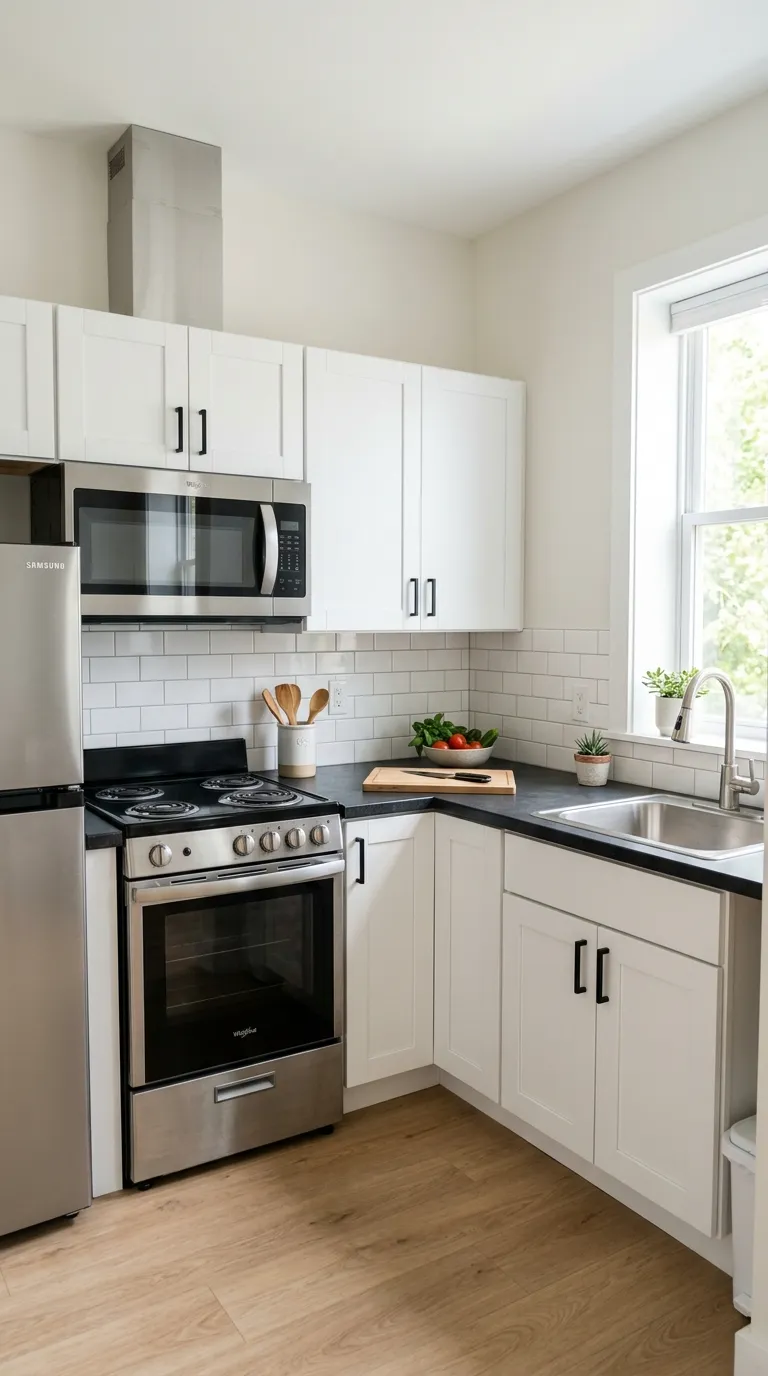
Simple small kitchen with white cabinets demonstrating clean, uncluttered aesthetic
- Minimal ornamentation: Few decorative details, clean surfaces, straightforward design
- Neutral palette: White, gray, beige, or light wood tones as foundation
- Clean lines: Straight edges, geometric shapes, no elaborate moldings
- Functional focus: Every element serves a purpose, no purely decorative items
- Uncluttered surfaces: Clear counters, organized storage, breathing room
- Quality over quantity: Few high-quality pieces rather than many mediocre ones
- Easy maintenance: Materials and finishes that clean easily and wear well
Simple vs. Minimalist vs. Basic
Understanding the distinctions helps clarify the simple design philosophy:
| Approach | Characteristics | Best For |
|---|---|---|
| Simple Design | Uncomplicated, straightforward, accessible, warm | Those wanting ease without austerity |
| Minimalist Design | Bare essentials only, stark, very few items | True minimalists who embrace extreme restraint |
| Basic Design | Builder-grade, no thought to aesthetics, cheap | Temporary housing, pure budget constraints |
Simple design occupies the sweet spot—thoughtful and attractive without being complicated or expensive.
Why Simple Works in Small Kitchens
Simple design particularly suits compact spaces:
- Visual spaciousness: Less visual clutter makes small kitchens feel larger
- Budget-friendly: Simpler = fewer materials, less labor, lower costs
- Timeless appeal: Simple designs don’t look dated quickly
- Easier decisions: Fewer choices streamline renovation process
- Flexible styling: Simple foundations accept various accessories and updates
- Resale friendly: Broad appeal for potential buyers
Explore how simplicity integrates with various styles in our small kitchen design ideas guide.
Simple Kitchen Layouts for Small Spaces
Simple layouts maximize efficiency with minimal complexity. The most straightforward configurations work beautifully in small kitchens.
One-Wall Kitchen (The Simplest Layout)
Everything along a single wall—the ultimate in simplicity:
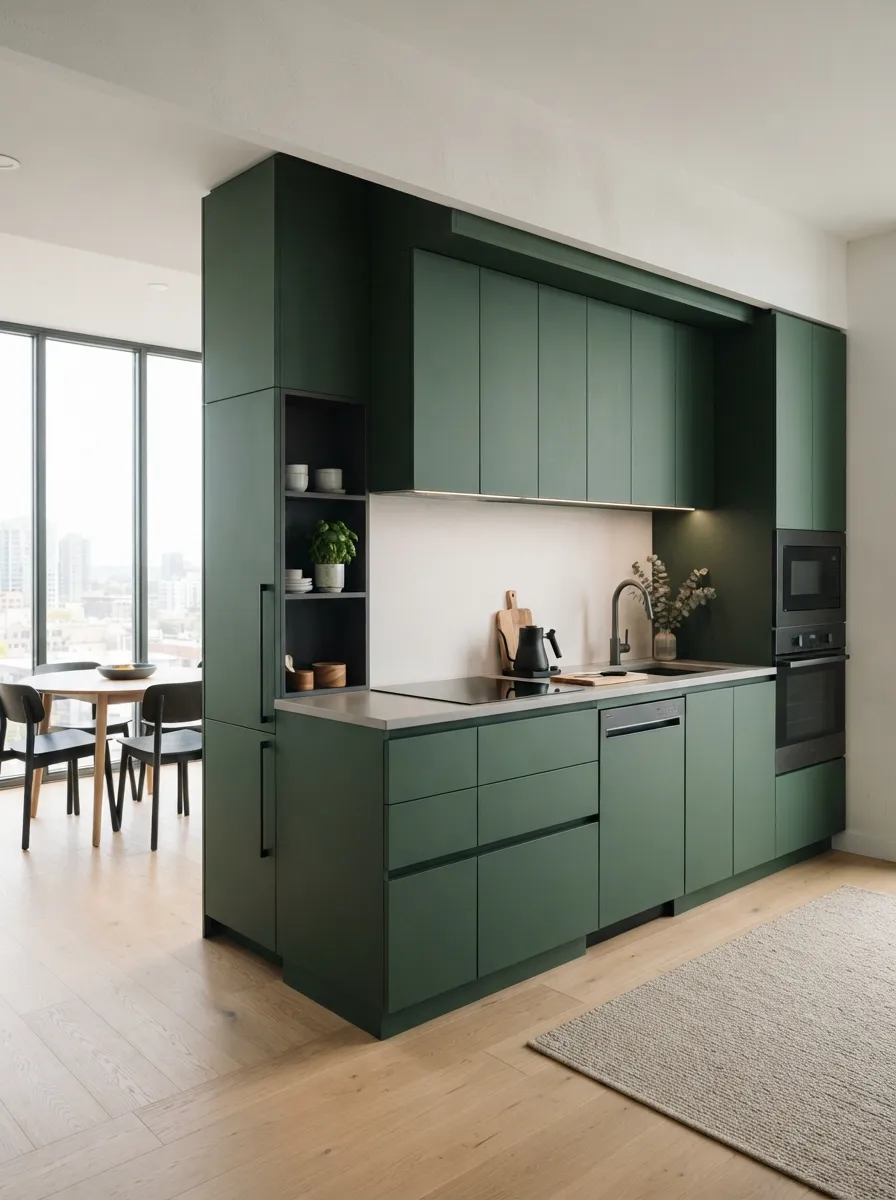
One-wall kitchen layout demonstrating ultimate simplicity with everything on single wall
- Configuration: Refrigerator, sink, stove, and storage all on one straight line
- Pros: Simplest to plan, easiest to install, most affordable, leaves opposite wall free
- Cons: Limited counter space, minimal storage compared to other layouts
- Best for: Studio apartments, tiny homes, narrow spaces under 7 feet wide
- Length needed: Minimum 8 feet, comfortable 10-12 feet
Galley Kitchen (Simple Corridor)
Two parallel walls creating efficient corridor:
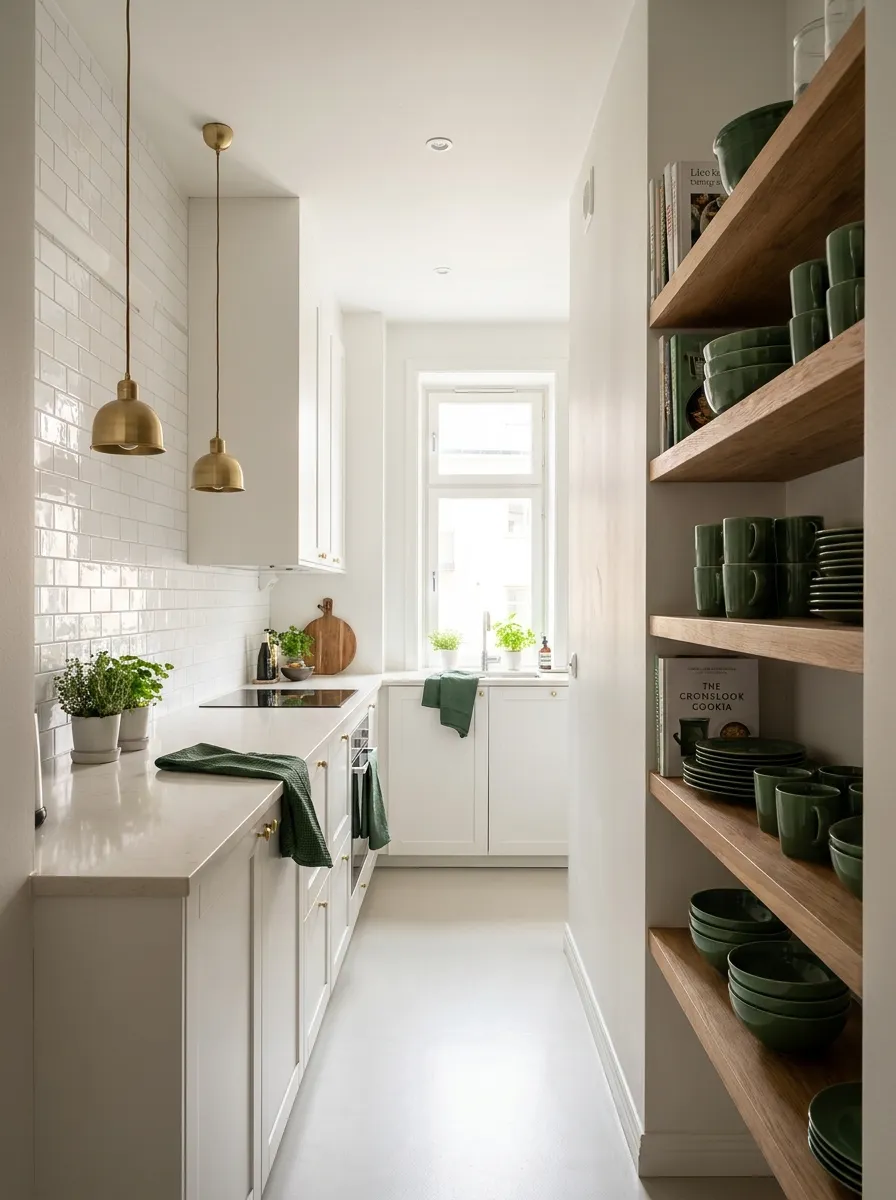
Simple galley kitchen with white cabinets on parallel walls—clean and efficient
- Configuration: Cabinets and appliances on two facing walls
- Pros: Highly efficient workflow, doubles storage/counter space vs. one-wall
- Cons: Can feel narrow if under 7 feet wide total
- Best for: Narrow rooms, maximizing efficiency in limited space
- Simple approach: Keep cabinets identical on both sides for visual harmony
Discover more galley kitchen strategies in our small galley kitchen designs resource.
L-Shaped Kitchen (Simple Corner Solution)
Two perpendicular walls meeting at corner:
- Configuration: Cabinets along two adjacent walls forming “L”
- Pros: Natural work triangle, leaves room open, accommodates small table
- Cons: Corner cabinet requires planning
- Best for: Square or rectangular rooms 10×10 feet or larger
- Simple approach: Use basic lazy susan in corner, matching cabinets on both legs
Keeping Layouts Simple
Simplify any layout with these strategies:
- Straight runs: Avoid angles, curves, or jogs in cabinet runs
- Standard dimensions: Use standard cabinet sizes (no custom odd sizes)
- Symmetric placement: Center sink in wall, balance appliances
- Minimal breaks: Continuous cabinet runs rather than interrupted sections
- No islands: Keep floor open in very small kitchens (under 100 sq ft)
Compare layouts in our small kitchen layout ideas comprehensive guide.
Simple Color Schemes for Small Kitchens
Simple color palettes create calm, cohesive spaces without visual competition. Neutrals form the foundation of simple kitchen design.
All-White Kitchens
The simplest and most timeless choice:
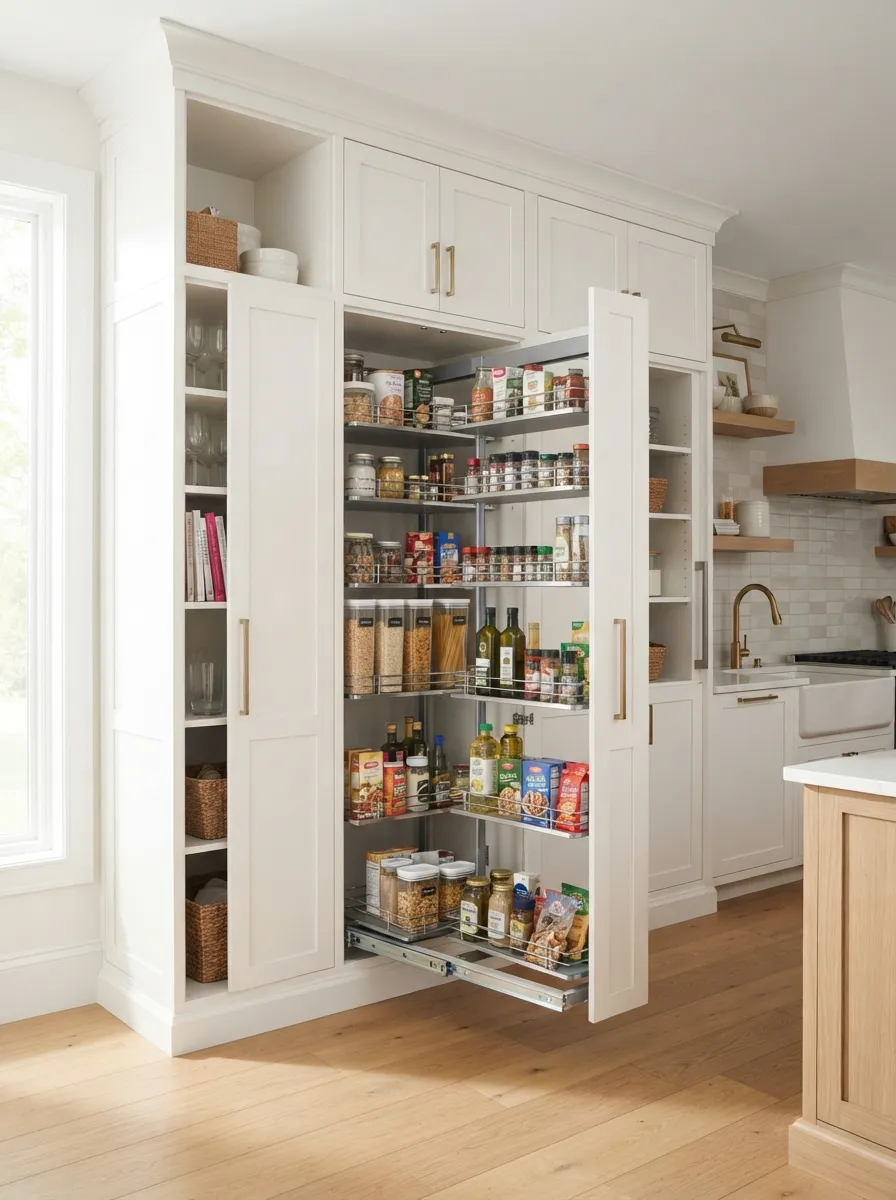
All-white simple kitchen creating bright, spacious feeling with minimal color
- Application: White cabinets, white walls, white subway tile backsplash
- Advantages: Maximum light reflection, makes small spaces feel larger, timeless appeal
- Warmth variation: Choose warm white (cream undertones) vs. cool white (blue undertones)
- Texture interest: Use different whites on different surfaces (matte cabinets, glossy tile)
- Budget benefit: White is most common = least expensive in most materials
White + Wood (Two Materials)
Add warmth with natural wood element:
- Combination: White cabinets + wood countertops or wood open shelving
- Balance: 70-80% white, 20-30% wood keeps simple aesthetic
- Wood choices: Light oak, maple, or pine for Scandinavian feel; walnut for warmth
- Simple rule: One wood tone only throughout kitchen
White + One Accent Color
Introduce subtle color while maintaining simplicity:
- Formula: White base + one accent color in 10-20% of space
- Application: Accent color on lower cabinets only, or single accent wall
- Simple accents: Soft sage, light gray, warm beige, or muted forest green
- Avoid: Multiple colors, patterns, or bold contrasts in simple designs
Gray Monotone
Alternative to white with equal simplicity:
- Light to medium gray cabinets and walls
- Creates sophisticated, modern feel
- Hides dirt better than white in high-use areas
- Keep undertones consistent (all warm gray or all cool gray)
Simple Color Don’ts
Avoid these in simple small kitchens:
- ❌ Multiple bold colors competing
- ❌ Busy patterns on backsplash or floor
- ❌ Dark colors in kitchens under 100 sq ft
- ❌ Three-tone cabinets (upper/lower/island different)
- ❌ Mixing warm and cool tones
See color applications in our modern kitchen designs showcase.
Simple Cabinet Choices
Cabinet style dramatically impacts kitchen complexity. Simple profiles and minimal detailing create clean, unfussy aesthetics.
Flat-Panel (Slab) Cabinets
The ultimate in cabinet simplicity:
- Design: Single flat panel, no frames or raised details
- Aesthetic: Ultra-modern, clean, seamless
- Advantages: Easy to clean, shows no dust in grooves, contemporary appeal
- Cost: Often less expensive than detailed styles (less manufacturing)
- Best in: White, light gray, or natural wood finishes
Simple Shaker Cabinets
Classic simplicity with subtle detail:
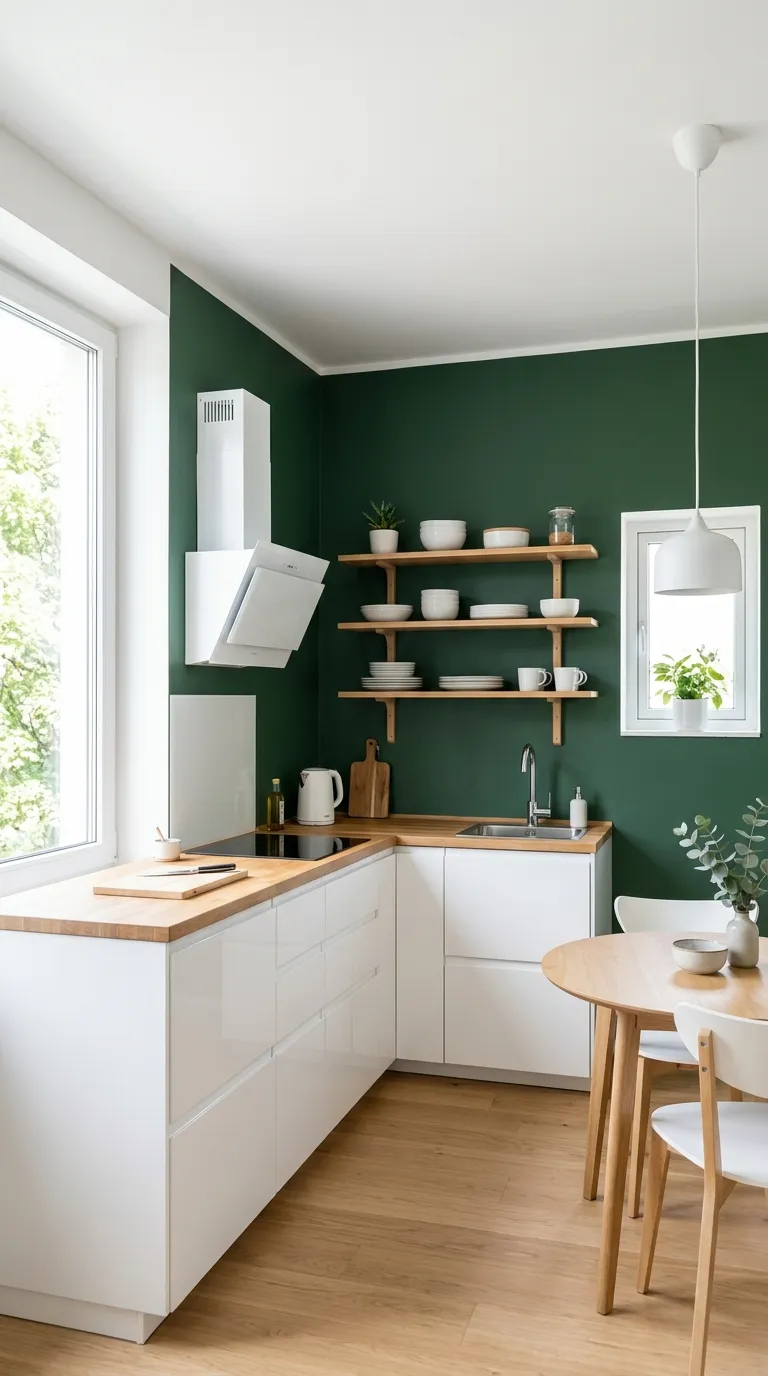
Simple shaker cabinets in white creating classic, timeless small kitchen
- Design: Five-piece frame-and-panel construction with recessed center
- Aesthetic: Versatile, traditional yet clean, suits many styles
- Advantages: Timeless, widely available, good resale appeal
- Keep simple: Avoid ornate versions, stick to basic shaker profile
- Best in: White or light painted finishes
Handleless Cabinets
Remove hardware for ultimate simplicity:
- Mechanisms: Push-to-open, touch-latch, or recessed pulls
- Advantages: Seamless appearance, no hardware to clean, modern look
- Considerations: Slightly more expensive mechanisms, may show fingerprints
- Simple approach: All cabinets handleless (not mixing handled and handleless)
Minimal Hardware
If using hardware, keep it simple:
- Style: Simple pulls or knobs, no ornate designs
- Finish: One finish throughout (brushed nickel, matte black, or simple brass)
- Size: Proportional to cabinets, not oversized statement pieces
- Placement: Consistent positioning on all cabinets and drawers
Open Shelving (Simplest Upper Storage)
Eliminate upper cabinet doors entirely:
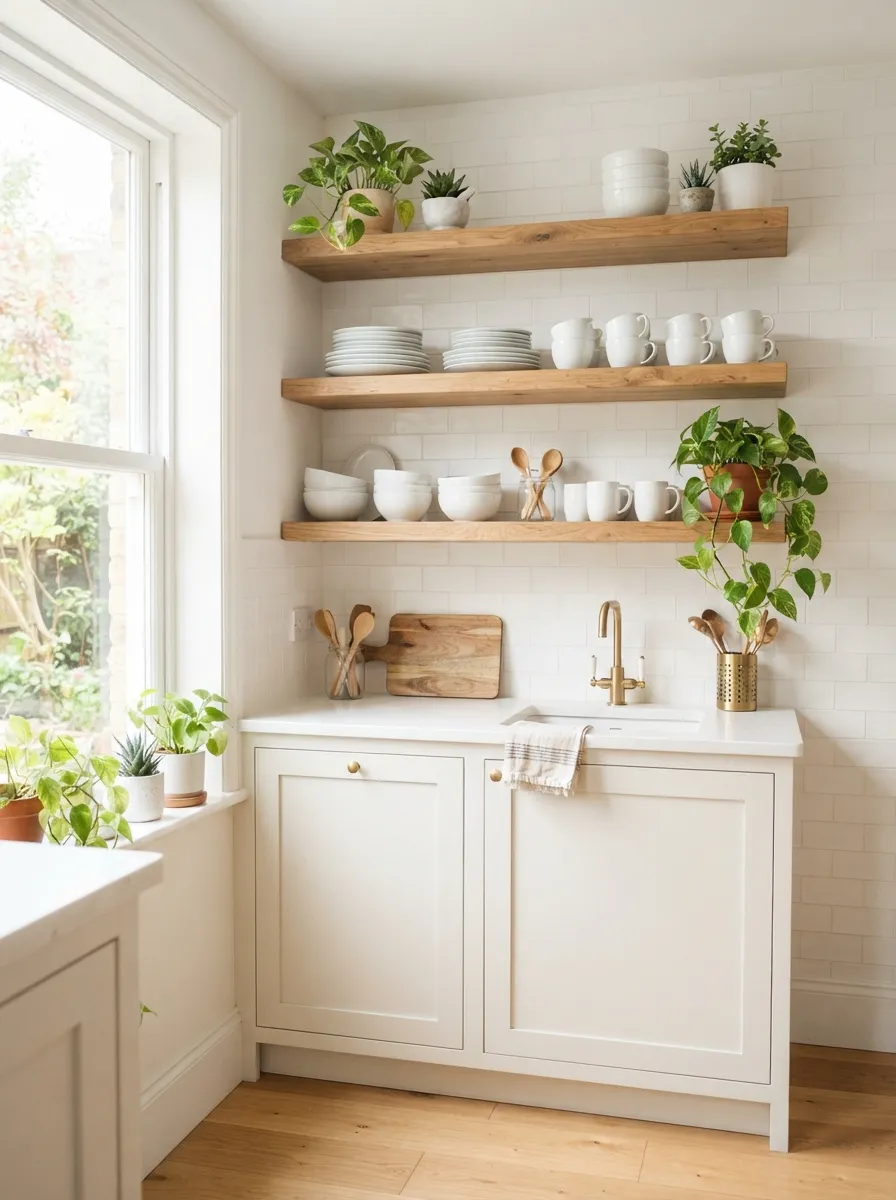
Simple open shelving displaying white dishes and minimal accessories
- Installation: Floating shelves or brackets, very affordable
- Advantages: Visually lighter than cabinets, less expensive, accessible
- Simple styling: White or matching dishware, minimal items, organized display
- Limitations: Requires discipline to keep organized, collects dust
Explore more cabinet options in our small kitchen cabinet design guide.
Budget-Friendly Materials for Simple Kitchens
Simple design allows budget-friendly materials to shine. When kept uncomplicated, affordable materials look clean and intentional rather than cheap.
Laminate Countertops
Modern laminates have come far from 1980s versions:
- Appearance: Solid colors, marble-look, or subtle patterns
- Cost: $10-40 per square foot installed (vs. $50-100+ for stone)
- Simple choices: White, light gray, or marble-look in matte finish
- Advantages: Easy maintenance, stain-resistant, budget-friendly
- Limitations: Not heat-resistant (use trivets), can chip at edges
- Longevity: 10-15 years with normal use
Vinyl or Laminate Flooring
Durable, affordable, attractive floor options:
- Luxury vinyl plank (LVP): Wood-look, waterproof, $2-7 per square foot
- Sheet vinyl: Budget option, $1-3 per square foot, one-piece installation
- Simple patterns: Light wood-look or solid neutral colors
- Advantages: Waterproof, comfortable underfoot, easy cleaning, DIY-friendly install
- Longevity: 10-20 years for quality LVP
Basic Ceramic or Subway Tile
Simple tile creates classic backsplash:
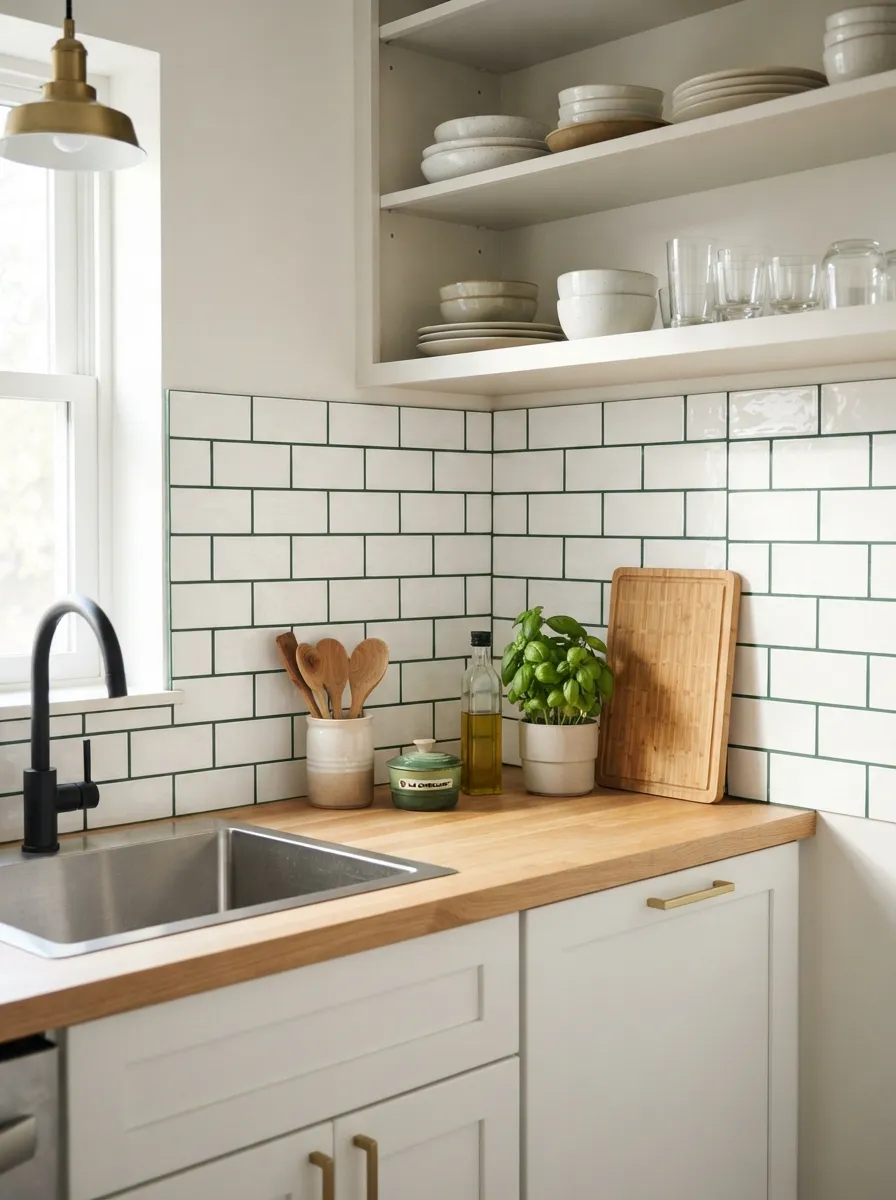
Simple white subway tile backsplash—timeless, affordable, easy to install
- Subway tile: 3×6 inch white ceramic, $1-5 per square foot
- Basic ceramic: 4×4 or 6×6 inch tiles in neutral colors
- Installation: Running bond (brick pattern) is simplest layout
- Grout: White or light gray for simple aesthetic
- Cost total: $150-400 for typical small kitchen backsplash DIY
Stock Cabinets
Ready-made cabinets vs. custom:
- Source: Home Depot, Lowe’s, IKEA stock cabinets
- Cost: $100-300 per linear foot vs. $500-1,500 for custom
- Simple styles: Basic shaker or flat-panel in white
- Quality: Decent quality from major retailers, adequate for most needs
- Limitations: Standard sizes only, limited color/finish options
Butcher Block (Budget Wood Option)
Affordable warm countertop alternative:
- Material: Laminated wood strips (oak, maple, birch)
- Cost: $25-75 per square foot, significantly less than stone
- Maintenance: Requires periodic oiling, can sand out scratches
- Aesthetic: Brings warmth to simple white kitchens
- Considerations: Not waterproof, needs regular sealing
When to Splurge vs. Save
Strategic spending in simple kitchens:
Worth Spending:
- Quality faucet (used daily, visible focal point)
- Good lighting (dramatically impacts look and function)
- Durable flooring (high-traffic area, expensive to replace)
Safe to Save:
- Countertops (laminate works fine if kept simple)
- Cabinets (stock cabinets in simple styles)
- Backsplash (basic tile looks great in simple designs)
- Hardware (simple pulls are inexpensive)
The Minimalist Approach to Small Kitchens
True minimalism takes simplicity further, embracing “less is more” philosophy. While not for everyone, minimalist principles benefit all simple kitchens.
Minimalist Kitchen Characteristics
What defines minimalist kitchen design:
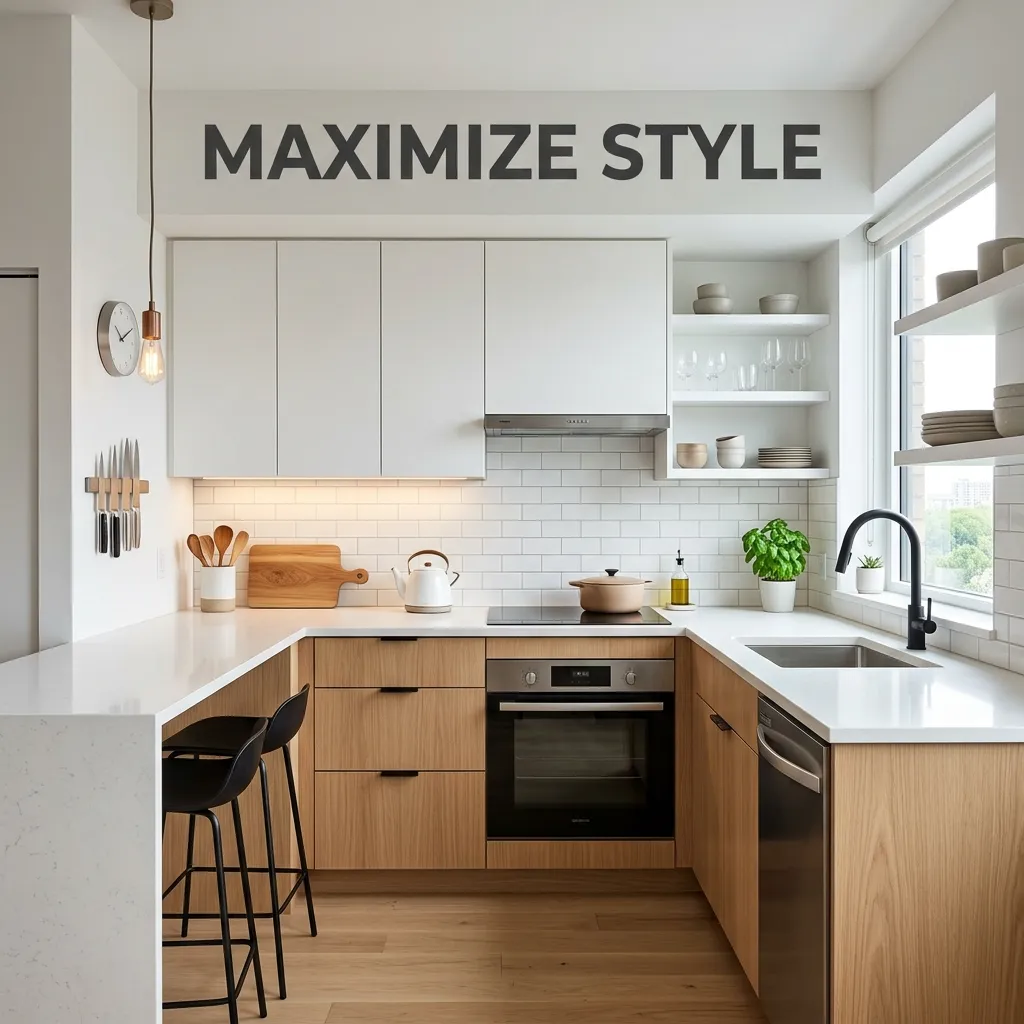
Minimalist kitchen design showcasing bare essentials and maximum restraint
- Bare counters: Absolutely nothing visible on countertops
- Hidden appliances: Everything stored in cabinets, nothing on display
- Minimal decor: No or very few decorative elements
- Concealed storage: Handleless cabinets, integrated appliances
- Monochromatic: Single color or very limited palette
- Quality essentials: Few items but highest quality
Borrowing from Minimalism (Without Going Extreme)
Apply minimalist principles to simple kitchens:
- 80% clear counters: Keep only 1-2 items visible (coffee maker, fruit bowl)
- Concealed storage: Store small appliances in cabinets, not on counters
- Edit dishware: Keep only what you actually use regularly
- Single-use items: Eliminate gadgets used once yearly
- Digital declutter: Remove refrigerator magnets, papers, clutter
Scandinavian Minimalism
Warmer minimalism with livability:
- Light wood + white palette
- Plants and greenery adding life
- Natural textiles (linen towels, woven baskets)
- Functional beauty (attractive tools on display)
- Hygge comfort alongside minimal aesthetic
Japanese Minimalism
Zen-inspired simplicity:
- Natural materials (wood, stone, bamboo)
- Neutral earth tones
- Hidden storage keeping surfaces bare
- Intentional empty space
- Quality over quantity in every element
Essential vs. Optional Features in Simple Kitchens
Simple kitchen design requires distinguishing must-haves from nice-to-haves. Focus budget and effort on essentials.
Essential Features (Non-Negotiable)
Functional Sink & Faucet
Quality single-bowl sink (easier to clean), reliable faucet with good water pressure. Budget: $200-500 total.
Reliable Appliances
Working refrigerator, range/cooktop, and microwave. Don’t need high-end—reliable mid-range sufficient.
Good Lighting
Adequate general lighting + under-cabinet task lighting. Critical for function and atmosphere. Budget: $150-400.
Sufficient Storage
Enough cabinets and drawers to keep counters clear. Organize what you have before adding more.
Easy-Clean Surfaces
Counters, backsplash, floor that wipe clean easily. Simple kitchens should be simple to maintain.
Functional Layout
Efficient work triangle (sink-stove-fridge), adequate counter space beside appliances for prep work.
Optional Features (Skip to Save Money/Complexity)
Features you can live without in simple small kitchens:
- Kitchen island: Most small kitchens (under 120 sq ft) function fine without
- Double oven: Single oven sufficient for most households
- Built-in coffee station: Countertop coffee maker works perfectly
- Wine refrigerator: Nice-to-have, not essential
- Warming drawer: Rarely used in most homes
- Elaborate backsplash: Simple subway tile does the job
- Pot filler faucet: Convenient but not necessary
- Integrated sound system: Bluetooth speaker sufficient
- Under-cabinet TV: Use tablet or phone instead
Simple Kitchen Priority List
If on tight budget, tackle in this order:
- Fix structural issues: Plumbing leaks, electrical problems, safety hazards
- Deep clean thoroughly: Sometimes cleaning reveals no renovation needed
- Add task lighting: Under-cabinet lights, $80-200, huge impact
- Paint or refresh cabinets: If structurally sound, $500-2,000
- New faucet: Instant upgrade, $100-300
- Simple backsplash: White subway tile DIY, $150-400
- Hardware update: New pulls/knobs, $50-150
- Counters (if needed): Laminate works fine, $500-1,500
- Flooring (last): If existing is functional, wait
Simple Storage Solutions
Simple storage means functional organization without elaborate systems. Basic solutions work beautifully when implemented thoughtfully.
Drawer Dividers (The Simplest Organizer)
Transform chaotic drawers instantly:
- Utensil dividers: Separate forks, spoons, knives, tools
- Expandable organizers: Adjust to fit drawer width
- Cost: $10-30 per drawer
- Impact: Makes everything visible and accessible
- Simple rule: One drawer for utensils, one for cooking tools, one for miscellaneous
Lazy Susan (Simple Corner Solution)
Classic corner cabinet organizer:
- Rotating shelves bring back items forward
- Inexpensive ($30-100), easy to install
- Works in base or upper corner cabinets
- No elaborate magic corner systems needed
Shelf Risers
Double cabinet height without installation:
- Stackable or expandable risers creating two levels
- Perfect for plates, bowls, canned goods
- Cost: $10-25 each
- No tools required, instantly removable
Under-Sink Organizer
Tame the messy under-sink cabinet:
- Tiered organizer working around plumbing
- Slide-out caddy for cleaning supplies
- Cost: $20-50
- Makes everything accessible without digging
Simple Pantry Solutions
Organize food storage without complex systems:
- Clear containers: Uniform containers for dry goods (pasta, rice, flour)
- Tiered shelf organizer: Can organizer showing all labels
- Door rack: Over-door or adhesive spice rack
- Baskets: Group similar items (baking, snacks, breakfast)
Discover more organization in our small kitchen interior design guide.
DIY-Friendly Simple Kitchen Updates
Simple designs lend themselves to DIY projects. Straightforward updates require minimal skills and tools.
Easy DIY Projects for Simple Kitchens
Beginner Level (No Experience Needed):
- Hardware replacement: Unscrew old, install new pulls/knobs (1-2 hours)
- Peel-and-stick backsplash: Clean, measure, stick tiles (3-5 hours)
- Under-cabinet lighting: Plug-in LED strips with adhesive backing (1-2 hours)
- Shelf liner installation: Cut to size, lay in cabinets (1 hour)
- Decluttering and organizing: Purge, categorize, organize (4-8 hours)
Intermediate Level (Basic Tool Skills):
- Cabinet painting: Remove doors, sand, prime, paint, reinstall (Weekend project)
- Floating shelf installation: Find studs, level, mount brackets (2-4 hours)
- Subway tile backsplash: Apply thinset, place tiles, grout (Full weekend)
- Faucet replacement: Turn off water, disconnect old, install new (2-4 hours)
- Light fixture replacement: Turn off power, swap fixtures (1-2 hours)
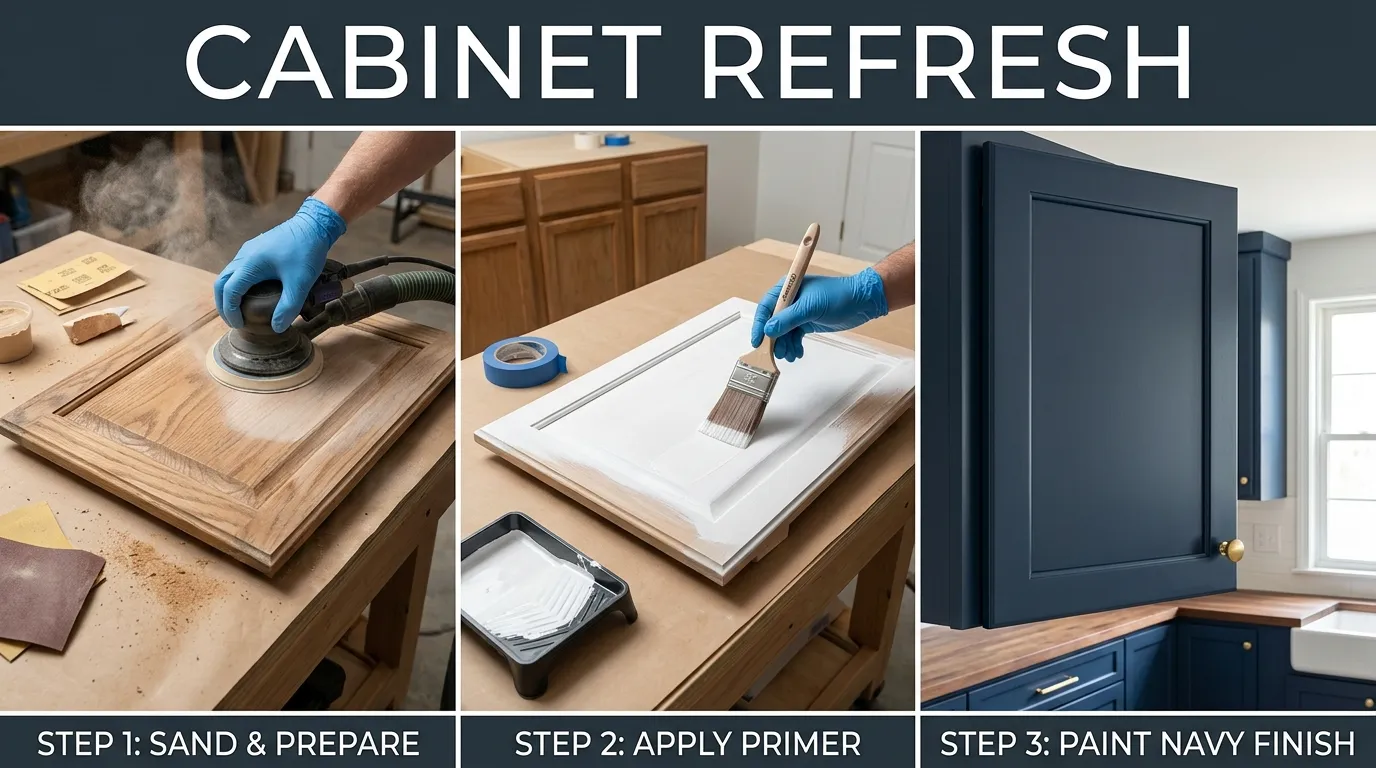
DIY cabinet painting tutorial—most impactful simple kitchen update
Advanced DIY (Experienced DIYers):
- Cabinet refacing: Replace doors/drawer fronts, veneer sides
- Vinyl plank flooring: Measure, cut, click together planks
- Butcher block counters: Measure, cut, install, seal
Simple DIY Tips
Maximize DIY success:
- Start small: Hardware replacement before cabinet painting
- Watch tutorials: YouTube videos for every project
- Measure twice: Cut once—verify all measurements
- Buy quality tools: Good brush for painting, proper level for shelves
- Take your time: Rushing causes mistakes
- Ask for help: Extra hands for heavy lifting or measuring
When to Hire Professionals
Some tasks require experts:
- Major plumbing work (moving sink location)
- Electrical beyond simple fixture swap (new circuits, outlets)
- Gas line work (range hookup)
- Structural changes (removing walls, moving doors)
- Stone countertop installation (heavy, expensive material)
For step-by-step remodeling, see our small kitchen remodel designs resource.
Easy Maintenance of Simple Kitchens
One key benefit of simple design is easy maintenance. Fewer crevices, simpler materials, and uncluttered surfaces all contribute to effortless upkeep.
Why Simple Kitchens Are Easier to Maintain
- Flat surfaces: No grooves or details collecting grime
- Smooth materials: Wipe-clean counters and cabinets
- Clear counters: Nothing to move before wiping
- Fewer items: Less to clean, dust, and organize
- Quality basics: Durable materials need less frequent replacement
Daily Maintenance (5 Minutes)
Keep simple kitchens looking pristine:
- Wipe counters after each use
- Wash dishes immediately or load dishwasher
- Sweep floor or use cordless vacuum
- Wipe stovetop after cooking
- Return items to designated spots
Weekly Maintenance (15-30 Minutes)
- Deep clean counters and backsplash
- Clean sink and faucet thoroughly
- Mop floor
- Wipe cabinet fronts (high-touch areas)
- Clean inside microwave
Monthly Maintenance (1 Hour)
- Clean inside refrigerator
- Wipe down all cabinet exteriors
- Clean oven interior
- Organize and purge expired items
- Deep clean floor edges and corners
Maintenance-Free Material Choices
Materials requiring minimal upkeep:
| Element | Low-Maintenance Choice | Why |
|---|---|---|
| Counters | Laminate or quartz | Non-porous, stain-resistant, no sealing needed |
| Cabinets | Painted or laminate finish | Wipe clean easily, don’t need polishing |
| Backsplash | Large tile or slab | Fewer grout lines to clean |
| Floor | Vinyl plank or ceramic tile | Waterproof, scratch-resistant, easy mopping |
| Sink | Stainless steel or composite | Don’t stain, hide water spots, durable |
Keeping Simple Kitchens Organized
Organization maintenance prevents clutter creep:
- One in, one out: New item enters, old item leaves
- Weekly 10-minute reset: Return everything to proper spot
- Quarterly purge: Remove items not used in 3 months
- Designated spots: Everything has specific home
- Resist accumulation: Question new purchases—do you really need it?
Simple Kitchen Design Inspiration Gallery
Explore these beautiful simple kitchen designs showcasing clean aesthetics and straightforward solutions:
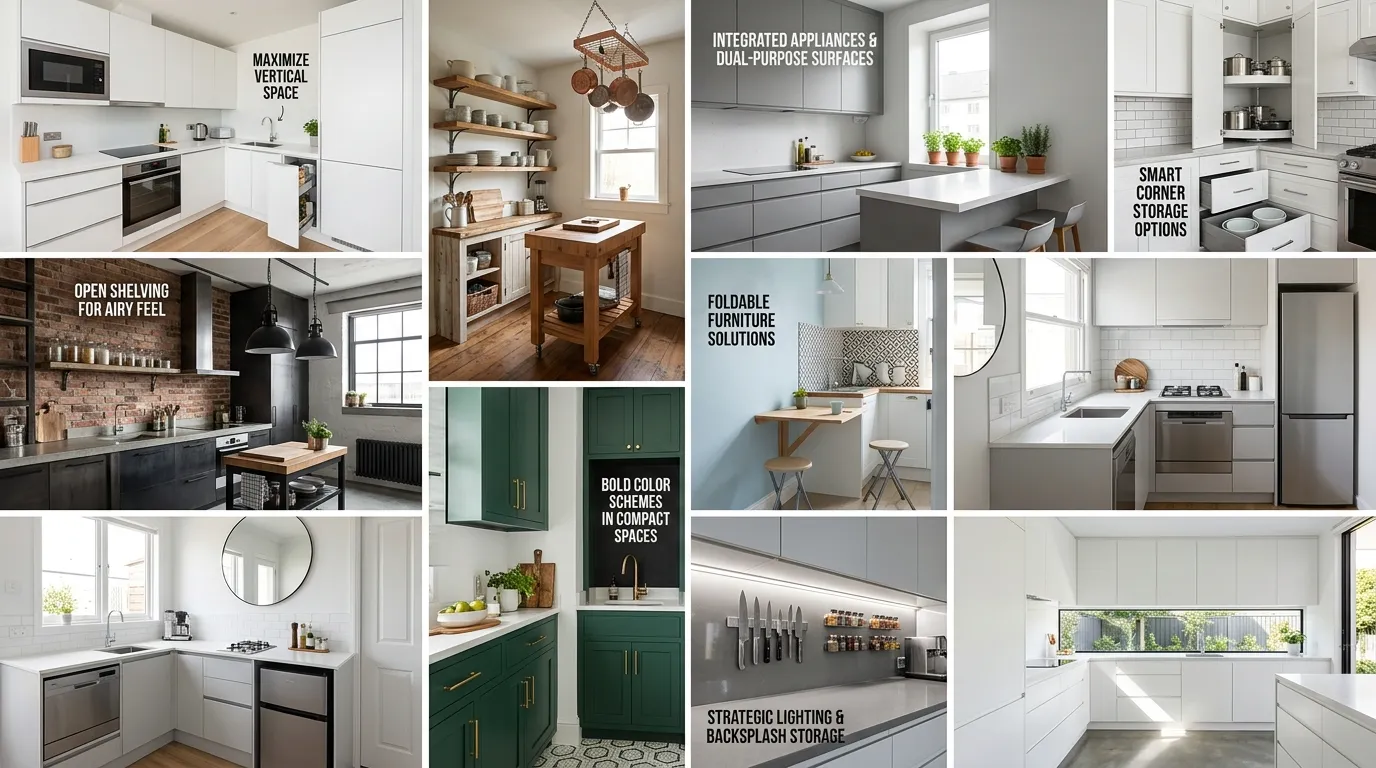
Simple small kitchen design prioritizing function and clean aesthetics
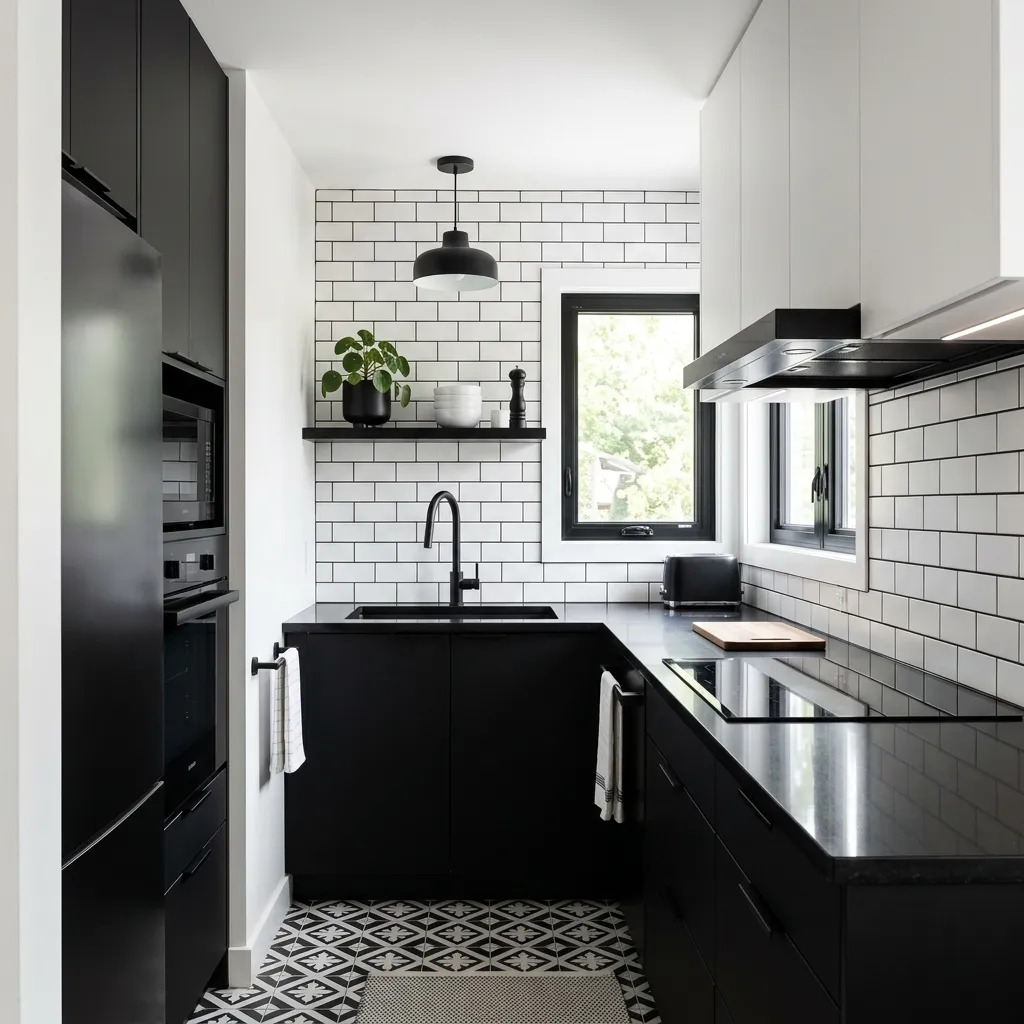
Simple black and white kitchen with monochromatic minimalism
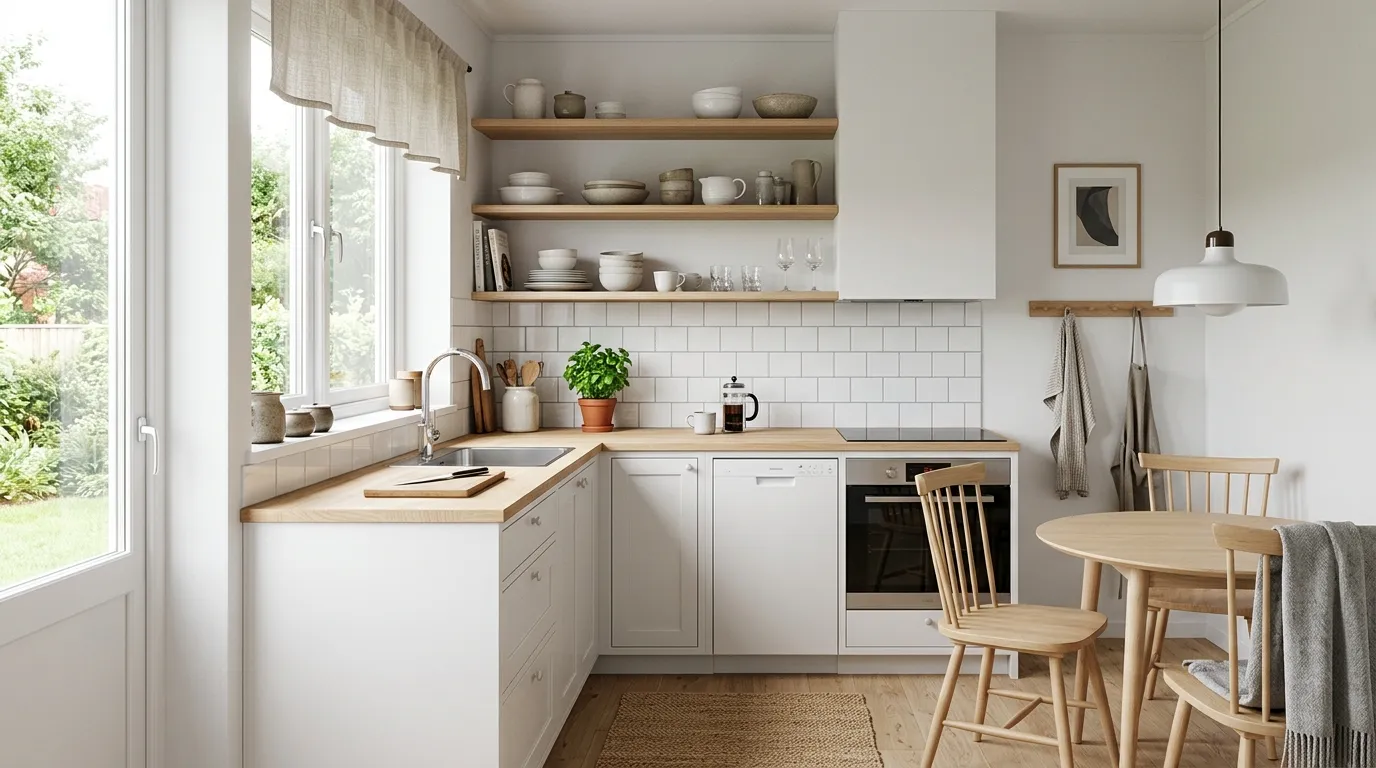
Bright Scandinavian simple kitchen with light wood and white palette
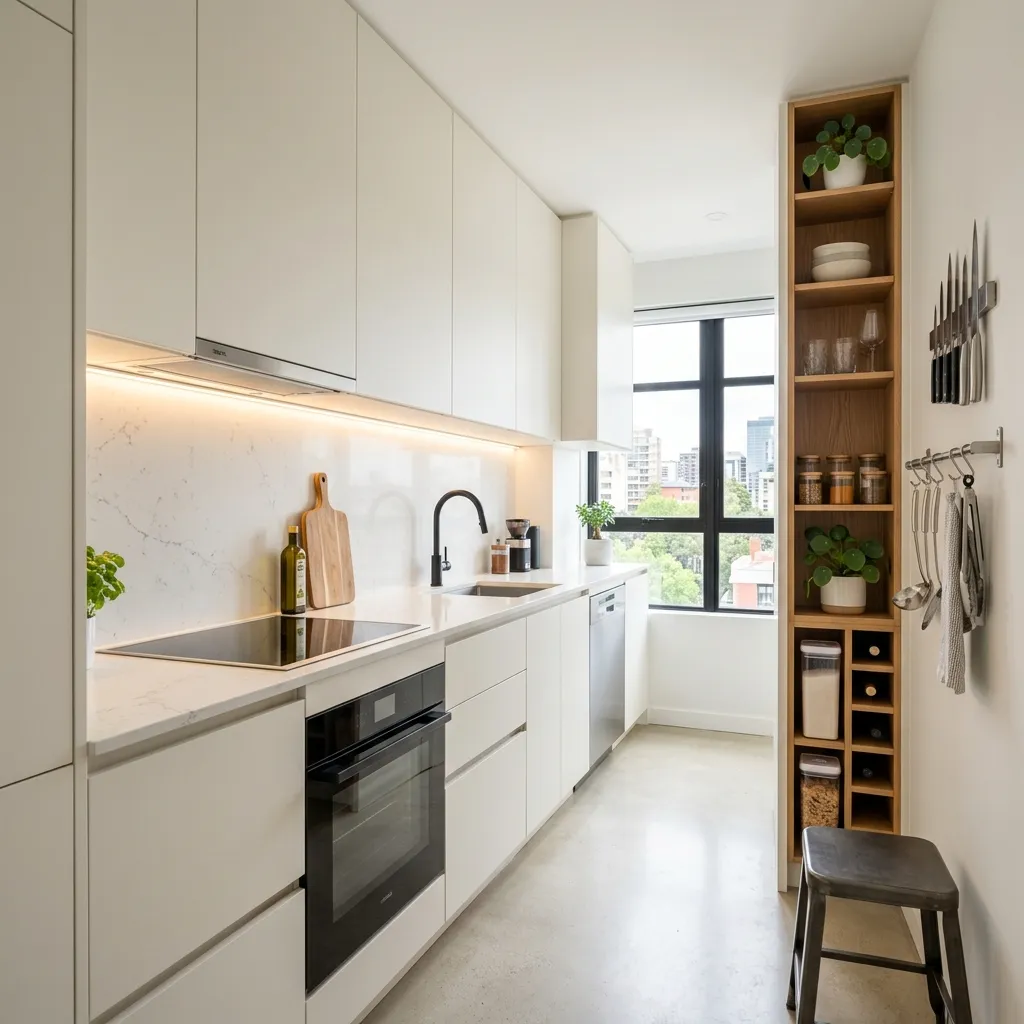
Minimal space-saving layout demonstrating simple efficiency
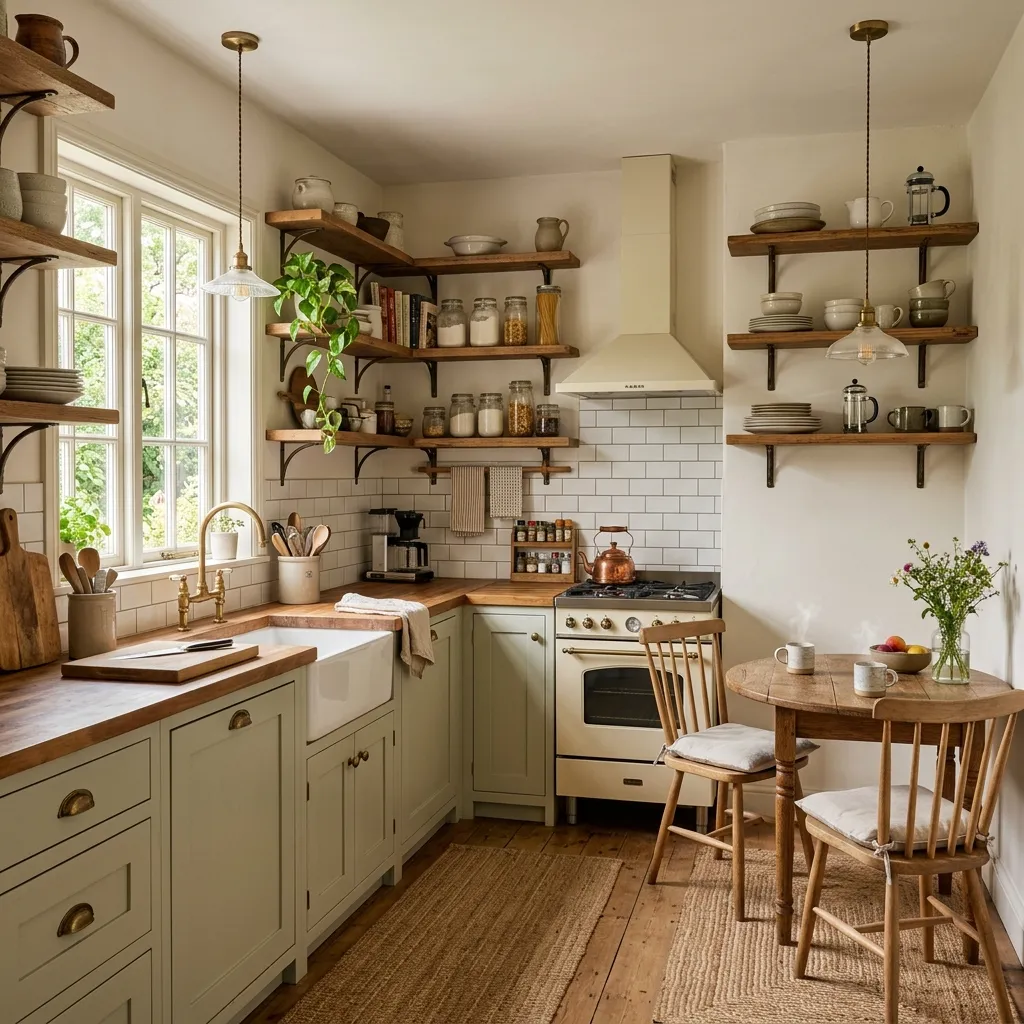
Simple rustic kitchen with natural materials and unfussy charm
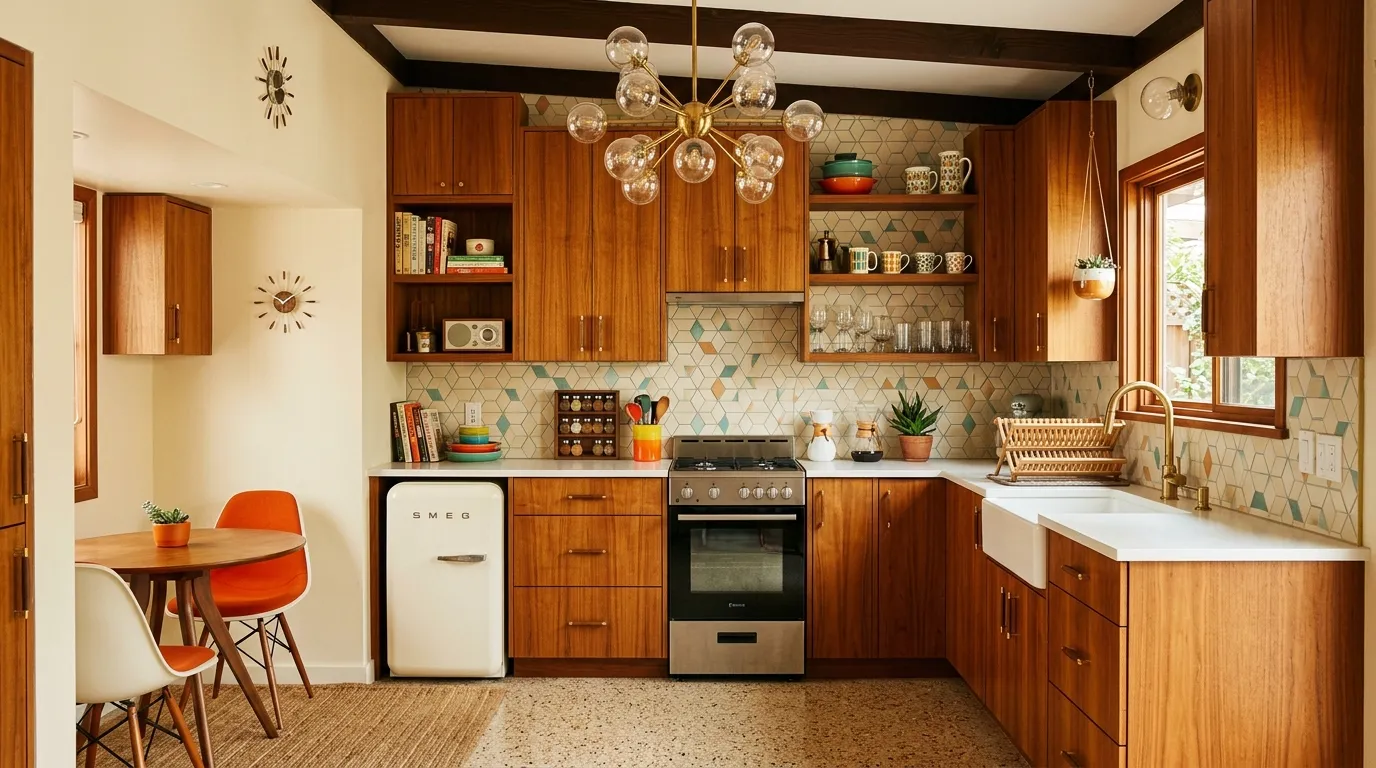
Mid-century modern simple kitchen with clean lines and wood accents
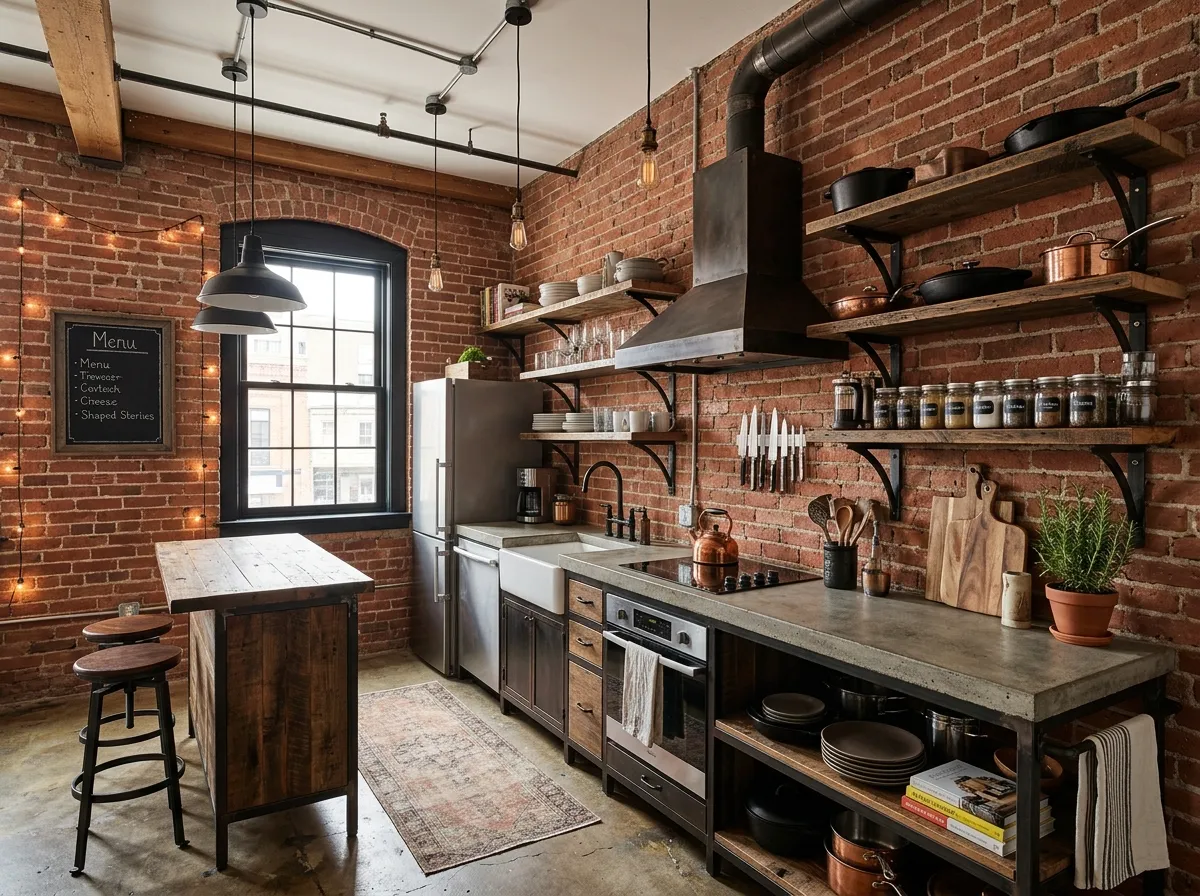
Simple industrial kitchen celebrating utilitarian function
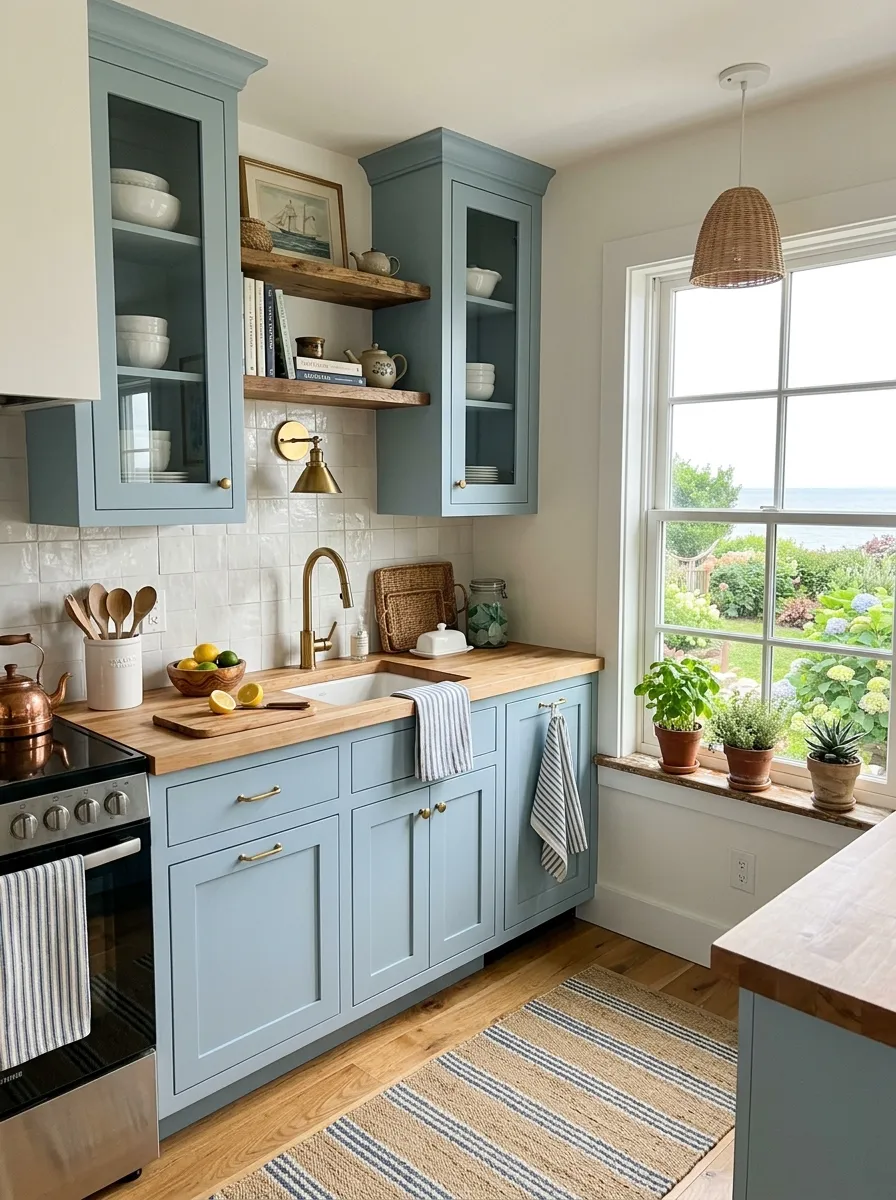
Simple coastal kitchen with blue and white creating breezy atmosphere
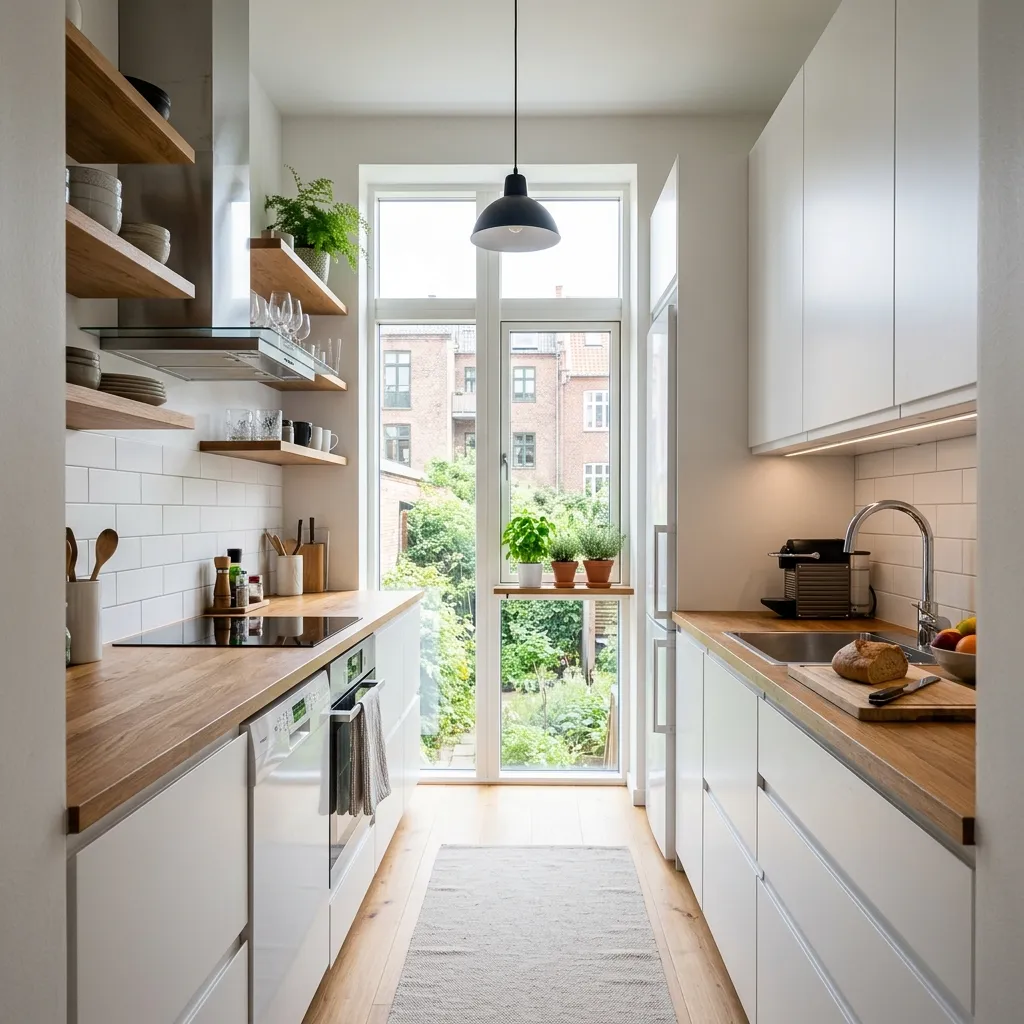
Simple modern galley demonstrating streamlined efficiency
Frequently Asked Questions About Simple Kitchen Designs
What is a simple kitchen design?
A simple kitchen design features uncomplicated layouts, minimal ornamentation, neutral color palettes, straightforward materials, and uncluttered surfaces. It focuses on essential function over elaborate details, clean lines over decorative elements, and quality basics over trendy extras. Simple designs typically use white or neutral cabinets, basic hardware or handleless systems, affordable materials like laminate or vinyl, and straightforward layouts like one-wall or galley configurations. The goal is timeless, functional beauty without complexity or excessive cost.
How much does a simple kitchen cost?
A simple small kitchen renovation typically costs $3,000-$8,000 including: stock cabinets or painted existing cabinets ($1,500-$3,000), laminate countertops ($500-$1,500), vinyl flooring ($300-$800), basic subway tile backsplash ($150-$400), updated lighting ($150-$400), new faucet ($100-$300), and hardware ($50-$150). This is 70-80% less expensive than elaborate custom kitchens costing $25,000-$50,000+. DIY work reduces costs further. Simple designs save money through standard materials, straightforward installation, and minimal custom work.
What color is best for a simple kitchen?
White is the best color for simple kitchens because it creates clean, timeless foundations, maximizes light reflection in small spaces, works with any accent color, has broad resale appeal, and is typically the least expensive option (most common = lowest cost). Alternatives include light gray, warm beige, or soft white with wood accents. For simple design, stick to one main neutral color (80% of kitchen), add one secondary material like wood (15%), and optionally one subtle accent color (5%). Avoid multiple competing colors or busy patterns.
Can a simple kitchen be stylish?
Yes, simple kitchens can be extremely stylish—often more so than busy, over-decorated spaces. Simple design’s restraint and intentional editing create sophisticated, timeless aesthetic. Stylish simple kitchens feature quality materials (even if affordable), thoughtful color palettes, good lighting, clean lines, and carefully curated accessories. Simplicity allows beautiful materials and good design to shine without competing elements. Many high-end designer kitchens embrace simple aesthetics. The key is choosing quality basics and maintaining consistency rather than adding trendy or elaborate details.
What is the simplest kitchen layout?
The one-wall kitchen is the simplest layout, featuring all appliances, cabinets, and sink along a single straight wall. This requires minimal planning, easiest installation, lowest cost, and works in very narrow spaces (under 7 feet wide). Requires 8-12 feet of wall length. Second simplest is the galley kitchen with parallel walls creating corridor layout. Both avoid complex corners, custom cabinet sizing, or elaborate planning. L-shaped kitchens are slightly more complex but still simple with basic corner solution. Skip islands, peninsulas, or U-shapes for maximum simplicity.
How do I make my kitchen look simple?
Make kitchens look simple by: clearing 80%+ of countertops (remove small appliances, decor, clutter), choosing one neutral color palette throughout, eliminating busy patterns or multiple colors, using simple cabinet styles (flat-panel or basic shaker), installing minimal or handleless hardware, keeping dishes and storage items uniform and organized, removing refrigerator magnets and papers, storing items in cabinets rather than displaying, using simple lighting (no elaborate fixtures), and maintaining clean, organized surfaces. Restraint and consistency are key—less is genuinely more in simple design.
What are simple kitchen materials?
Simple kitchen materials include: laminate countertops (solid colors or subtle marble-look), stock cabinets in white or light colors (flat-panel or shaker style), vinyl or laminate flooring (wood-look or solid neutral), basic ceramic subway tile backsplash (white 3×6 inch), stainless steel or composite sinks, and standard chrome or brushed nickel fixtures. These materials are affordable ($2,000-$5,000 total for small kitchen), widely available, easy to install (often DIY-friendly), durable for normal use, and look clean when kept simple. Avoid busy patterns, multiple materials, or elaborate finishes.
Is simple kitchen design good for resale?
Yes, simple kitchen designs have excellent resale value because they appeal to broad range of buyers (neutral, inoffensive style), appear move-in ready and well-maintained, allow buyers to envision their own style additions, photograph well for listings, and represent smart investment rather than over-improvement. Simple white or light neutral kitchens consistently rank highest in buyer preference surveys. Trendy colors, elaborate details, or highly personalized designs limit buyer pool. Simple, clean, functional kitchens help homes sell faster and often for higher prices than expected given renovation costs.
Can I DIY a simple kitchen renovation?
Yes, simple kitchen renovations are ideal for DIY because they avoid complex custom work, use standard-sized materials (easier to work with), feature straightforward installations, and don’t require specialized skills for most elements. DIYable projects include: painting cabinets, installing peel-and-stick or subway tile backsplash, replacing hardware, adding under-cabinet lighting (plug-in), installing vinyl plank flooring, swapping faucets, and organizing with simple systems. Hire professionals for plumbing relocation, major electrical work, gas lines, or structural changes. DIY can save $2,000-$5,000 in labor on simple kitchen updates.
What should I avoid in simple kitchen design?
Avoid in simple kitchens: multiple competing colors (stick to 1-2 neutrals), busy backsplash patterns (use solid or simple tile), ornate cabinet styles (choose flat-panel or basic shaker), elaborate crown molding and trim, decorative range hoods, complex lighting schemes, open shelving clutter (if using, keep very organized), multiple hardware styles, unnecessary appliances and gadgets on display, refrigerator clutter (magnets, papers), and trendy colors that date quickly. Each added element increases visual complexity—ruthlessly edit to maintain simplicity. When in doubt, leave it out.
Embrace the Beauty of Simple Kitchen Design
Simple kitchen designs for small kitchens offer liberating alternatives to complex, expensive renovations that often overwhelm compact spaces with too many competing elements. By focusing on clean lines, neutral palettes, straightforward layouts, and quality basics rather than elaborate details, simple kitchens deliver timeless beauty and excellent functionality at dramatically lower costs. The restraint inherent in simple design—choosing what to include as carefully as what to exclude—creates calm, organized spaces that feel larger, cleaner, and more inviting than cluttered alternatives.
The financial accessibility of simple kitchen design makes dream kitchens achievable for first-time homeowners, budget-conscious renovators, and DIY enthusiasts who might be priced out of elaborate custom kitchens. Stock cabinets in white, laminate countertops, vinyl flooring, and basic subway tile can create stunning, magazine-worthy kitchens for $3,000-$8,000—a fraction of typical renovation costs. When kept simple, these affordable materials look intentional and sophisticated rather than cheap. The money saved can go toward quality appliances, professional installation where needed, or simply staying within budget.
Perhaps most importantly, simple kitchens are easier to maintain, organize, and keep beautiful long-term. Clear counters clean in seconds. Minimal items mean less to organize and dust. Timeless neutral palettes never look dated. Simple materials often prove more durable than elaborate alternatives. The daily ease and long-term satisfaction of simple design shouldn’t be underestimated—your kitchen should simplify your life, not complicate it.
Whether you’re planning a budget renovation, working with a challenging small space, or simply preferring unfussy aesthetics, simple kitchen design offers proven solutions that stand the test of time. Start with the essentials—good lighting, functional storage, durable surfaces, and efficient layout. Add quality where it matters most to you. Edit ruthlessly, keeping only what serves you. The result will be a kitchen that’s beautiful precisely because of its simplicity, functional precisely because of its focus, and satisfying precisely because it reflects your values rather than fleeting trends.
Ready to create your simple, beautiful kitchen? Explore our complete collection of small kitchen design ideas for more inspiration, practical guidance, and budget-friendly solutions that work in real homes.