Sustainable and Eco-Friendly Small Kitchen Materials
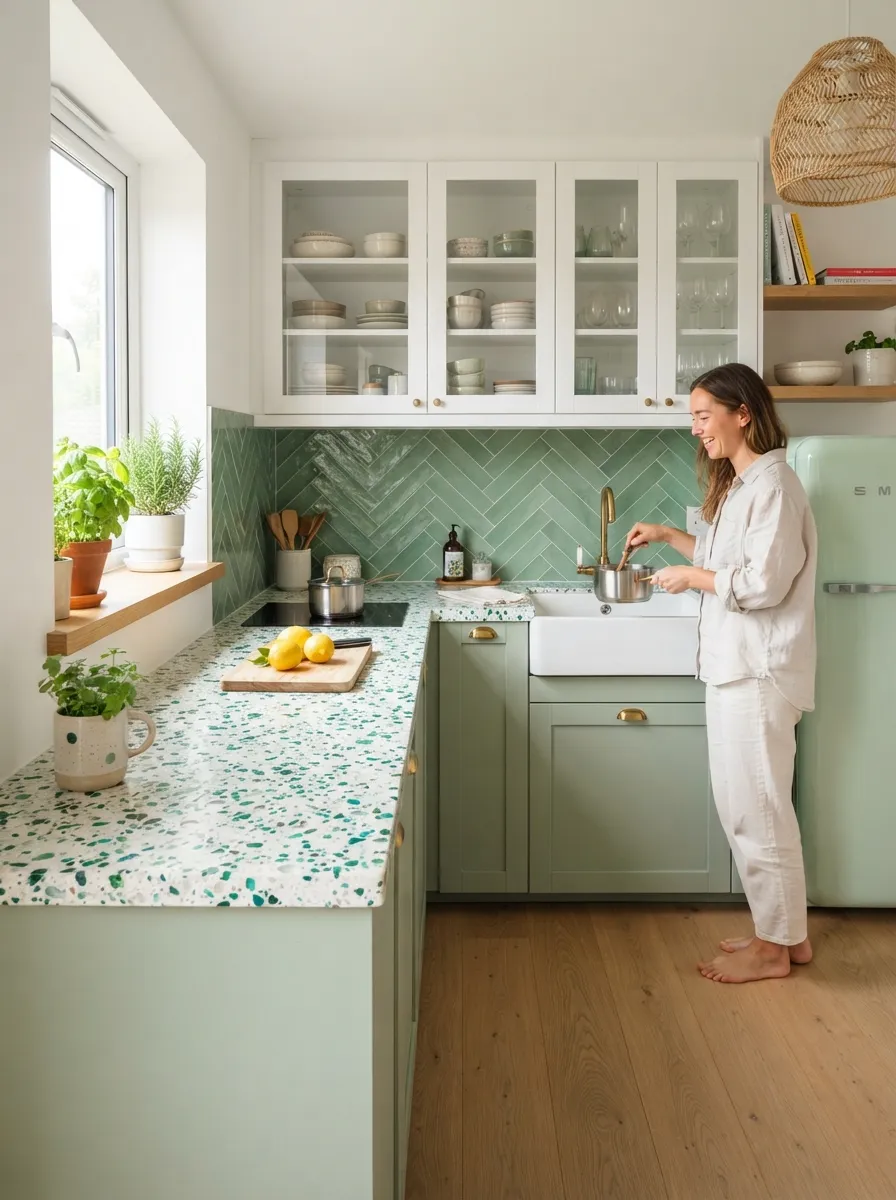
A small kitchen is actually one of the easiest rooms in the house to make genuinely eco-friendly, since less square footage means less material overall. Here’s a look at the most sustainable countertop, flooring, and cabinetry materials for small kitchens, plus what makes each one a better environmental choice than its conventional counterpart.
⭐ Quick Takeaways
- Recycled glass countertops repurpose post-consumer glass into a durable, distinctive surface
- Bamboo is one of the fastest-renewing materials available, growing to maturity in 3-5 years versus decades for hardwood trees
- FSC-certified wood cabinetry ensures the timber came from responsibly managed forests
- Reclaimed wood shelving reuses existing material instead of harvesting new lumber
- A small kitchen’s reduced material footprint means sustainable upgrades cost less overall than in a large kitchen
📑 In This Post
Why Sustainable Materials Matter in a Small Kitchen
Because a small kitchen requires less countertop, flooring, and cabinetry than a large one, the environmental impact of any given material choice is proportionally smaller — but that also means small kitchens are one of the easiest places to justify a premium sustainable material, since the total quantity needed (and cost) stays modest.
Countertop Materials
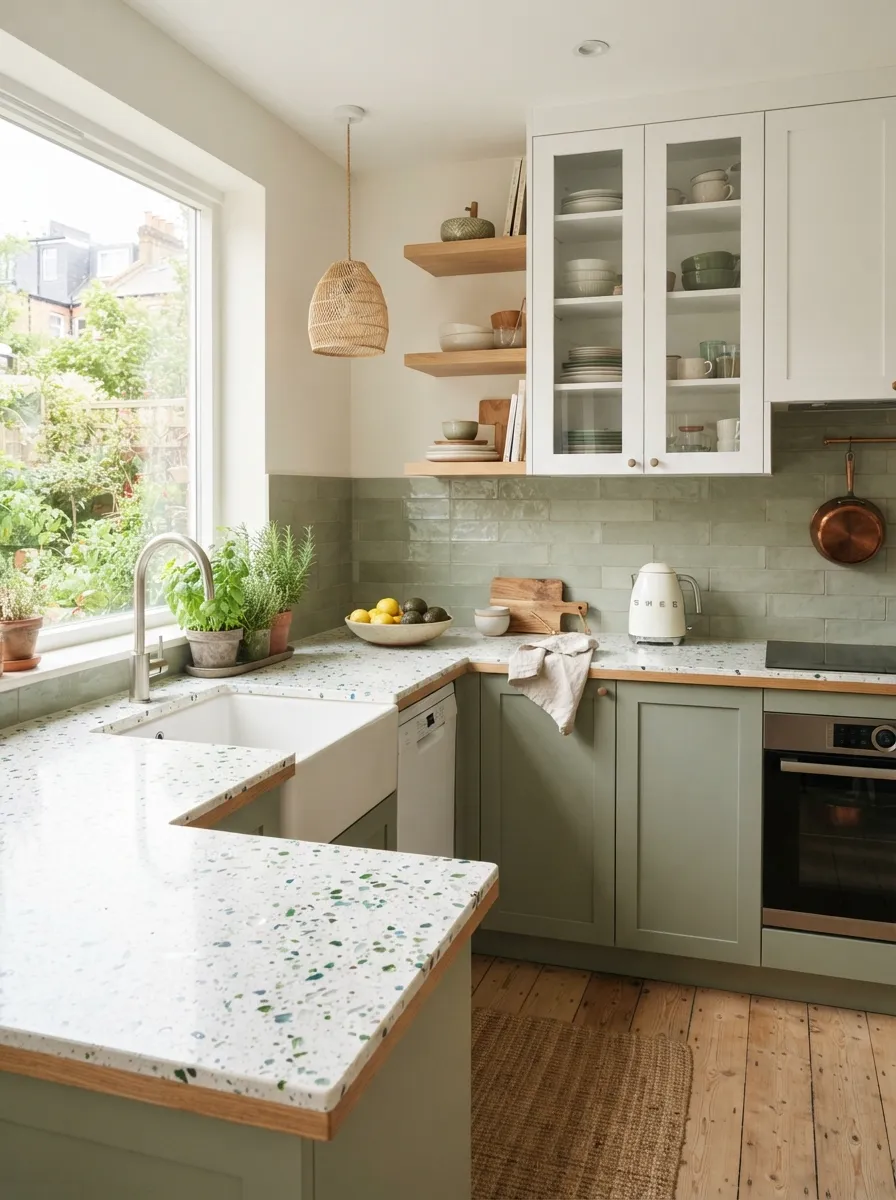
Recycled Glass
Made from post-consumer glass suspended in a binder, offering a distinctive speckled look while diverting glass waste from landfills.
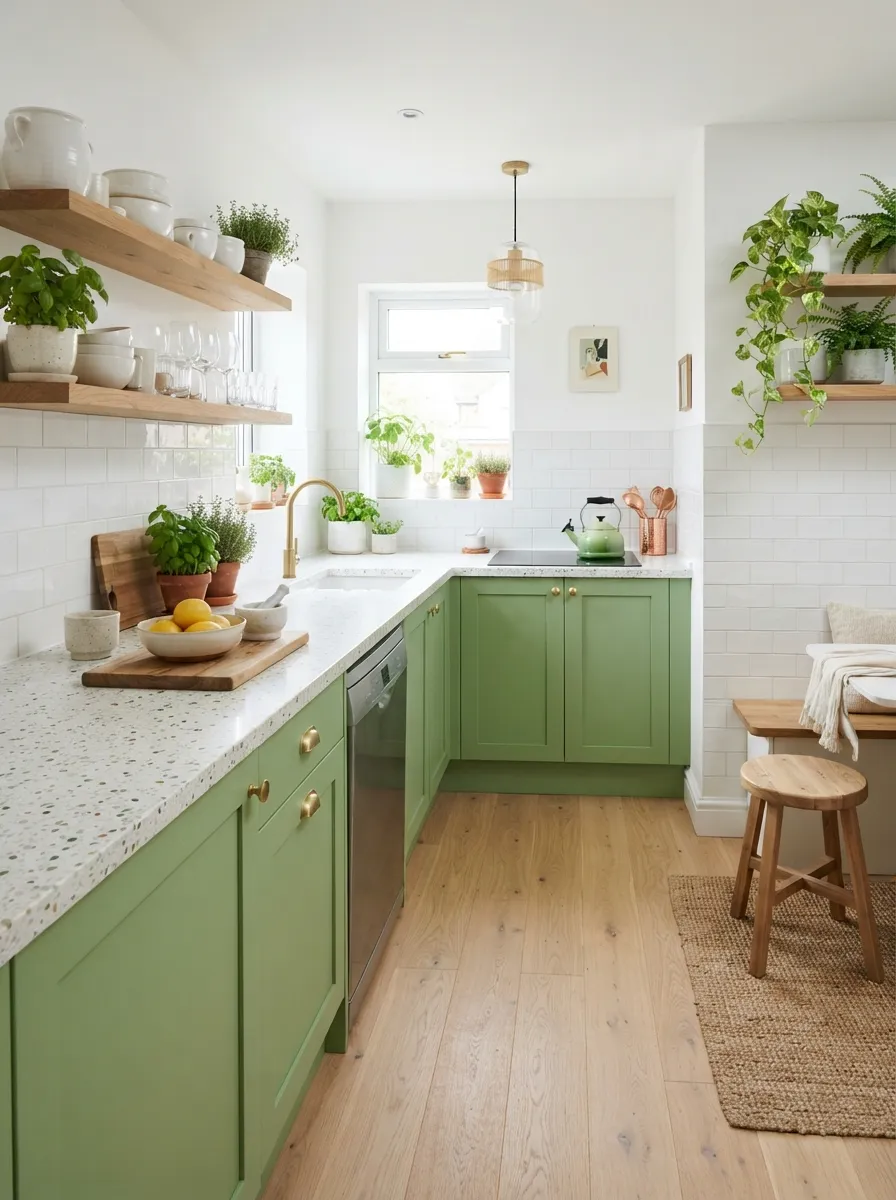
Recycled glass countertops repurpose post-consumer glass into a durable, one-of-a-kind surface.
Soapstone
A natural stone that requires minimal processing and develops a lasting patina over time — a genuinely long-lifespan, low-impact choice.
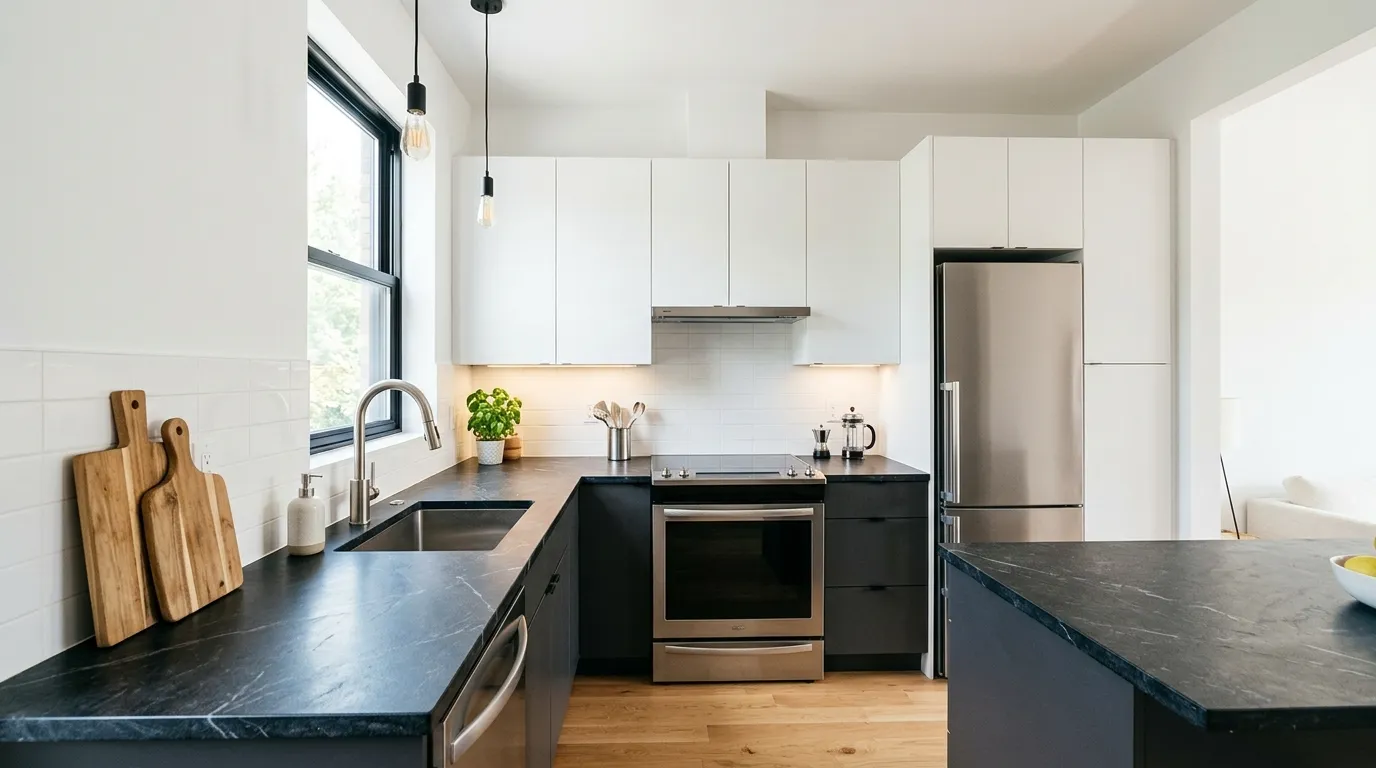
Soapstone requires minimal processing and ages gracefully rather than needing replacement.
Quartz (Recycled Content)
Some quartz manufacturers now incorporate recycled content into their engineered stone, offering the durability of quartz with a lower material footprint.
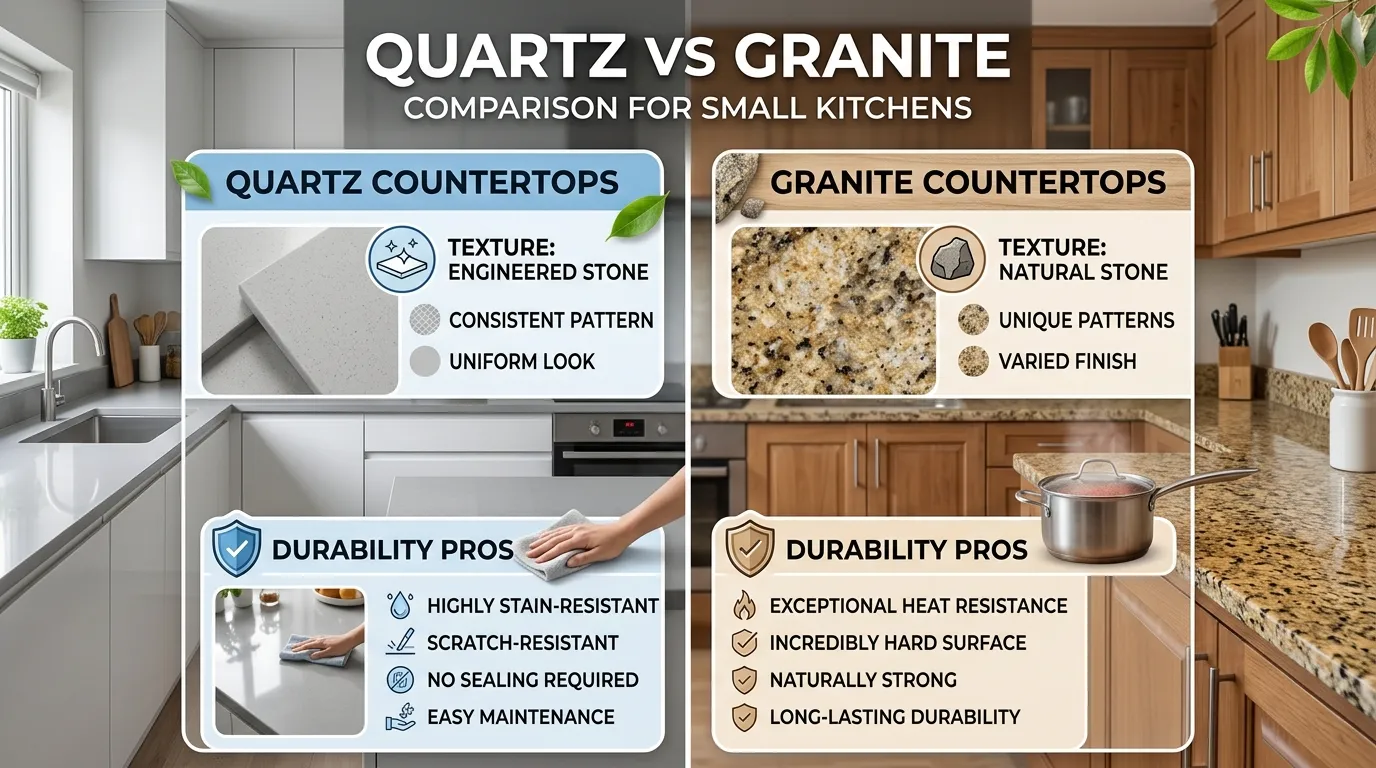
Comparing quartz and granite helps identify which option best matches your durability and sustainability priorities.
Wood Butcher Block (FSC-Certified)
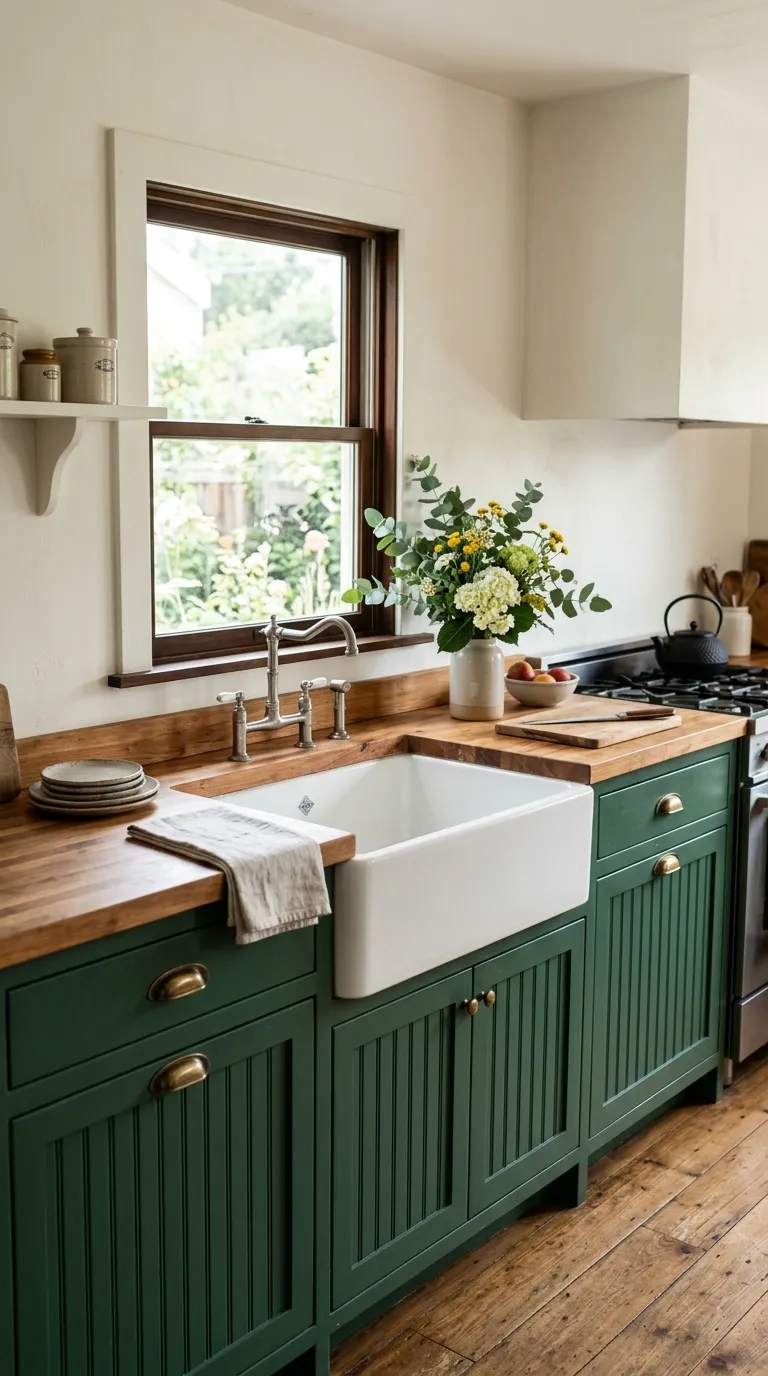
A renewable material when sourced from FSC-certified forests, offering warmth and a naturally antimicrobial surface.
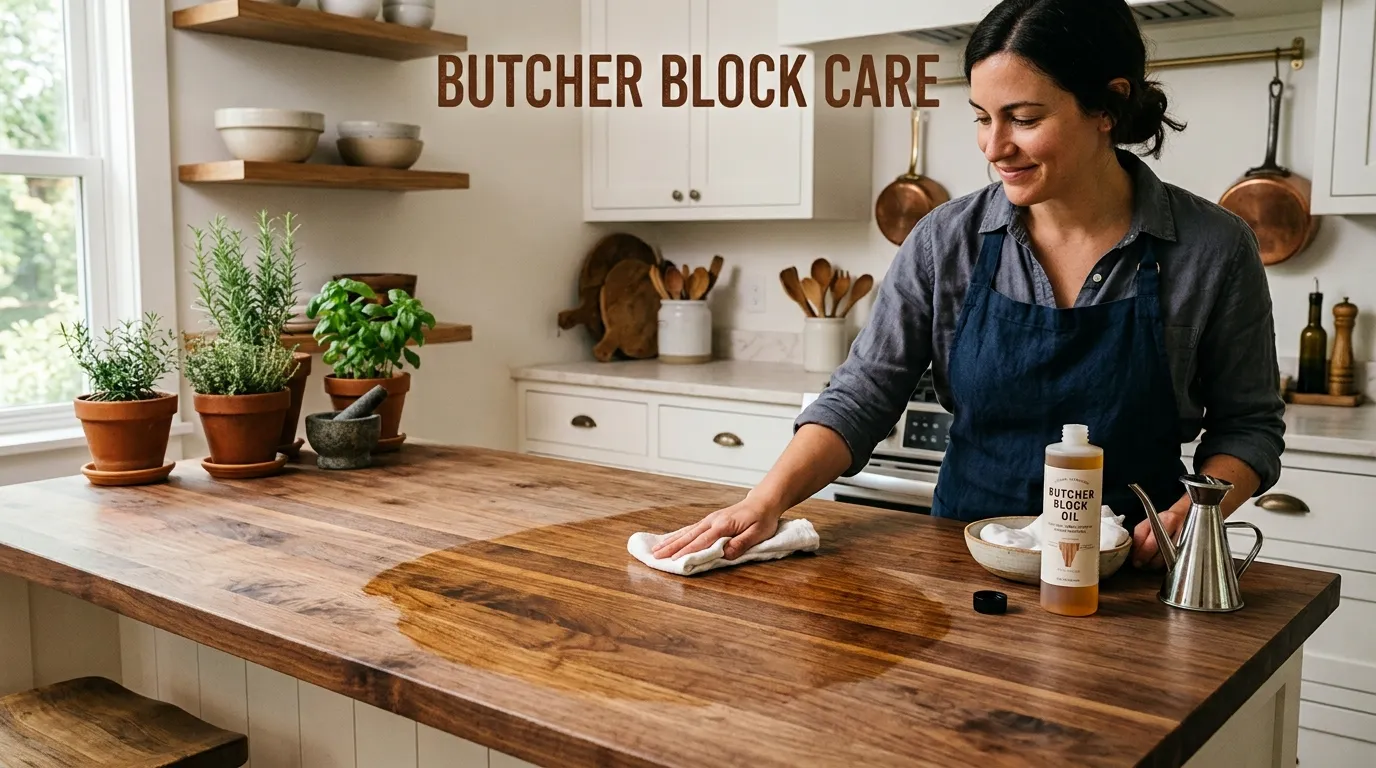
FSC-certified butcher block offers renewable material sourcing with genuine daily-use function.
Flooring Materials
Bamboo
One of the fastest-renewing materials available, reaching maturity in 3-5 years compared to decades for hardwood trees.
Cork
Harvested from the bark of cork oak trees without cutting them down, making it a renewable, biodegradable flooring choice.
Reclaimed Wood
Reuses existing material rather than harvesting new lumber, often with more character and stability than new-cut wood.
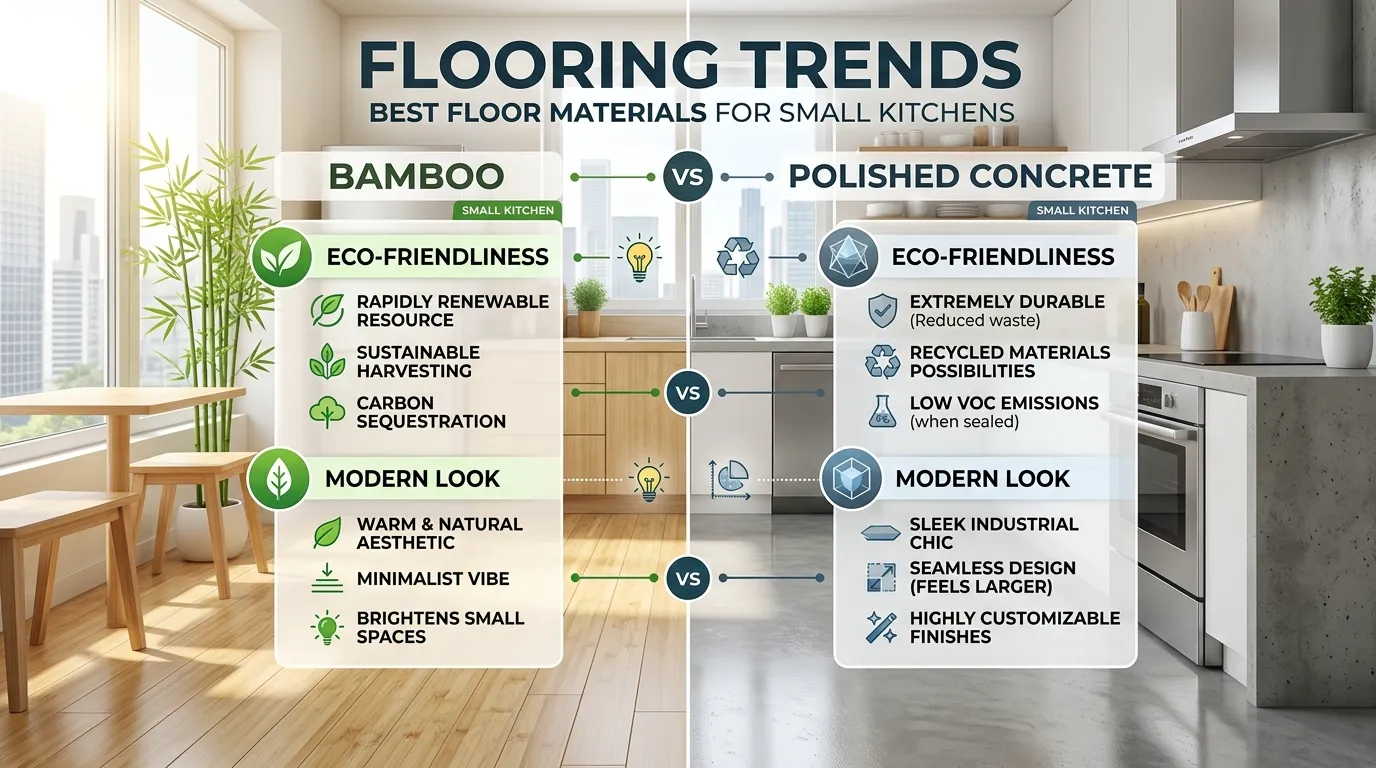
Bamboo’s rapid regrowth cycle makes it one of the more genuinely sustainable flooring materials available.
Cabinetry & Shelving
- FSC-certified plywood or solid wood cabinet boxes — ensures timber came from responsibly managed forests
- Low- or no-VOC finishes — reduces indoor air quality impact, especially important in a small, less-ventilated kitchen
- Reclaimed wood open shelving — reuses existing material instead of new lumber, and often looks more characterful for it
- Refinishing existing cabinets instead of replacement — the single most sustainable cabinet choice, since it uses no new raw material at all
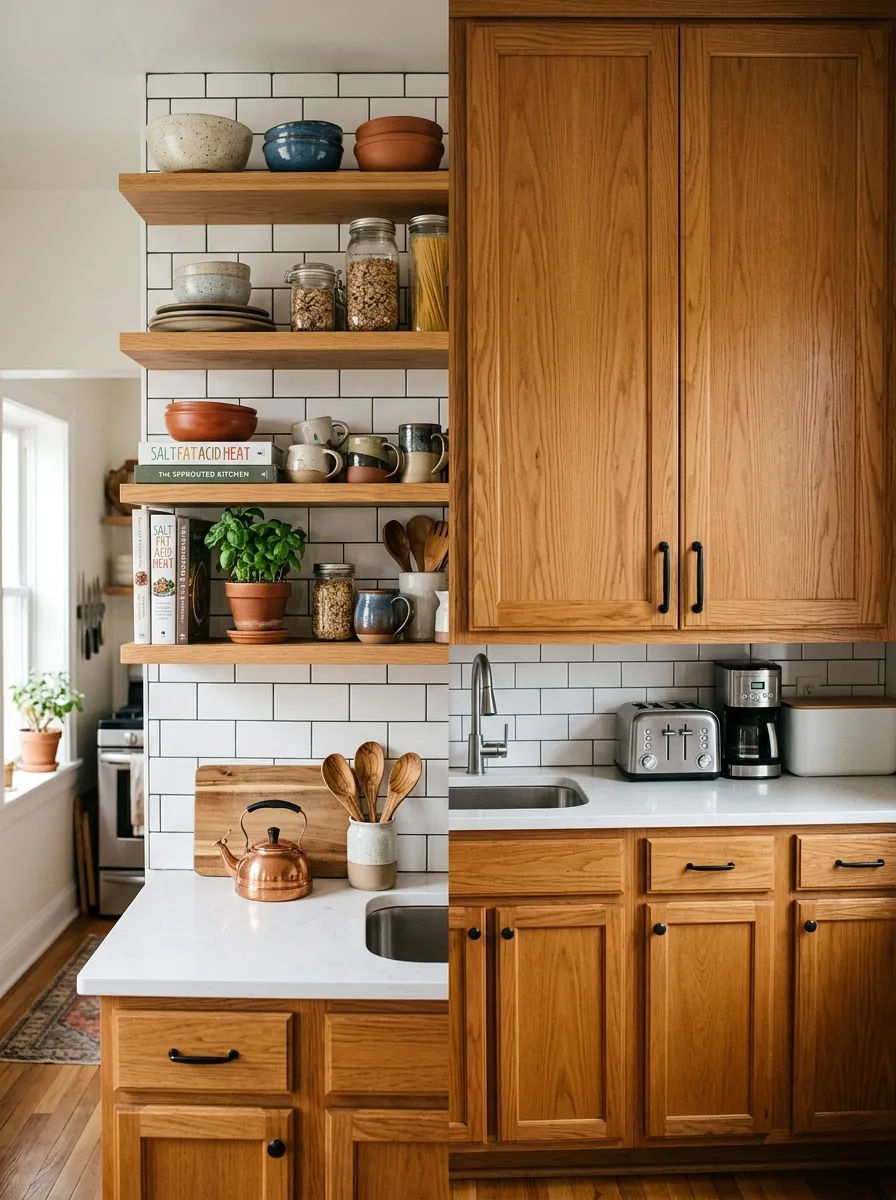
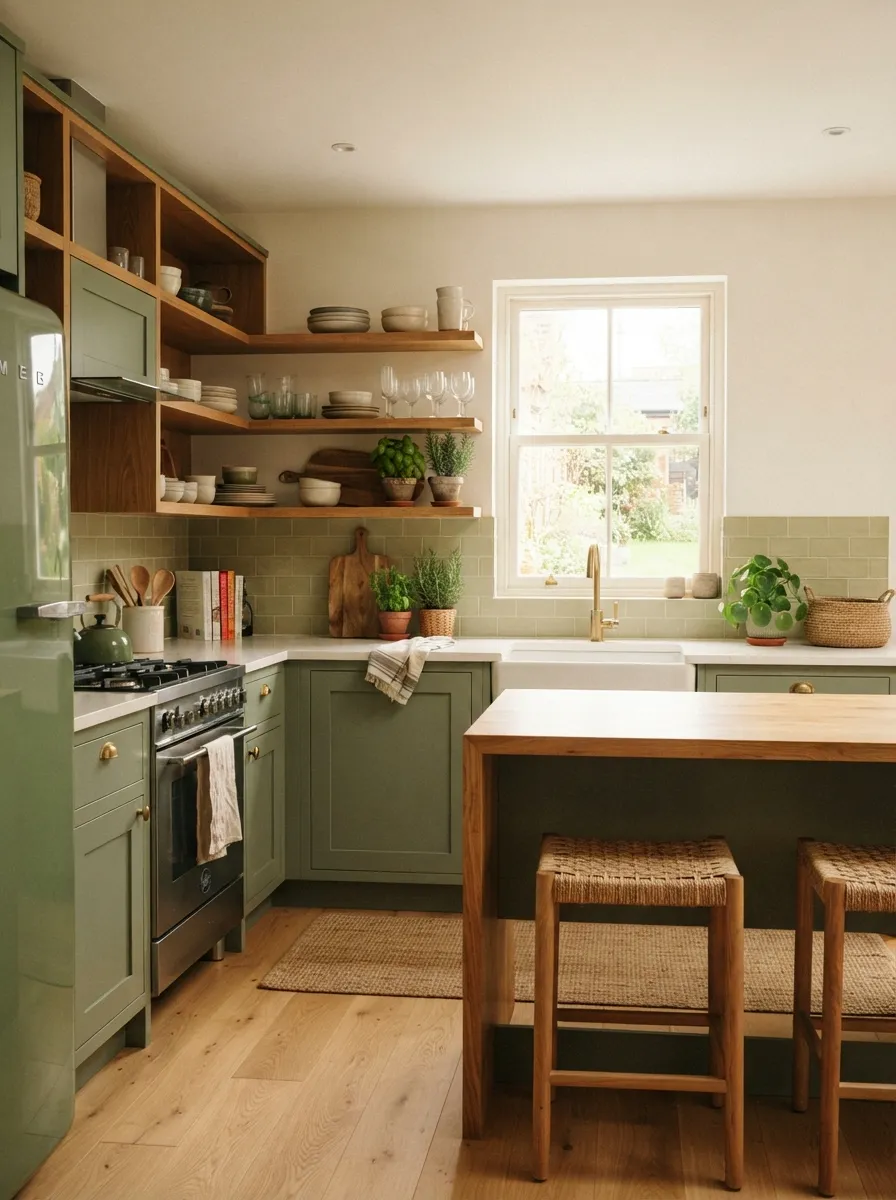
Open wood shelving is often a more sustainable and lower-cost alternative to a full cabinet run.
Mistakes to Avoid
- Trusting “eco-friendly” marketing without certification — ask for FSC, Cradle to Cradle, or GREENGUARD documentation instead
- Replacing functional cabinets purely for a sustainability label — refinishing what you already have is usually the lower-impact choice
- Overlooking finish and adhesive VOC content — the material itself might be sustainable, but a high-VOC sealant undercuts the benefit
- Choosing based on trend alone — the most sustainable material is the one that will last the longest in your specific kitchen, not necessarily the newest eco-material on the market
Frequently Asked Questions
Recycled glass and soapstone are both strong choices — recycled glass diverts waste from landfills, while soapstone requires minimal processing and lasts for decades.
Yes, bamboo reaches maturity in 3-5 years compared to decades for hardwood trees, making it one of the fastest-renewing flooring materials available.
FSC (Forest Stewardship Council) certification confirms that wood came from a responsibly managed forest, verified by a third-party organization rather than the manufacturer’s own claims.
Yes, refinishing existing cabinets uses no new raw material at all, making it generally the most sustainable cabinet choice available, alongside being significantly less expensive.
Check the finish and adhesive VOC content as well — a sustainably sourced material paired with a high-VOC sealant still impacts indoor air quality.
Some are, though a small kitchen’s reduced material quantity makes premium sustainable options more affordable overall than they would be in a larger kitchen.
Small Footprint, Real Impact
A small kitchen’s naturally reduced material footprint makes it one of the easiest rooms in the house to renovate sustainably — recycled glass, soapstone, bamboo, FSC-certified wood, and simple cabinet refinishing all offer genuine environmental upside without stretching the budget the way a full-size kitchen upgrade would. Ask for real certifications, prioritize longevity, and let the smaller scope work in your favor.
Explore More Small Kitchen Remodel Ideas