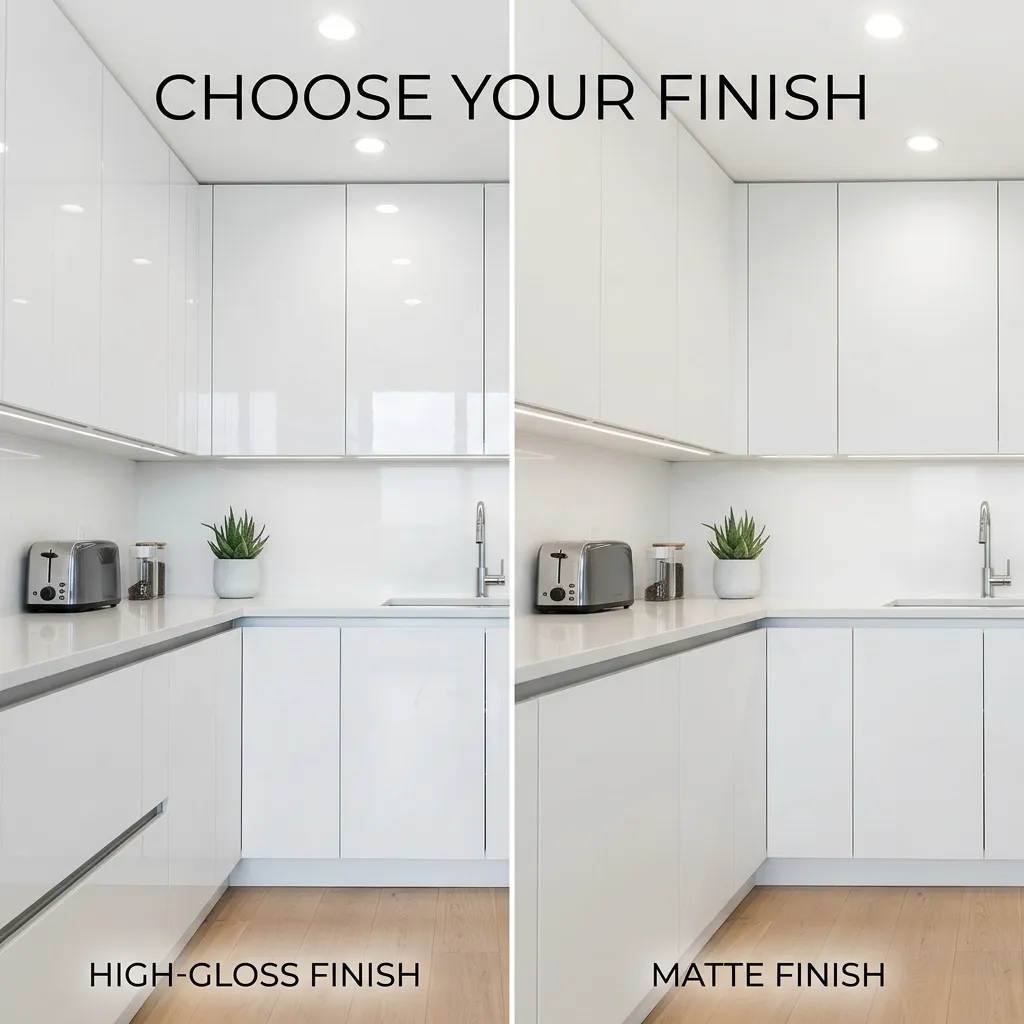
Which Cabinet Finish Resists Fingerprints Best
Quick Answer The cabinet finishes that resist fingerprints best are low-sheen and textured ones: textured woodgrain laminate, factory-applied anti-fingerprint (super-matte) surfaces, and matte or satin lacquers. High-gloss finishes show fingerprints most, especially in dark colors. Results vary by brand, so test a sample door with oily fingers under your own kitchen lighting before you buy.
In a small kitchen, you touch the cabinets constantly. The doors are within arm’s reach from almost anywhere, the lighting is often close and bright, and a child, a pet, or a cook with oily hands leaves marks that show up at every angle. Picking the right cabinet finish is the cheapest way to cut cleaning time. This guide compares the common finishes (gloss, satin, matte, textured, thermofoil, laminate, and anti-fingerprint surfaces), explains why some show prints and others don’t, and gives you a simple sample test, a cleaning routine, and a chooser table for busy households.
Quick Takeaways
- Gloss reflects light and shows fingerprints; matte, satin, and textured surfaces scatter light and hide them
- Hiding fingerprints and resisting them are different: texture and low sheen camouflage marks, while special coatings and surfaces aim to repel oils and wipe clean
- Dark, glossy cabinets are the worst offenders; light-to-mid colors in a textured or matte finish are the most forgiving
- Not every matte finish performs the same, since some matte paints mark or burnish when scrubbed; check the manufacturer’s care guidance
- Pulls and knobs keep hands off door faces, which reduces prints more than any finish
- Always test a sample under your actual kitchen lighting
What’s In This Guide
- Hiding vs Resisting: What Fingerprint-Resistant Really Means
- Why Fingerprints Show on Some Cabinets and Not Others
- Cabinet Finishes Compared (Quick Table)
- The Finishes in Detail
- Why Small Kitchens Are Harder on Finishes
- How to Test a Sample Before You Buy
- Best Finish by Household Type
- How to Clean Fingerprints Without Damaging the Finish
- Frequently Asked Questions
Hiding vs Resisting: What Fingerprint-Resistant Really Means
When people ask which cabinet finish resists fingerprints, they mean two different things.
Hiding means the finish doesn’t make prints visible. Matte, satin, and textured surfaces break up reflected light, so smudges blend in. The oil is still on the door, you just don’t see it.
Resisting means the surface is engineered to repel oils or release them with a quick wipe. Anti-fingerprint (often sold as super-matte or soft-touch) surfaces and certain laminates and films aim for this. Industry coverage of cabinet surface trends notes, for example, that PET surfaces are fingerprint and scratch resistant, and that electron-beam cured high-pressure laminate (HPL) is fingerprint, impact, and scratch resistant, while ordinary matte HPL may still show fingerprints. The finish name alone doesn’t tell you which type you’re getting.
The best answer for most kitchens is a surface that does both: low sheen plus a coating or material that wipes clean.
Why Fingerprints Show on Some Cabinets and Not Others
Four things decide how visible a fingerprint is.
Sheen. Higher sheen levels such as gloss and semi-gloss reflect more light, so they highlight any smudge. Lower sheen diffuses light.
Color. Dark colors show oily smudges and dust more than light-to-mid tones.
Texture. A woodgrain, embossed, or slightly pebbled surface breaks up the reflection, so marks are camouflaged.
Lighting angle. Raking light, such as sunlight from a side window or under-cabinet LEDs, exaggerates prints. This is why a door can look clean in a showroom and smudged at home.
Cabinet Finishes Compared (Quick Table)
| Finish | Fingerprint visibility | Ease of cleaning | Durability notes | Budget level |
|---|---|---|---|---|
| High-gloss (acrylic, lacquer, gloss laminate) | Highest | Wipes easily but needs frequent wiping | Gloss can show scratches and swirl marks | Medium to high |
| Semi-gloss paint | High | Easy | Good scrubbability | Low to medium |
| Satin paint or lacquer | Low to moderate | Easy | A good balance for most kitchens | Low to medium |
| Matte lacquer or matte paint | Low | Varies; some mark when rubbed | Check manufacturer care guidance | Medium |
| Textured woodgrain laminate, melamine or HPL | Lowest | Easy | Hard-wearing; texture hides marks | Low to medium |
| Anti-fingerprint (super-matte) acrylic, PET or specialty HPL | Very low | Easiest | Engineered to resist oils; quality varies | Medium to high |
| Thermofoil | Moderate | Easy on smooth versions | Can be damaged by heat and steam | Low to medium |
| Natural wood with matte or satin topcoat | Low to moderate | Moderate | Stained dark wood shows prints more | Medium to high |
Budget levels are relative; actual prices vary by brand, region, and construction.
The Finishes in Detail
Textured Woodgrain (Laminate, Melamine, HPL)
Woodgrain and embossed textures are the most forgiving. The raised pattern breaks up reflected light, so fingerprints blend in with the surface. These materials are also generally hard-wearing and easy to wipe. If your priority is hiding prints at a reasonable cost, this is the safest choice. Look for a texture with some depth rather than a nearly flat “wood look.”
Anti-Fingerprint (Super-Matte) Surfaces
These factory-applied surfaces, usually acrylic, PET film, or specialty laminate, combine an ultra-low sheen with a coating designed to resist skin oils. They give the clean, modern look of a matte door without the smudges. Quality varies, so ask for the manufacturer’s care guide, and test samples. Avoid assuming that any door marketed as matte is anti-fingerprint.
Matte Lacquer or Matte Paint
Matte lacquer is a popular, modern look, and it hides prints well. The caveat is that some matte finishes don’t like scrubbing: rubbing can leave shiny patches (burnishing) or lift marks, and certain matte paints are less washable than satin. If you choose matte, follow the manufacturer’s cleaning instructions and blot rather than scrub.
Satin Paint or Satin Lacquer
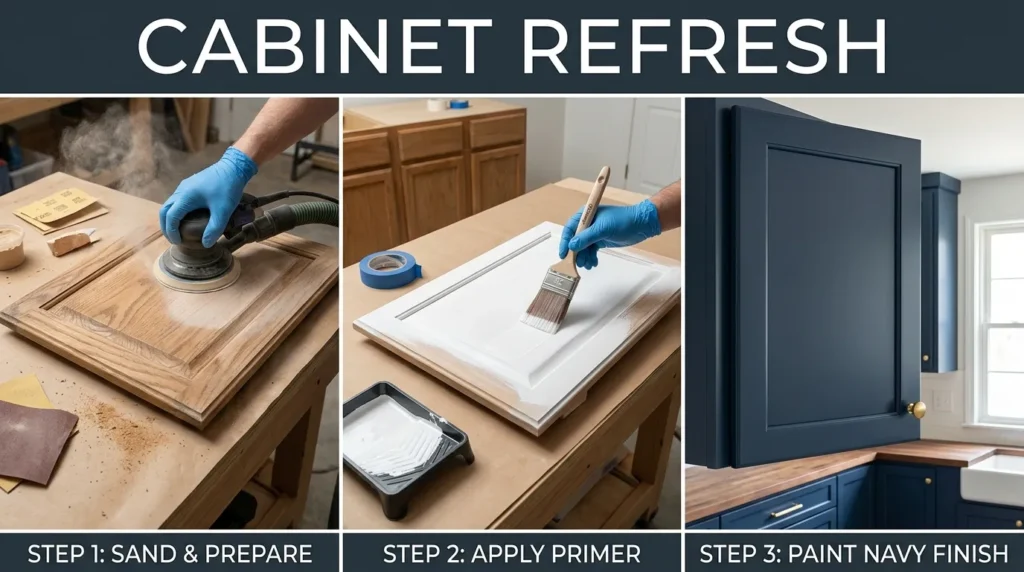
Satin is the practical middle ground. It has enough sheen to clean easily and enough softness to hide most prints. For many families, satin is the best balance of look, wipeability, and durability, and it’s the usual recommendation when refinishing existing cabinets.
High-Gloss
High-gloss doors reflect light and make a small kitchen feel brighter, but they show fingerprints, smudges, and water marks more than any other finish, especially in dark colors. Lacquered acrylic and lacquered melamine are among the more scratch-resistant gloss options, but scratch resistance doesn’t help fingerprints. Choose gloss only if you enjoy wiping.
Thermofoil
Thermofoil is a vinyl film heat-sealed to a substrate, typically MDF. It’s budget-friendly and easy to wipe, but it isn’t inherently fingerprint-resistant, and it can be damaged by heat and steam, so it’s a poor choice beside a range or dishwasher.
Laminate
Laminate comes in both gloss and matte, and the surface matters more than the category. Textured and matte laminates hide prints well. Smooth gloss laminate shows them.
Natural Wood
Natural wood with a matte or satin topcoat can hide prints reasonably well, especially with visible grain. Dark stains and glossy topcoats show marks more.
Why Small Kitchens Are Harder on Finishes
A small kitchen concentrates the touch points. Doors and drawers sit within arm’s reach of the main work zone, you open the same few cabinets constantly, and a close, bright light source rakes across the doors and exaggerates every mark.
There’s also a trade-off. High-gloss finishes reflect light and make a compact kitchen feel larger, which is why they’re tempting. If you want some of that brightness without the smudges, a satin or soft-sheen finish in a light color is the usual compromise. See our guide to small kitchen cabinet design for how color and finish affect the feel of a compact room.
💡 Pro Tip: Put pulls or knobs where hands naturally land, at the edge nearest the hinge or the top of a drawer. Fingerprints concentrate on door faces when there’s no hardware to grab, so a pull often reduces marks more than the finish.
How to Test a Sample Before You Buy
A 5-minute test saves a lot of regret.
- Get a full-size door sample. A small swatch isn’t enough; you need to see how the surface reflects light.
- Make it dirty on purpose. Touch it with slightly oily hands, such as after applying hand cream or eating something buttery.
- View it in your own kitchen. Look at it in daylight and under your actual lights, including any under-cabinet LEDs, from several angles.
- Wipe it. Use a damp microfiber cloth and see whether the marks come off in one pass.
- Repeat a few times. Check whether repeated wiping leaves shiny patches or streaks.
- Compare two or three finishes together. A side-by-side comparison makes differences obvious.
Best Finish by Household Type
| Situation | Best choice | Why |
|---|---|---|
| Young kids or sticky hands | Textured woodgrain or anti-fingerprint matte in a light-to-mid color | Hides and wipes clean |
| Pets | Satin or textured finish | Easy to wipe and hides smudges |
| Dark cabinet lover | Anti-fingerprint super-matte or textured dark woodgrain | Avoid dark gloss, which shows the most |
| Tight budget | Textured laminate or melamine | Hides prints at a low price |
| Rental or paint-over project | Durable satin cabinet enamel | Easy to clean and widely available |
| Modern minimalist look | Anti-fingerprint matte acrylic or PET | Clean slab look with fewer smudges |
| High-humidity or steamy kitchen | Laminate or lacquer rather than thermofoil | Better heat and steam tolerance |
How to Clean Fingerprints Without Damaging the Finish
- Start gentle. Wipe with a damp microfiber cloth and dry right away.
- Use mild soap if needed. A small drop of dish soap in warm water is enough for most finishes.
- Avoid abrasives. Scouring pads, powders, and harsh chemicals can dull or damage many finishes, especially matte and anti-fingerprint ones.
- Blot rather than scrub on matte surfaces. Rubbing can burnish.
- Check the manufacturer’s care guide. Different coatings have different cleaning rules.
- Wipe the high-touch zones weekly. Door edges near the handle, the fridge-side cabinet, and the drawer above the trash get the most contact.
Frequently Asked Questions
Which cabinet finish resists fingerprints best?
Textured woodgrain surfaces and factory anti-fingerprint (super-matte) surfaces resist or hide fingerprints best. Matte and satin lacquers also do well. High-gloss shows the most.
Do matte cabinets show fingerprints?
Matte cabinets hide fingerprints much better than gloss, but not all matte finishes perform the same. Some matte paints can show oil marks or burnish when scrubbed, so test a sample and follow the cleaning guidance.
Are satin cabinets better than matte?
Satin is easier to clean and often more durable, while matte hides prints a bit better. For many families, satin is the best balance. Choose matte if you prioritize the look and will follow the care instructions.
Do glossy cabinets show fingerprints?
Yes. High-gloss surfaces reflect light and highlight fingerprints, smudges, and water marks, particularly on dark colors. They need frequent wiping.
What is the best cabinet color to hide fingerprints?
Light-to-mid tones and woodgrain patterns hide fingerprints best. Very dark colors in glossy finishes show them the most.
Are anti-fingerprint cabinets worth it?
Often yes, for busy households, since they’re designed to resist skin oils and wipe clean easily. Quality varies, so ask for the care guide and test a sample before ordering.
Is thermofoil good for resisting fingerprints?
Thermofoil is easy to wipe but isn’t inherently fingerprint-resistant, and it can be damaged by heat and steam. It’s better away from the range and dishwasher.
What is the best finish for painted kitchen cabinets with kids?
A durable cabinet enamel in satin is the usual choice. It cleans easily and hides prints better than semi-gloss or gloss.
How can I reduce fingerprints without replacing my cabinets?
Add pulls or knobs, switch to a microfiber cleaning routine, and consider refinishing in a satin or low-sheen cabinet enamel.
Do cabinet handles reduce fingerprints?
Yes. Hardware moves contact from the door face to the handle, which often reduces visible marks more than the finish.
Related Pages
Small Kitchen Cabinet Design
How cabinet style, color, and storage shape a compact kitchen.
Small Kitchen Remodel Designs
Plan finishes alongside layout and budget.
Backsplash Designs for Small Kitchens
Pair your cabinet finish with an easy-clean backsplash.
Small Kitchen Drawer Organization Systems
Finish the inside as well as the outside of your cabinets.
Final Thought
The best cabinet finish for resisting fingerprints is low in sheen, textured or engineered to repel oils, and mid-to-light in color. For most kitchens, that points to textured woodgrain, a quality anti-fingerprint matte, or a durable satin. Skip high-gloss in dark colors unless you enjoy wiping. Whatever you pick, test a full-size sample with oily hands under your own lights, and add pulls where hands naturally land. Ten minutes of testing now saves years of smudge-wiping.
Planning a bigger update? See Small Kitchen Remodel Designs
Performance varies by manufacturer and product. Always follow the care guide supplied with your cabinets or coating.
Sources
- Woodworking Network, From texture to shine: Key surface trends shape modern cabinet design: https://www.woodworkingnetwork.com/architectural-products/texture-shine-key-surface-trends-shape-modern-cabinet-design
- General cabinet finish guidance on sheen, texture, and cleaning from cabinet-industry and coating-manufacturer care guides
- Manufacturer care guides for your specific cabinet or coating