Which Countertop Edge is Best for Small Spaces?
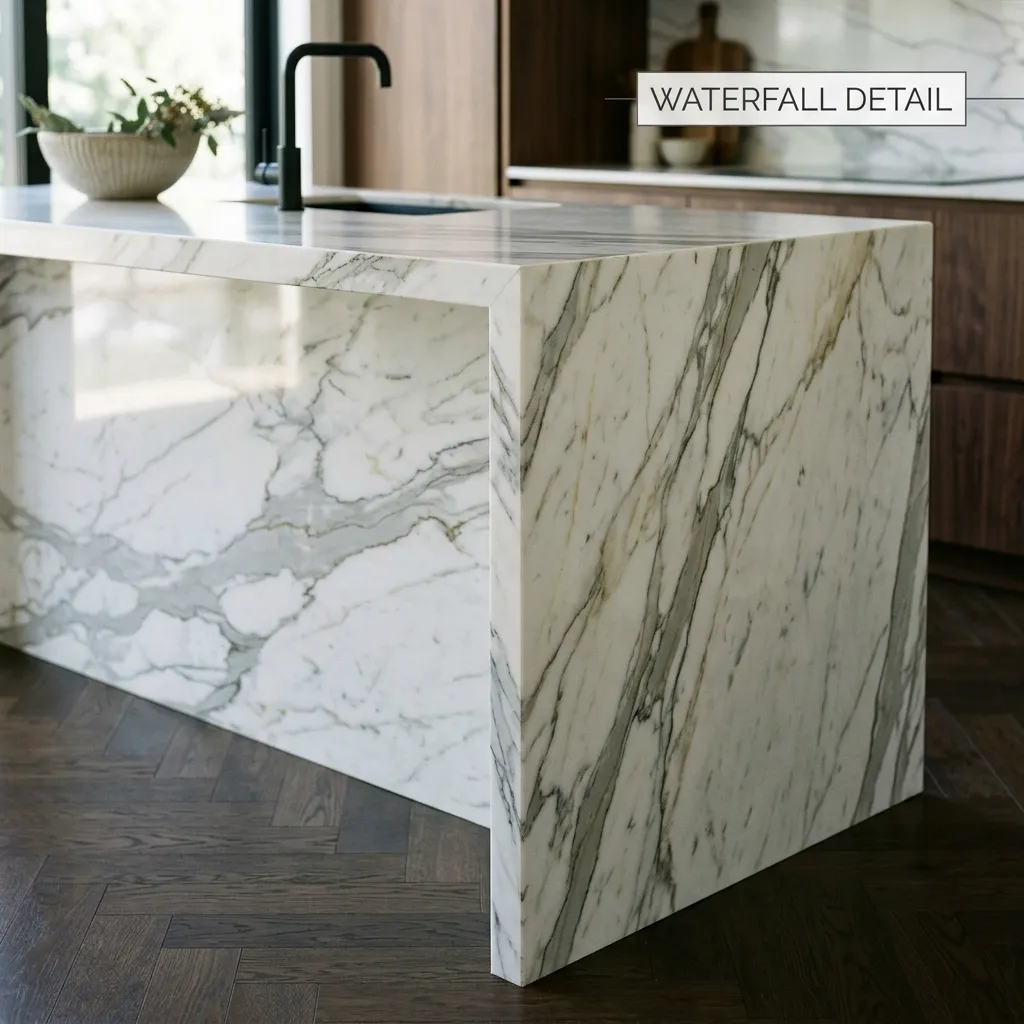
For small kitchens, an eased or slightly rounded edge is generally the best countertop edge profile — it’s safe around tight walkways, budget-friendly, and visually simple enough not to compete with the rest of a compact room. Waterfall edges look stunning on an island but demand more material and a larger footprint to read well, so the right choice depends heavily on where the edge sits in your layout.
Quick Takeaways
- Eased edges are the safest, most budget-friendly choice for tight walkways.
- Bullnose edges soften sharp corners, useful near high-traffic pinch points.
- Waterfall edges look best on an island with enough surrounding clearance to view them.
- Ogee and other decorative edges use more material and can visually shrink a small counter.
- Match edge complexity to counter size — simpler edges scale better in tight kitchens.
Table of Contents
1. Eased Edge
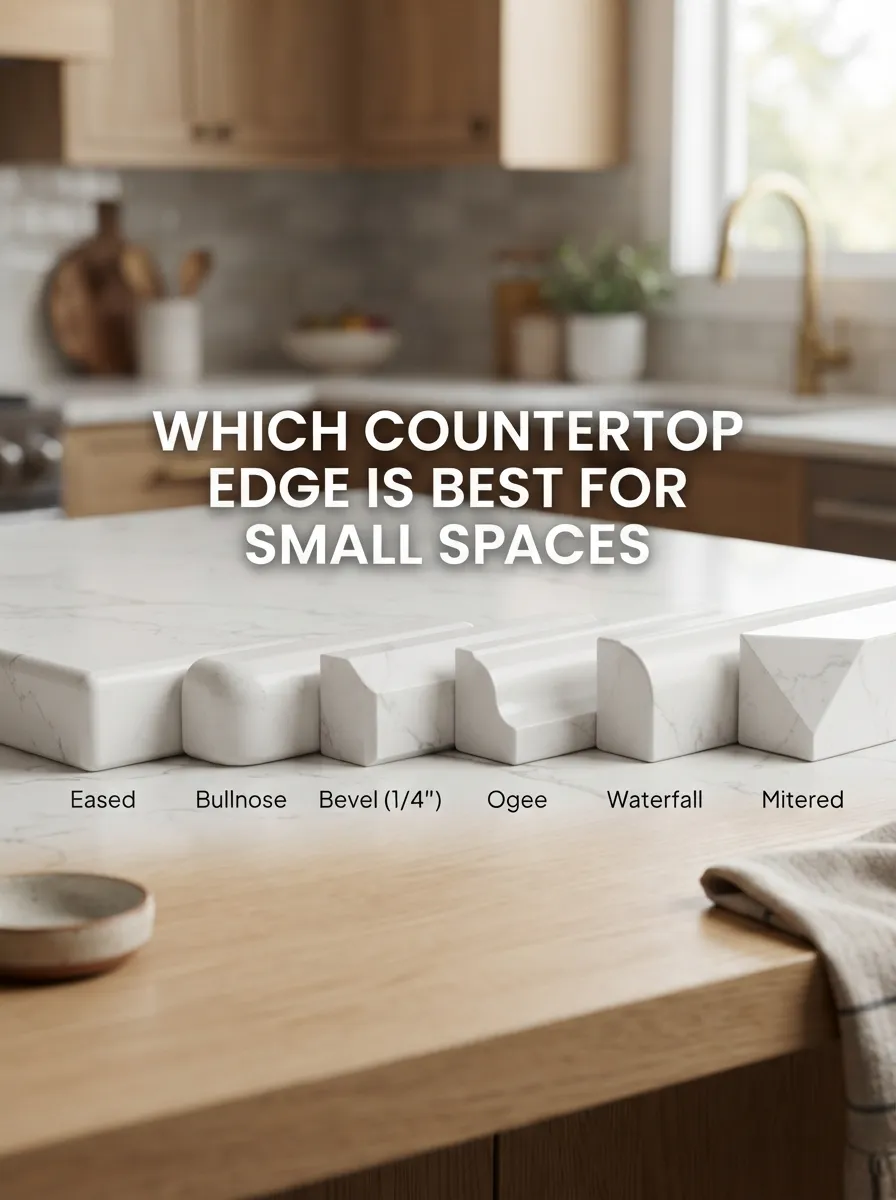
An eased edge has a very slight rounding on the top corner, just enough to remove the sharpness of a raw square cut. It’s the most common standard edge, the least expensive to fabricate, and works with any countertop material. In a small kitchen where clearances are already tight, an eased edge minimizes injury risk from bumping the counter without adding visual bulk.
2. Bullnose Edge
A full bullnose rounds the entire top corner into a smooth curve, offering more injury protection than an eased edge — a genuine advantage on a peninsula or island corner in a small kitchen where kids or foot traffic pass close by. The rounded look reads as slightly softer and more traditional than a crisp eased edge.
3. Waterfall Edge
A waterfall edge extends the countertop material down the side of the island or cabinet to the floor, creating a continuous, seamless look. It’s visually striking but works best when there’s enough open floor space around the island to actually see and appreciate the effect — in a very tight kitchen, a waterfall edge can end up crowded by nearby cabinetry rather than showcased.
4. Decorative Edges (Ogee, Bevel)
Ogee, bevel, and other decorative profiles add visual detail through carved curves or angled cuts. These work well in larger, more traditional kitchens but can visually compete with a small kitchen’s other design elements, making the room feel busier rather than more refined. If you love a decorative edge, consider using it on just one focal surface — an island, for example — rather than throughout.
| Edge Style | Best For | Relative Cost |
|---|---|---|
| Eased | Any small kitchen, tight walkways | Lowest (often standard) |
| Bullnose | High-traffic corners, kid-friendly kitchens | Low to moderate |
| Waterfall | Islands with open surrounding space | High |
| Ogee/decorative | Traditional kitchens, focal surfaces | Moderate to high |
5. How to Choose for Your Layout
Match the edge to where it sits: use a simple, safe eased or bullnose edge on perimeter counters and any surface near a tight walkway, and reserve a more decorative or waterfall edge for a single focal point, like an island, where there’s room for it to be appreciated rather than crowded.
A waterfall edge creates a seamless, continuous look on an island.
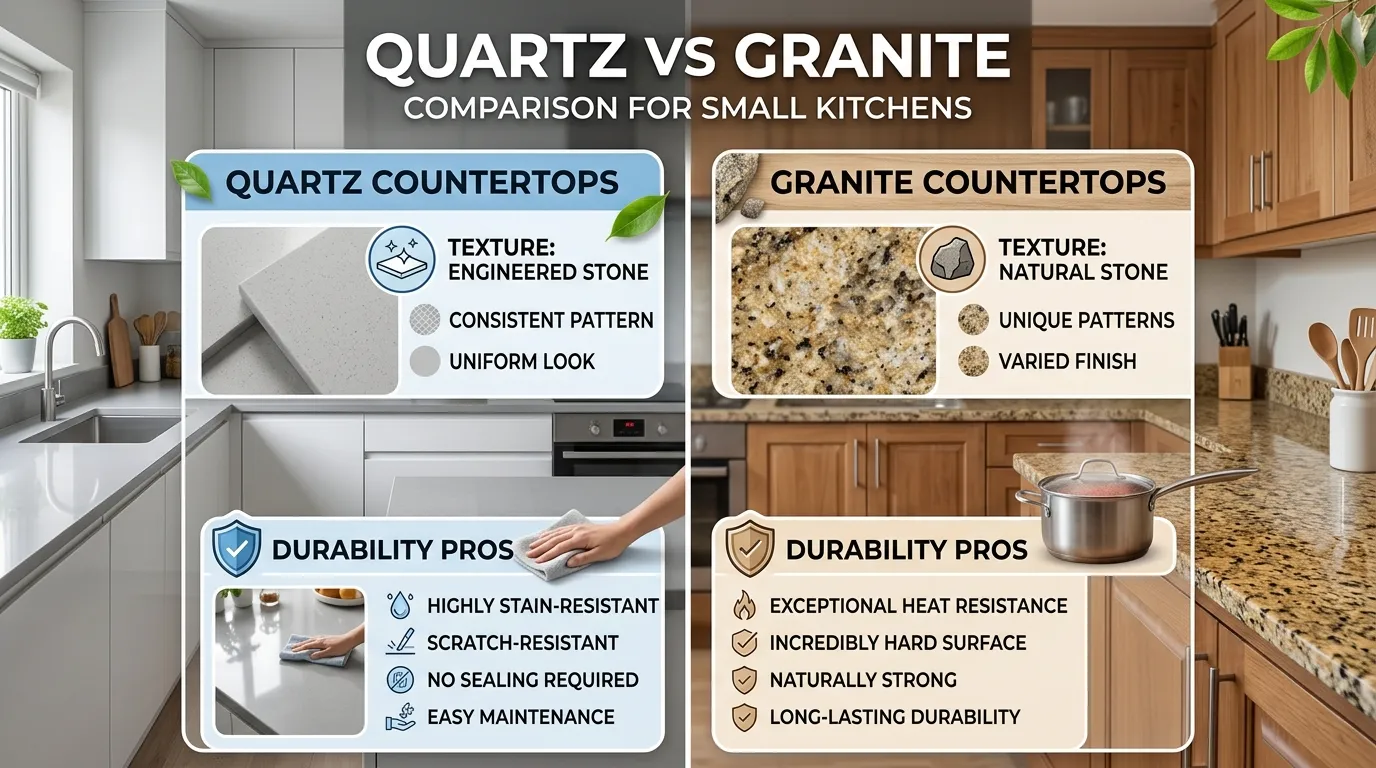
Edge profile choice works with either quartz or granite material.
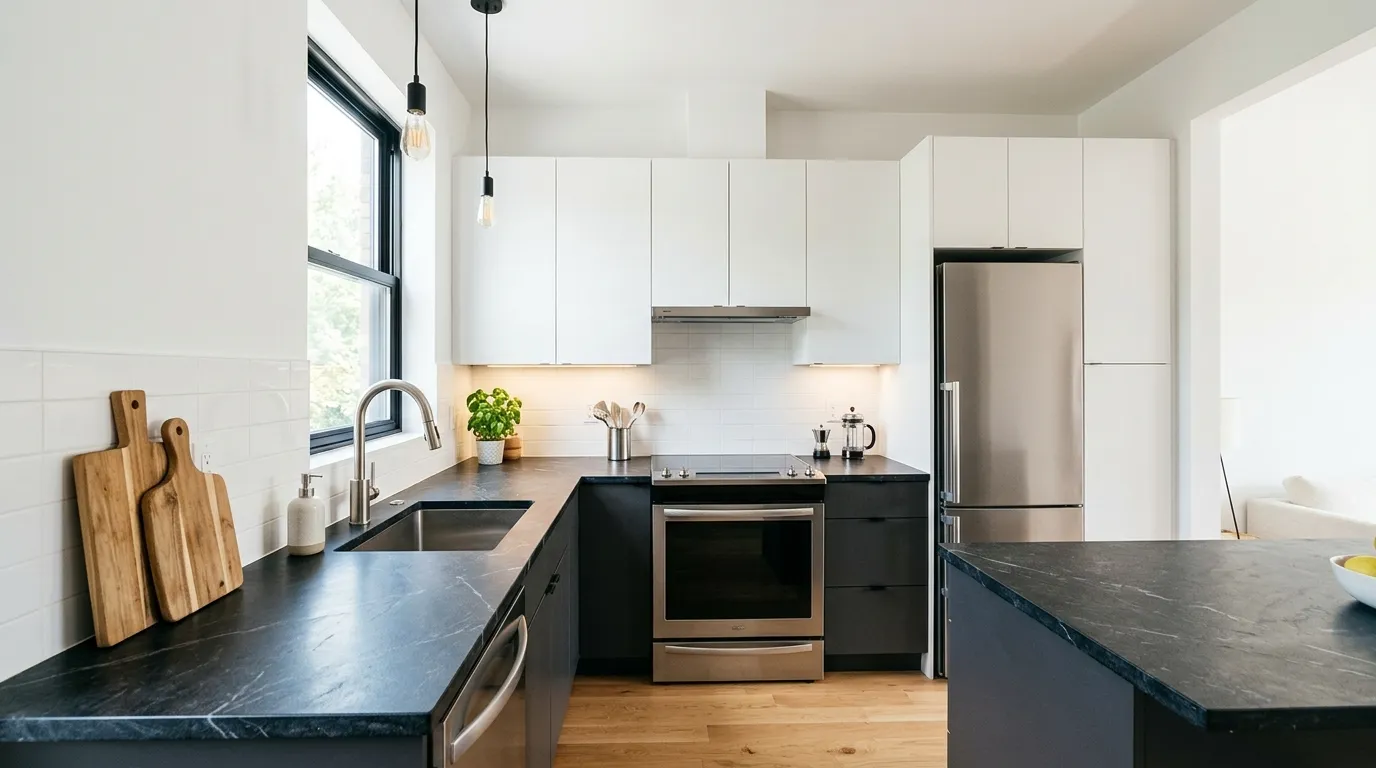
A simple eased edge suits soapstone’s naturally soft, matte look.
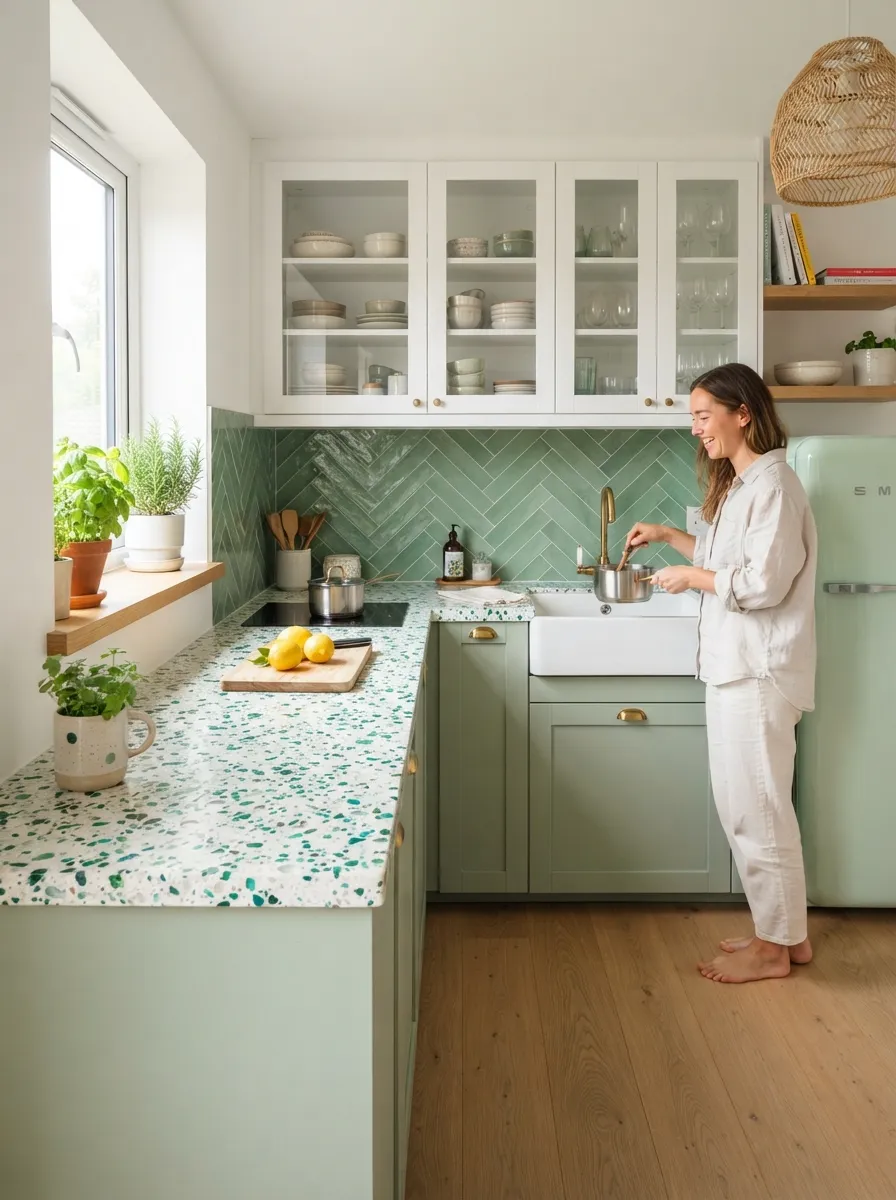
Recycled glass countertops pair well with a clean, simple edge profile.
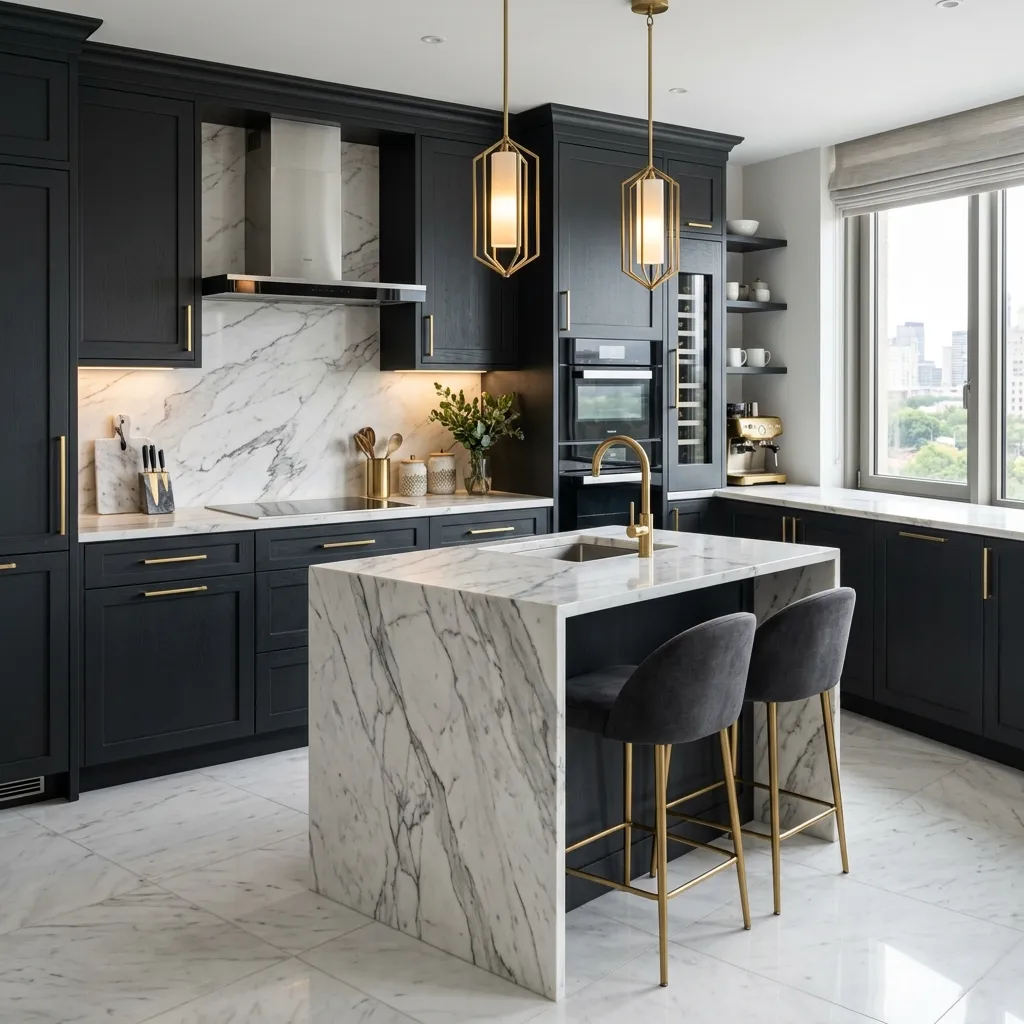
A focal island is the right place to invest in a decorative edge.
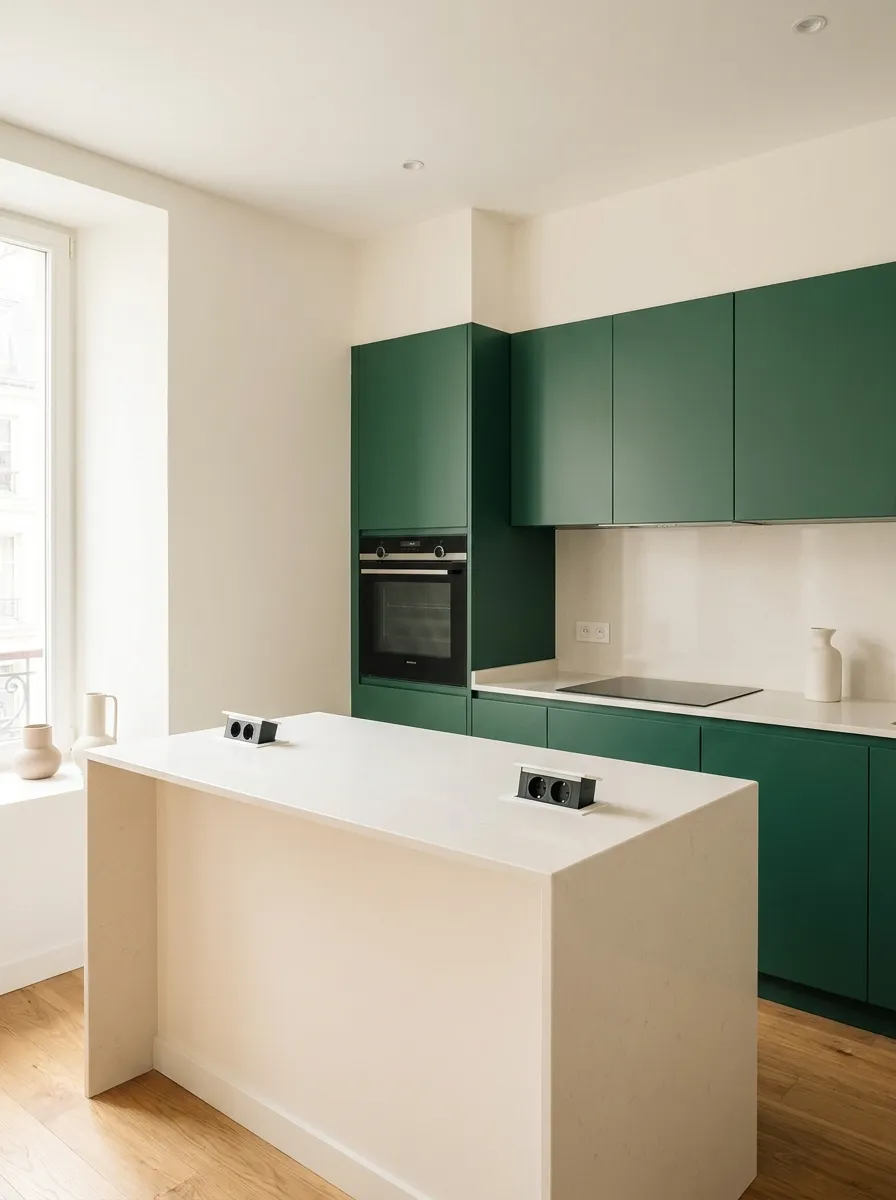
A waterfall edge works best with open floor space around the island.
Frequently Asked Questions
What is the safest countertop edge for a small kitchen?
A full bullnose edge offers the most injury protection with its fully rounded corner, though an eased edge is a close, more budget-friendly second.
Is a waterfall edge worth it in a small kitchen?
It can be, but only if there’s enough open floor space around the island to actually see the effect — otherwise it can feel crowded rather than showcased.
What is the cheapest countertop edge option?
Eased edge is typically the least expensive, often included standard with fabrication rather than carrying an extra charge.
Do decorative edges work in small kitchens?
They can, but are best reserved for one focal surface like an island rather than used throughout, since they can make a small room feel busier.
Does edge profile matter for countertop material choice?
Most edge profiles work with any material, though very soft or textured materials like soapstone often look best with a simpler edge.
Can I mix edge styles within the same kitchen?
Yes, a common approach is a simple edge on perimeter counters and a more decorative edge reserved for a single island or focal surface.
Related Pages
Choosing Your Edge?
Start with a simple, safe edge for high-traffic counters and save decorative details for a single focal surface. Browse our kitchen island designs for more countertop inspiration.