

The Hidden Costs of DIY Small Kitchen Renovations
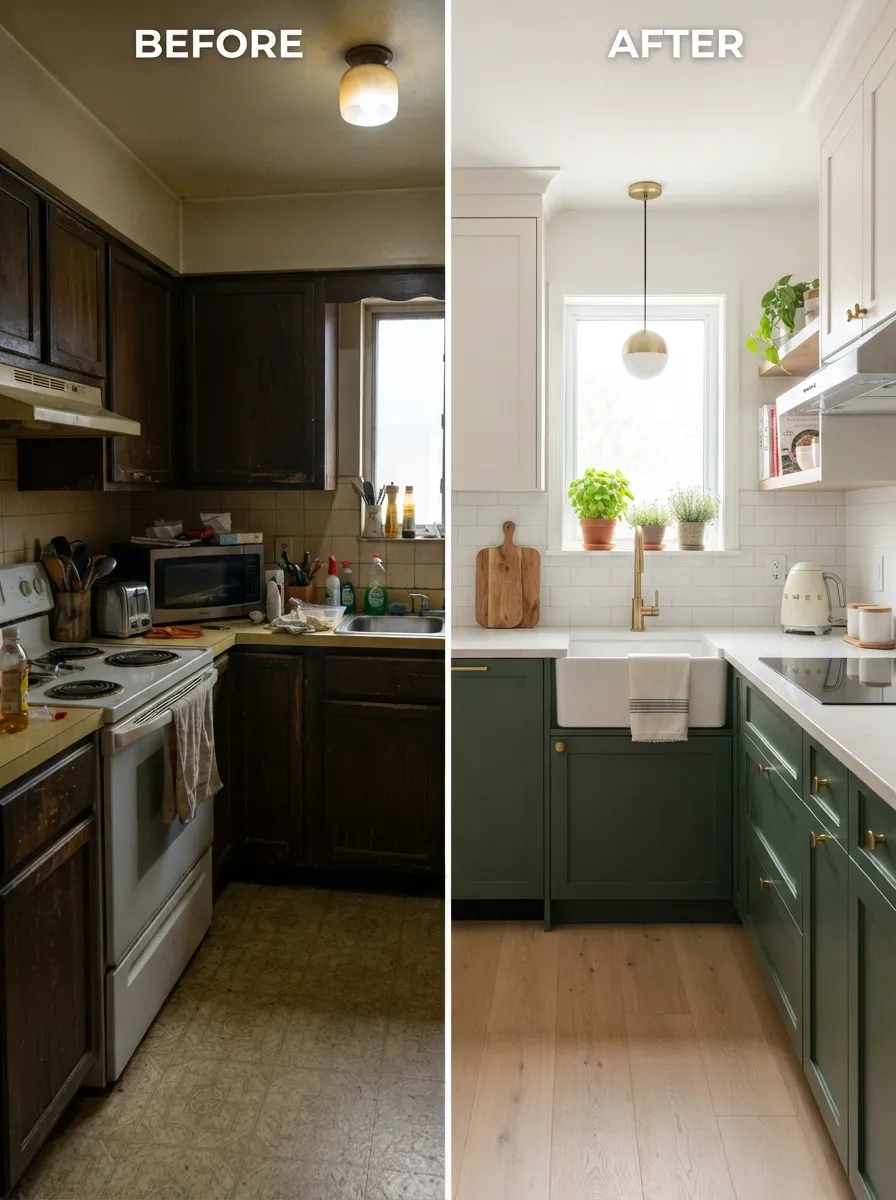
The hidden costs of a DIY small kitchen renovation usually come from four places: tool rental or purchase, mistakes that require redoing work, code corrections after a failed inspection, and the value of your own time. None of these show up in the initial materials budget, which is why DIY projects that looked like they’d save 30-40% versus hiring a contractor often end up much closer in total cost than expected.
Quick Takeaways
- Specialty tool rental for tile, plumbing, or electrical work adds up quickly.
- Mistakes on tile, countertops, or cabinets often mean rebuying materials, not just redoing labor.
- Unpermitted electrical or plumbing work can require costly correction before a home sale.
- Your own time has real value, even though it doesn’t appear on a receipt.
- Some tasks — gas line work, structural changes — are safety risks better left to licensed pros.
Table of Contents
1. Tool Rental & Purchase
A tile saw, a laser level, a good drill, and specialty cabinet-installation tools aren’t things most homeowners already own. Renting or buying them for a single project can add several hundred dollars that a materials-only budget estimate never accounts for. Even seemingly small purchases — a proper grout float, a stud finder, a set of cabinet jacks — add up across a full kitchen project.
2. The Cost of Mistakes
A miscut piece of tile, an incorrectly measured countertop template, or a cabinet installed slightly out of level all mean rebuying materials, not just redoing labor. In a small kitchen, mistakes on expensive materials like natural stone or custom cabinetry are particularly costly since there’s often little room for error in a tight layout with less material to work with.
3. Permit & Code Corrections
DIY electrical or plumbing work that doesn’t meet code can require expensive correction, especially if discovered during a home sale inspection. Beyond the direct cost of fixing the work, unpermitted changes can complicate selling the home or lead to insurance issues if something goes wrong later. This risk is easy to underestimate when a DIY project feels straightforward in the moment.
4. The Value of Your Time
A DIY kitchen renovation commonly takes 2-4 times longer than a professional crew would need, since you’re likely learning as you go and fitting the work around a regular job and daily life. That extended timeline has a real cost, even if it’s not a line item — a kitchen out of commission for 3 months instead of 6 weeks means more takeout, more disruption, and more opportunity cost.
5. Tasks Worth Hiring Out
Some tasks carry genuine safety risk that makes DIY a poor trade-off regardless of savings: gas line work, structural wall changes, and major electrical panel work should generally go to licensed professionals. The cost of getting these wrong isn’t just financial — it can be a real safety hazard for your home and family.
| Hidden Cost Category | Typical Impact |
|---|---|
| Tool rental/purchase | $200-$800+ depending on scope |
| Material waste from mistakes | 10-20% material overage common |
| Code correction after failed inspection | Can exceed original task cost |
| Extended timeline | 2-4x longer than professional crew |
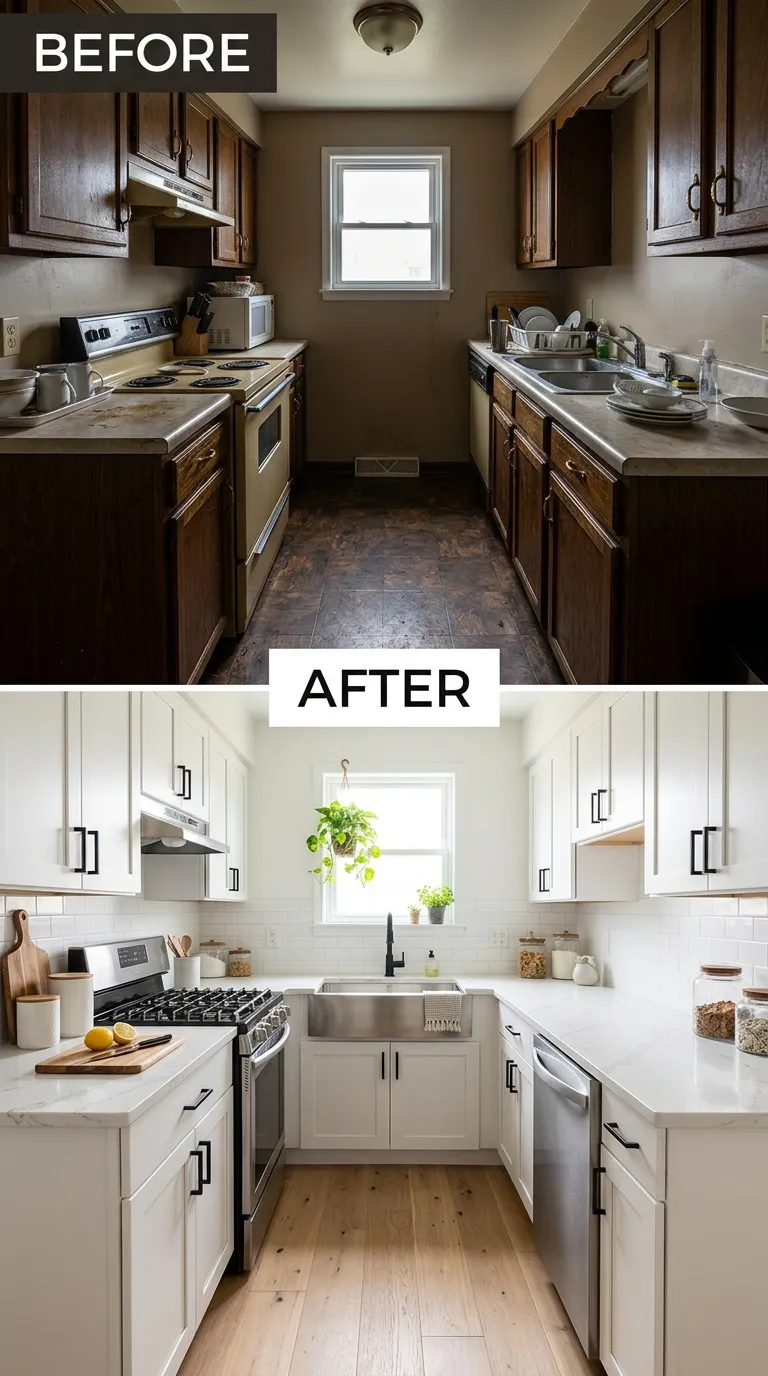
A successful renovation, DIY or hired, depends on realistic budgeting.

Accurate measuring reduces the risk of costly material mistakes.

Tile installation requires specialty tools most homeowners don’t own.

Flooring installation is a common DIY task with a real learning curve.
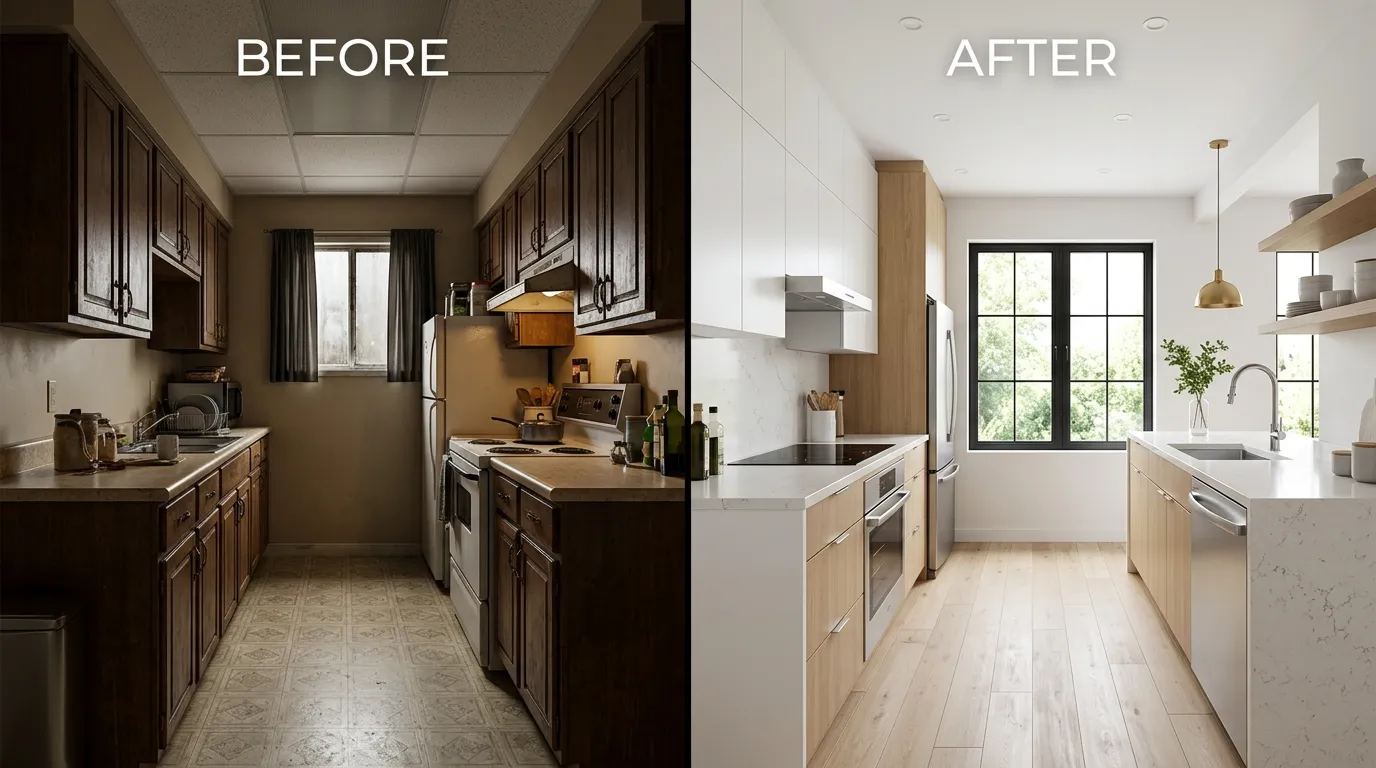
A full transformation often blends DIY work with hired specialty labor.
Realistic budgeting for hidden costs leads to a smoother renovation.
Frequently Asked Questions
Is DIY really cheaper than hiring a contractor for a kitchen remodel?
Often, but the gap is smaller than expected once tool costs, mistake corrections, and time are factored in — sometimes it’s closer than the initial estimate suggests.
What DIY kitchen tasks are riskiest to attempt without experience?
Gas line work, structural wall changes, and major electrical panel work carry real safety risk and are generally best left to licensed professionals.
How much can tool rental add to a DIY renovation budget?
Depending on scope, tool rental or purchase can add $200-$800 or more, which is easy to underestimate in a materials-only budget.
Can unpermitted DIY work cause problems later?
Yes, unpermitted electrical or plumbing work can require costly correction and may complicate selling the home down the line.
How much longer does a DIY renovation take compared to hiring a crew?
Commonly 2-4 times longer, since the work fits around daily life and often involves a learning curve.
Is a hybrid approach — some DIY, some hired — a good option?
Yes, hiring licensed professionals for permitted electrical or plumbing work while DIYing cosmetic tasks is a common, cost-effective middle ground.
Related Pages
Planning Your Renovation?
Budget for tools, mistakes, and time — not just materials — before deciding what to DIY. Browse our remodel design gallery for inspiration either way.