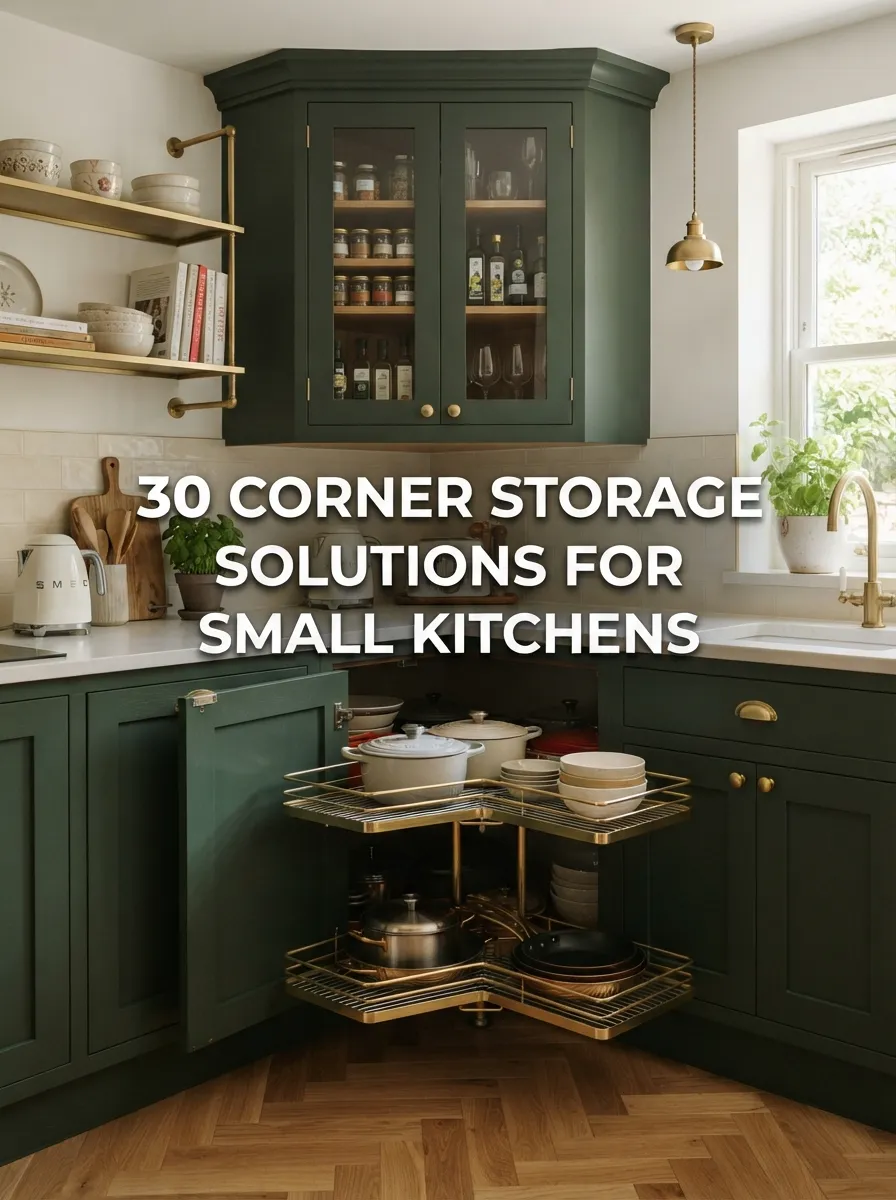
30 Corner Storage Solutions for Small Kitchens That Maximize Every Inch
Corner storage solutions for small kitchens transform wasted space into functional storage goldmines. Those awkward corner cabinets that swallow Tupperware lids and make you play hide-and-seek with your cookware? They don’t have to be black holes anymore. With smart corner storage systems, you can reclaim up to 50% more usable space in your compact kitchen.
Whether you’re dealing with a galley kitchen, L-shaped layout, or U-shaped design, corner areas present unique storage challenges and opportunities. This comprehensive guide reveals 30 proven corner storage solutions that professional organizers and interior designers use to maximize every square inch of small kitchen spaces.
Quick Takeaways
- Corner cabinets can waste 30-50% of their space without proper organizational systems
- Lazy Susans, pull-out shelves, and magic corner units recover previously unusable space
- Diagonal corner sinks and angled drawers turn awkward corners into functional work zones
- Corner shelving and floating solutions add storage without expensive cabinet renovations
- Smart corner storage solutions can increase kitchen storage capacity by 25-40%
Table of Contents
- Why Corner Storage Matters in Small Kitchens
- Cabinet-Based Corner Storage Solutions (1-10)
- Pull-Out and Carousel Systems (11-15)
- Diagonal and Angled Corner Solutions (16-20)
- Open Corner Storage Solutions (21-25)
- Creative Corner Storage Hacks (26-30)
- How to Choose the Right Corner Solution
- Installation and Measurement Tips
- Frequently Asked Questions
Why Corner Storage Matters in Small Kitchens
In small kitchens, every square inch counts—yet corners are often the most underutilized spaces. Standard corner cabinets can waste 30-50% of their interior volume due to poor accessibility. When you can’t reach items stored in the back, that space becomes essentially useless, creating what designers call “dead space.”
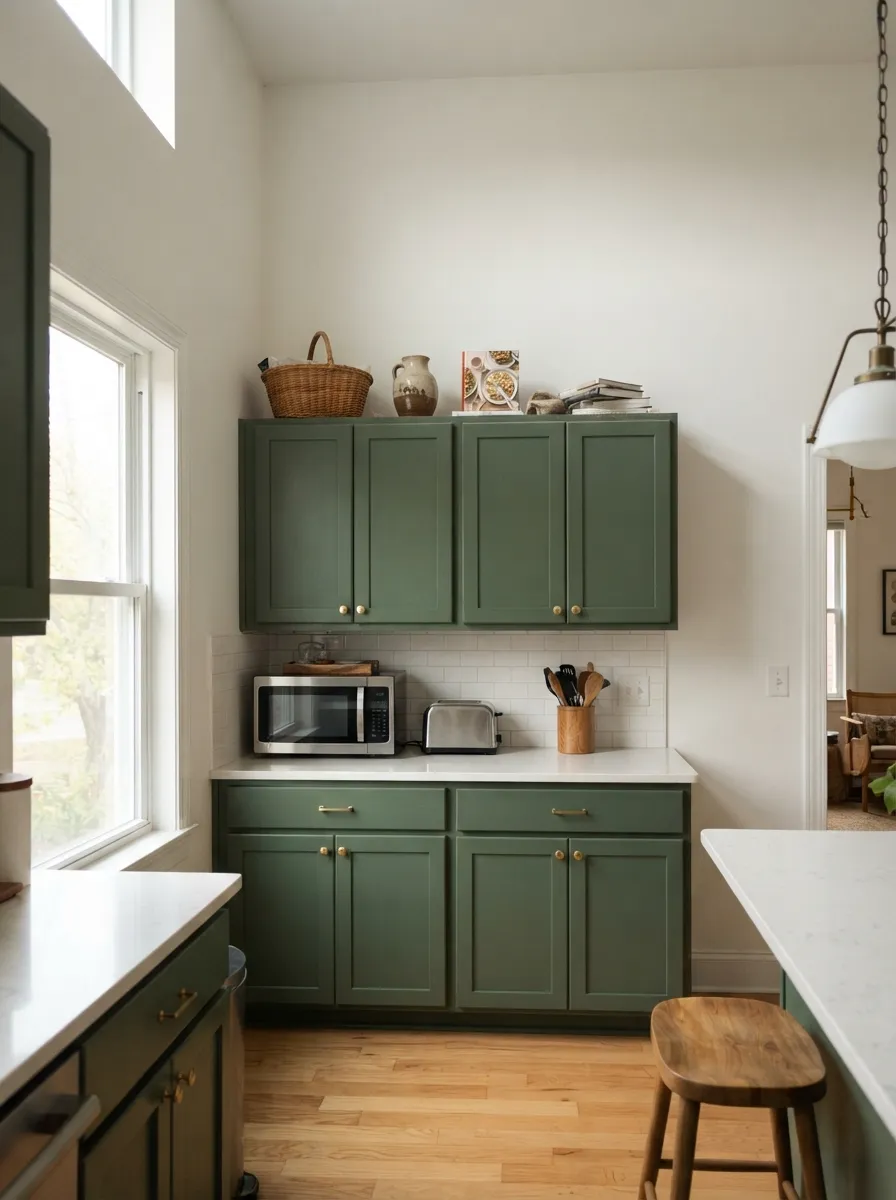
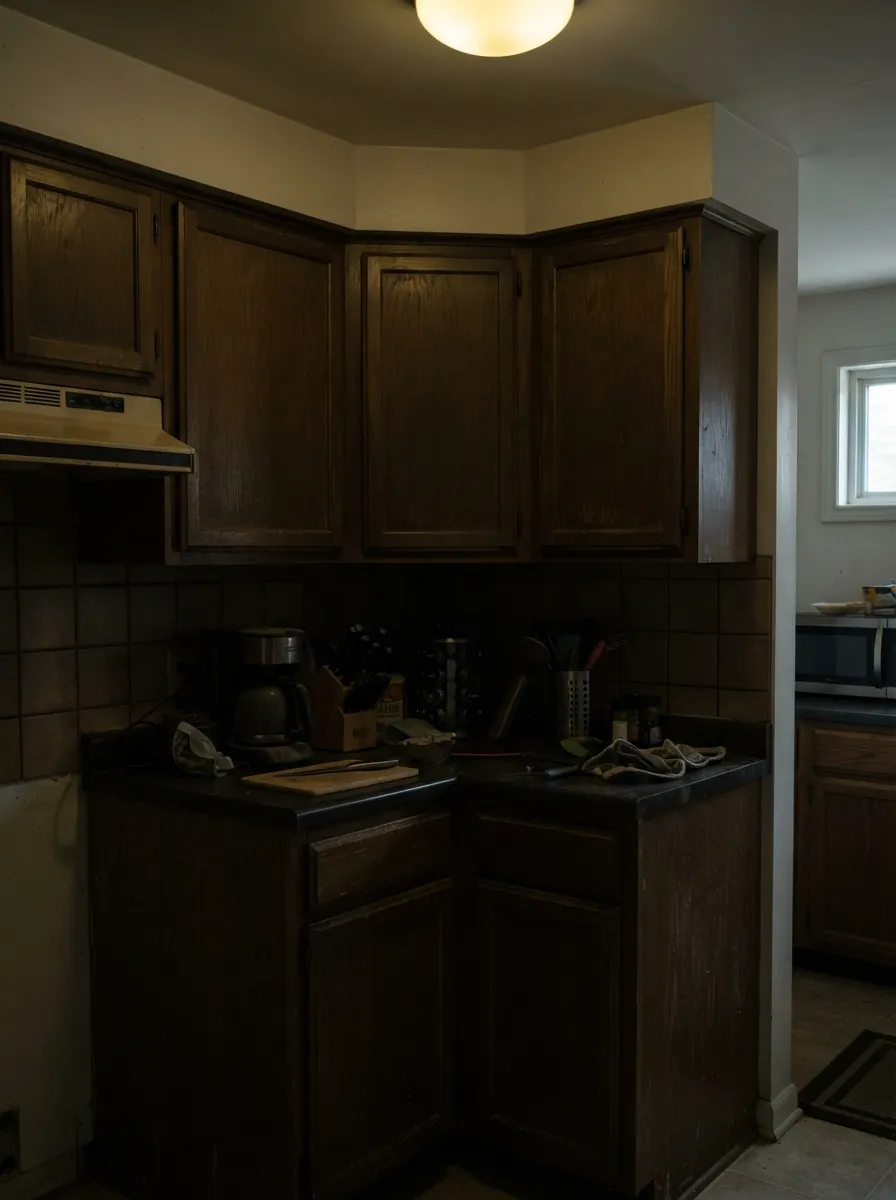
Corner cabinets without organizational systems waste valuable storage space in small kitchens
The Corner Storage Problem
Traditional corner cabinets present several challenges:
- Limited Accessibility: Deep corners require you to crawl inside to reach items
- Wasted Vertical Space: Items pile up and create single-layer storage
- Lost Items: Small items disappear into dark corners, never to be seen again
- Awkward Door Configurations: Cabinet doors compete for space and block access
- Poor Visibility: Dark corners make it impossible to see what you have
The Storage Impact
Properly organized corner storage can dramatically increase your kitchen’s capacity. A typical small kitchen has 2-4 corner areas that, when optimized, can provide:
- 25-40% more accessible storage space
- Room for 30-50 additional kitchen items
- Improved workflow efficiency by 15-20%
- Better organization and reduced clutter
- Enhanced kitchen functionality without renovation
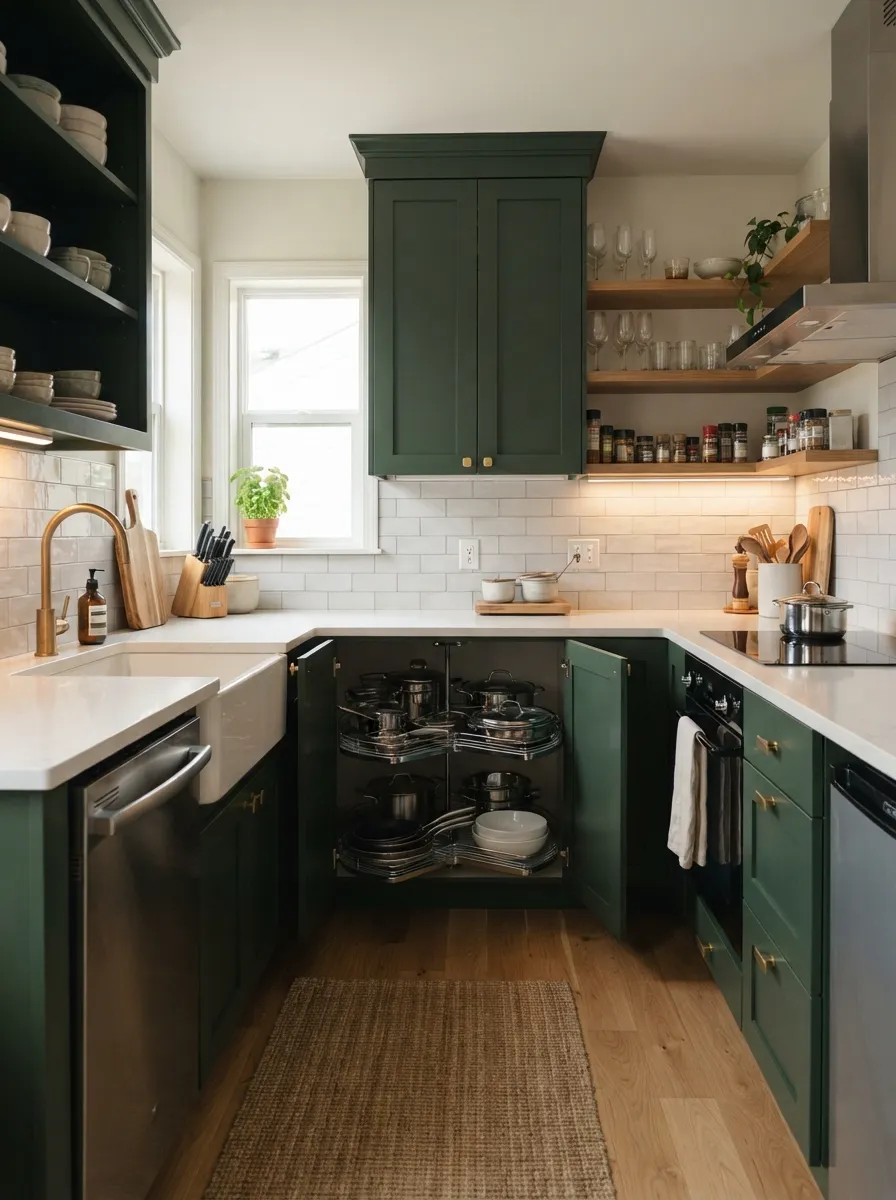
Smart corner storage solutions transform wasted space into highly functional storage areas
Understanding why corners matter is the first step. Now let’s explore specific solutions that turn these challenging spaces into storage powerhouses. For more kitchen organization strategies, check out our guide on small kitchen layout ideas.
Cabinet-Based Corner Storage Solutions (1-10)
Cabinet-based solutions are permanent installations that maximize corner cabinet functionality. These systems require installation during cabinet construction or as retrofits to existing cabinets.
1. Lazy Susan (Rotating Shelves)
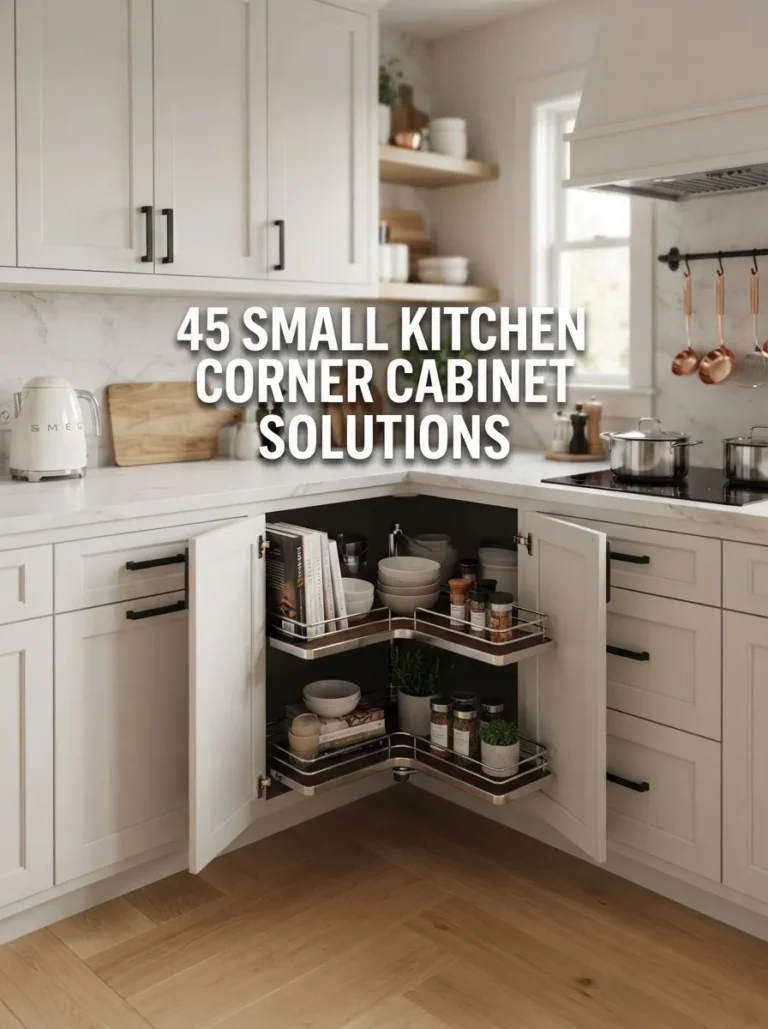
The classic Lazy Susan remains one of the most effective corner storage solutions. This rotating shelf system allows full access to items stored in deep corners with a simple spin.
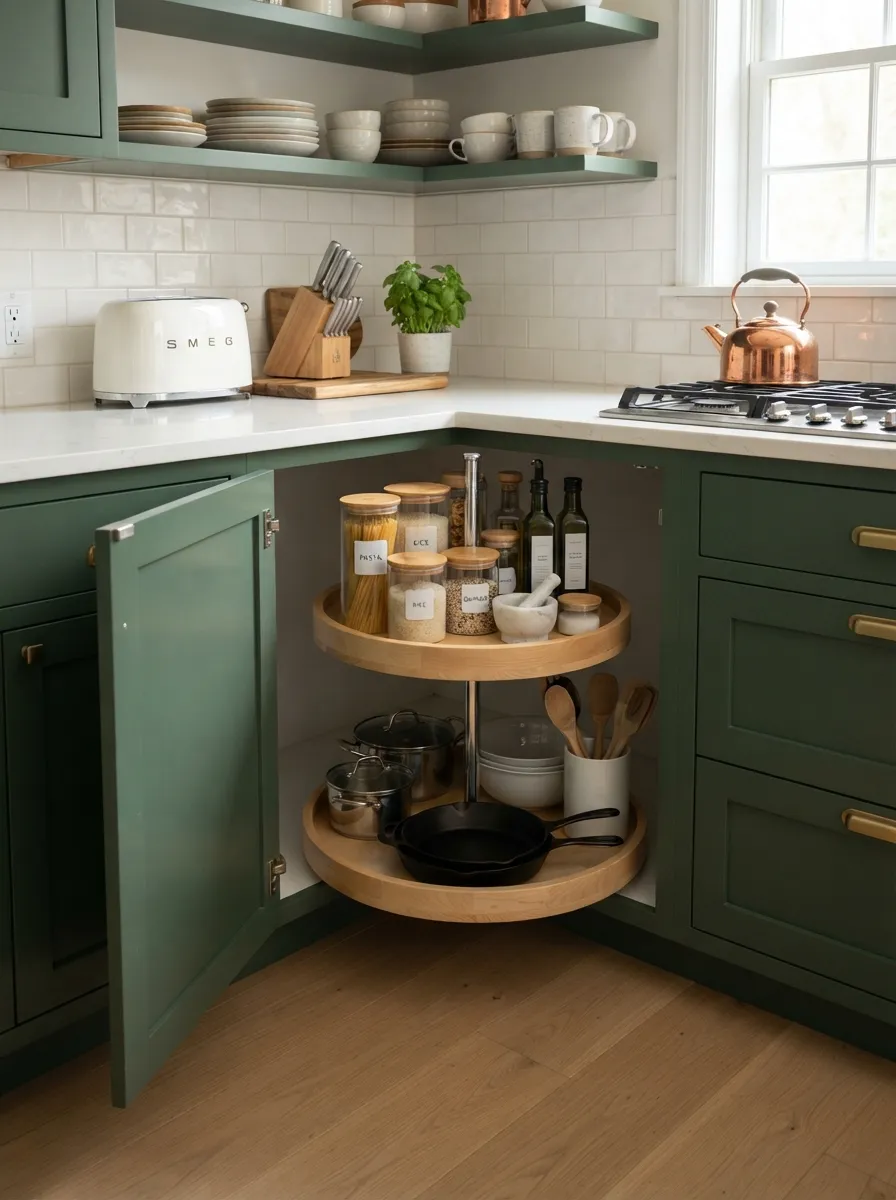
Lazy Susan systems provide 360-degree access to corner cabinet storage
- Full-Circle Lazy Susan: Complete rotating shelf ideal for canned goods and small appliances
- Kidney-Shaped Lazy Susan: D-shaped design that maximizes corner space while avoiding door interference
- Two-Tier Systems: Double the storage capacity with stacked rotating shelves
- Best For: Base corner cabinets storing pots, pans, mixing bowls, and dry goods
2. Magic Corner Pull-Out Systems
Magic corner systems are sophisticated pull-out mechanisms that bring deep corner contents to you. These premium solutions extract the entire contents of the corner with one pull.
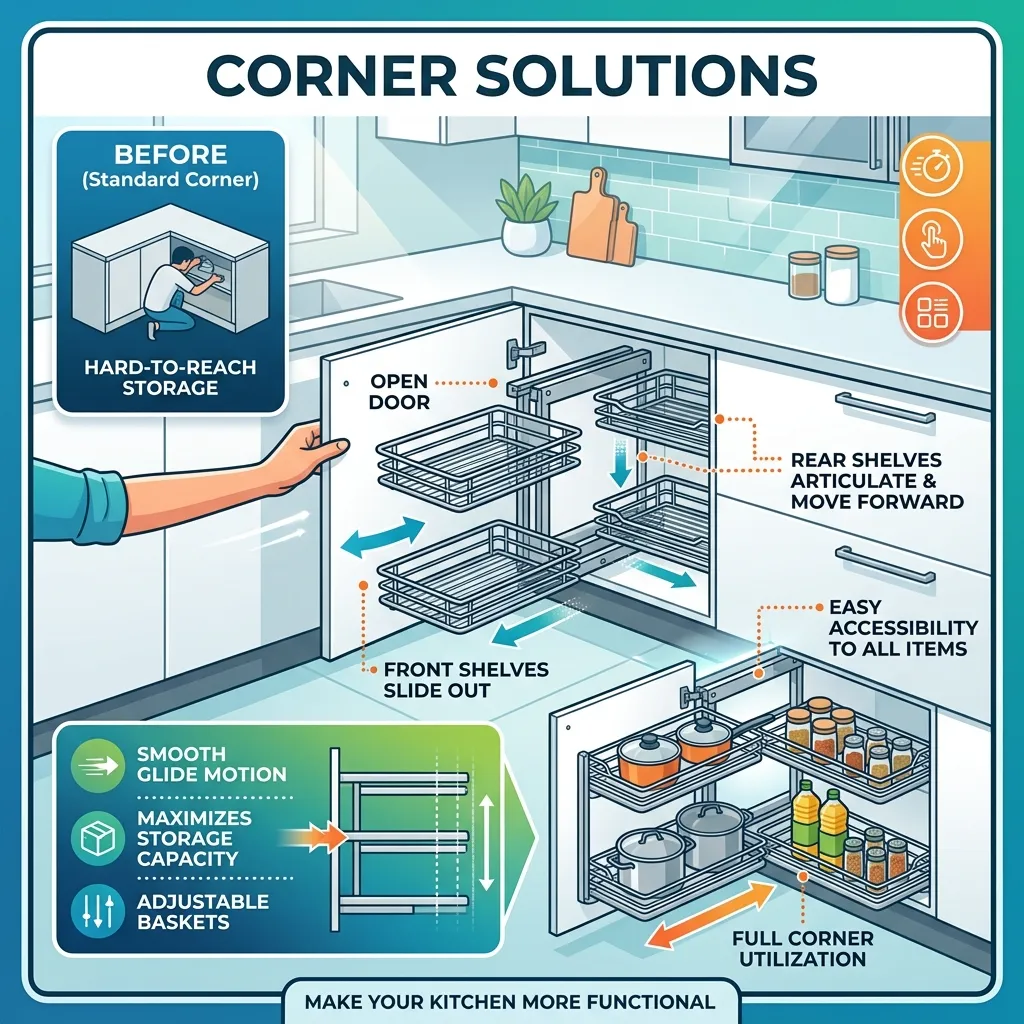
Magic corner systems pull out entire corner contents for easy access
- Dual basket system that swings out and forward
- Recovers up to 70% of corner space
- Smooth gliding mechanism for heavy items
- Typical capacity: 40-100 lbs depending on model
- Investment: $200-$600 per unit
3. Blind Corner Pull-Out Organizers
Blind corner organizers solve the problem of L-shaped cabinet configurations where one cabinet extends past the other, creating a blind spot.
- Single or double sliding baskets
- Extends fully for complete visibility
- Chrome wire or solid shelf options
- Easy retrofit installation
- Cost-effective alternative to magic corners ($100-$300)
Blind corner organizers slide out to reveal hidden storage space
4. Corner Drawer Systems
Revolutionary corner drawer systems replace traditional door-and-shelf cabinets with angled or curved drawers that maximize every inch.
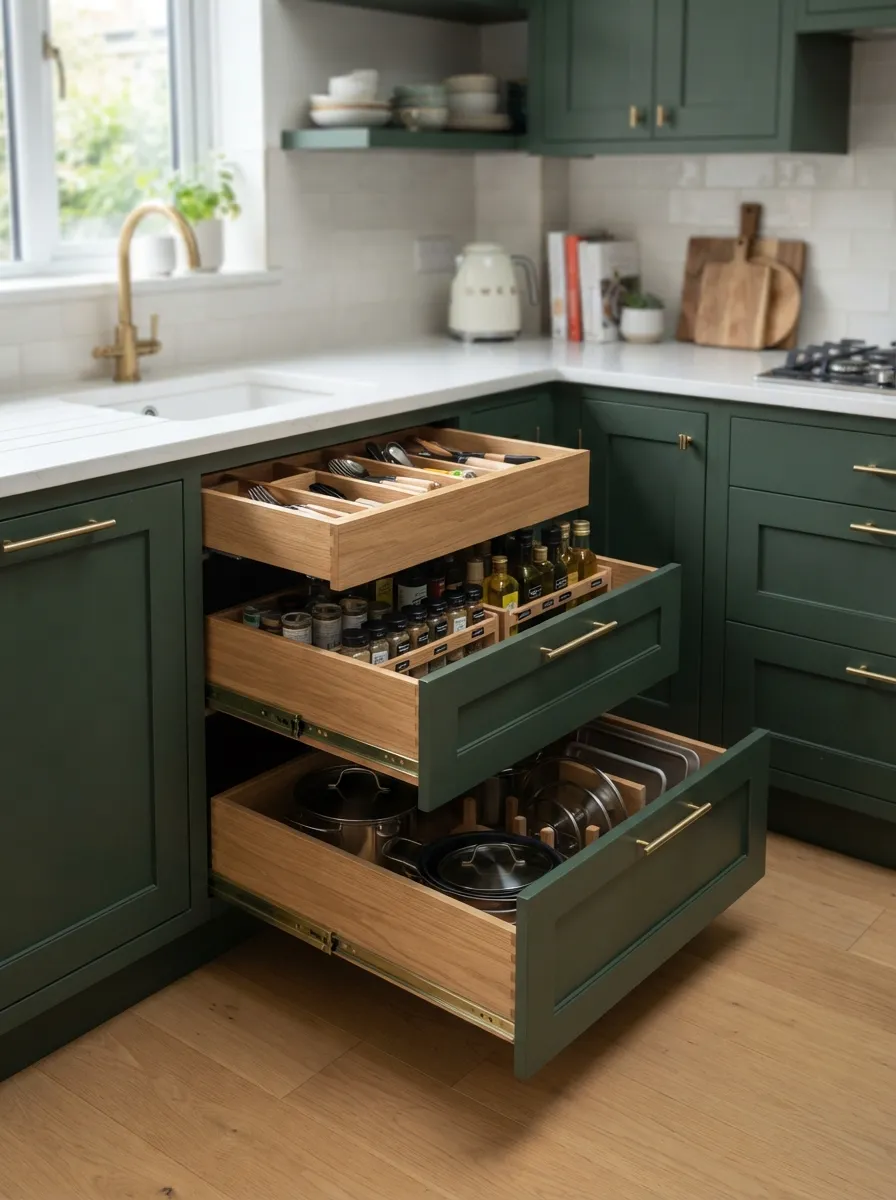
Corner drawer systems provide intuitive access to corner storage
- Diagonal Drawers: Angled drawers that follow the corner’s natural shape
- Curved Drawers: Rounded front drawers that sweep into the corner
- Trapezoid Drawers: Five-sided drawers designed for L-shaped corners
- Provide 90% accessibility versus 40% for standard corner cabinets
- Ideal for utensils, cooking tools, and small items
5. Diagonal Corner Cabinets
Diagonal corner cabinets feature angled doors that eliminate the deep, inaccessible corner pocket traditional cabinets create.
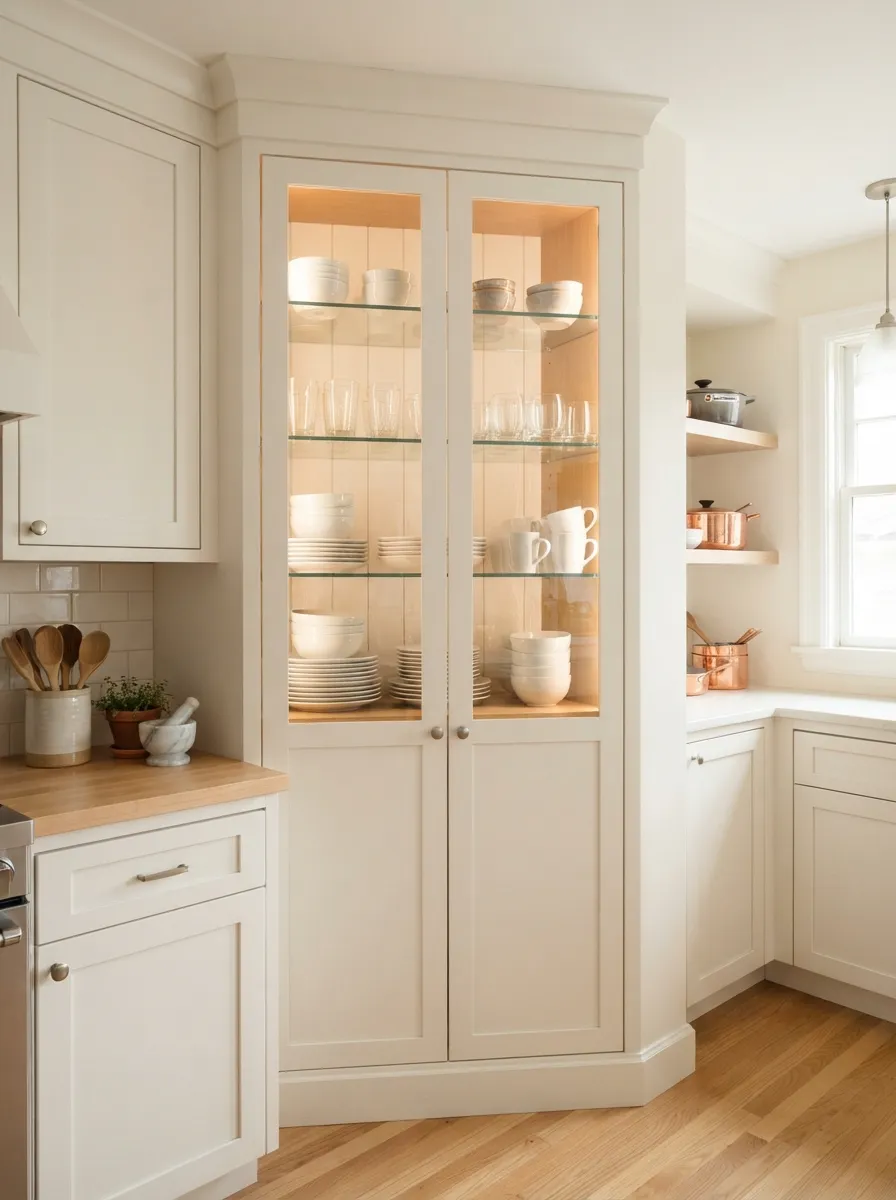
Diagonal corner cabinets eliminate deep, hard-to-reach spaces
- 45-degree angled door provides straight-on access
- Reduces wasted space by 30-40%
- Works well with standard shelving
- Cleaner aesthetic than traditional corner cabinets
- Excellent for displaying dishes in upper cabinets
6. Corner Pantry Cabinets
Floor-to-ceiling corner pantry cabinets transform awkward corners into substantial food storage areas.
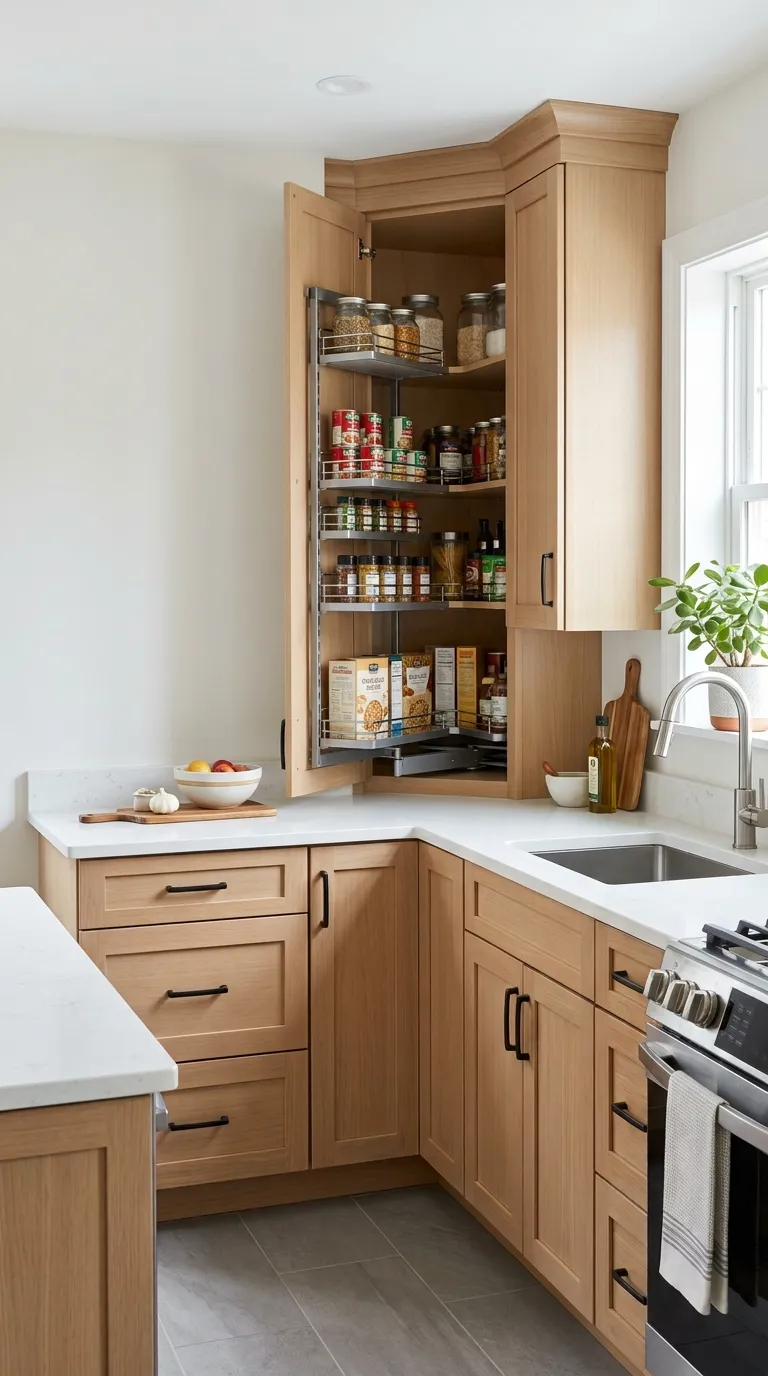
Corner pantry cabinets utilize vertical space for maximum food storage
- Tall cabinets (84-96 inches) maximize vertical space
- Multiple adjustable shelves accommodate various item heights
- Diagonal or angled doors improve accessibility
- Can store 3-4 times more than standard corner base cabinets
- Perfect for small kitchens lacking dedicated pantry space
7. Le Mans Corner Units
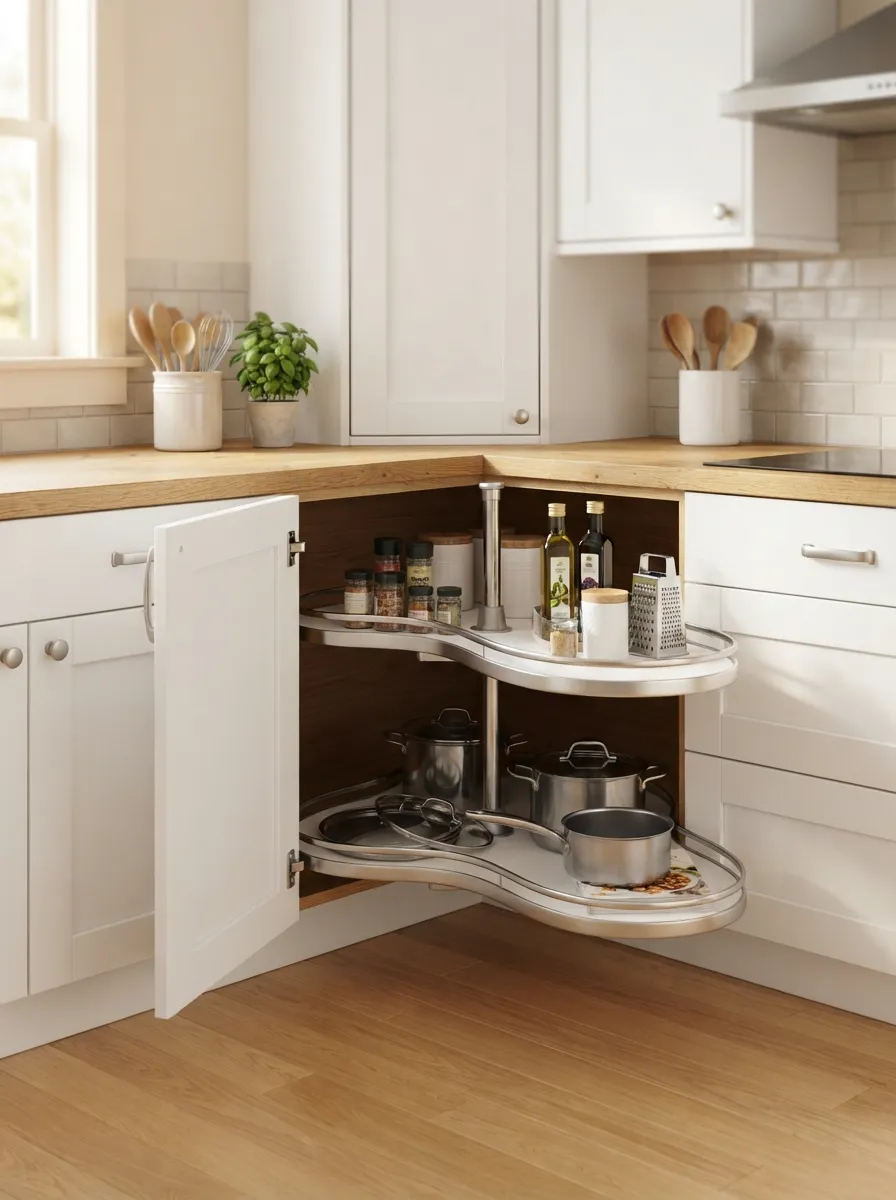
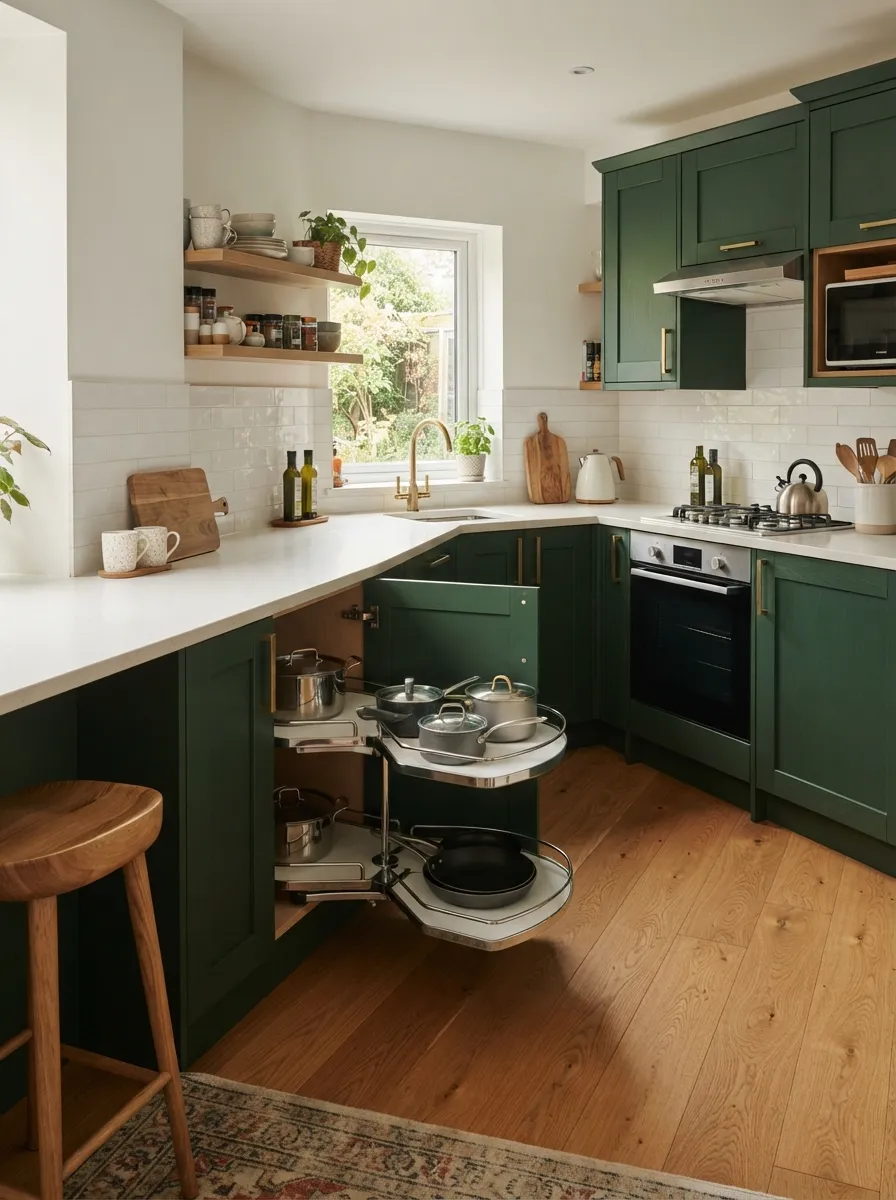
Named after the famous race track, Le Mans units feature curved pull-out shelves that swing around the corner in a smooth arc.
- Kidney-shaped shelves that rotate out and around
- Two or three-tier configurations available
- Smooth gliding mechanism with soft-close feature
- Provides visibility and access to 80% of corner space
- Premium option: $400-$800 per unit
8. Corner Appliance Garages
Corner appliance garages hide small appliances while keeping them easily accessible, perfect for toasters, coffee makers, and blenders.
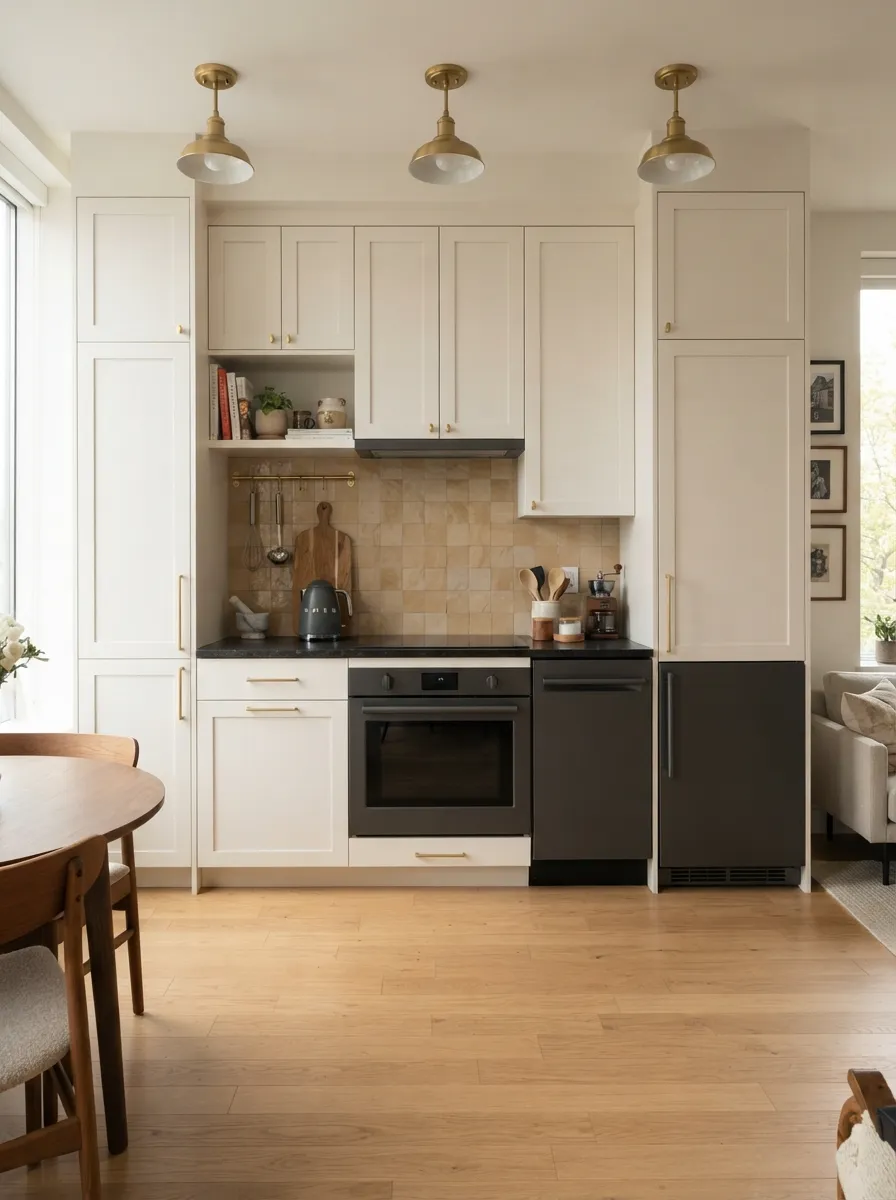
Corner appliance garages keep countertops clear while maintaining appliance accessibility
- Roll-up tambour doors or hinged doors
- Built-in outlets for plugged-in appliances
- Frees up 2-4 square feet of counter space
- Angled design fits corner perfectly
- Keeps appliances dust-free but ready to use
9. Corner Sink Base Cabinets
Positioning your sink in the corner frees up valuable straight-wall cabinet space for storage and creates an efficient work triangle.
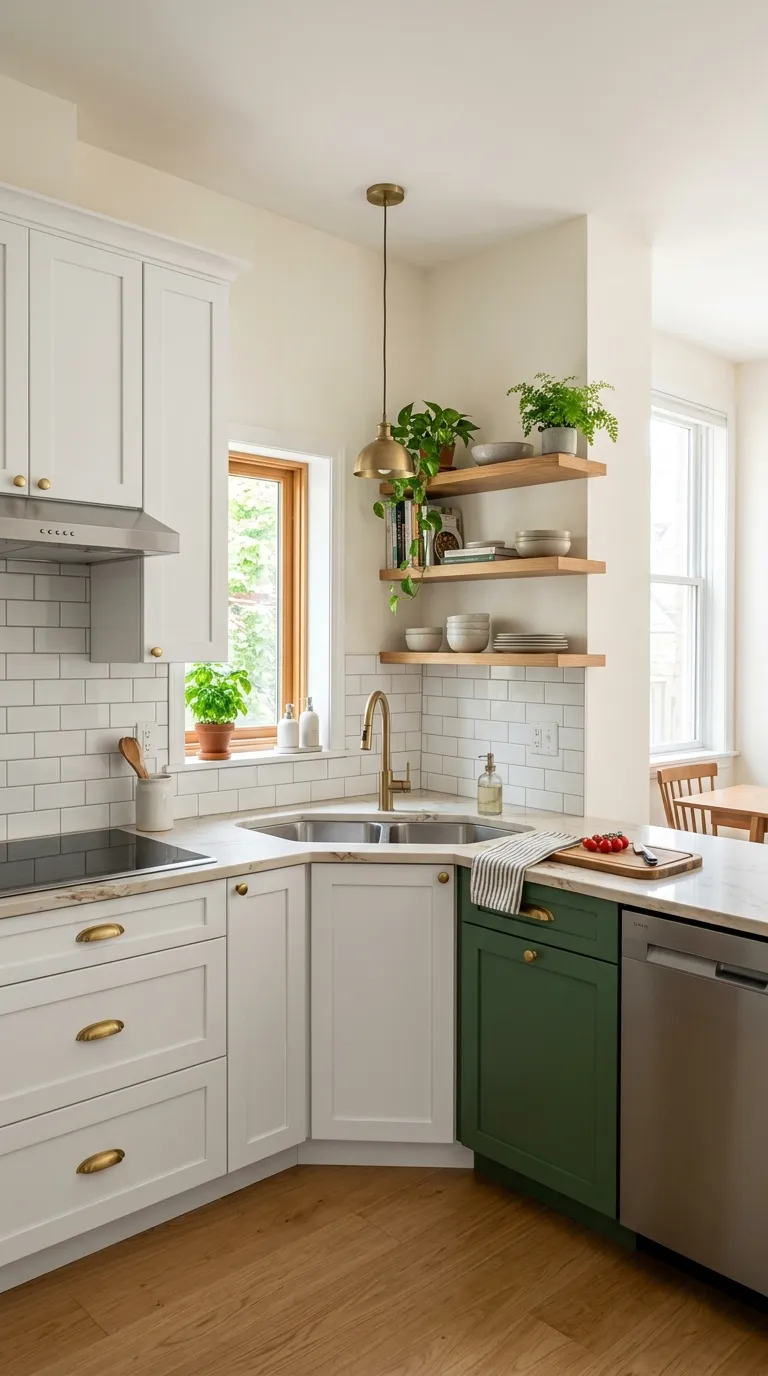
Corner sinks maximize straight-wall storage while utilizing difficult corner space
- Diagonal sink placement optimizes corner use
- Space below sink for pull-out trash/recycling
- Storage for cleaning supplies and dish soap
- Creates more continuous counter runs
- Improves kitchen workflow and efficiency
For more ideas on optimizing your kitchen layout, explore our guide on L-shaped kitchen designs.
10. Tiered Corner Shelf Inserts
Simple but effective, tiered shelf inserts create multiple levels within corner cabinets, preventing items from stacking and getting lost.
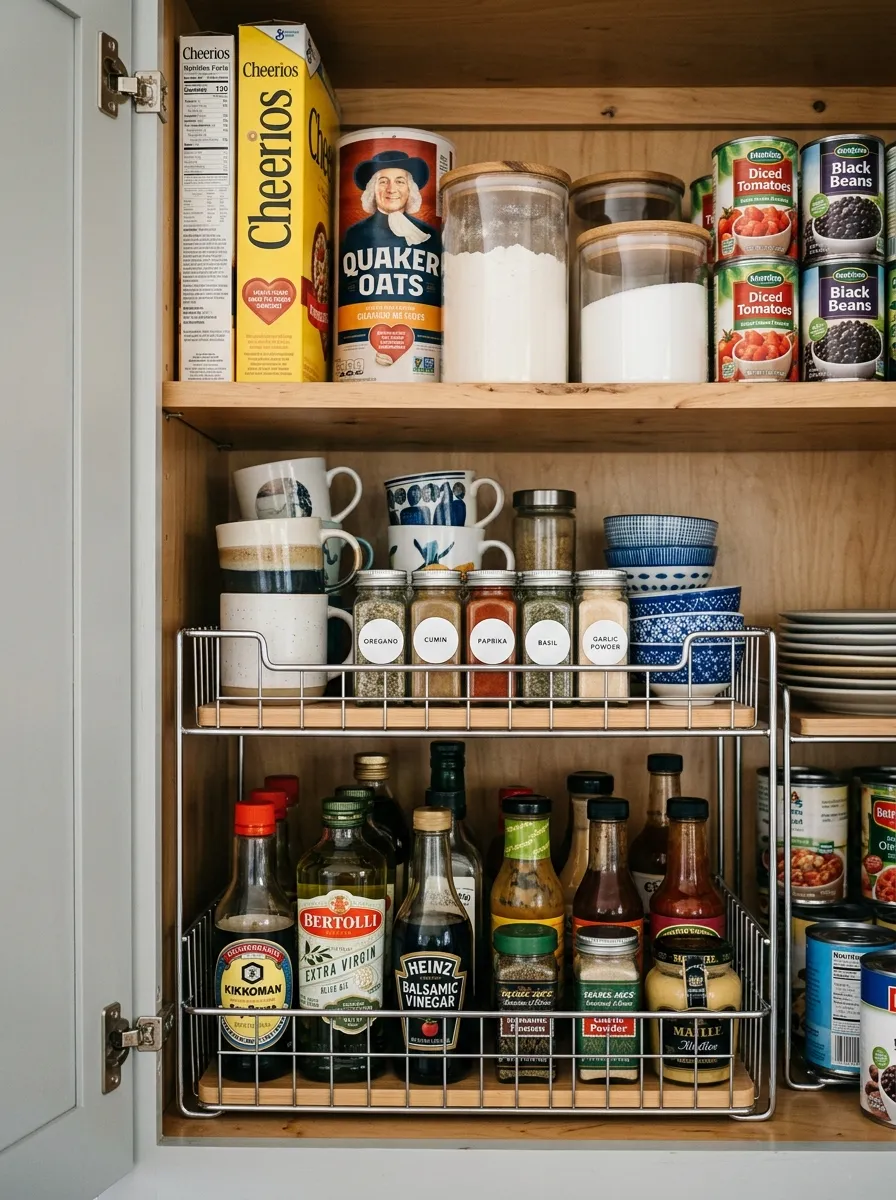
Tiered shelf inserts maximize vertical space in corner cabinets
- 2-3 tier expandable or fixed designs
- Plastic, bamboo, or metal construction
- No installation required—just place and use
- Budget-friendly: $15-$50
- Ideal for spices, canned goods, and small containers
- Easy to remove and clean
Pull-Out and Carousel Systems (11-15)
Pull-out and carousel systems bring corner contents to you, eliminating the need to reach deep into cabinets. These mechanical solutions offer superior accessibility and organization.
11. Swing-Out Corner Organizers
Swing-out organizers attach to cabinet doors and swing forward when opened, bringing corner contents into view.
- Two or three-shelf configurations
- 180-degree swing reveals all contents
- Chrome wire or polymer shelves
- Capacity: 30-50 lbs per unit
- Retrofit installation in 30-60 minutes
- Cost: $80-$200
Swing-out organizers bring deep corner storage into easy reach
12. Pull-Out Corner Baskets
Heavy-duty pull-out baskets slide smoothly on tracks, extending fully to expose all corner contents.
- Full-extension slides for complete access
- Chrome, stainless steel, or coated wire construction
- Single or double basket configurations
- Soft-close mechanisms prevent slamming
- Load capacity: 50-100 lbs
- Perfect for pots, pans, and heavy cookware
13. Two-Tier Carousel Systems
Double-decker carousel systems multiply corner storage capacity by adding a second rotating level.
Two-tier carousels double corner storage capacity with stacked rotating shelves
- Independent rotation on each tier
- Lower tier: 18-24 inches diameter
- Upper tier: 16-20 inches diameter
- Typically 24-28 inches total height
- Stores 40-60 items depending on size
- Ideal for spices, cans, jars, and boxes
14. Corner Pull-Out Pantry Systems
Tall pull-out pantry systems designed specifically for corners bring entire food storage areas into view with one motion.
- Floor-to-ceiling height (72-84 inches)
- Multiple adjustable shelves
- Angled or straight pull-out design
- Full visibility when extended
- Stores 100+ food items
- Premium investment: $500-$1,200
15. Kidney Bean Lazy Susans
Kidney bean-shaped Lazy Susans optimize corner cabinet space by conforming to the cabinet’s natural shape while avoiding door interference.
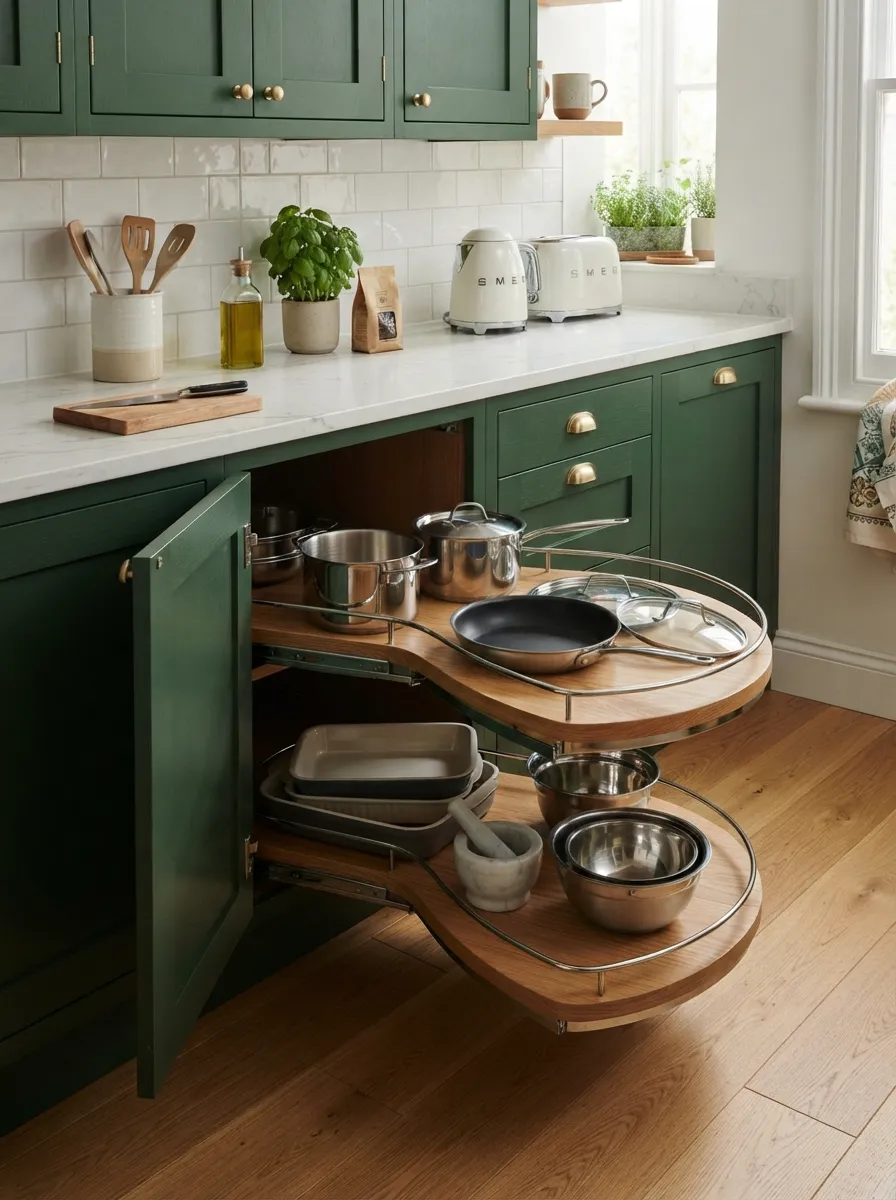
Kidney bean Lazy Susans maximize space while avoiding cabinet door conflicts
- D-shaped design fits perfectly in blind corners
- Rotates 360 degrees for full access
- Available in plastic, bamboo, or wood
- Typically 28-32 inches on longest side
- Easier to install than full-circle models
- Budget-friendly: $30-$80
These mechanical systems transform corner accessibility. Next, we’ll explore diagonal and angled solutions that architecturally reimagine corner spaces. For more small kitchen storage strategies, visit our cabinet design guide.
Diagonal and Angled Corner Solutions (16-20)
Diagonal and angled solutions approach corner storage architecturally, redesigning the space itself rather than adding organizational systems to existing cabinets.
16. 45-Degree Angled Corner Cabinets
Cabinets installed at 45-degree angles eliminate traditional corner pockets entirely, creating straight-on access from a diagonal approach.
45-degree angled cabinets provide direct access without awkward reaching
- Eliminates blind corners completely
- Standard shelf configuration works perfectly
- Clean, modern aesthetic
- Easier to clean and organize
- Reduces wasted space by 40-50%
- Ideal for contemporary kitchen designs
17. Corner Diagonal Drawers
Instead of doors, angled corner drawers provide intuitive pull-out access that follows the corner’s natural diagonal line.
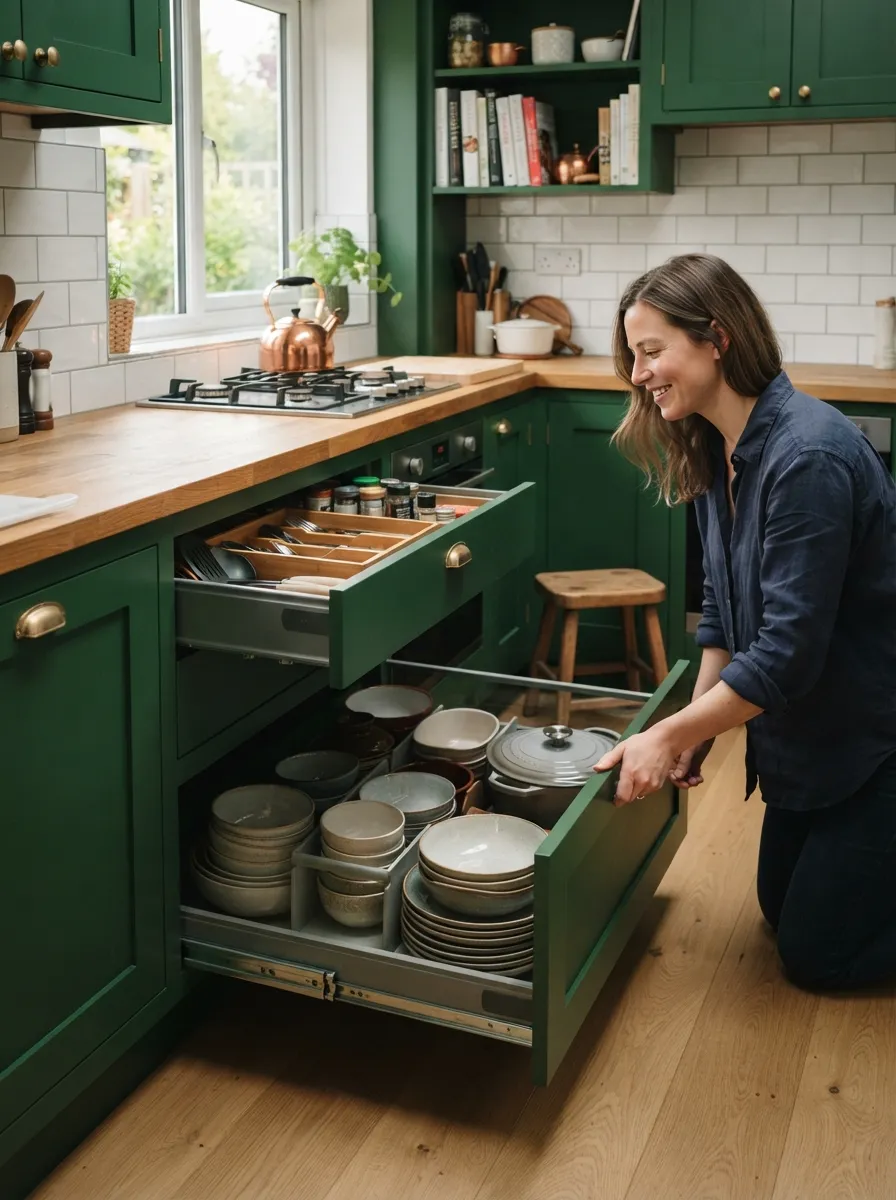
Diagonal corner drawers offer intuitive access to corner storage
- Drawers run diagonally across the corner
- Soft-close mechanisms standard
- Multiple drawer heights available
- Excellent for utensils, linens, and small items
- Modern, streamlined appearance
- 90% of space is accessible
18. Corner Sink with Angled Cabinet Below
Positioning sinks diagonally in corners opens up straight wall runs while the angled cabinet below provides surprisingly functional storage.
Diagonal corner sinks maximize counter space while providing accessible storage below
- Frees up 3-5 linear feet of wall space
- Creates more continuous work surfaces
- Angled storage below for cleaning supplies
- Improves workflow triangle efficiency
- Works beautifully in L-shaped kitchens
- Natural placement for windows above
19. Trapezoid Corner Shelving
Open trapezoid shelving units designed specifically for corners provide display and storage without the bulk of full cabinets.
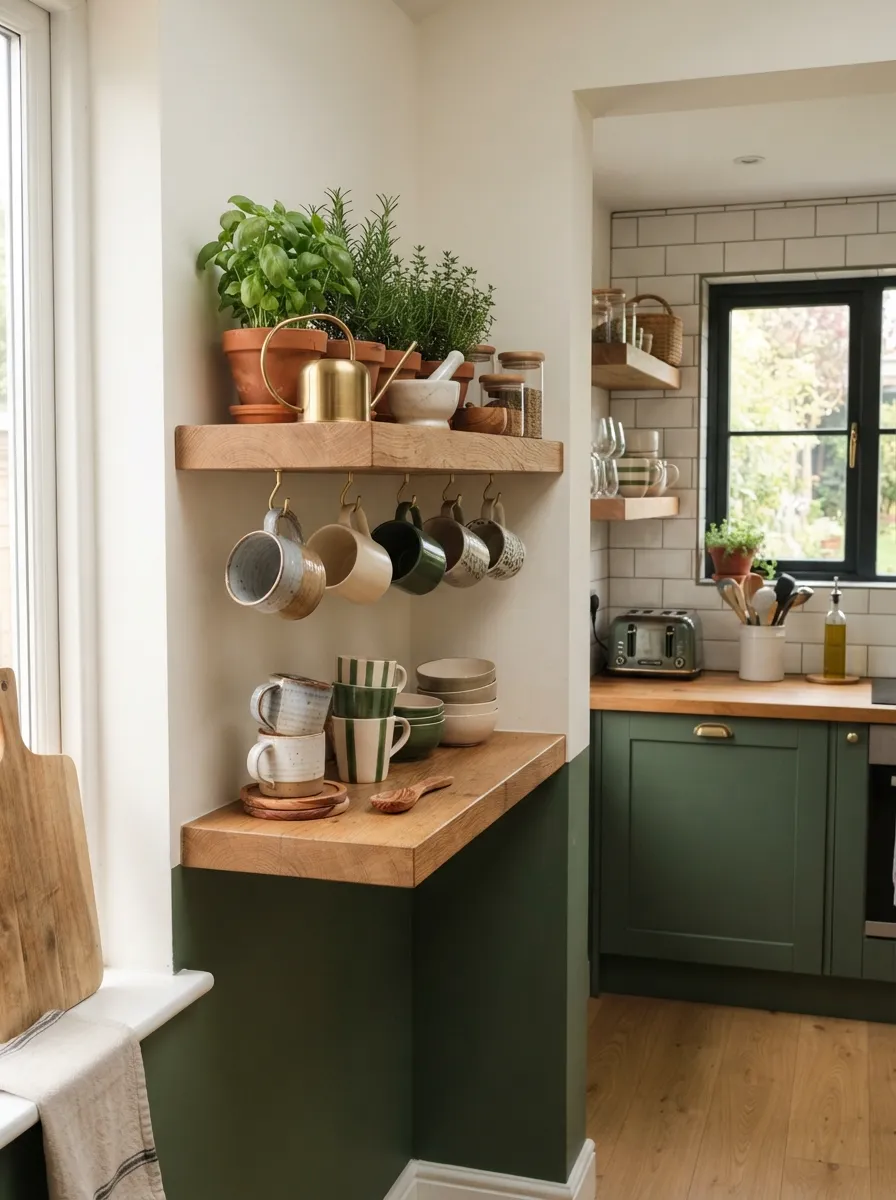
Trapezoid corner shelves provide open storage and display space
- Five-sided shelves fit perfectly in 90-degree corners
- Multiple shelf heights create visual interest
- Perfect for displaying dishes, plants, cookbooks
- Makes small kitchens feel more open
- Wood, metal, or glass construction
- DIY-friendly installation
20. Angled Corner Breakfast Bar
Extending countertops diagonally across corners creates casual dining space while eliminating awkward corner cabinets.
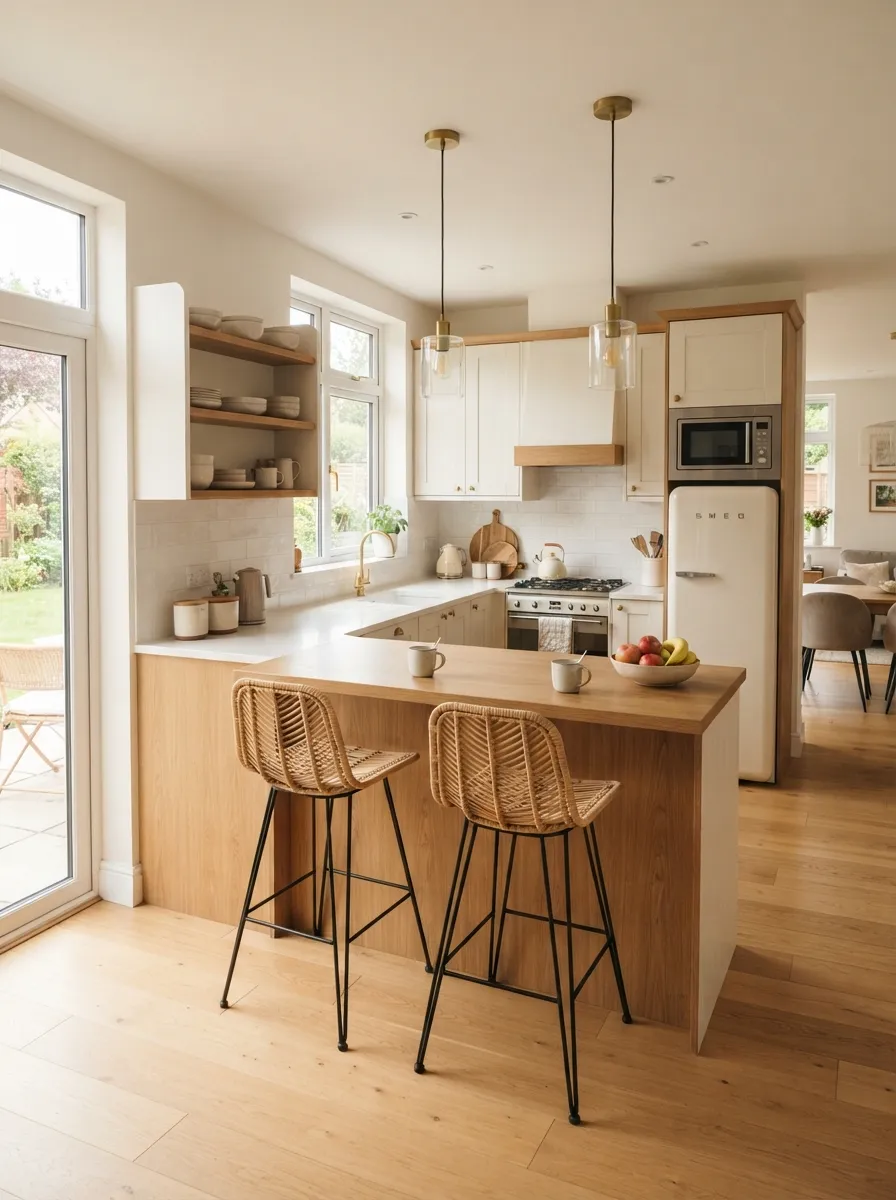
Angled corner breakfast bars add seating while simplifying corner storage
- Seats 2-3 people comfortably
- Eliminates difficult corner cabinet access
- Open base can house barstools when not in use
- Creates visual flow in small kitchens
- Optional lower shelving for cookbook storage
- Multifunctional space for eating, working, or food prep
Diagonal solutions fundamentally reimagine how corners function in small kitchens. Learn more about maximizing your layout in our small kitchen layout guide.
Open Corner Storage Solutions (21-25)
Open storage solutions trade cabinet doors for accessibility and visual appeal, making small kitchens feel larger while providing functional corner storage.
21. Floating Corner Shelves
Floating corner shelves attach directly to walls without visible brackets, creating clean, modern storage that doesn’t overwhelm small spaces.
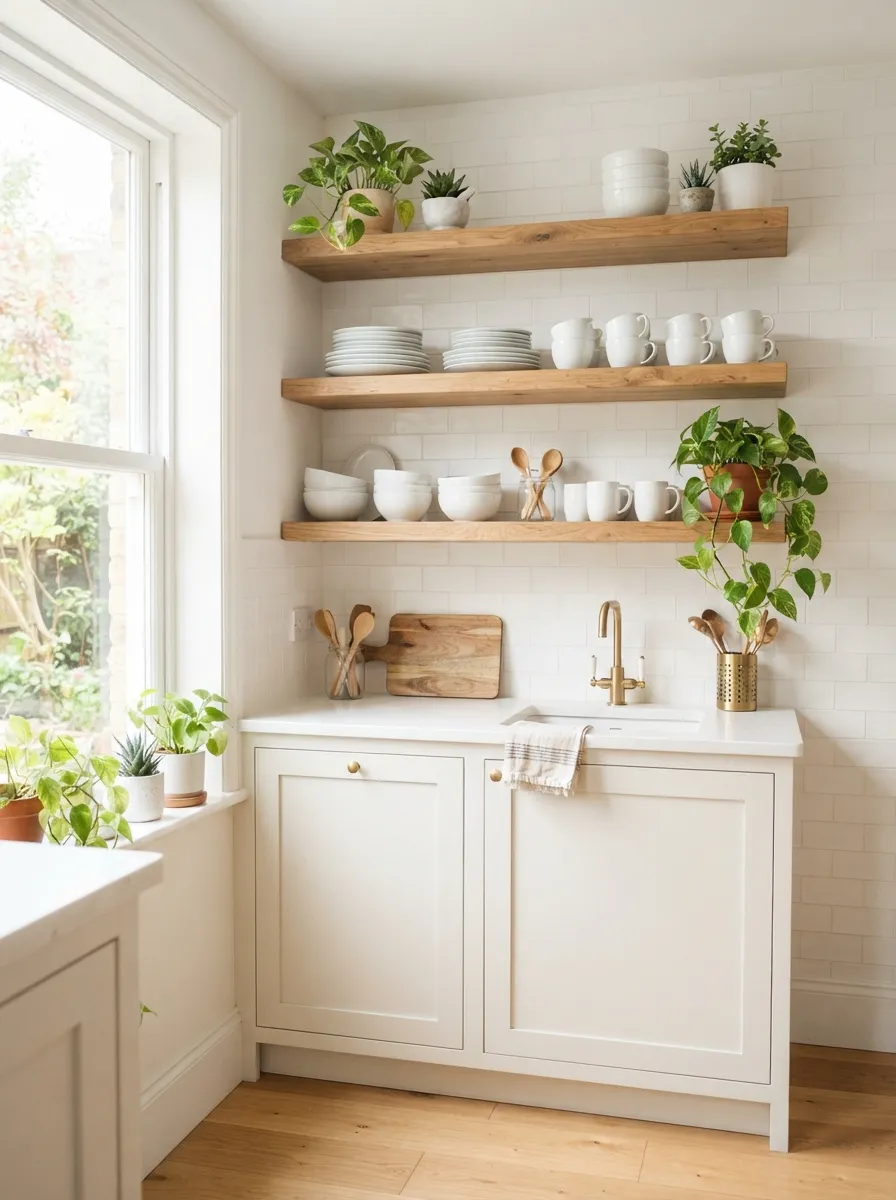
Floating corner shelves provide storage without the visual weight of cabinets
- L-shaped or wraparound corner designs
- Wood, glass, or metal construction
- Typical depth: 8-12 inches
- Hidden mounting brackets for clean look
- Perfect for frequently used items
- Makes small kitchens feel more spacious
- Budget-friendly: $20-$80 per shelf
22. Corner Pot Racks
Ceiling-mounted or wall-mounted corner pot racks free up cabinet space while displaying attractive cookware.
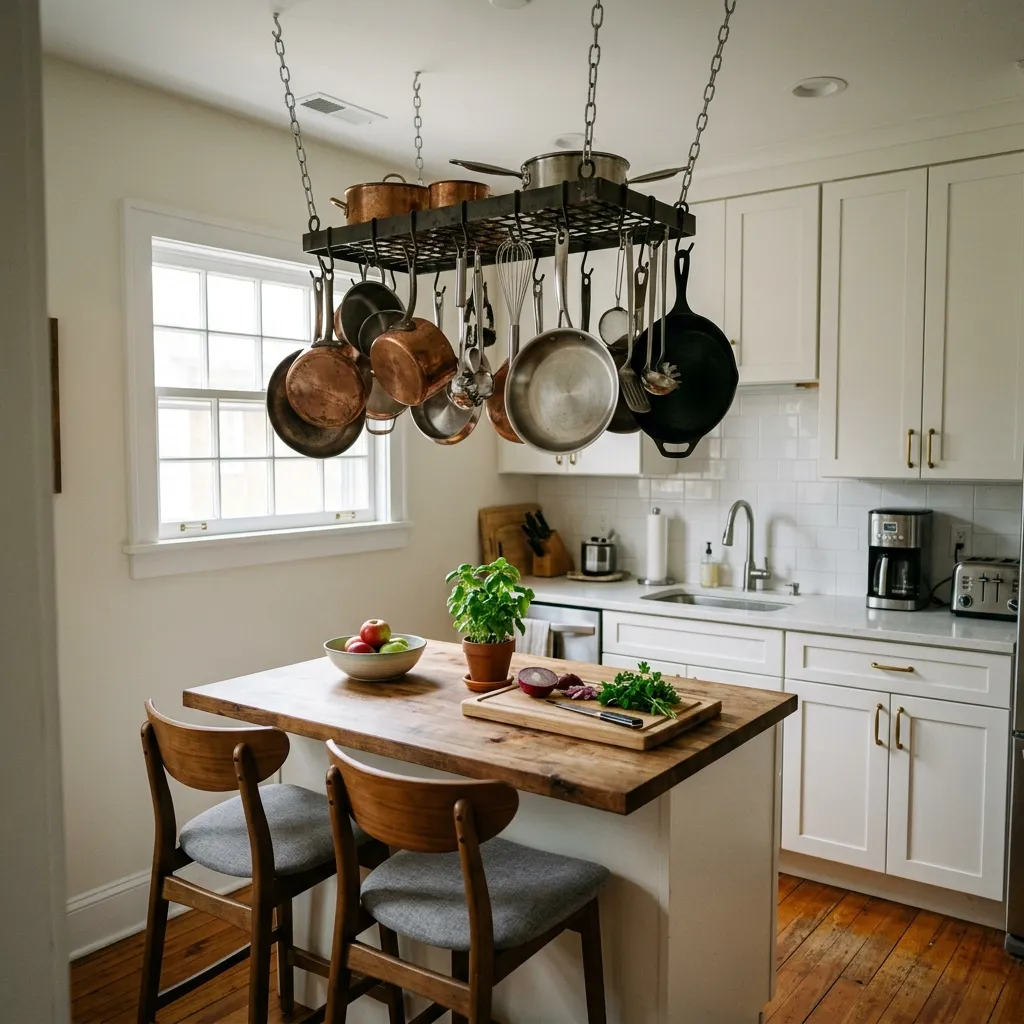
Corner pot racks utilize ceiling space while freeing cabinet storage
- Utilizes unused ceiling space
- Holds 8-12 pots and pans
- Iron, stainless steel, or brass construction
- Includes hooks for utensils
- Creates chef-inspired aesthetic
- Requires secure ceiling joist mounting
23. Corner Baker’s Rack
Freestanding baker’s racks fit perfectly in corners, providing multi-level open storage for appliances, dishes, and pantry items.
- 3-5 shelf levels typical
- Metal or wood construction
- No installation required
- Mobile—can be repositioned as needed
- Adds vertical storage without renovation
- Vintage or industrial style options
- Cost: $60-$250
24. Corner Hanging Rail System
Wall-mounted rail systems with S-hooks create customizable corner storage for utensils, pots, and kitchen tools.
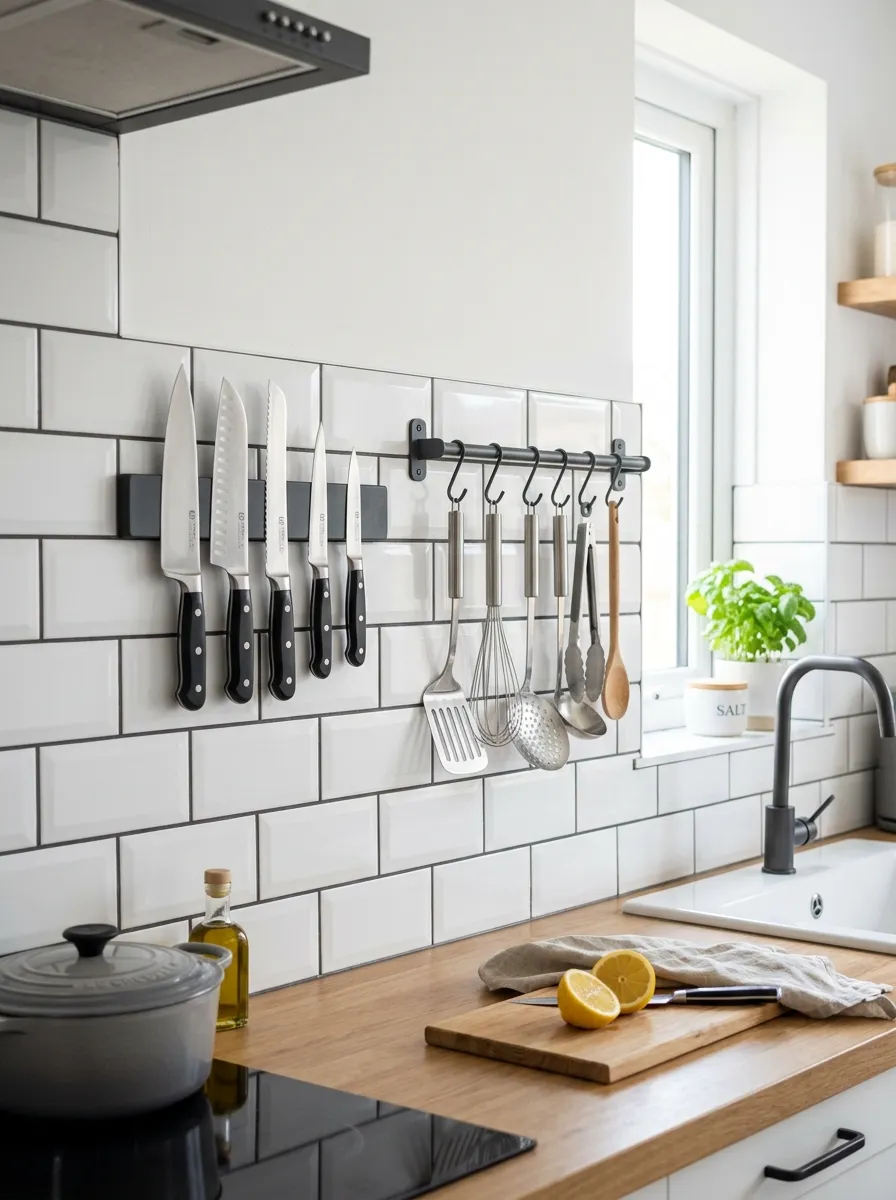
Corner rail systems provide flexible, customizable tool storage
- Stainless steel or brass rails
- Wraparound corner configuration
- S-hooks, baskets, and magnetic attachments
- Keeps tools within arm’s reach
- Professional kitchen aesthetic
- Easy installation: 30 minutes
25. Corner Glass-Front Cabinets
While technically cabinets, glass-front versions function like open storage by maintaining visibility while protecting contents from dust.
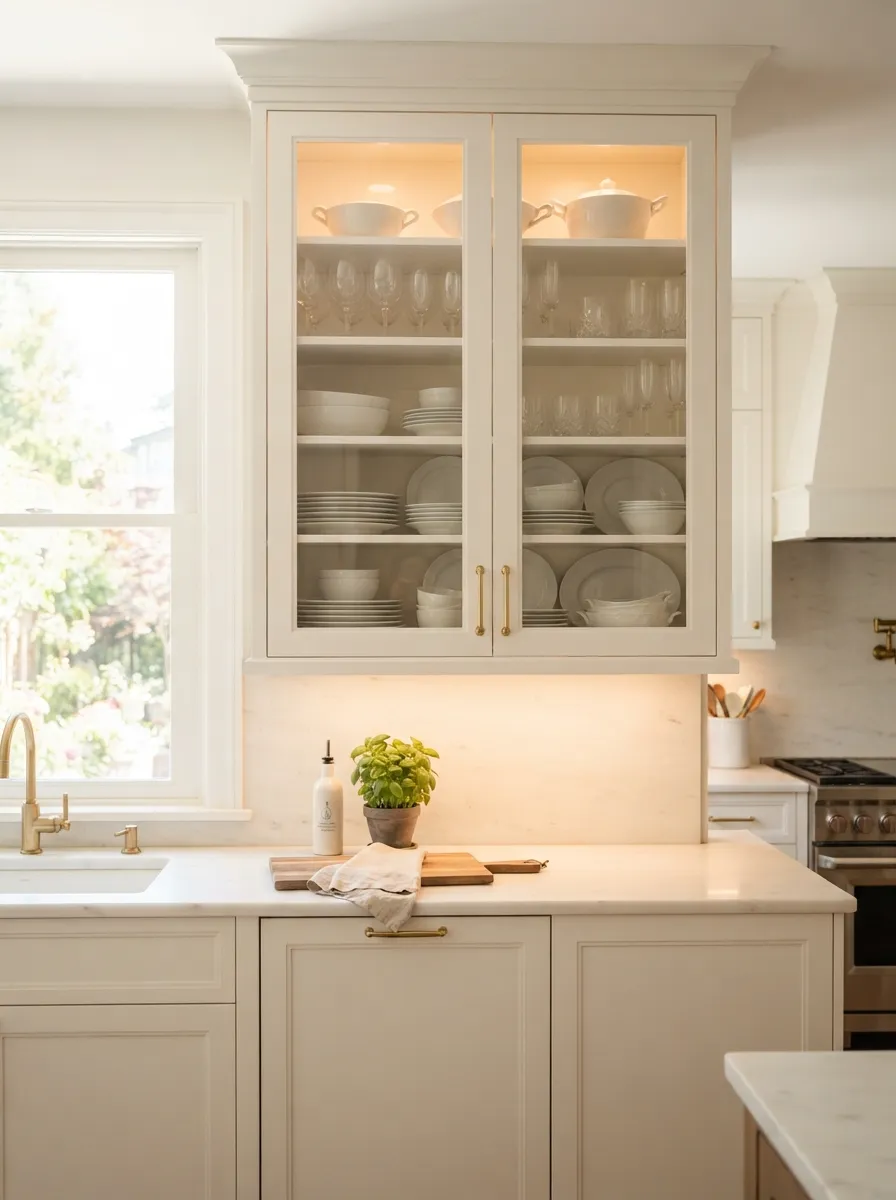
Glass-front corner cabinets combine protection with open-storage visibility
- Clear or seeded glass options
- Display attractive dishware and glassware
- Makes kitchens feel larger and brighter
- Interior lighting creates ambiance
- Encourages organized storage
- Works in traditional and modern designs
Open storage solutions make small kitchens feel more spacious and accessible. For more design ideas, check out our guide on modern small kitchen designs.
Creative Corner Storage Hacks (26-30)
Sometimes the best corner storage solutions come from creative thinking rather than expensive installations. These innovative hacks maximize corner space with minimal investment.
26. Tension Rod Divider System
Spring-loaded tension rods installed vertically in corner cabinets create adjustable dividers for organizing baking sheets, cutting boards, and serving trays.
- No installation tools required
- Adjustable positioning
- Vertical storage saves 50% more space
- Perfect for flat items
- Cost: $10-$20 per rod
- Can be easily repositioned
27. Stackable Corner Bins
Clear stackable bins with pull-out handles organize corner cabinets into manageable, visible storage units.
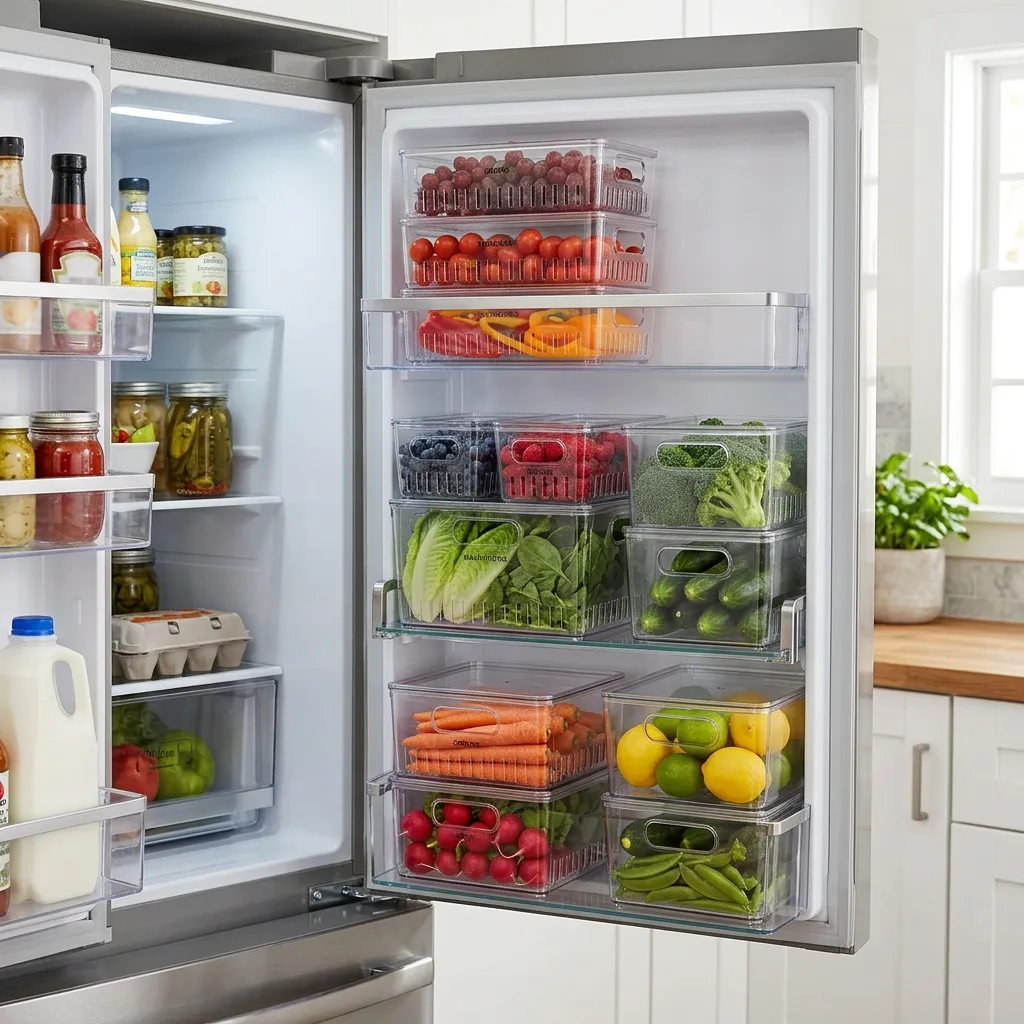
Stackable bins create organized zones in deep corner cabinets
- Clear plastic shows contents at a glance
- Front handles for easy pulling
- Stackable design maximizes vertical space
- Various sizes for different items
- Dishwasher safe for easy cleaning
- Budget-friendly: $5-$15 per bin
28. Pegboard Corner Panel
Installing pegboard in corner spaces creates infinitely customizable storage for tools, utensils, and small items.
- Custom-cut to fit corner dimensions
- Hooks and baskets rearrange as needed
- Paint to match kitchen decor
- Vertical and horizontal storage
- DIY installation in 1-2 hours
- Total cost: $20-$50
29. Rolling Corner Cart
Slim rolling carts designed for corner spaces provide mobile storage that pulls out when needed and tucks away when not in use.
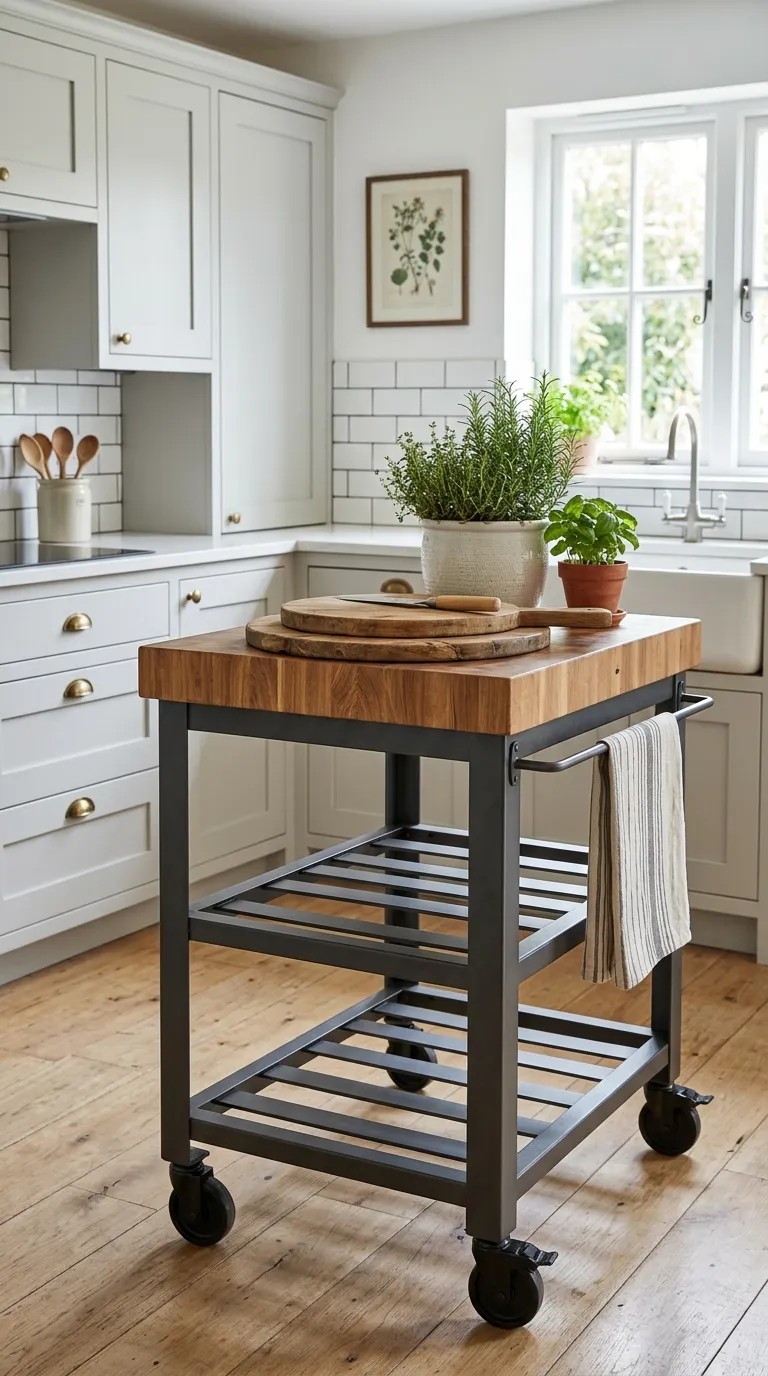
Rolling corner carts offer flexible storage that adapts to your needs
- Triangular or L-shaped designs for corners
- Multiple shelf levels
- Locking casters for stability
- Slim profile (10-15 inches wide)
- Metal or wood construction
- Cost: $40-$150
30. Magnetic Strip Corner Storage
Magnetic strips mounted in inside corners hold knives, metal utensils, and spice tins, utilizing vertical space that’s otherwise wasted.
Magnetic strips transform inside corners into tool storage
- Stainless steel or wood-covered magnets
- 16-24 inch lengths typical
- Holds 5-8 knives or 10-15 utensils
- Easy wall mounting
- Keeps sharp tools safely stored
- Budget option: $15-$40
These creative solutions prove that maximizing corner storage doesn’t always require expensive installations. Sometimes ingenuity works better than investment. Explore more budget-friendly ideas in our simple kitchen designs guide.
How to Choose the Right Corner Storage Solution
With 30 options, selecting the right corner storage solution for your small kitchen depends on several key factors. Here’s how to make the best choice for your space and budget.
Assess Your Corner Type
Different corner configurations require different solutions:
- Blind Corners (L-shaped): Magic corners, blind corner pull-outs, or kidney Lazy Susans work best
- 90-Degree Corners: Standard Lazy Susans, diagonal cabinets, or corner drawers
- Upper Corners: Diagonal cabinets, glass-front displays, or open shelving
- Pantry Corners: Tall pull-out systems or corner pantry cabinets
- Open Floor Plan Corners: Angled breakfast bars or peninsula extensions
Consider Your Budget
Corner storage solutions range from $10 DIY hacks to $1,200 premium installations:
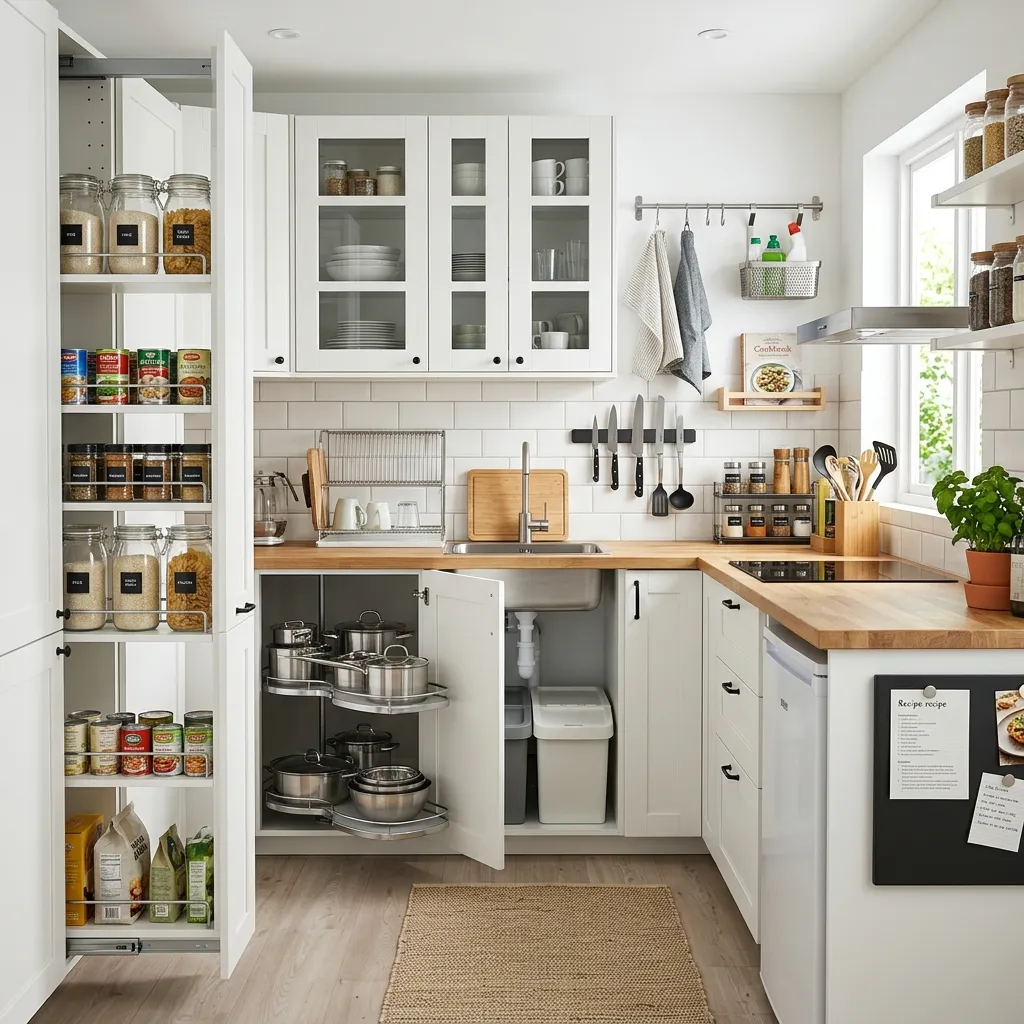
Corner storage solutions available at every budget level
- Under $50: Tiered shelves, stackable bins, tension rods, magnetic strips
- $50-$200: Lazy Susans, swing-out organizers, floating shelves, rolling carts
- $200-$500: Blind corner pull-outs, Le Mans units, corner drawer retrofits
- $500+: Magic corner systems, custom corner cabinets, tall pull-out pantries
Match Solution to Contents
What you’re storing determines the best solution:
- Heavy Pots and Pans: Pull-out baskets with heavy-duty slides (75-100 lb capacity)
- Dry Goods and Cans: Two-tier Lazy Susans or corner pantry pull-outs
- Small Appliances: Corner appliance garages or deep drawers
- Dishes and Glassware: Diagonal glass-front cabinets or open shelving
- Utensils and Tools: Corner drawers, magnetic strips, or hanging rails
- Cleaning Supplies: Under-sink corner pull-outs or swing-out organizers
Evaluate Installation Complexity
Consider your DIY skills and available time:
- No Installation Required: Tiered inserts, stackable bins, freestanding baker’s racks
- Simple DIY (1-2 hours): Floating shelves, magnetic strips, pegboard, Lazy Susans
- Moderate DIY (2-4 hours): Pull-out basket retrofits, swing-out organizers
- Professional Installation: Magic corners, corner drawer systems, diagonal cabinets
Think Long-Term
Some solutions offer better long-term value:
- Permanent Solutions: Diagonal cabinets, corner drawer systems—add home value
- Transferable Solutions: Lazy Susans, pull-out baskets—take with you when moving
- Temporary Solutions: Bins, shelves, racks—good for rentals
- Maintenance Needs: Ball-bearing slides last decades; plastic organizers may need replacement
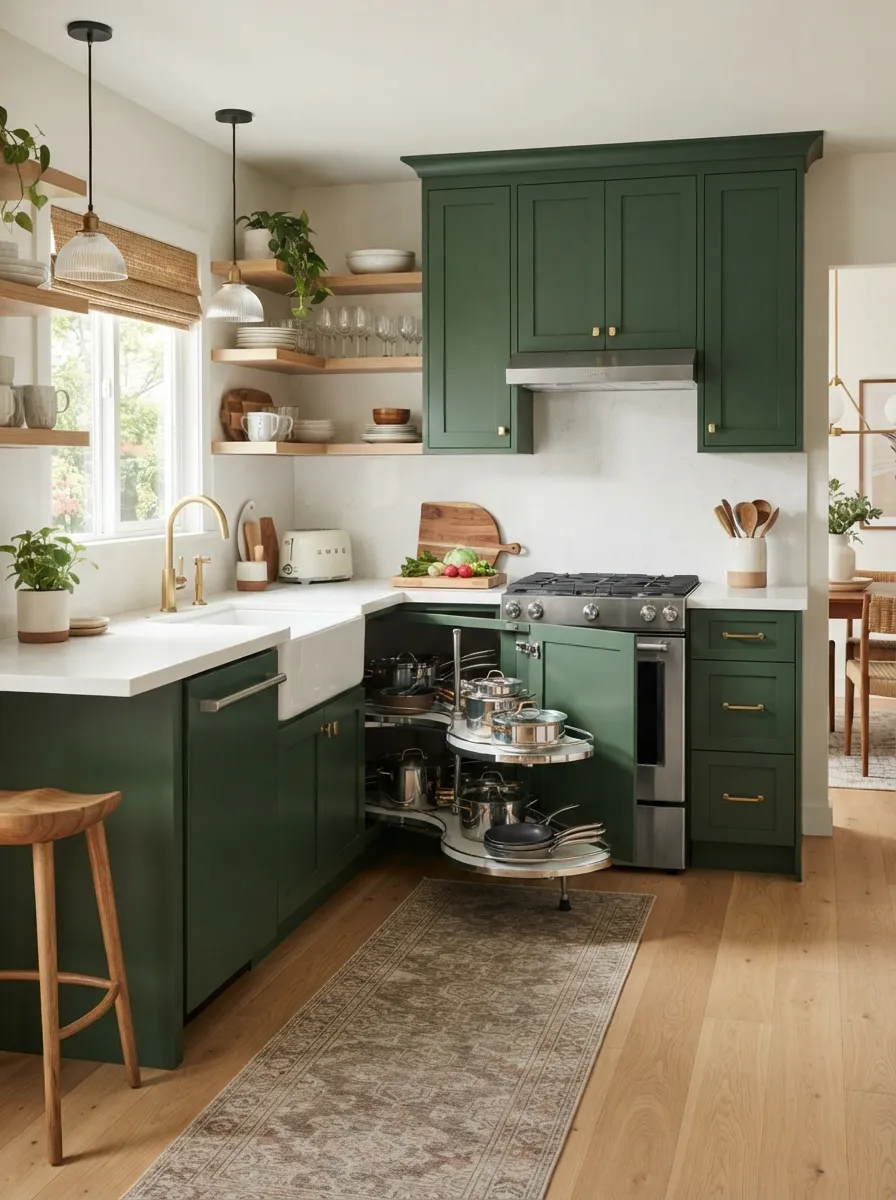
The best corner storage often combines multiple solutions for maximum functionality
Often, the best approach combines multiple solutions—a Lazy Susan for lower cabinets, floating shelves for upper corners, and magnetic strips for vertical surfaces. Learn more about comprehensive kitchen planning in our kitchen remodel guide.
Installation and Measurement Tips
Proper measurements and installation ensure corner storage solutions function perfectly. Follow these professional tips for successful installation.
Measuring Your Corner Space
Accurate measurements are critical for corner storage success:
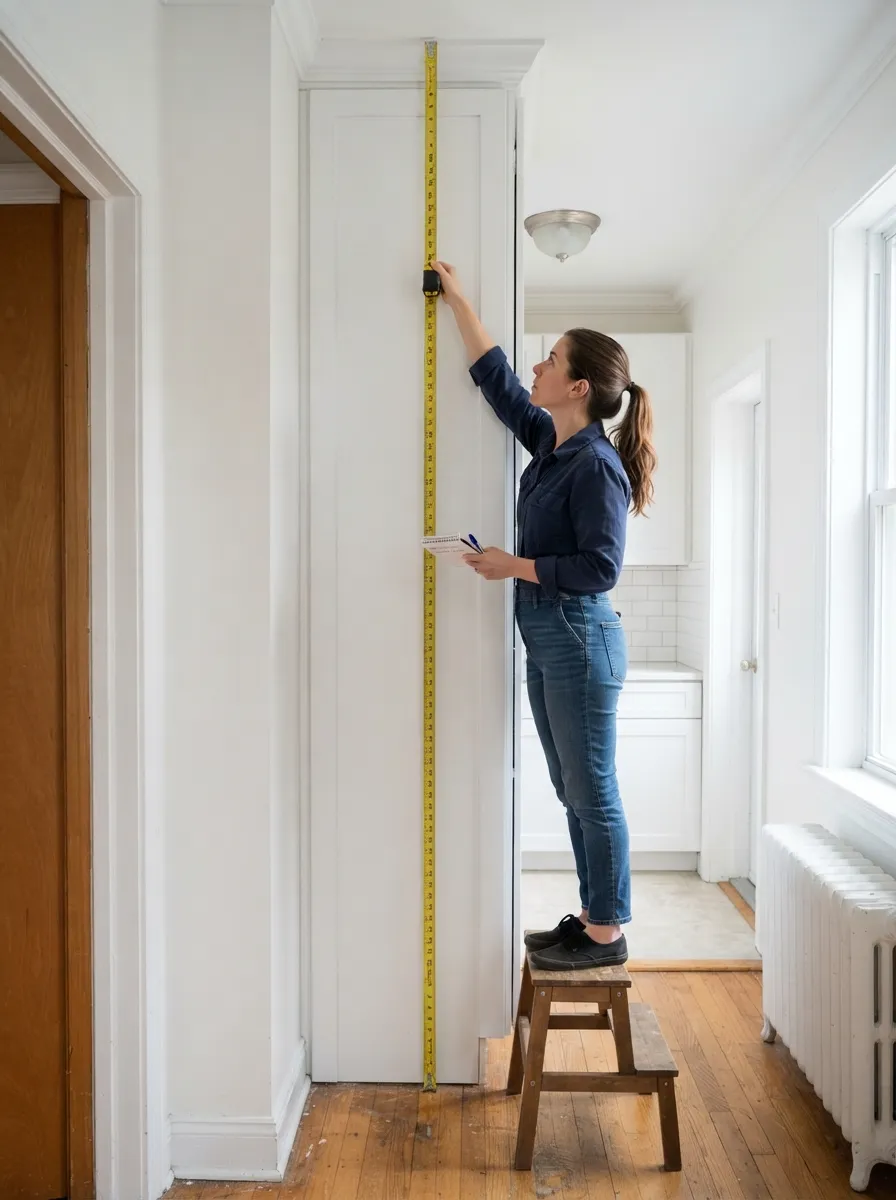
Precise measurements ensure corner storage solutions fit perfectly
- Cabinet Opening: Measure door opening width and height (not cabinet exterior)
- Interior Depth: Measure from door to back wall at deepest point
- Interior Width: Measure side-to-side at widest point inside cabinet
- Interior Height: Measure top to bottom, accounting for any pipes or obstructions
- Door Clearance: Measure how far doors open without hitting adjacent walls or cabinets
- Floor-to-Shelf Height: Measure each shelf position separately
Common Installation Mistakes to Avoid
Learn from these frequent errors:
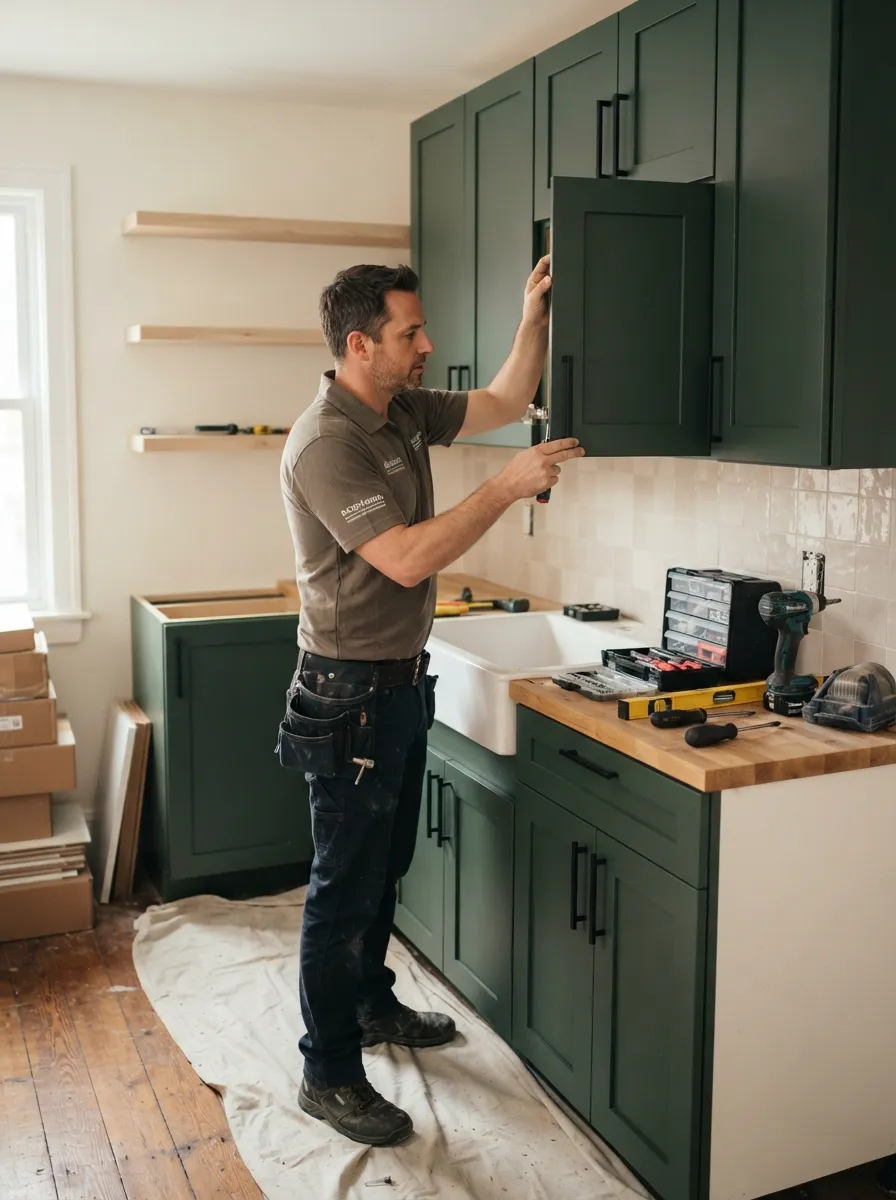
Professional installation avoids common corner storage mistakes
- Not Accounting for Door Swing: Measure arc of door swing to ensure pull-outs won’t interfere
- Ignoring Plumbing: Check for pipes before drilling for heavy-duty mounting
- Wrong Slide Length: Full-extension slides must match cabinet depth exactly
- Insufficient Support: Heavy solutions need mounting to studs, not just drywall
- Skipping Level Check: Even slightly unlevel installations cause binding and poor operation
- Over-tightening Screws: Can crack plastic components or strip threads
Tools You’ll Need
Basic tool requirements for most installations:
- Tape measure (25-foot recommended)
- Level (2-foot minimum)
- Drill/driver with bit set
- Phillips and flathead screwdrivers
- Stud finder for wall-mounted solutions
- Pencil for marking
- Adjustable wrench or socket set
Step-by-Step: Installing a Lazy Susan
Lazy Susans are among the easiest DIY corner solutions:
- Empty and Clean: Remove all contents, wipe cabinet interior clean
- Center the Mechanism: Mark cabinet center, position rotating base
- Level and Secure: Use level to ensure base is flat, drill pilot holes, secure with screws
- Test Rotation: Spin mechanism empty to ensure smooth operation
- Attach Shelves: Secure shelf to rotating platform per manufacturer instructions
- Load and Adjust: Add items, adjust shelf height if needed
Professional vs. DIY Installation
When to call a professional:
- DIY-Friendly: Lazy Susans, tiered shelves, bins, floating shelves (under 12 inches), magnetic strips
- Advanced DIY: Swing-out organizers, pull-out baskets, pegboard systems
- Hire a Pro: Magic corner units, custom cabinets, diagonal drawer systems, anything requiring cabinet modifications
- Professional Benefits: Warranty protection, perfect fit, proper weight support, time savings
- Installation Costs: Expect $100-$300 labor for complex pull-out systems
Proper installation ensures years of trouble-free corner storage. For comprehensive kitchen renovation guidance, see our complete remodeling guide.
Corner Storage Solutions Gallery
Browse these real-world examples of corner storage solutions in action for inspiration and ideas:
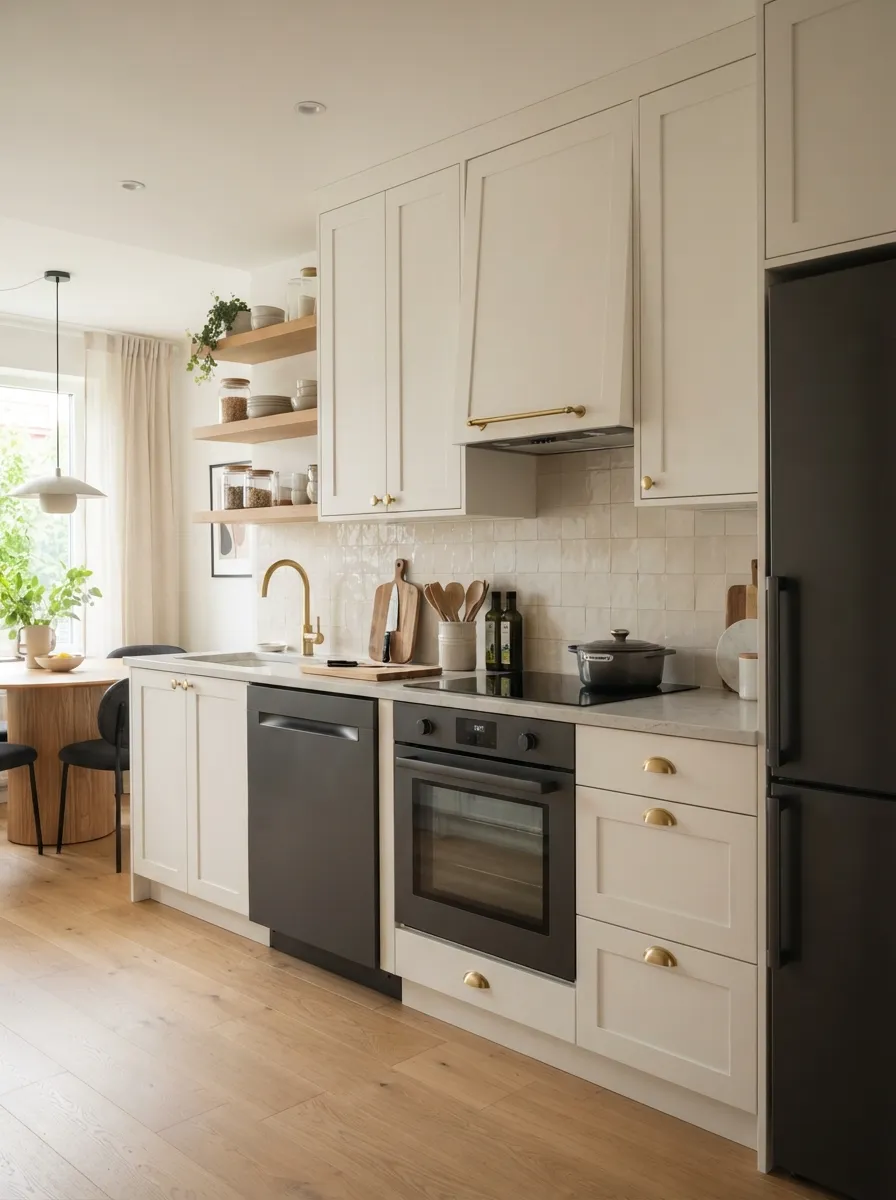
Diagonal corner cabinet with appliance garage maximizes storage while hiding small appliances
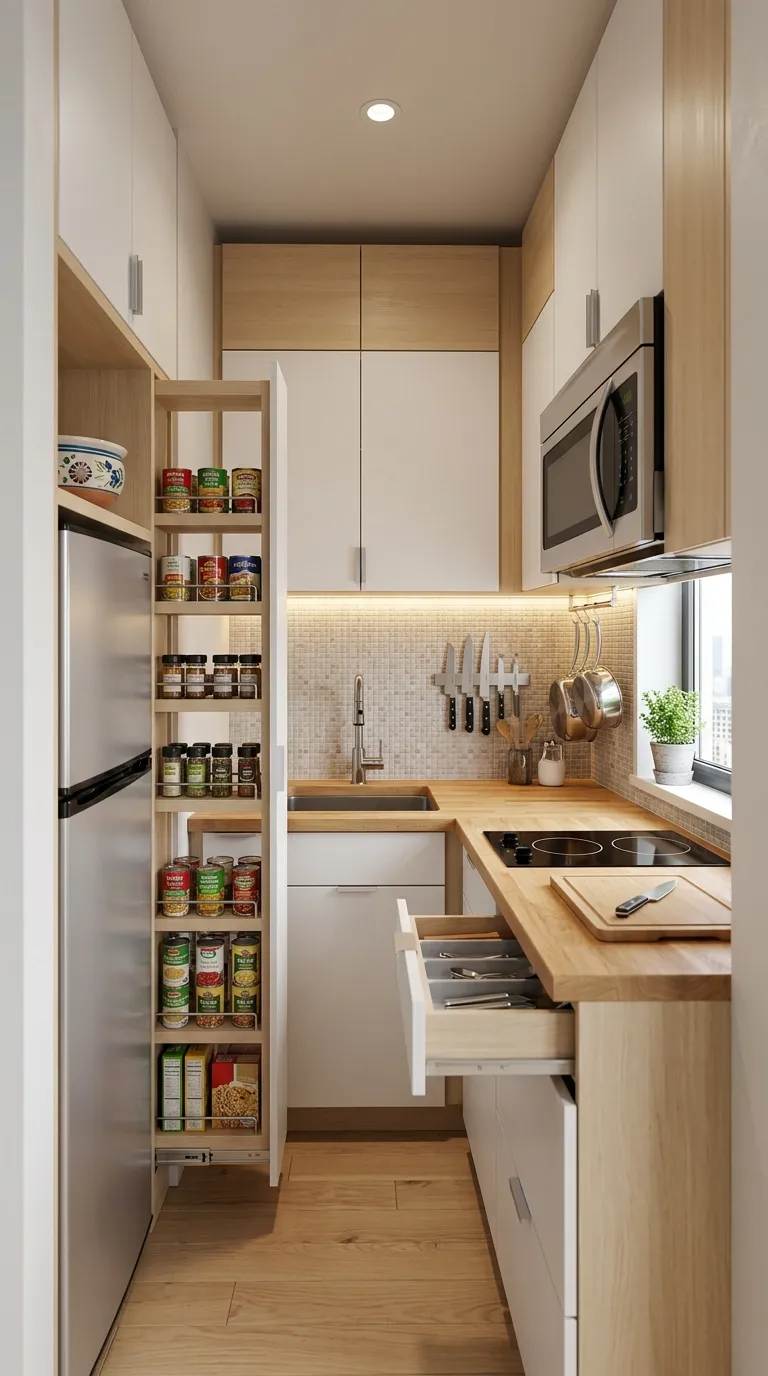
Pull-out corner basket system brings deep storage into easy reach
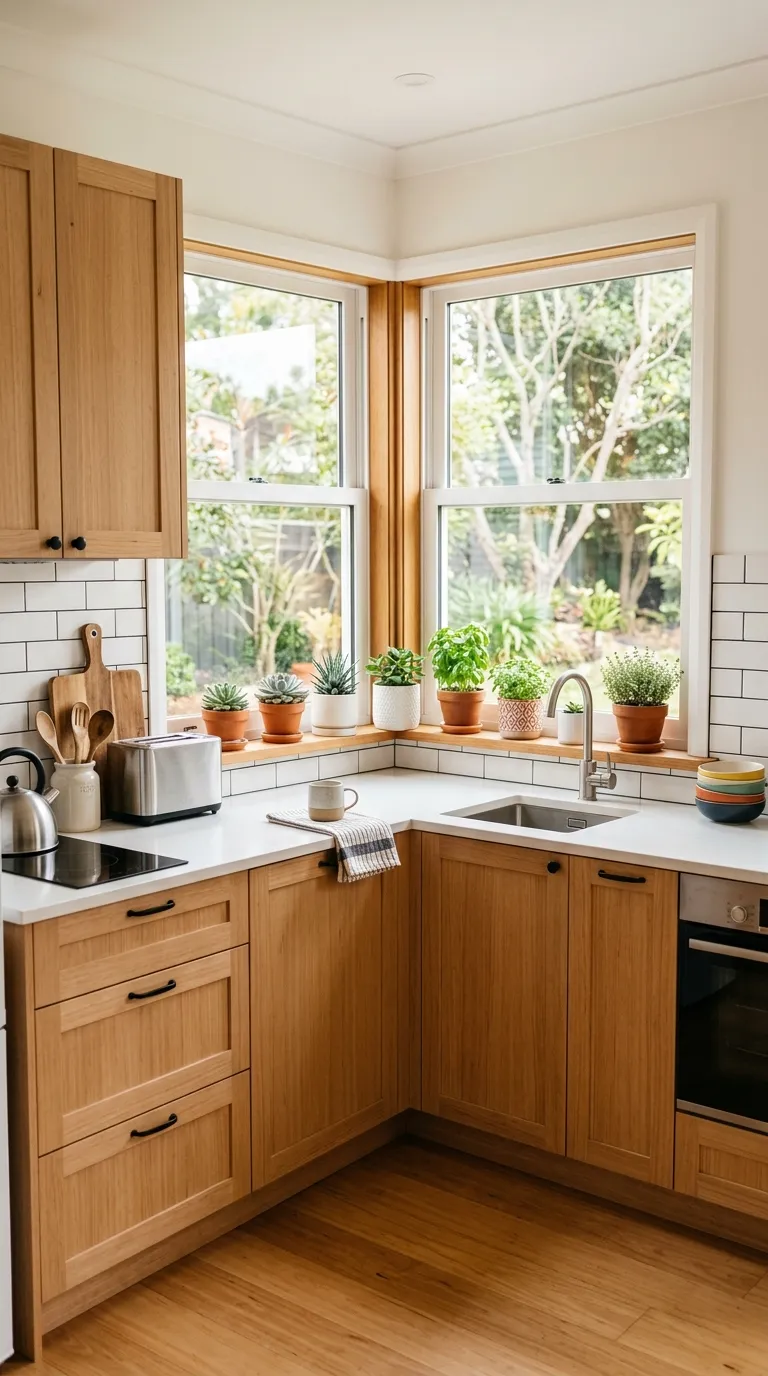
Wood L-shaped corner with Lazy Susan lower cabinet and open upper shelving
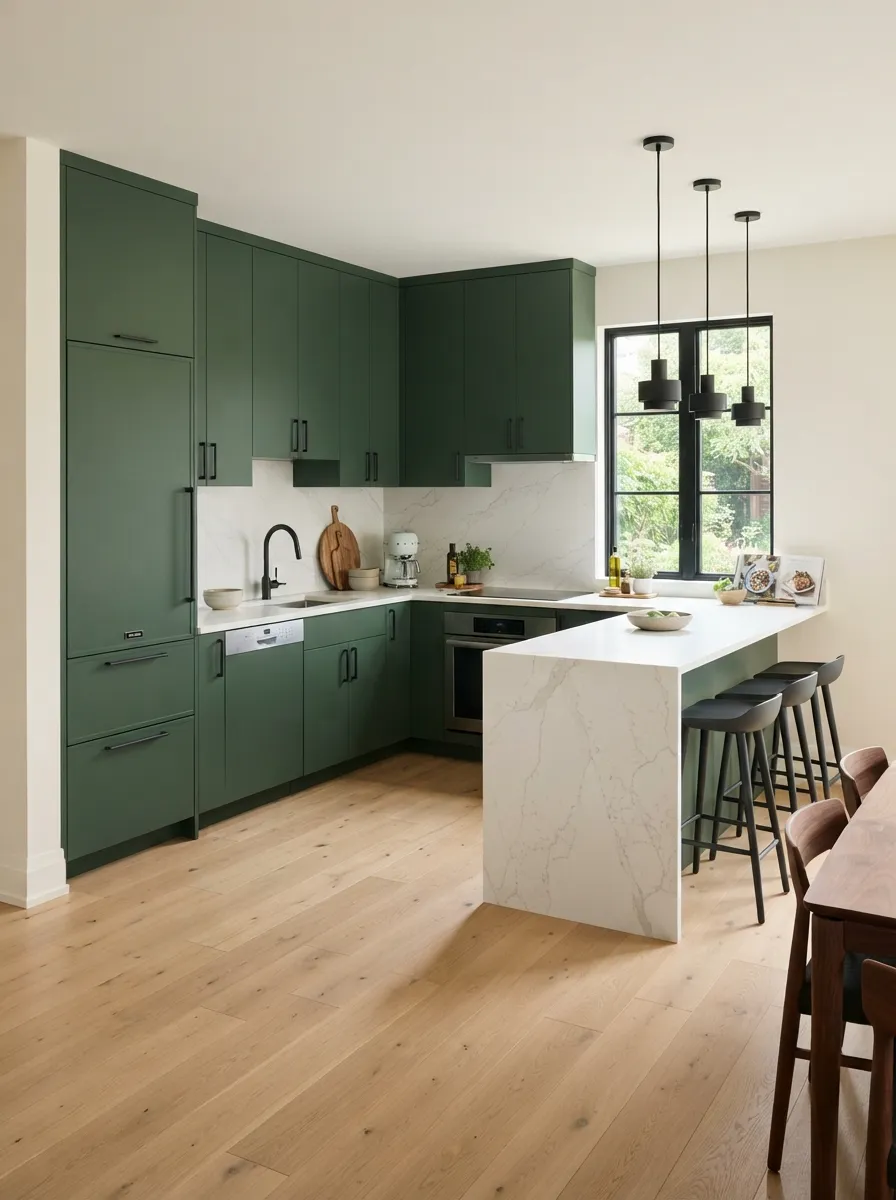
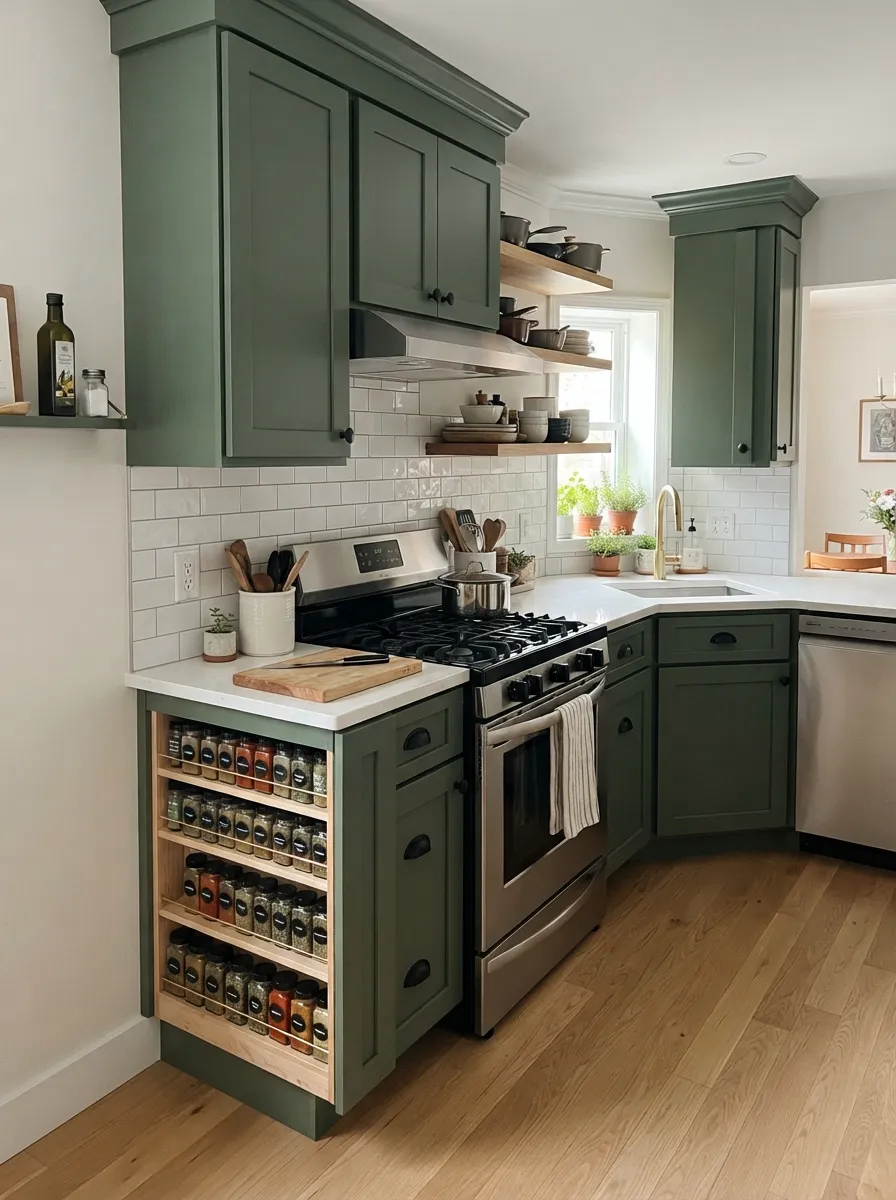
Forest green corner cabinets with diagonal configuration and floating shelves
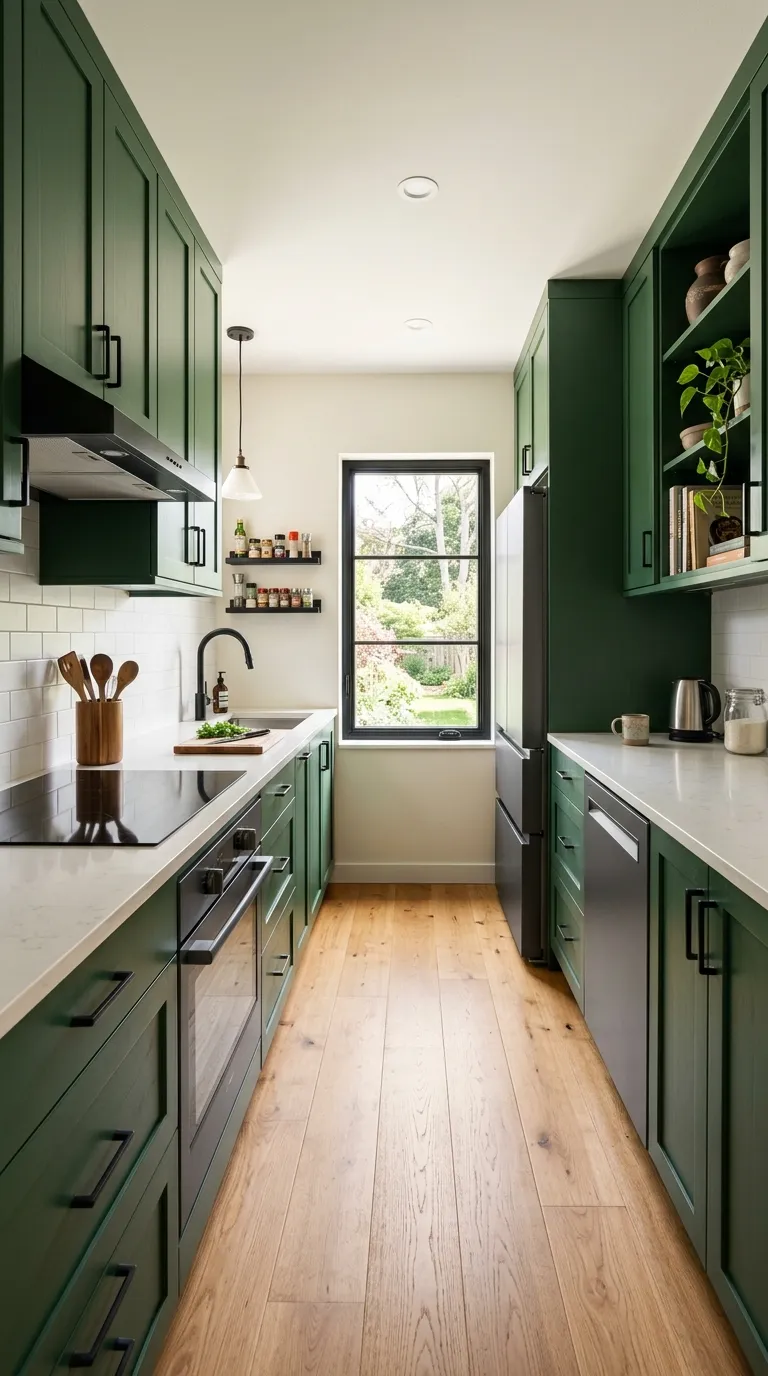
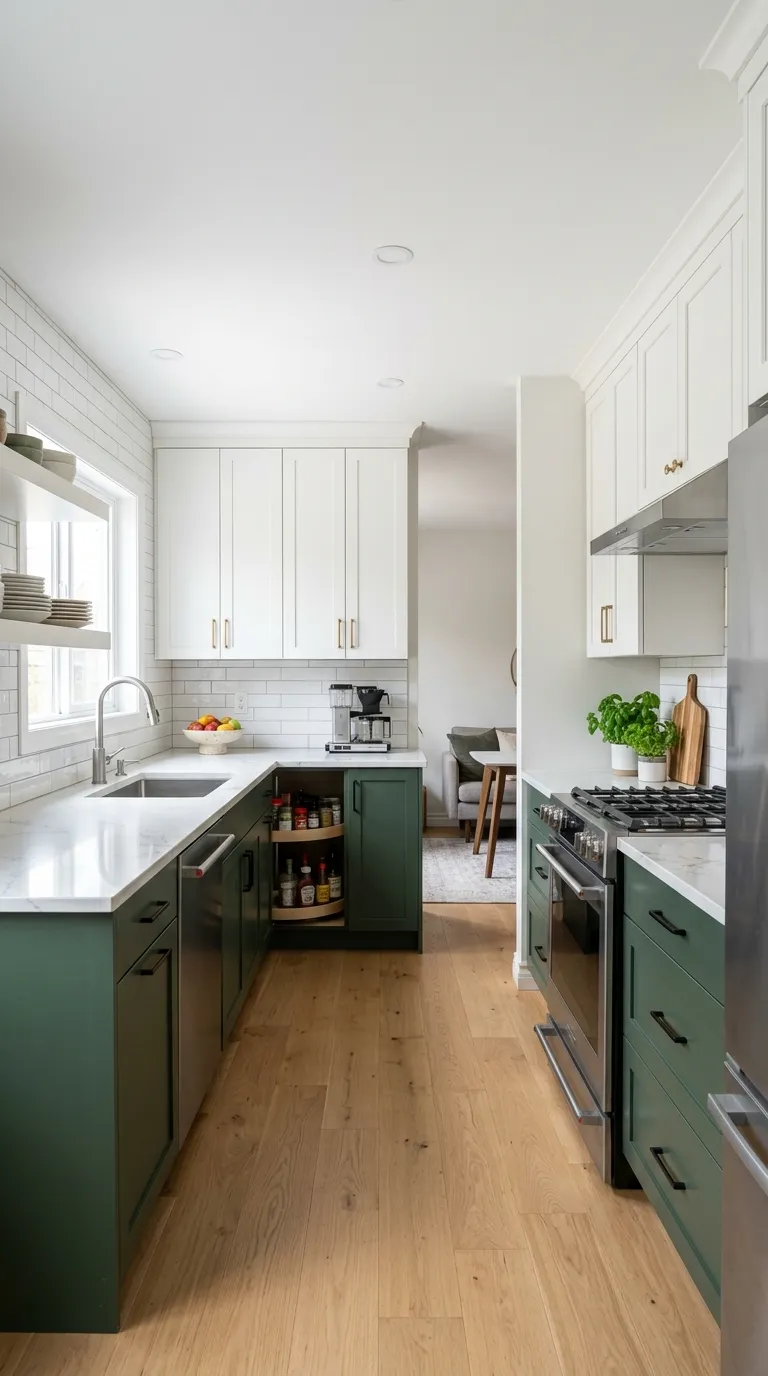
Narrow galley corner with vertical storage and open shelving maximizing limited space
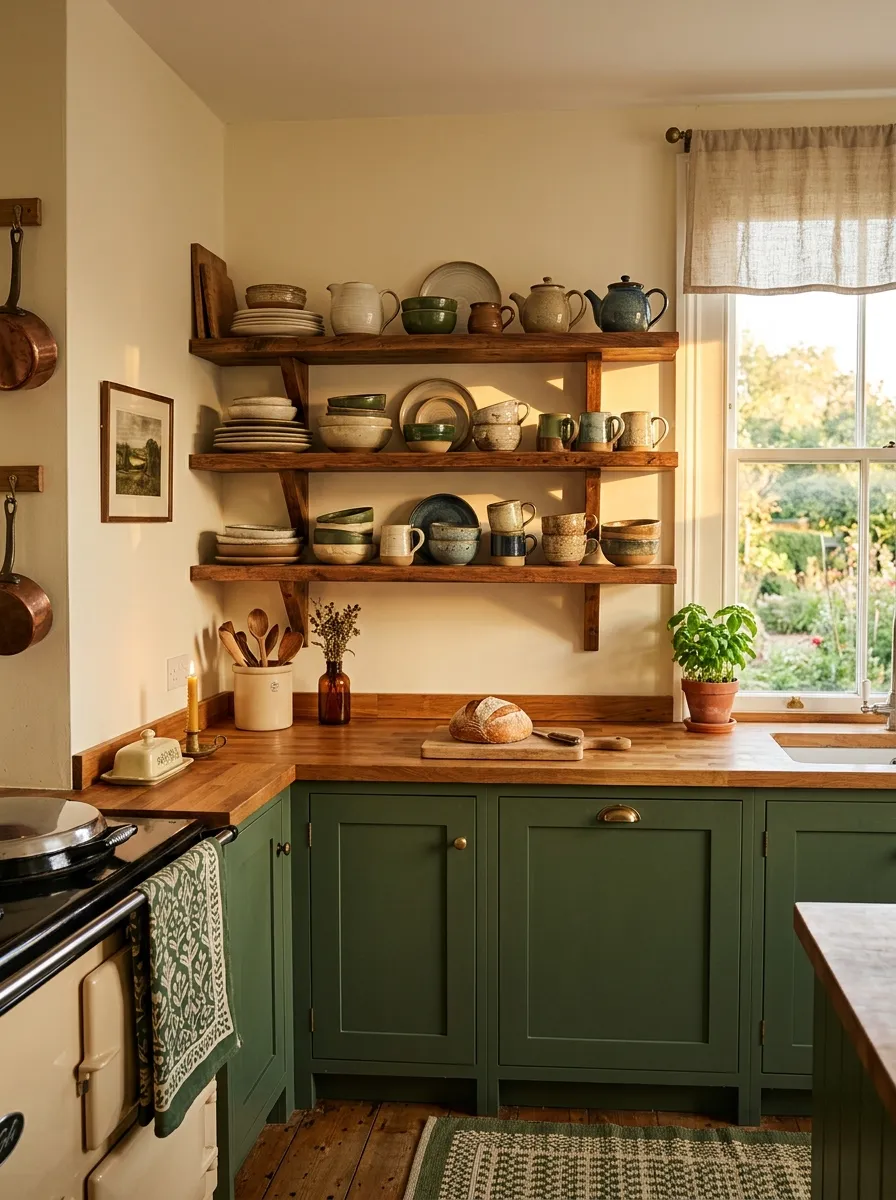
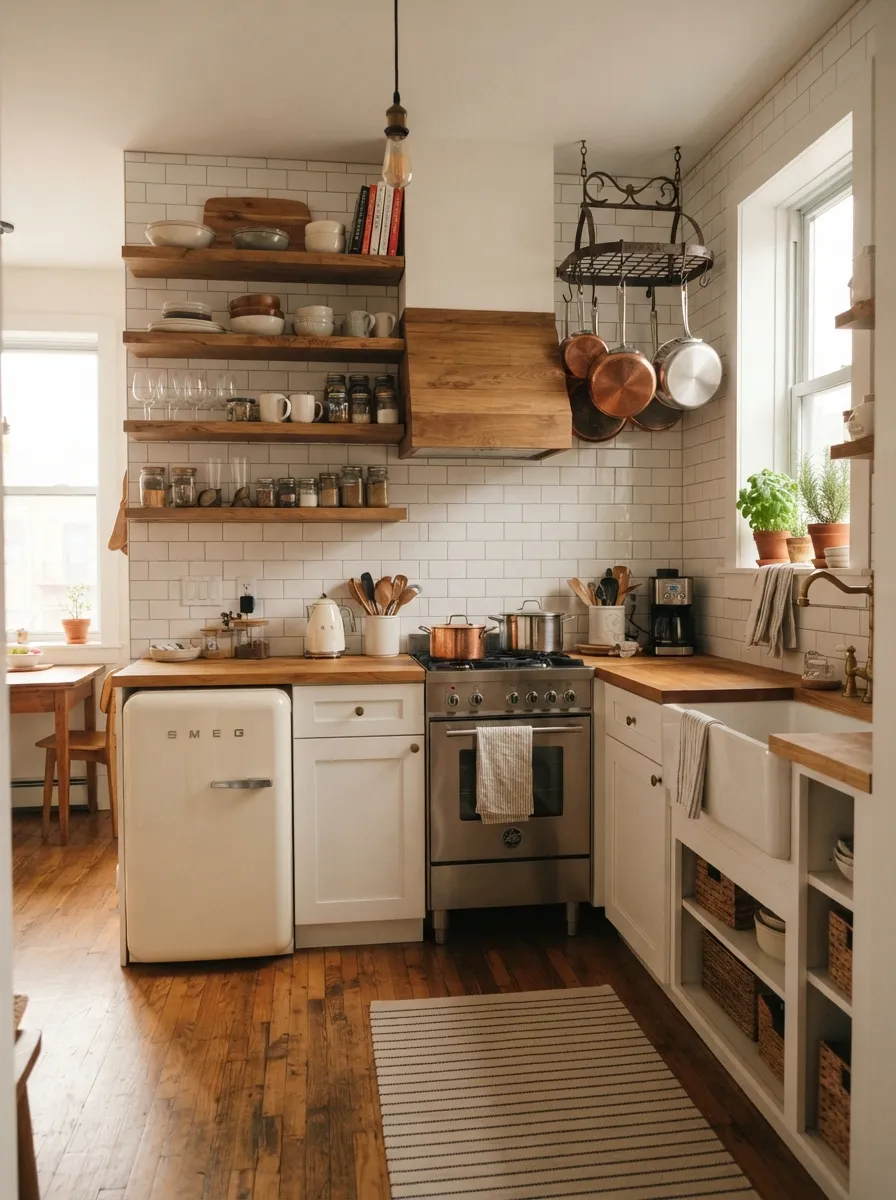
Wood floating shelves in kitchen corner create display and storage without cabinet bulk
Open shelving corner system in compact L-shaped kitchen maintains airiness
Functional L-shaped corner combining diagonal sink with pull-out storage below
Bright corner with glass-front upper cabinet and carousel lower storage
Frequently Asked Questions About Corner Storage
What is the best corner cabinet solution for a small kitchen?
For most small kitchens, Lazy Susan systems offer the best balance of affordability, accessibility, and ease of installation. They recover 60-70% of corner space, cost $30-$150, and install in under an hour. For blind corners in L-shaped kitchens, magic corner or blind corner pull-out systems provide superior access but cost $200-$600. The “best” solution depends on your budget, corner type, and what you’re storing.
How much does it cost to install corner storage solutions?
Corner storage costs range dramatically: DIY solutions like tiered shelves or stackable bins cost $10-$50, standard Lazy Susans run $50-$150, pull-out blind corner organizers cost $100-$300, magic corner systems range from $200-$600, and custom corner drawer or diagonal cabinet installations can exceed $1,000. Professional installation adds $100-$300 in labor for complex systems. Budget-conscious solutions under $100 can still dramatically improve corner functionality.
Can I install corner storage solutions myself?
Many corner storage solutions are DIY-friendly. Lazy Susans, tiered shelf inserts, stackable bins, floating shelves, and magnetic strips require basic tools and minimal experience. Pull-out basket retrofits and swing-out organizers need moderate DIY skills. However, magic corner units, corner drawer systems, and diagonal cabinet installations typically require professional installation to ensure proper fit, weight support, and smooth operation. If you’re comfortable with basic carpentry and have accurate measurements, most solutions under $200 are manageable DIY projects.
What’s the difference between a Lazy Susan and a magic corner?
Lazy Susans feature one or two rotating circular shelves that spin within the cabinet—you open the door and rotate items into view. Magic corner systems use sophisticated pull-out mechanisms with linked baskets that extract from deep corners, bringing contents completely outside the cabinet. Lazy Susans are simpler and cheaper ($30-$150) but require reaching into the cabinet. Magic corners are premium solutions ($200-$600) that bring everything to you with one pull, ideal for blind corners or mobility limitations.
How do I maximize corner cabinet space without renovation?
Maximize existing corner cabinets without renovation using: (1) Tiered shelf inserts to create vertical levels ($15-$50), (2) Lazy Susan turntables for 360-degree access ($30-$100), (3) Stackable clear bins with pull handles ($5-$15 each), (4) Tension rod dividers for vertical pan storage ($10-$20), (5) Door-mounted organizers for lids and small items ($20-$40). These solutions install in minutes, require no tools or permanent changes, and recover 30-50% more usable space. The key is creating visible, accessible zones rather than deep piles.
Are corner sinks a good idea in small kitchens?
Corner sinks can be excellent in small kitchens, freeing up 3-5 linear feet of valuable wall space for cabinets and countertops. They work especially well in L-shaped kitchens where they create efficient work triangles. The cabinet beneath accommodates pull-out storage for cleaning supplies. However, corner sinks work best with 36+ inch counters on each adjoining wall; smaller corners may feel cramped. Diagonal sink placement (rather than perpendicular) maximizes the benefits while maintaining comfortable workspace around the sink.
What should I store in corner cabinets?
Store items you use regularly but not daily in corner cabinets: mixing bowls, serving platters, small appliances (slow cookers, blenders), dry goods in bulk, pots and pans with matching lids, baking sheets and muffin tins, and seasonal items. Avoid storing frequently accessed items like everyday dishes or cooking utensils—the extra effort to access corners becomes frustrating. With proper organization (Lazy Susans, pull-outs, or tiered systems), corners excel at housing medium-frequency items that need protection but don’t deserve prime real estate.
How deep should corner cabinet shelves be?
Standard corner base cabinet shelves range from 24-30 inches deep, while upper corner cabinets are typically 12-18 inches deep. However, usable depth depends on your organizational system. Without aids, you can comfortably access only 12-15 inches. Lazy Susans work best with 24-28 inch depths. Pull-out systems function well in 24-36 inch cabinets. Deeper than 36 inches becomes problematic even with organizational tools. For retrofit projects, measure your specific cabinet depth before purchasing corner solutions to ensure proper fit and maximum accessibility.
Can I add corner storage to existing cabinets?
Yes, most corner storage solutions retrofit into existing cabinets. Lazy Susans, tiered shelf inserts, pull-out baskets, swing-out organizers, and stackable bins install without cabinet modifications. Some solutions like magic corner units may require minor adjustments to door hinges or shelf positioning. Measure your cabinet opening, interior dimensions, and check for obstructions (pipes, electrical) before purchasing. The vast majority of corner storage products are designed for retrofit installation and include detailed instructions. Only diagonal cabinet conversions or corner drawer systems require professional cabinet modification or replacement.
What are the most common corner storage mistakes?
Common mistakes include: (1) Choosing solutions based on appearance rather than accessibility needs, (2) Overloading systems beyond weight limits, causing premature failure, (3) Installing solutions without accurate measurements, resulting in binding or poor fit, (4) Storing daily-use items in hard-to-reach corners, (5) Not considering door swing clearance for pull-out systems, (6) Mixing incompatible organizational systems that compete for space, and (7) Ignoring vertical space with single-level storage. The biggest mistake is doing nothing—even imperfect corner organization beats wasted space.
Conclusion: Transform Your Kitchen Corners
Corner storage solutions for small kitchens turn wasted space into functional storage goldmines. Whether you invest $10 in stackable bins or $1,000 in magic corner systems, reclaiming corner space dramatically improves your kitchen’s organization, efficiency, and capacity.
The 30 solutions in this guide range from simple DIY hacks to professional installations, ensuring options for every budget, skill level, and corner configuration. Start by assessing your specific corner challenges—blind corners need different solutions than standard 90-degree corners. Measure carefully, choose solutions that match your storage needs, and don’t be afraid to combine multiple approaches for maximum functionality.
Remember that even small improvements yield big results. A $40 Lazy Susan recovers 60% of corner space. Tiered shelf inserts for $20 prevent the dreaded pan avalanche. Magnetic strips utilize vertical corner space for $15. You don’t need expensive renovations to transform corner storage—you need smart solutions matched to your space.
Ready to maximize every inch of your small kitchen? Start with one corner solution today. Your future self will thank you every time you easily access that pot, find that spice, or retrieve that serving platter without excavating the entire cabinet. Small kitchens work beautifully when every corner works hard.
Explore more small kitchen solutions: Browse our comprehensive guides on small kitchen design ideas, modern small kitchen designs, and simple kitchen designs to create your dream compact kitchen.