15 Small Kitchen Baking Sheet Storage Ideas That Actually Fit
Small kitchen baking sheet storage ideas matter for a simple reason: baking sheets are large, flat, and awkward, and a small kitchen rarely has a cabinet tall or deep enough to stack more than two or three flat without them sliding around every time the door opens. The fix, in almost every case, is the same one that works for cutting boards and trays: store sheets vertically instead of flat. This guide covers fifteen real small kitchen baking sheet storage ideas, from a $10 drawer divider to a professionally installed pull-out slot, so you can find one that fits your actual cabinets.
Quick Takeaways
- Storing baking sheets vertically uses far less space than stacking them flat
- A slim gap beside the oven, fridge, or a cabinet is often unused space already
- Felt or rubber separators prevent sheets from scratching each other in a flat stack, if vertical storage isn’t possible
- Keep your most-used sheet in the most accessible slot, not buried behind rarely used bakeware
- Budget options start around $10–$20; built-in pull-out slots run $50–$130
What’s In This Guide
Why Baking Sheets Are Hard to Store
A standard baking sheet is roughly 13×18 inches, which is bigger than most cabinet shelves are designed around and too large for almost any drawer to hold flat without dedicating the entire drawer to it. Stack two or three sheets flat and they slide against each other every time you open the cabinet, and the one on the bottom becomes the hardest to reach even though it’s often the one you use most. The fifteen ideas below solve this the same way most flat-item storage problems get solved: giving sheets a dedicated, vertical spot instead of letting them compete for flat shelf space with everything else.
15 Small Kitchen Baking Sheet Storage Ideas That Actually Work
1Vertical Divider in a Deep Drawer
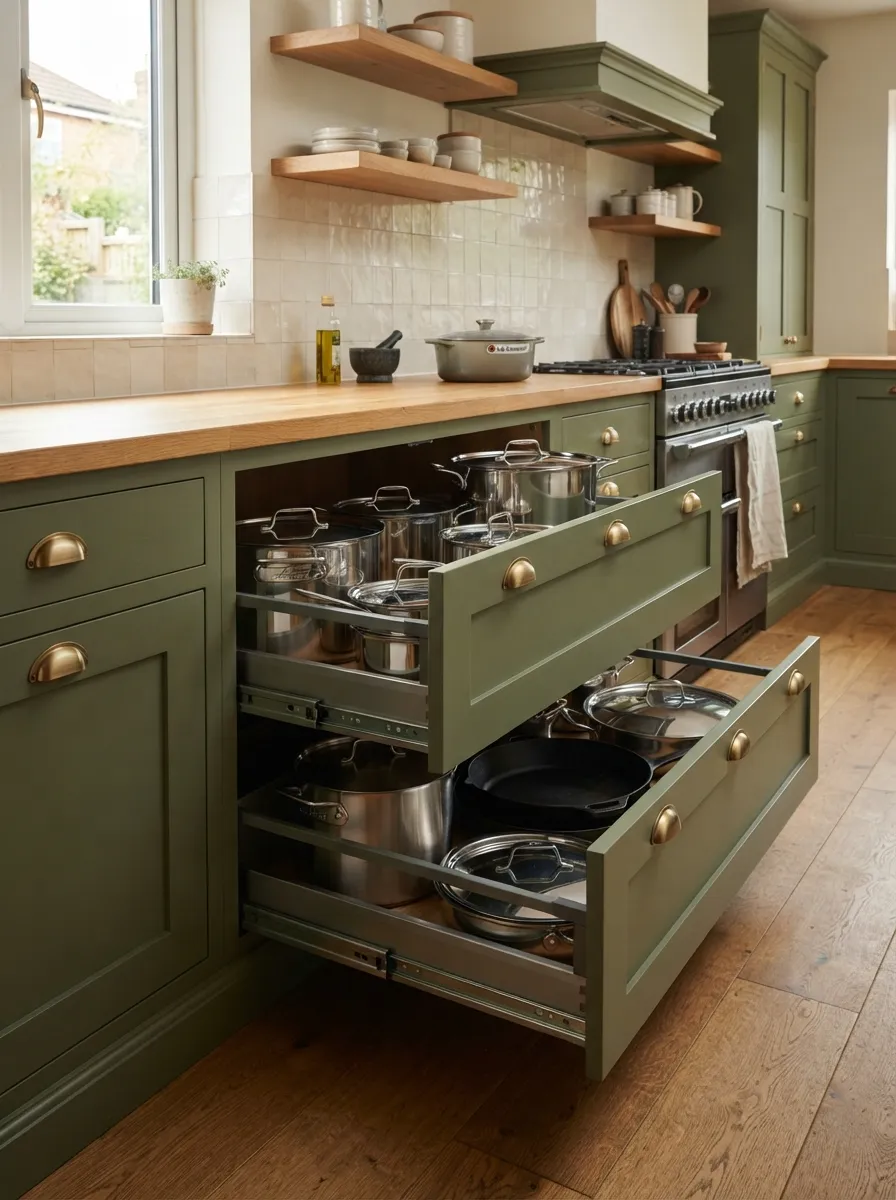
A simple metal or wood divider installed in a deep drawer near the oven turns flat, wasted drawer depth into upright slots for 4–6 sheets. This is the single most popular small kitchen baking sheet storage idea because most kitchens already have one underused deep drawer that’s perfect for this conversion, and dividers cost as little as $12–$25.
2Slim Slot Beside the Oven or a Cabinet
The narrow gap that often exists between the oven and an adjacent cabinet, or between two cabinets, can hold a slim vertical rack sized specifically for bakeware. It’s one of the most overlooked spots in any kitchen and turns dead space into genuinely useful storage.
3Pull-Out Vertical Tray Organizer
A dedicated pull-out unit, either a retrofit kit or built into a cabinet during a refacing project, gives sheets their own slide-out compartment with individual slots. It’s the most polished option on this list, typically running $50–$130 installed.
4Toe-Kick Drawer
The gap under your base cabinets is almost always empty space, and a shallow, wide toe-kick drawer is perfectly sized for flat bakeware since sheets don’t need much vertical clearance. Professionally installed versions run $80–$150, or less with a DIY kit.
5Under-Oven Storage Drawer
If your range has a storage drawer beneath the oven (many do, though it’s sometimes just a broiler drawer), adding a simple divider turns that existing space into dedicated vertical bakeware storage you’re likely already walking past every day without using fully.
6Wall-Mounted Bakeware Rack
A slim wall-mounted rack, similar in style to a mail or magazine organizer, holds 3–5 sheets standing upright against the wall. This works well in a kitchen with visible wall space near the oven but limited cabinet room to spare.
7Inside Pantry Door Mount
A wire or bamboo rack mounted to the inside of a pantry door keeps sheets fully hidden and out of the way, using space that’s otherwise wasted every time that door swings open. This is one of the best options if your pantry has any unused door depth to spare.
8Above-Cabinet Storage for Rarely Used Sheets
The gap between the top of your upper cabinets and the ceiling is a good spot for sheets you only use occasionally, like a large holiday roasting pan or an oversized cookie sheet, stored flat or in a slim bin since reaching frequency matters less here than depth efficiency.
9Stackable Storage With Felt Separators
If vertical storage genuinely isn’t an option in your kitchen, felt or rubber separator sheets placed between each flat pan prevent scratching and reduce the sliding that makes a flat stack frustrating to dig through. It’s not as space-efficient as standing sheets upright, but it’s a fast, cheap fix (separators run $8–$15) for a stack you already have.
10Cabinet Door-Mounted Rack
Similar to the pantry door option, a rack mounted to the inside of a regular cabinet door works anywhere you have at least 2–3 inches of clearance behind the door when it’s closed, giving sheets a hidden home without needing a dedicated drawer.
11Slim Countertop Caddy
For kitchens with genuinely no spare cabinet, drawer, or wall space, a small-footprint caddy designed specifically for bakeware keeps 2–3 sheets upright in a compact base. It’s the least space-saving option here, but it sets up instantly with zero installation.
12Hanging From a Pot Rail With Clips
If you already have a pot rail installed, adding a few S-hooks or clips lets lighter baking sheets hang alongside your pots and pans, making use of a storage system you’ve already set up rather than adding a new one.
13Retrofit Sliding Cabinet Insert
A slide-out insert kit, installed into an existing cabinet without replacing the cabinet itself, adds vertical divided slots to a cabinet that previously held sheets flat and disorganized. These kits typically run $30–$70 and are a realistic weekend DIY project.
14Repurposed File or Magazine Holder
A simple file holder or magazine rack, the kind meant for an office desk, fits perfectly inside many cabinets and holds 3–4 sheets upright for $10–$20. It’s one of the cheapest and fastest small kitchen baking sheet storage ideas to set up, since it requires no installation at all.
15Between-Cabinet Filler Storage
Some cabinet layouts include a narrow filler panel between two cabinet runs purely for spacing. Where possible, replacing a fixed filler with a slim pull-out vertical rack turns that purely decorative gap into genuinely useful bakeware storage.
Baking Sheet Sizes and How That Affects Storage
Not all baking sheets are the same size, and knowing your actual sizes helps you pick storage that fits without guesswork. A standard half-sheet pan is roughly 13×18 inches, a quarter sheet is about 9×13 inches, and a jelly roll pan typically runs 10×15 inches. If your collection mixes sizes, a vertical divider with slightly wider slots accommodates the range better than a rigid slot-per-size system, since you can group similar sizes together in the same slot without needing a separate compartment for every dimension. Round pizza stones and cake pans, if you store those alongside sheets, usually need their own slightly deeper slot since they don’t stand as flat or stably as a rectangular sheet.
Quick Comparison: Baking Sheet Storage by Space and Cost
| Option | Space Used | Typical Cost | Best For |
|---|---|---|---|
| Deep drawer divider | Existing drawer | $12–$25 | Kitchens with one spare deep drawer |
| Slim slot beside oven | Dead gap space | $15–$35 | Kitchens with a narrow cabinet gap |
| Pull-out tray organizer | New cabinet compartment | $50–$130 | Full cabinet upgrade or refacing project |
| Toe-kick drawer | New (unused space) | $80–$150 | Zero cabinet/wall impact |
| File/magazine holder | Inside existing cabinet | $10–$20 | Fastest, cheapest setup |
| Felt separators (flat stack) | No new space needed | $8–$15 | Protecting an existing flat stack |
Storage Tips That Protect Your Bakeware
How you store baking sheets affects how long the nonstick coating and finish last, not just how tidy the cabinet looks:
- Let sheets cool and dry fully before storing them to avoid trapping moisture against another pan’s surface
- Use felt or rubber separators any time sheets are stored flat and touching, since metal-on-metal contact causes visible scratching over time
- Store your most-used sheet in the most accessible slot — the back of a deep vertical rack is fine for a rarely used roasting pan, not your everyday cookie sheet
- Keep non-stick sheets separated from cast iron or heavier bakeware, since the weight difference can cause warping if a heavy pan rests on top
- If using a wall or door-mounted rack, check the mounting hardware periodically, since a loaded rack carries real weight over time
How to Choose Based on Your Kitchen
Galley kitchens with narrow cabinet runs do best with a deep drawer divider or a slim slot beside a cabinet, since there’s rarely enough open wall space for a wall-mounted rack.
Kitchens with visible wall space near the oven are good candidates for a wall-mounted rack or hanging option, turning space you’re not using into genuinely functional storage.
Apartment and rental kitchens should lean toward no-installation options: a file holder, a countertop caddy, or felt separators for an existing flat stack all work without drilling.
Kitchens with an unused toe-kick gap get the most net-new storage from converting that space into a drawer, since it adds capacity instead of repurposing storage you’re already using for something else.
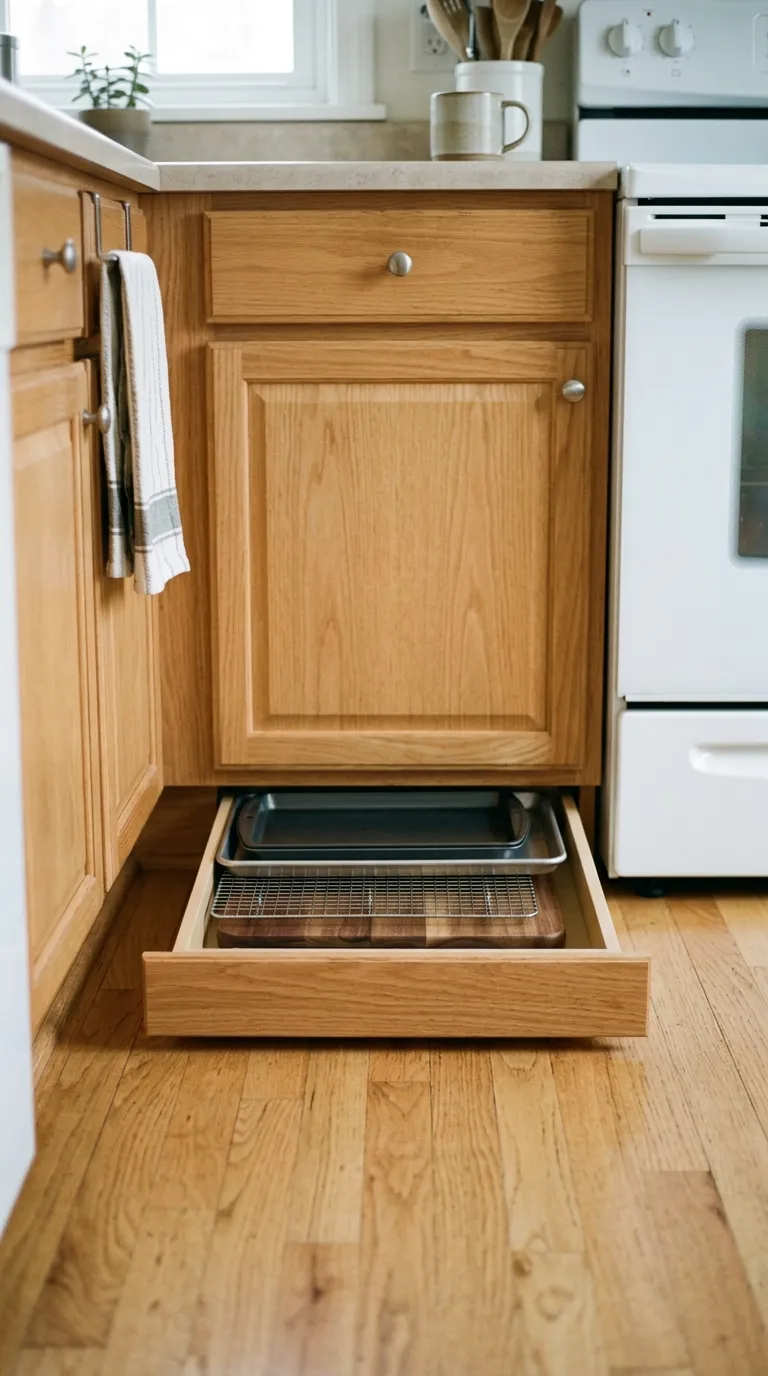
A toe-kick drawer turns unused space into dedicated bakeware storage
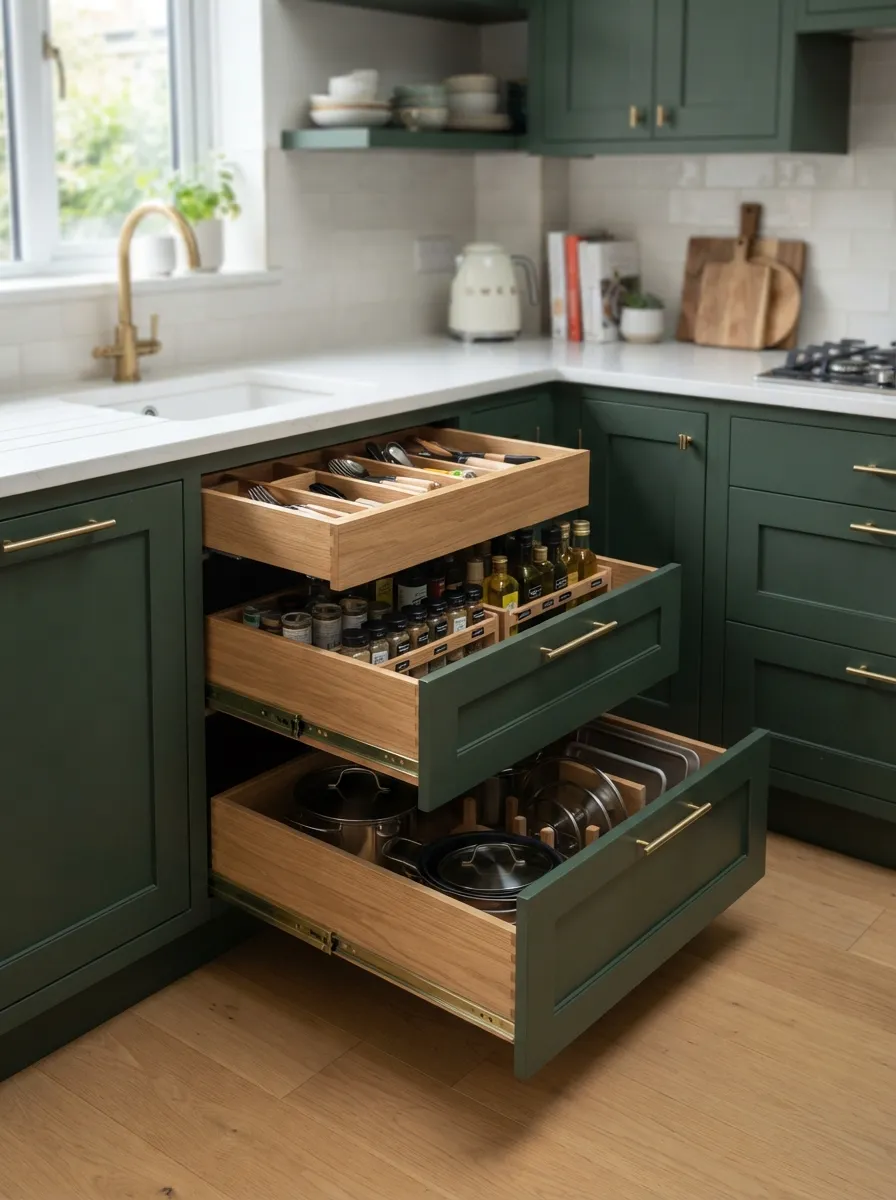
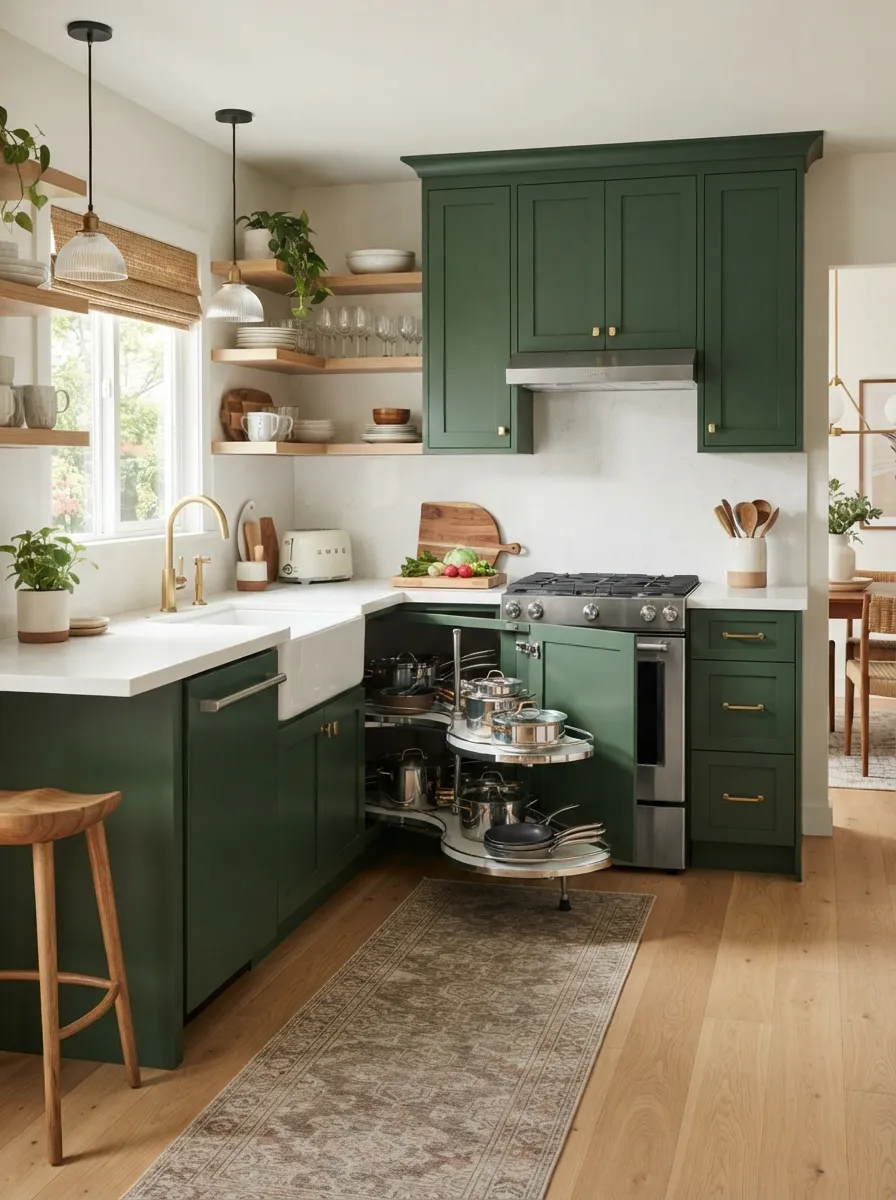
Corner drawer systems can be fitted with vertical dividers
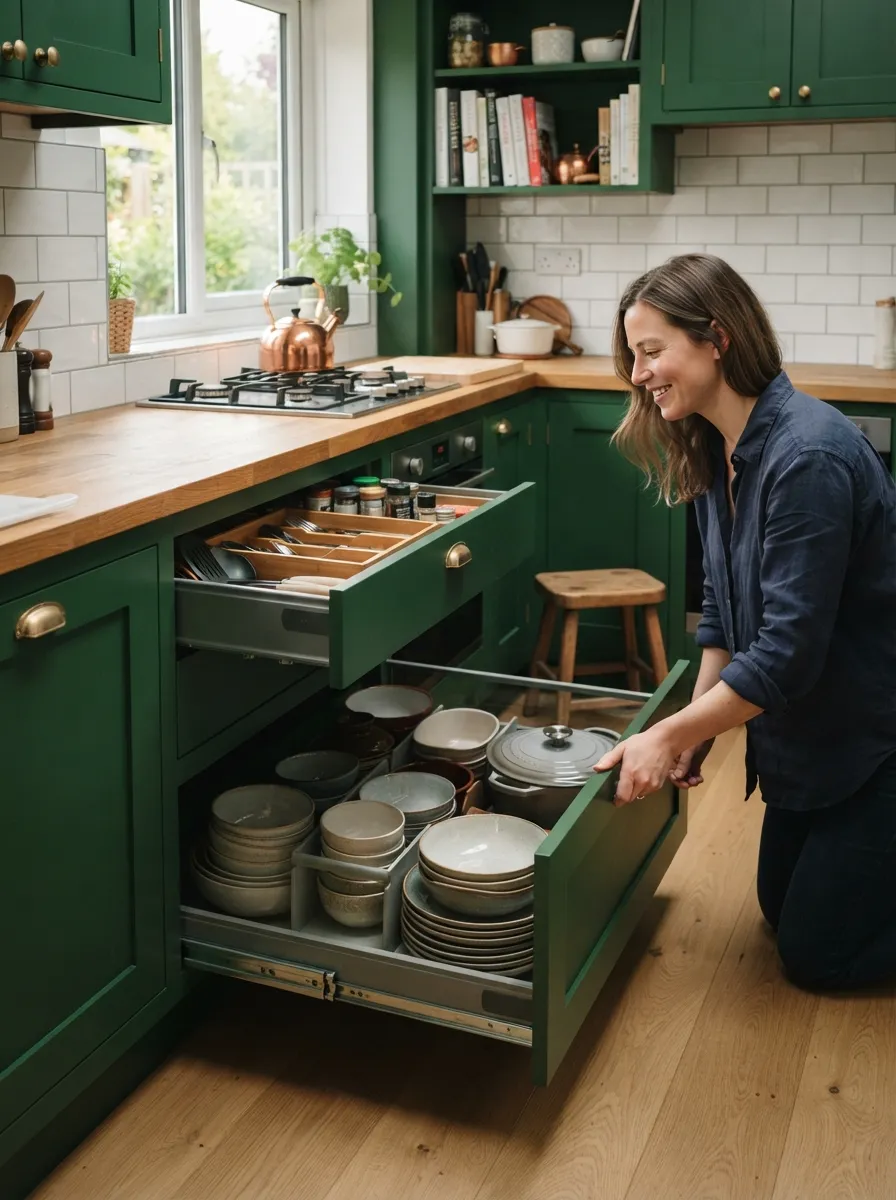
Deep drawers work well once fitted with the right divider
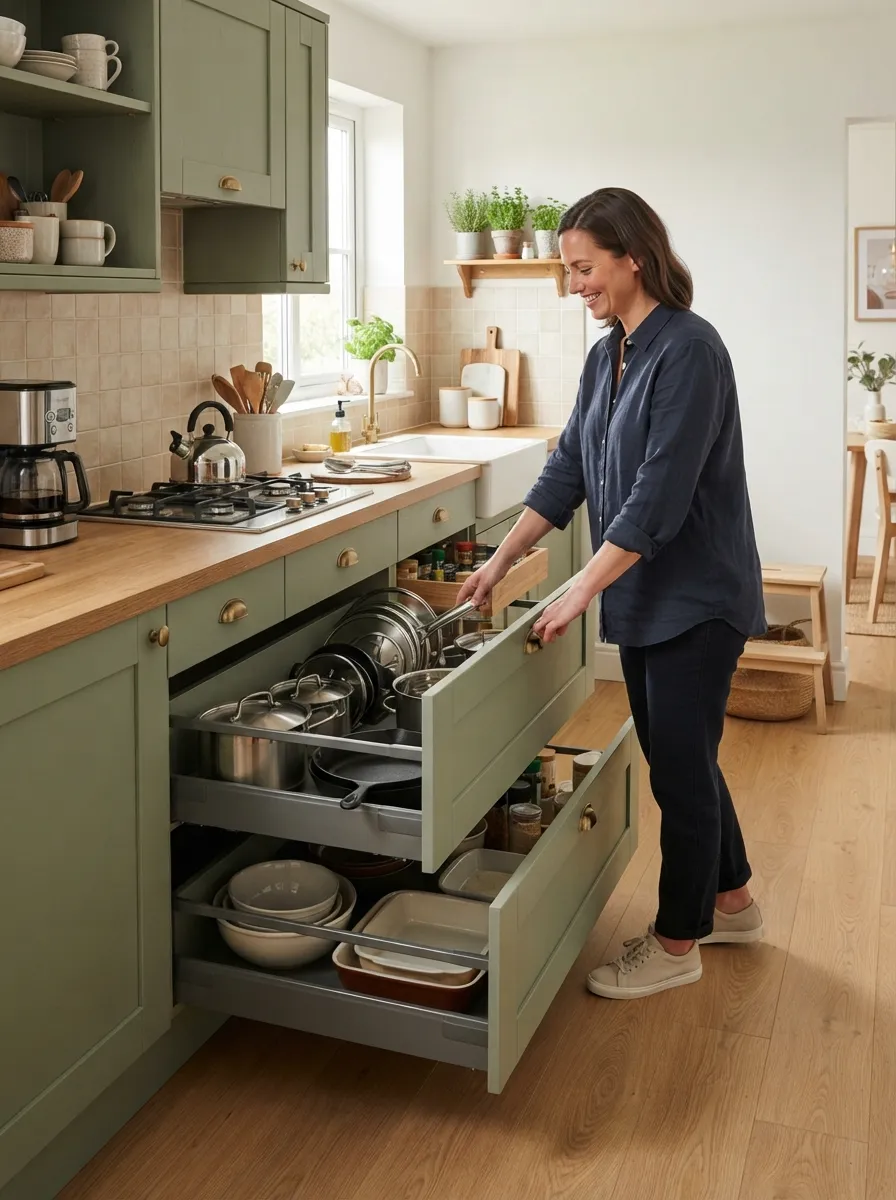
Vertical slots keep every sheet visible and easy to grab
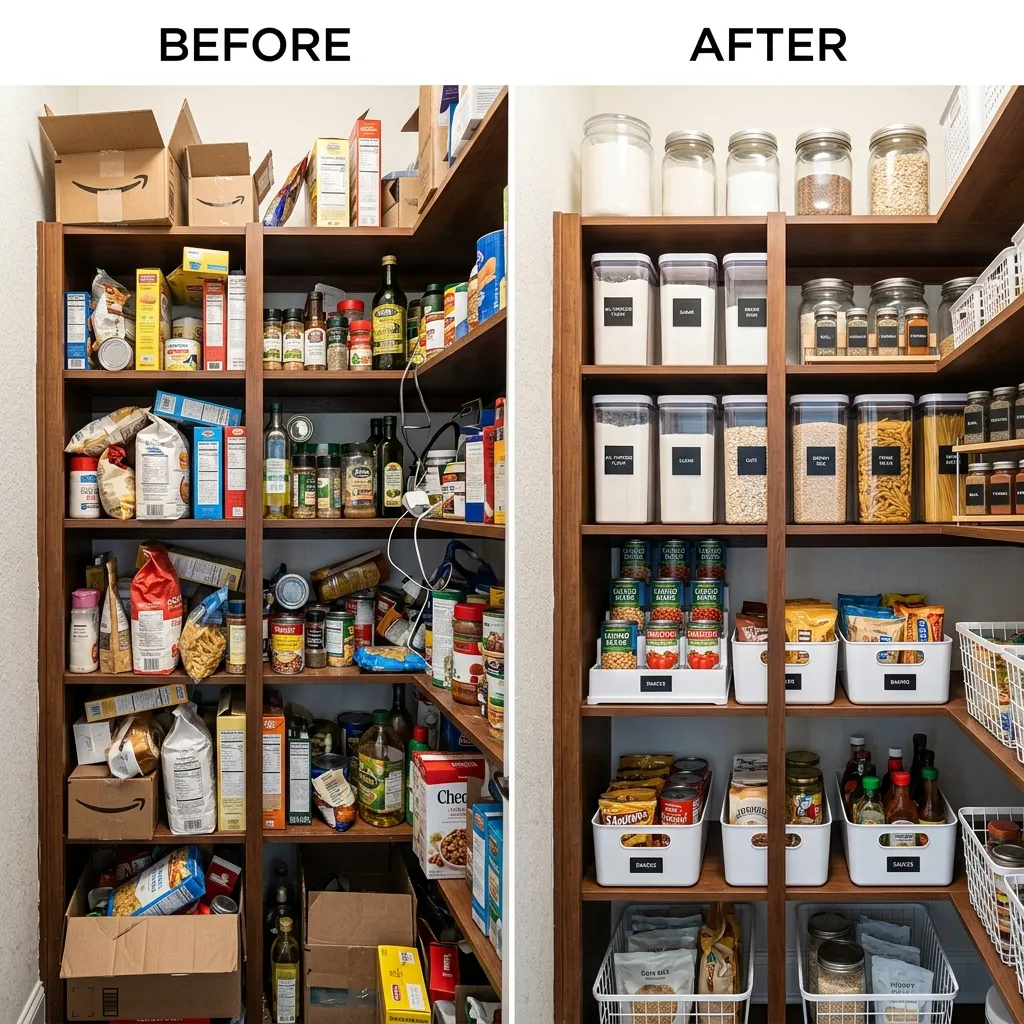
Even a small pantry can fit a dedicated bakeware slot
A deep drawer divider is the most popular baking sheet storage fix
Baking Sheet Storage Mistakes to Avoid
Buying more bakeware than your storage can handle. A set of six baking sheets looks like a good deal, but if you only regularly use two, the extras just crowd whatever storage method you choose. Keep the two or three you actually reach for and store or donate the rest.
Storing sheets while still warm or damp. Putting a sheet away before it’s fully cool and dry traps moisture against whatever it’s stacked with, which can lead to rust spots on uncoated pans over time.
Ignoring narrow gaps as “unusable” space. A 2–3 inch gap beside a cabinet or the oven looks too narrow to matter, but it’s exactly the width most slim bakeware racks are designed for. Measure before ruling any gap out.
Mixing heavy and lightweight bakeware in the same tight stack. A cast iron pan resting on top of a thin nonstick sheet is one of the most common causes of warping, so keep weight classes separated even within the same storage slot.
Take a few minutes to actually count your bakeware and measure the largest piece before choosing a storage method — it’s a small step that prevents buying a divider or rack that doesn’t quite fit, which is one of the most common (and avoidable) frustrations with bakeware organization products.
Frequently Asked Questions
What’s the best way to store baking sheets in a small kitchen?
Storing sheets vertically, on edge, in a divided deep drawer, a slim slot, or a pull-out rack is far more space-efficient than stacking them flat, and makes grabbing the one you need much easier.
Where should I store baking sheets if I have no extra drawer space?
A wall-mounted rack, an inside-cabinet-door mount, or a small countertop caddy are the best options when drawer space is fully used, since none require dedicated drawer room.
Is it bad to stack baking sheets flat?
It’s not harmful in the short term, but stacking without separators can cause scratching over time, and the sheet on the bottom becomes the hardest one to reach.
How do I keep baking sheets from scratching each other in storage?
Felt or rubber separator sheets placed between each pan prevent metal-on-metal contact, which is the main cause of visible scratching in a flat stack.
What’s the best baking sheet storage option for renters?
A file or magazine holder placed inside an existing cabinet, a countertop caddy, or felt separators for a flat stack are all good renter-friendly options, since none require drilling.
Can I use a toe-kick drawer for anything besides baking sheets?
Yes, toe-kick drawers work equally well for cutting boards, trays, or knife storage, since the shallow depth suits any flat kitchen item.
How many baking sheets does a small kitchen actually need?
Most home cooks regularly use only two or three sheets: one everyday cookie sheet, one larger roasting sheet, and sometimes a smaller toaster-oven-sized pan. Storing only these makes any storage idea on this list work better.
Related Pages
Final Thought
Baking sheets feel harder to store than they should be, mostly because their flat, oversized shape doesn’t fit any typical drawer or shelf cleanly. Pick the option from this list that matches space you already have — a spare deep drawer, a narrow gap, or an underused toe-kick — and you’ll free up more usable space than you’d expect from something this simple.
Whichever option you land on, measure twice before buying any divider, rack, or insert kit — bakeware storage products are rarely one-size-fits-all, and a slot that’s a half-inch too narrow makes the whole system frustrating to use daily.
Want to organize the rest of your kitchen tools too?
Explore Small Kitchen Cabinet Design