12 Small Kitchen Cutting Board Storage Ideas That Save Real Space
Small kitchen cutting board storage ideas all come down to one basic principle: boards are flat and wide, which makes them awkward in a kitchen where every cabinet and drawer is already working overtime. Stacked flat in a cabinet, two or three boards can eat up as much depth as a stack of dinner plates, and pulling the bottom board out means lifting everything above it first. The fix in almost every case is to store boards vertically instead of flat, whether that’s a dedicated slot, a divider in a drawer, or a simple hook on the wall. This guide walks through twelve real small kitchen cutting board storage ideas, from a $10 divider to a built-in pull-out slot, so you can pick the one that actually fits your cabinets.
Quick Takeaways
- Storing boards vertically (on edge) uses far less space than stacking them flat
- A slim slot next to the fridge or end of a cabinet run is often unused space already
- Keep your most-used board in the most accessible slot — don’t bury it behind rarely used ones
- Wood boards need airflow to dry properly, so avoid sealing them into a fully enclosed slot while damp
- Budget options start around $10–$20; built-in pull-out slots run $50–$120
What’s In This Guide
Why Cutting Boards Are Awkward to Store
A cutting board doesn’t fit neatly into any of the storage categories a small kitchen is usually designed around. It’s too big for a utensil drawer, too flat to stand on its own in most cabinets, and too frequently used to bury at the back of a deep shelf. Most people end up either leaning boards against the side of a cabinet (where they slide and fall) or stacking them flat on top of pans (where the one you need is always on the bottom). The twelve ideas below solve this by giving boards their own dedicated, vertical spot — which takes up surprisingly little space once it’s set up correctly.
12 Small Kitchen Cutting Board Storage Ideas That Actually Work
1Vertical Slot Beside a Cabinet or Fridge
The narrow gap between a cabinet and a wall, or a cabinet and the fridge, is one of the most overlooked spots in any small kitchen. A slim vertical divider (or even just a tension rod) turns that dead space into a dedicated slot for 2–4 boards standing on edge. This works especially well in galley kitchens where every inch of floor space is already accounted for elsewhere.
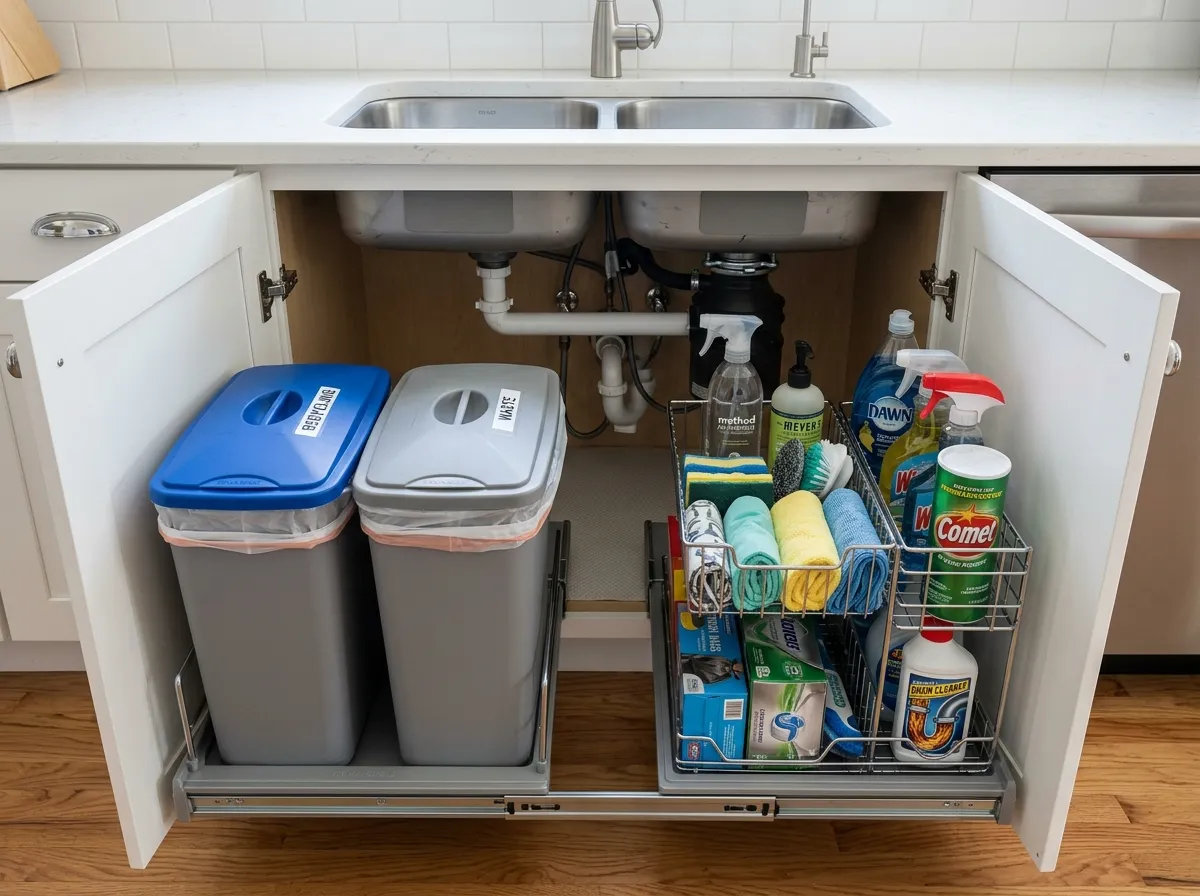
2Under-Sink Vertical Storage
The area under the sink often has more usable width than people realize once cleaning supplies are relocated to a caddy. A simple vertical divider or a small tension-rod rack lets boards stand upright next to your under-sink bins, keeping them close to where you rinse them after use.
3Pull-Out Slot Built Into a Cabinet
A dedicated pull-out slot, either a retrofit kit or built during a cabinet refacing project, gives boards their own drawer-style compartment that slides out fully for easy access. It’s the most polished small kitchen cutting board storage idea on this list, and professionally installed versions run $50–$120.
4Hanging Rail With S-Hooks
If your boards have a hole drilled in one corner (many do, or you can add one), a wall-mounted rail with S-hooks lets you hang them vertically off the wall entirely, freeing up cabinet space completely. This pairs well with an existing pot rail if you already have one installed.
5Divided Deep Drawer Storage
A deep drawer fitted with a simple vertical divider (the same style used for baking sheets) works just as well for cutting boards, letting several stand on edge side by side instead of stacked flat. This is a strong option if you already have one underused deep drawer near the stove or prep area.
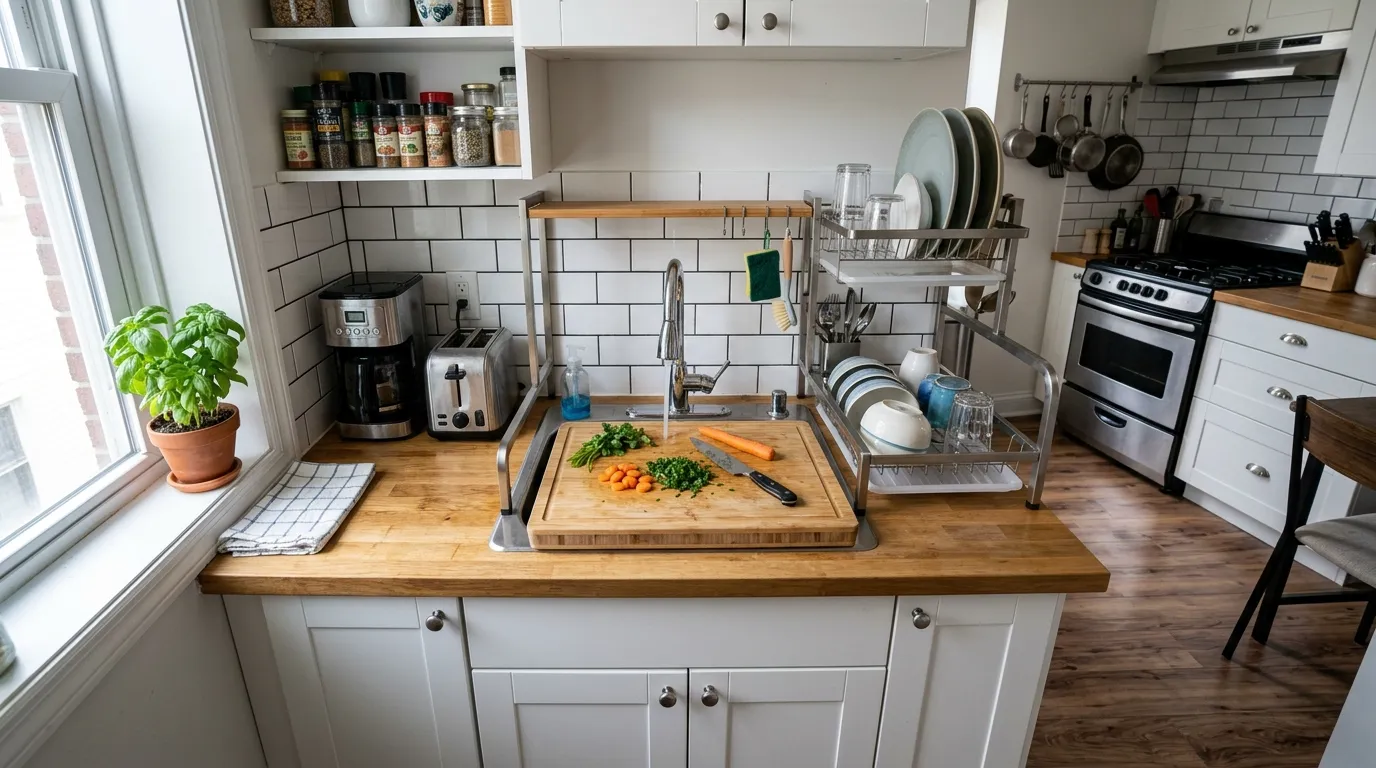
6Over-the-Sink Cutting Board
An over-the-sink board that rests on the sink’s rim doubles as both a cutting surface and functional counter extension, and it stores flat against the wall or in a slim vertical slot when not in use. This is one of the few dual-purpose ideas on this list — you’re not just storing the board better, you’re also gaining prep space when it’s in use.
7Magnetic Mount on the Side of the Fridge
If your board has a metal loop or you add adhesive magnetic strips to the back, the side of the fridge becomes a genuinely useful vertical storage spot that most small kitchens have and completely ignore. It keeps the board fully visible and grabbable without using a single inch of cabinet space.
8Wall-Mounted Shelf With a Lip Guard
A single floating shelf with a small raised lip along the front edge lets boards lean upright against the wall without sliding off. This works well above a counter run that has empty wall space but isn’t wide enough for a full cabinet, and it doubles as display storage for boards you actually like the look of.
9Slim Holder Mounted Inside a Cabinet Door
Similar to an in-cabinet knife rack, a slim wire or bamboo holder mounted to the inside of a cabinet door keeps boards fully hidden and out of the way, using space that’s otherwise completely wasted every time that door swings open and shut.
10Toe-Kick Drawer for Boards
The empty gap under your base cabinets can hold a shallow, wide drawer perfectly sized for flat cutting boards, since they don’t need much vertical clearance at all. It’s a more involved project (professionally installed toe-kick drawers run $80–$150), but it adds storage without touching your existing cabinets or counters.
11Stackable Countertop Caddy
If you genuinely don’t have wall, drawer, or cabinet space to spare, a small footprint caddy designed specifically for boards (rather than a generic dish rack) keeps 2–3 boards upright in a compact 6–8 inch wide base. It’s the least space-saving option on this list, but it’s the fastest to set up with zero installation.
12Pegboard With Pegs
A small pegboard panel mounted above the counter or inside a pantry door lets you hang boards, along with other flat kitchen tools, on adjustable pegs. It’s one of the more flexible small kitchen cutting board storage ideas because you can rearrange the layout any time your other kitchen tools change.
Quick Comparison: Cutting Board Storage by Space and Setup Time
| Option | Space Used | Setup Time | Typical Cost |
|---|---|---|---|
| Vertical slot beside cabinet | Dead gap space | Under 30 min | $10–$25 |
| Under-sink vertical rack | Existing under-sink space | Under 30 min | $12–$25 |
| Pull-out cabinet slot | New cabinet compartment | Professional install | $50–$120 |
| Hanging rail with hooks | Wall only | Under 1 hour | $15–$35 |
| Toe-kick drawer | New (unused space) | Professional install | $80–$150 |
| Countertop caddy | Small counter footprint | Instant | $12–$25 |
Storage Tips That Also Protect Your Boards
How you store a cutting board affects how long it lasts, not just how tidy your kitchen looks:
- Let wood boards air-dry fully before storing them upright in an enclosed slot — trapped moisture is the top cause of warping
- Store your most-used board where you can grab it one-handed, since that’s the one you’ll reach for daily
- Keep boards used for raw meat separated from those used for produce, even within the same storage slot, using a divider or distinct color-coded boards
- Avoid stacking boards flat with heavy items on top, which is one of the most common causes of warping over time
- If you’re using a magnetic or hook-mounted option, check the mounting hardware periodically — a board falling from a wall mount is a common (and avoidable) kitchen mishap
How to Choose Based on Your Kitchen
Galley kitchens with narrow walls between cabinet runs do best with a vertical slot beside a cabinet or the under-sink option, since there’s rarely spare wall space to work with.
Kitchens with visible wall space above the counter or beside the fridge are good candidates for a hanging rail, magnetic mount, or wall-mounted shelf — all of which turn wall space you’re not using into functional storage.
Apartment and rental kitchens should lean toward options that don’t require drilling: a countertop caddy, an under-sink tension rod rack, or a magnetic strip on the fridge all set up and remove cleanly.
Kitchens with an unused toe-kick gap get the most net-new storage from converting that space into a drawer, since it doesn’t compete with any storage you’re already using.
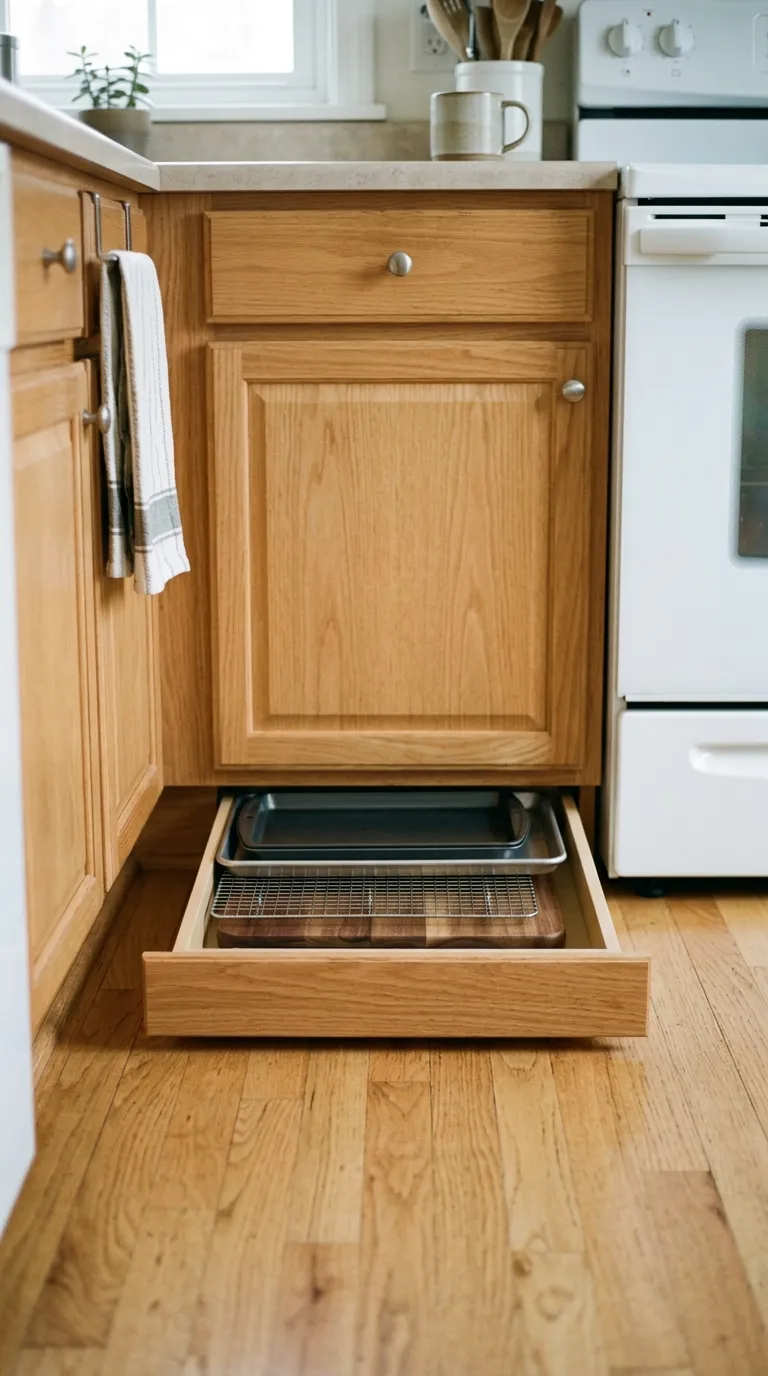
A toe-kick drawer gives boards a dedicated, hidden spot
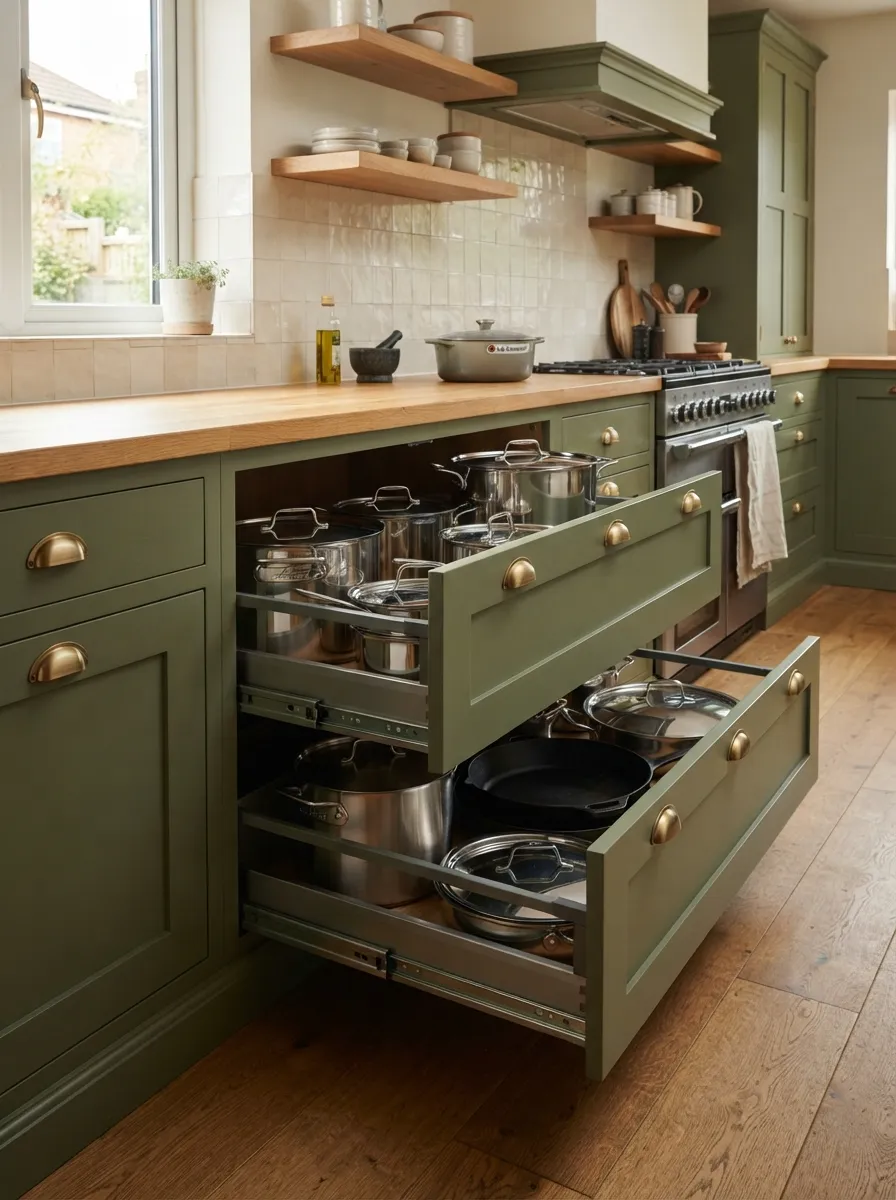
Deep drawers with dividers keep boards upright and separated
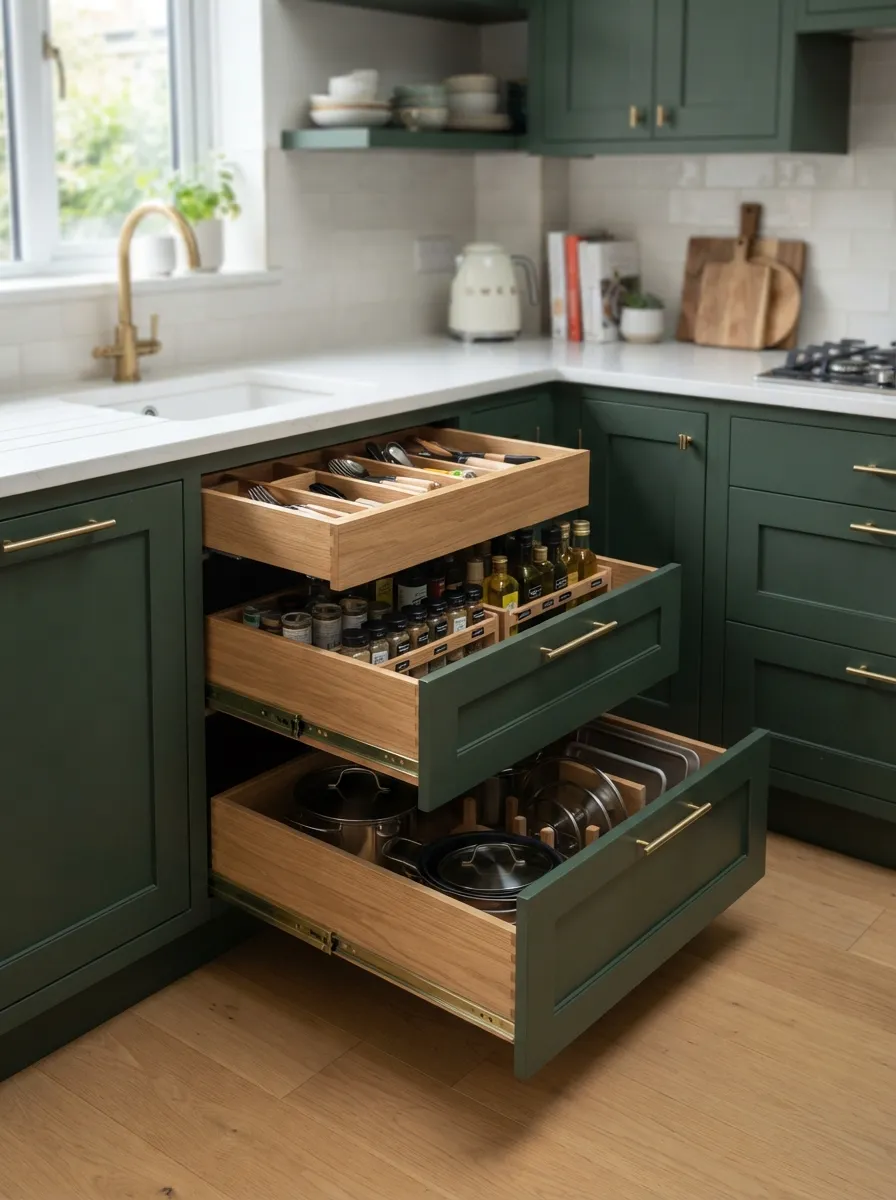
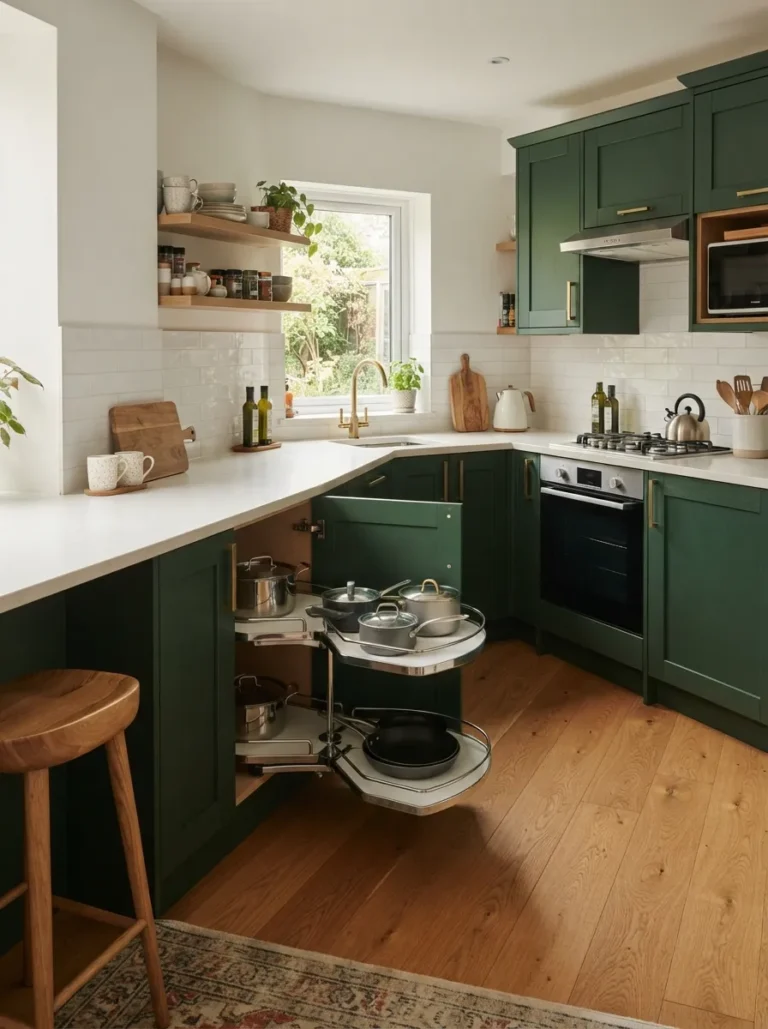
Corner drawer systems can hold boards alongside other flat tools
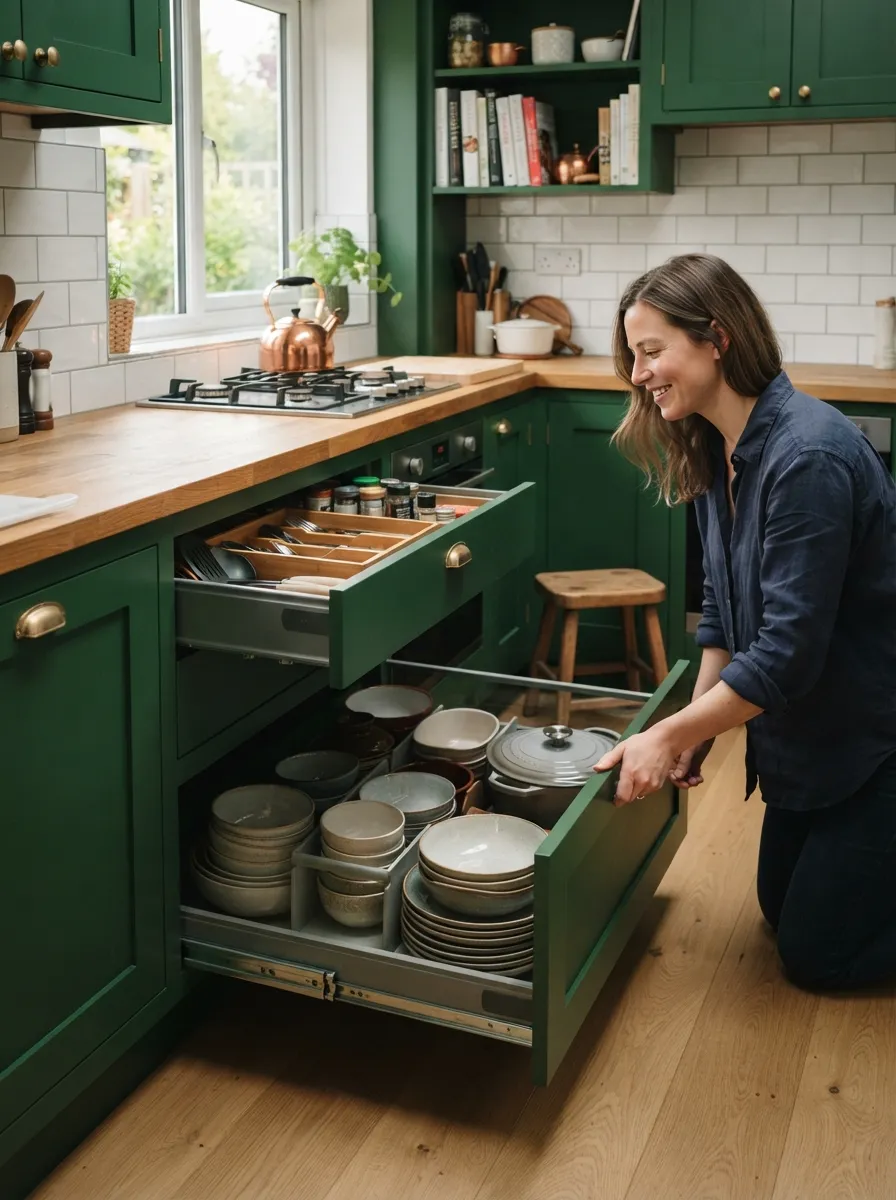
A compact kitchen with dedicated vertical storage sections
Under-sink space works well for a vertical board rack
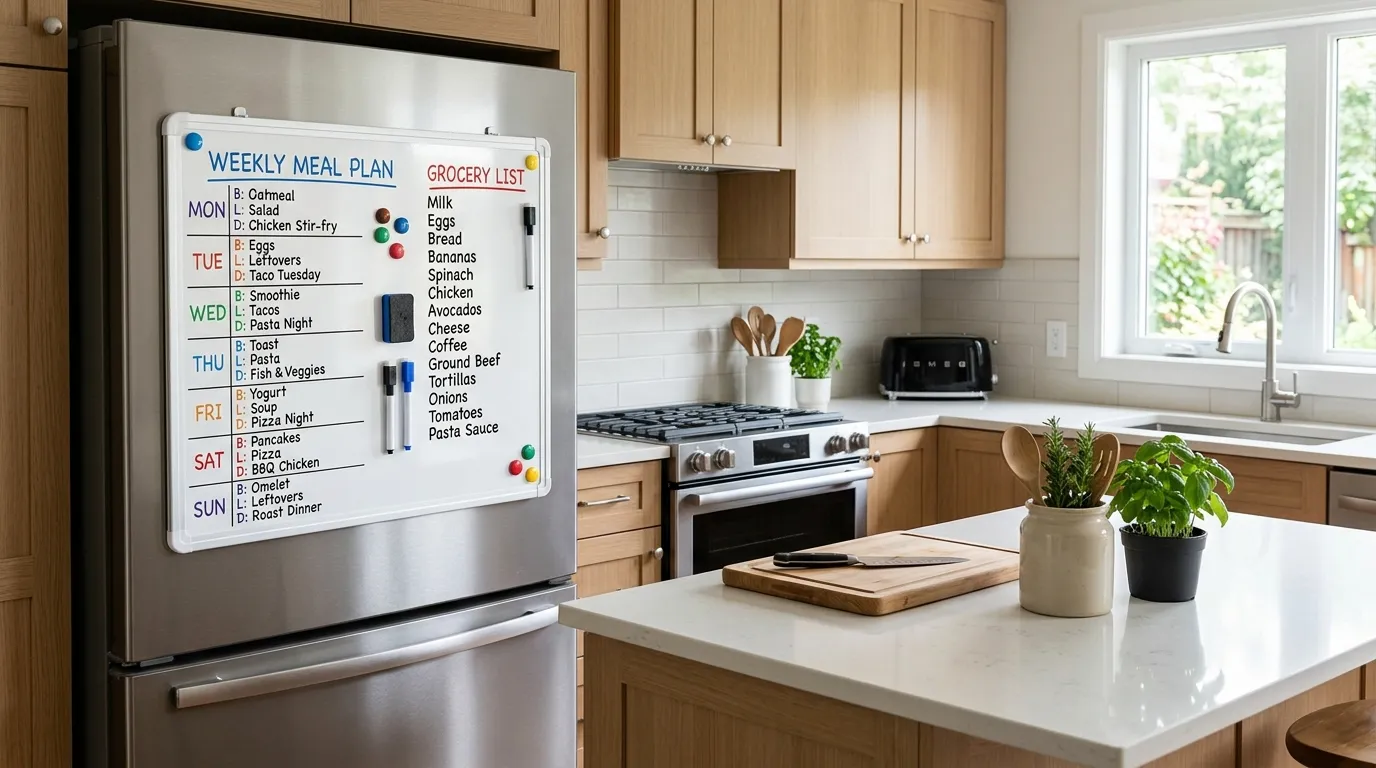
The side of the fridge is often unused, magnet-friendly space
Cutting Board Storage Mistakes to Avoid
Storing boards flat under heavy cookware. The weight from stacked pots and pans is one of the most common causes of warped boards, and it also means digging out everything on top just to grab the board underneath.
Sealing a damp board into an enclosed slot. Trapped moisture leads to warping and, over time, can encourage mold growth on wood boards specifically. Always let boards fully air-dry before tucking them into a closed cabinet or drawer slot.
Using the same slot for cross-contamination-prone boards. If you use separate boards for meat and produce, keep at least a visual divider between them in storage, not just during prep, as a simple habit that reduces mix-ups.
Overloading a single vertical slot. Cramming five or six boards into one narrow gap makes the whole stack hard to access and increases the chance of one sliding out and falling. Split boards across two smaller storage spots if you own more than three or four.
Storing Different Types of Cutting Boards
Not every board has the same storage needs, and matching your storage method to your board material makes a real difference in how long each one lasts.
Wood boards need the most airflow of any material, since trapped moisture is the leading cause of warping and, eventually, mold. Favor open storage — a hanging rail, an open vertical slot, or a wall-mounted shelf — over a fully enclosed drawer or cabinet slot, and always confirm the board is completely dry before putting it away.
Plastic boards are far more forgiving and can go straight into an enclosed slot, drawer divider, or toe-kick drawer without the same airflow concern. They’re also usually thinner and lighter, which means more of them fit into the same vertical slot compared to wood.
Bamboo boards sit somewhere between the two: they’re more moisture-resistant than solid wood but still benefit from some airflow, so a partially open storage method (a rail, an open-front slot) is a reasonable middle ground.
Glass and composite boards are the most storage-flexible of all, since they don’t absorb moisture or odors the way wood and bamboo can. If you have one of these as a backup or specialty board, it’s the safest option to store fully enclosed without any airflow consideration.
Frequently Asked Questions
What’s the best way to store cutting boards in a small kitchen?
Storing boards vertically, on edge, in a slim slot, drawer divider, or hanging rail is far more space-efficient than stacking them flat, and it makes grabbing the one you need much easier.
Where should I store cutting boards if I have no extra cabinet space?
A wall-mounted rail, a magnetic mount on the side of the fridge, or a small countertop caddy are the best options when cabinet space is fully used, since none of them require cabinet or drawer room.
Is it bad to store cutting boards flat and stacked?
It’s not damaging in the short term, but stacking boards flat under heavy items can contribute to warping over time, and it makes the board on the bottom the hardest one to access.
How do I store cutting boards so they don’t warp?
Let wood boards fully air-dry before storing them, avoid stacking heavy items on top, and store them vertically where possible so air can circulate around them rather than trapping moisture against a flat surface.
Should I store meat and produce cutting boards separately?
Yes, keeping a visual or physical divider between boards used for raw meat and those used for produce, even in storage, is a simple habit that reduces the risk of cross-contamination.
What’s the best cutting board storage option for renters?
A countertop caddy, an under-sink tension-rod rack, or an adhesive magnetic strip on the fridge are all good renter-friendly options, since none require drilling into cabinets or walls.
Can I use a toe-kick drawer for anything besides cutting boards?
Yes, toe-kick drawers work equally well for baking sheets, trays, or knife storage, since the shallow depth suits any flat kitchen item rather than boards specifically.
Related Pages
Final Thought
Cutting boards feel like they should be simple to store, but their flat, wide shape makes them one of the trickiest items in a small kitchen unless you store them upright. Pick one option from this list that matches a spot you already have — a gap beside a cabinet, empty wall space, or an underused drawer — and you’ll free up more room than you’d expect from something this small.
Want to organize the rest of your kitchen tools too?
Explore Small Kitchen Cabinet Design