How to Create a Functional Pantry Without Extra Space
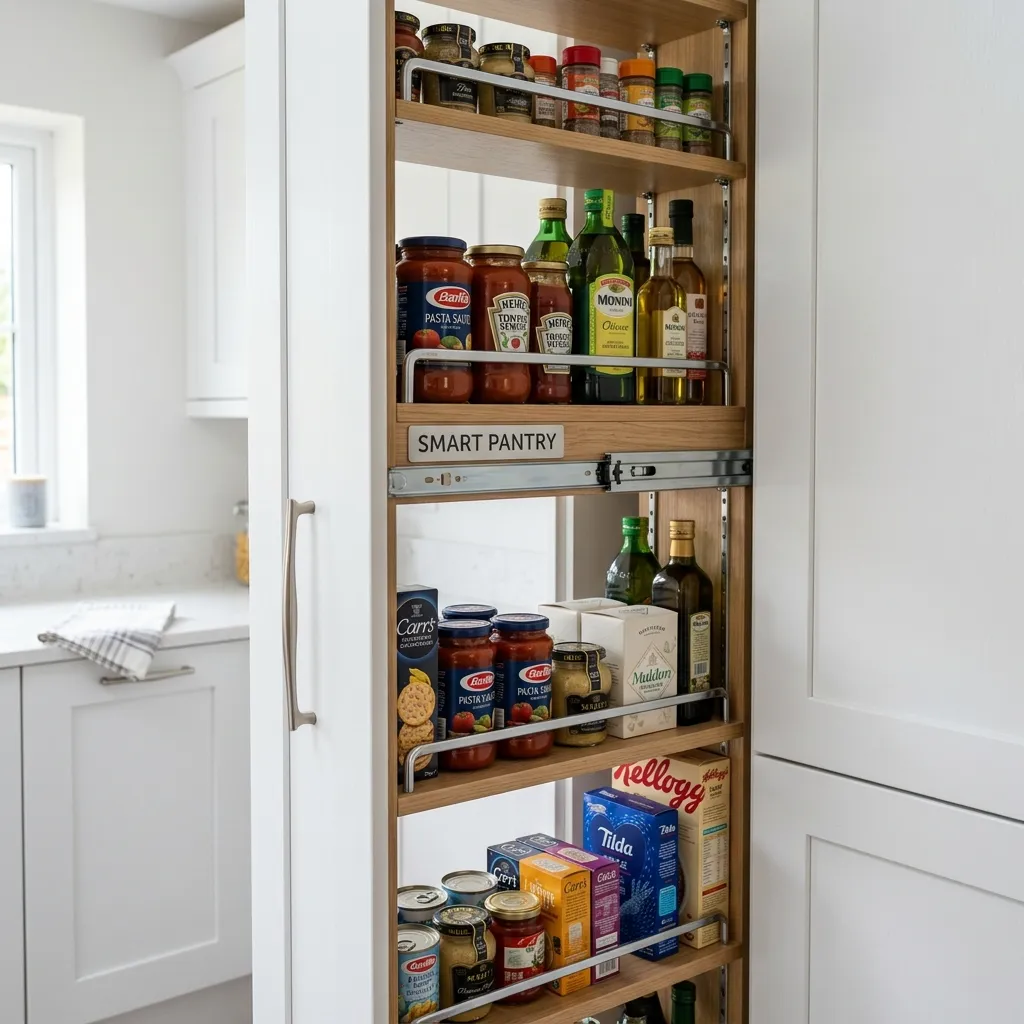
A functional pantry doesn’t require a dedicated room — most small kitchens can create genuinely usable pantry storage from cabinets, narrow gaps, and vertical space they already have. Here’s how to build real pantry function into a kitchen with zero extra square footage to spare.
⭐ Quick Takeaways
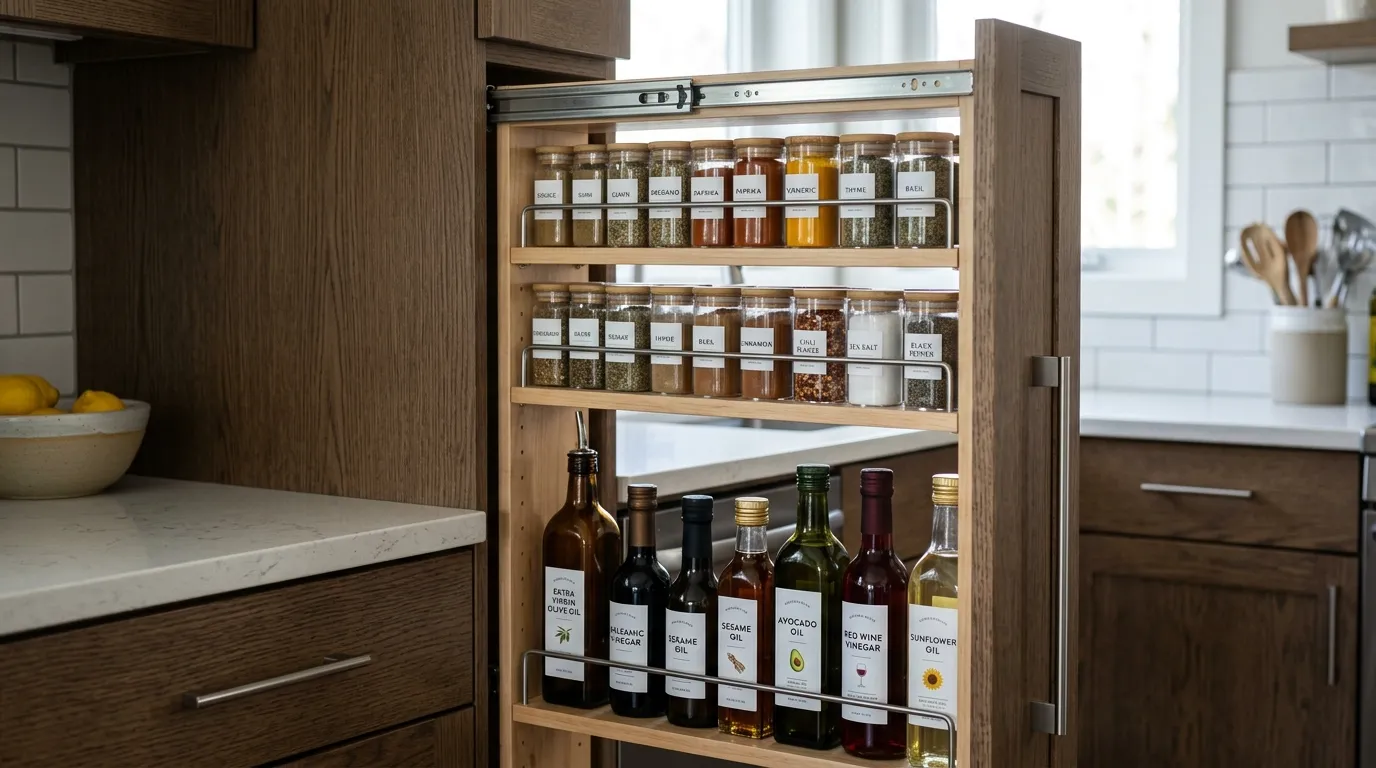
- A narrow gap as slim as 6-8 inches can hold a slide-out vertical pantry unit
- Converting one existing cabinet into dedicated pantry storage is often more effective than trying to add a new one
- Corner cabinets are consistently the most underused potential pantry space in small kitchens
- Uniform, labeled containers store more efficiently than mismatched bags and boxes
- Open shelving can function as a stylish, visible “pantry” when floor-to-ceiling cabinets aren’t an option
📑 In This Post
Why This Matters in a Small Kitchen
Most small kitchens weren’t built with a walk-in pantry, but that doesn’t mean pantry function is out of reach — it just means the storage has to be built from what’s already there, using vertical space, narrow gaps, and smarter organization rather than square footage that doesn’t exist.
Vertical & Narrow-Gap Solutions
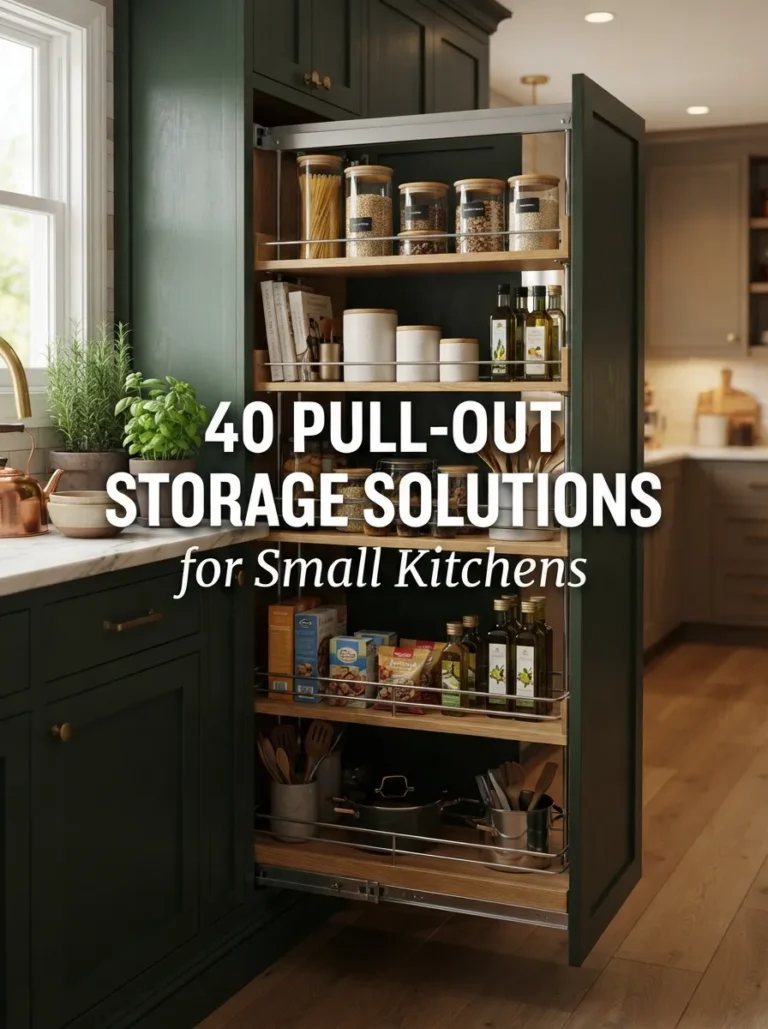
- Slide-out vertical pantry unit — fits gaps as narrow as 6-8 inches, often beside a fridge or at the end of a cabinet run
- Floor-to-ceiling cabinet repurposed entirely for pantry goods instead of mixed storage
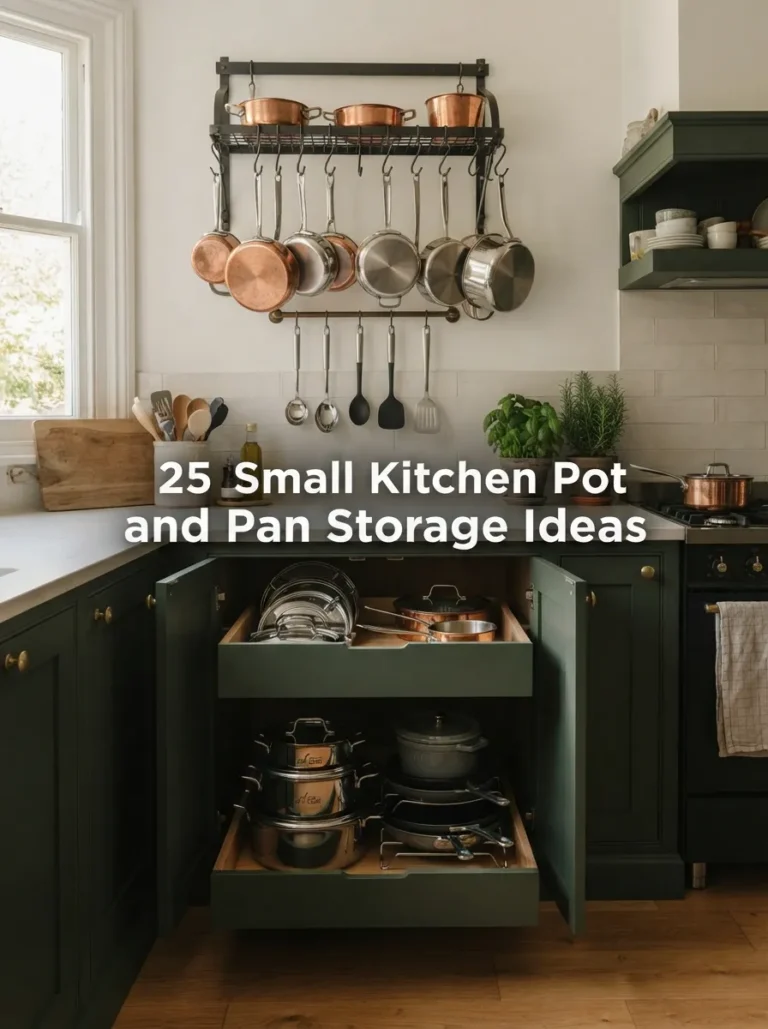
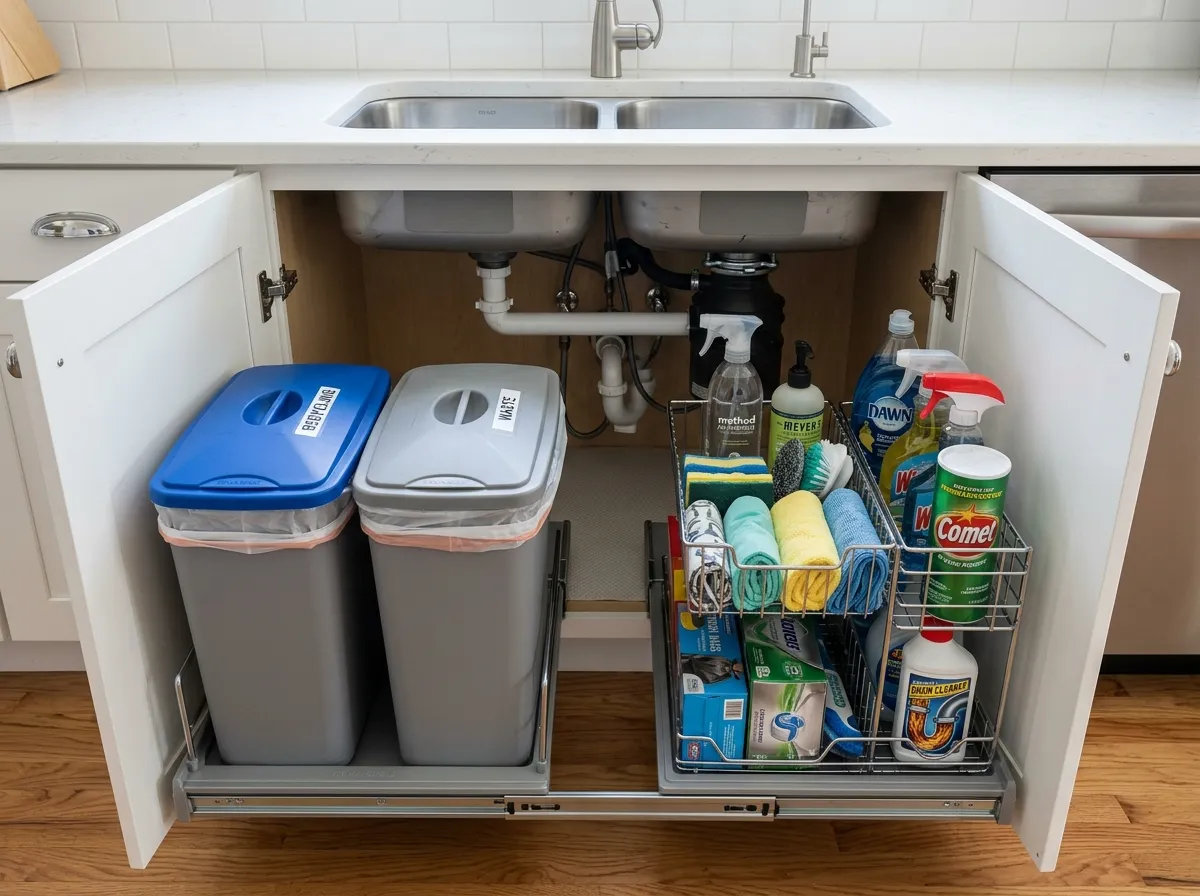
- Tiered shelf organizers inside an existing cabinet, doubling visible and usable shelf space
- Door-mounted racks on the inside of any cabinet door, adding a full extra storage layer for free
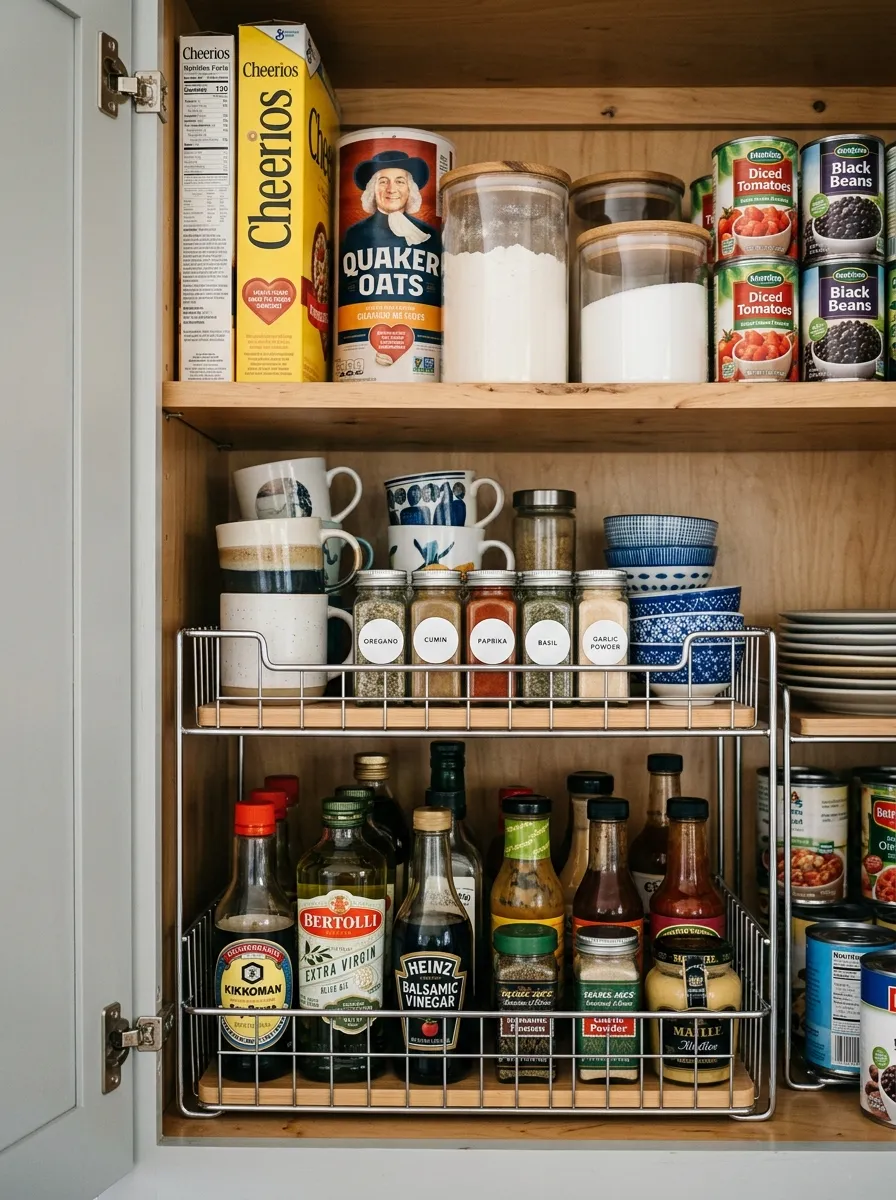
Tiered shelf organizers double the usable storage inside an existing cabinet.
Converting an Existing Cabinet
Rather than trying to add a new pantry, the most reliable fix is often converting one existing cabinet — even a standard base or upper cabinet — into fully dedicated, well-organized pantry storage.
- Empty one full cabinet completely and reserve it exclusively for pantry goods, rather than mixing food with cookware
- Add pull-out shelves so nothing gets lost or forgotten at the back
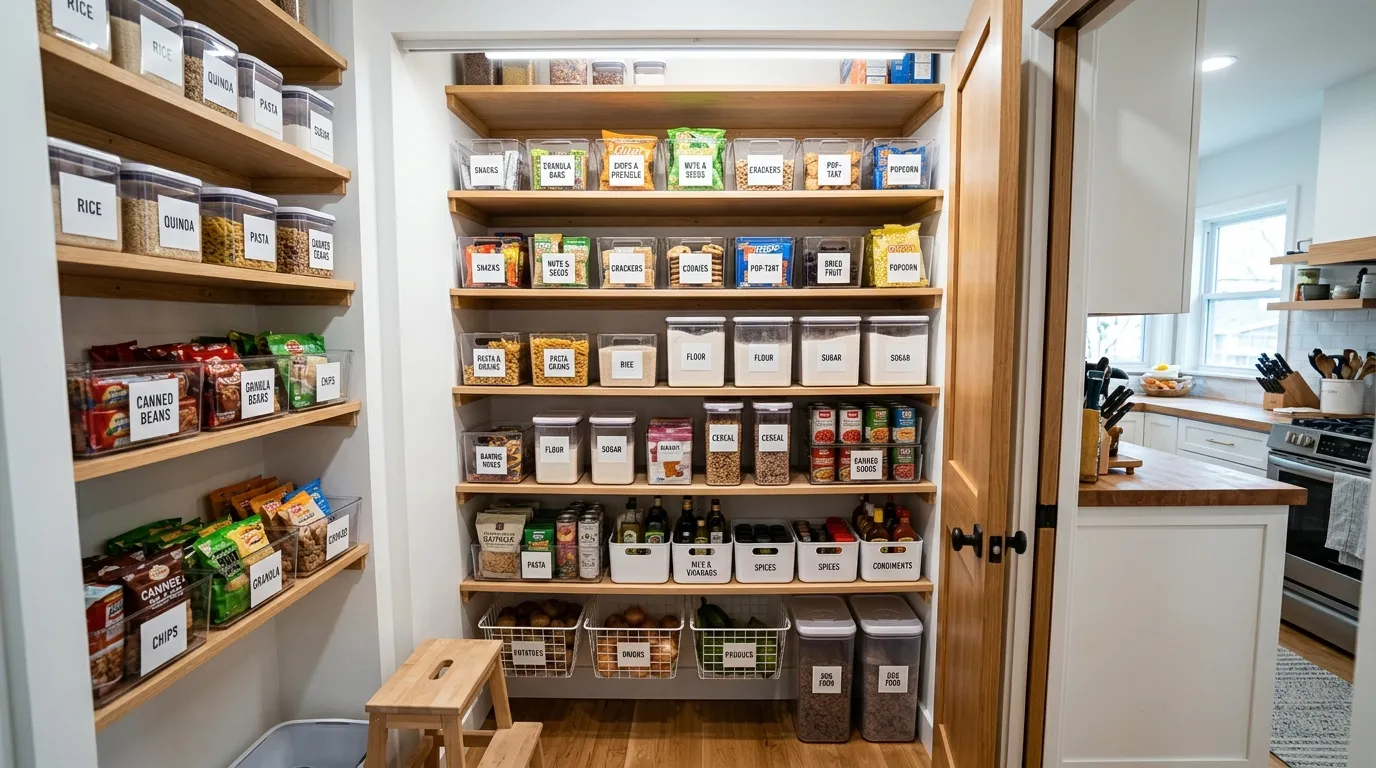
- Use uniform, labeled containers for dry goods, which store more efficiently than mismatched bags and boxes
- Zone by category (baking, snacks, canned goods) so restocking and finding items stays quick
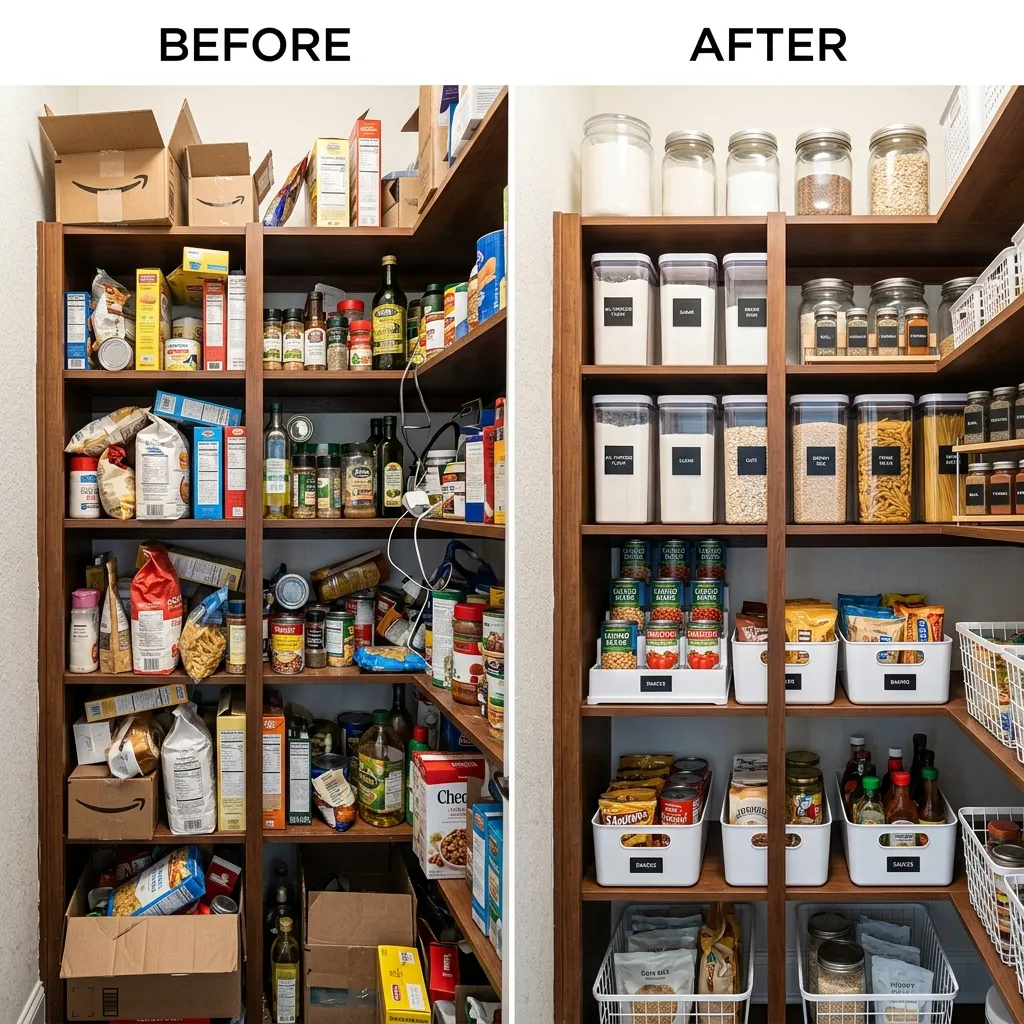
A single well-organized cabinet, converted entirely to pantry use, often outperforms a poorly organized dedicated pantry room.
Corner & Awkward Space Solutions
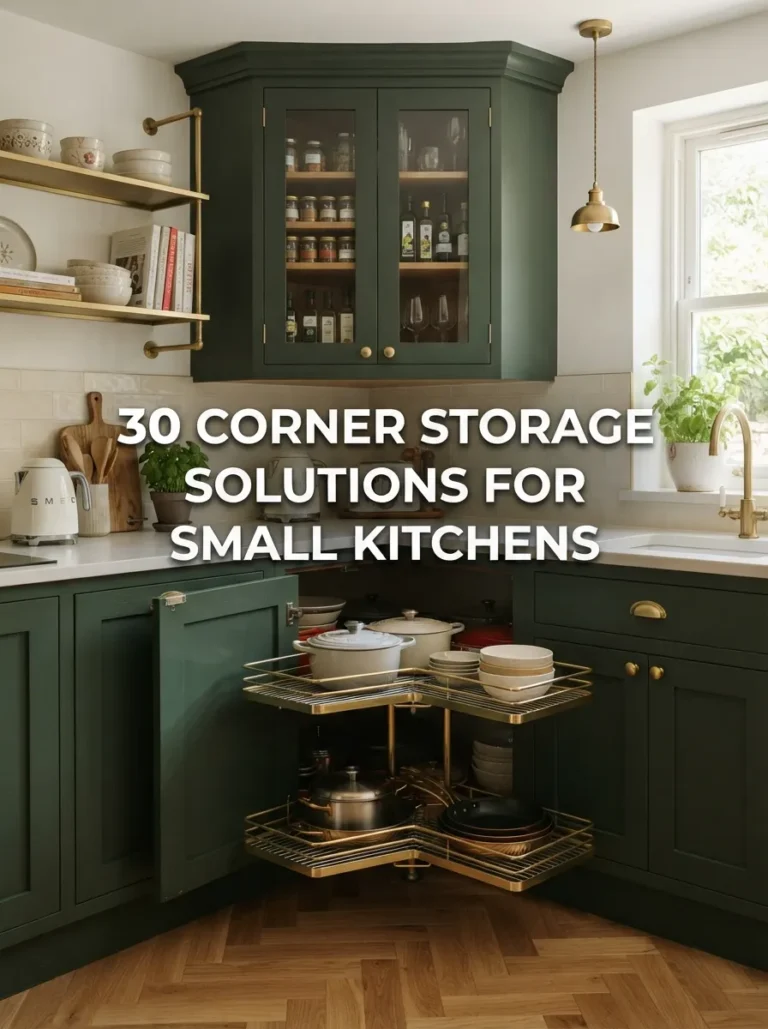
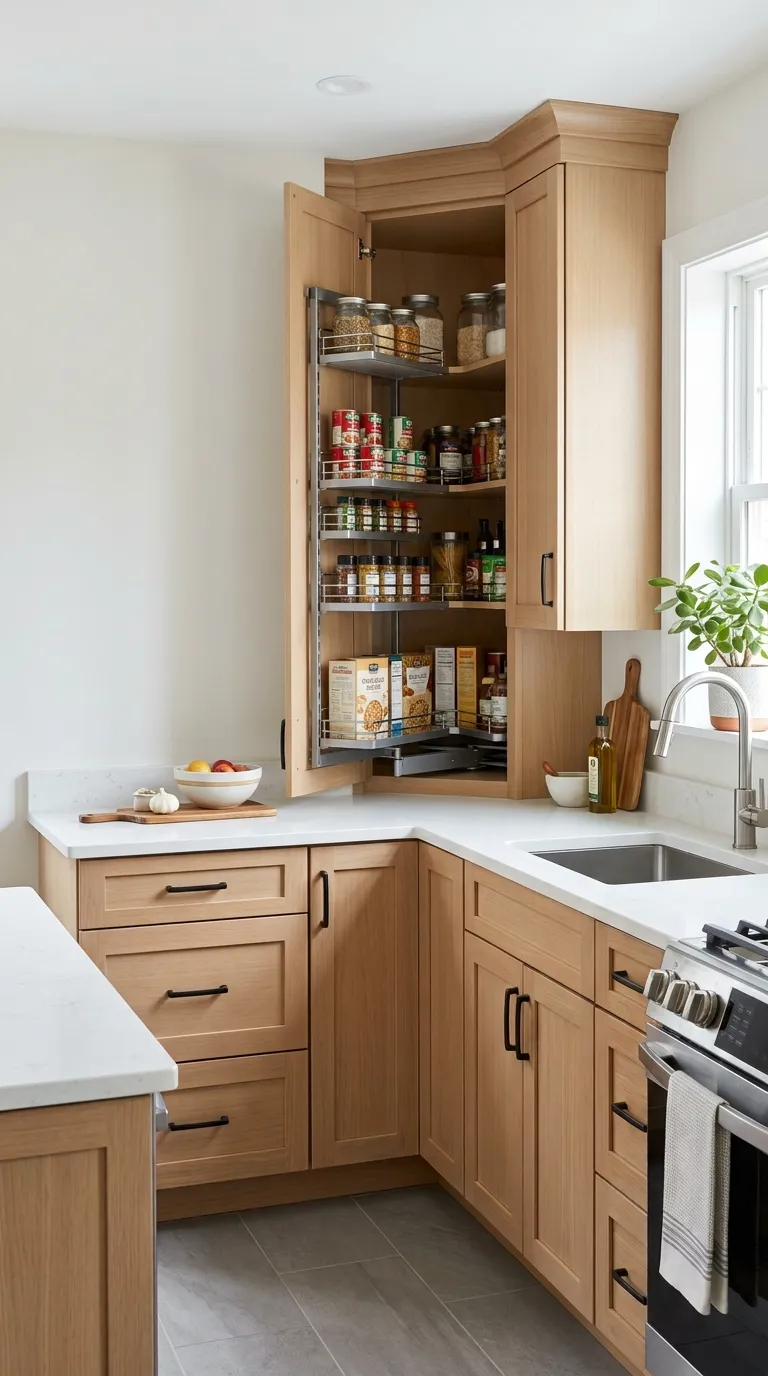
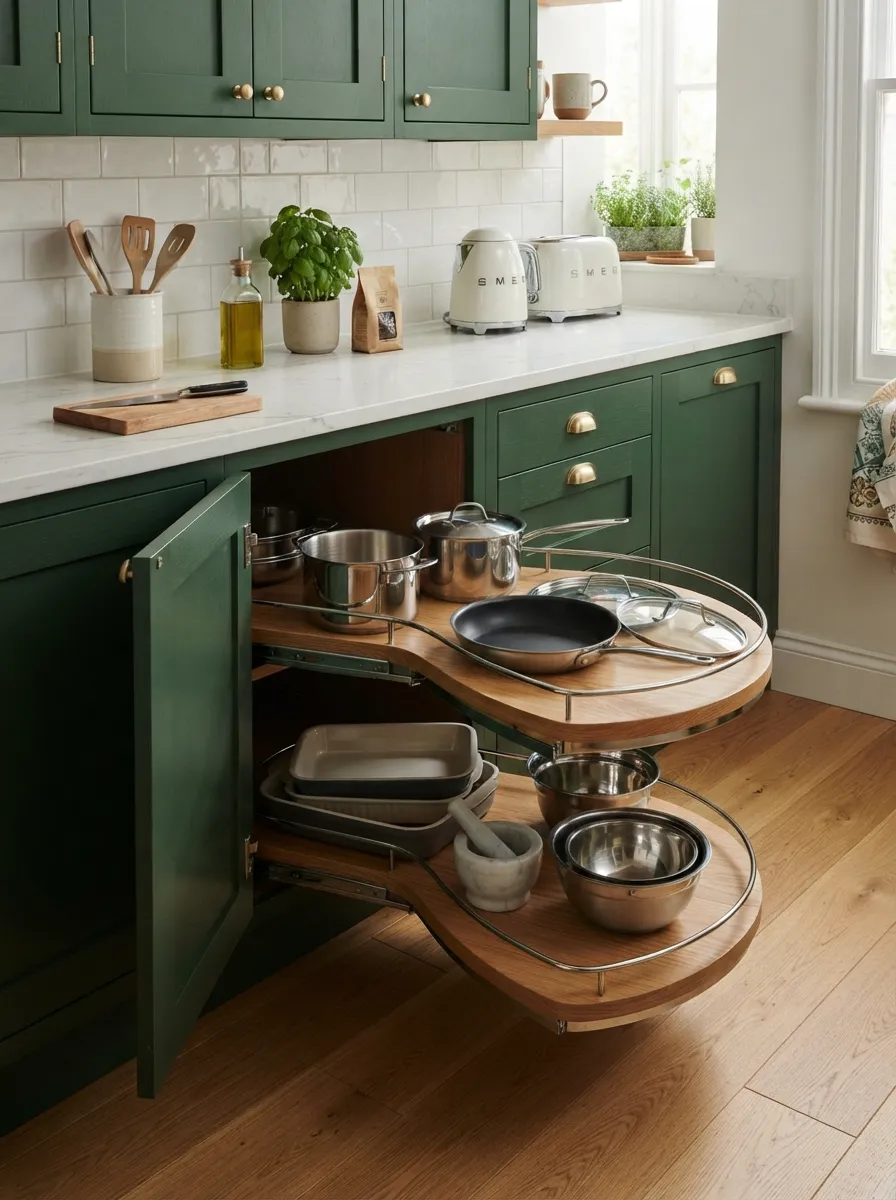
Corner cabinets are consistently the most underused potential pantry space in small kitchens — the deep, hard-to-reach back corner is exactly where extra storage tends to go forgotten.
- Lazy Susan corner cabinet — rotates pantry contents into reach instead of losing them in the back
- Magic Corner pull-out system — pulls the entire contents of a blind corner cabinet forward
- Diagonal corner shelving — a budget-friendly alternative that still improves access over a standard fixed shelf
- Kidney-shaped rotating shelves — designed specifically to maximize awkward corner geometry
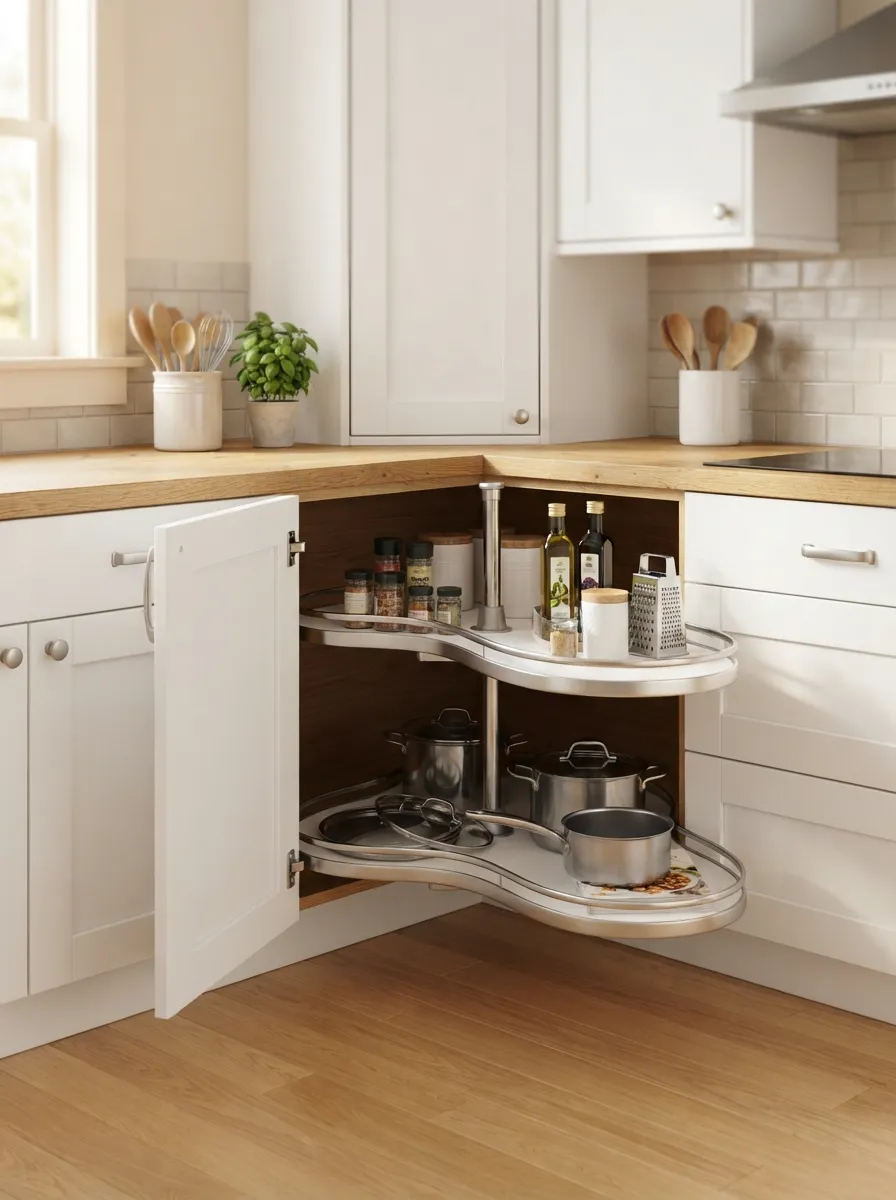
A carousel pull-out turns a wasted corner cabinet into genuinely usable pantry space.
Furniture-Based Pantry Options
If cabinet space genuinely can’t accommodate more pantry storage, freestanding furniture pieces can fill the gap without any renovation.
- Freestanding pantry cabinet — a tall, narrow furniture piece that can sit in an unused corner or against a wall
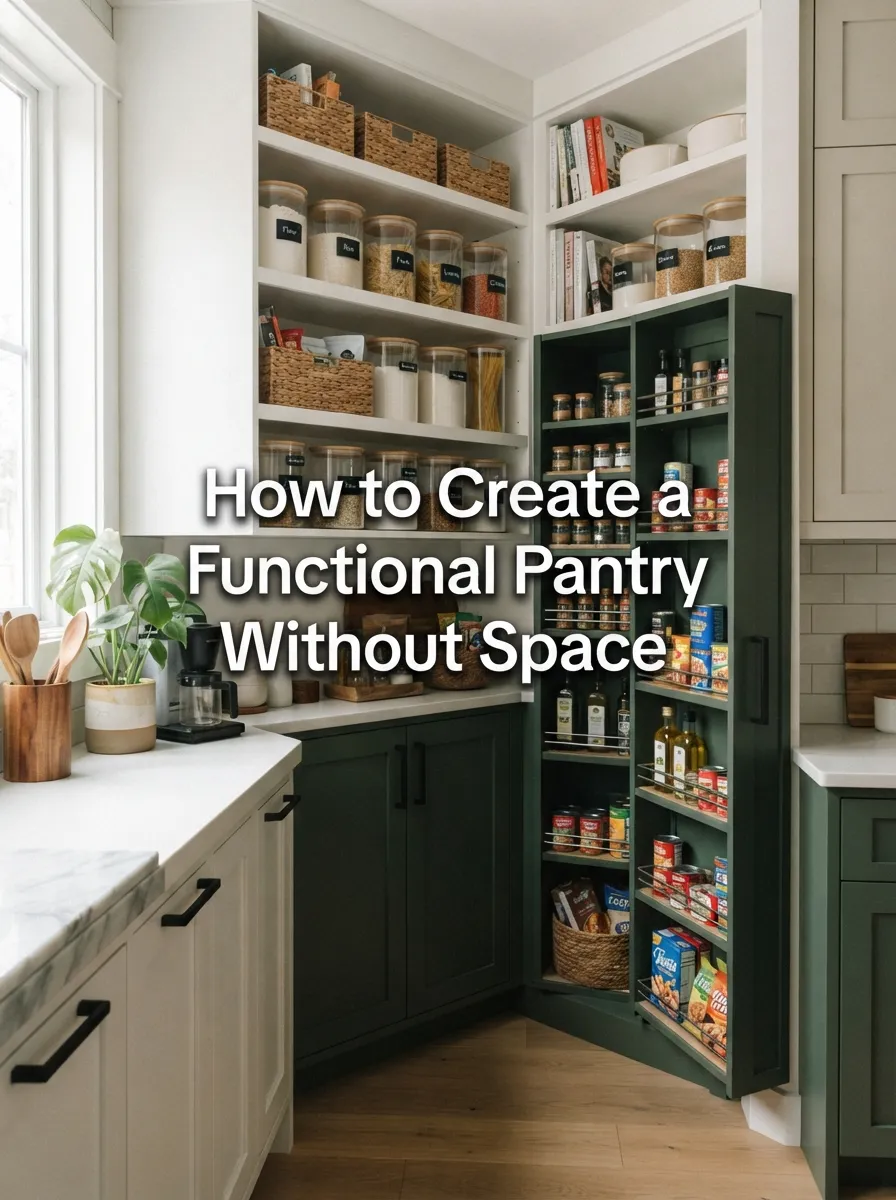
- Open shelving unit styled as a visible, curated pantry display rather than hidden storage
- Rolling cart with baskets that can tuck beside the fridge or an appliance when not in active use
- Under-stair or closet conversion if your kitchen is near an unused nook that could function as an informal pantry
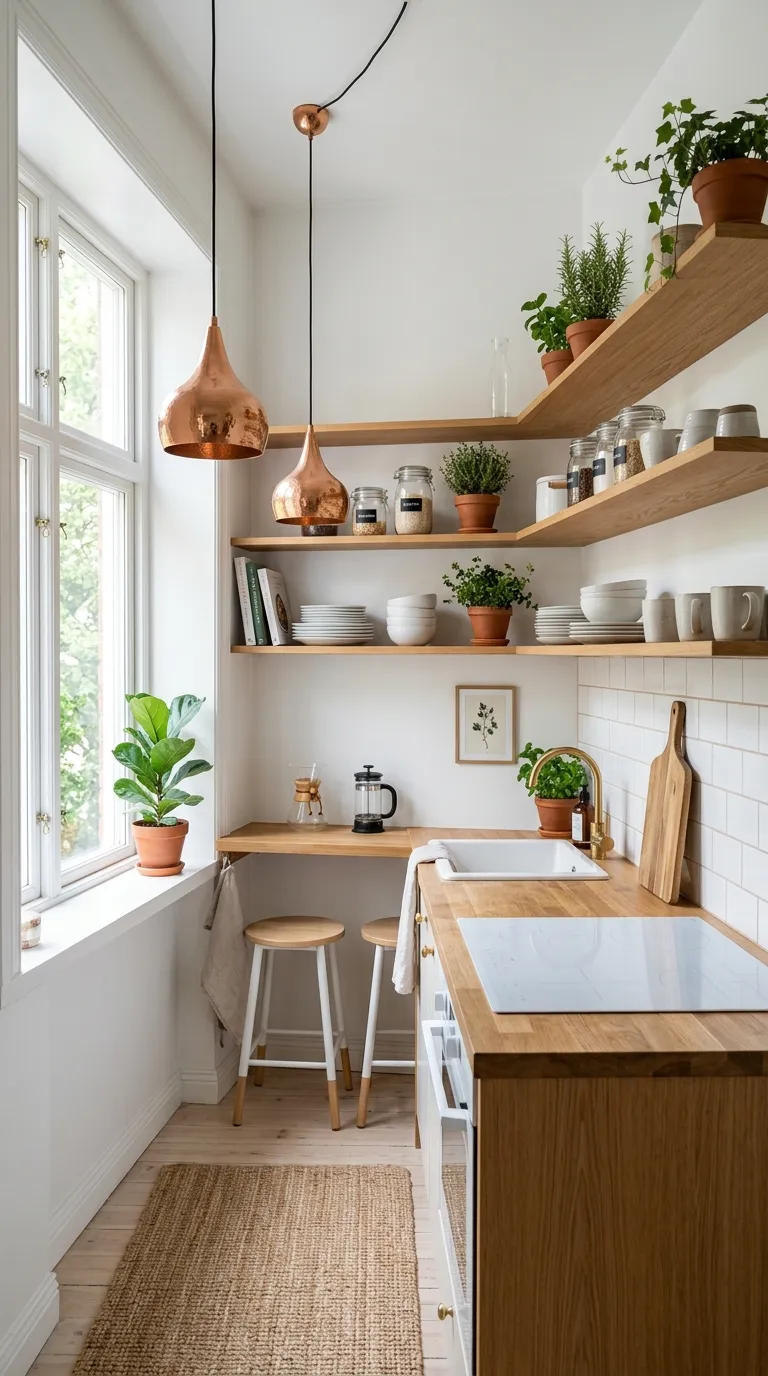
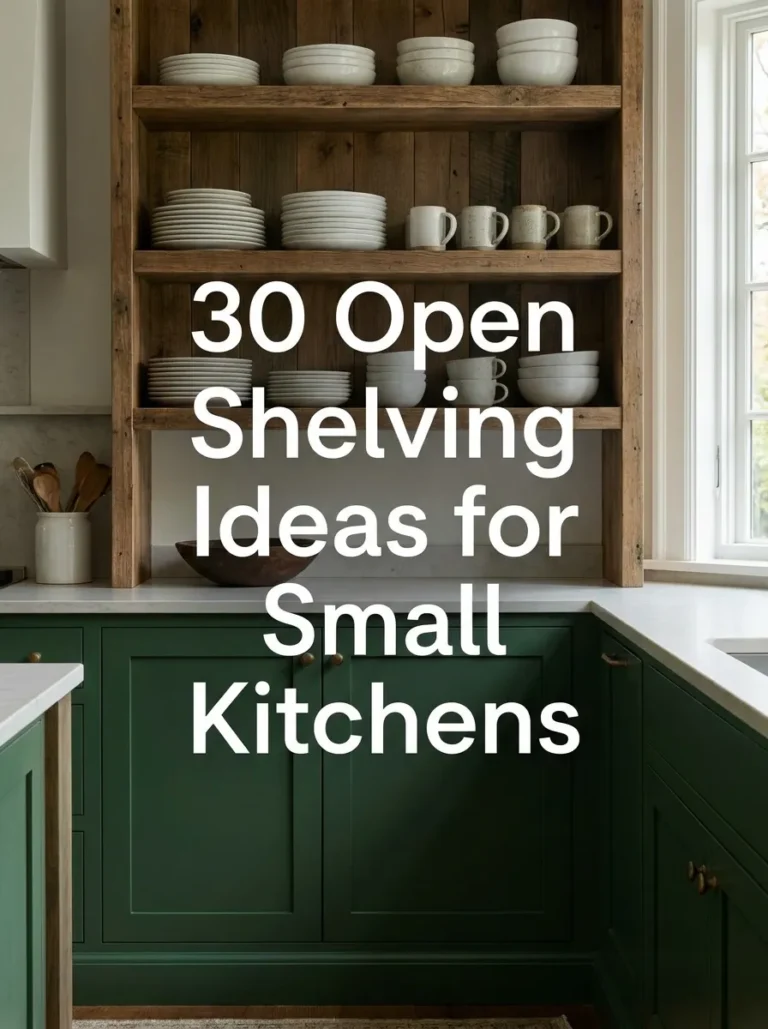
Open shelving can double as a stylish, visible pantry when a closed cabinet isn’t an option.
Mistakes to Avoid
- Mixing food storage with cookware in the same cabinet, which makes both harder to find and organize
- Ignoring corner cabinets — they’re consistently the most wasted potential pantry space
- Using mismatched containers that stack and store inefficiently compared to a uniform set
- Skipping labels — an unlabeled system falls apart within weeks, especially in a shared household
Frequently Asked Questions
Yes, converting one existing cabinet into fully dedicated, well-organized pantry storage is often more effective than a poorly organized dedicated pantry room.
Slide-out vertical pantry units can fit gaps as narrow as 6-8 inches, often found beside a refrigerator or at the end of a cabinet run.
A lazy Susan, Magic Corner pull-out, or kidney-shaped rotating shelf system all significantly improve access compared to a standard fixed shelf in a corner cabinet.
No, mixing food storage with cookware makes both harder to find and organize — dedicating at least one cabinet exclusively to pantry goods works significantly better.
Yes, open shelving can function as a stylish, visible pantry when a closed cabinet conversion isn’t possible, though it requires more consistent tidiness since everything is on display.
It’s not required, but uniform, labeled containers store more efficiently than mismatched bags and boxes, making better use of limited pantry space.
Real Storage, No Extra Square Footage
A functional pantry is less about having a dedicated room and more about building genuine storage discipline into the cabinets, corners, and gaps a small kitchen already has. Start with a narrow-gap slide-out unit or a full cabinet conversion, fix any wasted corner space, and let uniform, labeled containers do the rest.
Explore More Small Kitchen Organization Ideas