10 Small Kitchen Knife Storage Ideas That Keep Blades Sharp and Counters Clear
Small kitchen knife storage ideas matter more than most people expect, because in a compact kitchen a traditional countertop knife block eats up 6 to 8 inches of prep space you probably can’t spare. Multiply that across a cutting board, a dish rack, and a coffee maker, and the counter disappears fast. The good news is that knives are one of the easiest things to store smartly — they’re flat, they’re few in number compared to cookware, and there are more space-saving mounting options for knives than almost any other kitchen tool. This guide walks through ten real, tested small kitchen knife storage ideas, from a $12 magnetic strip to a built-in toe-kick drawer, plus how to pick the right one for your specific layout.
Quick Takeaways
- Magnetic strips and slim in-drawer inserts save the most counter space of any option
- Keep knives within one step of your main cutting board or cutting zone, not across the kitchen
- Blade guards matter more in small kitchens because storage sits closer to daily foot traffic
- Pairing one visible option (magnetic strip) with one hidden option (drawer insert) covers most cooking styles
- Budget options start around $12–$20; built-in solutions run $40–$150
What’s In This Guide
Why Knife Storage Matters More in a Small Kitchen
In a full-size kitchen, a bulky knife block just takes up a corner nobody uses anyway. In a small kitchen, every flat surface is doing double or triple duty — the same 18 inches of counter might hold your cutting board, your dish drainer, and your knife block on any given evening. That’s why the calculus is different here: the storage method matters almost as much as the knives themselves. A method that works well in a large kitchen (a heavy wooden block, a deep utensil drawer with room to spare) often just doesn’t fit the footprint of a galley, apartment, or studio kitchen. The ten ideas below are chosen specifically because they work within tight square footage, not because they’re the most popular options in general.
10 Small Kitchen Knife Storage Ideas That Actually Work
1Magnetic Knife Strip (Wall-Mounted)
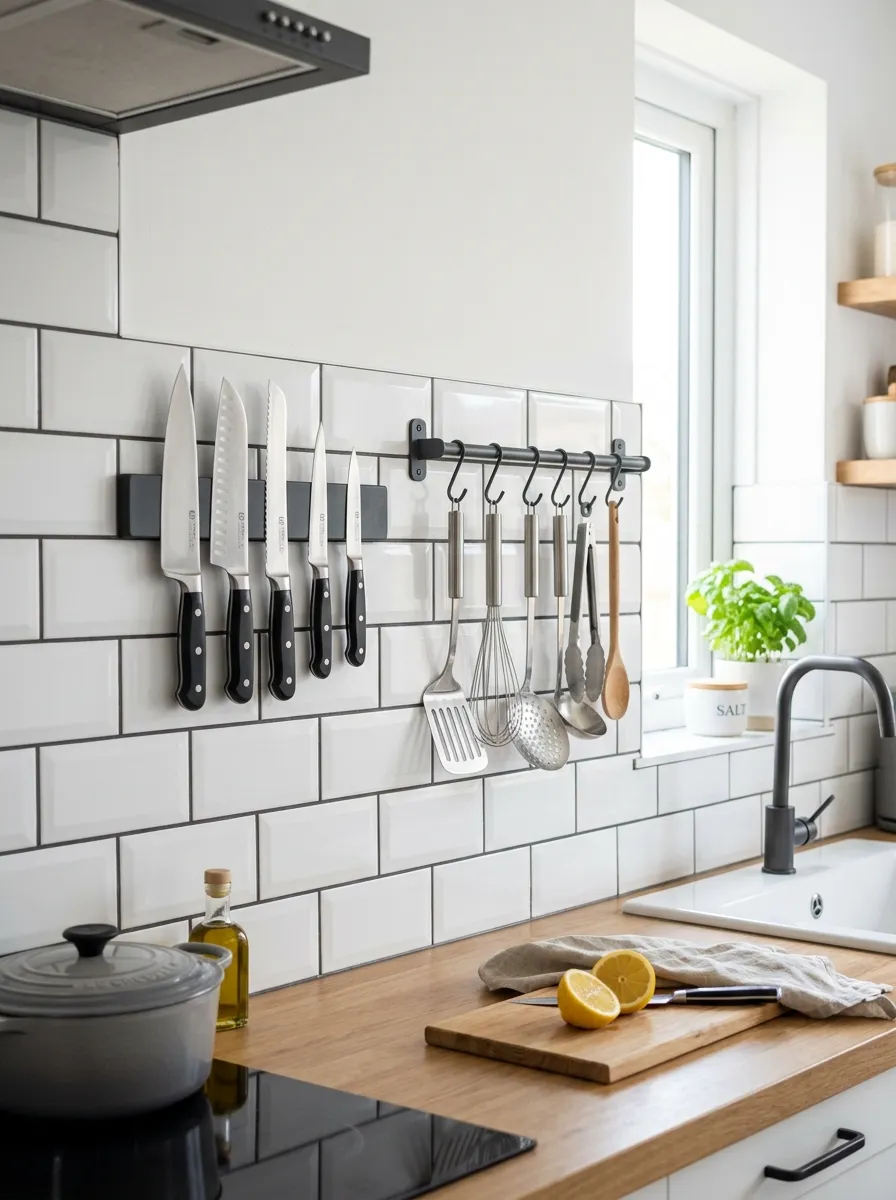
A magnetic strip mounted on the wall beside your stove or prep area is the single most space-efficient knife storage idea for a small kitchen — it uses zero counter or drawer space and turns your knives into a display feature instead of clutter. Look for a strip at least 12–18 inches long so blades don’t overlap, and mount it at a height that’s out of easy reach for kids. Strips run from about $12 for a basic bar to $35 for a locking, higher-capacity version.
2Magnetic Strip Inside a Cabinet Door
If you don’t want knives visible at all, mount the same magnetic strip on the inside of a cabinet door near your prep zone. This is one of the best small kitchen knife storage ideas for renters and anyone who wants a completely hidden, kid-safe setup, since the knives are only exposed when the door is open and you’re standing right there. Just make sure the door doesn’t slam shut hard enough to knock blades loose, and confirm the cabinet is deep enough that the door closes fully with the strip installed (usually not an issue, since knife handles add only about half an inch of clearance needed).
3Slim In-Drawer Knife Organizer
A slim in-drawer insert is the safest hidden option and works in almost any drawer that’s at least 2 inches deep. Bamboo and plastic inserts with individual slots run $15–$30 and keep blades separated so they don’t dull against each other or nick your hand when you reach in. This is the top pick if you already have one dedicated utensil drawer near the stove and want to avoid adding anything to your walls or cabinet doors.
4Toe-Kick Drawer for Knife Storage
The toe-kick is the gap under your base cabinets that’s almost always empty space. Converting it into a slim pull-out drawer (professionally installed, usually $80–$150, or DIY with a kit for less) gives you a dedicated, completely out-of-sight spot for knives, cutting boards, or baking sheets. It’s one of the more involved small kitchen knife storage ideas on this list, but it adds storage without touching a single inch of your existing counter, wall, or cabinet space — genuinely new square footage.
5Compact Vertical Countertop Block
If you do want a countertop block, choose a narrow vertical style (roughly 4×4 inches at the base) instead of the traditional wide wedge block. A vertical block holds 6–8 knives in the same footprint a traditional block uses for 3–4, and it tucks neatly into a corner where a wider block wouldn’t fit. Prices run $20–$50 depending on material.
6In-Cabinet Door-Mounted Knife Rack
Similar to the magnetic strip but using a slotted rack instead of magnets, this option is better for knife sets that don’t have full magnetic tangs or for anyone who prefers a rack they can see is holding blades securely. It mounts to the inside of a cabinet door with adhesive strips or small screws and typically costs $18–$40.
7Universal Slot Knife Block
A universal (slotted, spring-loaded) block holds knives of almost any size in the same set of flexible slots, so you don’t need a separate slot shaped for each blade. This matters in a small kitchen because it means one compact block can flex to hold a new knife you add later without needing to buy a second block. Expect to pay $30–$60.
8Under-Cabinet Mounted Knife Block
Mounted to the underside of your upper cabinets, this style keeps knives at eye level and fully off both the counter and the wall. It’s an excellent small kitchen knife storage idea for anyone with limited wall space but at least one run of upper cabinets over the counter. Installation is simple (usually 2–4 screws), and prices run $25–$45.
9Knife Roll or Canvas Case
A canvas or leather knife roll isn’t just for professional chefs — it’s genuinely one of the best options for renters, studio kitchens, or anyone storing knives inside an already-crowded drawer. Roll it up and tuck it into any drawer, and it protects blades the same way a block would, just without taking up fixed space when you’re not using it. Rolls run $15–$40 depending on capacity.
10Floating Shelf With Blade Guards Near the Sink
A single floating shelf installed just above the backsplash near your sink or prep zone can hold 3–5 knives standing in individual blade guards or a small slotted tray. This works well when wall space is available but you don’t want a full magnetic strip, and it doubles as a spot for a cutting board or dish soap. Blade guards cost $2–$5 each, and a small floating shelf runs $15–$30.
Quick Comparison: Knife Storage Options by Space and Budget
| Option | Space Used | Typical Cost | Best For |
|---|---|---|---|
| Wall magnetic strip | Wall only | $12–$35 | Open display, easy access |
| In-cabinet magnetic strip | None (hidden) | $12–$35 | Renters, kid safety |
| In-drawer organizer | Existing drawer | $15–$30 | Hidden, no installation |
| Toe-kick drawer | New (unused space) | $80–$150 | Zero counter/wall impact |
| Slim vertical block | Small counter footprint | $20–$50 | Visible, low commitment |
| Knife roll/case | Fits in any drawer | $15–$40 | Renters, studio kitchens |
Knife Storage Safety Tips for Small Kitchens
Small kitchens mean less distance between your knives and everyone walking through the room, so a few extra precautions are worth the two minutes it takes to set them up:
- Mount magnetic strips and racks at least 54 inches from the floor if kids use the kitchen
- Never store knives loose in a general utensil drawer — always use a divider, guard, or dedicated slot
- Choose blade guards for any knife stored in a drawer, roll, or open shelf near the edge
- Keep the busiest walking path in the kitchen clear of any wall-mounted rack, even if that means a slightly less convenient spot
- If you have a toe-kick drawer, add a soft-close mechanism so it can’t be kicked open accidentally
How to Choose the Right Option for Your Layout
The right small kitchen knife storage idea depends less on your budget and more on what kind of kitchen you’re actually working with:
Galley kitchens tend to have narrow walls and tight walking paths, so an in-cabinet magnetic strip or in-drawer organizer usually beats anything wall-mounted, since there’s rarely a safe stretch of open wall that isn’t also a walkway.
One-wall and open-concept kitchens often have more visible wall space above the counter, making a wall-mounted magnetic strip or floating shelf a strong, space-neutral choice that doesn’t compete with cabinets or drawers at all.
Apartment and rental kitchens do best with options that need no drilling: a knife roll, an in-drawer insert, or an adhesive-mounted in-cabinet strip all install and remove without leaving a mark.
Kitchens with a toe-kick that’s currently just empty space should seriously consider the toe-kick drawer — it’s the only option on this list that adds storage instead of repurposing storage you already have.
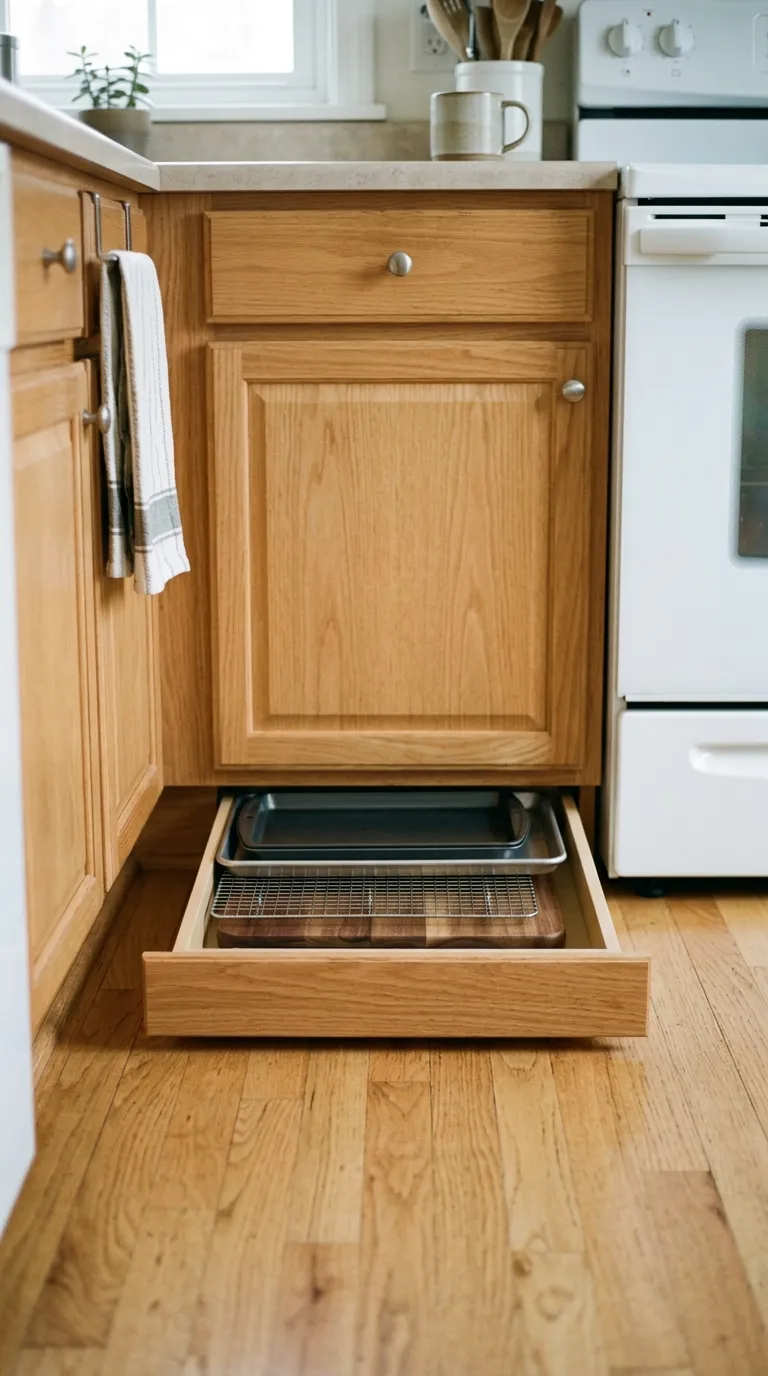
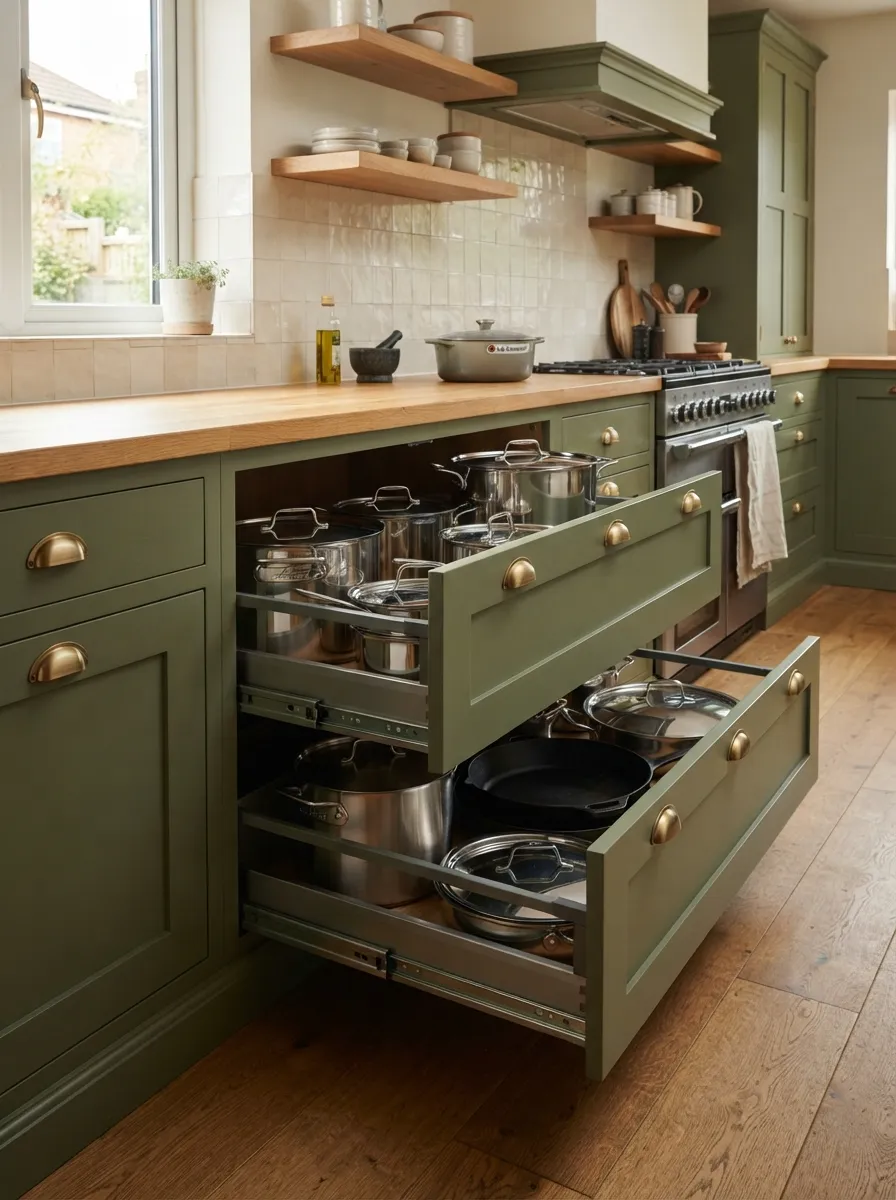
A toe-kick drawer turns unused space under the cabinets into knife storage
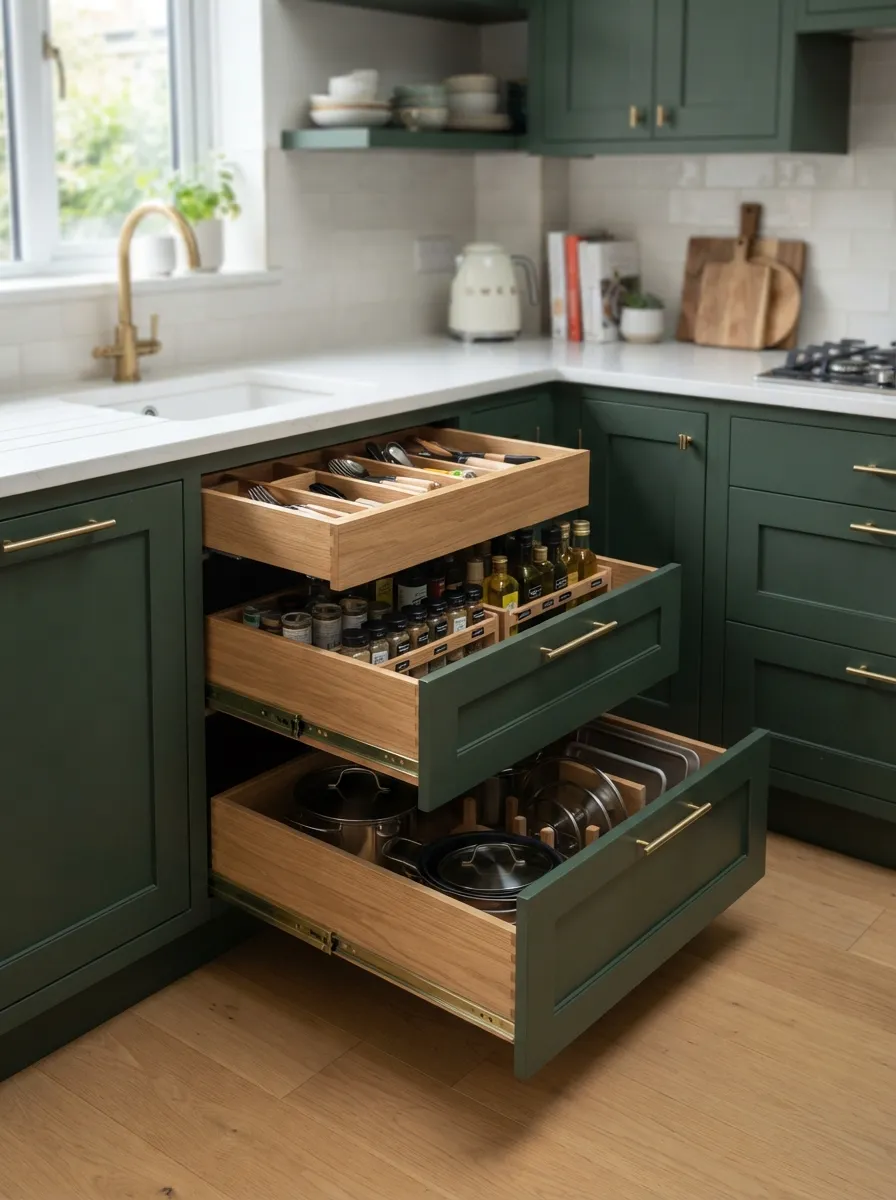
Deep drawers work well for slim in-drawer knife organizers
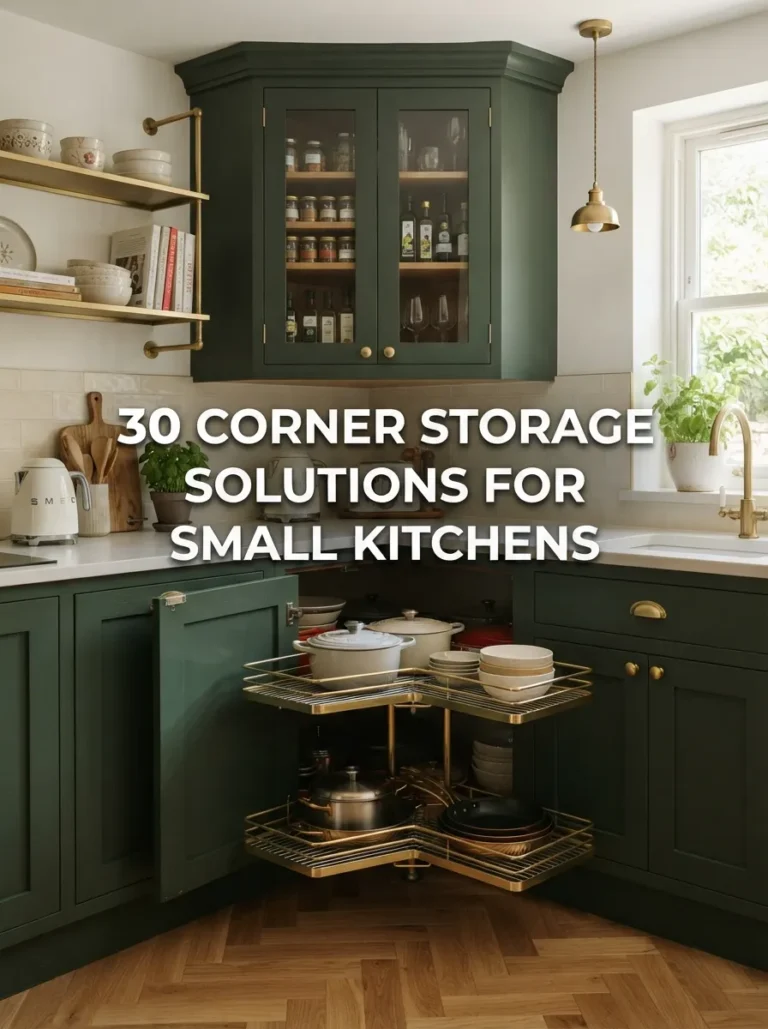
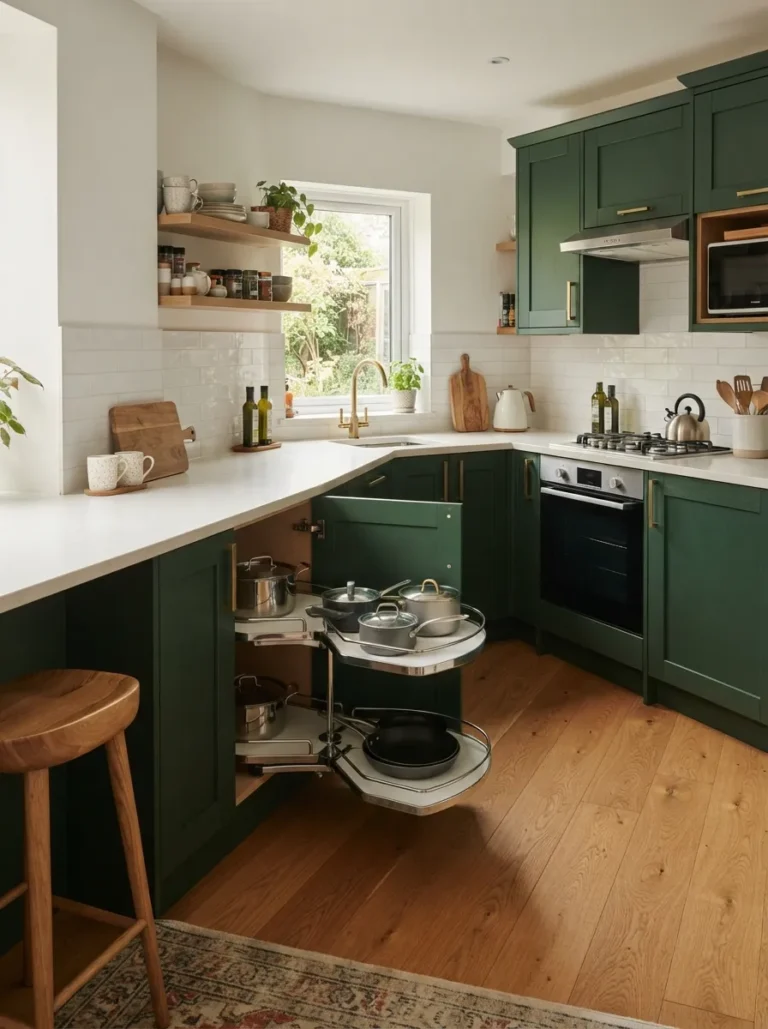
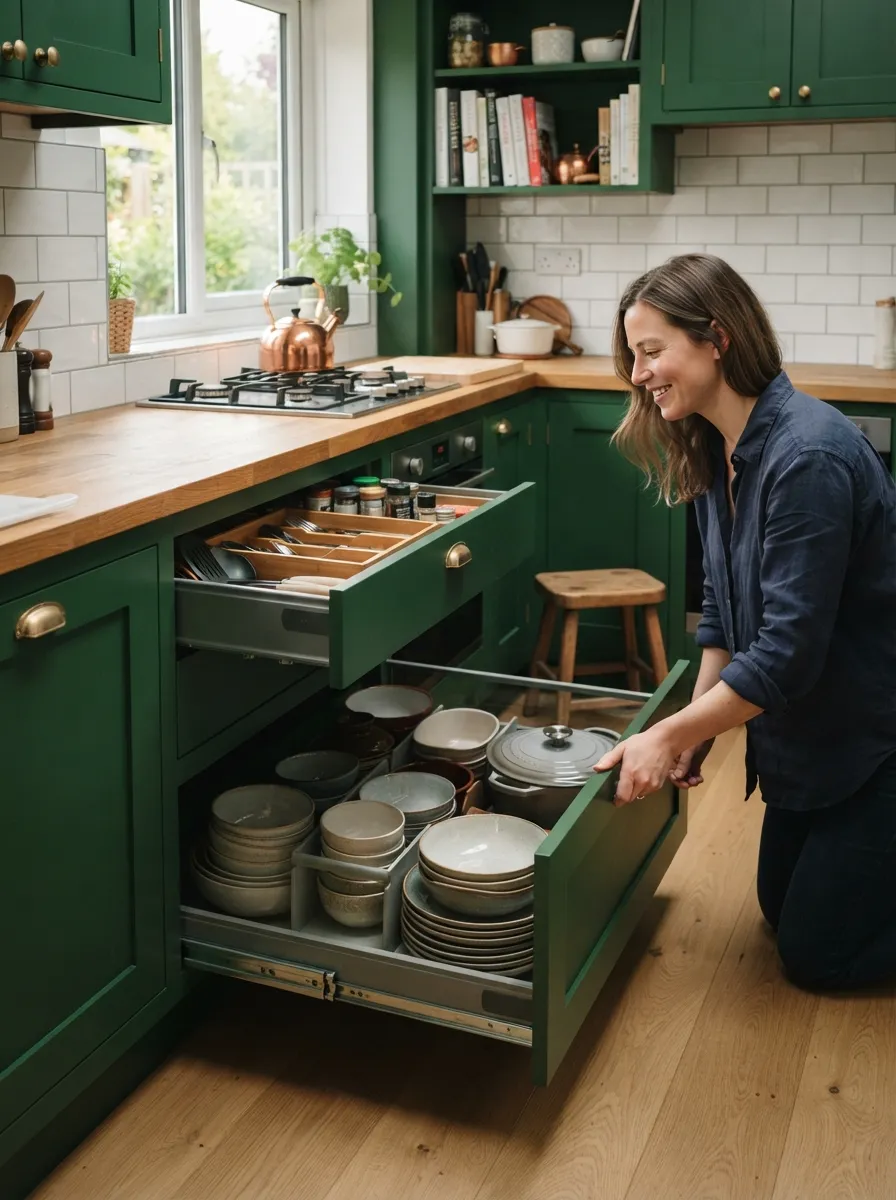
Corner drawer systems free up prime counter space
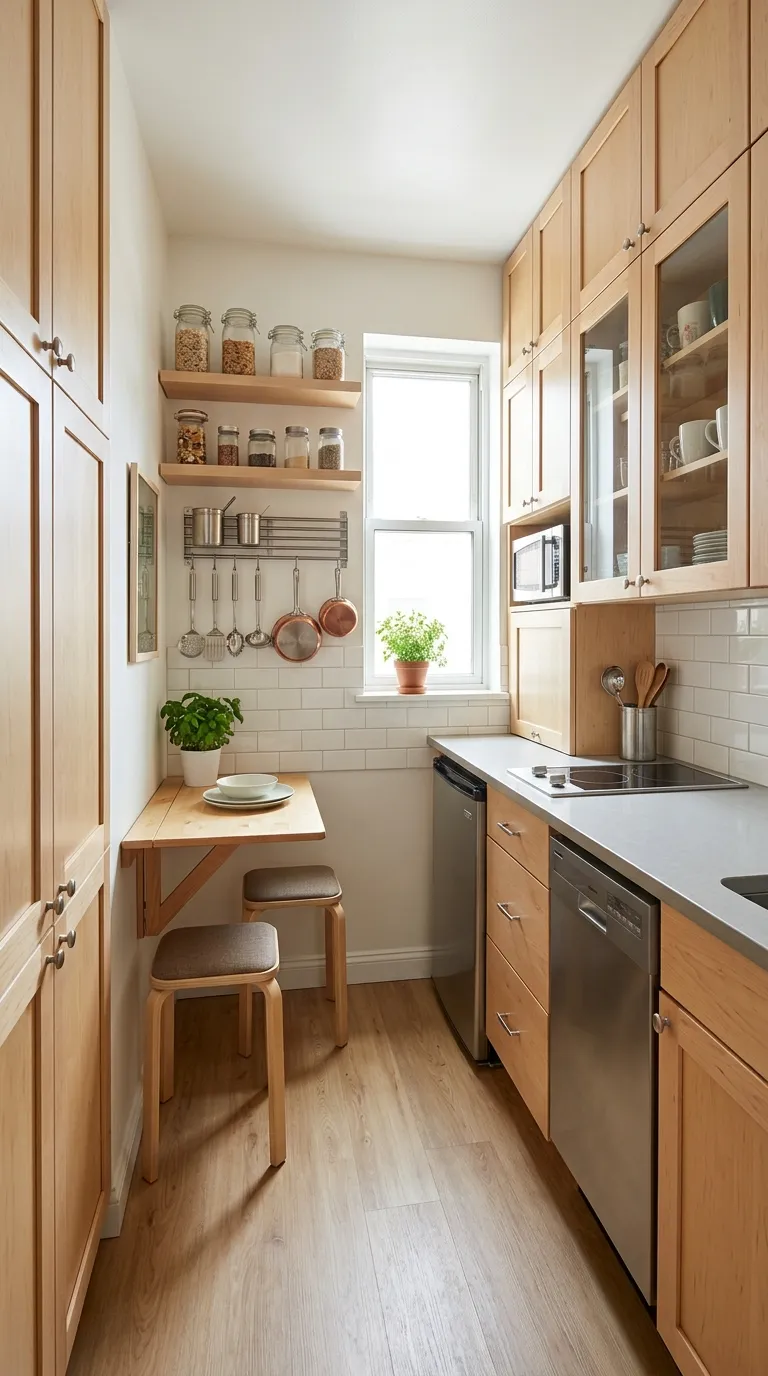
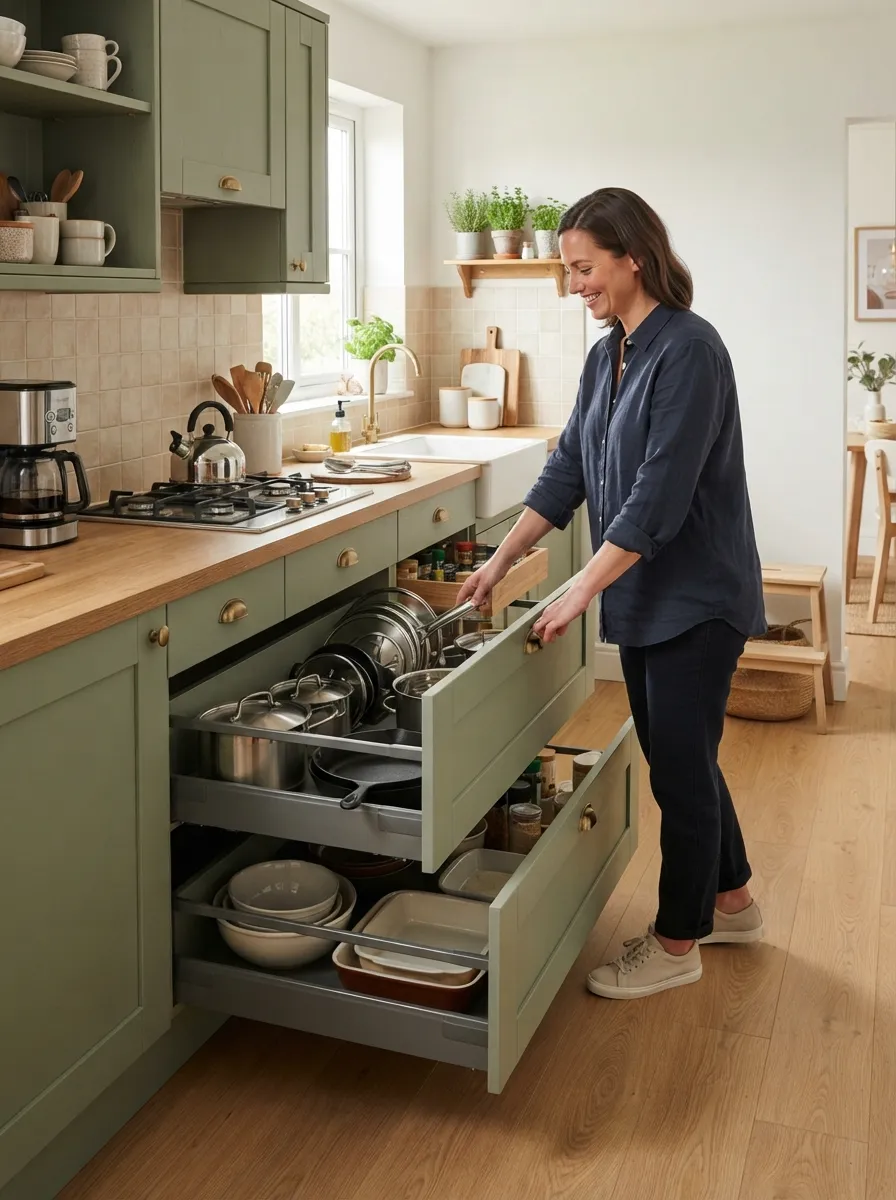
A compact kitchen with dedicated, organized drawer storage
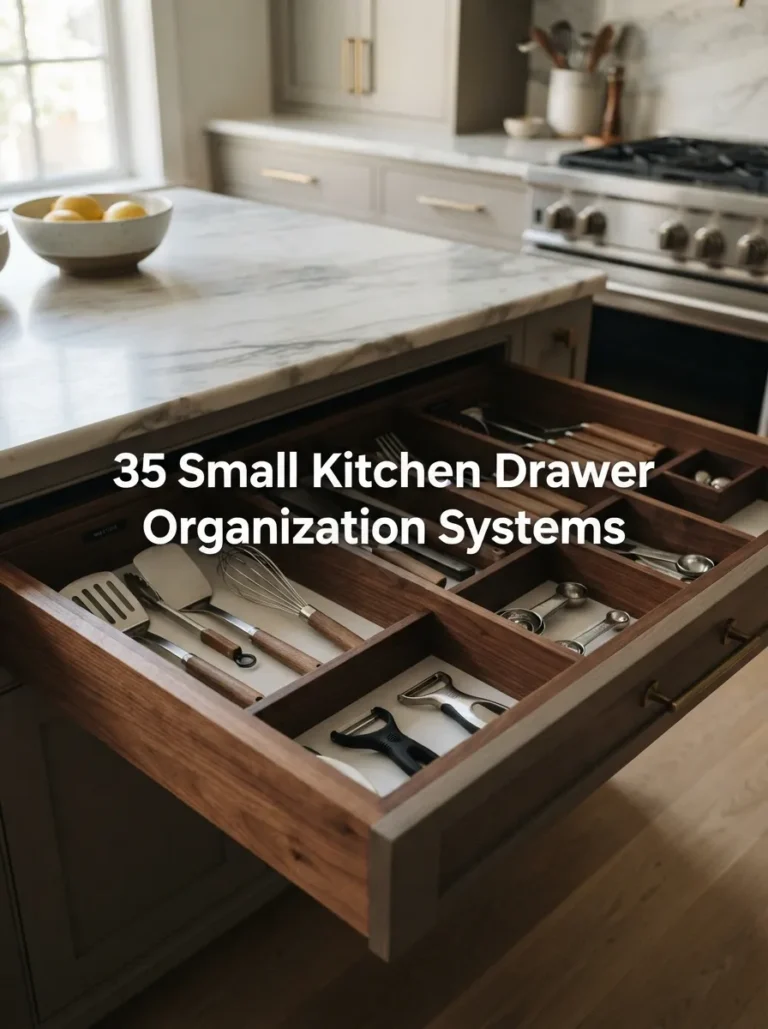
Slim inserts keep blades separated and easy to grab
A magnetic rail keeps knives off the counter entirely
Common Knife Storage Mistakes in Small Kitchens
A few habits quietly work against you no matter which storage idea you pick, so it’s worth checking your setup against these before you commit to a solution:
Buying a full knife block set you don’t need. A 14-slot block might look complete, but if you only reach for 3 of those knives, you’re dedicating counter space to storing tools you rarely touch. Downsize to the knives you actually use, and store any extras separately in a drawer.
Mounting a magnetic strip too close to the stove. Heat and steam near a range can loosen adhesive-mounted strips over time and make handles slippery with condensation. Aim for at least 8–10 inches of clearance from any burner.
Choosing style over function for a first-time setup. A beautiful open display looks great in photos, but if your kitchen sees a lot of foot traffic or young hands, a hidden in-drawer or in-cabinet option will serve you better day to day. You can always add a visible strip later once you know your routine.
Ignoring the toe-kick space entirely. It’s one of the most overlooked spots in any small kitchen, and for renters or anyone who isn’t ready for a built-in drawer, even a slim slide-out tray kit designed for the gap can work without permanent modification.
Skipping blade guards on knives stored in a roll or drawer. It only takes a few dollars per guard, but it’s the difference between a safe, tidy setup and one where you’re reaching blind into a drawer full of exposed edges.
Frequently Asked Questions
Is a magnetic knife strip safe for a small kitchen?
Yes, as long as it’s mounted at a height out of easy reach for children and positioned away from the busiest walking path. Magnetic strips are actually considered safer than loose drawer storage because each blade is fully visible and separated rather than hidden among other knives.
Where should I store knives if I don’t have drawer space?
A wall-mounted or in-cabinet-door magnetic strip is the best option when drawer space is limited, since it uses only vertical space you’re likely not using for anything else. A floating shelf near the sink is a good second option.
How many knives does a small kitchen actually need?
Most home cooks only regularly use three knives: a chef’s knife, a paring knife, and a serrated bread knife. Storing only these three (instead of a full 12-piece block set) is one of the simplest ways to make any small kitchen knife storage idea work better, since you’re solving for 3 knives instead of 10.
Is it safe to store knives loose in a drawer?
No. Loose knives in a drawer dull faster from knocking against other utensils and create a real cut risk when you reach in without looking. Always use a divided insert, individual blade guards, or a knife roll instead.
What’s the best knife storage option for renters?
An in-drawer organizer or a canvas knife roll are the top choices for renters, since neither requires drilling or adhesive that could damage cabinets or walls. An adhesive-backed magnetic strip inside a cabinet door is a close third, as it can be removed cleanly at move-out.
How do I keep knives away from kids in an open small kitchen?
Favor hidden storage over any visible option: an in-cabinet magnetic strip, a locking in-drawer organizer, or a toe-kick drawer all keep knives out of a child’s sightline and reach, which matters more in open-concept layouts where the kitchen has no door to close off.
Do magnetic strips dull knife blades over time?
No, a quality magnetic strip won’t dull blades on its own. Dulling happens from blades knocking against each other or hard surfaces, which a magnetic strip actually prevents by holding each knife separately and securely in place.
Related Pages
Final Thought
You don’t need a big kitchen to store knives well — you need a system that matches the space you actually have. Start with the option that fits your layout best (magnetic strip for open wall space, in-drawer for a spare drawer, toe-kick drawer if you want to add space rather than repurpose it), and resist the urge to buy a full knife block set that’s bigger than what you’ll use. Three well-stored knives beat twelve crowded ones every time.
Ready to tackle the rest of your small kitchen storage?
Explore Small Kitchen Cabinet Design