How to Choose Kitchen Faucet Finish for Small Kitchens (7 Finishes Compared)
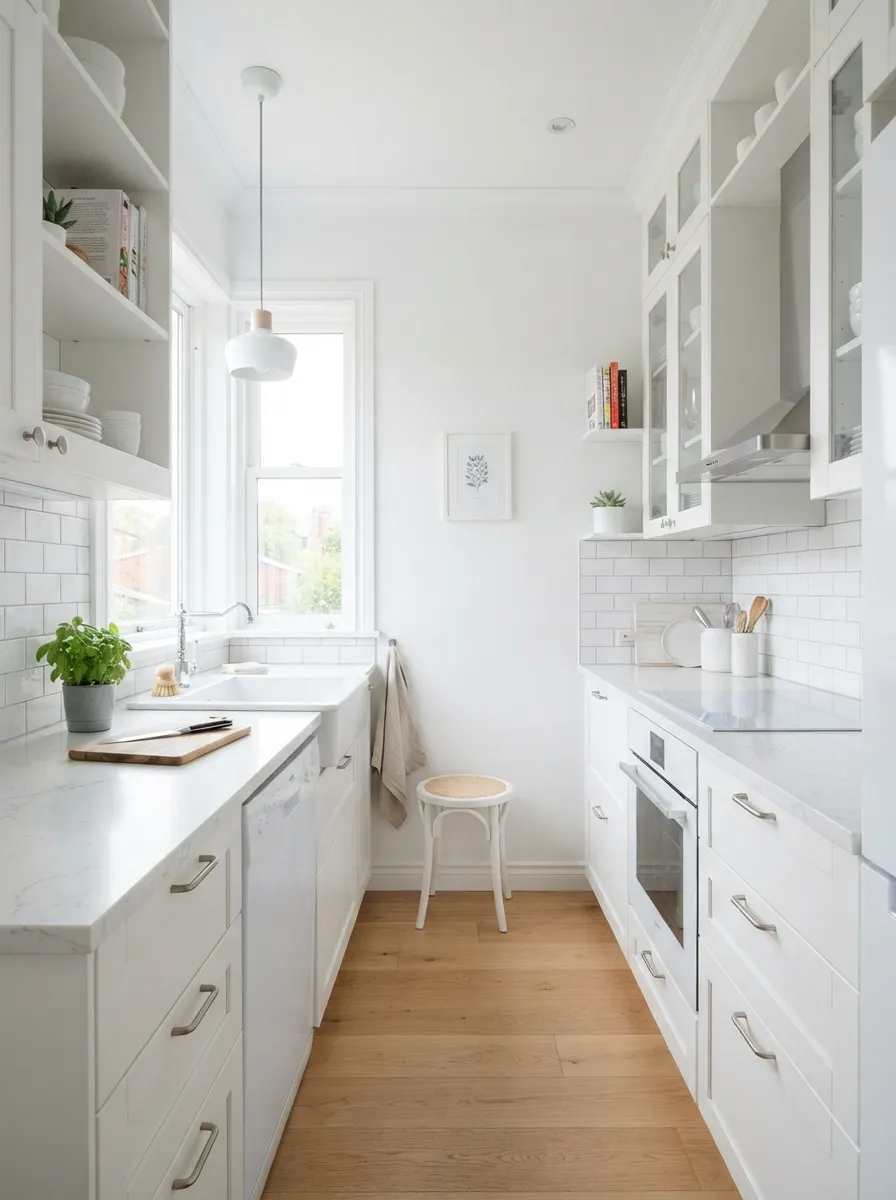
Choosing a kitchen faucet finish for a small kitchen comes down to one simple trade-off: light-reflecting metals open the space up visually, while darker or warmer finishes add a focal point but can make a tight kitchen feel a little more closed in if the rest of the room is already dark. The finish is also one of the cheapest, fastest updates you can make to a small kitchen — a faucet swap usually takes under two hours and costs far less than refinishing cabinets or replacing a countertop, yet it changes how the whole sink area reads. This guide compares seven popular finishes side by side, explains how to match a faucet to your existing hardware, and breaks down maintenance and cost so you can pick with confidence.
Quick Takeaways
- Chrome, brushed nickel, and stainless steel reflect light and read as more spacious
- Matte black and bronze finishes hide water spots better but show fingerprints more
- Match your faucet finish to your cabinet hardware, or intentionally contrast — avoid landing in between
- Budget finishes start around $60–$90; premium brushed brass or matte black can run $150–$300+
- PVD (physical vapor deposition) finishes resist scratching and tarnishing far better than standard plating
What’s In This Guide
Why Faucet Finish Matters More in Small Kitchens
In a larger kitchen, the faucet is one detail among many — an island, a run of pendant lights, a big window all compete for attention. In a small kitchen, the sink and faucet are often the visual centerpiece simply because there’s less else going on, which means the finish you choose carries more visual weight than it would elsewhere. A faucet that reflects light bounces it back into the room and subtly reinforces the sense of openness that small-kitchen design is usually chasing. A dark, matte finish does the opposite: it absorbs light and reads as a solid, grounded object, which is a great design choice on purpose, but works against you if it wasn’t intentional.
7 Kitchen Faucet Finishes Compared
Polished Chrome
Chrome is the most reflective, most affordable finish available, and it brightens a small kitchen more than almost any other option because it bounces light in every direction. It’s also the easiest finish to clean, since chrome doesn’t show water spots as readily as darker finishes. The trade-off is that it can look slightly generic or dated if the rest of your kitchen leans more modern or warm-toned. Best for kitchens that want maximum brightness on a tight budget.
Brushed Nickel
Brushed nickel has a soft, matte-metallic look that reflects light without the sharp glare of polished chrome, and it hides water spots and fingerprints noticeably better. It pairs well with almost any cabinet color, which makes it the safest all-around choice if you’re not sure what direction the rest of your kitchen is heading. Best for kitchens that want brightness without a mirror-like shine.
Stainless Steel
Stainless steel finishes are designed to match stainless appliances, which makes this the obvious pick if your refrigerator, range, or dishwasher are already stainless. It has a similar light-reflecting quality to brushed nickel but with a cooler, slightly more industrial tone. Best for kitchens built around stainless appliances that want visual consistency.
Matte Black
Matte black is the most popular finish for adding a bold focal point to a small kitchen, and it genuinely can work well in a compact space — but only when the surrounding cabinets, countertop, and backsplash are light. Against an all-white or pale kitchen, a matte black faucet reads as an intentional accent. Against an already-dark kitchen, it can make the sink area feel heavier and smaller. It also shows water spots more visibly than lighter finishes, though it hides fingerprints better than polished chrome.
Brushed Gold / Brass
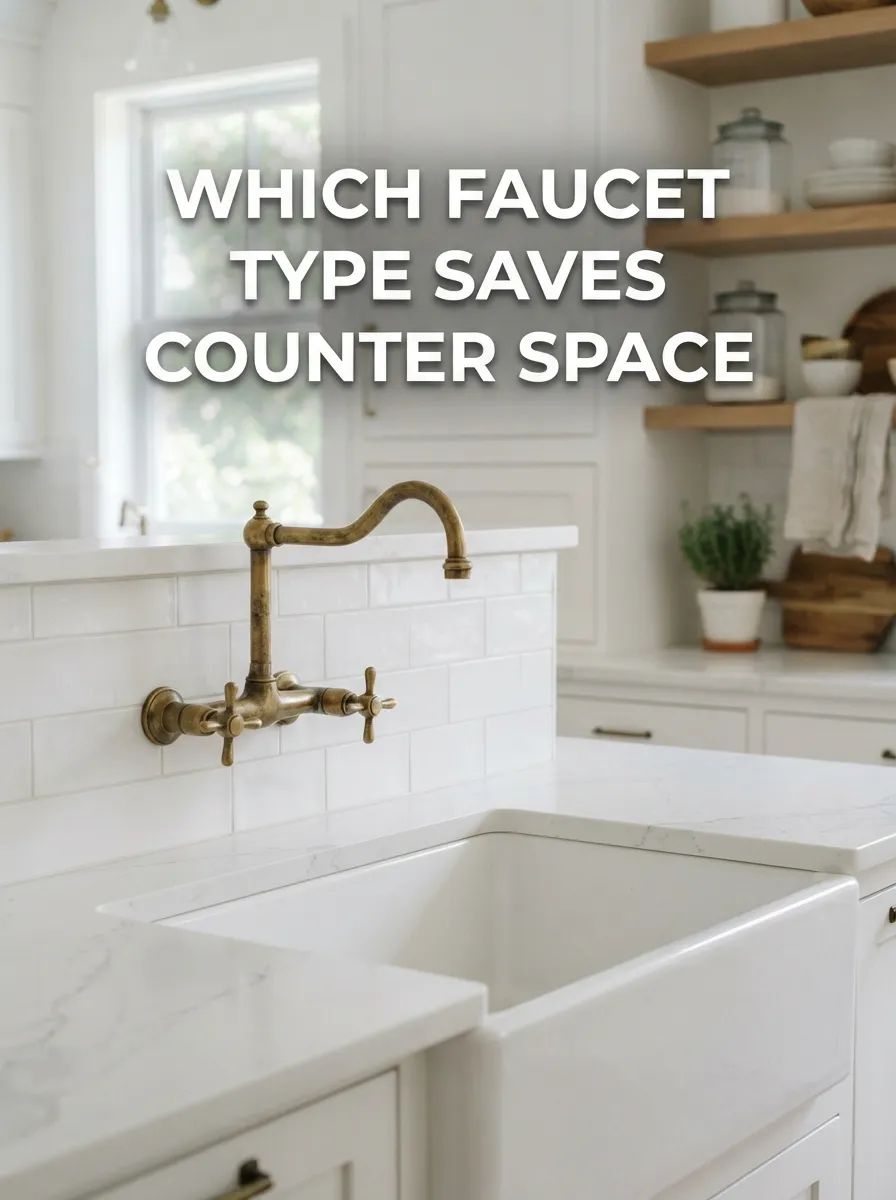
Brushed brass or gold finishes add warmth and a higher-end look, and they pair especially well with warm wood tones, cream cabinets, or matte white. Because the finish is brushed rather than polished, it hides fingerprints and water spots better than a shiny gold finish would. Best for kitchens leaning into a warm, traditional, or transitional style.
Oil-Rubbed Bronze
Oil-rubbed bronze is a dark, warm-toned finish with visible variation in the metal, which actually helps it hide water spots and fingerprints better than almost any other option on this list. It works best in kitchens with wood cabinetry, black hardware, or a farmhouse-leaning style. Like matte black, it adds visual weight, so it’s best paired with a light countertop and backsplash.
Matte White
A less common but growing option, matte white faucets blend directly into an all-white or cream kitchen for a seamless, almost invisible look. This is the finish to choose if you want the sink area to disappear visually rather than become a focal point — useful in a very small kitchen where you want as few visual breaks as possible.
Matching Faucet Finish With Cabinet Hardware
The simplest rule: match your faucet finish to your cabinet hardware finish, or contrast intentionally — avoid landing in a finish that’s just slightly different from your hardware, since that reads as a mismatch rather than a choice. If your cabinet pulls are brushed nickel, a brushed nickel or stainless faucet will look coordinated. If your hardware is matte black, a matte black faucet ties the room together, or a brushed brass faucet can work as an intentional, two-tone contrast as long as you repeat that second metal somewhere else in the room (a light fixture, cabinet pulls on an island, open shelf brackets).
Durability & Maintenance by Finish
How a faucet finish holds up day to day matters just as much as how it looks on install day, especially in a small kitchen sink that sees heavier daily use relative to its size.
| Finish | Shows Water Spots | Shows Fingerprints | Scratch Resistance |
|---|---|---|---|
| Polished Chrome | Low | Medium | Medium |
| Brushed Nickel | Low | Low | High |
| Stainless Steel | Low | Medium | High |
| Matte Black | Medium-High | Low | Medium (PVD versions high) |
| Brushed Brass/Gold | Low | Low | High (if PVD-coated) |
| Oil-Rubbed Bronze | Low | Low | Medium |
What Faucet Finishes Cost
Finish affects price as much as brand or features do. Polished chrome is almost always the cheapest option because it requires the least specialized coating process, while brushed brass, matte black, and other specialty finishes cost more due to the extra manufacturing steps (and especially due to PVD coating, when present).
- Polished chrome: $50–$120
- Brushed nickel / stainless steel: $70–$150
- Matte black (standard): $80–$180
- Matte black (PVD): $150–$280
- Brushed brass / gold: $120–$300
- Oil-rubbed bronze: $90–$200
Installation typically adds $75–$150 if you’re hiring a plumber, though swapping a faucet is one of the more DIY-friendly kitchen upgrades if your existing supply lines are in good shape.
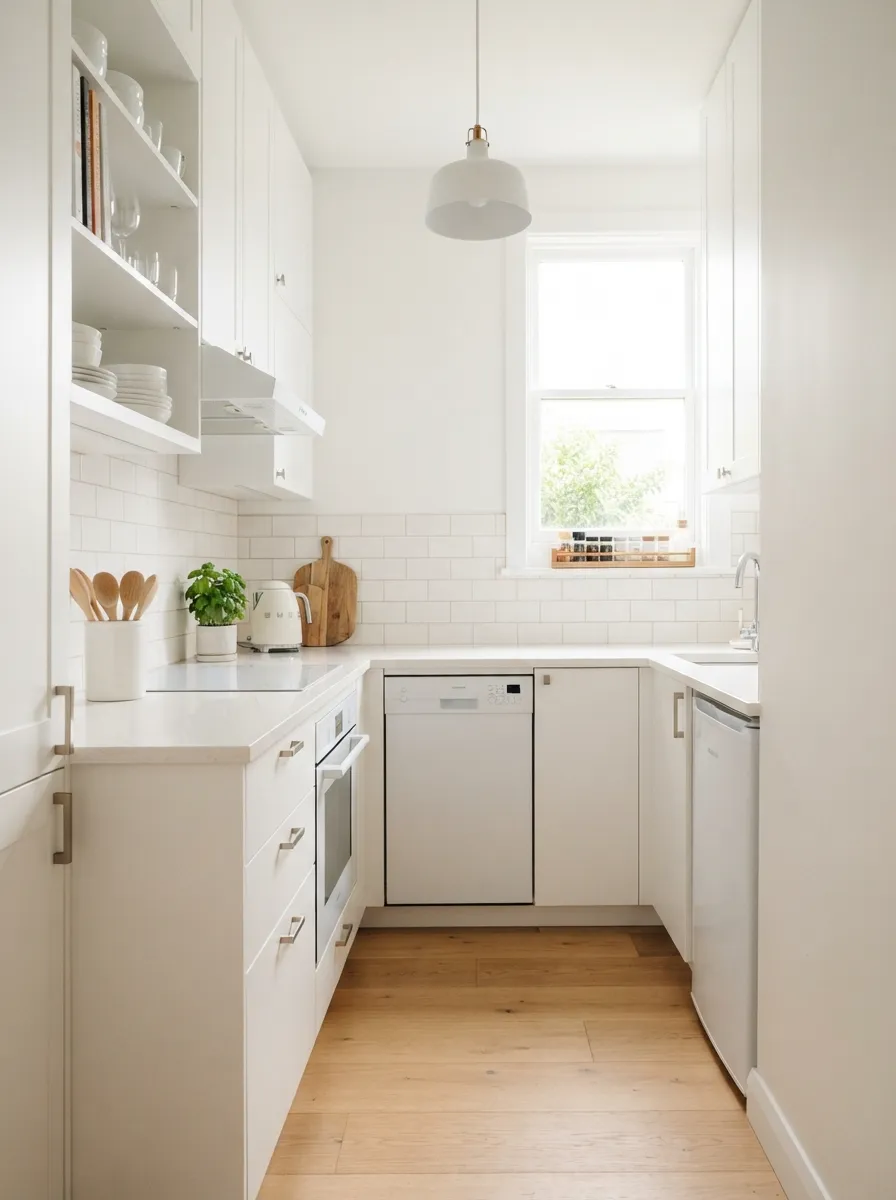
Light-reflecting finishes work especially well against white surfaces
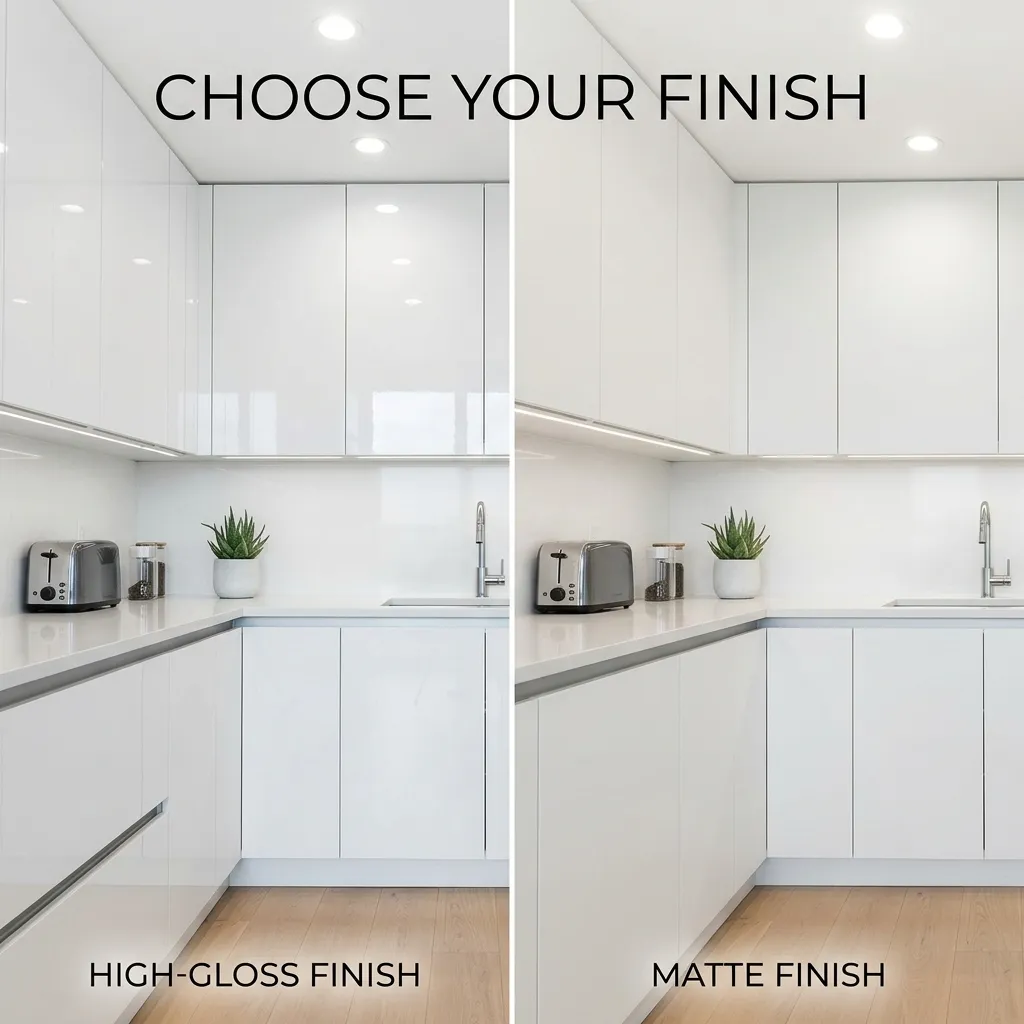
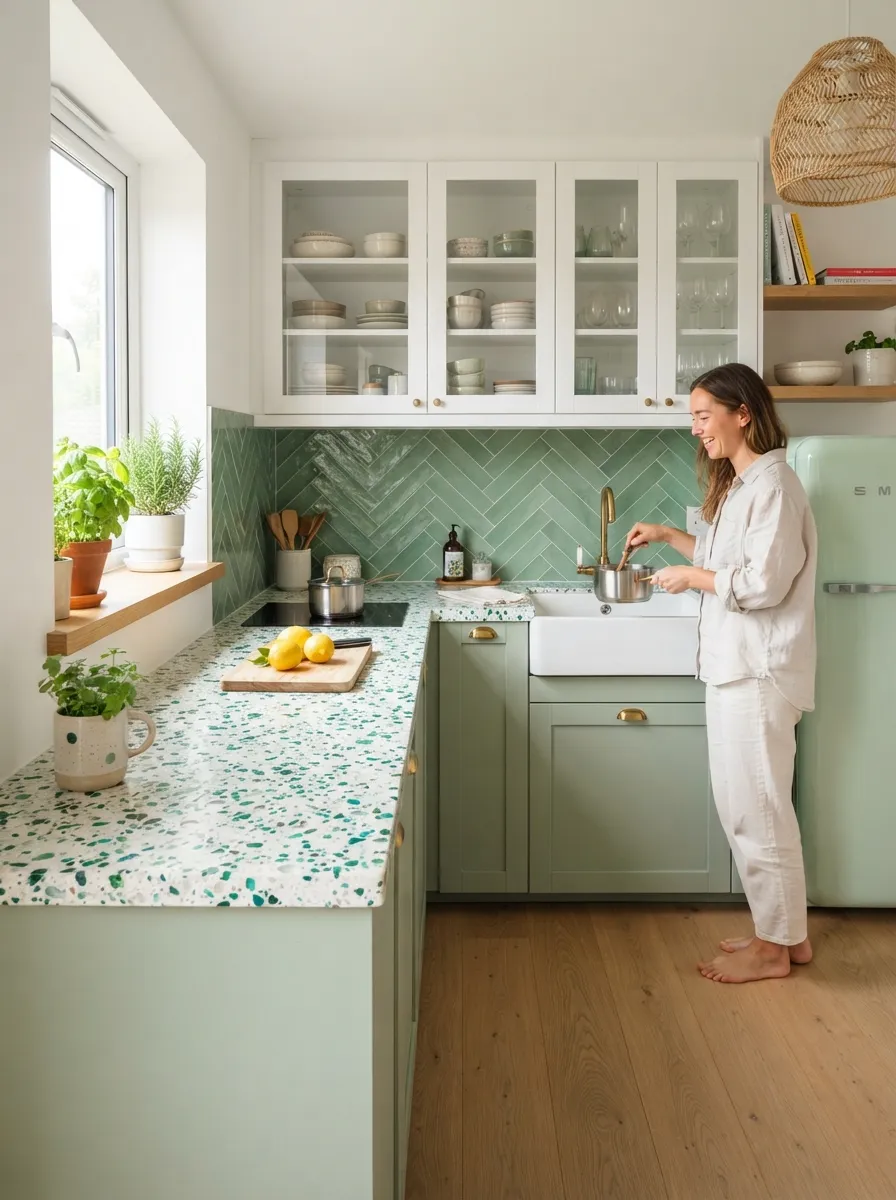
Coordinate faucet finish with your cabinet hardware finish
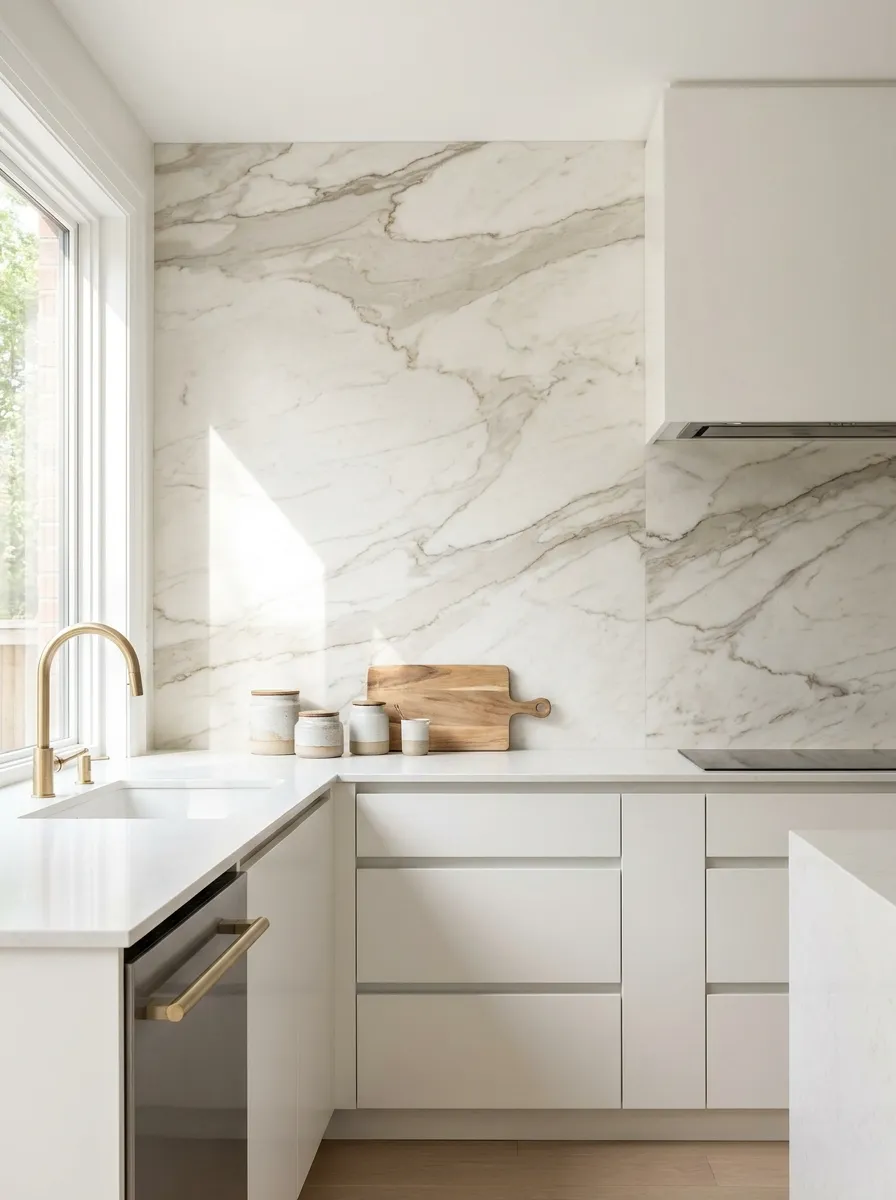
A light backsplash lets a darker faucet finish stand out as a focal point
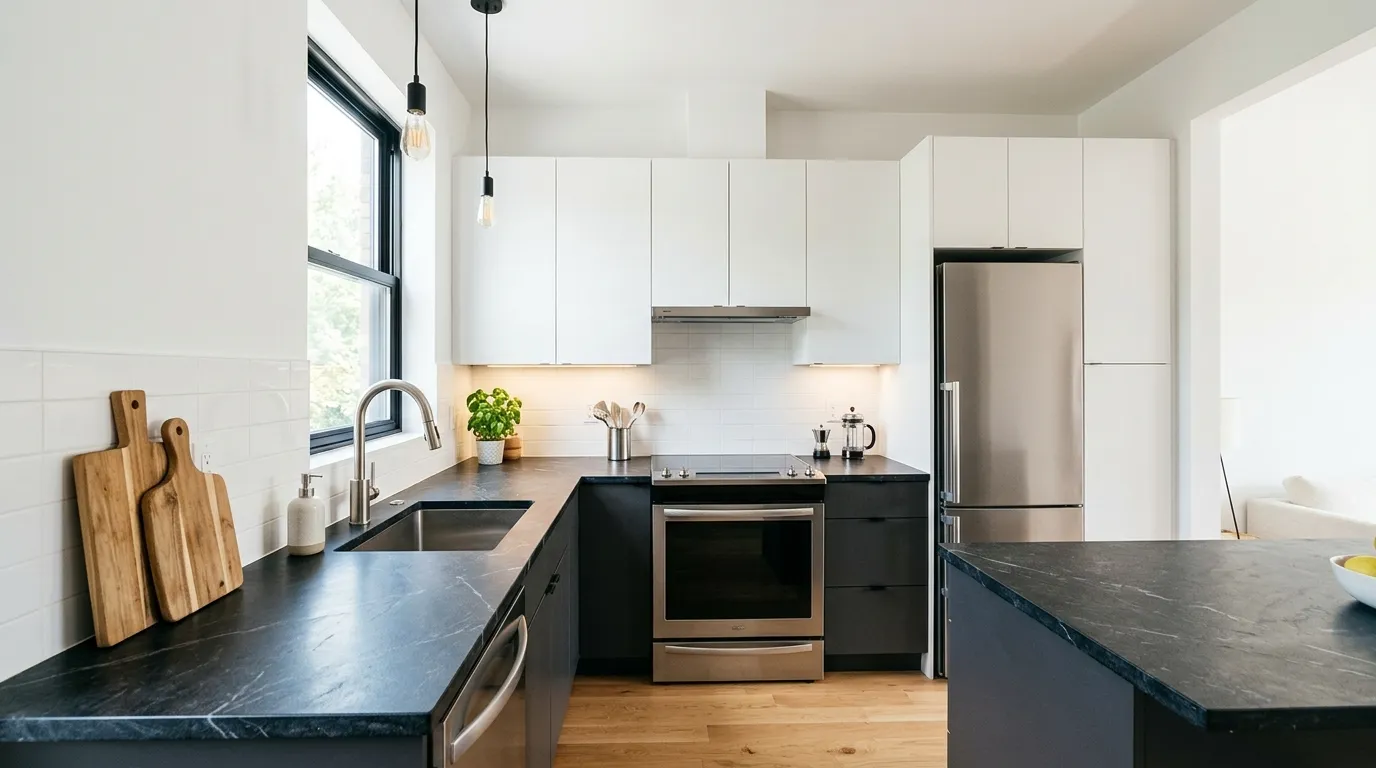
Darker countertops pair well with warm brass or bronze finishes
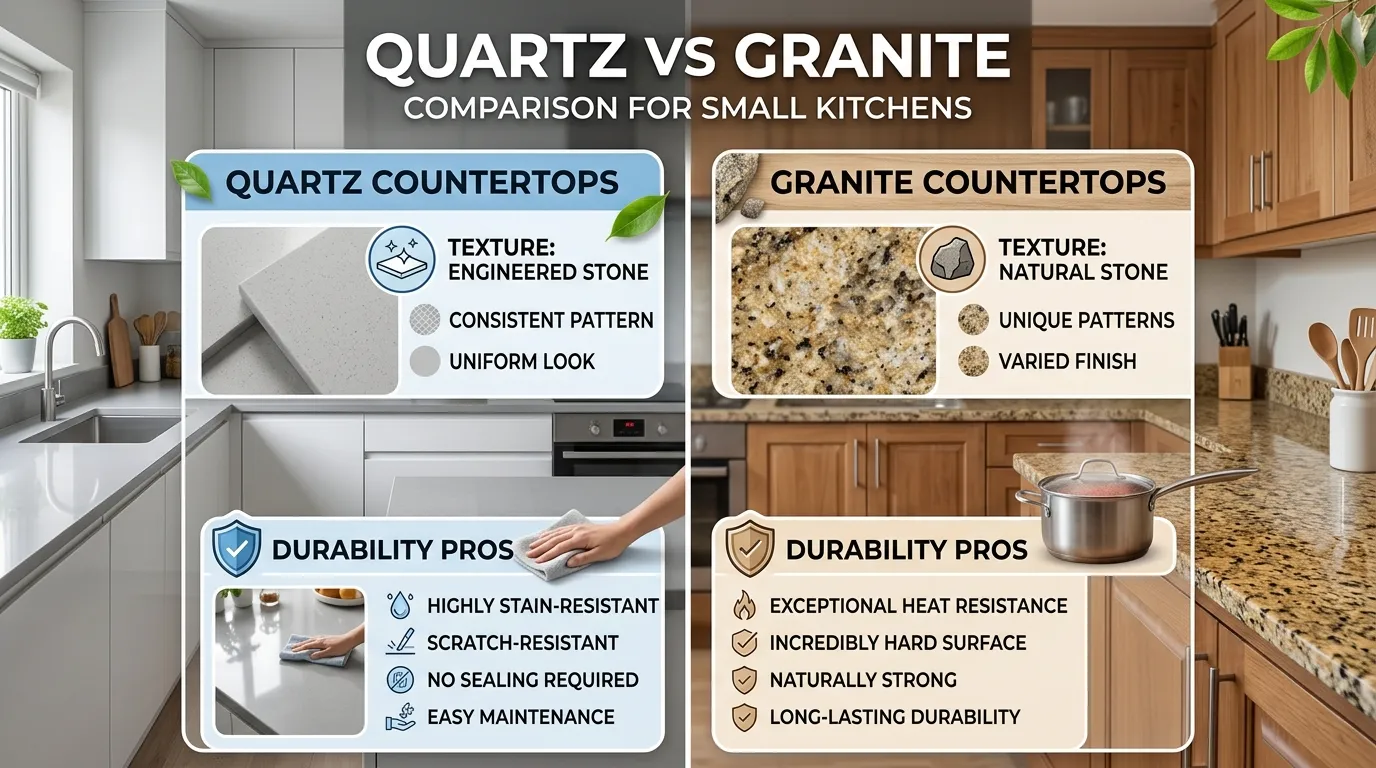
Consider your countertop material’s undertone when choosing a finish
Cooler countertop tones lean well toward chrome, nickel, or steel
Which Faucet Finish Fits Your Small Kitchen’s Style
Beyond the practical comparison, it helps to think about which finish naturally fits the design direction you’re already leaning toward. A few common small-kitchen styles and the finishes that tend to work best in each:
Modern minimalist kitchens (clean lines, mostly white or grey, simple hardware) tend to pair best with polished chrome, matte black, or matte white — finishes with a single, uniform tone rather than visible brushing or texture.
Farmhouse and transitional kitchens (shaker cabinets, warm wood tones, apron sinks) generally lean toward oil-rubbed bronze, brushed brass, or brushed nickel, all of which have enough texture and warmth to feel at home next to wood and warmer whites.
Scandinavian-inspired kitchens (light wood, soft neutrals, minimal ornamentation) usually look best with brushed nickel or brushed brass in a soft, understated tone, since a high-shine chrome or a heavy matte black can feel like too much contrast against a deliberately quiet palette.
Industrial-style small kitchens (exposed materials, stainless appliances, concrete or metal accents) suit stainless steel or matte black best, both of which echo the raw, utilitarian feel the style is built around.
Faucet Finish Mistakes to Avoid in a Small Kitchen
Mixing more than two metal finishes without a plan. One faucet finish, one hardware finish, and maybe one light fixture finish is the practical limit for a small kitchen before it starts to look accidental rather than intentional. If you already have two metals in the room, match your new faucet to one of them rather than introducing a third.
Choosing a trendy dark finish without checking your lighting. Matte black and oil-rubbed bronze both absorb light, which can make an already dim small kitchen feel noticeably darker at the sink, one of the areas where you need the clearest visibility for prep and cleanup. If your kitchen doesn’t get much natural or task lighting, lean toward a lighter, more reflective finish instead.
Ignoring your water hardness. If you have hard water, finishes that show water spots prominently (matte black, in particular) will need more frequent wiping down to stay looking good. Brushed finishes in any metal tone are more forgiving for hard water areas than polished or matte finishes.
Buying based on the faucet alone without checking the handle and sprayer match. Some faucet lines sell the base unit and side sprayer or soap dispenser in slightly different finish batches. Double-check that every piece you’re buying is listed under the same finish name before you check out.
Frequently Asked Questions
Does faucet finish really affect how big a small kitchen looks?
Yes, though subtly. Light-reflecting finishes like chrome and brushed nickel bounce ambient light back into the room, which contributes to an overall brighter, more open feel at the sink area — one of the most-used spots in any small kitchen.
What faucet finish shows the least water spots?
Brushed finishes in any metal tone (brushed nickel, brushed brass, brushed stainless) hide water spots best, since the textured surface doesn’t show mineral deposits as clearly as a polished or matte surface does.
Is matte black a bad choice for a small kitchen?
Not inherently — it’s a great choice as long as the surrounding cabinets, countertop, and backsplash are light. Matte black against an already-dark kitchen can make the space feel smaller, but against white or pale surfaces it works as a striking, intentional focal point.
Should my faucet match my cabinet hardware exactly?
It should either match or intentionally contrast — landing in between (close but not quite the same finish) usually reads as a mismatch. Brushed nickel or stainless is the safest neutral choice if you’re not ready to commit to a two-tone look.
What is a PVD faucet finish and is it worth the extra cost?
PVD (physical vapor deposition) is a coating process that bonds the finish at a molecular level, making it far more scratch- and tarnish-resistant than standard plating. It’s especially worth the extra cost for matte black and brushed brass finishes, which show wear more readily without it.
Can I install a new faucet finish myself?
In most cases, yes. If your existing supply lines and shut-off valves are in working condition, swapping a faucet is a fairly beginner-friendly project that typically takes one to two hours with basic tools.
Which faucet finish works best with stainless steel appliances?
A stainless steel or brushed nickel faucet finish will read as the closest match to stainless appliances, keeping a consistent metal tone throughout the kitchen without needing an exact brand-to-brand match.
How often should I replace my kitchen faucet in a small kitchen?
Most kitchen faucets last 15–20 years mechanically, but the finish is often the first thing to visibly wear, especially on polished or standard-plated options. If the finish is worn or discolored well before the mechanism fails, a straightforward swap is usually more cost-effective than trying to refinish the existing faucet.
Can I mix a matte black faucet with chrome or nickel cabinet hardware?
Yes, this is a common and effective two-tone approach, but it works best when the second metal (chrome or nickel) also appears somewhere else in the room, such as a light fixture or open shelf bracket, so the contrast reads as intentional rather than mismatched.
Related Pages
Final Thought
There’s no single “correct” faucet finish for a small kitchen — the right one depends on how bright you want the space to feel and what finishes are already in the room. If you’re unsure, brushed nickel or stainless steel is the lowest-risk choice that works with almost any style. If you’re ready to commit to a bolder look, matte black or brushed brass can genuinely elevate a small kitchen, as long as the rest of the room is light enough to let that finish stand out instead of closing the space in.
One more thing worth remembering: a faucet is one of the few kitchen upgrades you can fully reverse if you change your mind. Unlike painted cabinets or a new backsplash, swapping a faucet finish again later is a low-cost, low-risk change, which makes it a genuinely safe place to experiment with a bolder finish if you’ve been hesitant to commit to one elsewhere in the kitchen.
Planning the rest of your small kitchen’s finishes?
Explore Small Kitchen Interior Design