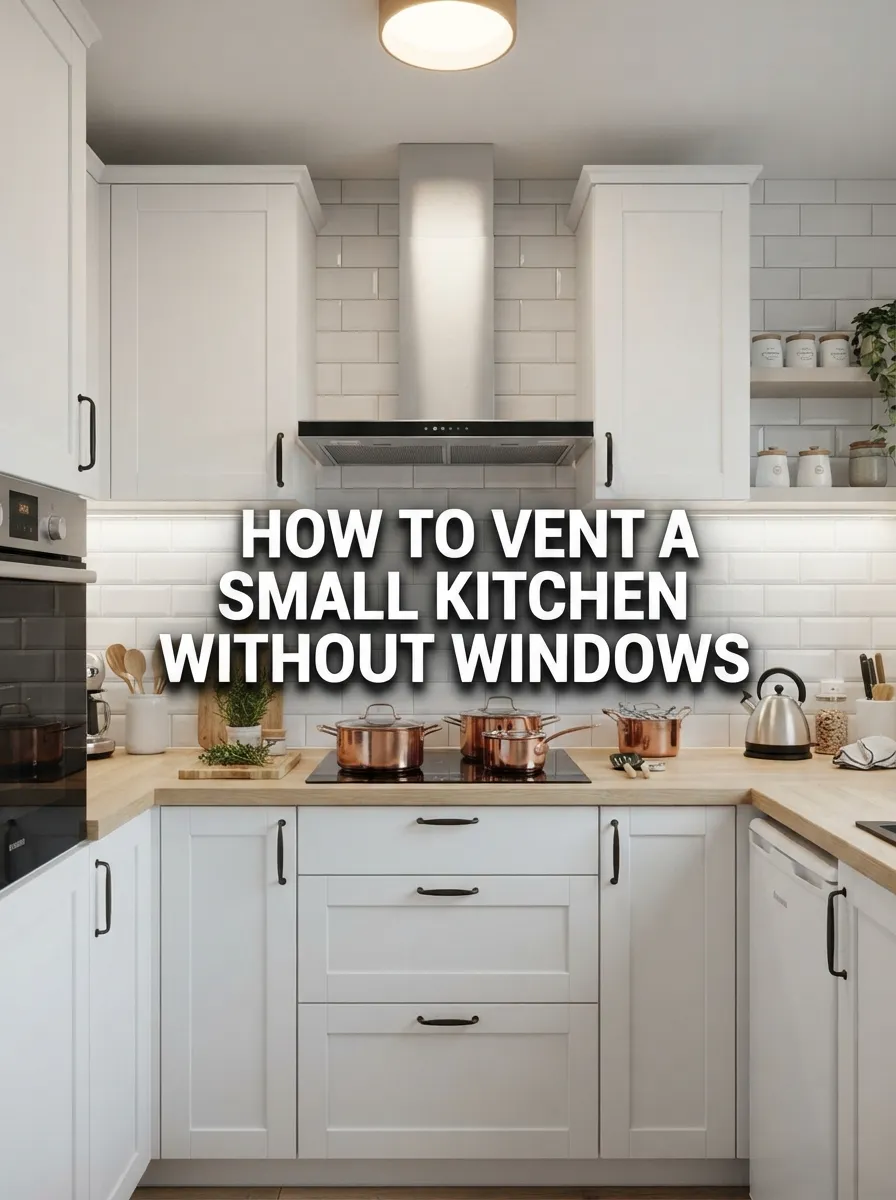
How to Vent a Small Kitchen Without Windows
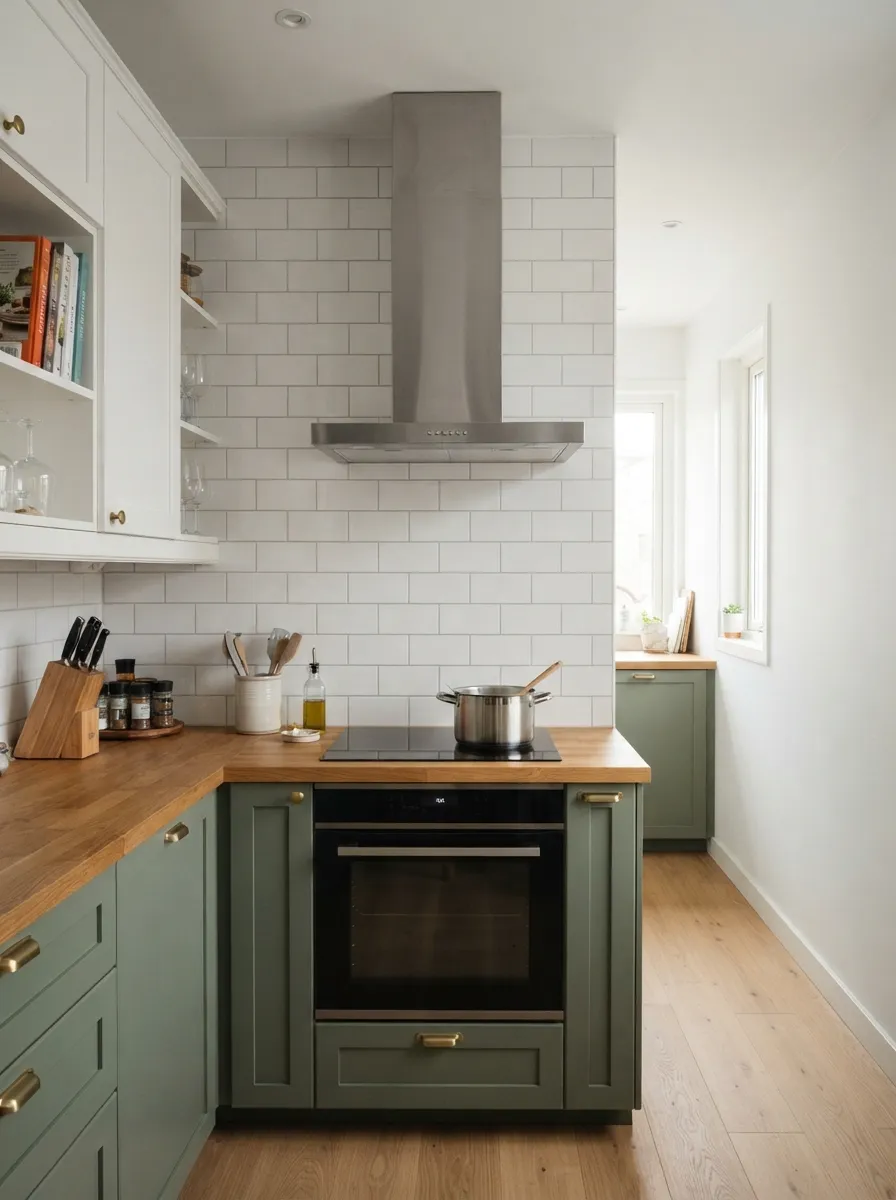
A windowless kitchen can still be properly ventilated with a ducted range hood that exhausts through the wall or roof, a dedicated interior exhaust fan on a timer, or a recirculating hood as a lower-effectiveness fallback where ducting isn’t possible. Many interior and studio kitchens rely on exactly this setup, since a window was never an option to begin with.
Quick Takeaways
- A ducted range hood that vents through a wall or roof is the most effective windowless option.
- Ducting can often run through a soffit or drop ceiling if a direct wall path isn’t available.
- An interior exhaust fan on a timer helps clear residual moisture and odors after cooking.
- Recirculating hoods are a fallback, not a replacement, for true exhaust ventilation.
- Local code may set a minimum ventilation requirement even without a window present.
Table of Contents
1. Ducted Range Hoods
A ducted range hood remains the most effective ventilation option even without a window, since it actively removes smoke, grease, and moisture from the room rather than just filtering and recirculating it. The duct routes through an exterior wall, roof, or soffit to vent outside — the window itself was never actually required for a ducted hood to work.
2. Routing Ductwork Without a Direct Wall
If your windowless kitchen doesn’t back onto an exterior wall, ductwork can often run up through a soffit, drop ceiling, or an adjacent closet to reach the roof or a nearby exterior wall. This adds installation complexity and cost, but it’s a common and effective solution in interior kitchens, especially in apartment buildings and older homes with unconventional layouts.
3. Interior Exhaust Fans
A dedicated interior exhaust fan, separate from the range hood, helps clear lingering moisture and cooking odors after the main event is over. Running it on a timer for 15-20 minutes after cooking finishes continues pulling stale air out even once you’ve stepped away from the stove, which matters more in a kitchen with no window to crack open.
4. Recirculating Hoods as a Fallback
When ducting genuinely isn’t possible, a recirculating hood filters air through a charcoal filter and returns it to the room. This is meaningfully less effective than true exhaust ventilation, since it doesn’t remove heat or moisture, only some airborne grease and odor particles — treat it as a fallback rather than a first choice whenever ducting is an option.
5. Code Requirements for Windowless Kitchens
Many building codes require mechanical ventilation specifically because a kitchen lacks operable windows, since natural ventilation isn’t available as an alternative. Check your local code for minimum exhaust CFM requirements, which may be stricter for a windowless kitchen than one with natural ventilation as a backup.
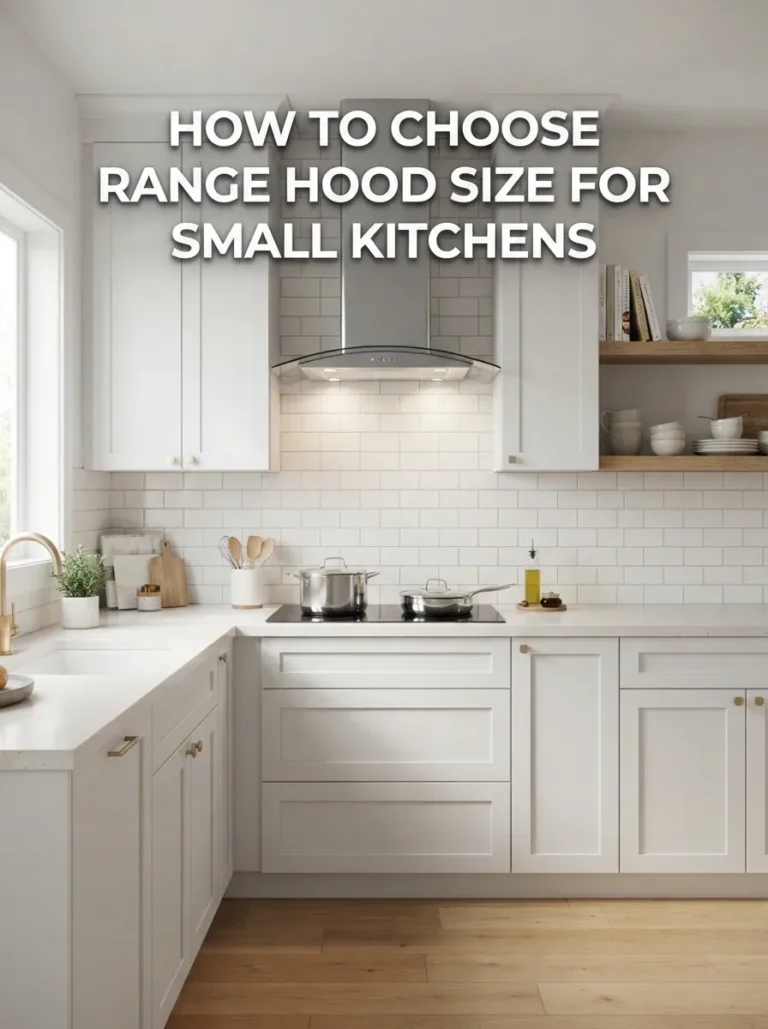
A ducted range hood remains effective ventilation even without a window.
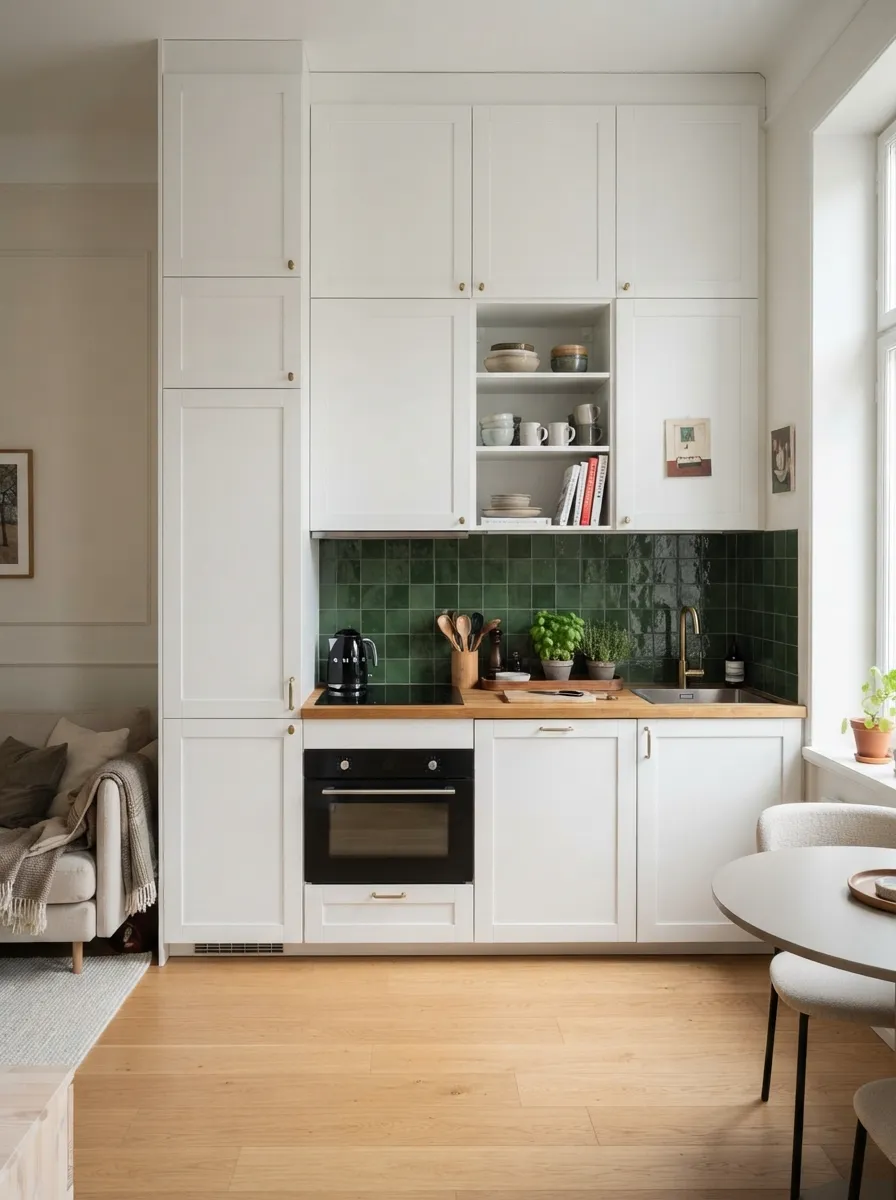
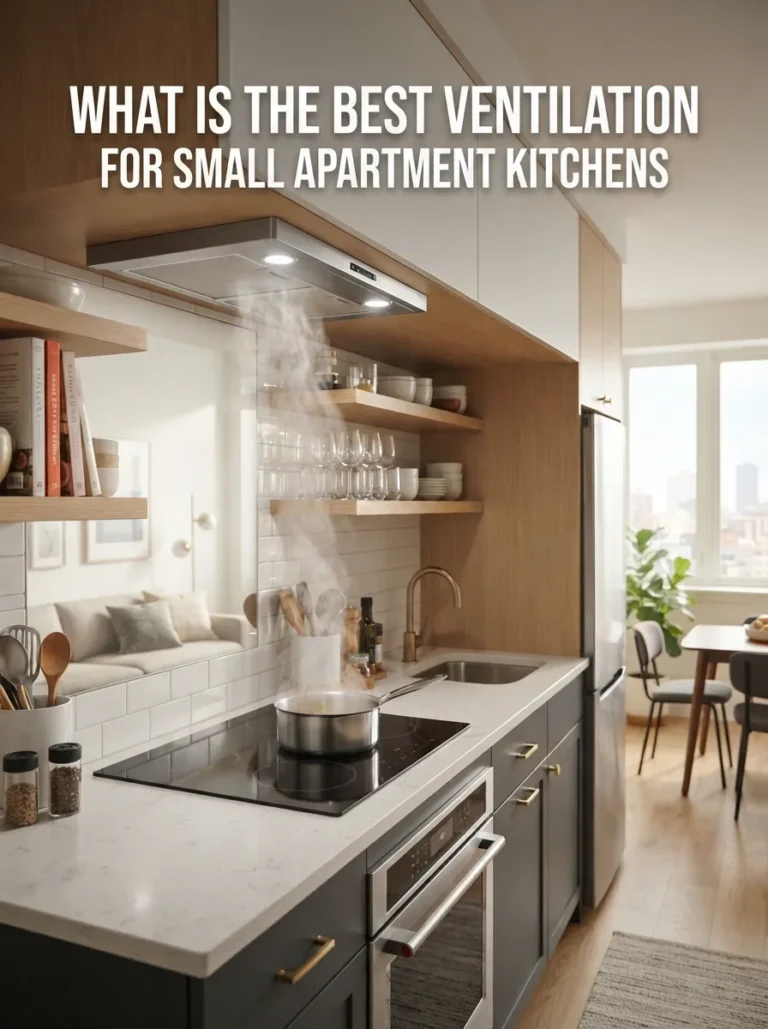
Studio and interior kitchens often rely entirely on mechanical ventilation.
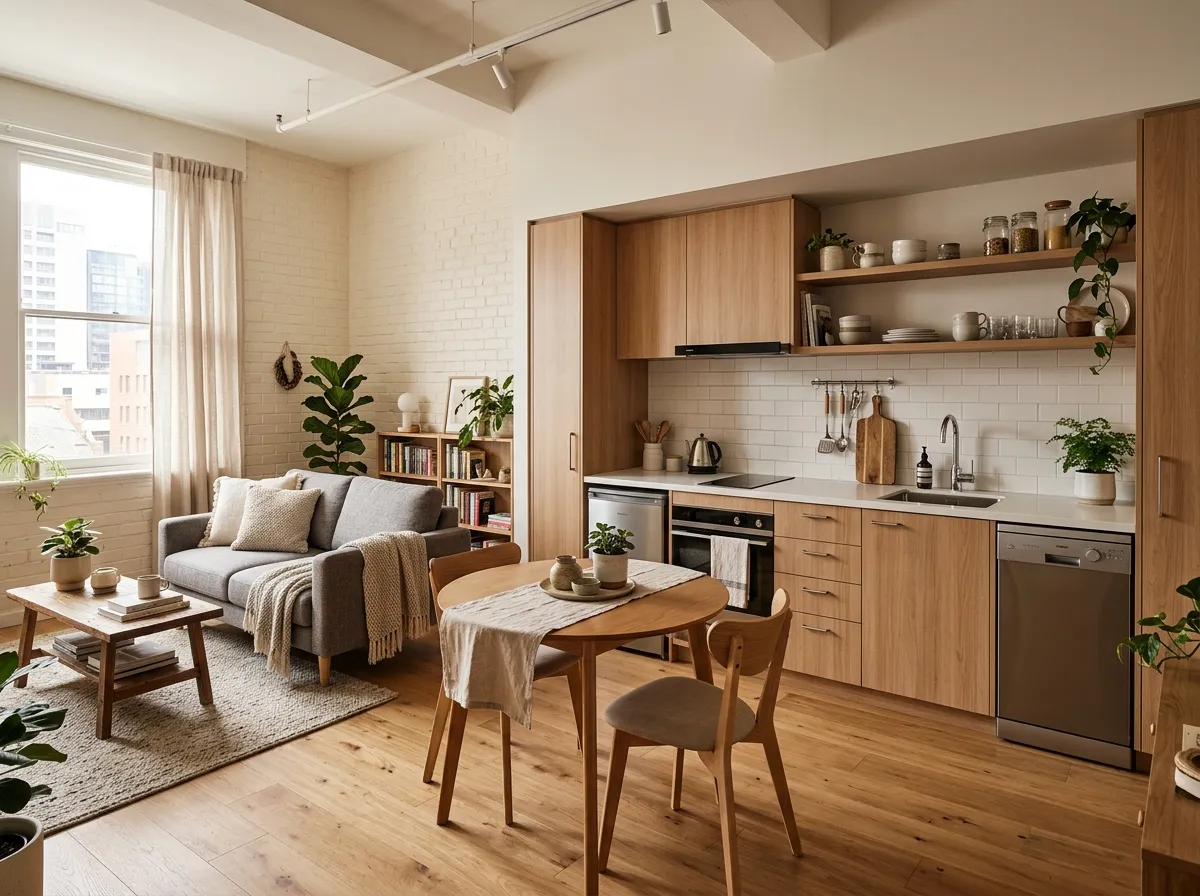
A one-wall layout simplifies ducting to a single nearby exterior wall.
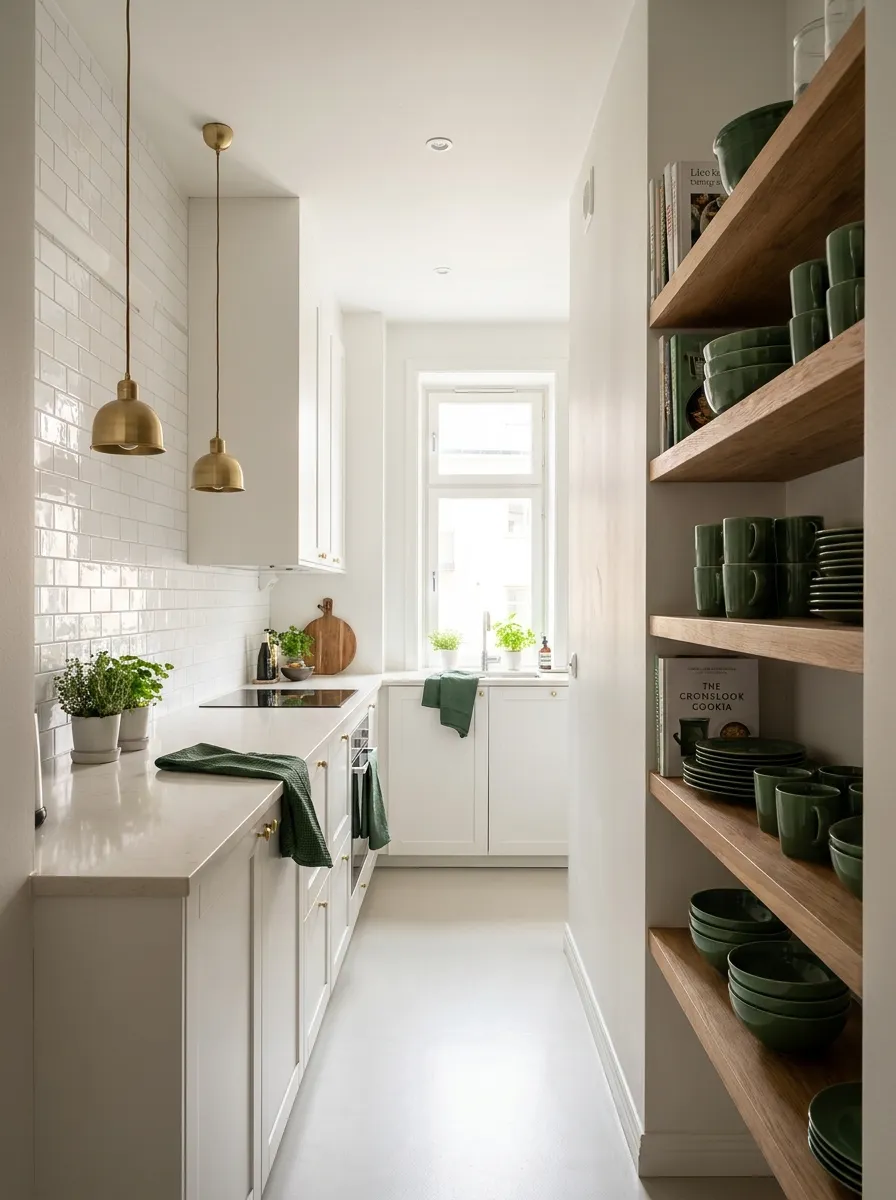
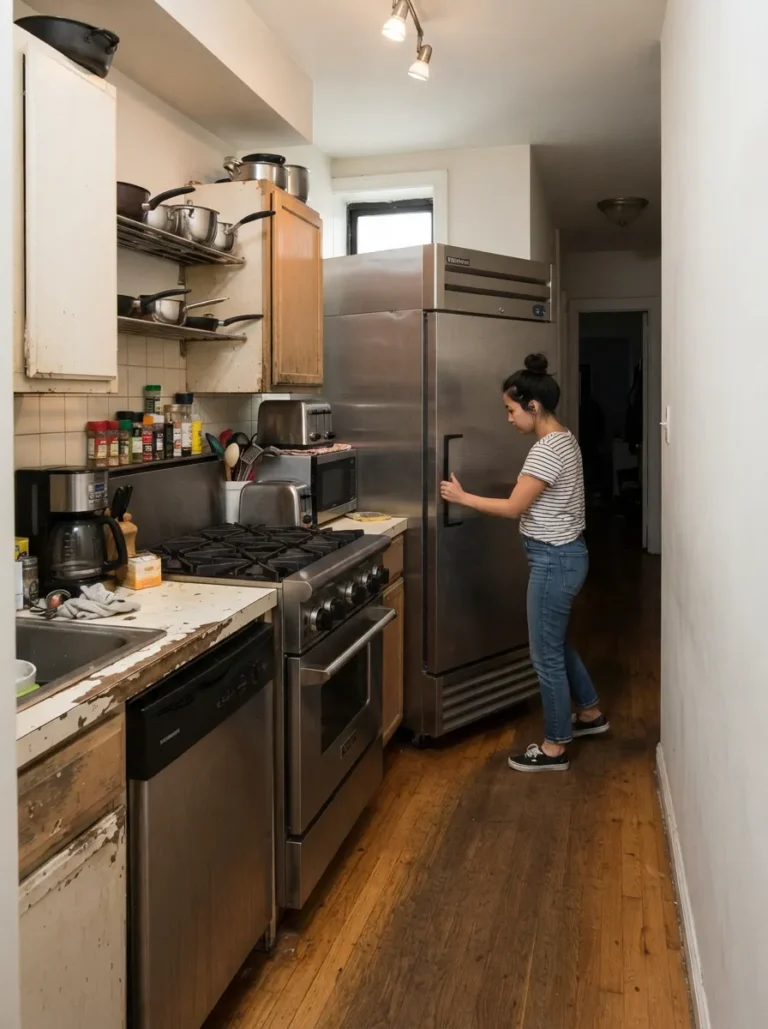
Interior galley kitchens depend on properly ducted mechanical ventilation.
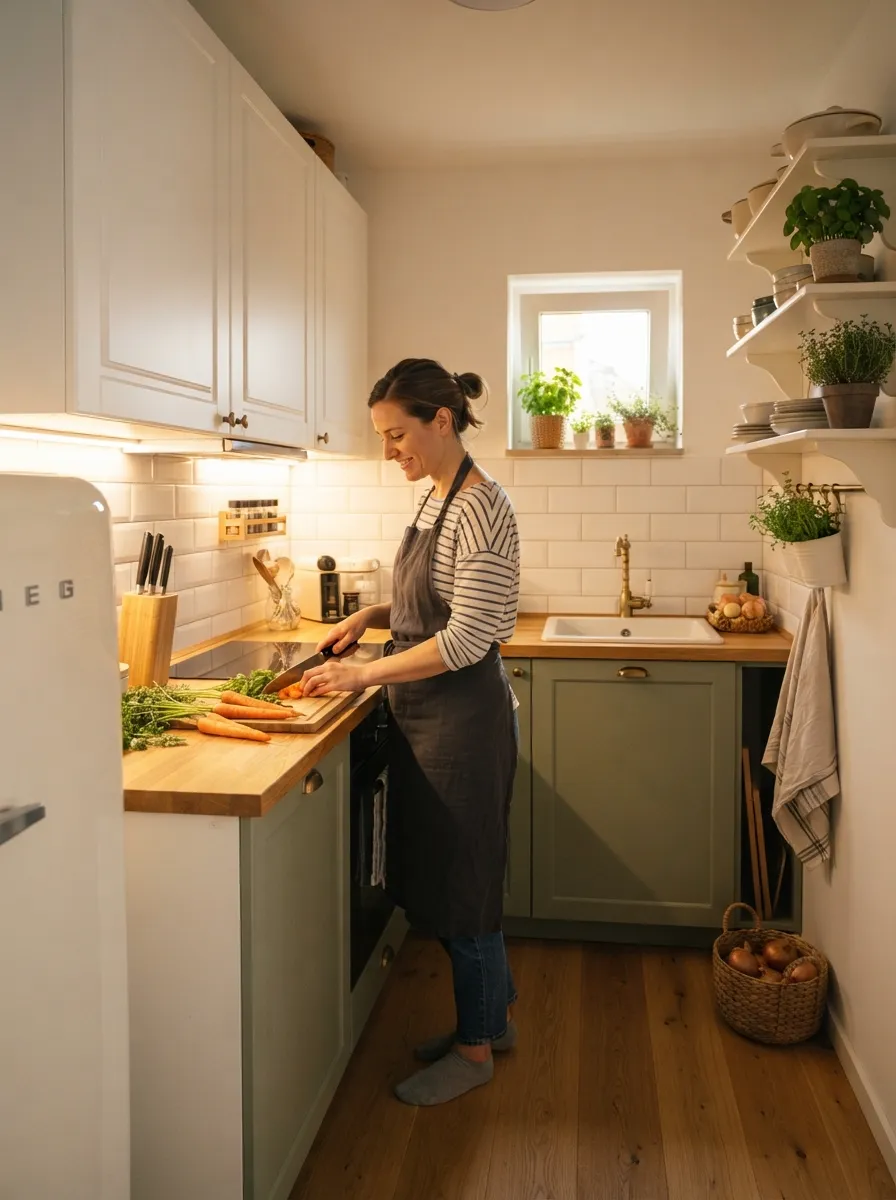
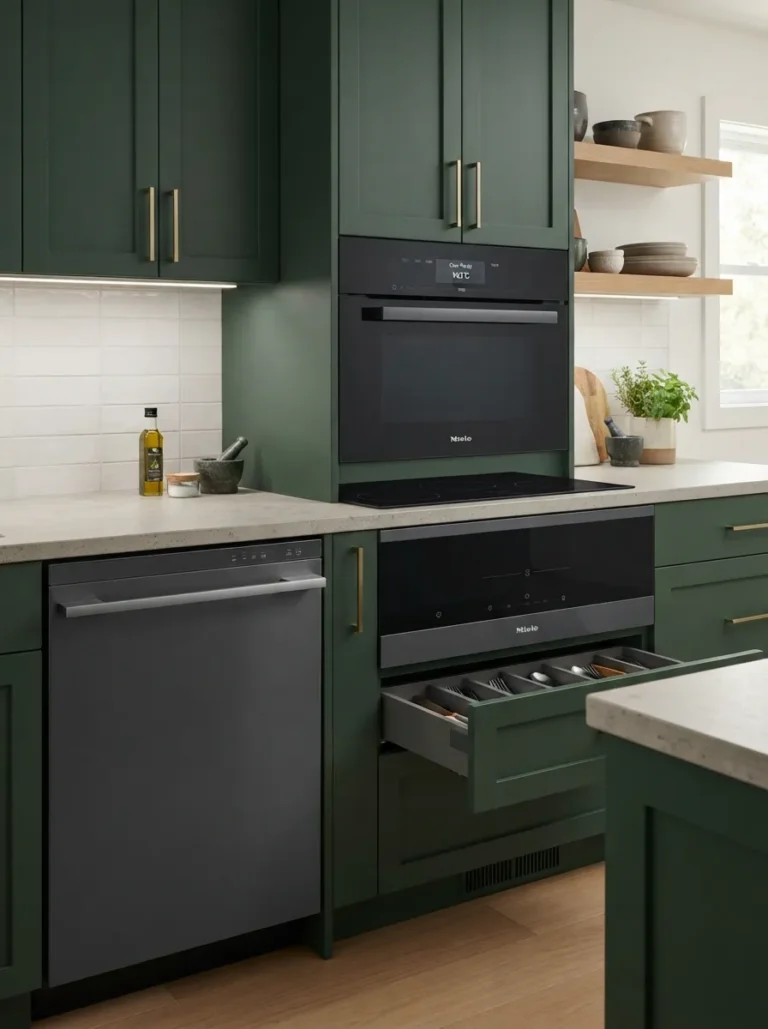
Good lighting matters even more in a kitchen without natural light.
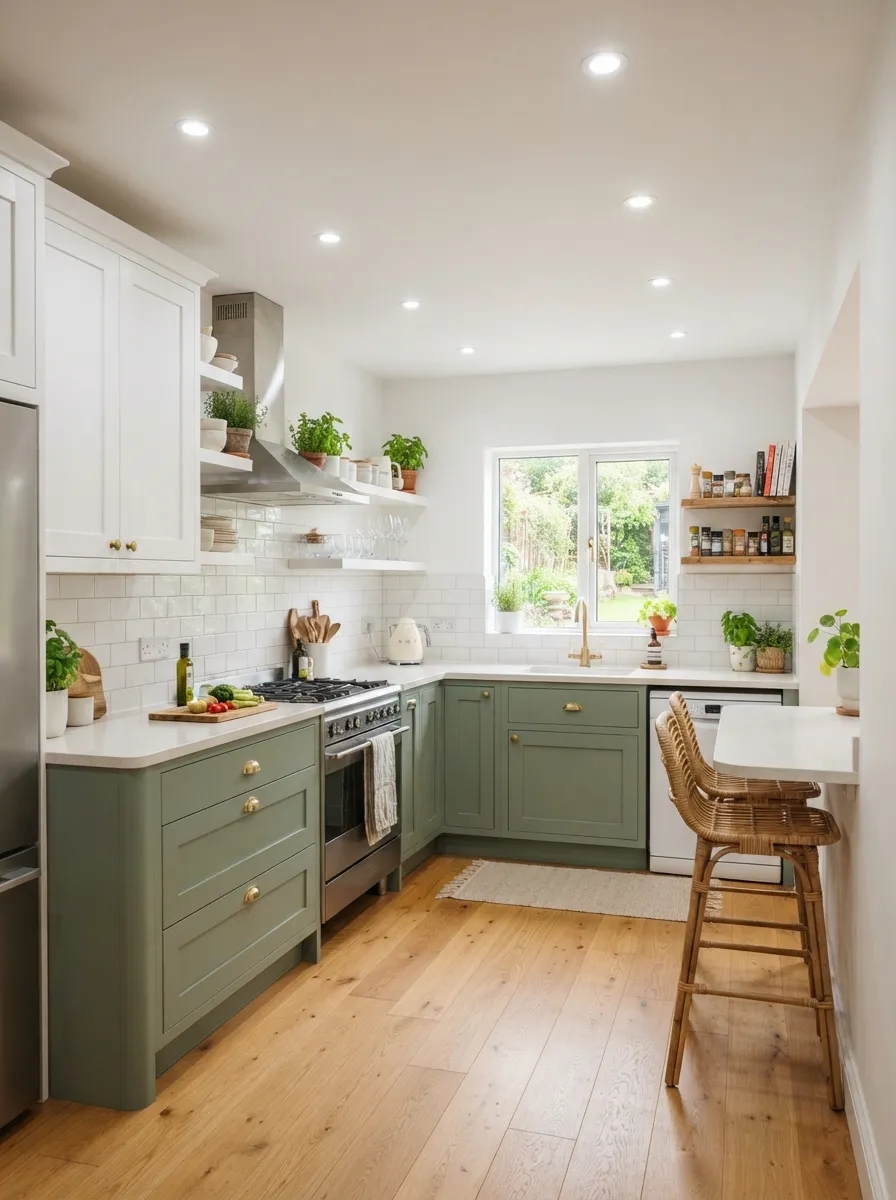
Recessed lighting helps compensate for the lack of natural light and airflow cues.
Frequently Asked Questions
Can a kitchen without a window still be properly ventilated?
Yes, a ducted range hood or interior exhaust fan can vent to the outside without needing an actual window, and many interior kitchens rely on exactly this.
How does ductwork route if the kitchen isn’t on an exterior wall?
It can often run through a soffit, drop ceiling, or adjacent closet to reach the roof or a nearby exterior wall.
Is a recirculating hood good enough for a windowless kitchen?
It’s a fallback option when ducting isn’t possible, but it’s meaningfully less effective than true exhaust ventilation since it doesn’t remove heat or moisture.
Does code require different ventilation for a windowless kitchen?
Many codes require mechanical ventilation specifically because natural ventilation isn’t available, sometimes with stricter minimum CFM requirements.
How long should an exhaust fan run after cooking?
Running it 15-20 minutes after cooking finishes continues clearing residual moisture and odors even after you’ve left the stove.
Does duct length affect how well a range hood works?
Yes, longer runs and more bends reduce exhaust performance, so keeping the duct path as short and straight as possible matters.
Related Pages
Planning Your Ventilation?
Check your local code’s minimum exhaust CFM requirements before choosing a hood. Browse our apartment kitchen design guide for more layout ideas.