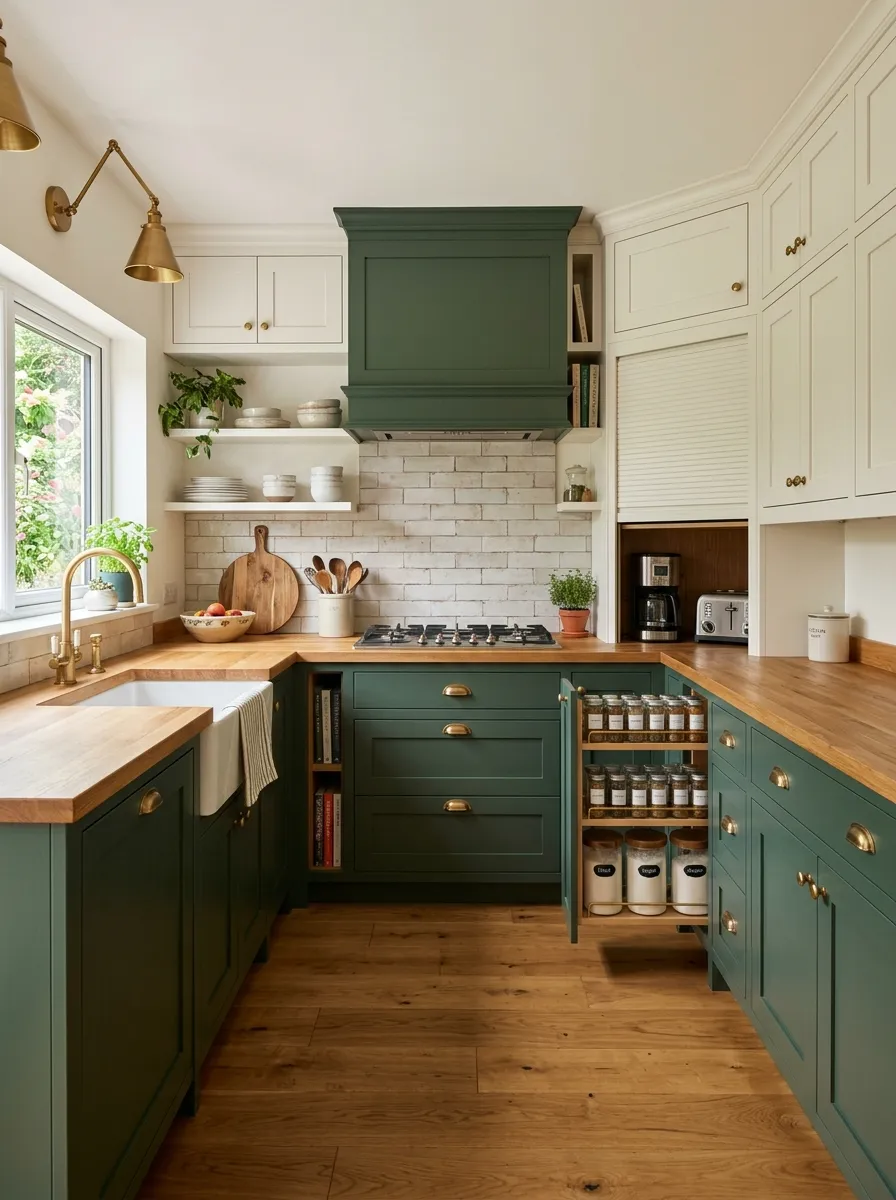
How to Organize Kitchen Towels and Linens in a Small Kitchen
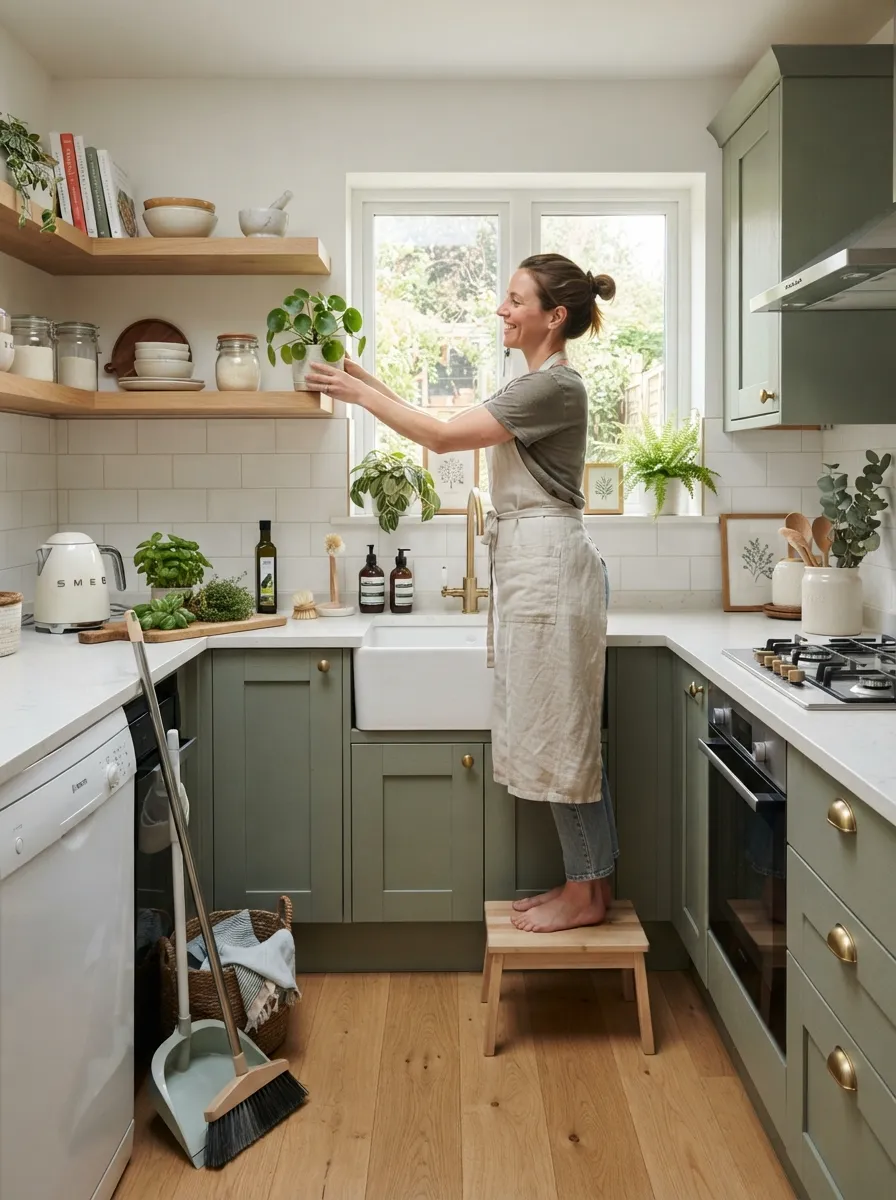
Kitchen towels and linens are one of those categories that quietly take over a small kitchen because they multiply fast — dish towels, hand towels, cleaning rags, oven mitts, potholders, and maybe a few napkins or placemats all end up jammed into the same overstuffed drawer. Organizing kitchen towels and linens in a small kitchen isn’t really about finding more space, it’s about separating them by how you actually use them and giving each type its own small, dedicated spot. This guide walks through where to store each type, how to set up a simple rotation system, how to choose towels that are easier to keep organized, and how to handle the harder-to-place items like tablecloths and placemats.
Quick Takeaways
- Separate towels by function (dish, hand, cleaning) instead of storing them all together
- A hanging bar on the oven door or a cabinet door hook keeps your most-used towel within reach without using drawer space
- Keep only 4–6 towels in daily rotation — store extras elsewhere and swap them in only when needed
- Wash dish towels every 1–2 days and cleaning rags separately, since they pick up different levels of bacteria
- Fold, don’t stack loosely, to fit noticeably more into the same drawer space
What’s In This Guide
Why Towel Storage Gets Overlooked
Towels don’t get planned for the way dishes or cookware do, because they’re soft, they compress, and they seem like they should just fit anywhere. In practice, that’s exactly why they end up crammed into a single junk drawer alongside rubber bands and takeout menus. In a small kitchen especially, treating towels as an afterthought means they either take over a drawer you need for something else, or they end up in a pile on the counter because there’s nowhere better to put them. A few minutes spent separating them by type and giving each a small, specific spot solves most of this permanently, and it rarely needs revisiting once the system is set up.
Where to Store Kitchen Towels
A few small kitchen-specific spots work far better than a single catch-all drawer:
- Oven door handle bar: Keeps your most-used towel within arm’s reach of where you actually need it most, without using any drawer or cabinet space
- Cabinet door-mounted hook or bar: A small adhesive or screw-in hook on the inside or side of a cabinet door holds one or two towels out of sight but easy to grab
- A shallow, dedicated drawer near the sink or stove, reserved only for towels, with a simple fold-and-stack system
- A small wall hook near the sink for the towel you use constantly during dishwashing and cleanup
- Under-sink hanging rod for cleaning rags specifically, keeping them separate from towels used near food
Organizing by Towel Type
Not every towel in your kitchen should be treated the same way, and mixing them together is one of the biggest sources of both clutter and cross-contamination risk.
Dish towels (used for drying dishes and hands) should be the most accessible, since they’re used constantly throughout the day. Keep 2–3 in active rotation on hooks or bars, with a few backups folded in a drawer.
Cleaning rags (used for wiping counters and spills) should be stored separately from dish towels, ideally under the sink or in a designated bin, since they’re handling a different level of mess and shouldn’t get mixed in with towels used near food or hands.
Oven mitts and potholders deserve their own small hook or hanging spot near the oven specifically, since fumbling to find one while holding a hot pan is a real (and avoidable) safety issue.
Guest or decorative towels, if you keep any separate from your everyday set, can live folded at the back of a drawer or cabinet, since they’re used rarely enough not to need prime, easy-access real estate.
A Simple Rotation System
The easiest way to avoid both clutter and running out of clean towels is a basic rotation: keep 4–6 dish towels total, with 2 in active use (hung on hooks or bars) and the rest folded in a drawer as backups. When a towel gets visibly dirty or starts to smell, swap it for a fresh one from the drawer and toss the used one in the laundry. This keeps your visible, in-use towel count low (which matters in a small kitchen where every hook and hanging spot is prime real estate) while still ensuring you’re never caught without a clean one.
| Towel Type | Recommended Count | Wash Frequency |
|---|---|---|
| Dish towels | 4–6 | Every 1–2 days |
| Cleaning rags | 3–4 | Every 1–2 days, washed separately |
| Oven mitts/potholders | 2 sets | Every 1–2 weeks |
| Guest/decorative towels | 1–2 | As needed |
Storing Small Linens
If your kitchen doubles as a small dining space, napkins, placemats, and the occasional tablecloth need a spot too, and they don’t have to compete with towel storage if you plan for them separately.
Cloth napkins fold flat and store well in a slim drawer divider or a small basket, ideally near wherever you set the table, rather than mixed in with kitchen towels.
Placemats can be stored flat in a wide, shallow drawer, or rolled and stood upright in a basket if drawer space is tighter, similar to the vertical storage approach used for cutting boards.
Tablecloths, used less frequently than everyday linens, are good candidates for a top-of-cabinet spot or a slim under-bed-style storage bin if your kitchen genuinely has no spare drawer space, since they don’t need to be part of your everyday reach zone.
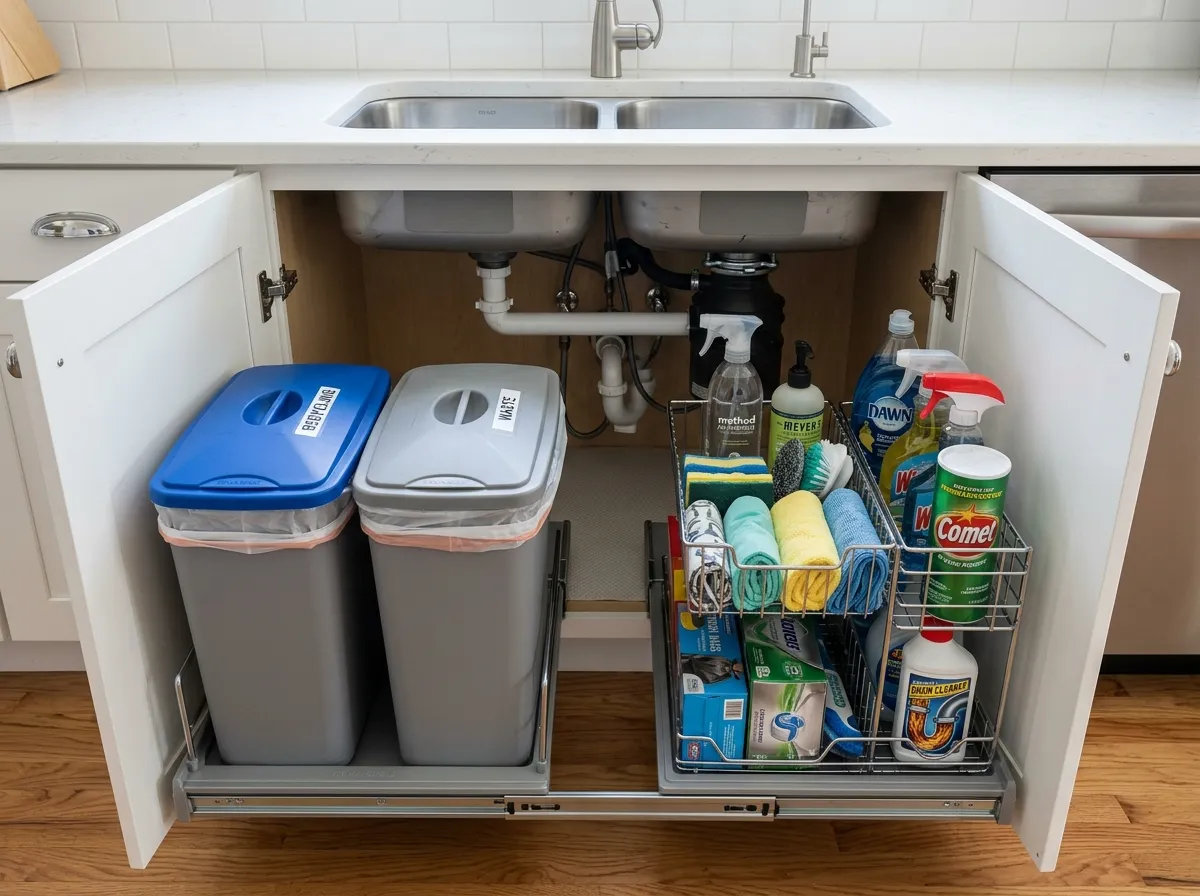
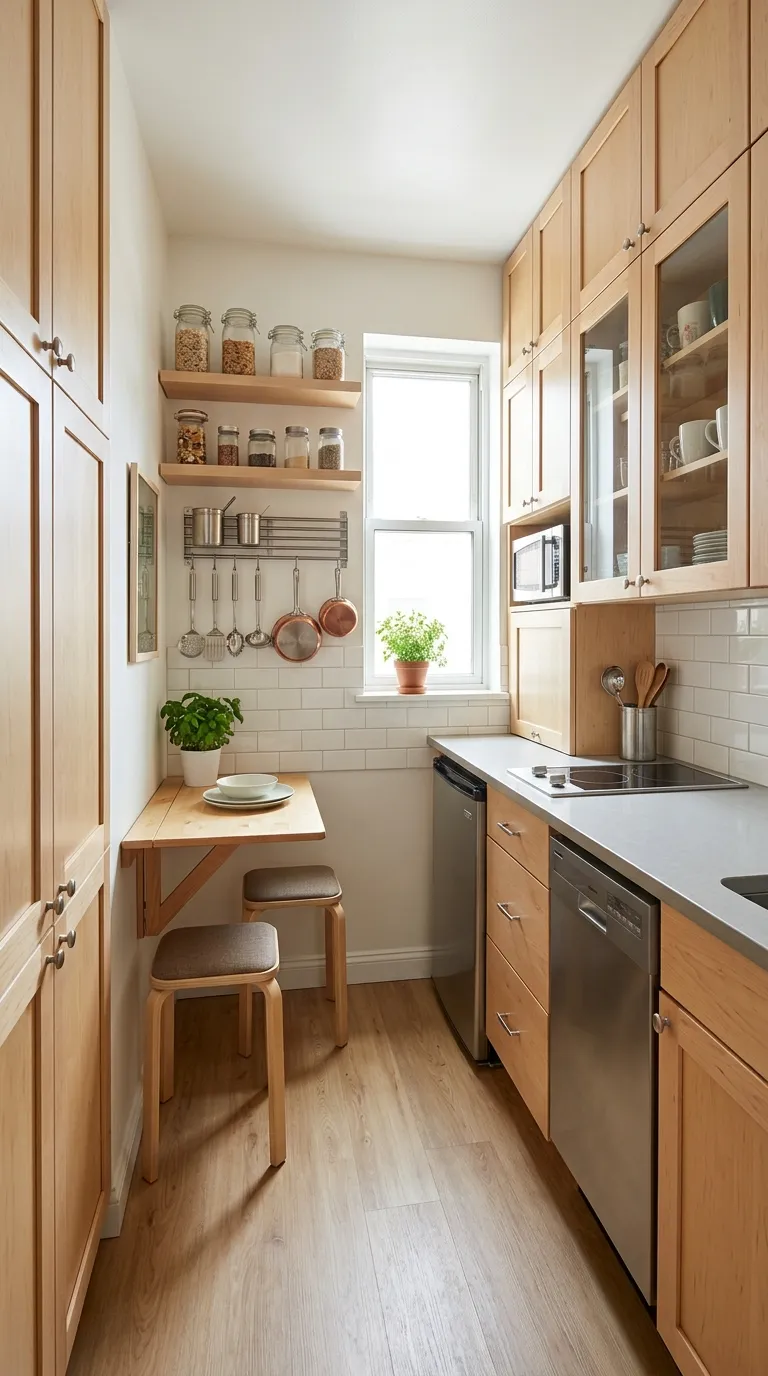
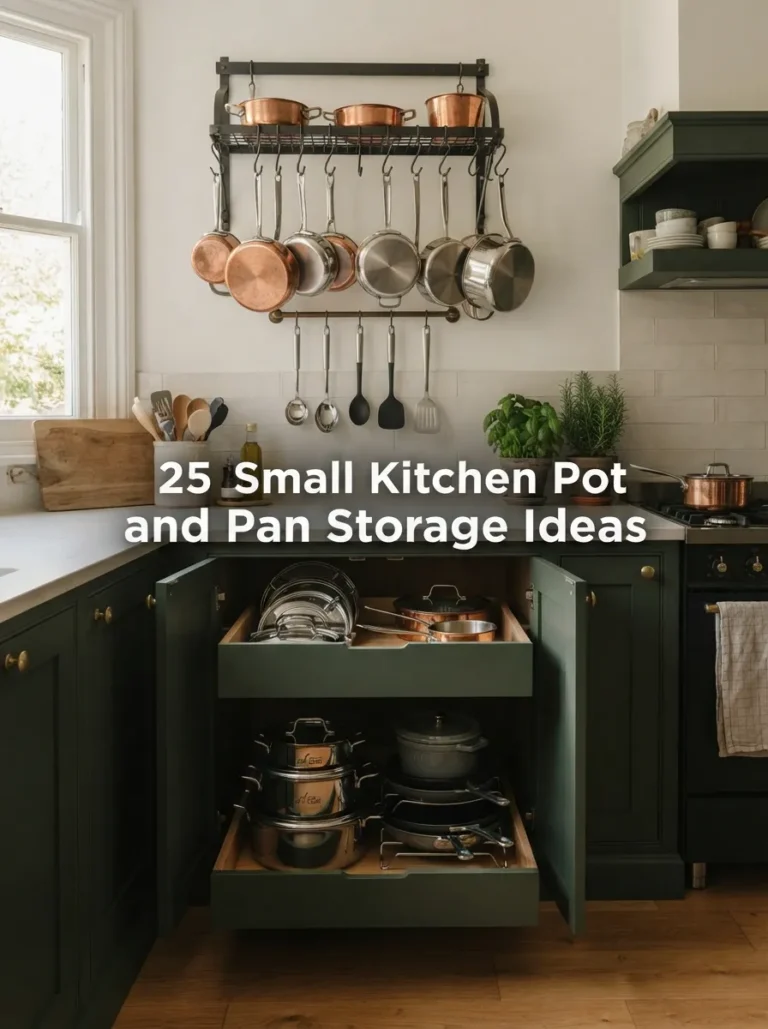
Under-sink space works well for cleaning rags kept separate from towels
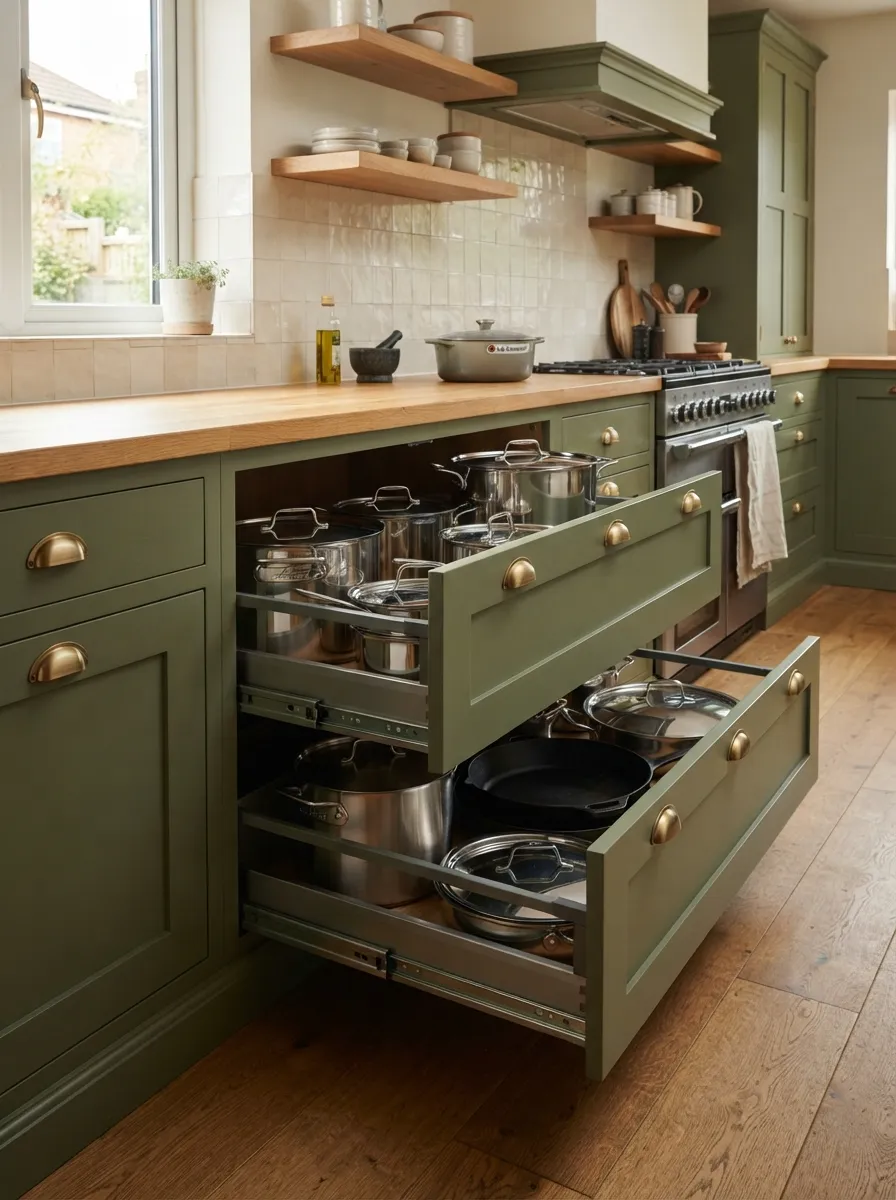
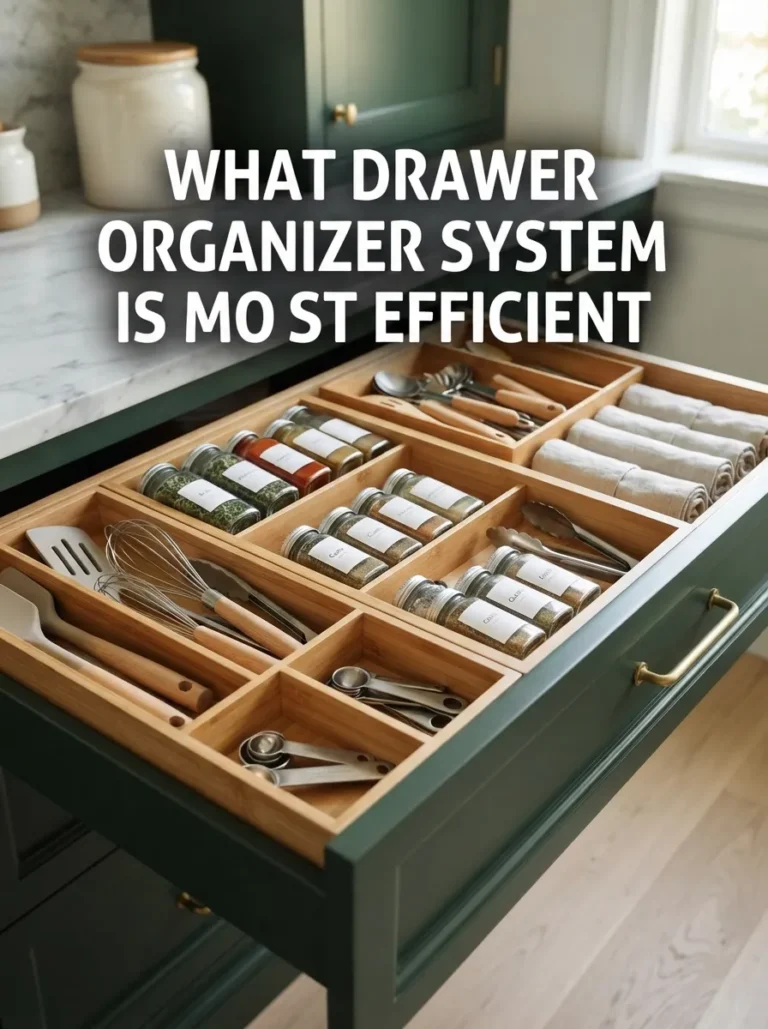
A shallow, dedicated drawer keeps backup towels neatly folded

A tidy towel setup makes daily cleanup noticeably faster
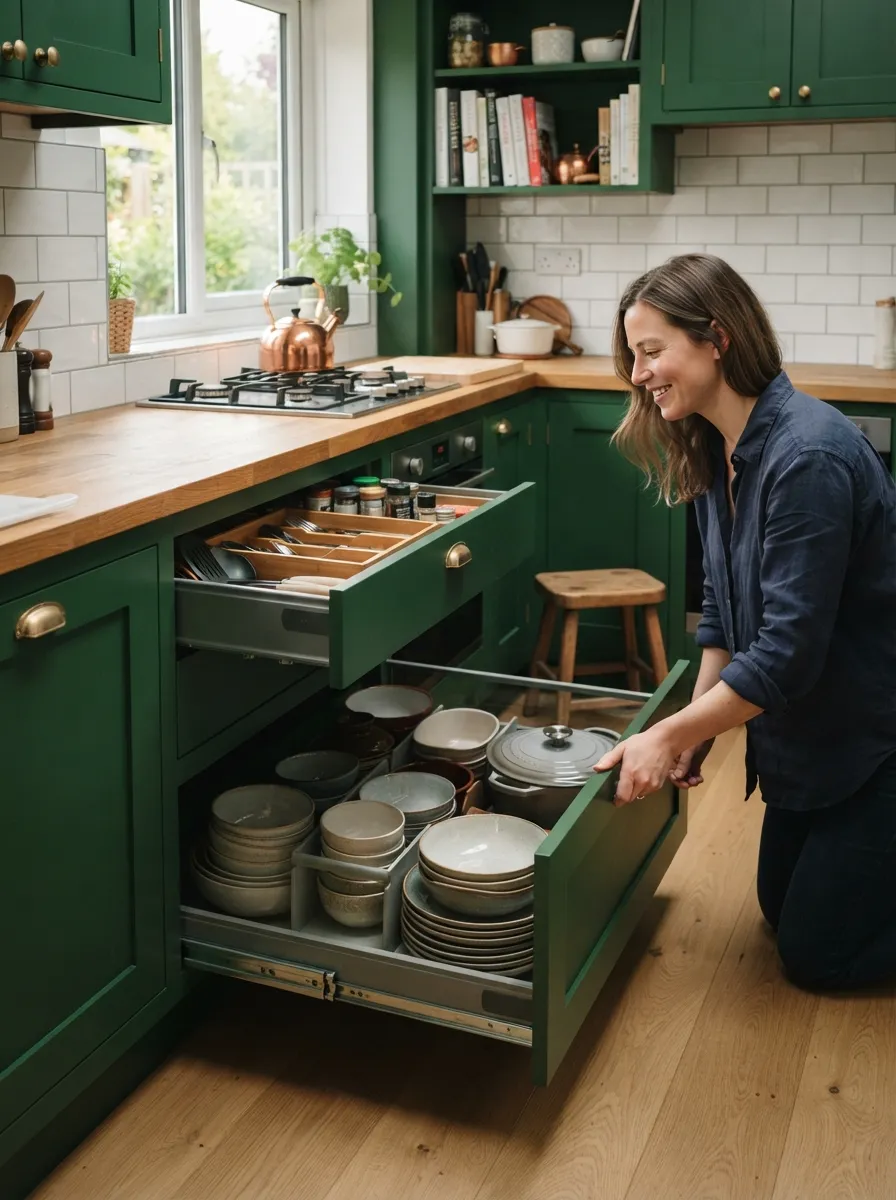
Dividers keep linens from becoming one crowded, tangled pile
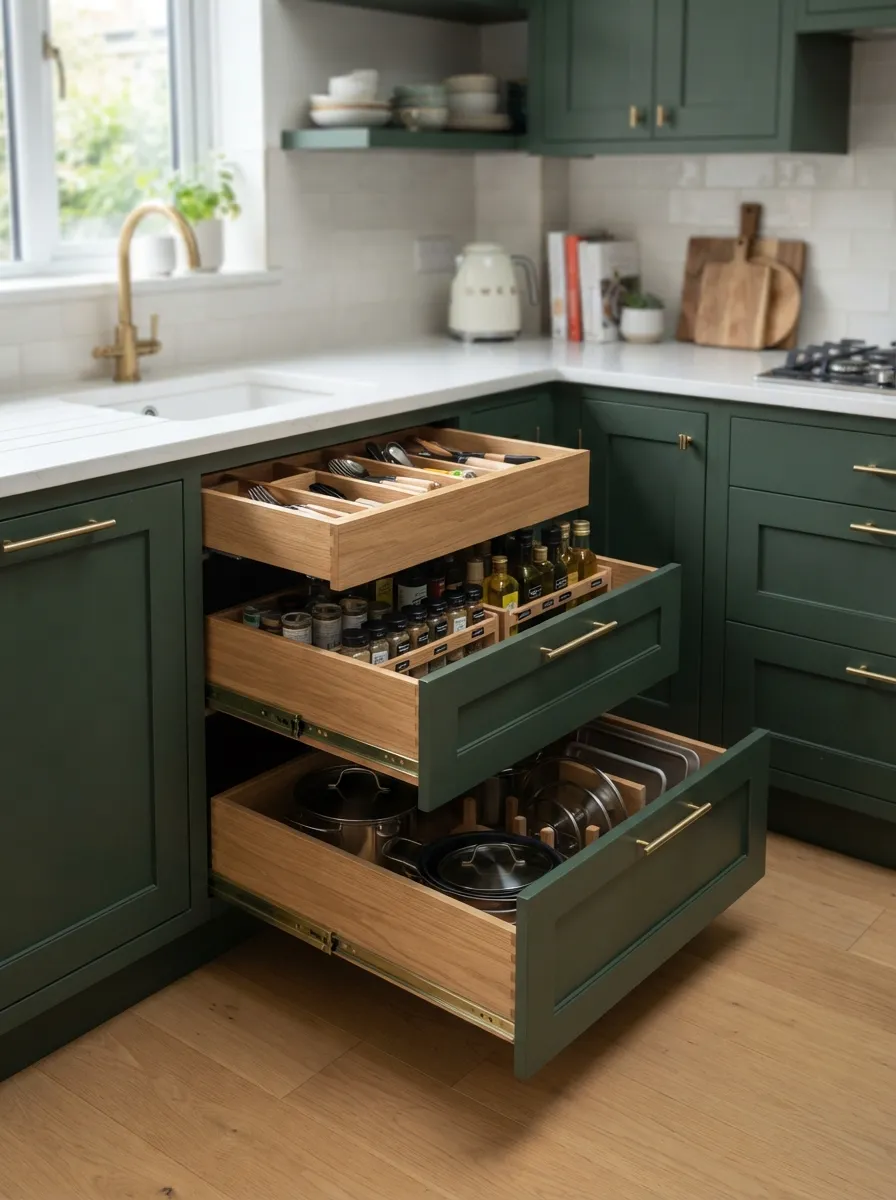
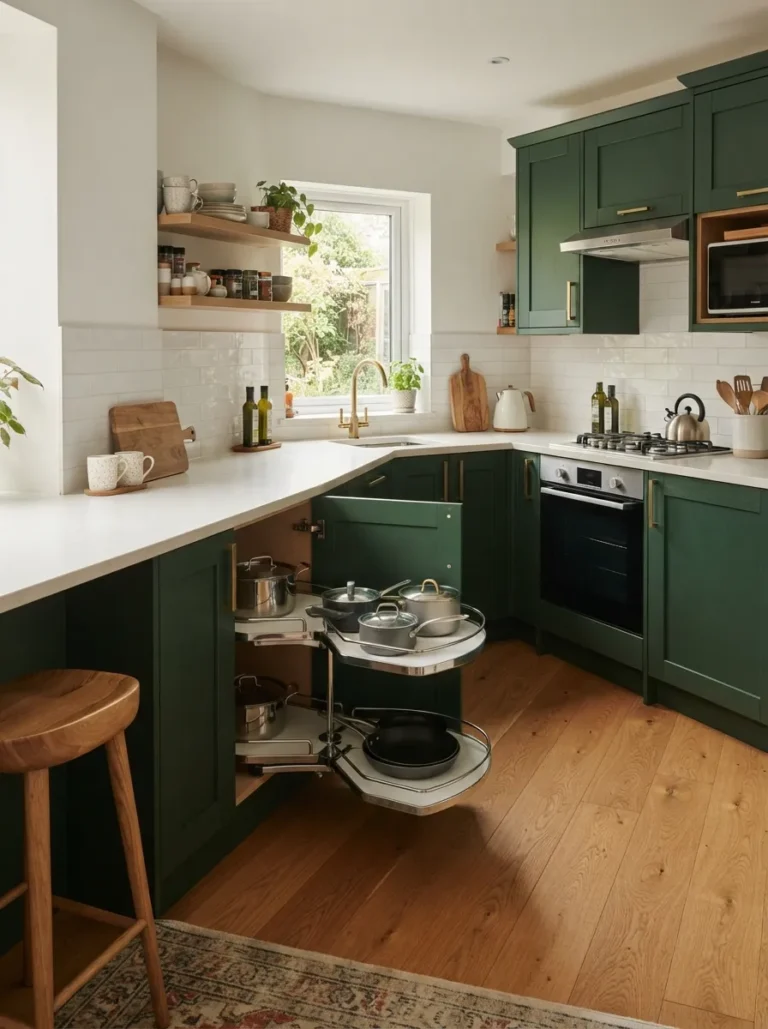
Corner drawer systems can hold napkins and placemats separately
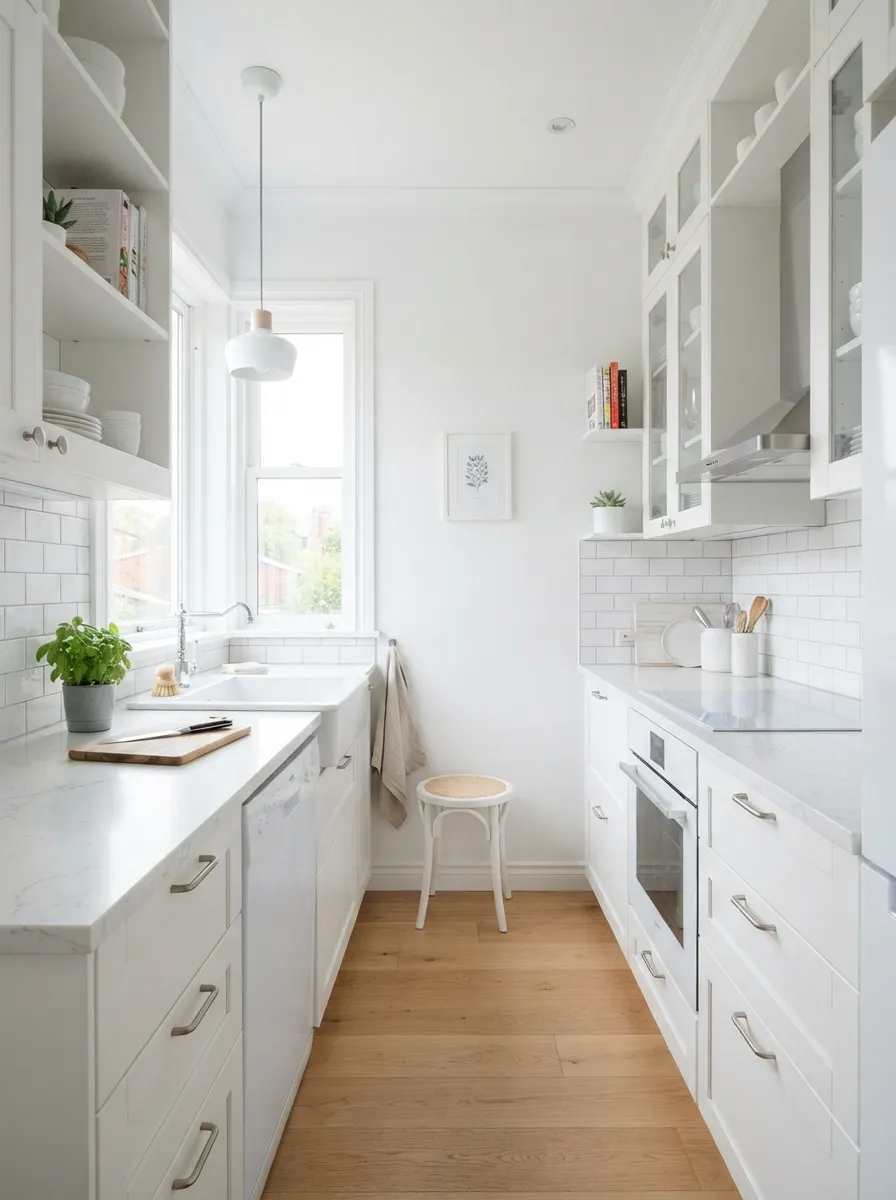
Fewer towels in visible rotation keeps counters feeling clear
Choosing Towels That Are Easier to Organize
The towels themselves make a difference to how easy this whole system is to maintain. Thinner, quick-drying towels take up less drawer space folded and dry faster between uses, which matters if your storage spot doesn’t have much airflow. Choosing one or two consistent colors or patterns for your everyday set also makes folding and stacking faster, since you’re not hunting through a mismatched pile to grab “the good one” for guests. Many people keep a slightly nicer, matching set of 2–3 towels specifically for when guests are over, stored separately from the everyday set that sees daily wear.
Towel size matters too: a standard kitchen towel (16×28 inches or so) folds into a smaller, more drawer-friendly rectangle than an oversized bath-towel-style kitchen towel, which can be nice to use but genuinely harder to store neatly in a small drawer.
Setting Up a Dedicated Towel Station Near the Sink
The sink is where most towel use actually happens — drying hands, wiping counters, drying dishes — so it makes sense to concentrate your towel storage there rather than spreading it across the kitchen. A small station near the sink might include one bar or hook for your active drying towel, a second small hook for a hand towel if you keep them separate from dish towels, and a shallow drawer or small basket underneath the sink for the next towel in rotation. Keeping this station compact and specific (rather than a catch-all spot for everything sink-related) prevents it from becoming the new junk drawer that towel piles tend to turn into.
If your sink is against a wall with no nearby cabinet door to mount a hook on, a small adhesive hook on the side of the cabinet or even the side of the dishwasher (if it’s a built-in unit right next to the sink) works as a low-commitment alternative that doesn’t require drilling.
Storing Seasonal and Occasional Linens
Beyond your everyday towel rotation, most kitchens accumulate a few linens that only come out a few times a year — holiday-themed towels, a special-occasion tablecloth, or a set of cloth napkins reserved for entertaining. These don’t need to compete with your everyday towel storage, and keeping them separate actually makes your daily system work better by not crowding it with items you’ll use twice a year.
- A flat storage bin on a high shelf or above the cabinets works well for seasonal linens, since accessibility matters less for items used only occasionally
- A slim under-bed storage box, if your kitchen doesn’t have spare shelf space, can live in a nearby closet and still keep seasonal linens organized and out of the way
- Label the bin or box clearly if you’re storing it somewhere out of sight, so you’re not opening multiple containers every holiday season trying to find the right tablecloth
Kitchen Towel Organization Mistakes to Avoid
Keeping too many towels in rotation at once. A drawer stuffed with fifteen mismatched towels is harder to manage than one with six you actually reach for regularly. Pare down to what you use, and store or donate the rest.
Washing cleaning rags with dish towels. As covered above, this mixes bacteria levels that should stay separate. It’s a small habit change with a real hygiene payoff.
Stacking towels loosely instead of folding. A loose pile takes up more drawer space and topples every time you pull one out. A simple fold-in-thirds method fits noticeably more into the same drawer and keeps the stack stable.
Leaving a damp towel bunched on a hook. A folded-over, bunched towel takes longer to dry and can develop odor faster than one hung flat with airflow around it. Use a bar rather than a single hook where possible for your most-used towel.
A well-organized towel system is one of those small kitchen projects that takes under an hour but gets used dozens of times every single day, which makes it one of the better returns on effort available in any small kitchen organization plan.
Frequently Asked Questions
Where should I store kitchen towels in a small kitchen?
Keep your most-used towel on an oven door bar or a sink-side hook for easy access, and store backups folded in a small, dedicated drawer rather than mixed in with other kitchen items.
How many kitchen towels do I actually need?
Most households do well with 4 to 6 dish towels in rotation, with 2 in active use and the rest as backups, plus a separate set of 3 to 4 cleaning rags.
Should I wash dish towels and cleaning rags together?
No, it’s better to wash them separately. Cleaning rags used on counters and floors carry more bacteria than towels used for drying clean dishes, and washing them together can transfer that bacteria.
How often should kitchen towels be washed?
Dish towels and cleaning rags should generally be washed every 1 to 2 days with regular use, since they’re handling food, moisture, and daily mess more than most other kitchen linens.
Where should I store placemats and tablecloths in a small kitchen?
Placemats fit well flat in a wide, shallow drawer or standing upright in a basket. Tablecloths, used less often, are good candidates for above-cabinet storage or a slim bin since they don’t need to be in your everyday reach zone.
What’s the best way to hang a kitchen towel so it dries properly?
Hang it flat over a bar, rather than bunched on a single hook, so air can circulate on both sides. A folded-over, bunched towel takes longer to dry and can develop odor faster.
Should oven mitts be stored separately from dish towels?
Yes, oven mitts and potholders should have their own hook or hanging spot near the oven specifically, so they’re quick to find when you’re holding something hot rather than mixed in with everyday towels.
How should I store seasonal or holiday kitchen linens?
Wash and fully dry them before storing, then keep them in a labeled bin on a high shelf, above the cabinets, or in a nearby closet, separate from your everyday towel rotation so they don’t crowd daily storage.
What’s the best material for kitchen towels in a small, busy kitchen?
Cotton and cotton-blend towels are generally the most absorbent and durable for everyday kitchen use, while microfiber dries faster between uses, which can matter if your towel storage space has limited airflow.
Related Pages
Final Thought
Kitchen towels and linens don’t need much space — they need a plan. Separate them by how you use them, give each type one small, specific spot, and keep your active rotation smaller than you think you need. A tidy towel setup is one of the fastest, cheapest wins in any small kitchen organization project.
If you’re starting from a cluttered drawer today, the fastest way in is a five-minute reset: pull everything out, keep only the towels in good condition that you’d genuinely reach for, and sort those by function before putting anything back. Most people find they can donate or repurpose a third of what they had, and the drawer that results is easier to use every single day without any extra effort to maintain it.
Want to tackle the rest of your kitchen storage too?
Explore Small Kitchen Cabinet DesignHow to Organize Kitchen Towels and Linens in a Small Kitchen
Kitchen towels and linens are one of those categories that quietly take over a small kitchen because they multiply fast — dish towels, hand towels, cleaning rags, oven mitts, potholders, and maybe a few napkins or placemats all end up jammed into the same overstuffed drawer. Organizing kitchen towels and linens in a small kitchen isn’t really about finding more space, it’s about separating them by how you actually use them and giving each type its own small, dedicated spot. This guide walks through where to store each type, how to set up a simple rotation system, how to choose towels that are easier to keep organized, and how to handle the harder-to-place items like tablecloths and placemats.
Quick Takeaways
- Separate towels by function (dish, hand, cleaning) instead of storing them all together
- A hanging bar on the oven door or a cabinet door hook keeps your most-used towel within reach without using drawer space
- Keep only 4–6 towels in daily rotation — store extras elsewhere and swap them in only when needed
- Wash dish towels every 1–2 days and cleaning rags separately, since they pick up different levels of bacteria
- Fold, don’t stack loosely, to fit noticeably more into the same drawer space
What’s In This Guide
Why Towel Storage Gets Overlooked
Towels don’t get planned for the way dishes or cookware do, because they’re soft, they compress, and they seem like they should just fit anywhere. In practice, that’s exactly why they end up crammed into a single junk drawer alongside rubber bands and takeout menus. In a small kitchen especially, treating towels as an afterthought means they either take over a drawer you need for something else, or they end up in a pile on the counter because there’s nowhere better to put them. A few minutes spent separating them by type and giving each a small, specific spot solves most of this permanently, and it rarely needs revisiting once the system is set up.
Where to Store Kitchen Towels
A few small kitchen-specific spots work far better than a single catch-all drawer:
- Oven door handle bar: Keeps your most-used towel within arm’s reach of where you actually need it most, without using any drawer or cabinet space
- Cabinet door-mounted hook or bar: A small adhesive or screw-in hook on the inside or side of a cabinet door holds one or two towels out of sight but easy to grab
- A shallow, dedicated drawer near the sink or stove, reserved only for towels, with a simple fold-and-stack system
- A small wall hook near the sink for the towel you use constantly during dishwashing and cleanup
- Under-sink hanging rod for cleaning rags specifically, keeping them separate from towels used near food
Organizing by Towel Type
Not every towel in your kitchen should be treated the same way, and mixing them together is one of the biggest sources of both clutter and cross-contamination risk.
Dish towels (used for drying dishes and hands) should be the most accessible, since they’re used constantly throughout the day. Keep 2–3 in active rotation on hooks or bars, with a few backups folded in a drawer.
Cleaning rags (used for wiping counters and spills) should be stored separately from dish towels, ideally under the sink or in a designated bin, since they’re handling a different level of mess and shouldn’t get mixed in with towels used near food or hands.
Oven mitts and potholders deserve their own small hook or hanging spot near the oven specifically, since fumbling to find one while holding a hot pan is a real (and avoidable) safety issue.
Guest or decorative towels, if you keep any separate from your everyday set, can live folded at the back of a drawer or cabinet, since they’re used rarely enough not to need prime, easy-access real estate.
A Simple Rotation System
The easiest way to avoid both clutter and running out of clean towels is a basic rotation: keep 4–6 dish towels total, with 2 in active use (hung on hooks or bars) and the rest folded in a drawer as backups. When a towel gets visibly dirty or starts to smell, swap it for a fresh one from the drawer and toss the used one in the laundry. This keeps your visible, in-use towel count low (which matters in a small kitchen where every hook and hanging spot is prime real estate) while still ensuring you’re never caught without a clean one.
| Towel Type | Recommended Count | Wash Frequency |
|---|---|---|
| Dish towels | 4–6 | Every 1–2 days |
| Cleaning rags | 3–4 | Every 1–2 days, washed separately |
| Oven mitts/potholders | 2 sets | Every 1–2 weeks |
| Guest/decorative towels | 1–2 | As needed |
Storing Small Linens
If your kitchen doubles as a small dining space, napkins, placemats, and the occasional tablecloth need a spot too, and they don’t have to compete with towel storage if you plan for them separately.
Cloth napkins fold flat and store well in a slim drawer divider or a small basket, ideally near wherever you set the table, rather than mixed in with kitchen towels.
Placemats can be stored flat in a wide, shallow drawer, or rolled and stood upright in a basket if drawer space is tighter, similar to the vertical storage approach used for cutting boards.
Tablecloths, used less frequently than everyday linens, are good candidates for a top-of-cabinet spot or a slim under-bed-style storage bin if your kitchen genuinely has no spare drawer space, since they don’t need to be part of your everyday reach zone.
Under-sink space works well for cleaning rags kept separate from towels
A shallow, dedicated drawer keeps backup towels neatly folded
A tidy towel setup makes daily cleanup noticeably faster
Dividers keep linens from becoming one crowded, tangled pile
Corner drawer systems can hold napkins and placemats separately
Fewer towels in visible rotation keeps counters feeling clear
Choosing Towels That Are Easier to Organize
The towels themselves make a difference to how easy this whole system is to maintain. Thinner, quick-drying towels take up less drawer space folded and dry faster between uses, which matters if your storage spot doesn’t have much airflow. Choosing one or two consistent colors or patterns for your everyday set also makes folding and stacking faster, since you’re not hunting through a mismatched pile to grab “the good one” for guests. Many people keep a slightly nicer, matching set of 2–3 towels specifically for when guests are over, stored separately from the everyday set that sees daily wear.
Towel size matters too: a standard kitchen towel (16×28 inches or so) folds into a smaller, more drawer-friendly rectangle than an oversized bath-towel-style kitchen towel, which can be nice to use but genuinely harder to store neatly in a small drawer.
Setting Up a Dedicated Towel Station Near the Sink
The sink is where most towel use actually happens — drying hands, wiping counters, drying dishes — so it makes sense to concentrate your towel storage there rather than spreading it across the kitchen. A small station near the sink might include one bar or hook for your active drying towel, a second small hook for a hand towel if you keep them separate from dish towels, and a shallow drawer or small basket underneath the sink for the next towel in rotation. Keeping this station compact and specific (rather than a catch-all spot for everything sink-related) prevents it from becoming the new junk drawer that towel piles tend to turn into.
If your sink is against a wall with no nearby cabinet door to mount a hook on, a small adhesive hook on the side of the cabinet or even the side of the dishwasher (if it’s a built-in unit right next to the sink) works as a low-commitment alternative that doesn’t require drilling.
Storing Seasonal and Occasional Linens
Beyond your everyday towel rotation, most kitchens accumulate a few linens that only come out a few times a year — holiday-themed towels, a special-occasion tablecloth, or a set of cloth napkins reserved for entertaining. These don’t need to compete with your everyday towel storage, and keeping them separate actually makes your daily system work better by not crowding it with items you’ll use twice a year.
- A flat storage bin on a high shelf or above the cabinets works well for seasonal linens, since accessibility matters less for items used only occasionally
- A slim under-bed storage box, if your kitchen doesn’t have spare shelf space, can live in a nearby closet and still keep seasonal linens organized and out of the way
- Label the bin or box clearly if you’re storing it somewhere out of sight, so you’re not opening multiple containers every holiday season trying to find the right tablecloth
Kitchen Towel Organization Mistakes to Avoid
Keeping too many towels in rotation at once. A drawer stuffed with fifteen mismatched towels is harder to manage than one with six you actually reach for regularly. Pare down to what you use, and store or donate the rest.
Washing cleaning rags with dish towels. As covered above, this mixes bacteria levels that should stay separate. It’s a small habit change with a real hygiene payoff.
Stacking towels loosely instead of folding. A loose pile takes up more drawer space and topples every time you pull one out. A simple fold-in-thirds method fits noticeably more into the same drawer and keeps the stack stable.
Leaving a damp towel bunched on a hook. A folded-over, bunched towel takes longer to dry and can develop odor faster than one hung flat with airflow around it. Use a bar rather than a single hook where possible for your most-used towel.
A well-organized towel system is one of those small kitchen projects that takes under an hour but gets used dozens of times every single day, which makes it one of the better returns on effort available in any small kitchen organization plan.
Frequently Asked Questions
Where should I store kitchen towels in a small kitchen?
Keep your most-used towel on an oven door bar or a sink-side hook for easy access, and store backups folded in a small, dedicated drawer rather than mixed in with other kitchen items.
How many kitchen towels do I actually need?
Most households do well with 4 to 6 dish towels in rotation, with 2 in active use and the rest as backups, plus a separate set of 3 to 4 cleaning rags.
Should I wash dish towels and cleaning rags together?
No, it’s better to wash them separately. Cleaning rags used on counters and floors carry more bacteria than towels used for drying clean dishes, and washing them together can transfer that bacteria.
How often should kitchen towels be washed?
Dish towels and cleaning rags should generally be washed every 1 to 2 days with regular use, since they’re handling food, moisture, and daily mess more than most other kitchen linens.
Where should I store placemats and tablecloths in a small kitchen?
Placemats fit well flat in a wide, shallow drawer or standing upright in a basket. Tablecloths, used less often, are good candidates for above-cabinet storage or a slim bin since they don’t need to be in your everyday reach zone.
What’s the best way to hang a kitchen towel so it dries properly?
Hang it flat over a bar, rather than bunched on a single hook, so air can circulate on both sides. A folded-over, bunched towel takes longer to dry and can develop odor faster.
Should oven mitts be stored separately from dish towels?
Yes, oven mitts and potholders should have their own hook or hanging spot near the oven specifically, so they’re quick to find when you’re holding something hot rather than mixed in with everyday towels.
How should I store seasonal or holiday kitchen linens?
Wash and fully dry them before storing, then keep them in a labeled bin on a high shelf, above the cabinets, or in a nearby closet, separate from your everyday towel rotation so they don’t crowd daily storage.
What’s the best material for kitchen towels in a small, busy kitchen?
Cotton and cotton-blend towels are generally the most absorbent and durable for everyday kitchen use, while microfiber dries faster between uses, which can matter if your towel storage space has limited airflow.
Related Pages
Final Thought
Kitchen towels and linens don’t need much space — they need a plan. Separate them by how you use them, give each type one small, specific spot, and keep your active rotation smaller than you think you need. A tidy towel setup is one of the fastest, cheapest wins in any small kitchen organization project.
If you’re starting from a cluttered drawer today, the fastest way in is a five-minute reset: pull everything out, keep only the towels in good condition that you’d genuinely reach for, and sort those by function before putting anything back. Most people find they can donate or repurpose a third of what they had, and the drawer that results is easier to use every single day without any extra effort to maintain it.
Want to tackle the rest of your kitchen storage too?
Explore Small Kitchen Cabinet Design