A Beginner’s Guide to Small Kitchen Feng Shui
Small kitchen feng shui is really about applying an old design tradition to a modern, compact space, and the good news is that most of its principles cost nothing and require no construction at all. Feng shui is a centuries-old Chinese philosophy of arranging spaces to support the flow of energy, or “chi,” and the kitchen holds particular importance in this tradition because it’s associated with nourishment, wealth, and family health. This guide walks through the core feng shui principles as they’re traditionally practiced, translated specifically for the layout challenges of a small kitchen, whether you follow the philosophy closely or are simply curious about where the ideas come from.
Quick Takeaways
- In feng shui tradition, the stove (fire) and sink (water) are ideally not placed directly facing each other
- Visible clutter is considered one of the biggest blocks to good energy flow, especially in a small footprint
- Each of the five elements — wood, fire, earth, metal, water — is tied to specific colors you can incorporate
- Mirrors are traditionally used behind a stove to symbolically double abundance when the stove can’t be repositioned
- Most of these changes are decor and organization based, not structural, making them realistic for renters too
What’s In This Guide
The Five Elements and What They Mean for Your Kitchen
Feng shui philosophy organizes the world into five elements — wood, fire, earth, metal, and water — and traditionally recommends including a mix of them in any room to keep energy balanced rather than dominated by one. In a kitchen, this often happens naturally (the stove represents fire, the sink represents water, wood cabinets or a cutting board represent wood), but a few intentional choices can round out the balance further.
| Element | Associated Colors | Easy Ways to Add It |
|---|---|---|
| Wood | Green, brown | Wood cutting boards, potted herbs, a wood countertop or shelf |
| Fire | Red, orange, bright pink | A red kettle, warm-toned accent decor, candles (used safely) |
| Earth | Yellow, terracotta, beige | Ceramic dishware, terracotta pots, earthy stoneware |
| Metal | White, grey, metallics | Stainless appliances, metal utensil holders, silver accents |
| Water | Blue, black | Blue dish towels, dark accent tile, a small indoor fountain nearby |
The traditional goal isn’t to use every color in equal amounts, but to make sure no single element visually dominates the space to the exclusion of the others, since that imbalance is considered a source of stagnant energy in feng shui practice.
Stove, Sink, and Fridge Placement in Feng Shui
The stove holds special significance in feng shui tradition, since it’s tied to the household’s wealth and nourishment. The most commonly cited guideline is to avoid placing the stove and sink directly across from or immediately adjacent to each other, since fire and water are considered opposing elements whose direct clash is thought to create tension in the space. In a small kitchen, this isn’t always avoidable given layout constraints, which is exactly why the “cures” covered later in this guide (like a small buffer object or plant between them) exist specifically for situations where repositioning isn’t realistic.
Traditionally, it’s also considered favorable for the cook to be able to see the entrance to the kitchen while standing at the stove, rather than having their back fully to the door, since this position is thought to create a sense of awareness and control. In a galley or one-wall small kitchen where this isn’t possible, a small mirror positioned to reflect the doorway is a commonly used workaround.
Decluttering for Better Energy Flow in a Small Kitchen
Clutter is considered one of the most disruptive blocks to chi in feng shui tradition, and it’s also simply true that visual clutter makes a small kitchen feel smaller and more chaotic regardless of any philosophy behind it. A few decluttering habits that align with both feng shui principles and practical small-kitchen design:
- Clear the counter of anything not used daily — feng shui tradition treats an empty counter as a sign of clear, unobstructed energy
- Keep knives out of sight when not in use, since sharp, exposed objects are traditionally considered to create “cutting” or aggressive energy in a space
- Fix or replace anything broken promptly (a cracked mug, a wobbly cabinet handle), since lingering disrepair is considered a drain on the home’s energy
- Empty the trash regularly and keep the bin out of direct view of the stove or entrance where possible
- Store expired or unused pantry items only briefly — regularly clearing them out is treated as symbolically making room for new abundance
Color Choices Through a Feng Shui Lens
Color is one of the easiest, lowest-cost ways to apply feng shui principles to a small kitchen, since it doesn’t require any structural change. Warm earth tones (terracotta, warm yellow, soft beige) are traditionally considered grounding and are a popular choice for kitchen walls specifically, since the earth element is tied to nourishment. White and light grey, tied to the metal element, are also common choices and have the added practical benefit of making a small kitchen feel brighter and more open. Deep red or orange accents (a runner, dishware, a single accent wall) are traditionally used sparingly to bring in fire energy without overwhelming the room, since too much fire element is considered to create an overly intense atmosphere in a small, enclosed space.
Common Feng Shui Fixes for Small Spaces
Small kitchens often can’t be laid out from scratch, which is exactly the situation feng shui’s traditional “cures” were designed to address:
- Mirror behind or beside the stove: When the stove can’t be repositioned away from the sink, a small mirror installed nearby is traditionally used to symbolically double the stove’s abundance and soften the fire-water clash
- A plant between the stove and sink: Since wood is said to draw water’s energy toward fire in a supportive rather than clashing way, a small plant placed between the two is a commonly used buffer
- A round or curved rug or mat: Softens the sharp angles that are common in small, boxy kitchen layouts
- A wind chime or bell near a door facing the stove directly: Traditionally used to gently disperse energy that’s thought to rush too directly into the cooking area
- Warm lighting layered with natural light: Since feng shui treats dim, stagnant light as a block to energy flow, adding a layer of warm task lighting is a common fix for small kitchens with limited windows
What to Avoid, According to Tradition
A few things feng shui tradition generally advises against in a kitchen, small or otherwise:
A stove directly in line with the front door. This is considered to let household wealth and energy “escape” straight out the door, and in a small kitchen where the stove is fixed in place, a folding screen, plant, or hanging crystal near the doorway is a traditional workaround.
An overhead beam directly above the stove or sink. Exposed structural beams are traditionally thought to create pressure on whatever sits beneath them; a hanging plant or light fixture is sometimes used to visually soften this.
A cluttered, overflowing trash can visible from the main cooking or eating area. Beyond the tradition, this one lines up with basic small-kitchen practicality too — keep it covered or tucked away where possible.
Broken or non-functioning appliances left in place. A stove burner that doesn’t work or a persistently dripping faucet is traditionally seen as a drain on the home’s energy and abundance, distinct from ordinary clutter.
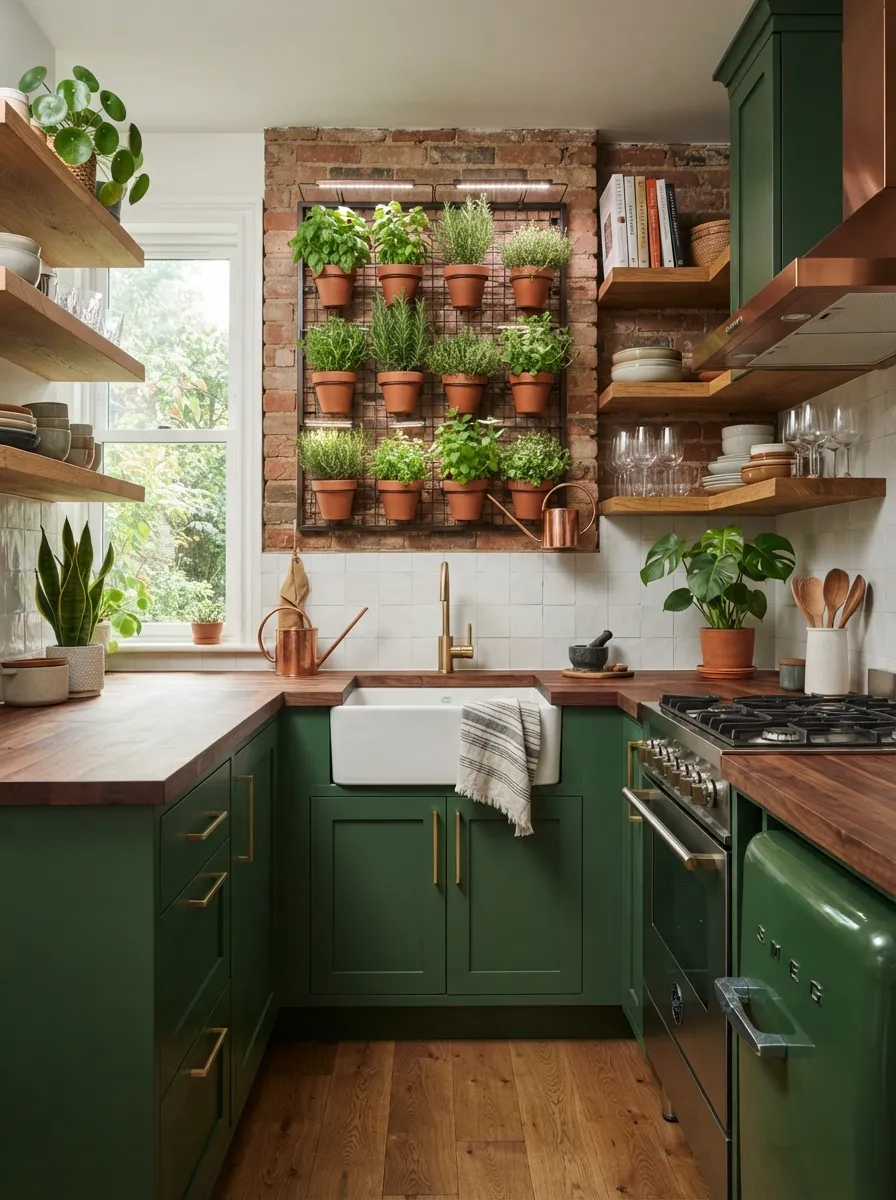
Plants bring the wood element into a small kitchen naturally
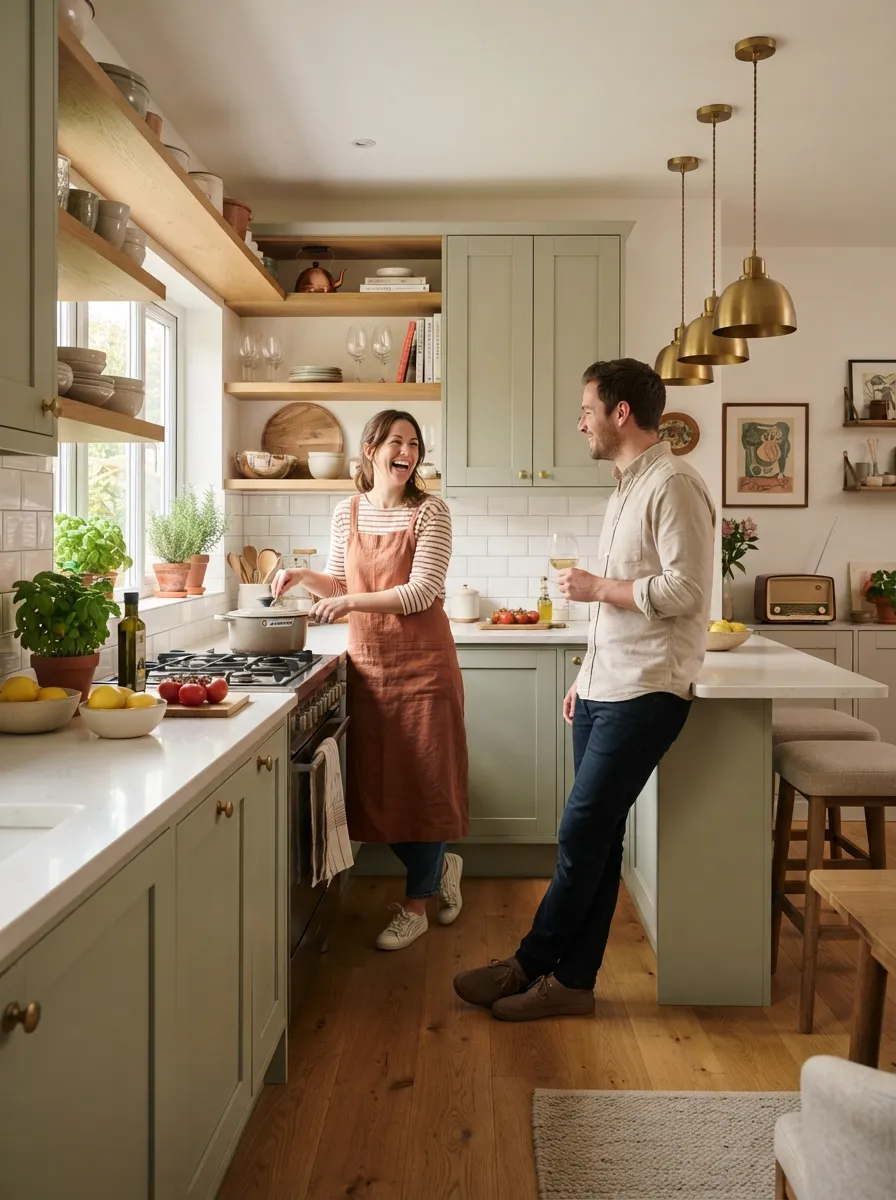
A warm, uncluttered atmosphere supports good energy flow
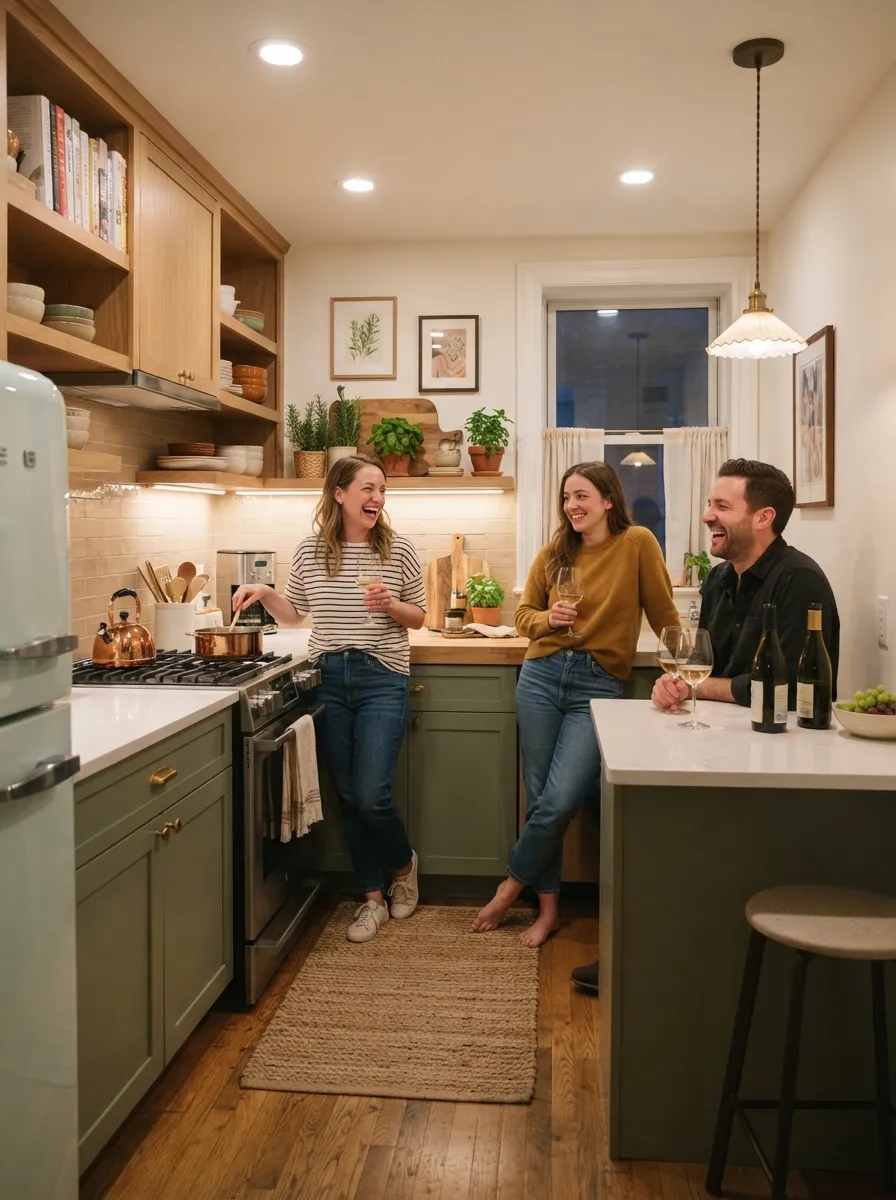
An open, welcoming layout is a core feng shui goal
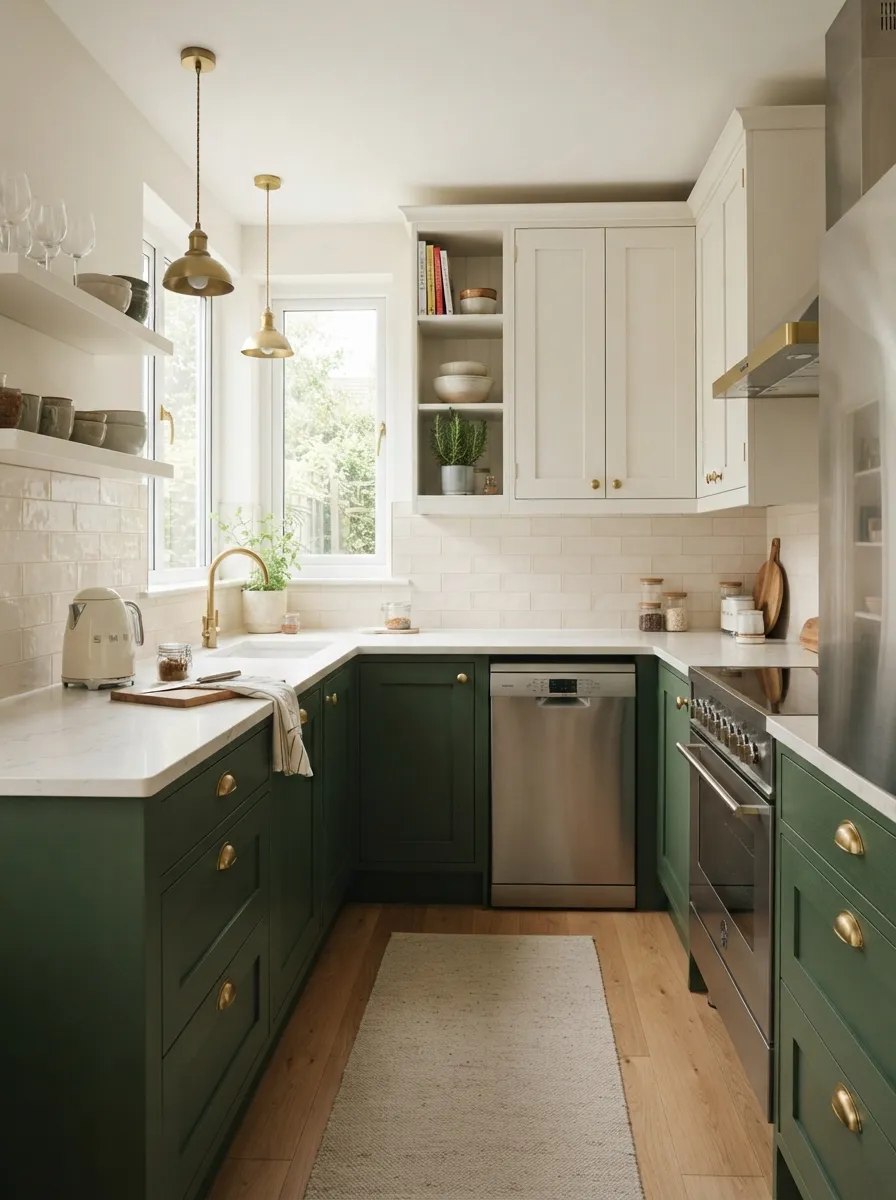
Green cabinetry brings the wood element into the room’s palette
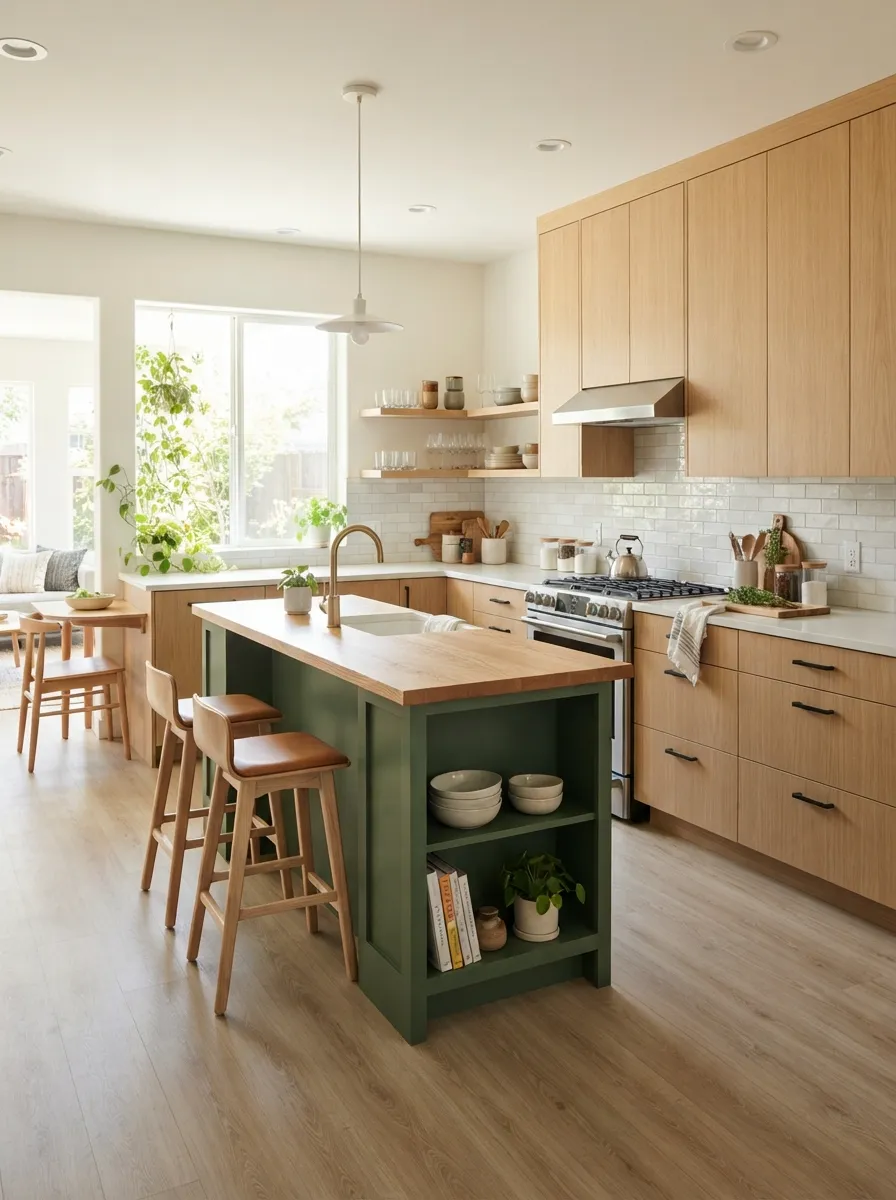
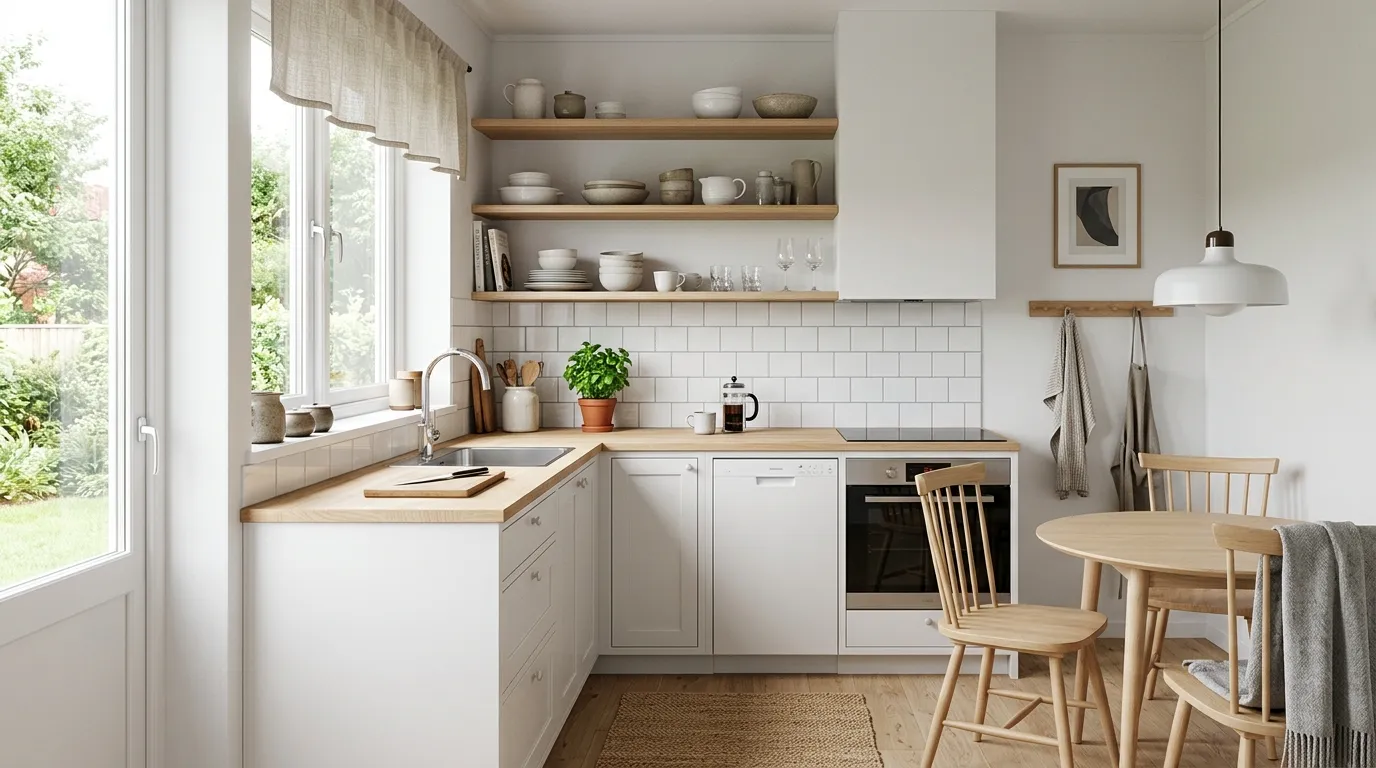
Light wood tones balance warmth with an open, airy feel
Bright, uncluttered kitchens align naturally with feng shui goals
Feng Shui Tips by Small Kitchen Layout
The specific challenges feng shui addresses look different depending on your kitchen’s shape, so it helps to think through your particular layout rather than applying every principle generically.
Galley kitchens (two parallel walls) often place the stove and sink directly across from each other by default, since that’s simply how the plumbing and gas lines tend to run. A small plant or a mirror positioned nearby is the most practical traditional fix here, since repositioning either fixture usually isn’t realistic without a full renovation.
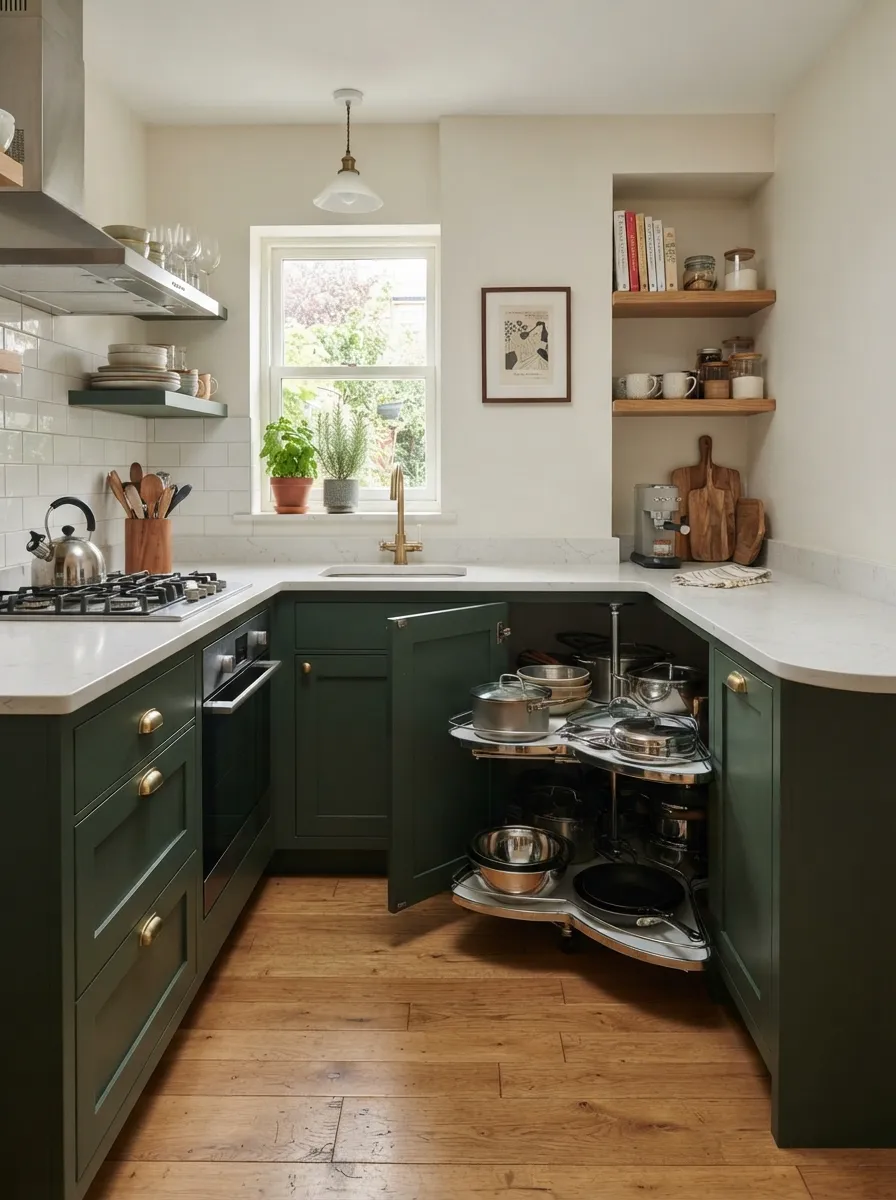
L-shaped kitchens tend to have more flexibility in stove and sink placement, and often naturally avoid the direct-facing issue simply due to the corner layout. The bigger focus here is usually decluttering the corner itself, since L-shaped layouts often develop a “dead corner” that collects clutter and blocks the room’s overall flow.
One-wall kitchens place everything in a single line, which traditionally is seen as creating a very direct, fast flow of energy down the wall. Breaking that line visually with a plant, a change in color, or open shelving partway down the run is a common way to soften it.
Open-concept small kitchens that flow directly into a living or dining area benefit from a clear visual boundary, even a subtle one like a rug, a change in flooring, or a pendant light, since feng shui tradition treats a completely undefined kitchen space as harder to energetically anchor than one with some sense of its own boundary.
Simple Feng Shui Changes Renters Can Make
Because feng shui in the kitchen relies so heavily on decor, color, and organization rather than structural change, it’s one of the more renter-friendly design philosophies to apply. None of the following require any permanent modification:
- Swap dish towels, a runner, or canisters into colors tied to the element you want to emphasize
- Add a small potted herb plant on the windowsill or counter for a wood-element touch
- Hang a small, removable mirror near the stove if it directly faces the sink
- Keep counters clear as a daily habit rather than a one-time reset
- Add a warm, plug-in accent light to layer in light without any wiring changes
As with any design tradition, take what’s useful for your own space and skip what doesn’t fit your layout or beliefs — feng shui works best as a flexible set of principles, not a rigid checklist.
Frequently Asked Questions
What is feng shui in the context of a kitchen?
Feng shui is a traditional Chinese philosophy of arranging spaces to support the flow of energy, or chi. In the kitchen specifically, it’s associated with nourishment, wealth, and family health, and it traditionally focuses on placement, color, and clutter.
Why shouldn’t the stove and sink face each other in feng shui?
The stove represents the fire element and the sink represents water, and in feng shui tradition, these opposing elements are thought to clash when placed directly facing or too close to one another. A mirror or plant placed between them is a traditional workaround when repositioning isn’t possible.
Do I need to renovate my kitchen to apply feng shui principles?
No. Most feng shui principles for a kitchen are about decor, color, organization, and small decorative fixes like mirrors or plants, all of which can be applied without any construction or permanent changes.
What colors are considered best for feng shui in a small kitchen?
Warm earth tones (terracotta, yellow, beige) are tied to the earth element and are traditionally considered grounding, while white and light grey are tied to the metal element and also help a small kitchen feel brighter and more open.
Why is clutter considered bad in feng shui?
Clutter is traditionally believed to block the free flow of chi, or energy, through a space. In practical terms, it also makes a small kitchen feel more chaotic and harder to move through, regardless of the underlying philosophy.
Can renters apply feng shui principles in their kitchen?
Yes, most feng shui kitchen principles rely on decor, color, and organization rather than structural changes, making them well suited to rental kitchens where permanent modifications aren’t an option.
Is feng shui based on scientific evidence?
Feng shui is a traditional design philosophy rather than a scientifically tested practice. Many people apply its principles for the sense of intention, calm, and organization they bring to a space, independent of any spiritual belief in the tradition itself.
What’s the traditional feng shui fix for a stove facing the front door?
A folding screen, a tall plant, or a hanging crystal placed between the stove and the door is a traditional way to gently redirect energy, since the stove itself usually can’t be moved once it’s plumbed and wired into place.
Related Pages
Final Thought
Small kitchen feng shui isn’t about a full renovation — it’s a lens for making intentional choices with what you already have. Start small: clear the counter, add one plant, swap in a few textiles in a color tied to the element you want more of, and see how the space feels. Whether or not you follow the philosophy closely, a clearer, more thoughtfully arranged kitchen tends to feel better to cook in either way.
Whatever your layout, the underlying goal stays the same across every version of feng shui advice: reduce visual chaos, let light and air move freely, and make sure no single element or fixture dominates the room. Those are useful design goals on their own, independent of whether you follow the tradition closely.
Want more ways to make your small kitchen feel intentional?
Explore Small Kitchen Interior Design