Which Backsplash Material Is Easiest to Clean in Small Kitchens?
The easiest backsplash material to clean in a small kitchen comes down to one main factor: grout lines. A small kitchen’s backsplash sits closer to the stove, sink, and daily prep activity relative to its total size than a backsplash in a larger kitchen, which means it takes more splatter and spill exposure per square foot. Materials with visible grout lines, no matter how attractive, require more regular scrubbing to keep those lines from staining, while grout-free materials wipe clean in seconds. This guide compares the most common backsplash materials specifically on cleaning ease, weighs in cooking frequency and backsplash height, and covers a simple maintenance routine, so you can balance all of that against style and budget for your own kitchen.
Quick Takeaways
- Grout-free materials (stainless steel, glass panels, large-format porcelain slabs) are the easiest to wipe clean
- Standard ceramic and glass mosaic tile are close behind, but grout lines need periodic attention
- Natural stone (marble, travertine) needs the most maintenance, since it’s porous and stains more easily without sealing
- Epoxy or sealed grout resists staining far better than unsealed grout, regardless of tile material
- A backsplash behind the stove specifically benefits most from a low-maintenance, grout-free material given daily grease exposure
- Mixing materials by zone is a practical way to balance style, budget, and cleaning ease across the whole kitchen
What’s In This Guide
Why Cleaning Ease Matters More in a Small Kitchen
In a small kitchen, the stove, sink, and prep counter are often closer together than in a larger layout, which means splatter from cooking travels a shorter distance to reach the backsplash, and it happens more concentrated in one area rather than spread across a longer counter run. A backsplash material that’s high-maintenance in a large kitchen becomes even more demanding in a small one, simply because the same daily cooking activity is concentrated over less total backsplash area. This is exactly why cleaning ease is worth weighing as heavily as style when choosing a material for a compact kitchen, especially since a small kitchen’s backsplash is also more visually prominent relative to the room, meaning any grime or staining is harder to overlook than it might be in a larger space with more surfaces competing for attention.
Backsplash Materials Compared by Cleaning Ease
Stainless Steel Sheet
A single sheet of stainless steel is about as low-maintenance as backsplash materials get: no grout, no porous surface, and a quick wipe with a damp cloth removes grease and splatter instantly. It’s especially popular behind the stove specifically, where cleaning ease matters most. The trade-off is visible fingerprints and smudges on a polished finish, though a brushed finish hides these far better.
Large-Format Porcelain Slab
A single large porcelain slab, sized to cover most or all of the backsplash area, minimizes grout lines to just the panel edges rather than a full grid. Porcelain itself is non-porous and highly stain-resistant, making this one of the easiest tile-based materials to maintain, though the material and installation cost run higher than standard tile.
Glass Panel (Back-Painted)
A single sheet of back-painted glass offers a completely seamless, grout-free surface with a glossy finish that wipes perfectly clean. It’s non-porous and doesn’t stain, though like polished stainless steel, a glossy glass surface shows fingerprints and water spots more visibly than a matte material.
Ceramic Subway Tile
Standard ceramic subway tile has a glazed surface that resists staining well and cleans easily with regular wiping, making it one of the more practical tile choices despite having visible grout lines. The main maintenance point is the grout itself, which should be sealed and periodically checked for staining, especially in the areas nearest the stove.
Glass Mosaic Tile
Individual glass tiles are non-porous and wipe clean easily, similar to ceramic, but a mosaic pattern means significantly more total grout line length in the same square footage compared to larger subway tile. This makes mosaic slightly more maintenance overall, even though each individual tile is easy to clean.
Natural Stone (Marble, Travertine)
Natural stone is the most maintenance-intensive common backsplash material, since it’s porous and can absorb grease, wine, or acidic splatter if not properly sealed. Marble specifically can etch (develop dull spots) from acidic splashes like vinegar or lemon juice. Natural stone needs to be sealed regularly, typically once a year, to stay reasonably stain-resistant.
Peel-and-Stick Vinyl
A budget-friendly, grout-free option, peel-and-stick vinyl wipes clean easily and resists staining well for a temporary or rental-friendly solution. Its main limitation isn’t cleaning difficulty but durability: it can peel or discolor faster than a permanent material, especially with prolonged heat exposure right behind a stove.
Choosing Based on How Often You Actually Cook
Cleaning ease matters more or less depending on your actual cooking habits, and it’s worth being honest about that before committing to a material.
Frequent home cooks who cook daily, especially with methods that generate a lot of splatter (frying, searing, wok cooking), should prioritize a grout-free, non-porous material behind the stove regardless of what they choose elsewhere. The daily time savings on cleanup add up significantly over months and years of use.
Occasional cooks who mostly reheat, assemble simple meals, or cook a few times a week have more flexibility to choose a higher-maintenance material they love the look of, since the backsplash simply won’t face the same frequency of exposure.
Households that bake often deal with more flour and sugar residue than grease, which tends to be easier to wipe away than oil-based splatter, making even moderately porous materials like sealed natural stone a more reasonable choice near a baking zone than they would be directly behind a stovetop.
Does Backsplash Height Affect Cleaning?
A taller backsplash, extending further up the wall, covers more of the splatter zone that would otherwise land on painted drywall, which is actually much harder to clean than tile, glass, or stainless steel. Extending a low-maintenance material to at least 18–24 inches above the counter behind the stove specifically captures more of the typical splatter range than a shorter, purely decorative strip. Some small kitchens extend a full-height backsplash from counter to the underside of the upper cabinets for exactly this reason, prioritizing coverage over a shorter, more minimal look.
The Grout Factor
Grout is almost always the real source of backsplash maintenance headaches, not the tile itself. Unsealed grout is porous and absorbs grease, food coloring, and moisture, which is why a beautiful tile backsplash can start looking dingy at the grout lines within months of installation if the grout wasn’t sealed properly. The fix isn’t necessarily avoiding tile altogether — it’s making sure any tiled backsplash uses sealed or epoxy grout, which resists staining dramatically better than standard unsealed grout.
| Grout Type | Stain Resistance | Resealing Needed |
|---|---|---|
| Standard unsealed grout | Low | Every 6–12 months |
| Sealed standard grout | Medium | Yearly |
| Epoxy grout | High | Rarely, if ever |
Best Materials by Kitchen Zone
Not every section of your backsplash needs to use the same material, and mixing materials by zone is a practical way to balance cleaning ease with budget and style.
Behind the stove sees the most grease and splatter of any backsplash zone, making it the best candidate for stainless steel, a large-format slab, or glass, regardless of what material covers the rest of the kitchen.
Behind the sink deals mostly with water exposure rather than grease, so ceramic tile, glass tile, or porcelain all perform well here without needing the same grease-specific durability as the stove zone.
Away from both the stove and sink (a purely decorative stretch of backsplash) is the most forgiving zone, and a good spot to use a higher-maintenance material like natural stone if you love the look but want to limit it to a smaller area.
A Simple Cleaning Routine by Material
A quick routine tailored to your material keeps any backsplash looking its best with minimal ongoing effort:
- Stainless steel, glass, large-format porcelain: Wipe with a damp microfiber cloth after cooking; use a stainless-specific cleaner occasionally to remove fingerprints on polished finishes
- Ceramic and glass tile with sealed grout: Wipe tile surfaces after cooking; spot-clean grout lines weekly with a soft brush and mild cleaner
- Natural stone: Wipe immediately after any acidic spill to prevent etching; reseal annually; avoid abrasive or acidic cleaners entirely
- Peel-and-stick vinyl: Wipe with a damp cloth; avoid abrasive scrubbing, which can lift edges over time
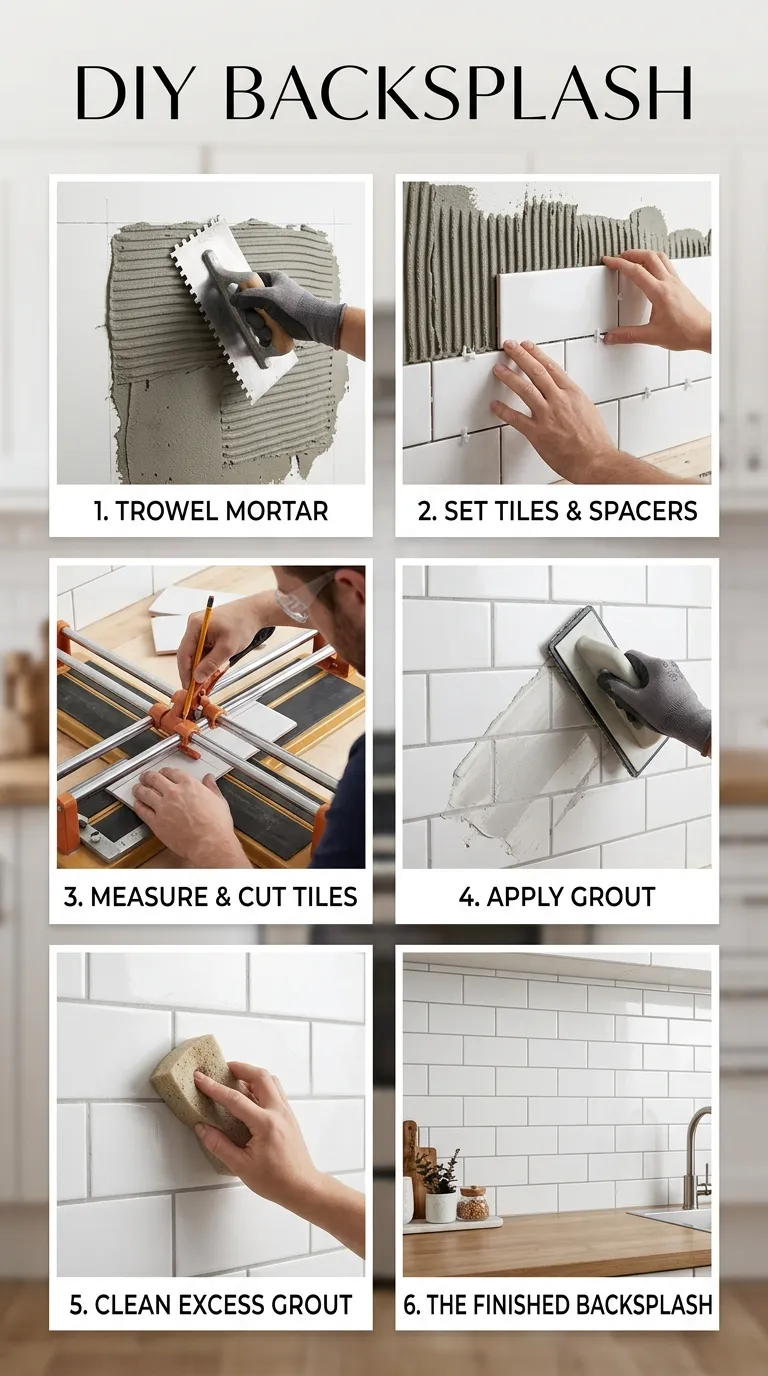
Subway tile balances cleaning ease with classic style
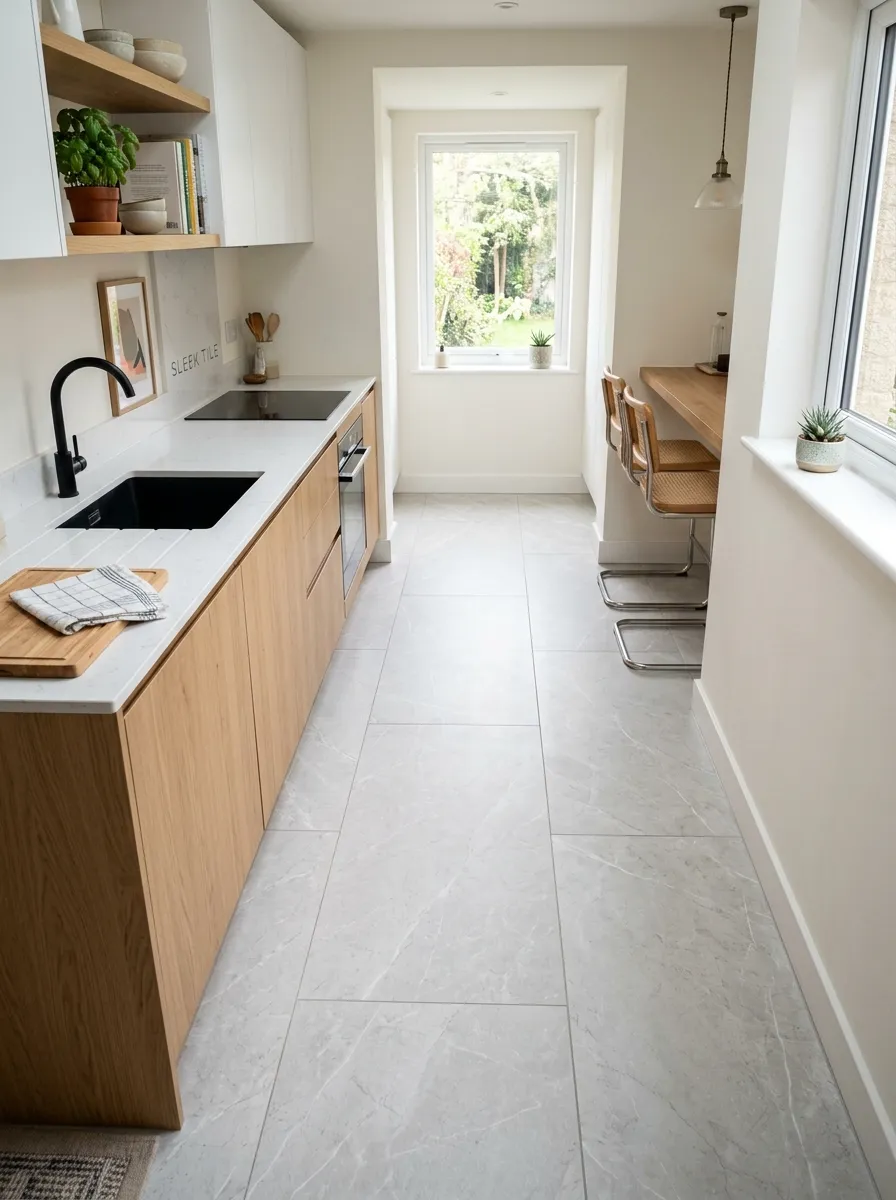
Large-format porcelain minimizes grout lines behind the stove
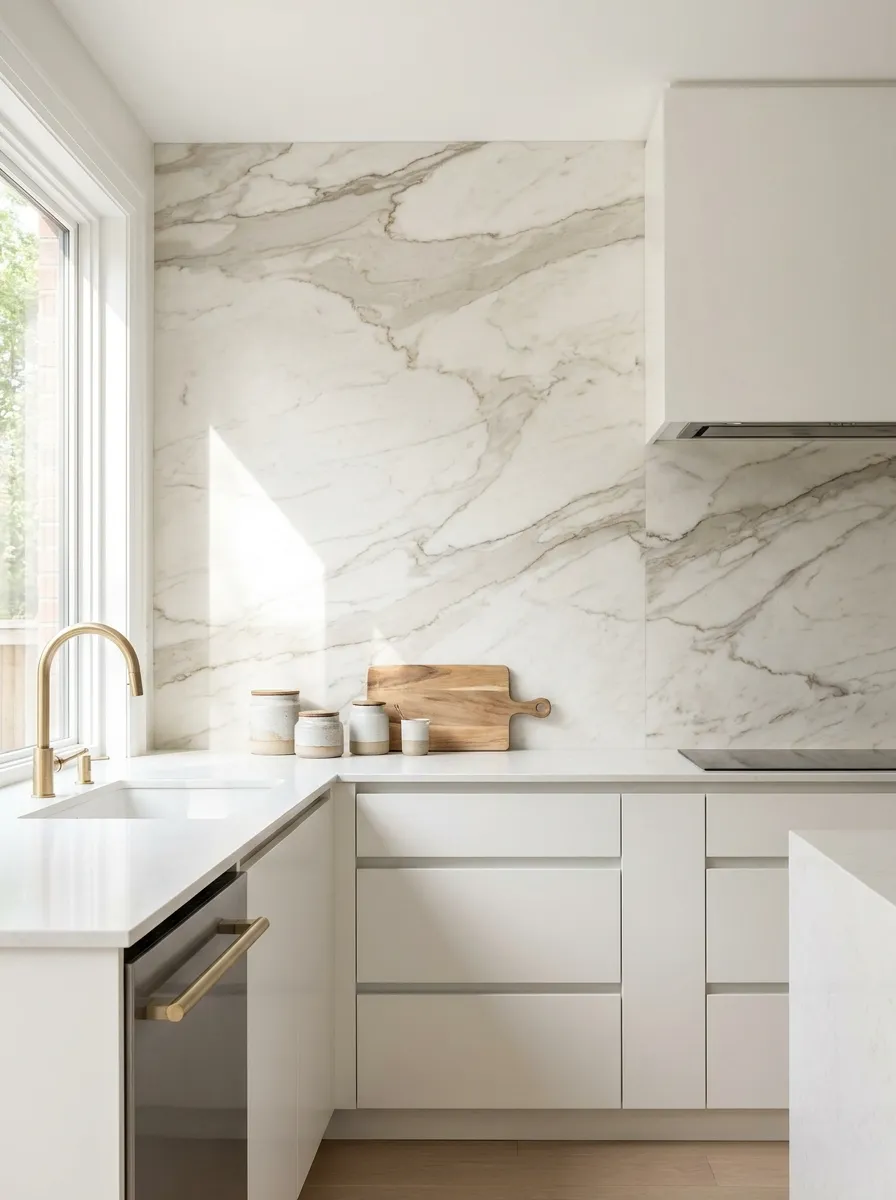
Marble looks striking but needs regular sealing to resist stains
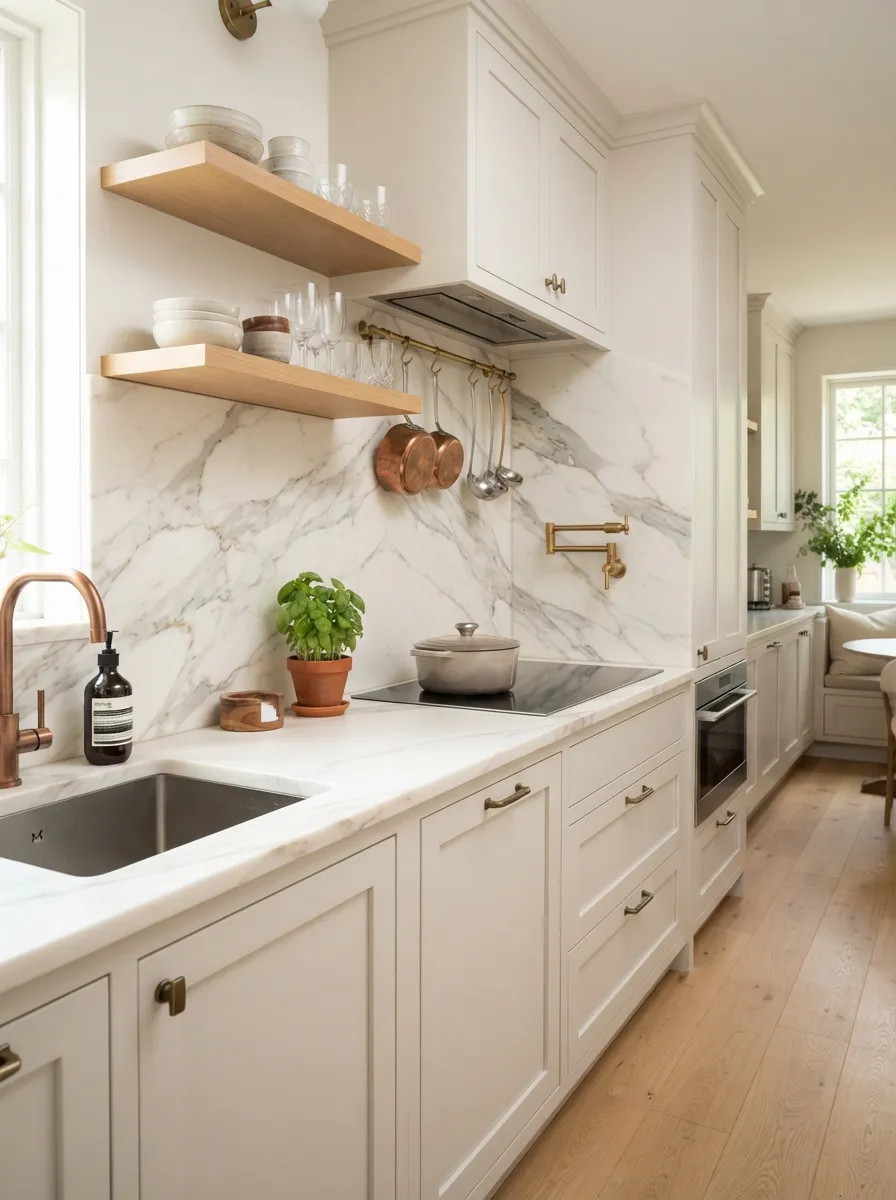
A large slab minimizes grout lines compared to smaller tile

A material swap during a remodel can meaningfully cut cleaning time
Comparing materials side by side helps balance style and upkeep
Backsplash Cleaning Mistakes to Avoid
Skipping grout sealant to save on installation cost. Unsealed grout is the single biggest reason a tiled backsplash starts looking dingy within the first year. The extra cost of sealing (or choosing epoxy grout) pays for itself many times over in reduced scrubbing.
Using abrasive cleaners on natural stone. Acidic or abrasive cleaners can etch or dull marble and other natural stone permanently. Stick to pH-neutral, stone-safe cleaners specifically formulated for natural stone.
Ignoring the backsplash zone directly behind the stove. This area needs more frequent attention than the rest of the backsplash regardless of material, simply due to grease exposure. A quick wipe after each cooking session prevents buildup that’s much harder to remove once it’s baked on by repeated heat exposure.
Choosing a material purely on looks without checking your cooking habits. If you cook frequently and generate a lot of splatter, prioritize a low-maintenance material behind the stove even if you love the look of a higher-maintenance option elsewhere in the kitchen.
Assuming all tile is equally hard to clean. Cleaning difficulty varies more by tile size and grout choice than by tile material itself. A large-format ceramic tile with epoxy grout can actually be lower-maintenance than a smaller, unsealed natural stone tile, even though “tile” as a category covers both.
Take a moment to think through your own cooking habits and the specific zones of your kitchen before finalizing a material choice, rather than picking purely on appearance. The right material for the stove zone might genuinely be different from the right material for a decorative stretch elsewhere, and that’s a completely reasonable way to design a backsplash.
Frequently Asked Questions
What backsplash material requires the least cleaning?
Grout-free materials like stainless steel sheets, glass panels, and large-format porcelain slabs require the least cleaning, since there are no grout lines to trap grease or stain over time.
Is subway tile easy to clean behind a stove?
Yes, ceramic subway tile’s glazed surface resists staining well and wipes clean easily, though the grout lines need periodic attention and should be sealed to prevent staining near the stove specifically.
Why is natural stone harder to clean than tile?
Natural stone like marble and travertine is porous, meaning it can absorb grease and acidic spills if not properly sealed. It also requires yearly resealing to maintain stain resistance, unlike non-porous materials.
Does epoxy grout really make a difference in cleaning?
Yes, significantly. Epoxy grout resists staining far better than standard cement-based grout and rarely needs resealing, which essentially eliminates the grout-staining issue that makes many tiled backsplashes look dirty over time.
Is peel-and-stick backsplash easy to clean?
Yes, peel-and-stick vinyl wipes clean easily and resists staining well, though it should be cleaned with a soft, non-abrasive cloth to avoid lifting the edges over time.
Can I use different backsplash materials in different areas of the same kitchen?
Yes, this is a practical approach: using a low-maintenance material like stainless steel behind the stove while using a different material, even natural stone, in a purely decorative zone away from grease and water exposure.
How often should I reseal a tile or stone backsplash?
Natural stone typically needs resealing once a year. Standard sealed grout also benefits from yearly resealing, while epoxy grout rarely, if ever, needs to be resealed.
Should my backsplash extend all the way to the upper cabinets?
Extending a low-maintenance material behind the stove at least 18-24 inches up the wall covers most of the typical splatter zone, and some small kitchens extend it fully to the underside of the upper cabinets for maximum coverage.
Is glass tile more or less work to clean than ceramic tile?
Individual glass tiles are just as easy to wipe clean as ceramic, but a glass mosaic pattern typically has more total grout line length in the same area, which can mean slightly more overall grout maintenance than larger-format ceramic tile.
Take these material and grout comparisons as a practical starting point, then confirm current pricing and product-specific care instructions with your chosen supplier before finalizing your selection.
Related Pages
Final Thought
The easiest backsplash material to clean isn’t necessarily the most popular one — it’s the one with the least grout and the most stain-resistant surface for the specific zone it covers. If low maintenance is a real priority, lean toward a grout-free material behind the stove at minimum, and don’t be afraid to mix materials by zone to balance cleaning ease with the overall look you want for the rest of your small kitchen. A little planning at the material-selection stage saves a meaningful amount of scrubbing for years afterward, which is a trade worth making in a kitchen you’ll be cooking in daily.
Planning your full backsplash design?
Explore Backsplash Designs