Small Kitchen Design for Long-Distance Meal Preppers
Small kitchen design for long-distance meal preppers, meaning anyone who cooks most of a week’s meals in one or two concentrated sessions rather than daily, has a different set of priorities than everyday small kitchen design. The kitchen doesn’t need to be optimized for quick, small daily meals — it needs to handle a batch-cooking marathon efficiently once or twice a week, then store the results cleanly until they’re eaten. This guide covers the storage, appliance, and workflow choices that make that specific pattern work well in a compact kitchen.
Quick Takeaways
- Dedicate a specific fridge and freezer zone to prepped meals, separate from everyday groceries
- Uniform, stackable containers use freezer and fridge space far more efficiently than a mismatched collection
- A clear staging counter for portioning and labeling matters as much as cooking space itself
- Batch-sized cookware (a large stockpot, full sheet pans) is worth prioritizing over a full set of smaller pieces
- A simple labeling system prevents “mystery container” buildup in the freezer over time
What’s In This Guide
- Why Meal Prep Kitchens Have Different Priorities
- Storage for Prepped Meals
- Choosing the Right Containers
- Setting Up a Staging and Portioning Zone
- Batch-Friendly Appliances and Cookware
- A Simple Labeling and Rotation System
- Handling Bulk Grocery Deliveries
- Dishwasher and Cleanup Capacity
- Planning Portions for One or Many
- Frequently Asked Questions
Why Meal Prep Kitchens Have Different Priorities
Most small kitchen design advice assumes cooking happens in small, frequent bursts throughout the week. A long-distance meal prepper flips that pattern: one or two intense sessions produce most of the week’s food, which then sits in storage until it’s needed. That means the kitchen needs less everyday quick-access convenience and more capacity for batch cooking, bulk storage, and organized rotation. A kitchen designed around this pattern prioritizes freezer and fridge organization, generous staging space, and larger-capacity cookware over the smaller, grab-and-go setups that suit daily cooking.
Storage for Prepped Meals
The single biggest design shift for a meal-prep-focused kitchen is treating fridge and freezer space as a planned system rather than general storage.
- Dedicate specific shelves or bins in the fridge and freezer exclusively to prepped meals, separate from everyday groceries, so a week’s worth of food doesn’t get buried behind milk and condiments
- Use the freezer door and side racks for flatter, single-portion items, keeping the main shelves free for stacked containers
- Store meals in the order you’ll eat them, front to back, so nothing gets pushed to the back and forgotten until it’s freezer-burned
- Consider a small standalone chest freezer if your kitchen’s built-in freezer genuinely can’t handle a full week or two of batch-prepped meals, especially useful in a very small kitchen with a compact standard fridge
Choosing the Right Containers
Container choice affects storage efficiency more than almost any other single decision in a meal-prep kitchen. A mismatched collection of containers in different shapes and sizes wastes real fridge and freezer space, since irregular shapes don’t stack cleanly and leave gaps.
| Container Type | Stacking Efficiency | Best For |
|---|---|---|
| Uniform rectangular containers | High | Freezer storage, stacking multiple meals |
| Mason jars | Medium | Soups, sauces, overnight oats |
| Silicone freezer bags | High (flat-frozen) | Maximizing freezer space, portioned proteins |
| Mismatched containers | Low | Not recommended for a dedicated meal-prep system |
Switching to one or two consistent container sizes, rather than accumulating whatever’s on sale, is one of the highest-value, lowest-cost upgrades available to a meal-prep-focused small kitchen. It’s also worth choosing containers that are freezer, microwave, and dishwasher safe, so meals move from freezer to reheating to cleanup without ever needing to be transferred to a different container along the way.
Setting Up a Staging and Portioning Zone
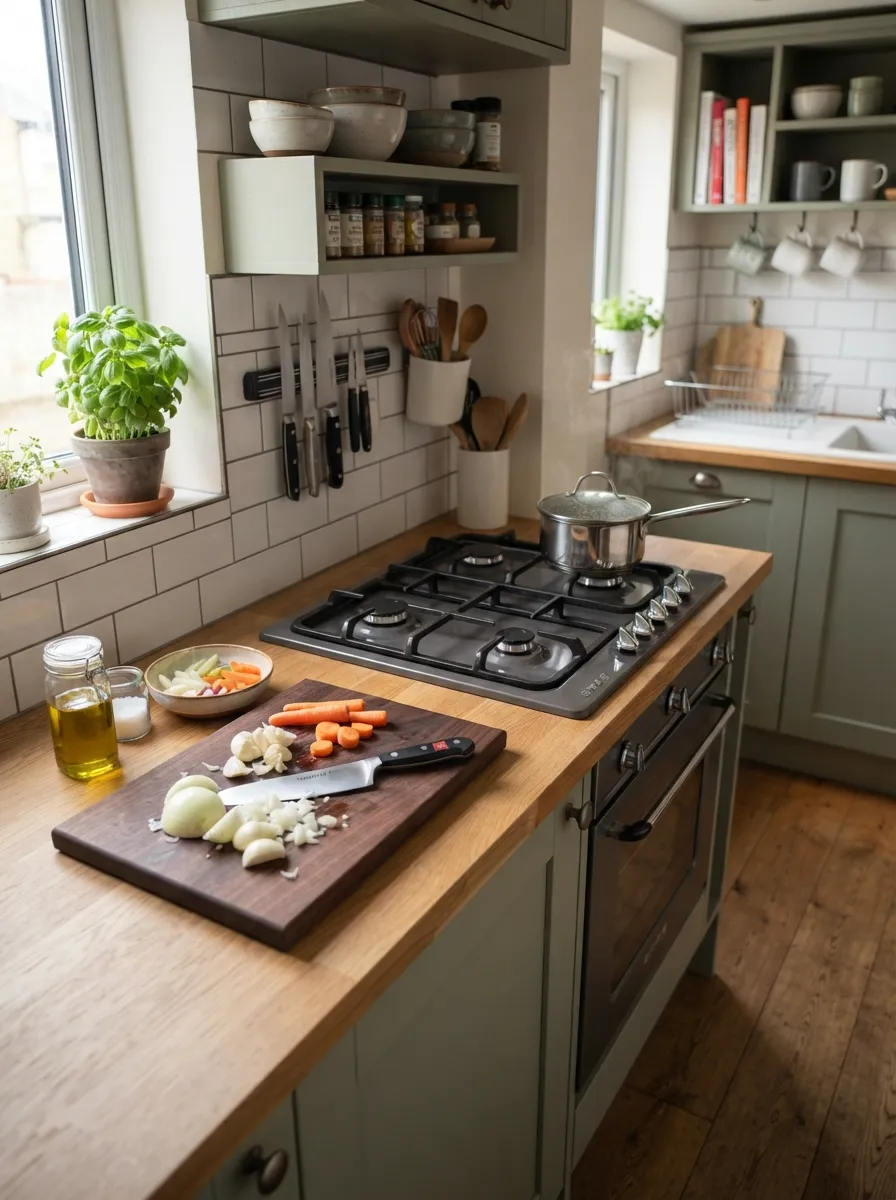
Batch cooking day needs more clear counter space at once than daily cooking does, since you’re often portioning multiple meals into multiple containers simultaneously rather than plating one dish. If your small kitchen doesn’t have much spare counter space day to day, consider a fold-down or slide-out surface you can deploy specifically for prep day, then tuck away the rest of the week. A rolling cart that lives elsewhere in a small apartment and gets wheeled into the kitchen for prep sessions is another practical option that doesn’t require permanent counter space.
Keep your containers, labels, and a kitchen scale (if you portion by weight) staged together near this zone on prep day, rather than scattered around the kitchen, so the whole assembly line — cook, portion, label, store — happens in one efficient pass.
Batch-Friendly Appliances and Cookware
A few pieces of cookware and appliances matter more to a meal-prep kitchen than they would to an everyday small kitchen setup:
A large stockpot or Dutch oven (6–8 quarts) handles batch quantities of soups, grains, and stews in one pass, rather than requiring multiple smaller batches that eat into prep-day time.
Full-size sheet pans, rather than the smaller quarter or half sheets common in compact kitchens, let you roast a full week’s worth of vegetables or protein in fewer oven cycles.
A multi-cooker (combining slow cooker, pressure cooker, and rice functions) is especially useful for meal prep specifically, since it can run a hands-off batch of grains or protein while you’re actively working on something else on the stove.
A reliable kitchen scale speeds up consistent portioning across multiple containers, which matters more when you’re dividing one large batch into 5–7 individual servings than it does for everyday single-meal cooking.
A Simple Labeling and Rotation System
Even a well-organized freezer becomes a guessing game without labels, and “mystery container” buildup is one of the most common ways meal-prep systems quietly break down over time. A simple system solves this without adding real time to prep day:
- Label every container with the meal name and the date it was made, using painter’s tape and a marker or simple pre-printed labels
- Keep a running list (on paper or your phone) of what’s currently in the freezer, updated as you add and remove items
- Use a first-in-first-out rotation, eating the oldest prepped meals first rather than always grabbing the most recent batch
- Set a rough shelf-life guideline for your own reference (most cooked meals hold well in the freezer for 2–3 months) so nothing sits indefinitely without being used
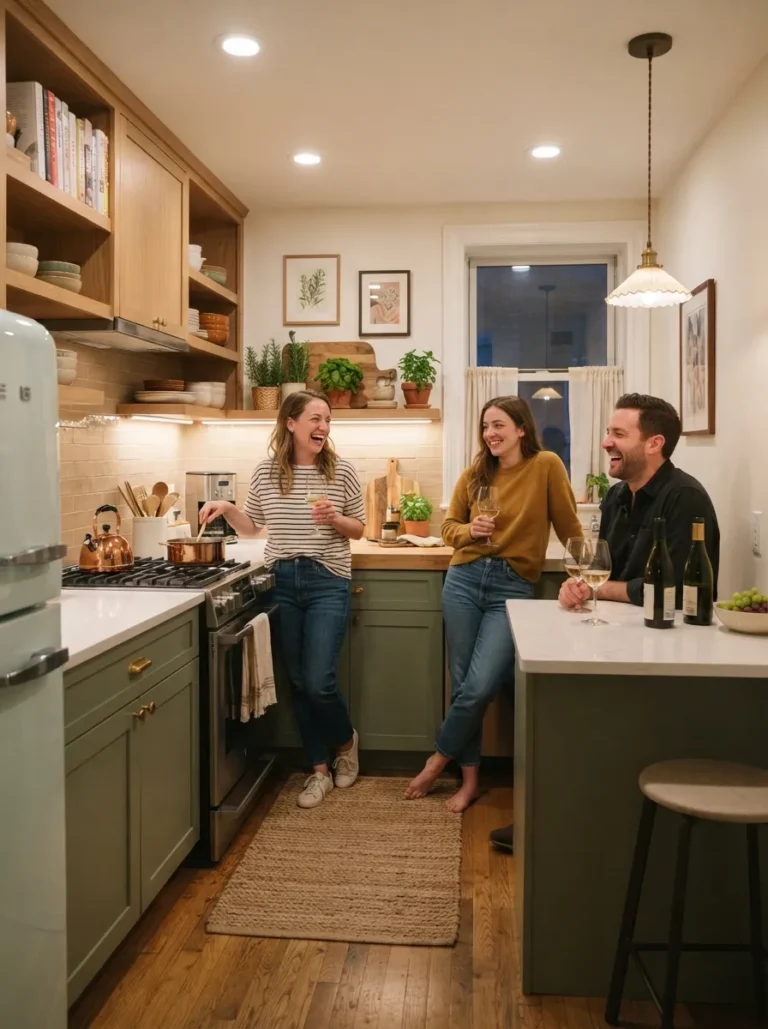
A dedicated staging zone speeds up batch-cooking day
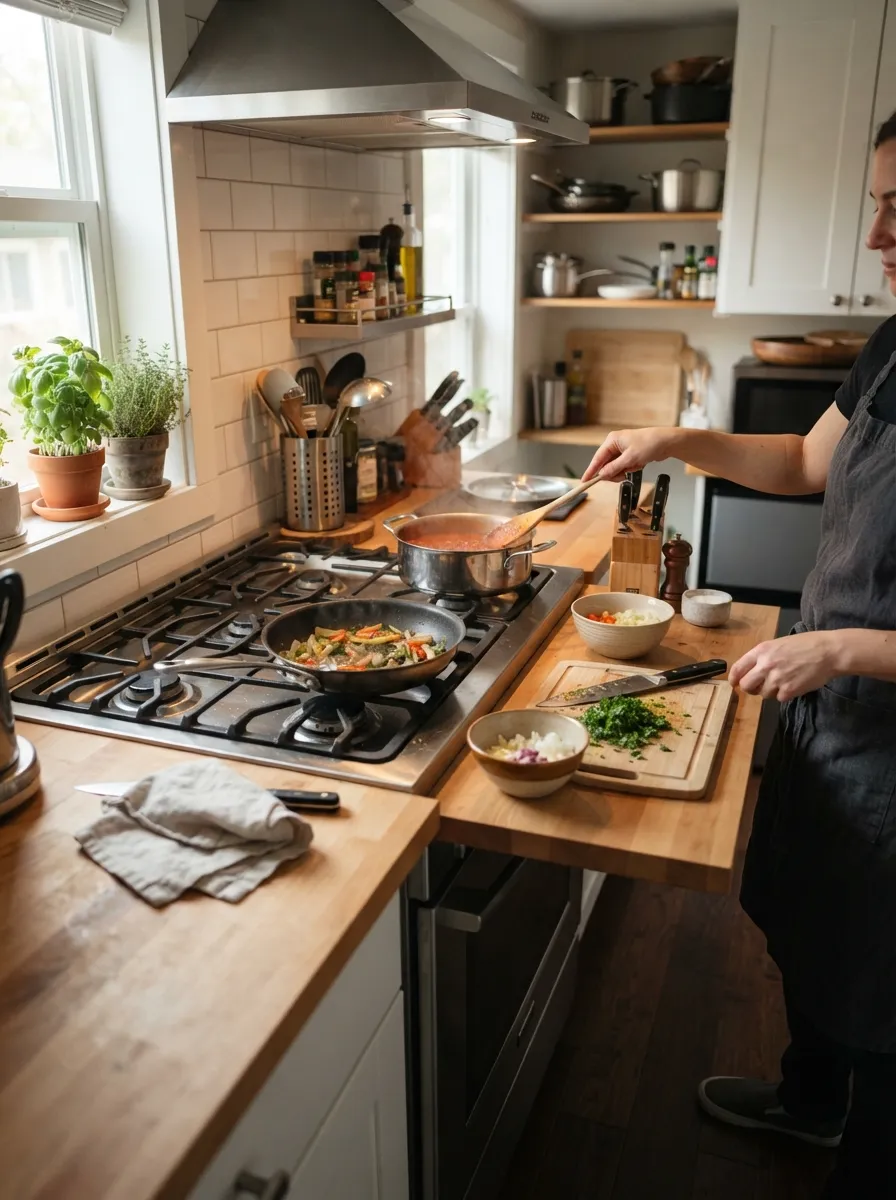
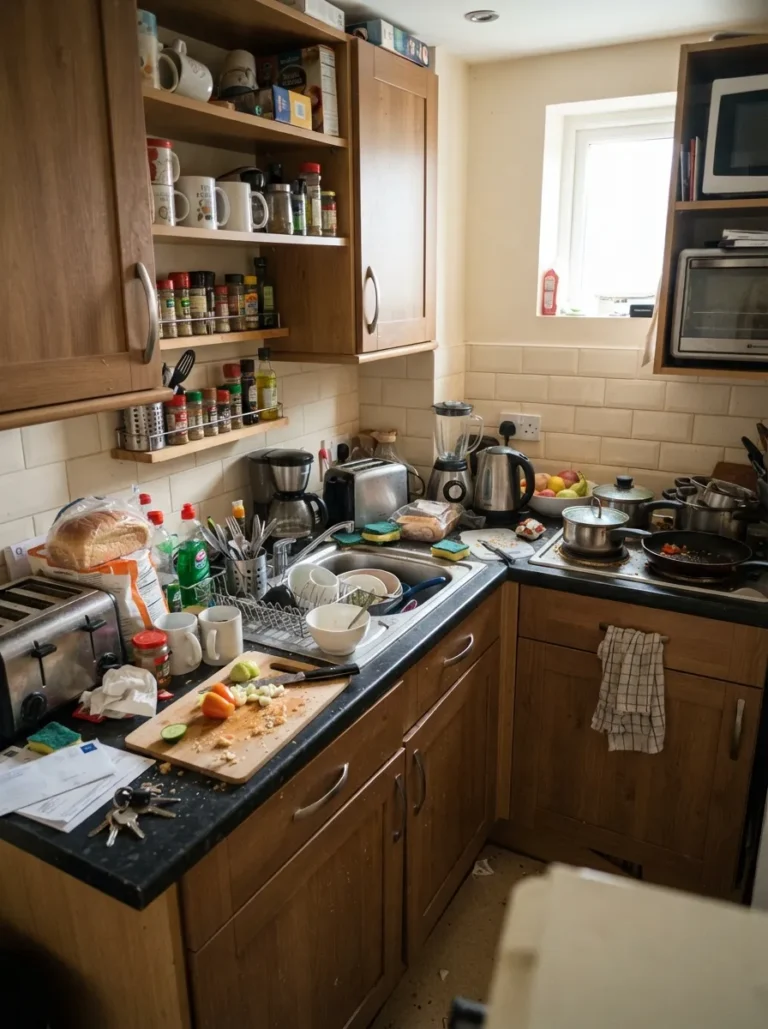
Clear counter space supports portioning multiple meals at once
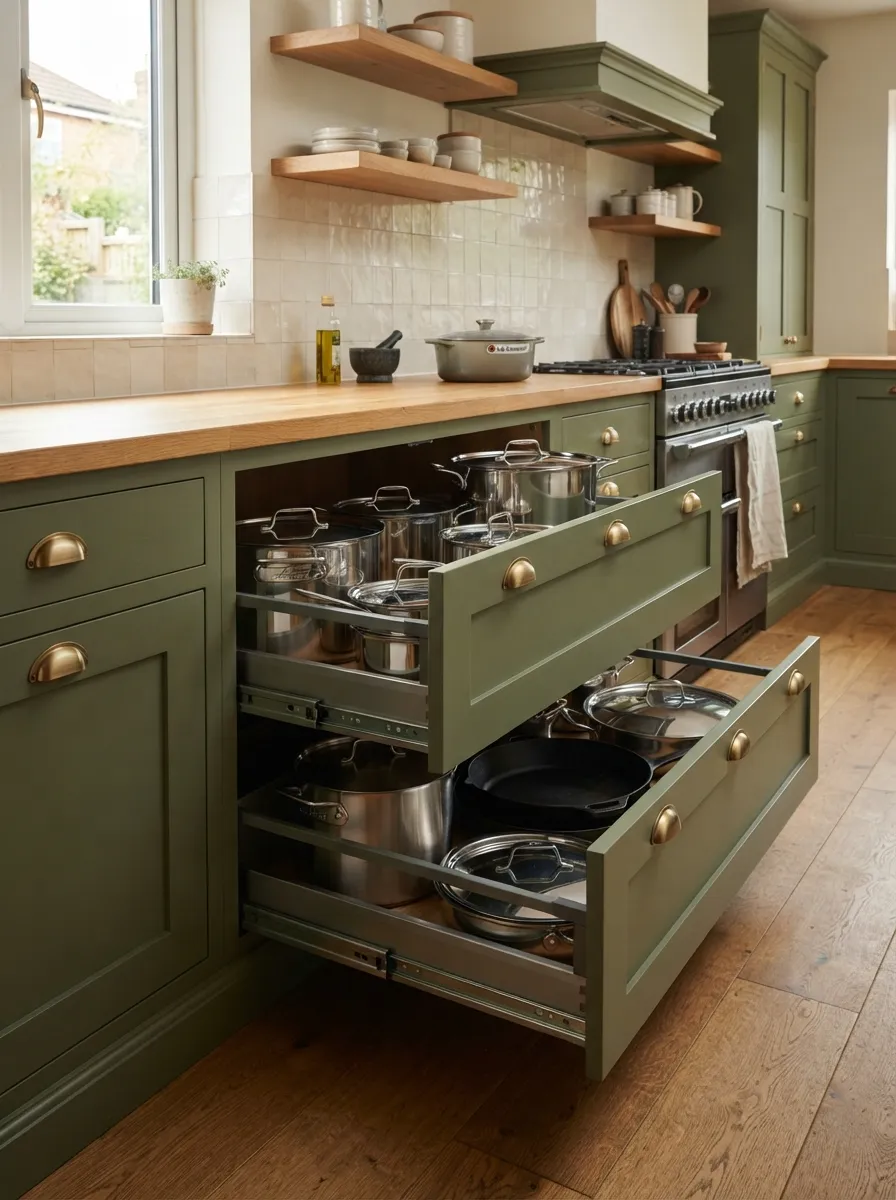
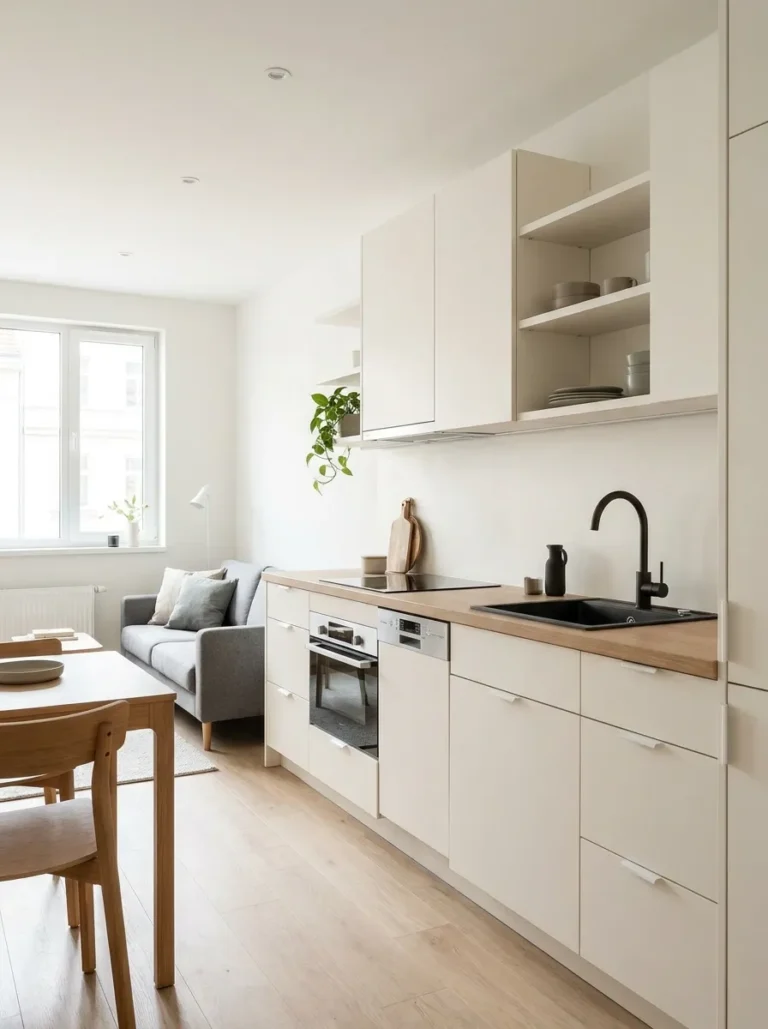
Deep drawers can hold a stack of uniform prep containers
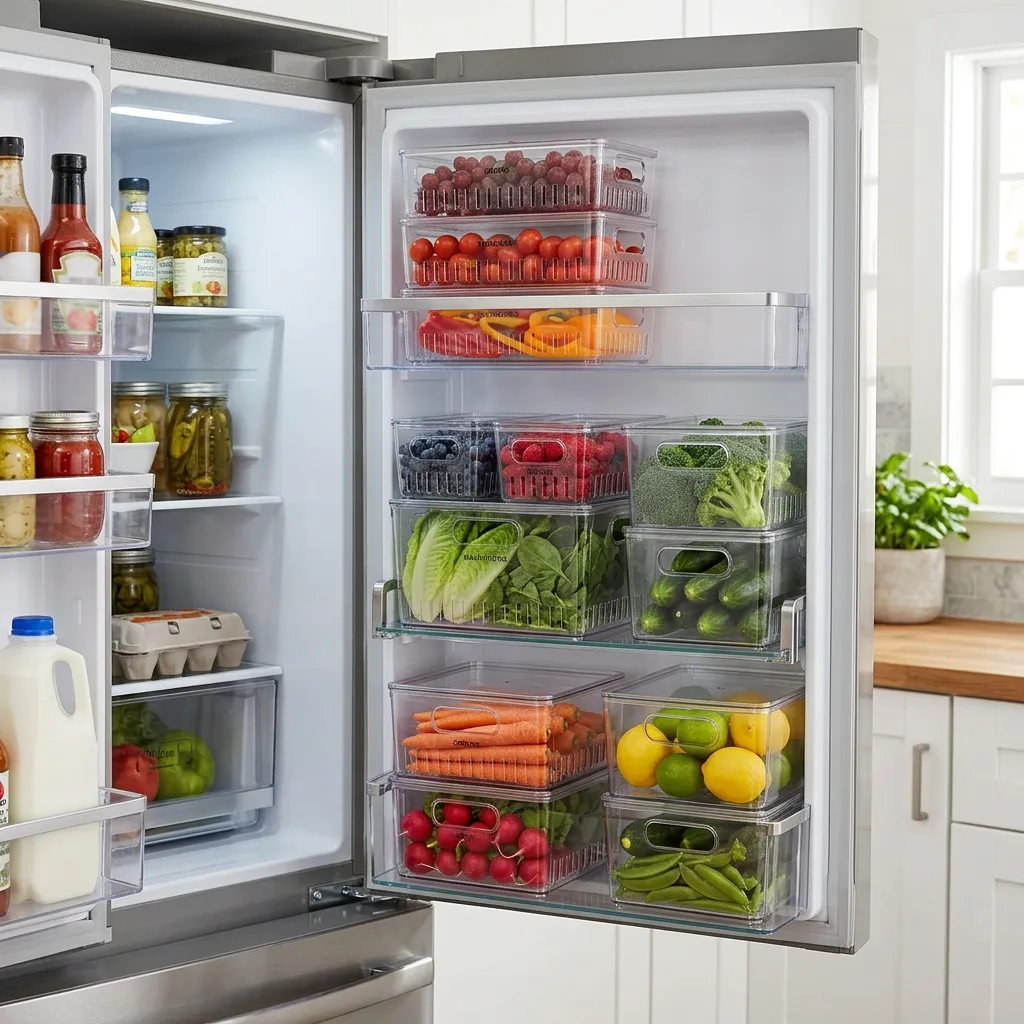
Stackable bins keep prepped meals organized in the fridge
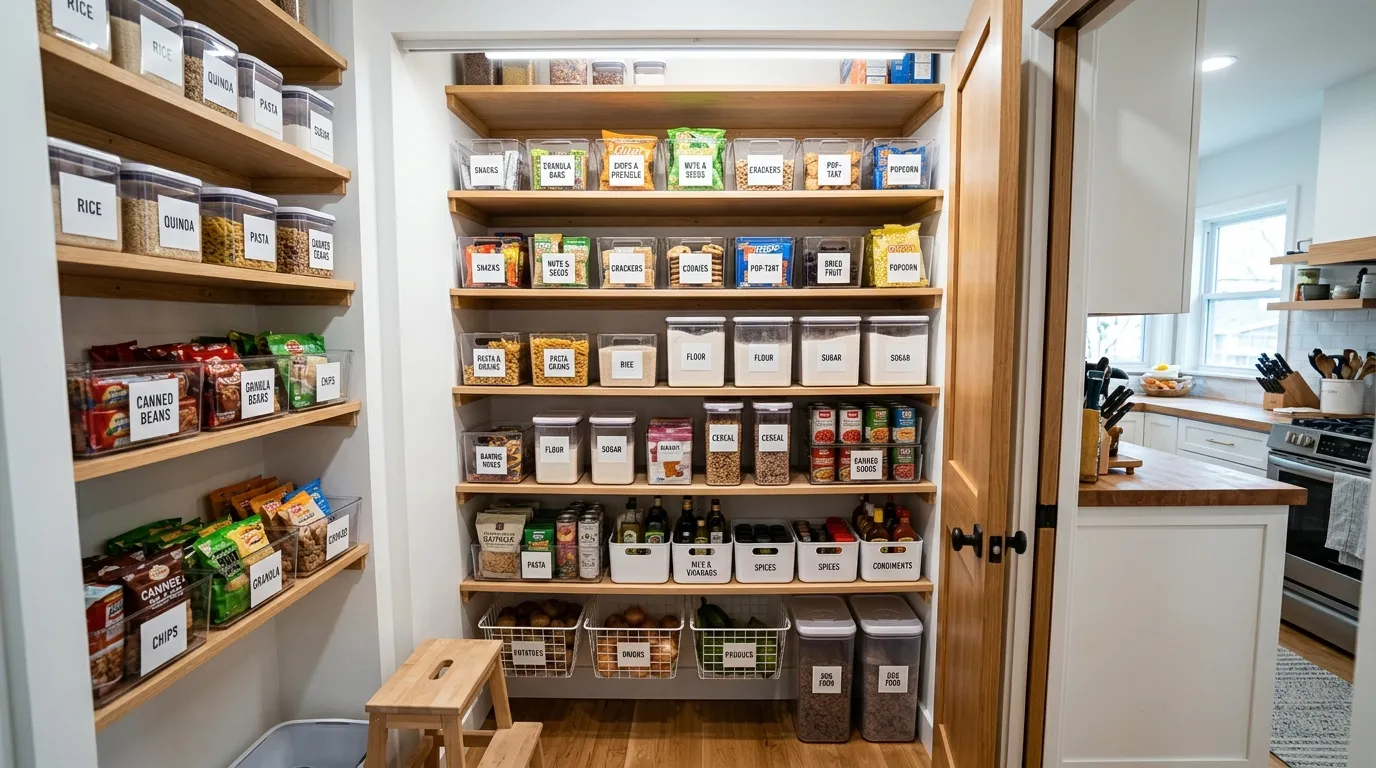
Clear labels prevent mystery containers from piling up
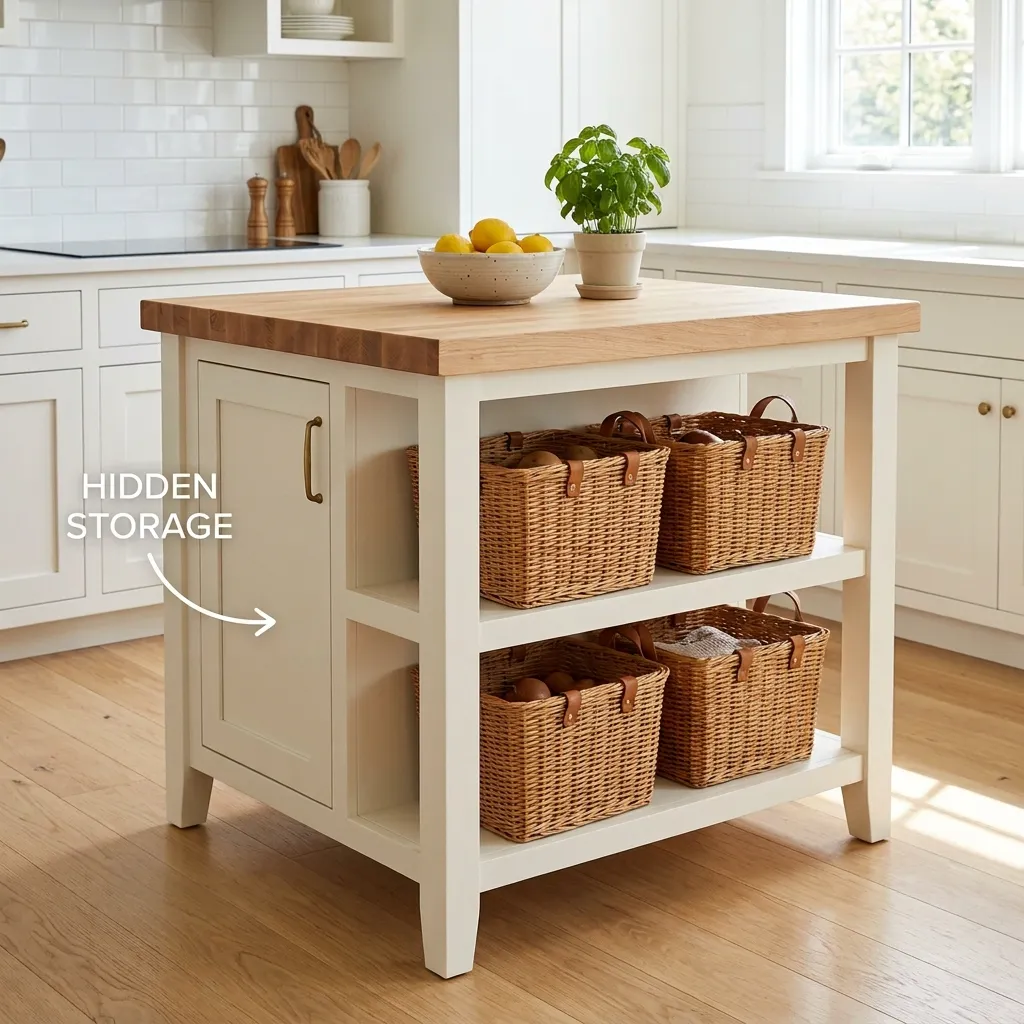
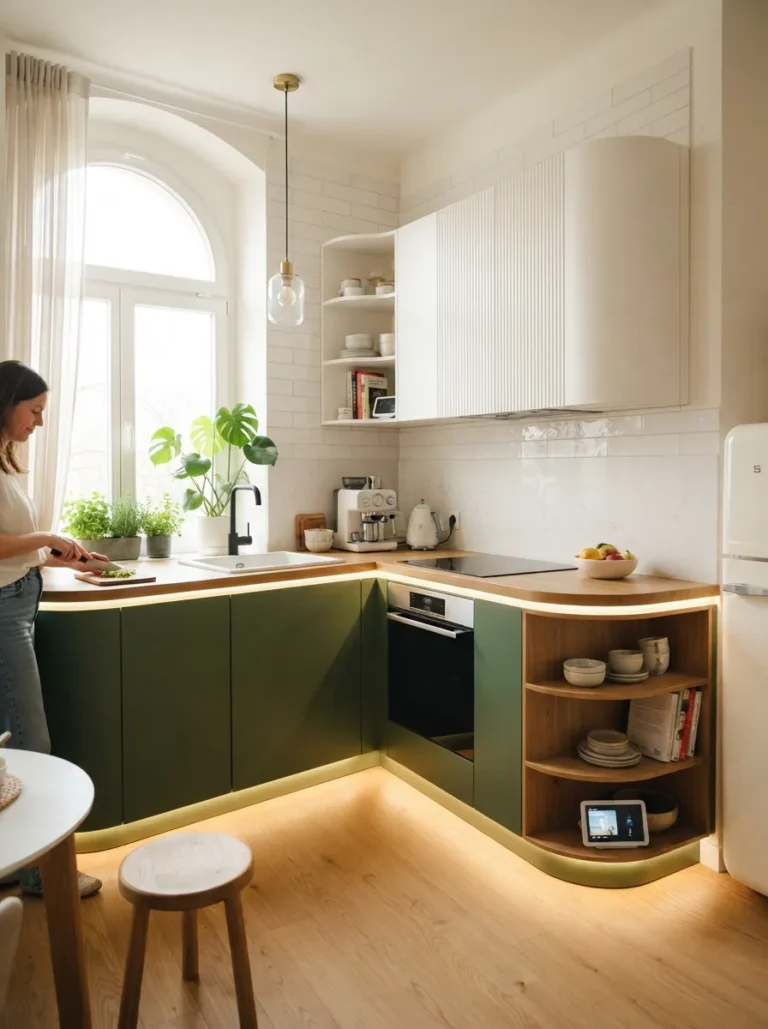
Extra counter and storage capacity supports batch cooking sessions
Handling Bulk Grocery Deliveries
Long-distance meal preppers often shop in larger, less frequent batches than daily cooks, which means groceries sometimes arrive in bulk quantities a small kitchen wasn’t necessarily designed to absorb all at once. A short staging plan helps: designate a spot, even just a clear stretch of counter or a rolling cart, where bulk groceries land first before being sorted into the fridge, freezer, and pantry, rather than trying to put everything directly away as it’s unloaded. This is especially useful if you use grocery delivery services, since a delivery can arrive all at once in a way that a gradual, daily shopping trip doesn’t.
Vertical stacking bins in the pantry and fridge help bulk staples (canned goods, bagged grains, proteins bought in larger quantities) stay organized rather than sprawling across multiple shelves. Clear bins specifically help here, since you can see contents and remaining quantity at a glance rather than needing to open every container.
Dishwasher and Cleanup Capacity for Batch Cooking Day
A single intense cooking session generates noticeably more dishes at once than typical daily cooking, which is worth planning for even in a small kitchen. If your dishwasher is a standard 24-inch model, running it once mid-session on prep day (rather than waiting until everything is done) keeps dirty dishes from piling up and taking over your limited counter space while you’re still actively cooking. If you’re working with a compact or countertop dishwasher, plan for a a mid-session hand-wash of key items (your stockpot, cutting boards) so you’re not stuck without a clean surface partway through a multi-hour prep session.
Planning Portions for a Household of One or Many
How you organize a meal-prep kitchen also depends on how many people you’re cooking for. If you’re prepping solo, smaller uniform containers (roughly 1.5–2 cup capacity) sized for single servings make grab-and-reheat mornings and evenings genuinely fast, since there’s no additional portioning step once a container comes out of the freezer. If you’re prepping for a household, larger family-style containers that get portioned onto plates at mealtime reduce the total number of containers you need to wash, store, and label, at the cost of a few extra minutes at serving time.
Either approach benefits from batch-cooking base components separately from final assembly: cook a large pot of rice or grains, a tray of roasted vegetables, and a batch of protein independently, then mix and match them into different meals through the week rather than committing to fully assembled dishes on prep day alone. This approach also uses freezer space more efficiently, since base components in bulk containers stack more predictably than a variety of fully assembled, differently shaped meals.
Meal Prep Kitchen Design Mistakes to Avoid
Storing prepped meals mixed in with everyday groceries. Without a dedicated zone, prepped meals get buried and forgotten behind whatever was bought most recently. A specific shelf or bin, reserved only for prep, solves this with almost no extra effort.
Using whatever containers happen to be on sale. A mismatched container collection is one of the most common reasons a freezer feels full before it actually is. Standardizing on one or two sizes pays off in usable space almost immediately.
Skipping labels because it feels like an extra step. The few seconds it takes to label a container is far less time than reheating a mystery meal to figure out what it is, or worse, throwing out something that’s been forgotten too long.
Underestimating how much staging space batch cooking needs. A kitchen that works fine for daily single-meal cooking can feel cramped fast when you’re simultaneously portioning six or seven meals into containers. Plan for that peak moment, not just an average weekday.
Frequently Asked Questions
How should I organize my freezer for meal prepping?
Dedicate specific shelves or bins to prepped meals, separate from everyday groceries, and store meals in the order you’ll eat them so older items don’t get buried and forgotten behind newer ones.
What containers are best for meal prepping in a small kitchen?
Uniform, stackable rectangular containers use fridge and freezer space far more efficiently than a mismatched collection, and choosing containers that are freezer, microwave, and dishwasher safe simplifies the whole process.
Do I need a separate freezer for meal prepping?
Not necessarily, but a small standalone chest freezer can help if your kitchen’s built-in freezer can’t comfortably hold a full week or two of batch-prepped meals alongside everyday items.
How long do prepped meals last in the freezer?
Most cooked, prepped meals hold well in the freezer for 2 to 3 months. Labeling containers with the date they were made makes it easy to track this without guessing.
What cookware is most useful for batch meal prepping?
A large stockpot or Dutch oven (6-8 quarts), full-size sheet pans, and a multi-cooker are especially useful, since they handle batch quantities in fewer cooking cycles than smaller, everyday-sized cookware.
How do I set up counter space for meal prep day in a small kitchen?
A fold-down surface, a slide-out counter extension, or a rolling cart brought in specifically for prep day can provide the extra staging space batch cooking needs without requiring permanent counter space.
What’s the easiest way to avoid forgetting what’s in the freezer?
Label every container with the meal name and date, and keep a simple running list, on paper or your phone, of what’s currently stored, updating it as you add and remove items.
How do I manage a large grocery delivery in a small kitchen?
Designate a clear staging spot, like a stretch of counter or a rolling cart, where groceries land first before being sorted into the fridge, freezer, and pantry, rather than trying to put everything away directly as it’s unloaded.
Should I run the dishwasher during a batch cooking session?
Yes, running it once mid-session rather than waiting until everything is finished keeps dirty dishes from piling up and taking over limited counter space while you’re still actively cooking.
Related Pages
Final Thought
A small kitchen built for long-distance meal prepping doesn’t need to be bigger — it needs to be organized around a different rhythm than everyday cooking. Dedicate real space to prepped meals, standardize your containers, and build a staging routine that makes prep day efficient rather than chaotic. Once that system is in place, the kitchen does most of its work in one or two sessions a week, and the rest of the week simply runs on what’s already stored and ready.
None of these changes require a full renovation to get started. Even something as simple as designating one freezer shelf exclusively for prepped meals, or switching to a single container size, moves a kitchen meaningfully closer to genuinely supporting a batch-cooking routine rather than just tolerating it.
Want more ways to make your small kitchen work harder?
Explore Small Kitchen Interior Design