
The Psychology Behind Small Kitchen Color Choices
Small kitchen color choices do more than decorate a room — they shape how calm, spacious, or energized the space feels every time you walk in. Color psychology isn’t just a design buzzword; how a hue reflects light, what it subconsciously reminds us of, and how it interacts with a room’s proportions all measurably affect the way a small kitchen feels to cook and gather in. Here’s what the research and design trends actually say about the colors reshaping small kitchens right now.
⭐ Quick Takeaways
- Light, reflective colors (white, warm white) genuinely make small kitchens feel larger by bouncing more available light around the room
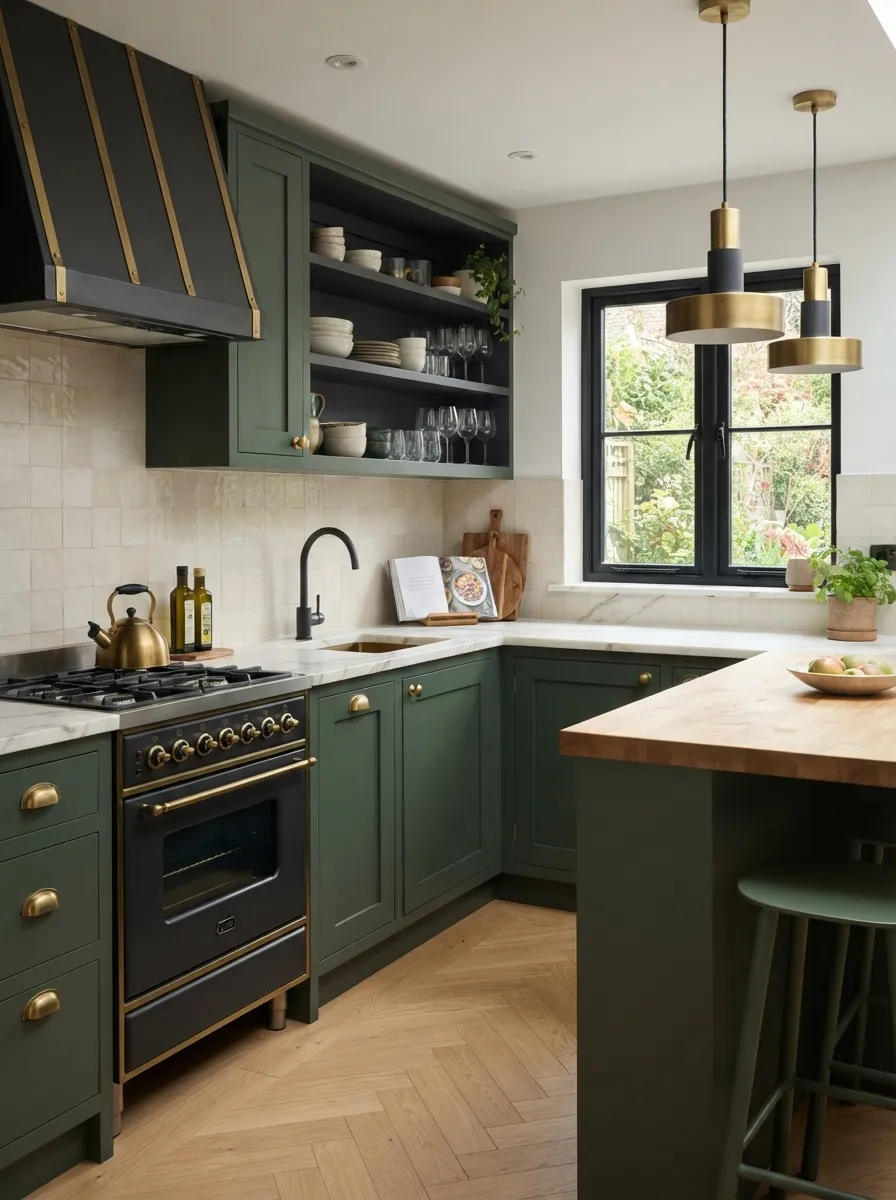
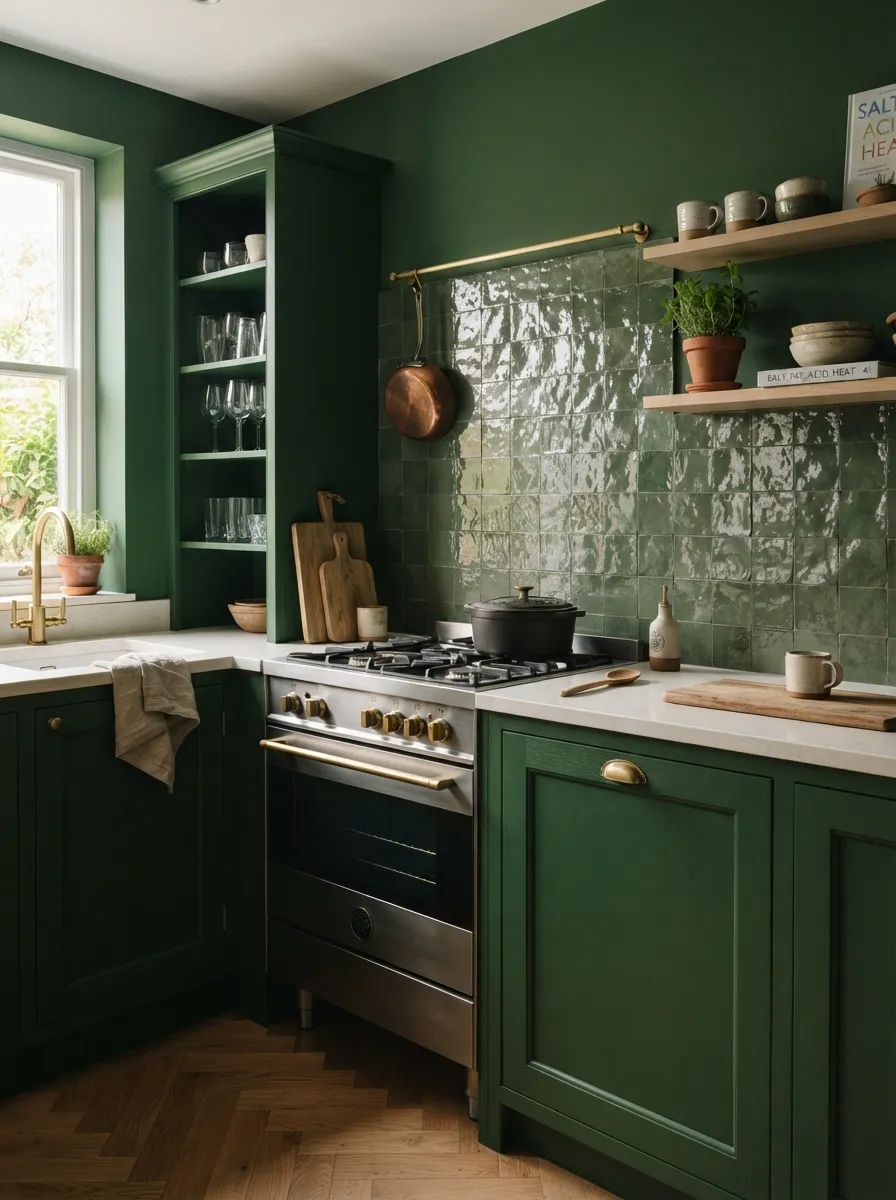
- Green — especially forest and sage tones — is trending in small kitchens partly because of “biophilic design,” our documented psychological preference for colors that echo nature
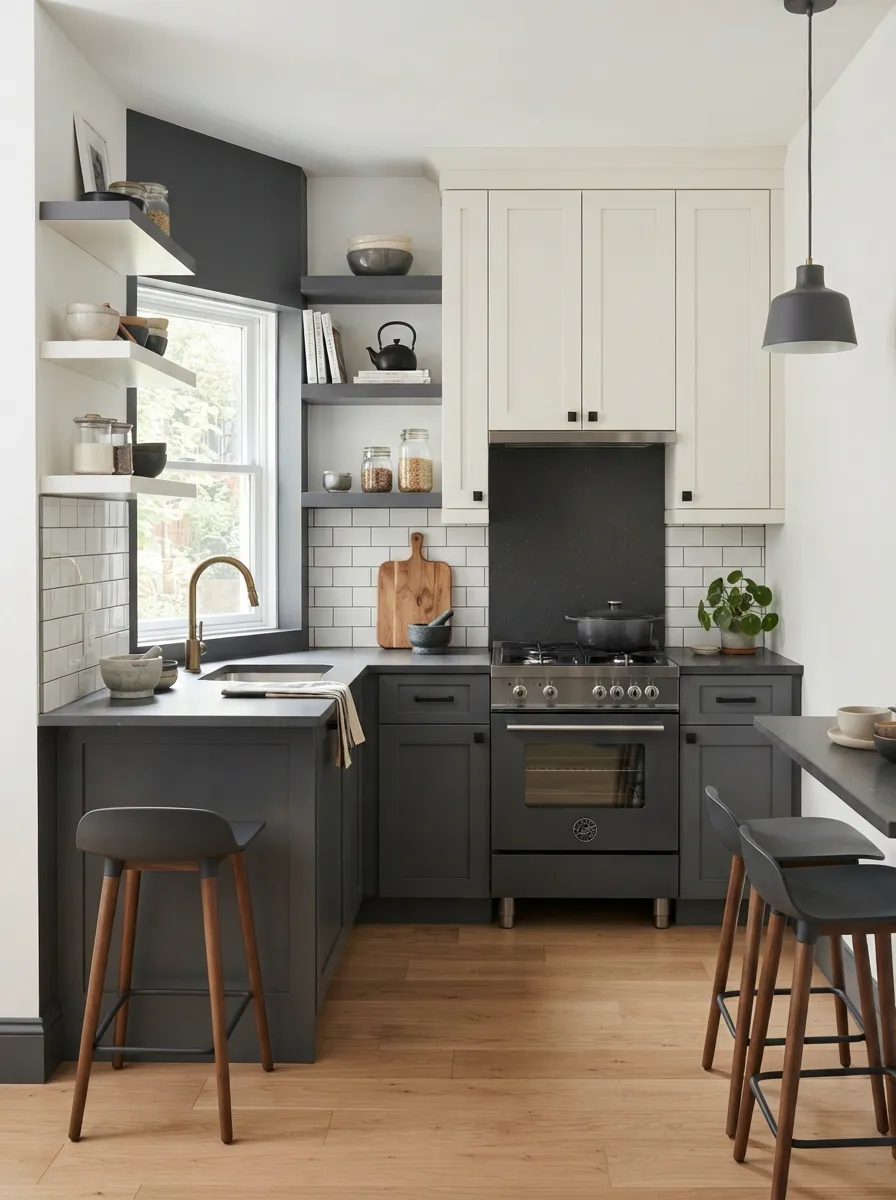
- Charcoal and black accents read as grounding and sophisticated, but work best in small doses paired with lighter surfaces
- Warm neutrals create a cozier, more social feeling — useful in kitchens that double as a gathering spot
- Color contrast (not just color choice) affects how “big” or “small” a kitchen feels — high contrast between floor, cabinets, and walls can visually shrink a room
📑 In This Post
Why Color Psychology Matters in a Small Kitchen
Every color choice in a small kitchen does double duty — it sets a mood and it affects how spacious the room appears. In a larger kitchen, a bold or dark color choice is absorbed by the sheer square footage; in a compact kitchen, that same color dominates nearly every sightline. Understanding what different colors psychologically communicate — and how they interact with light and proportion — helps you make a choice you’ll still love after the paint dries.
What Different Colors Communicate
Color psychology research consistently links certain hues to specific emotional associations. Here’s how the most popular small kitchen colors tend to read:
White & Warm White
Associated with cleanliness, openness, and calm. The most reliable choice for making a small kitchen feel airy and spacious.
Forest & Sage Green
Linked to nature, growth, and calm — part of why green is one of the fastest-growing small kitchen color trends right now.
Charcoal & Black
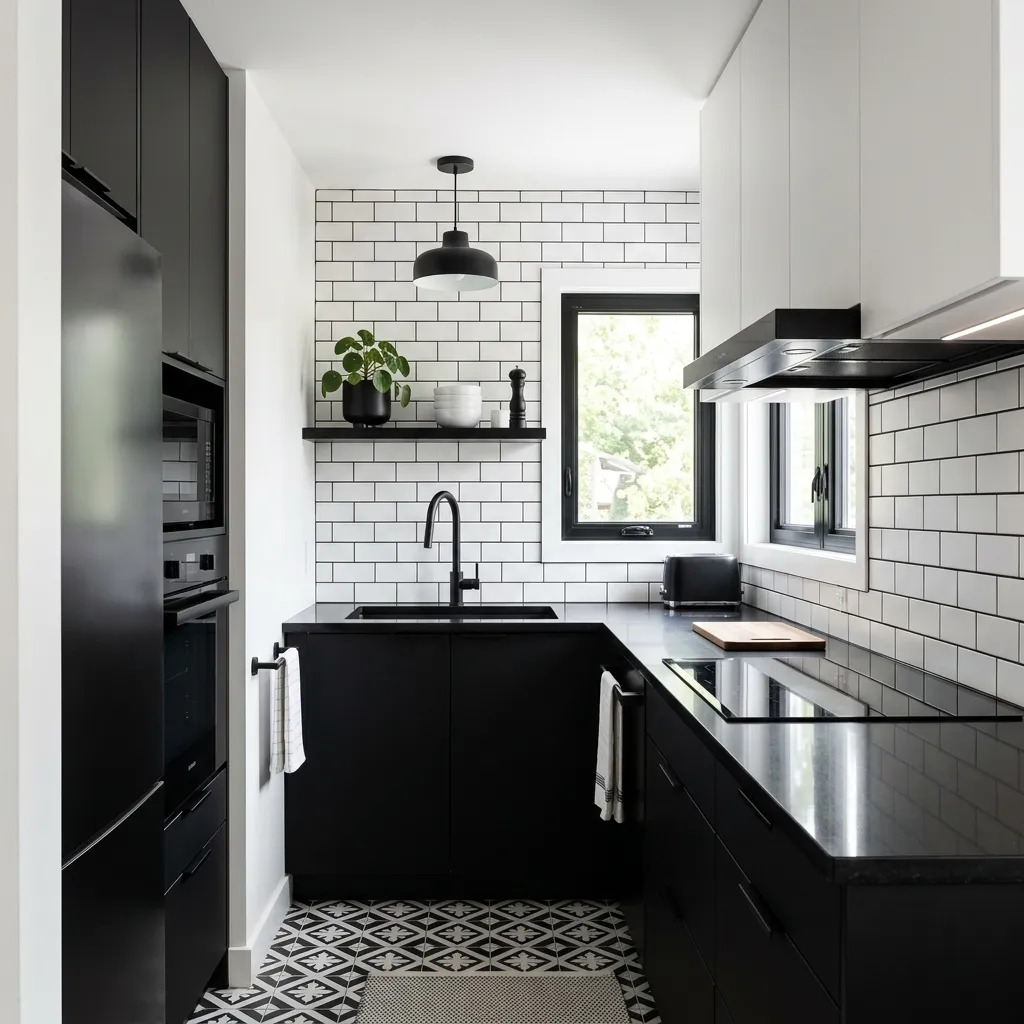
Reads as grounded, sophisticated, and dramatic. Best used in doses — lower cabinets or an island — rather than covering every surface.
Warm Neutrals & Wood Tones
Create a cozier, more social feeling — often used in kitchens meant to double as a casual gathering space.
Soft Blue
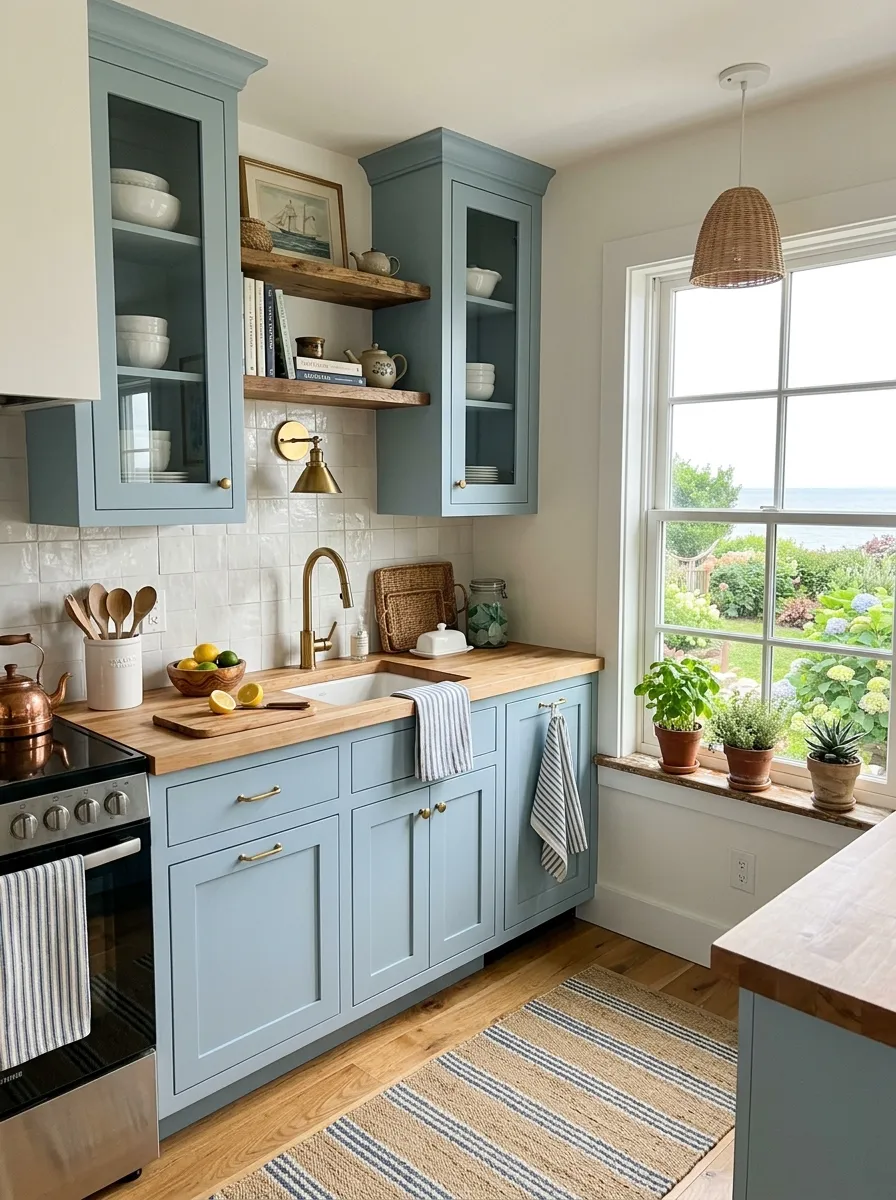
Associated with calm and coastal ease; a popular choice for kitchens designed to feel relaxed rather than energetic.
Brass & Mixed Metals
Not a wall color, but hardware and fixture tone still carries psychological weight — warm metals read as inviting, cool metals read as sleek and modern.
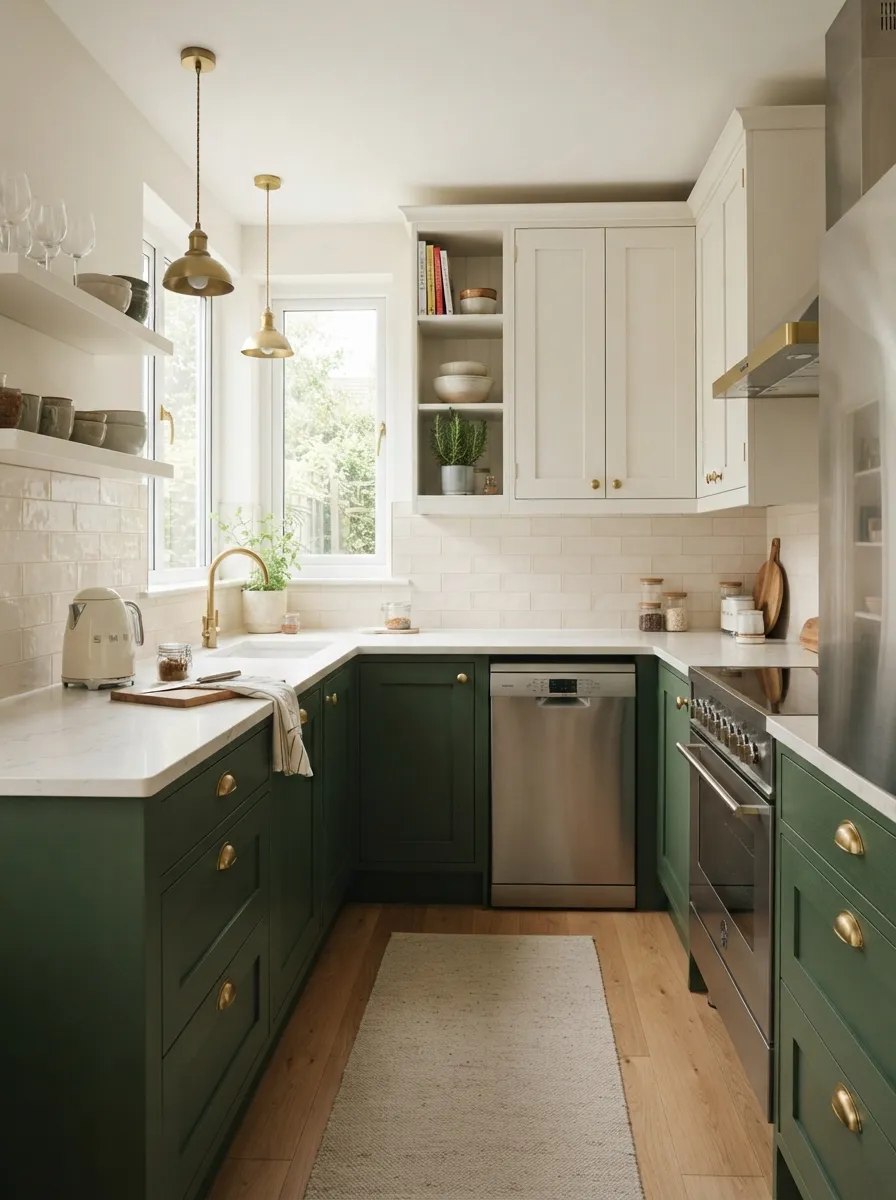
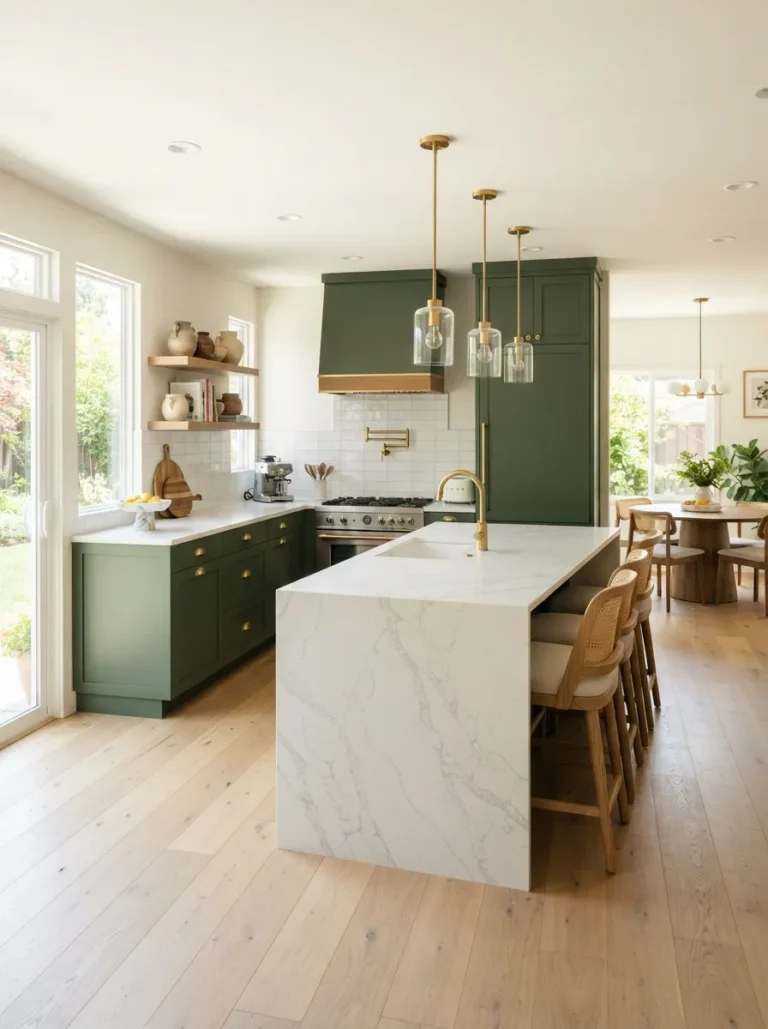
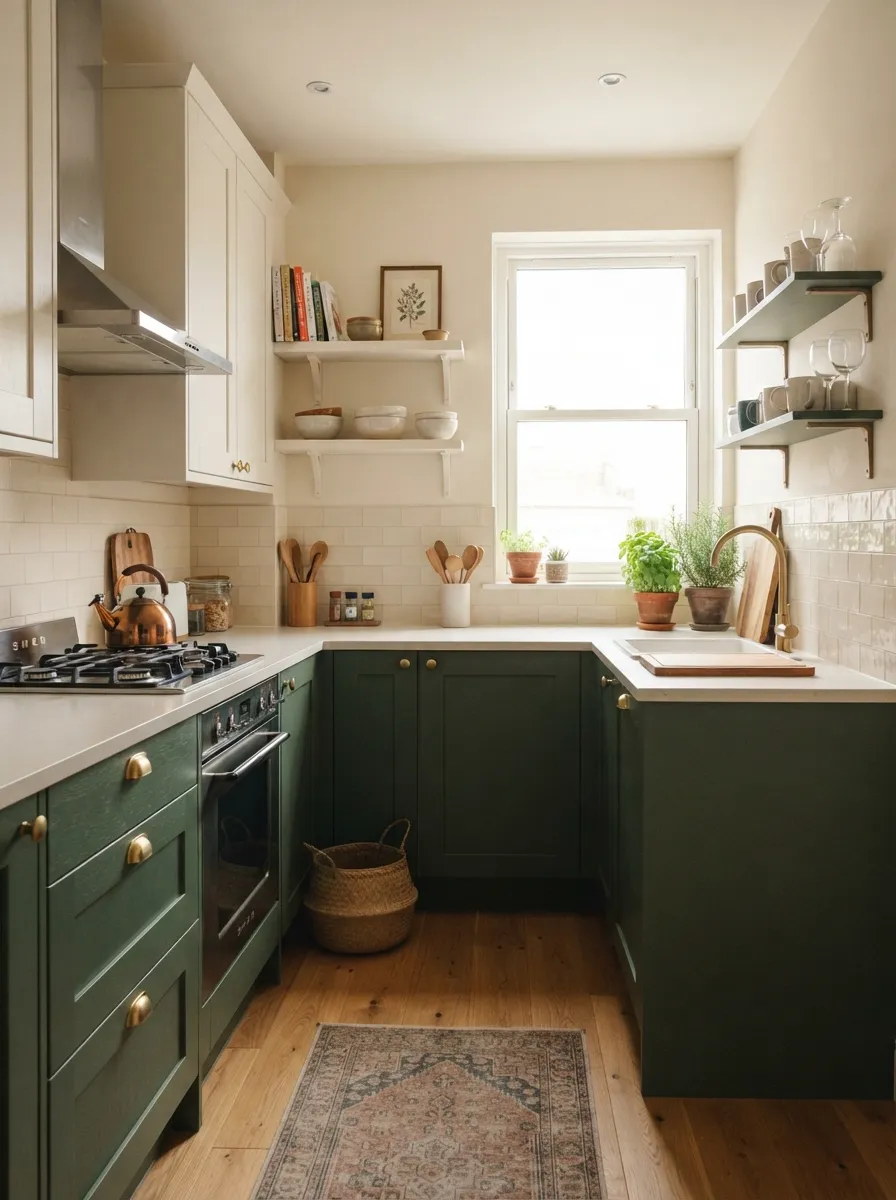
Green paired with white is one of the most common small-kitchen color pairings, balancing calm with brightness.
Color and Perceived Space
Beyond emotional association, color has a measurable effect on how large or small a room appears. Light, reflective colors bounce more of the available light around a room, which our eyes interpret as more open space. Dark colors absorb light instead of reflecting it, which can make boundaries feel closer — useful for coziness, risky for a kitchen that’s already tight on square footage.
- Light colors expand: white, warm white, and pale tones reflect the most light and read as the most spacious
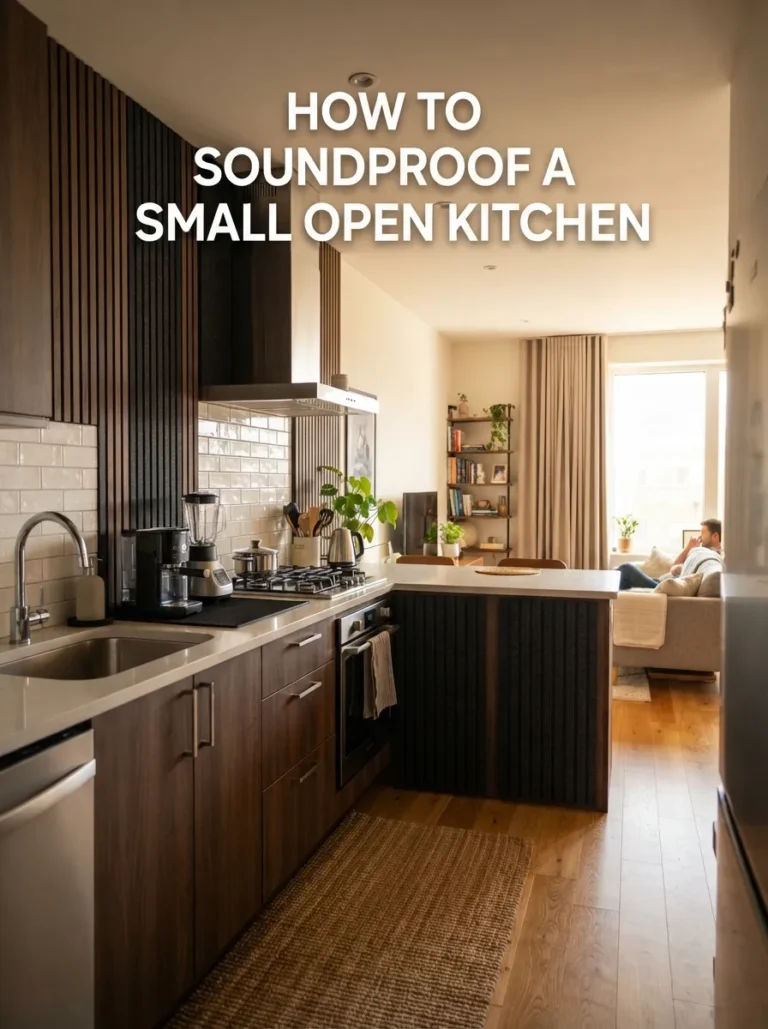
- Dark colors ground: charcoal and black absorb light and read as more intimate — best used selectively
- Monochrome schemes elongate: using one consistent tone across cabinets, walls, and even backsplash removes visual “stopping points” that make a room feel chopped up
- High contrast can shrink: a stark contrast between dark floors, light cabinets, and a different-toned backsplash creates visual breaks that can make a small kitchen feel busier and smaller
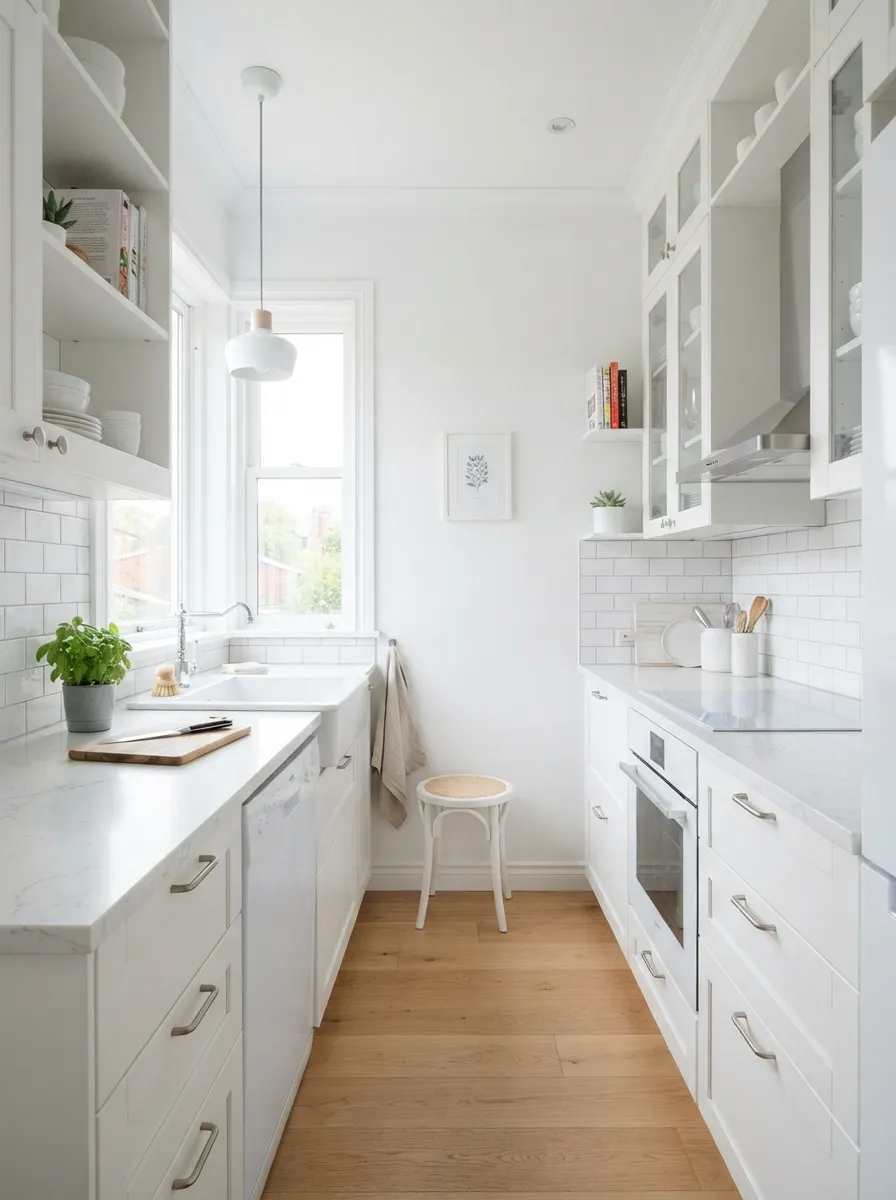
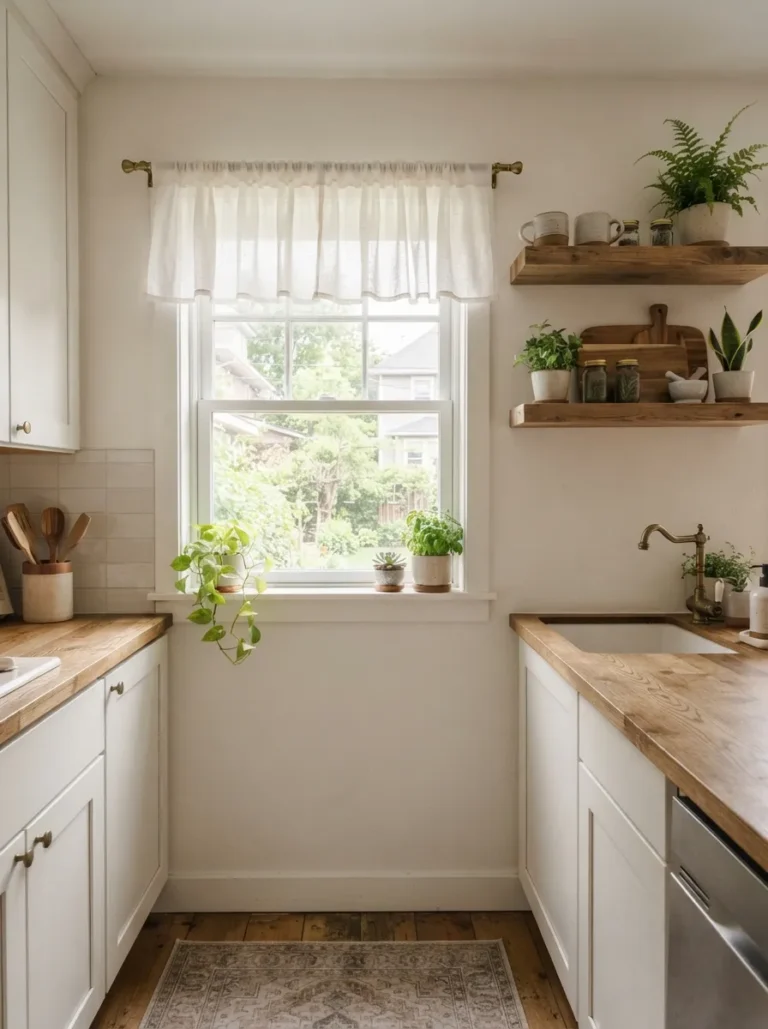
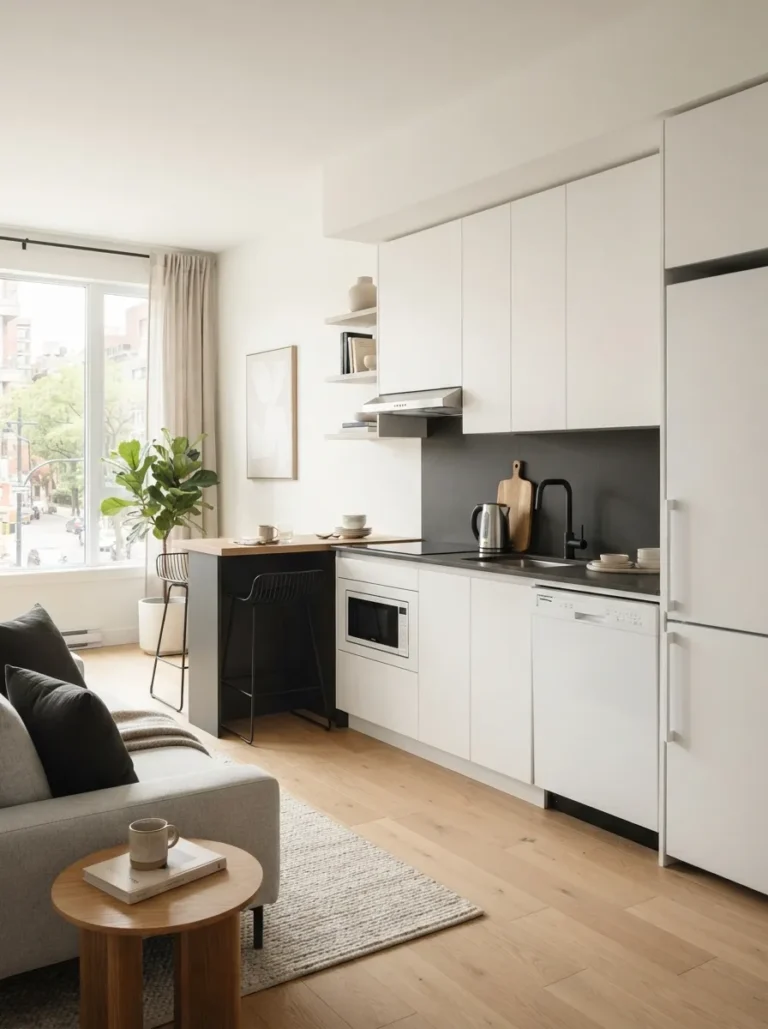
Light, monochrome white surfaces reflect the most available light in a compact kitchen.
Mood and Social Atmosphere
Color also shapes how a kitchen functions socially. This is part of why green has become one of the defining small-kitchen colors of the past few years — it taps into what designers call “biophilic design,” our documented psychological preference for colors and textures that echo the natural world, which research links to reduced stress and improved mood.
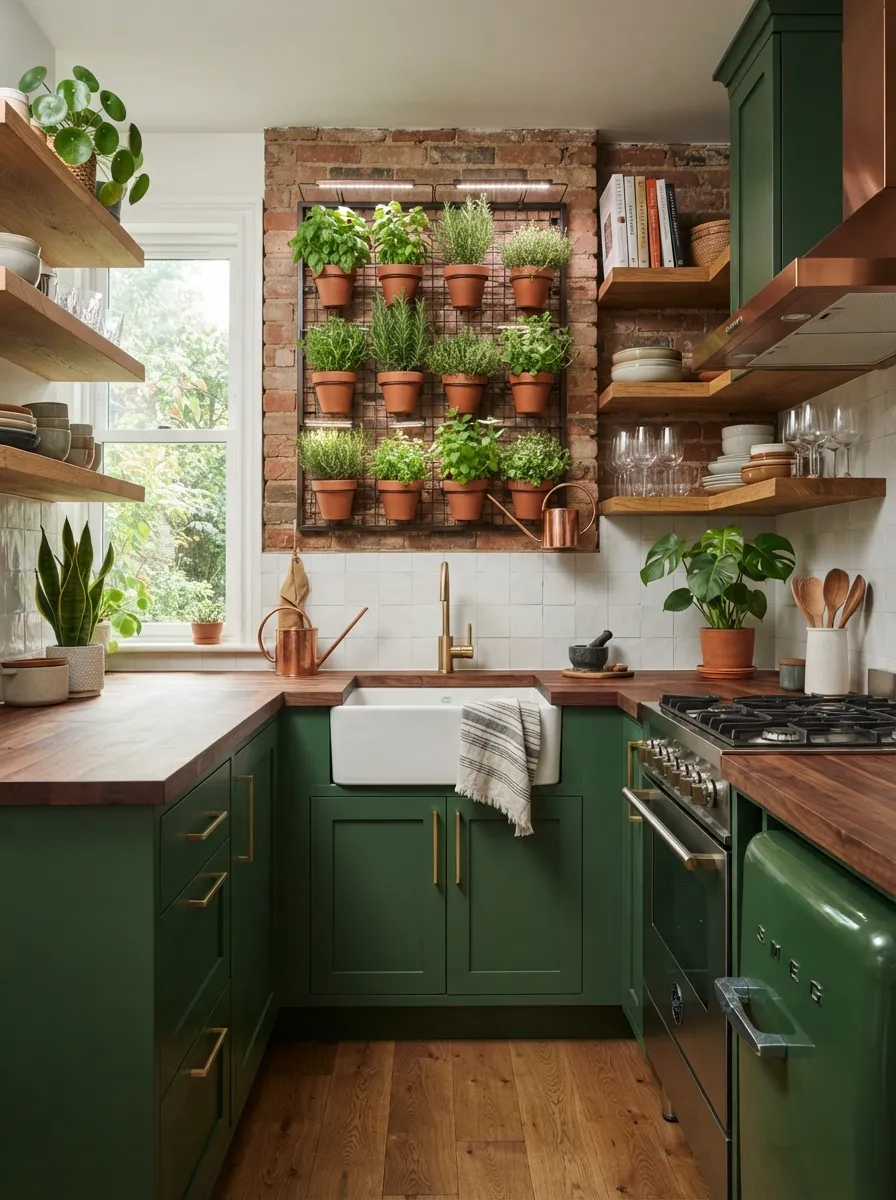
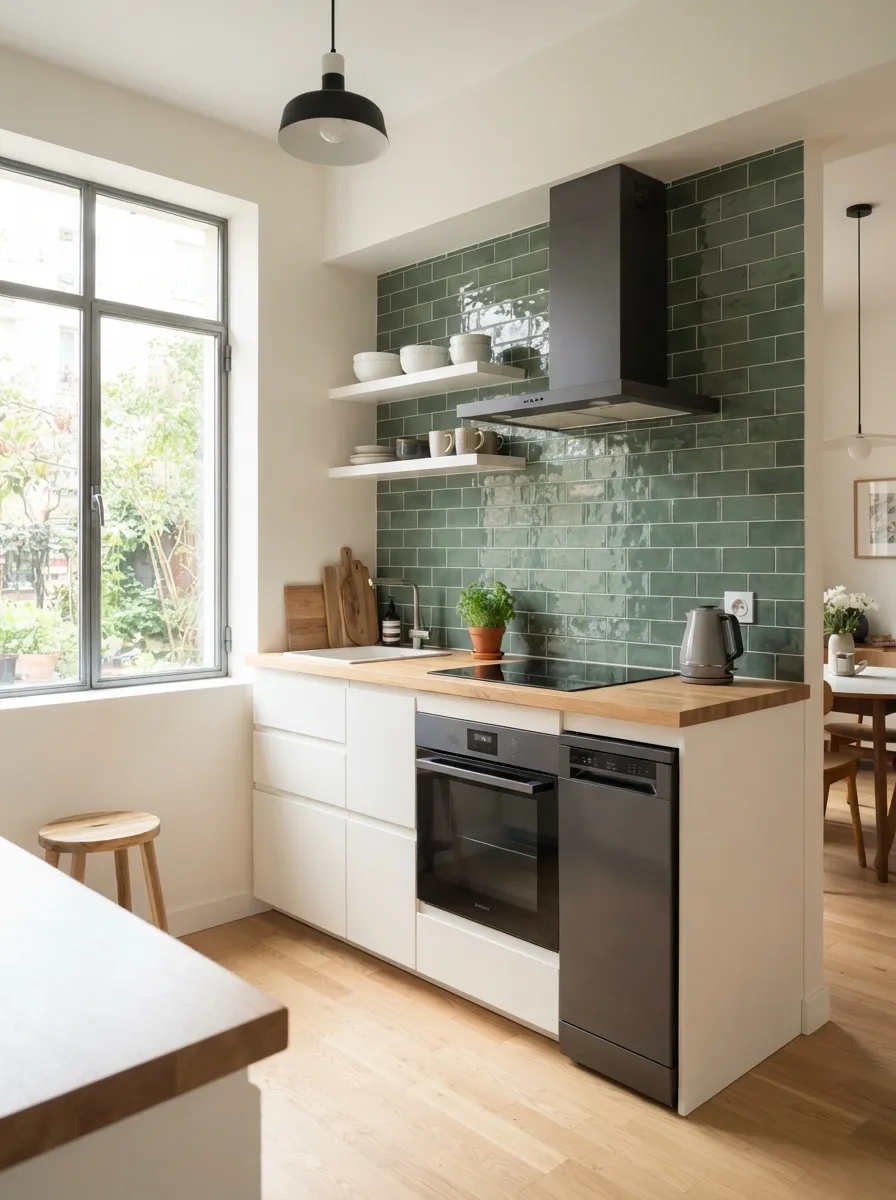
Biophilic color choices — greens and natural wood tones — are linked to a calmer, more restorative feeling in the kitchen.
Warmer palettes tend to encourage a more social atmosphere, which matters in small kitchens that often double as the gathering spot in a studio or apartment. Cooler, more monochrome palettes tend to read as calmer and more focused — better suited to kitchens used primarily for efficient, solo cooking.
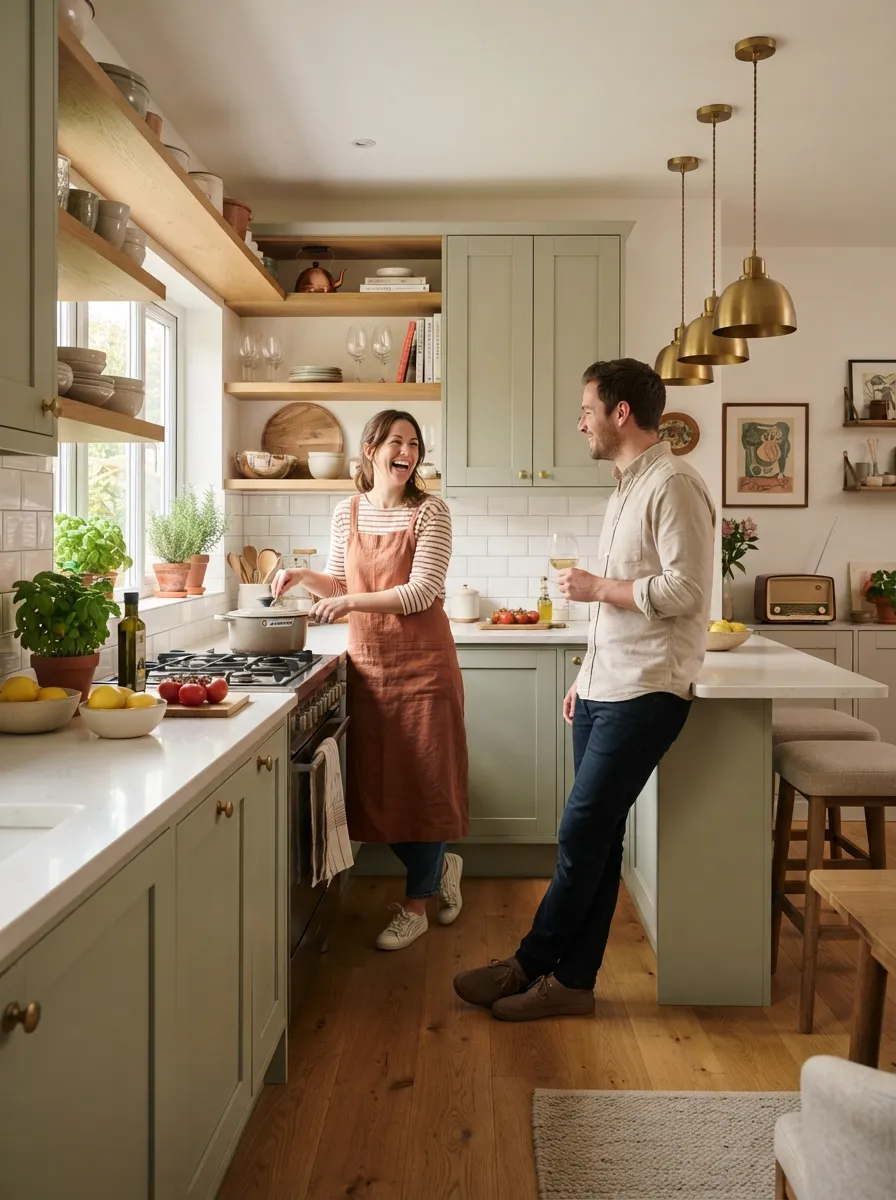
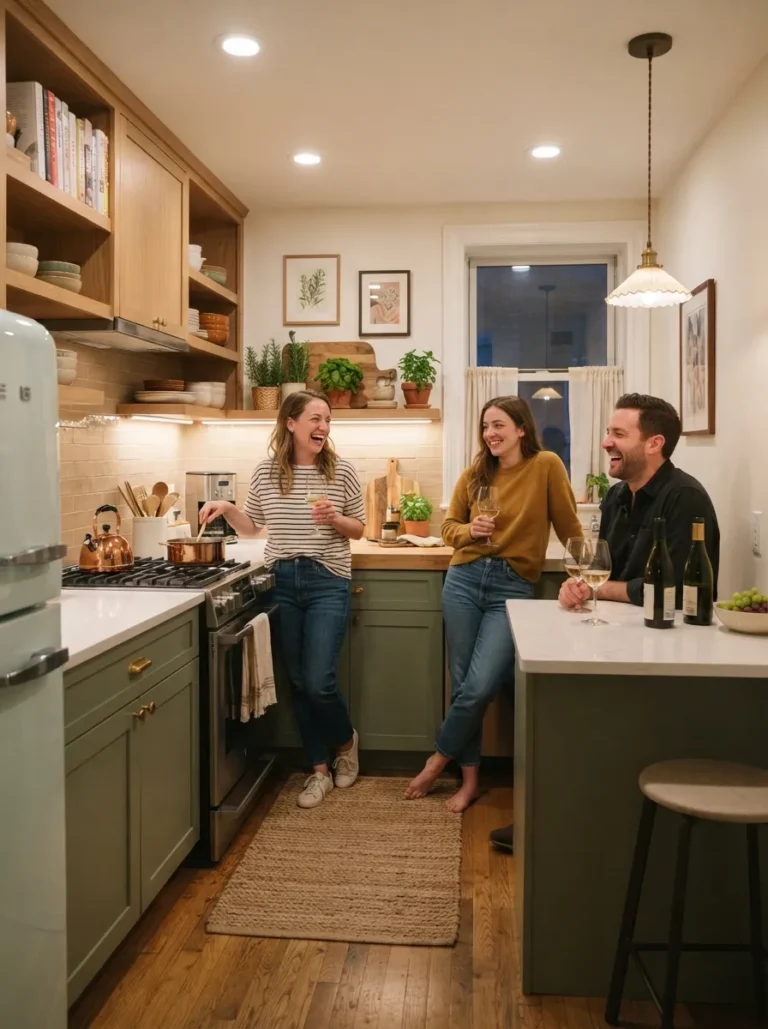
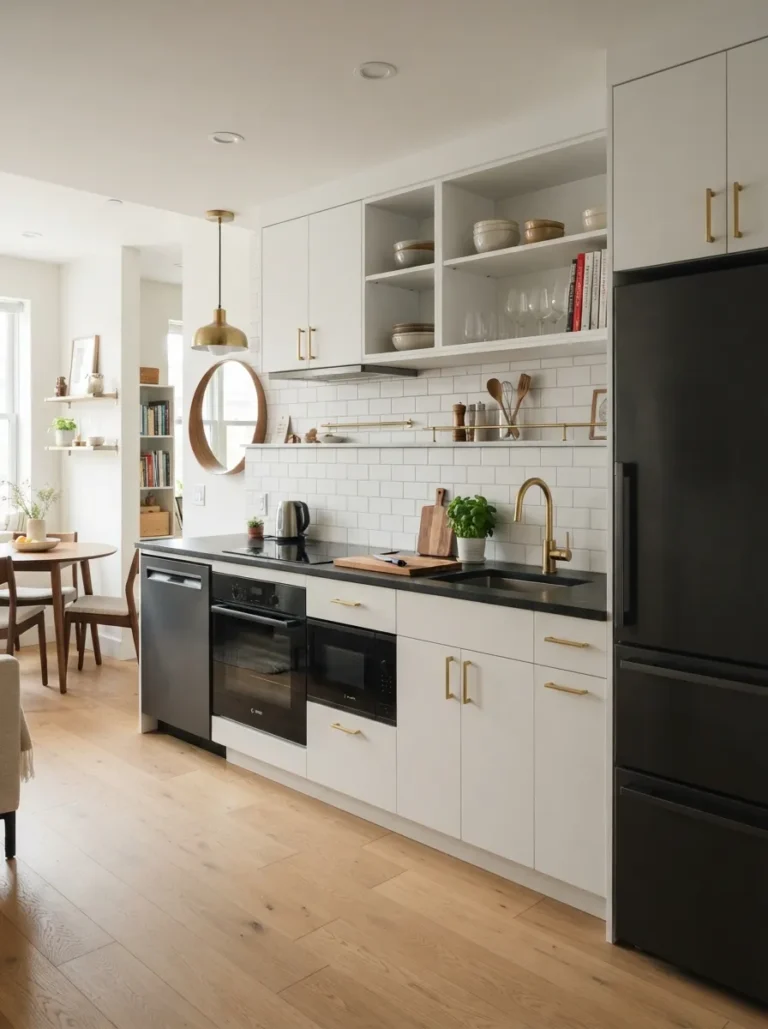
Warmer tones and mixed materials create a more social, gathering-friendly atmosphere in a small kitchen.
Choosing Your Palette
- Start with your light source — north-facing kitchens with cooler natural light can handle warmer wall colors; south-facing kitchens with warm light can handle cooler tones
- Decide on mood first — calm and spacious (light neutrals), grounded and dramatic (charcoal accents), or warm and social (wood tones, warm neutrals)
- Limit your palette to 2-3 tones — small kitchens read as more put-together with a tight, intentional color story
- Test large swatches in the actual room at different times of day before committing to cabinets or a backsplash
Mistakes to Avoid
- Choosing color based on trends alone without considering your kitchen’s actual light and size
- Going all-dark in a kitchen with limited natural light, which can feel more cave-like than cozy
- Too many competing tones — cabinets, walls, backsplash, and floor all in different colors creates visual clutter
- Ignoring undertones — a “white” with a cool undertone can clash with warm wood floors or brass hardware
Frequently Asked Questions
Light, reflective colors like white and warm white reflect the most available light, which is why they’re the most reliable choice for making a small kitchen feel larger.
Green taps into biophilic design — our psychological preference for colors that echo nature — which research links to a calmer, more restorative feeling in a room.
Yes, in doses. Dark tones like charcoal work best on lower cabinets or an island while walls and upper cabinets stay light, which grounds the room without darkening the whole space.
Yes — high contrast between floors, cabinets, and backsplash can create visual “breaks” that make a small kitchen feel busier and smaller, while a more monochrome palette tends to feel more spacious.
Most designers recommend limiting a small kitchen palette to 2-3 tones for a cohesive, intentional look rather than a busy one.
Yes — north-facing kitchens with cooler natural light can generally handle warmer wall colors better, while south-facing kitchens with warm light can handle cooler tones more comfortably.
Color With Intention
The colors you choose for a small kitchen aren’t just decoration — they shape how spacious, calm, or social the room feels every single day. Start with your light source, decide on the mood you want, and keep your palette tight. Whether you land on all-white, forest green, or a bold charcoal accent, choosing with intention (rather than trend alone) is what makes a small kitchen’s color story actually work.
Explore More Small Kitchen Interior Design Ideas