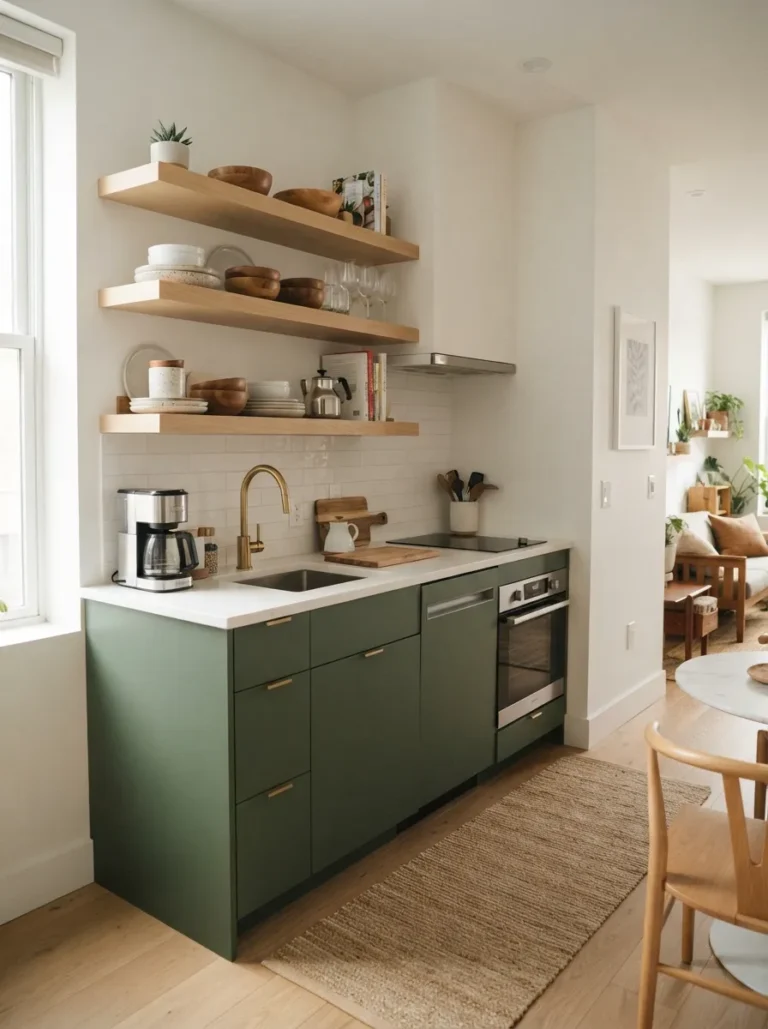
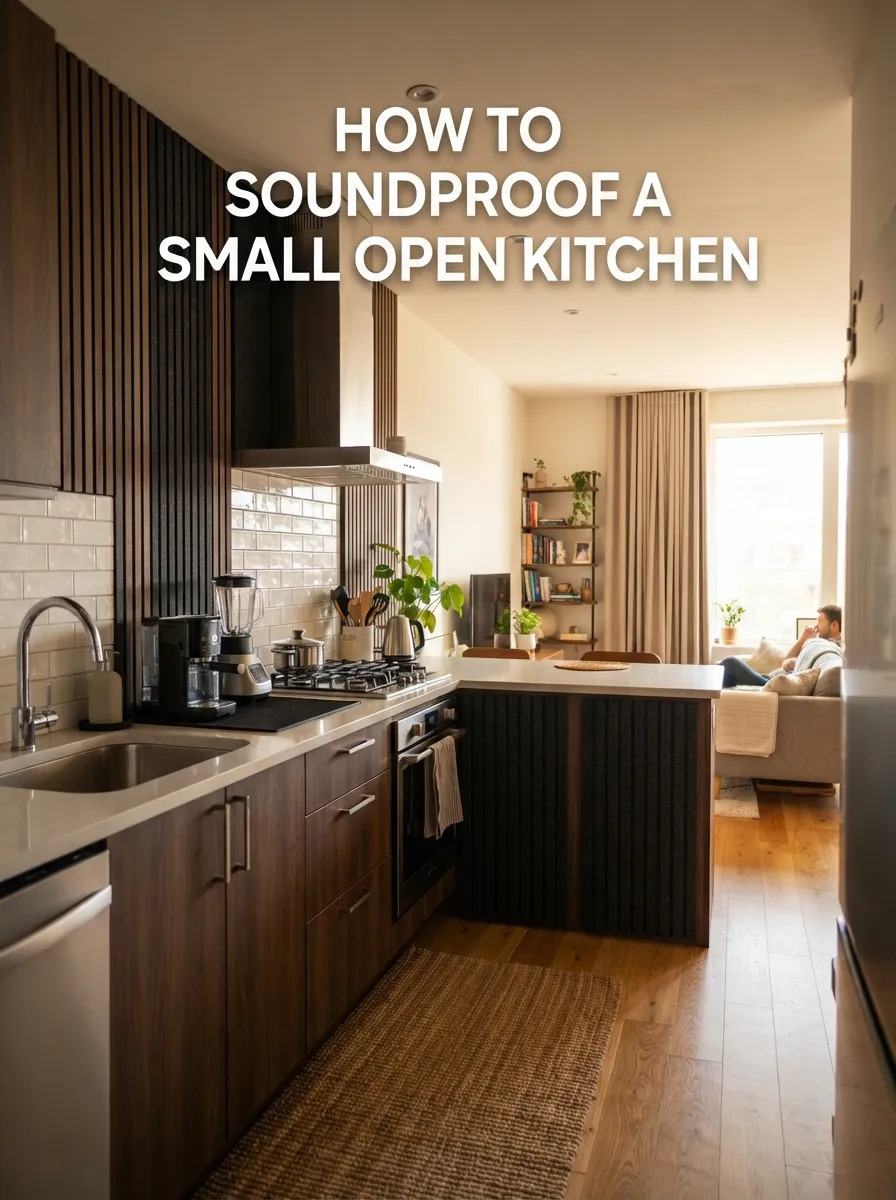
Sound Management and Acoustics in Small Kitchens
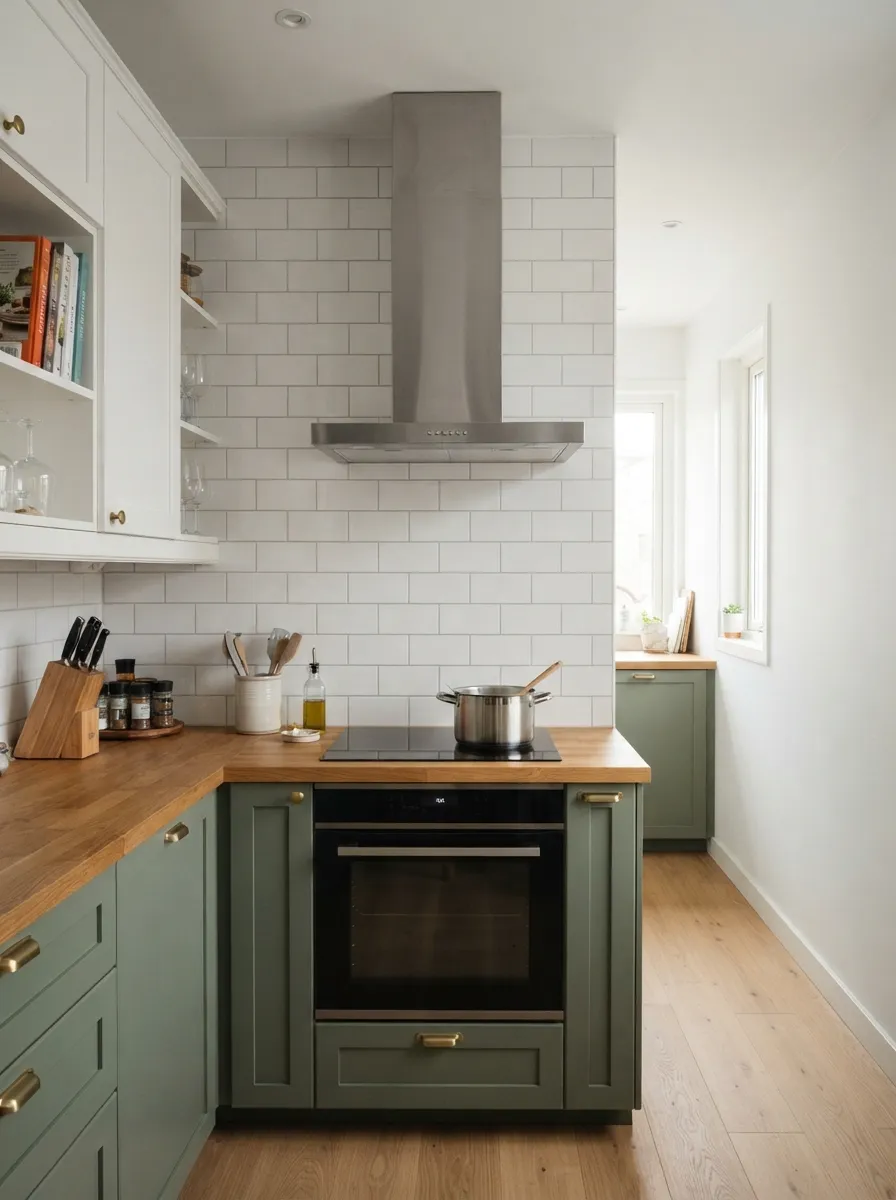
Hard surfaces are everywhere in a small kitchen — tile, stone, glass, stainless steel — and every one of them bounces sound rather than absorbing it, which is why compact kitchens can feel unexpectedly loud and echoey. Sound management and acoustics in small kitchens matter more than in almost any other room, since noise has less air volume to disperse into before bouncing straight back at you.
🔇 Quick Takeaways
- Hard, reflective surfaces (tile, stone, glass) amplify noise in a small kitchen’s tight footprint.
- A quiet-rated dishwasher and range hood make a bigger acoustic difference than most other single upgrades.
- Textiles — rugs, curtains, upholstered seating — absorb sound that hard surfaces reflect.
- Open shelving with soft-backed materials can reduce echo compared to a fully hard-surfaced wall.
- Placing the kitchen’s noisiest zone (dishwasher, disposal) away from an open living area reduces perceived noise elsewhere in the home.
In This Post
1. Why Small Kitchens Feel Loud
Sound waves reflect off hard, flat surfaces and are absorbed by soft, uneven ones. A typical kitchen is dominated by tile, stone, glass, and metal — all excellent reflectors and poor absorbers — while a small kitchen compresses those reflective surfaces into a tighter volume, giving sound less room to dissipate before bouncing back.
This isn’t purely a comfort issue — persistent kitchen noise from a running dishwasher or loud range hood can also disrupt conversation or media in an adjacent open living space, which makes acoustic planning worth considering early rather than as an afterthought.
2. Choosing Quieter Appliances
Appliance noise is one of the most controllable sound sources in a kitchen, and manufacturer decibel ratings make comparison straightforward before you buy.
- Quiet dishwashers rated at 45 decibels or below run barely audible from an adjacent room, compared to older or budget models that can exceed 55-60 decibels.
- Range hood sound ratings (sones) vary significantly — a hood rated under 3 sones on its lower speeds stays reasonably quiet during everyday cooking.
- Garbage disposals with insulated, sound-dampened housings run noticeably quieter than uninsulated basic models.
- Refrigerator compressor noise is generally low but worth checking on smaller under-counter units, which sometimes run louder relative to their size.
3. Materials That Absorb Rather Than Reflect Sound
Balancing a kitchen’s necessarily hard, cleanable surfaces with a few sound-absorbing elements meaningfully reduces echo without compromising hygiene or durability.
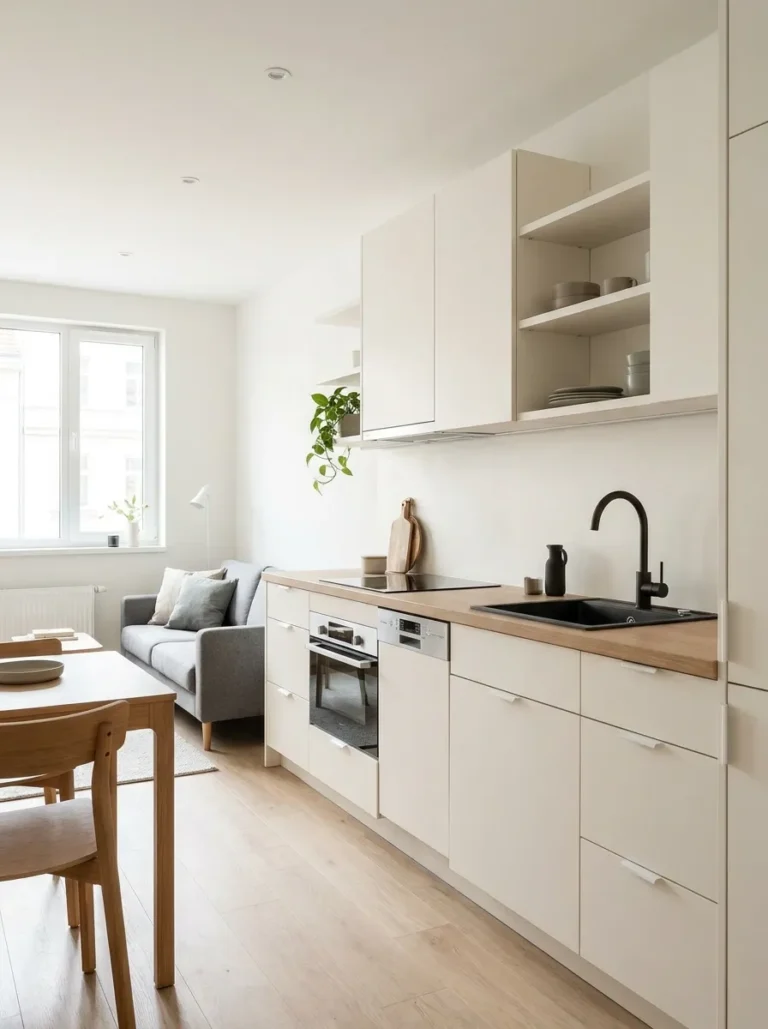
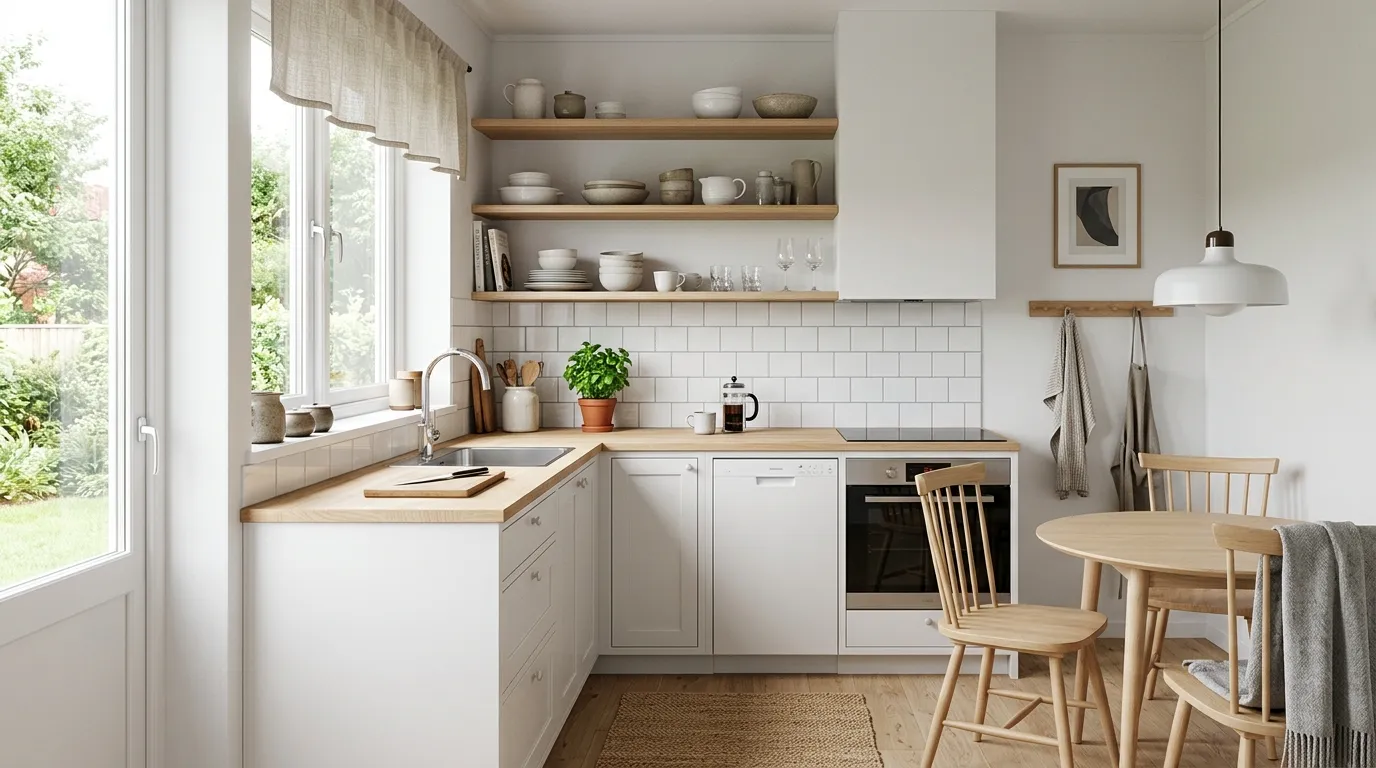
- A rug in an adjacent dining or seating area absorbs sound that would otherwise bounce off a hard kitchen floor and back into the room.
- Wood flooring or cork underlayment absorbs more sound than tile or polished concrete, while still remaining kitchen-durable.
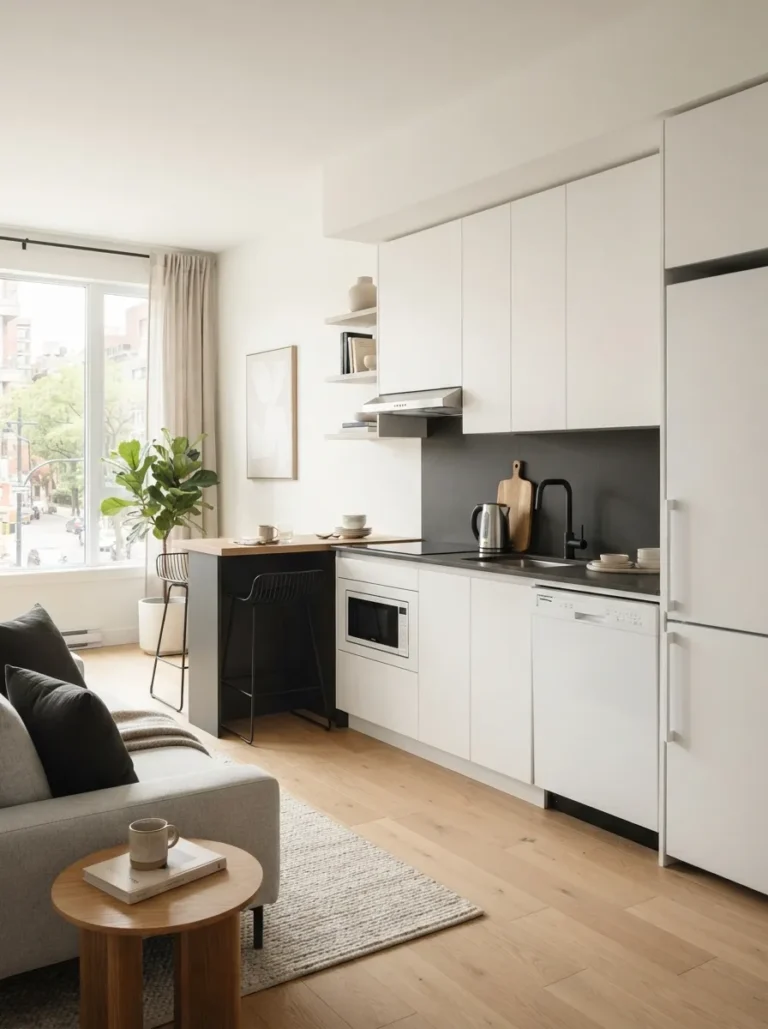
- Fabric window treatments over a kitchen window soften reflected sound from the glass surface.
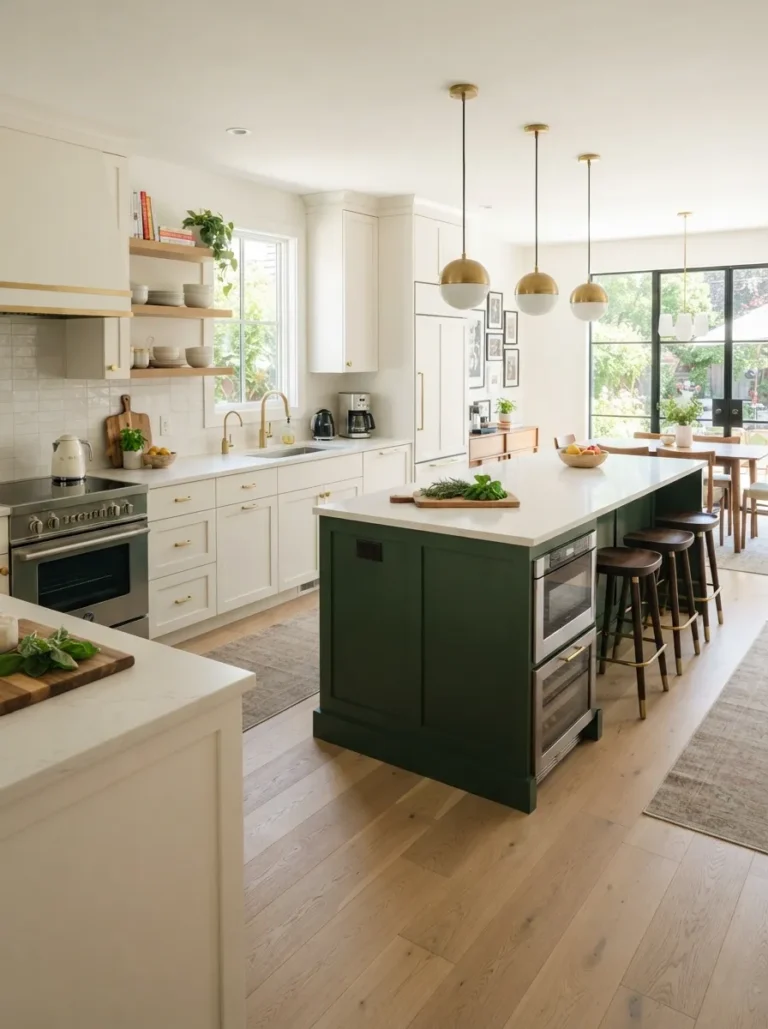
- Upholstered dining or bar seating near an open kitchen adds soft surface area that a fully hard-surfaced room lacks.
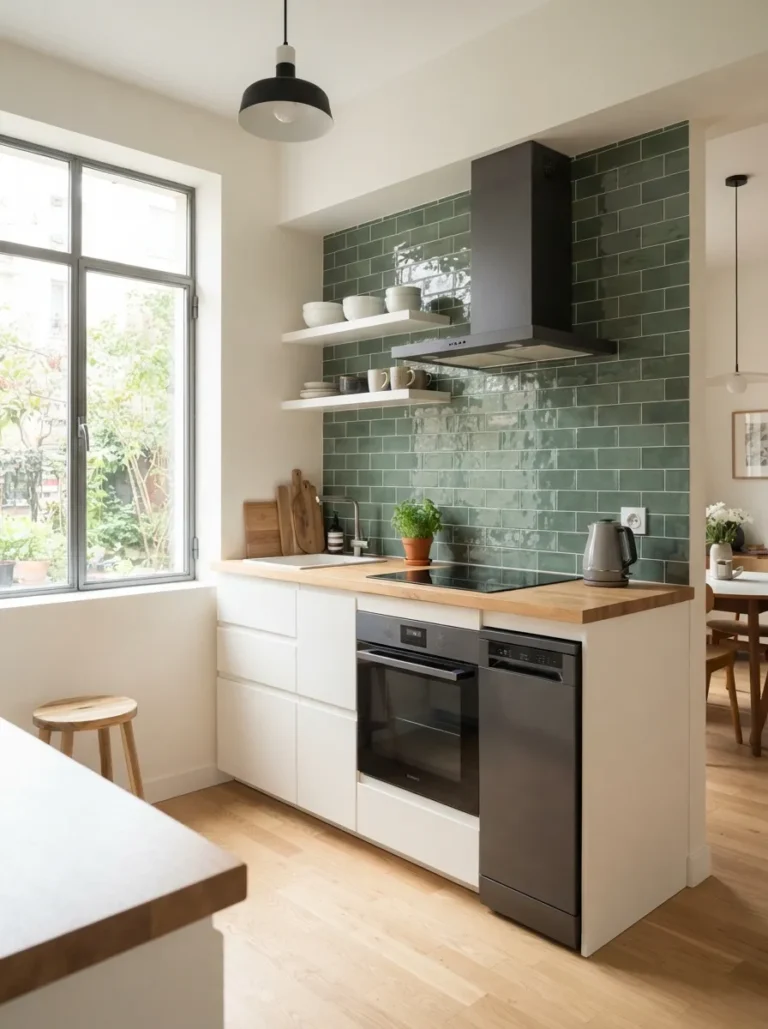
- Wood cabinetry and open shelving absorb slightly more sound than glossy laminate or lacquered finishes.
4. Layout Choices That Reduce Noise Spread
Where noisy elements sit within the kitchen affects how much sound reaches the rest of a small home, particularly in an open floor plan.
- Position the dishwasher away from a shared wall with a bedroom or home office where possible, to reduce noise transfer during a wash cycle.
- Keep the garbage disposal and dishwasher on the same side of the kitchen, consolidating the noisiest zone rather than spreading it across the layout.
- A peninsula or half-wall between the kitchen and living area can also serve as a mild acoustic buffer, alongside its visual zoning function.
- Insulated cabinet backing behind a dishwasher reduces vibration transfer into adjacent cabinetry.
5. Acoustics in an Open-Plan Kitchen
An open kitchen layout amplifies the acoustic stakes, since kitchen noise now travels directly into living or entertaining space without a wall to buffer it.
- Choose the quietest available appliance tier when the kitchen is fully open to a living area, since noise has nowhere to be contained.
- Add soft furnishings in the living zone specifically to counterbalance the kitchen’s hard surfaces, using the same zoning logic covered in our open kitchen zoning guide.
- Consider running the dishwasher or disposal during times when quiet isn’t essential, since layout alone can’t fully eliminate noise transfer in a fully open plan.
- A ceiling treatment with acoustic-friendly material, where feasible, reduces overhead sound reflection across the combined kitchen-living volume.
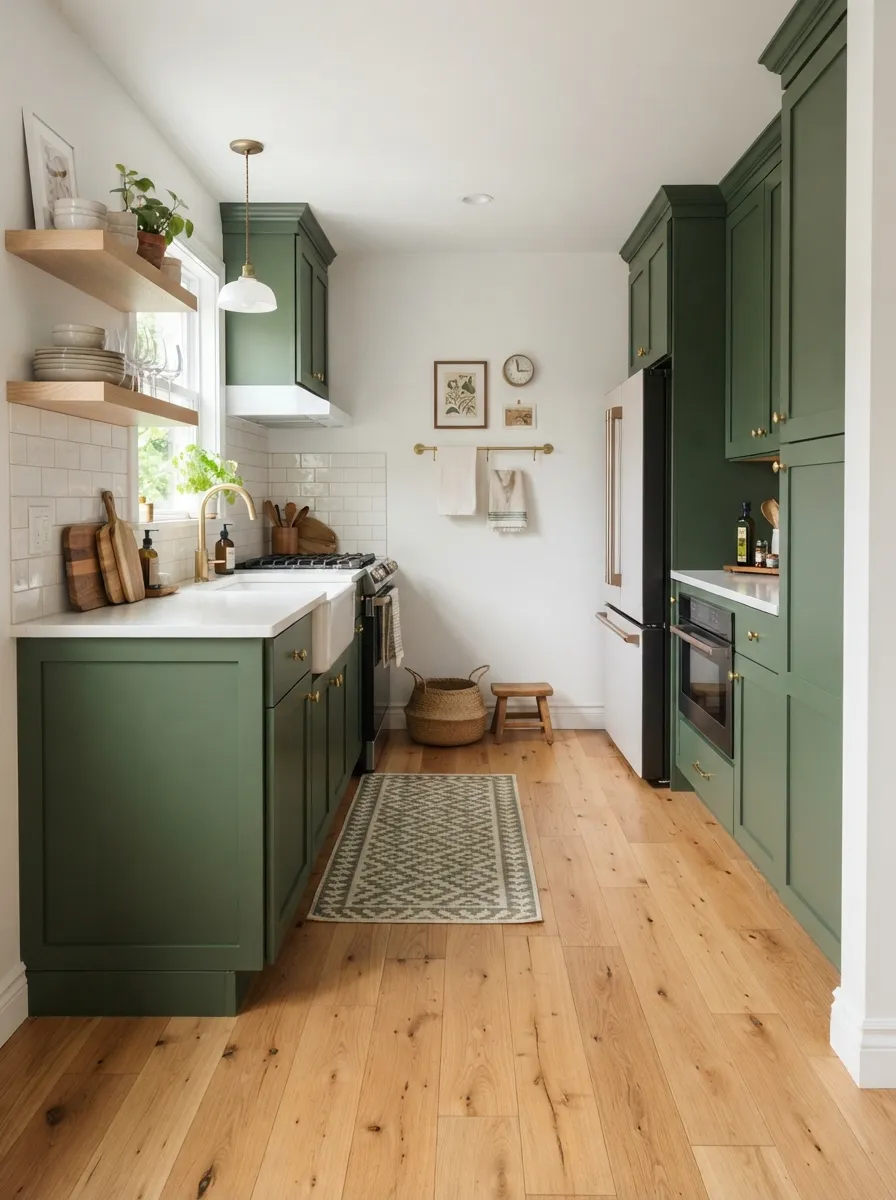
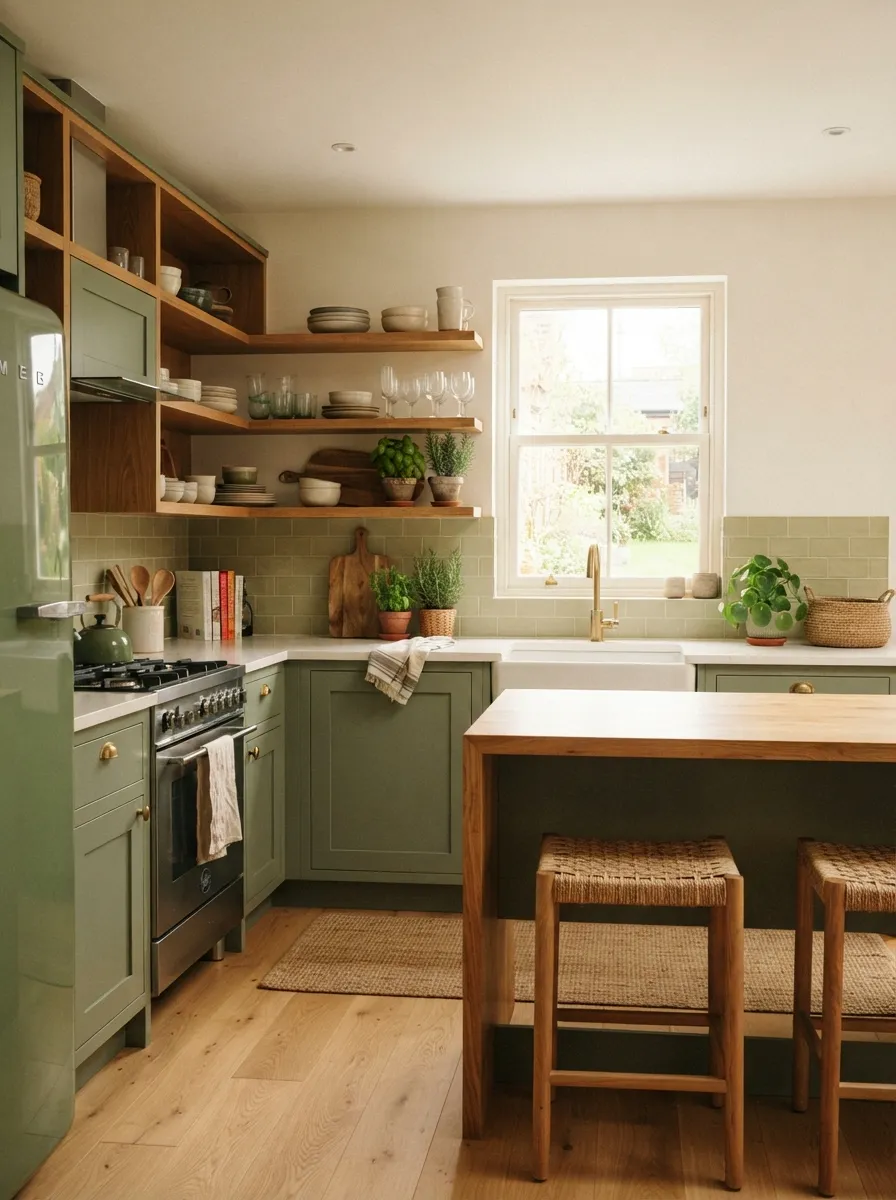
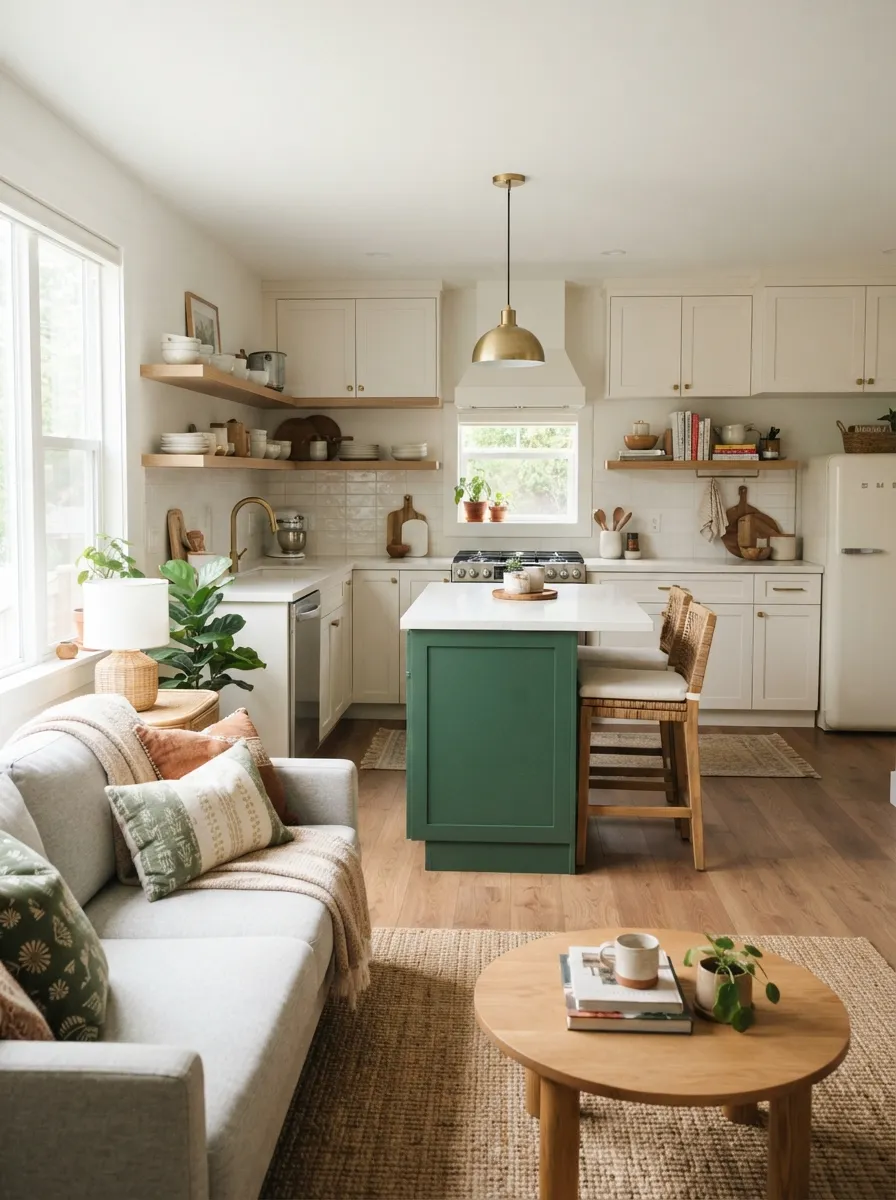
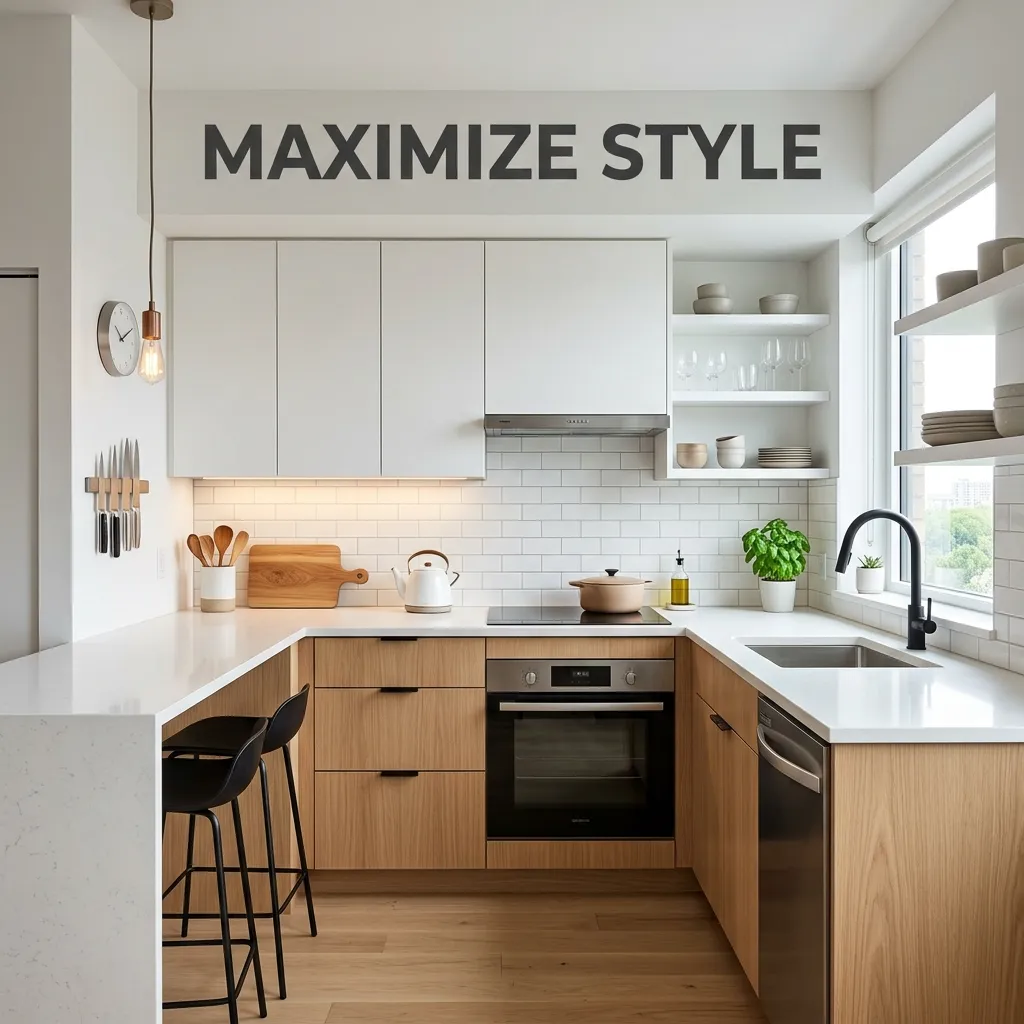
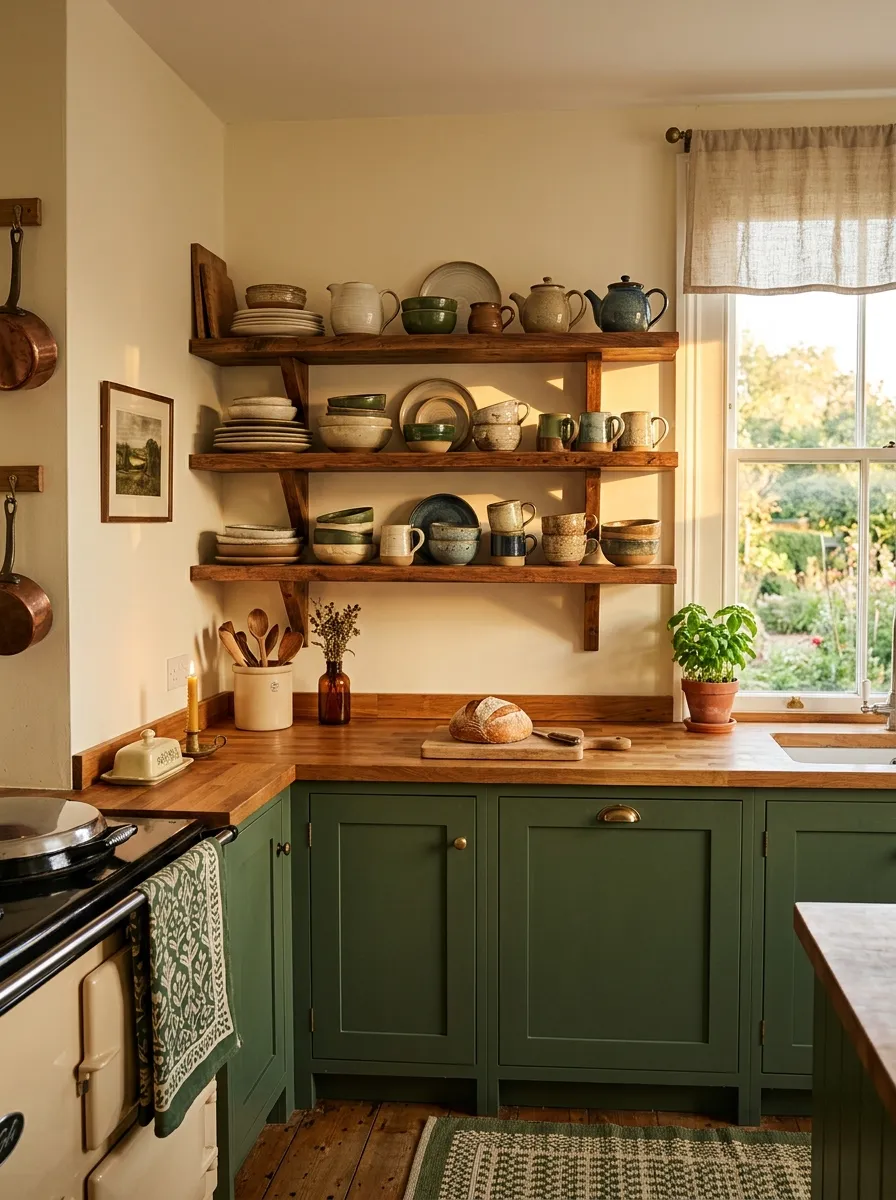
Kitchen Acoustics Gallery
Frequently Asked Questions
Why does my small kitchen feel so loud and echoey?
Hard, reflective surfaces like tile, stone, and glass dominate most kitchens, and a small footprint gives sound less room to disperse before bouncing back.
What decibel rating should I look for in a quiet dishwasher?
A rating at or below 44 decibels is considered whisper-quiet, while anything above 50 decibels will be clearly noticeable during conversation nearby.
Can I reduce kitchen noise without a renovation?
Yes, adding a rug in an adjacent seating area, fabric window treatments, or upholstered dining seating all help absorb sound without any structural change.
Does an open kitchen make noise worse?
Yes, an open layout lets kitchen noise travel directly into the living space without a wall to buffer it, making quieter appliances and soft furnishings more important.
What flooring is quietest for a small kitchen?
Wood flooring or cork underlayment absorbs more sound than tile or polished concrete, while remaining durable enough for daily kitchen use.
Are range hood sone ratings worth checking before buying?
Yes, a range hood rated under 3 sones on its lower speeds stays reasonably quiet during everyday cooking, compared to louder models that can be disruptive.
Related Pages
Quiet Is a Design Choice
Acoustics rarely make the initial wish list for a small kitchen remodel, but a quieter dishwasher, a rug in the dining zone, and a few soft-surfaced materials go a long way toward making a compact kitchen feel calmer day to day. Start with appliance decibel ratings when you’re already shopping for new equipment, then layer in soft textiles wherever the room allows.
For more on balancing an open kitchen’s layout and feel, see our Small Open Kitchen Design guide next.