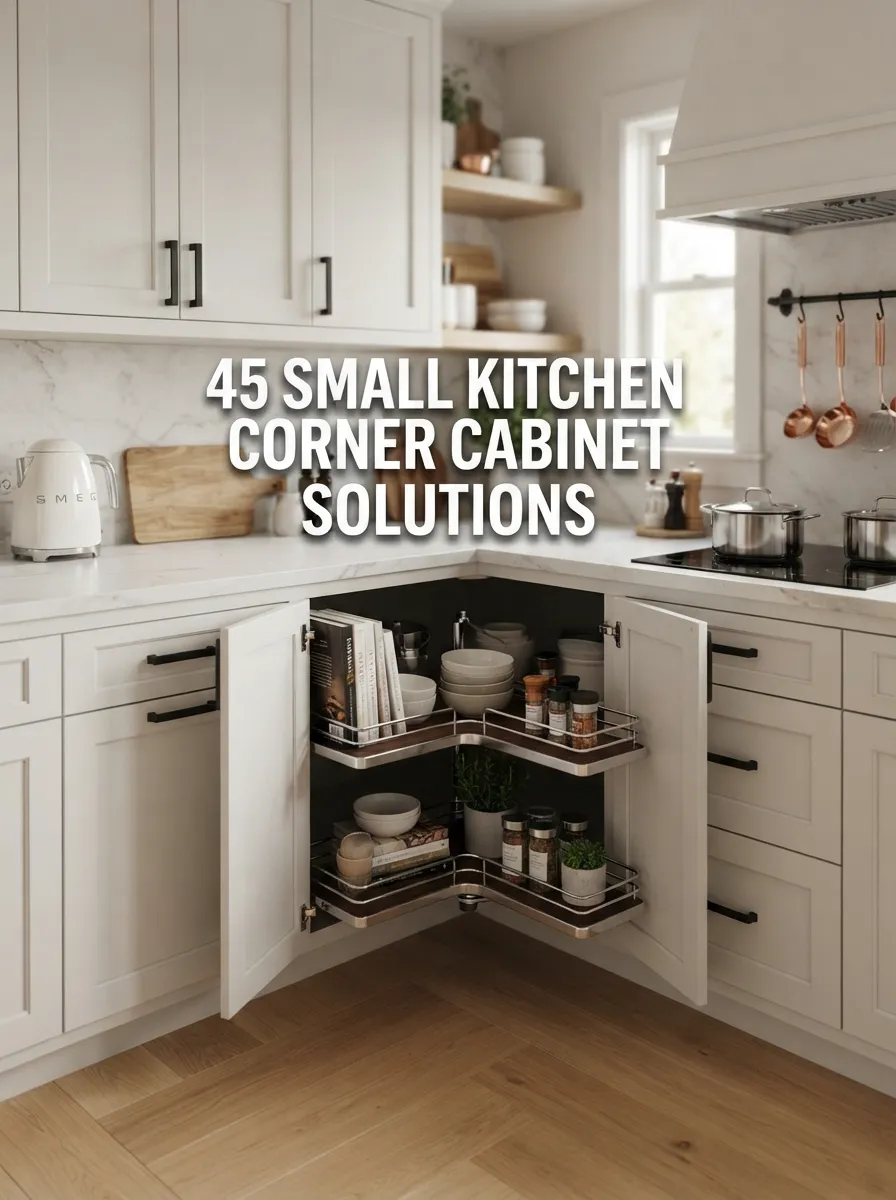
45 Small Kitchen Corner Cabinet Solutions
Corner cabinets are notorious for wasting more usable space than any other spot in a kitchen — a standard swing door corner cabinet can leave 30-40% of its interior volume essentially inaccessible. These 45 small kitchen corner cabinet solutions recover that lost space with carousels, pull-outs, diagonal drawers, and smarter shelving, turning the kitchen’s most awkward zone into some of its most functional storage.
📐 Quick Takeaways
- A standard swing-door corner cabinet wastes roughly 30-40% of its interior storage volume.
- Lazy Susans and carousels remain the most common and cost-effective corner solution.
- Diagonal corner drawers recover more usable space than any rotating system, at a higher cost.
- Blind corner pull-out systems are designed specifically for the L-shaped “blind” cabinet configuration.
- Open corner shelving eliminates the accessibility problem entirely, trading some storage capacity for full visibility.
In This Post
1. Rotating & Carousel Systems (1-12)
Rotating systems remain the most widely available and affordable category of corner solution for a small kitchen cabinet layout.
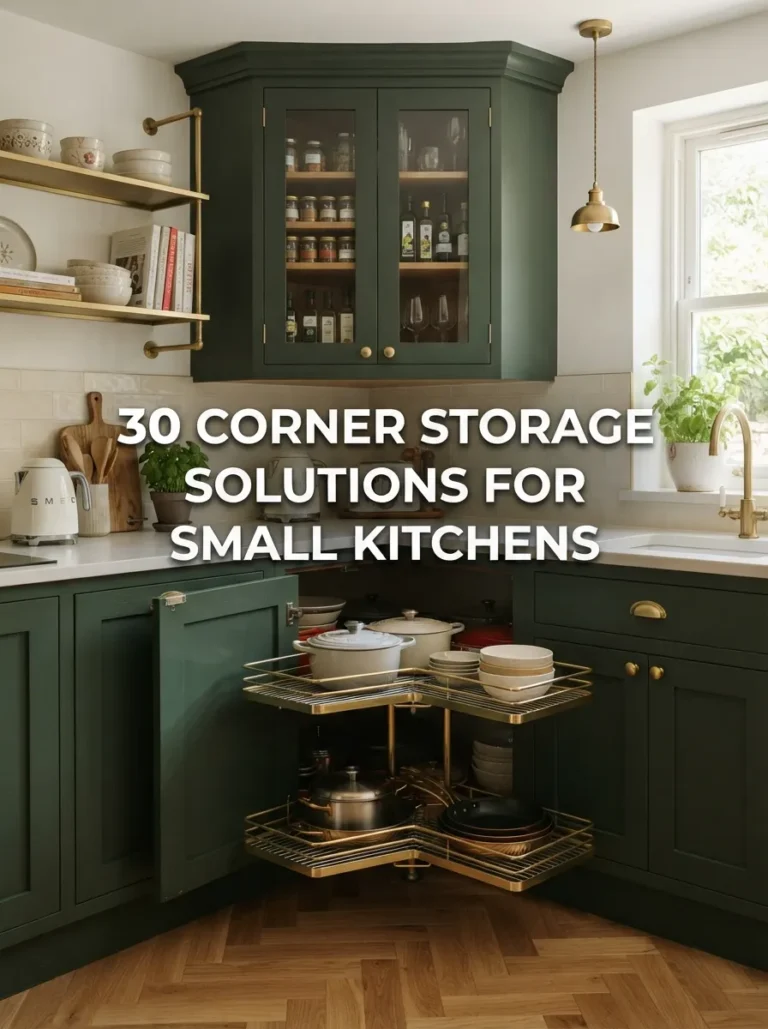
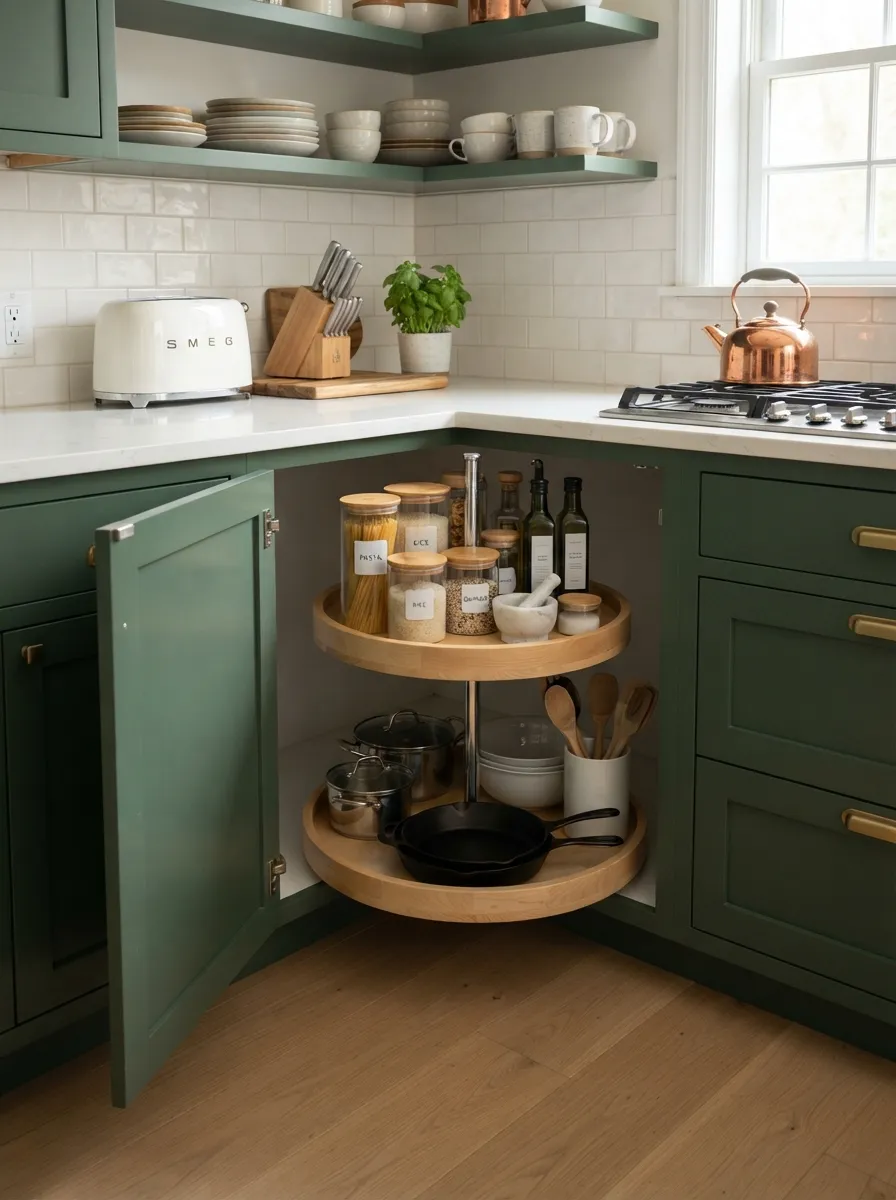
- 1. Full-circle Lazy Susan. A single rotating shelf accessible from any angle, the most classic corner solution.
- 2. Half-moon Lazy Susan. Designed for cabinets where a full circle doesn’t fit, using a semicircular shelf instead.
- 3. Kidney-shaped rotating shelf. A curved profile maximizes usable shelf area in an oddly angled corner.
- 4. Two-tier rotating carousel. Stacked rotating shelves double storage capacity within the same footprint.
- 5. Three-tier carousel system. Adds a third rotating level for taller corner cabinets with extra vertical space.
- 6. Door-mounted rotating unit. The shelving rotates out attached to the cabinet door itself, combining access with door opening.
- 7. Wire-frame carousel. An open wire design keeps items visible while rotating, unlike a solid shelf.
- 8. Soft-close rotating mechanism. Upgraded hardware prevents the carousel from spinning too freely or slamming during use.
- 9. Spice-specific mini carousel. A smaller rotating unit sized for spice jars fits inside a larger corner cabinet as a sub-organizer.
- 10. Corner carousel with bin inserts. Removable bins on the rotating shelf group items by category as the whole assembly turns.
- 11. Adjustable-height carousel shaft. Shelves reposition vertically to accommodate taller items on one level and shorter on another.
- 12. Corner carousel combined with a trash pull-out in the same cabinet footprint, doubling up on function.
2. Pull-Out & Sliding Systems (13-24)
Pull-out systems solve the corner problem differently than rotation, sliding contents forward and out rather than spinning them into reach.
- 13. Blind corner pull-out (Magic Corner-style). A specialized mechanism designed for L-shaped blind corner cabinets, pulling shelving fully out of the dark cabinet space.
- 14. Double pull-out shelf system. Two shelves slide out independently, one behind the other, for layered access.
- 15. Swing-out cabinet organizer. Shelves swing outward on a hinge before sliding, combining rotation with extension.
- 16. Diagonal sliding basket system. Wire baskets slide diagonally out of the corner along an angled track.
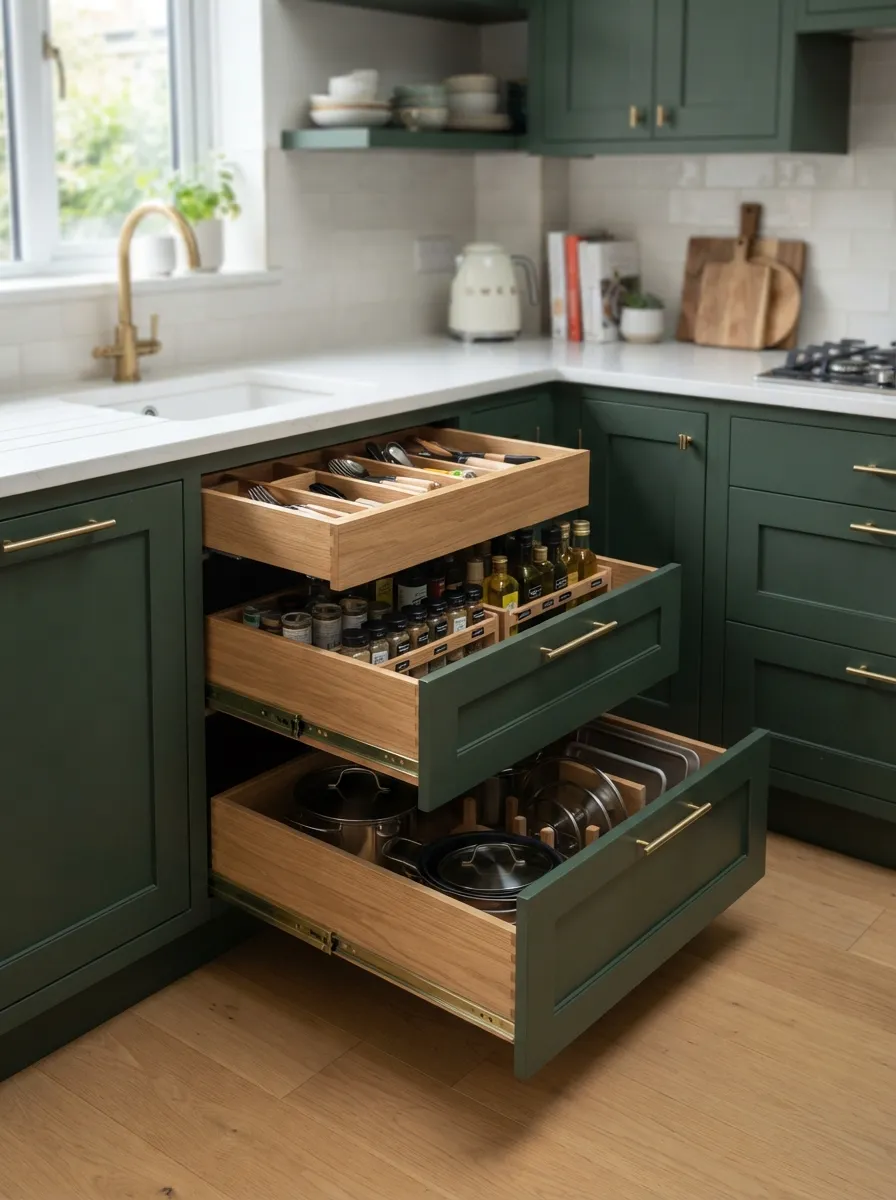
- 17. Corner drawer-style pull-out. A full-extension drawer replaces a swing door entirely for the corner cabinet.
- 18. Pull-out with adjustable dividers. Combines the sliding mechanism with customizable internal dividers.
- 19. Soft-close pull-out track. Upgraded slides prevent the extended shelf from slamming back into the cabinet.
- 20. Pull-out with a built-in cutting board. Converts unused corner space into an occasional secondary prep surface.
- 21. Corner pull-out pantry unit. A tall, narrow pull-out sized for canned and dry goods rather than cookware.
- 22. Two-stage extension mechanism. Shelves extend in stages for full access even in a deep corner cabinet.
- 23. Pull-out with integrated lighting. A built-in LED strip illuminates the shelf as it extends into view.
- 24. Modular pull-out system that can be reconfigured as storage needs change over time.
3. Diagonal Drawer Systems (25-33)
Diagonal drawers follow a corner cabinet’s natural angle, recovering storage in a way that rotating and sliding systems can’t fully match.
- 25. Single diagonal drawer. One angled drawer spans the full corner, following the cabinet’s natural 45-degree geometry.
- 26. Stacked diagonal drawers. Two or three diagonal drawers at different heights maximize vertical storage in the same corner.
- 27. Diagonal drawer with dividers. Internal dividers organize the angled drawer space into smaller functional zones.
- 28. Diagonal drawer for pot lids. A shallow angled drawer specifically sized for lid storage.
- 29. Deep diagonal drawer for cookware. A taller diagonal drawer holds pots and pans that wouldn’t fit a standard corner cabinet shelf.
- 30. Diagonal drawer with a felt liner for delicate items like china or glassware.
- 31. Combination diagonal drawer and door unit, using the drawer for the lower section and a small door above for taller items.
- 32. Full-extension diagonal slides that pull the entire angled drawer out completely rather than partially.
- 33. Custom-built diagonal drawer tailored to an irregular corner angle in an older or non-standard kitchen.
4. Open Shelving & Display Solutions (34-40)
Open shelving sidesteps the access problem entirely by removing the door, trading some enclosed storage capacity for complete visibility.
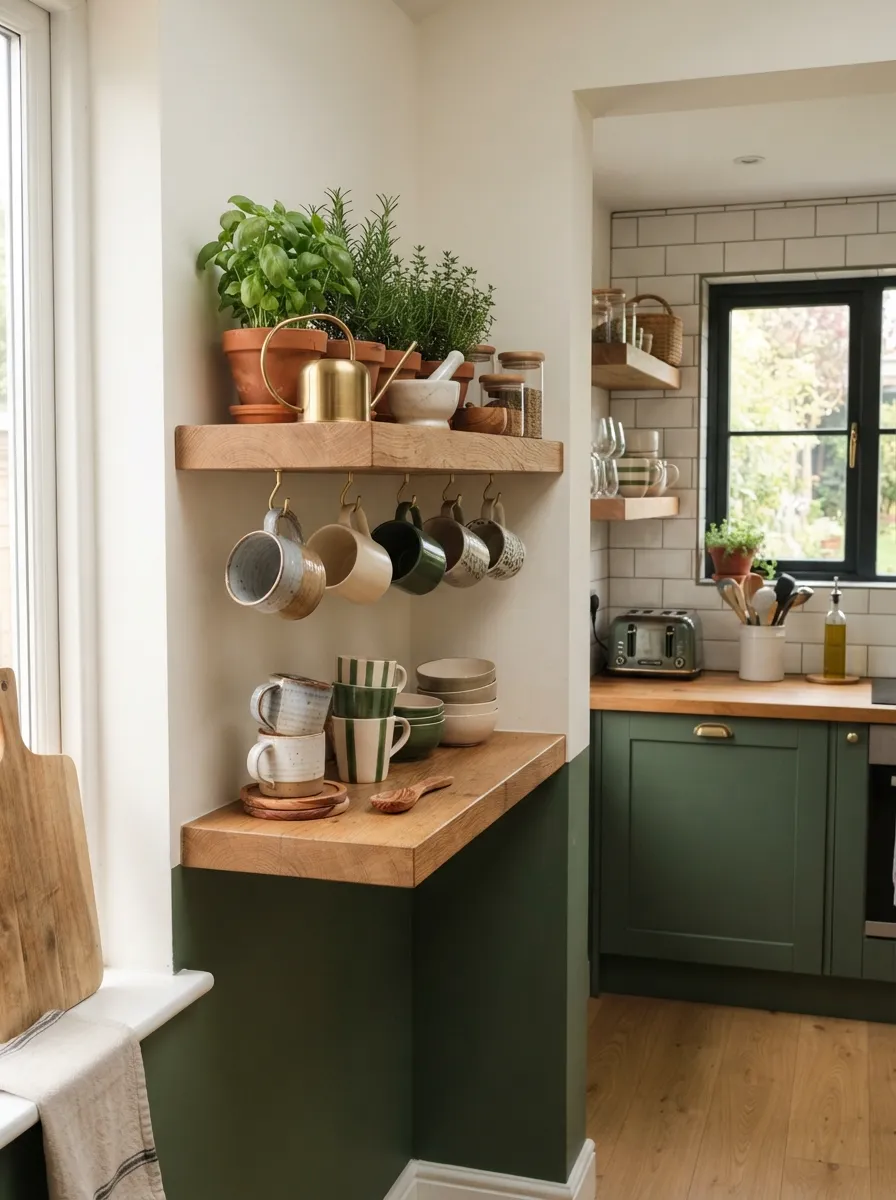
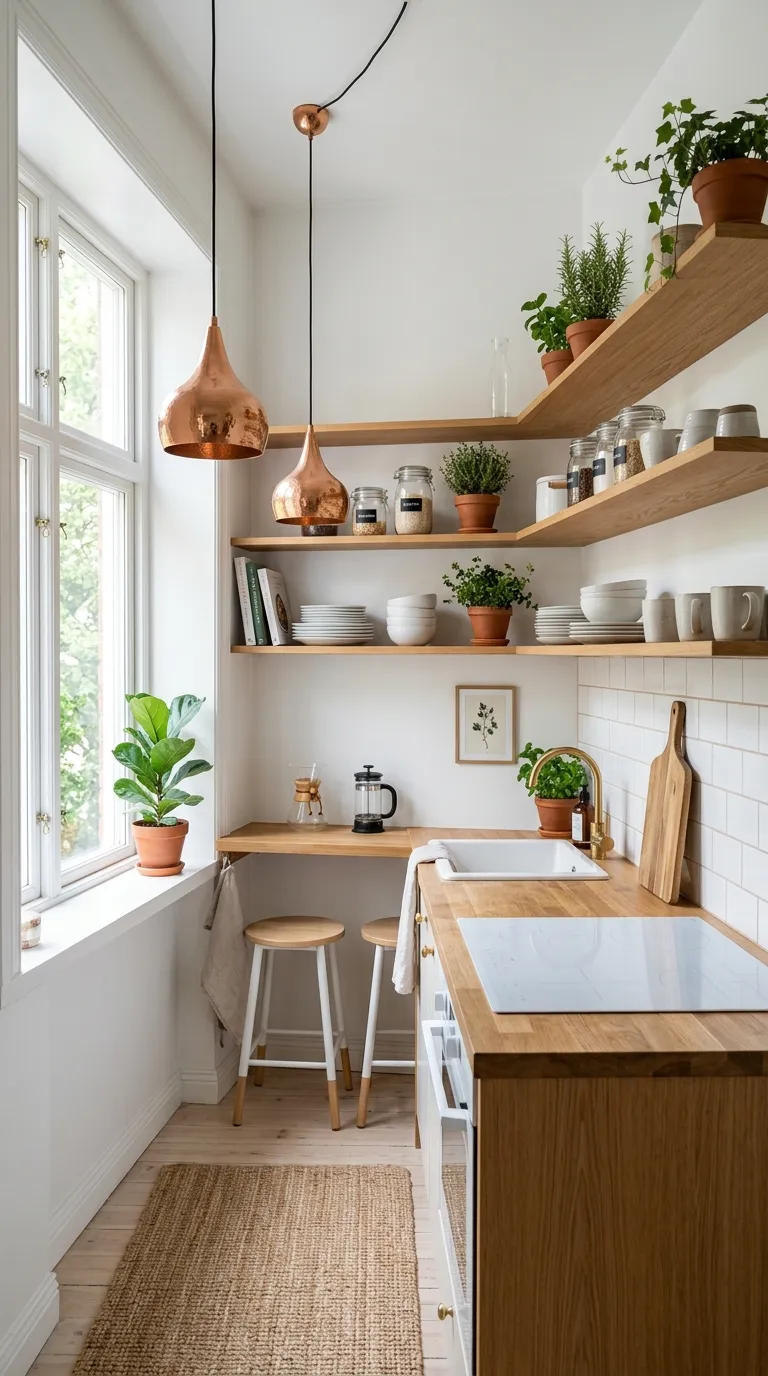
- 34. Open corner shelves. Floating shelves that follow the corner angle, fully visible and accessible without a door.
- 35. Corner display shelves for cookbooks or dishware. Turns the awkward space into a decorative feature.
- 36. Corner wine rack. Angled slots hold bottles in a space that would otherwise be difficult to use for anything else.
- 37. Corner plant shelf. A small greenery display uses the corner as a decor moment rather than storage.
- 38. Floating corner shelf with under-shelf lighting. Adds a lit display element to an open corner.
- 39. Corner shelf with hanging hooks below for mugs or utensils.
- 40. Glass-front corner cabinet as a middle ground between fully open and fully closed storage.
5. Layout Alternatives That Avoid the Problem (41-45)
In some cases, the most efficient corner solution is designing the layout to avoid a blind corner cabinet altogether.
- 41. Angled corner cabinet with its own door facing the room diagonally, rather than two cabinets meeting at 90 degrees.
- 42. Corner sink placement that uses the corner for plumbing rather than storage, sidestepping the cabinet access problem entirely.
- 43. L-shaped layout that ends before the corner, leaving the corner itself as open floor space or a small appliance nook.
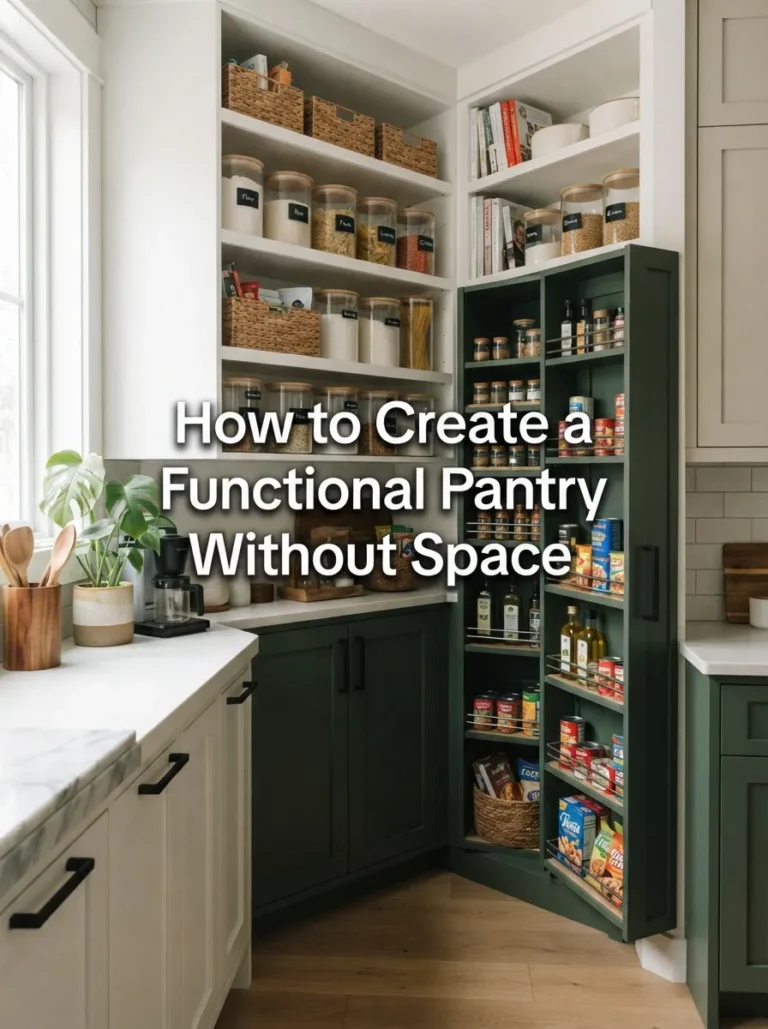
- 44. Corner pantry cabinet that runs floor to ceiling, treating the corner as a walk-in-style storage column rather than standard cabinetry.
- 45. Open corner nook used for a small table or plant stand instead of cabinetry altogether.
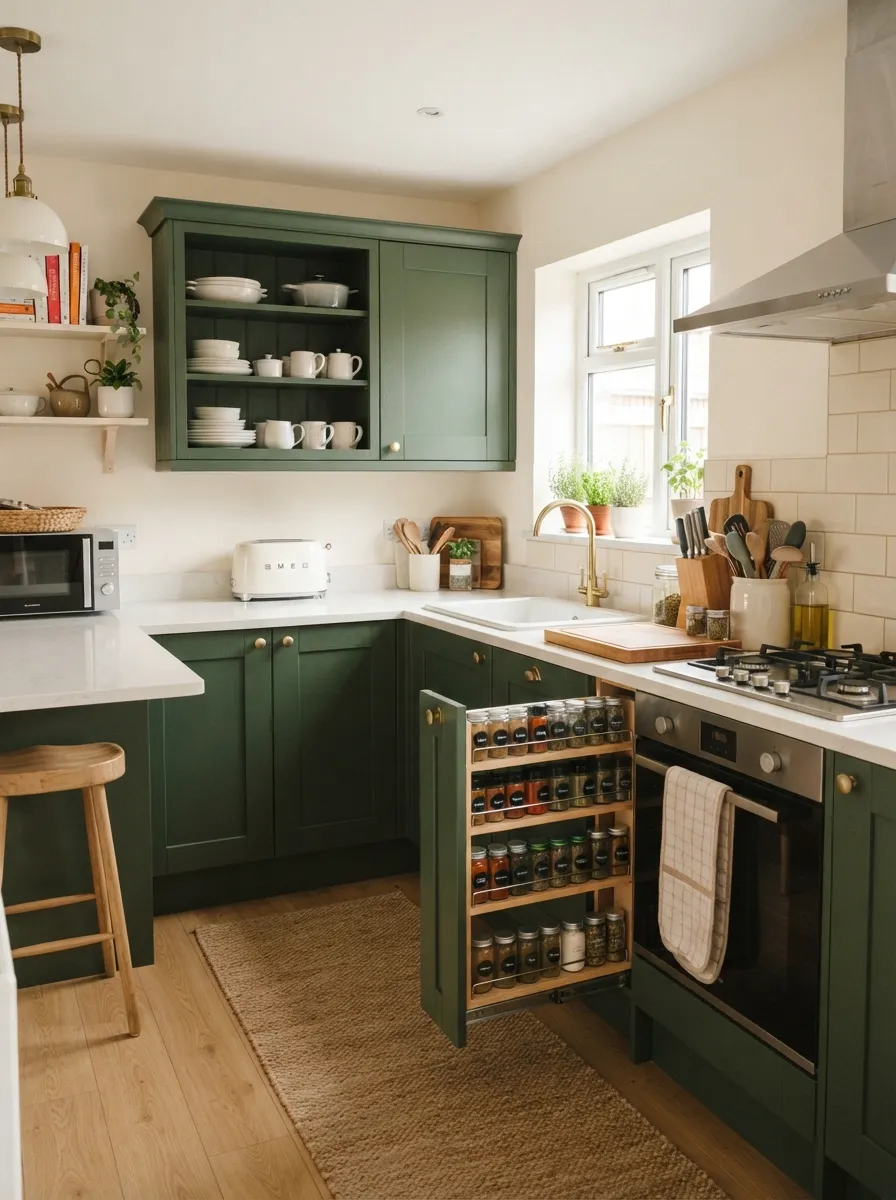
Corner Cabinet Gallery
Frequently Asked Questions
How much storage does a standard corner cabinet waste?
A standard swing-door corner cabinet without a specialized system can waste roughly 30-40% of its interior storage volume due to poor accessibility.
What is the best corner cabinet solution for a small kitchen?
A Lazy Susan remains the most affordable and widely available option, while a diagonal drawer system recovers the most usable space at a higher cost.
What is a blind corner cabinet?
A blind corner cabinet is an L-shaped configuration where one cabinet run extends behind another, creating a hard-to-reach hidden space that specialized pull-out systems are designed to access.
Are diagonal corner drawers worth the extra cost?
Yes, if maximizing usable storage is the priority, since diagonal drawers recover more space than rotating systems, though they typically cost more.
Can I avoid a blind corner cabinet altogether in my layout?
Yes, an angled corner cabinet, a corner sink, or an open corner nook can all be used in the layout instead of a traditional blind corner configuration.
Is open shelving a good corner solution?
Yes, open shelving eliminates the accessibility problem entirely by removing the door, though it trades some enclosed storage capacity for full visibility.
Related Pages
Turn the Dead Zone Into Storage
A corner cabinet doesn’t have to be your kitchen’s weakest storage spot — a Lazy Susan, a pull-out system, or a diagonal drawer can each recover meaningful space depending on your budget and how much capacity you need. Start by identifying whether your corner is a standard or blind configuration, since that determines which systems will actually fit and function well.
For the rest of your cabinet layout planning, see our Small Kitchen Cabinet Design guide next.