25 Two-Tone Cabinet Ideas for Small Kitchens
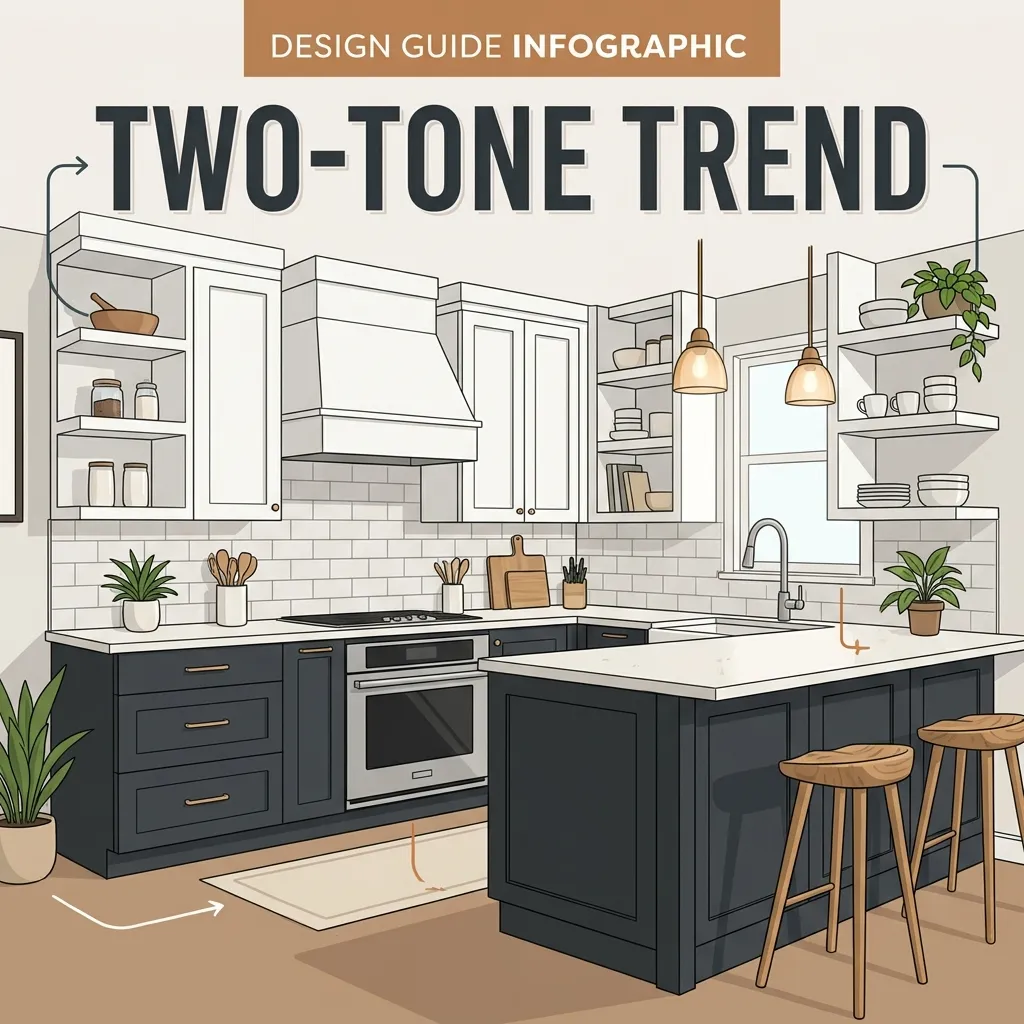
Two-tone cabinets — pairing a darker lower cabinet color with lighter uppers — have become one of the most popular small kitchen design choices, and for good reason: they add depth and personality without visually shrinking the room the way an all-dark palette can. Here are 25 two-tone combinations and application ideas to inspire your own small kitchen’s color story.
⭐ Quick Takeaways
- The classic formula is dark lower cabinets + light upper cabinets, which grounds the room without darkening the ceiling line
- Forest green, navy, and charcoal are the most popular “dark” halves of a two-tone small kitchen palette right now
- Two-tone works with any layout — L-shaped, galley, one-wall, or U-shaped
- Keep hardware consistent across both tones for a cohesive, intentional look
- An island or peninsula in the contrasting tone is a popular way to introduce two-tone without repainting every cabinet
📑 In This Post
Why Two-Tone Works in Small Kitchens
A single all-dark palette can feel heavy in a compact room, while all-white can feel flat after a while. Two-tone splits the difference — the darker lower half grounds the room and hides everyday scuffs better, while the lighter upper half keeps sightlines open and the ceiling feeling tall.
Green Combinations (1-6)
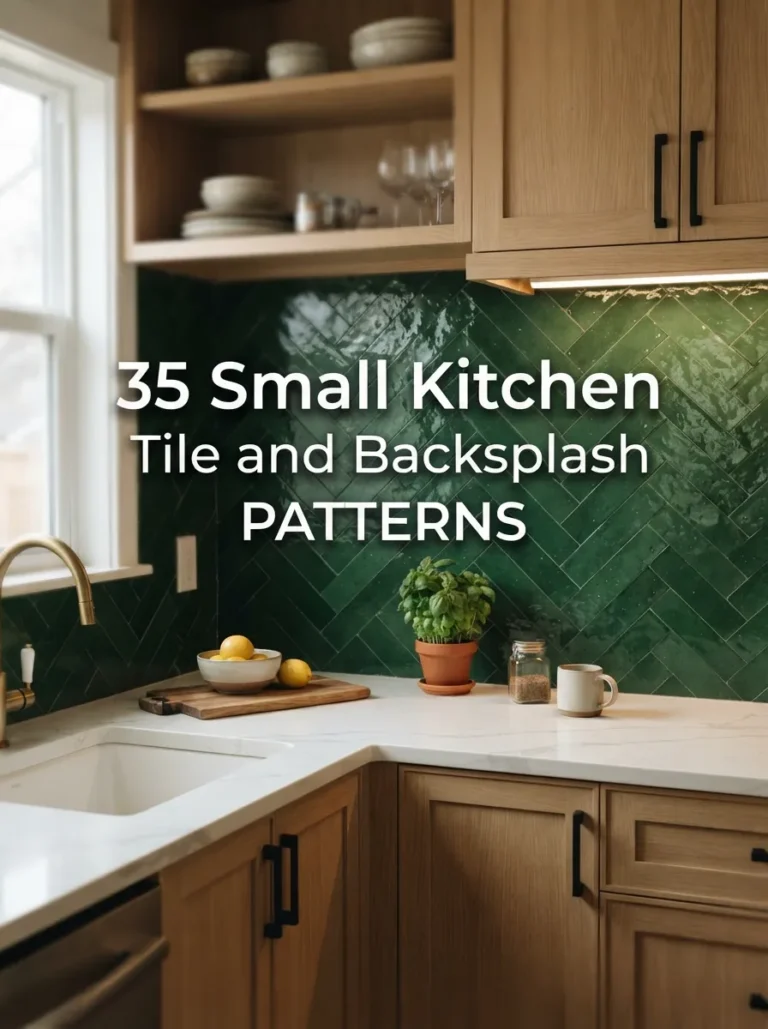
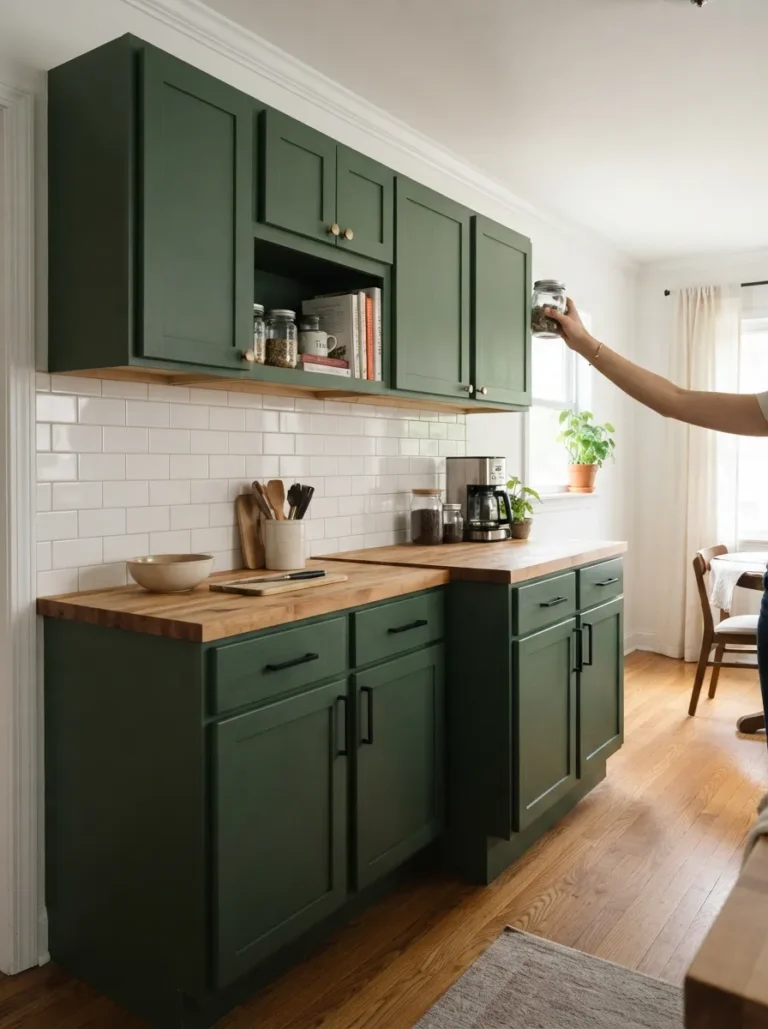
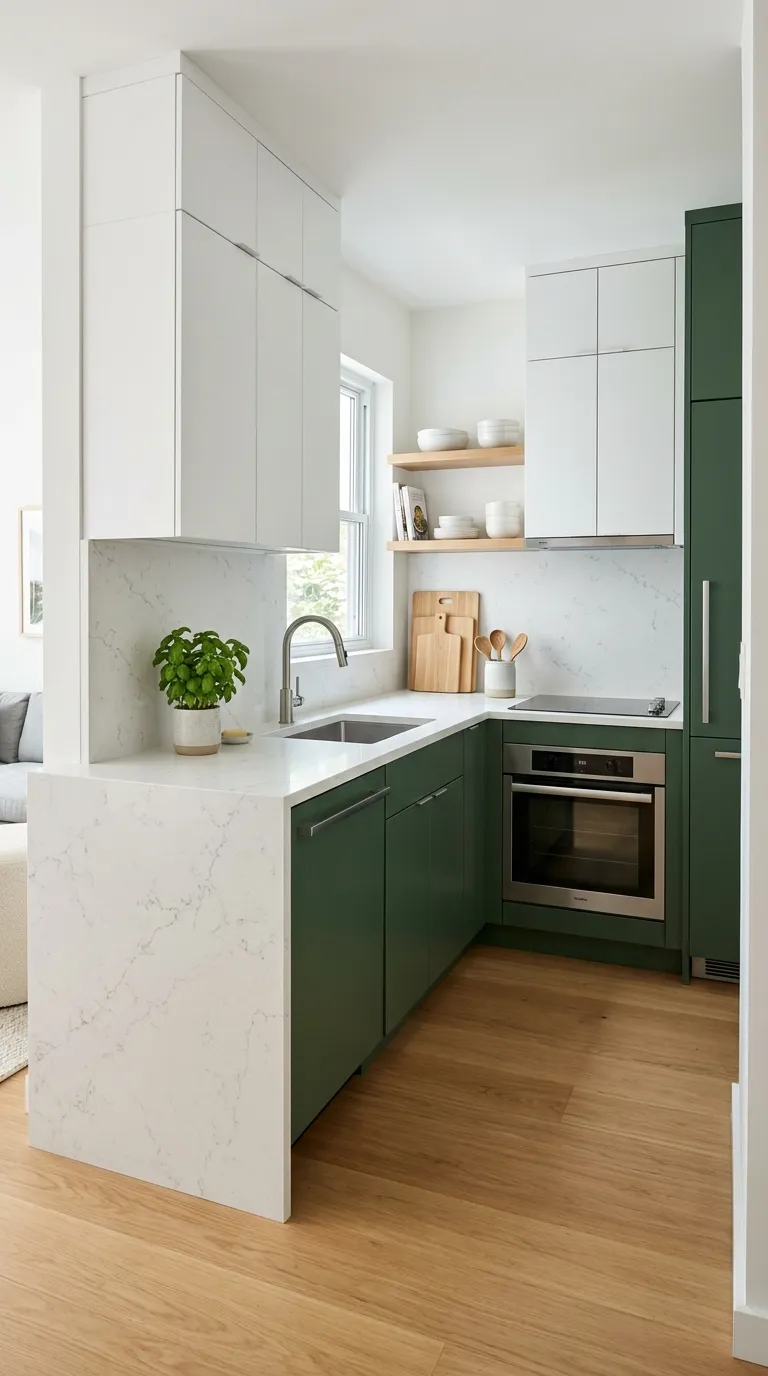
- Forest green lowers + white uppers — the most popular small-kitchen two-tone combination right now
- Sage green lowers + warm white uppers — a softer, more muted version of the classic
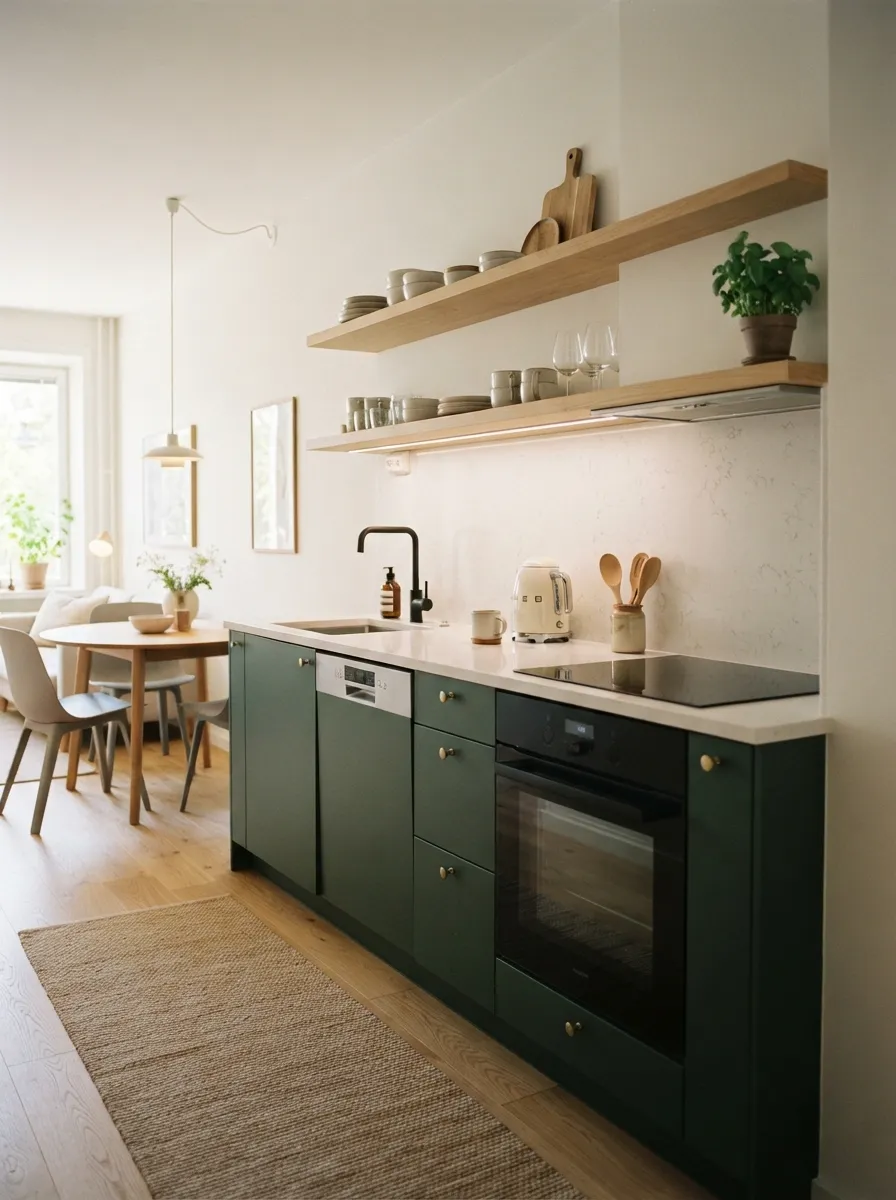
- Forest green lowers + light wood open shelving — swaps upper cabinets for open shelves entirely
- Green island + white perimeter cabinets — introduces color in just one focal piece
- Green lowers + glass-front white uppers — adds visual depth to the lighter half
- Deep hunter green lowers + cream uppers — a warmer, more traditional take on the green pairing
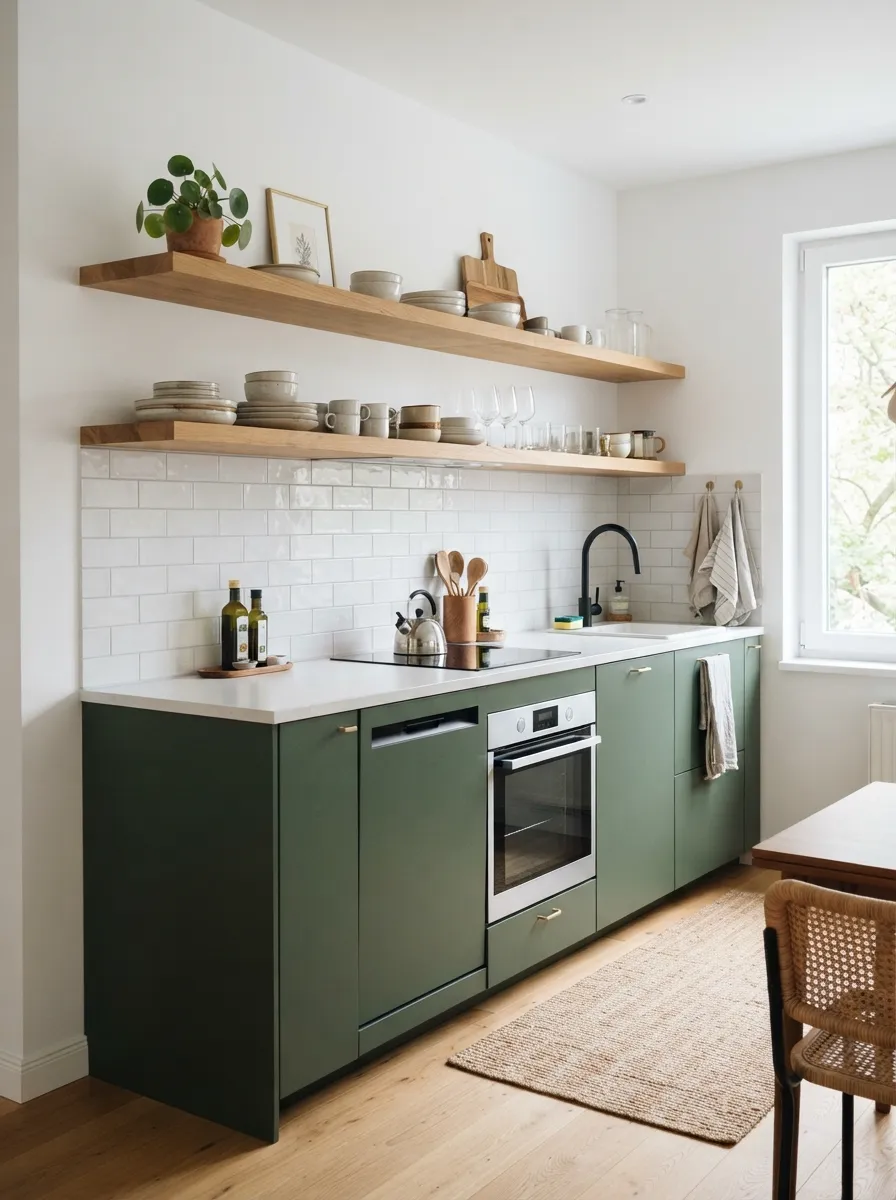
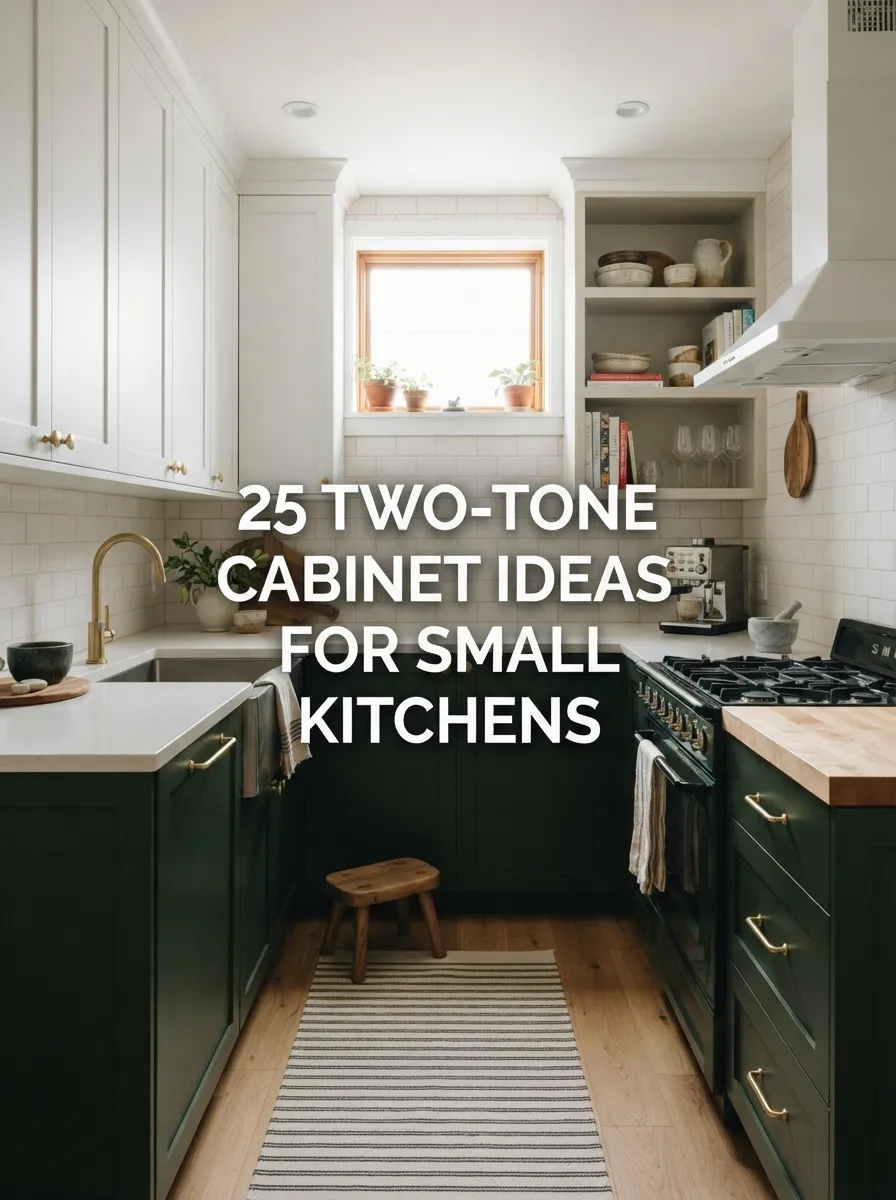
Forest green lowers paired with white uppers is the defining two-tone combination in small kitchens today.
Navy & Charcoal Combinations (7-12)
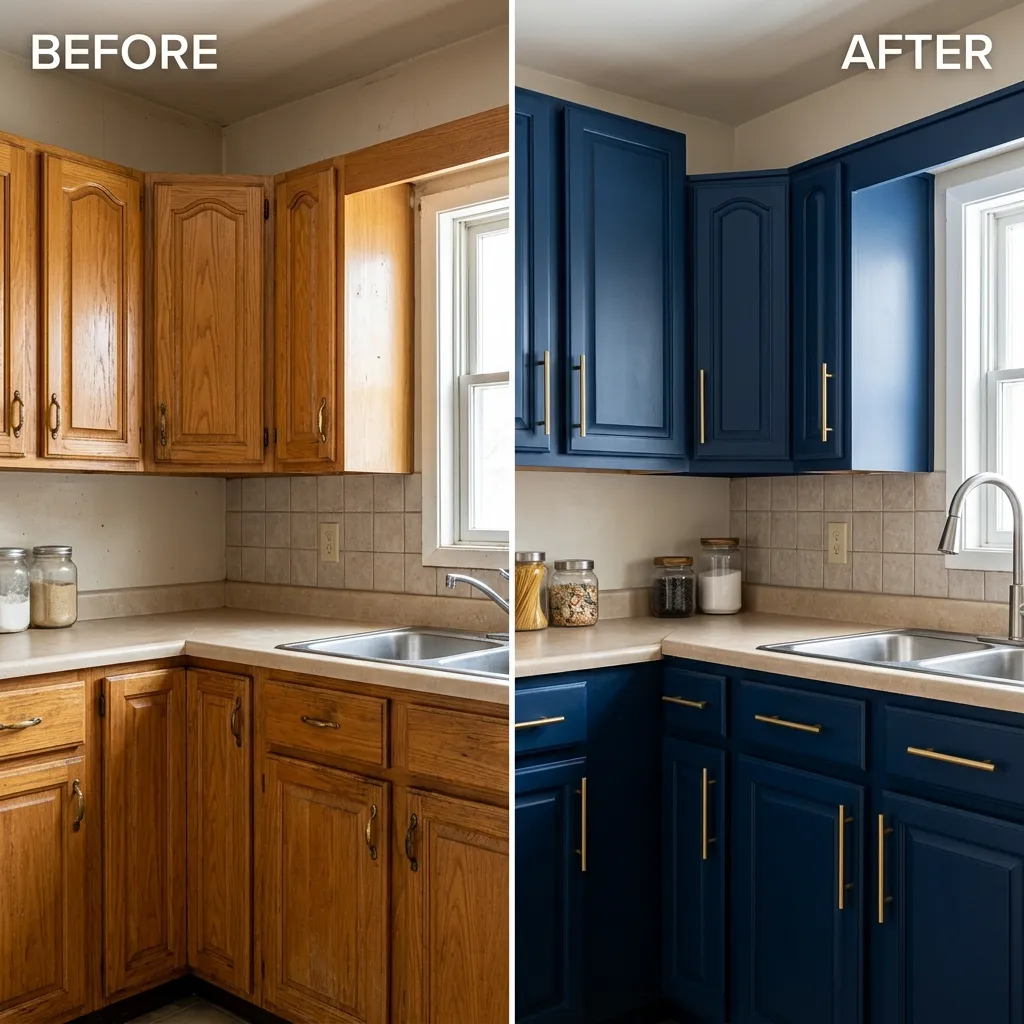
- Navy blue lowers + white uppers — a classic, slightly nautical-leaning pairing
- Charcoal lowers + warm white uppers — modern and sophisticated without feeling cold
- Navy island + light gray perimeter — a subtler, more monochrome-leaning two-tone approach
- Charcoal lowers + light wood uppers — mixes color with material for extra texture
- Navy lowers + brass hardware + white uppers — warm metal accents lift the cool navy tone
- Charcoal lowers + glass-front uppers — adds transparency to balance the darker base
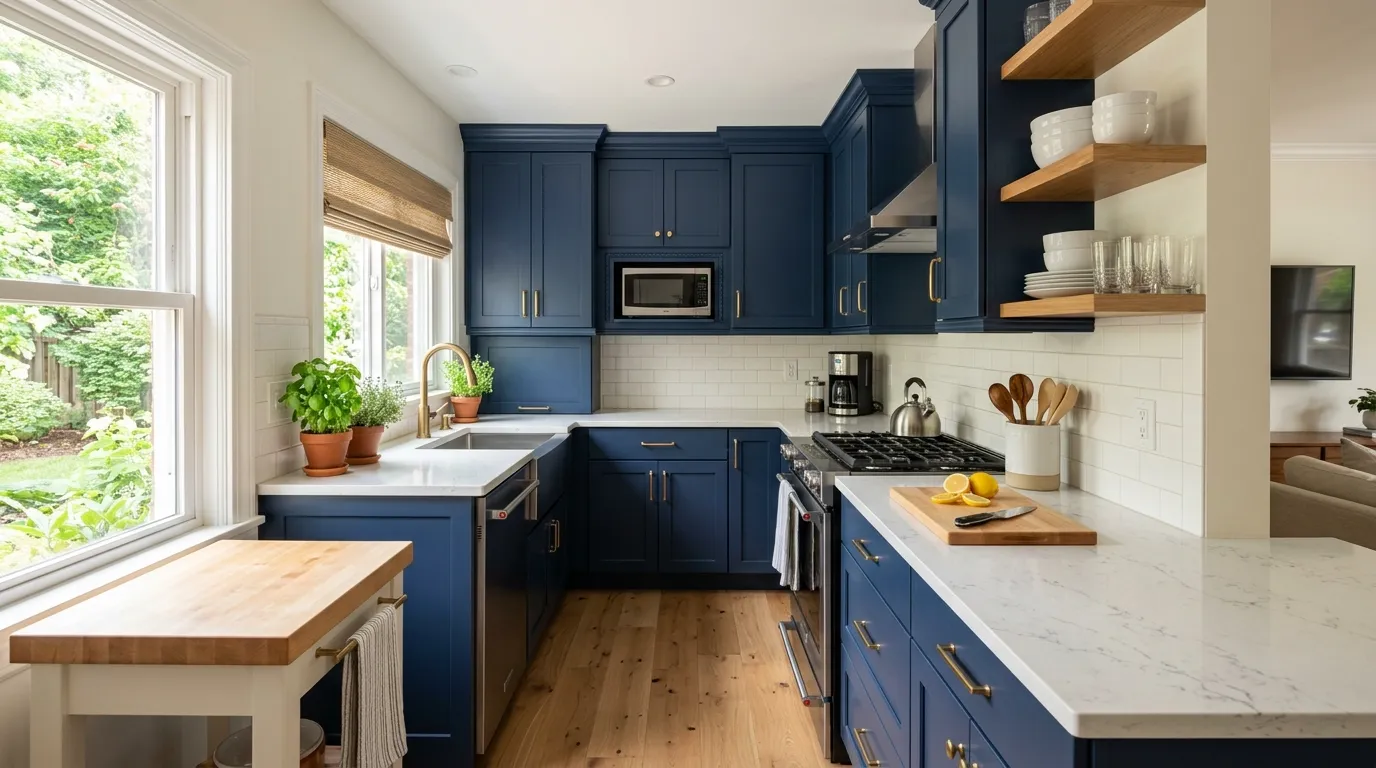
Navy lower cabinets paired with a light countertop and white uppers keep this bold color from overwhelming the room.
Warm & Wood-Tone Combinations (13-18)
- Warm wood lowers + white uppers — a farmhouse-leaning, natural take on two-tone
- White lowers + wood-tone uppers — flips the usual formula for a lighter, airier feel
- Terracotta lowers + cream uppers — a warm, Mediterranean-inspired pairing
- Two-toned wood cabinets — light oak uppers with a richer walnut lower run
- Warm gray lowers + light wood open shelving — combines neutral color with natural texture
- Cream lowers + wood island — a soft, understated version of two-tone
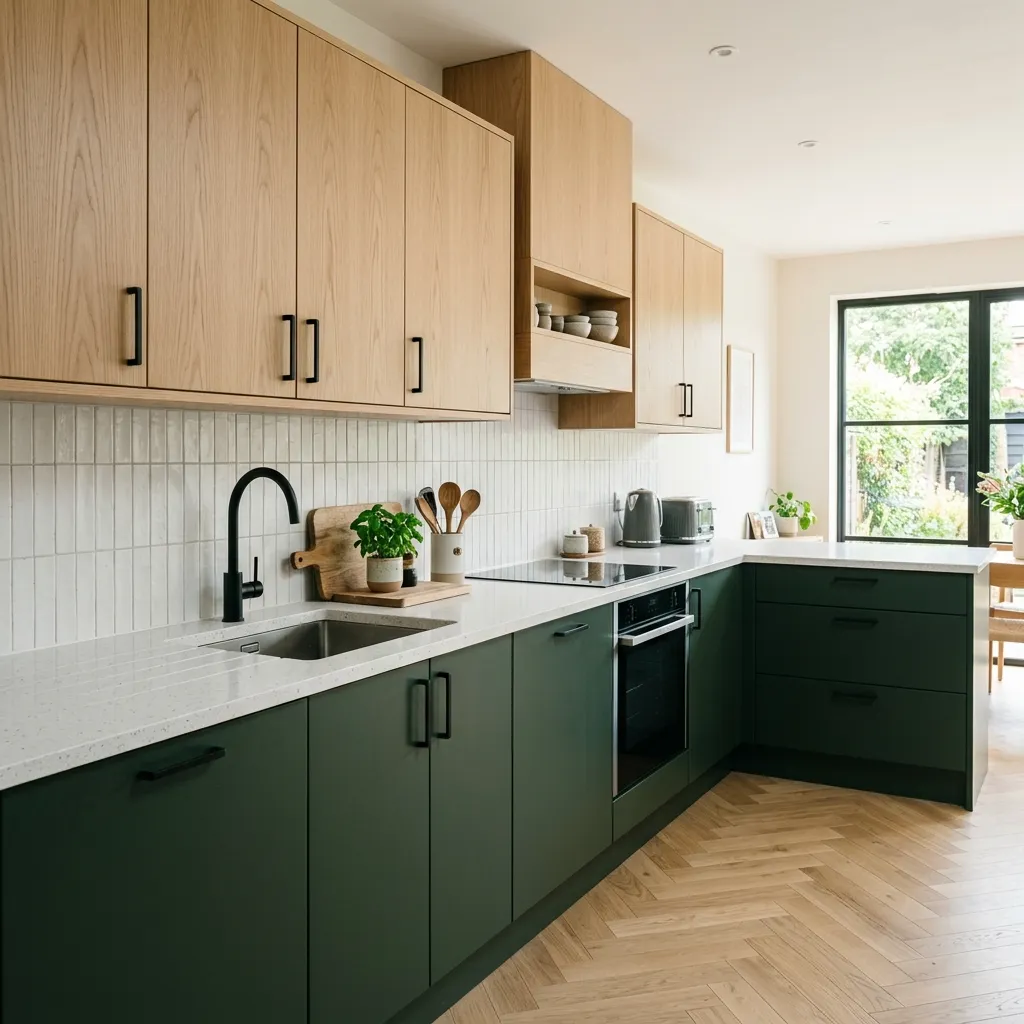
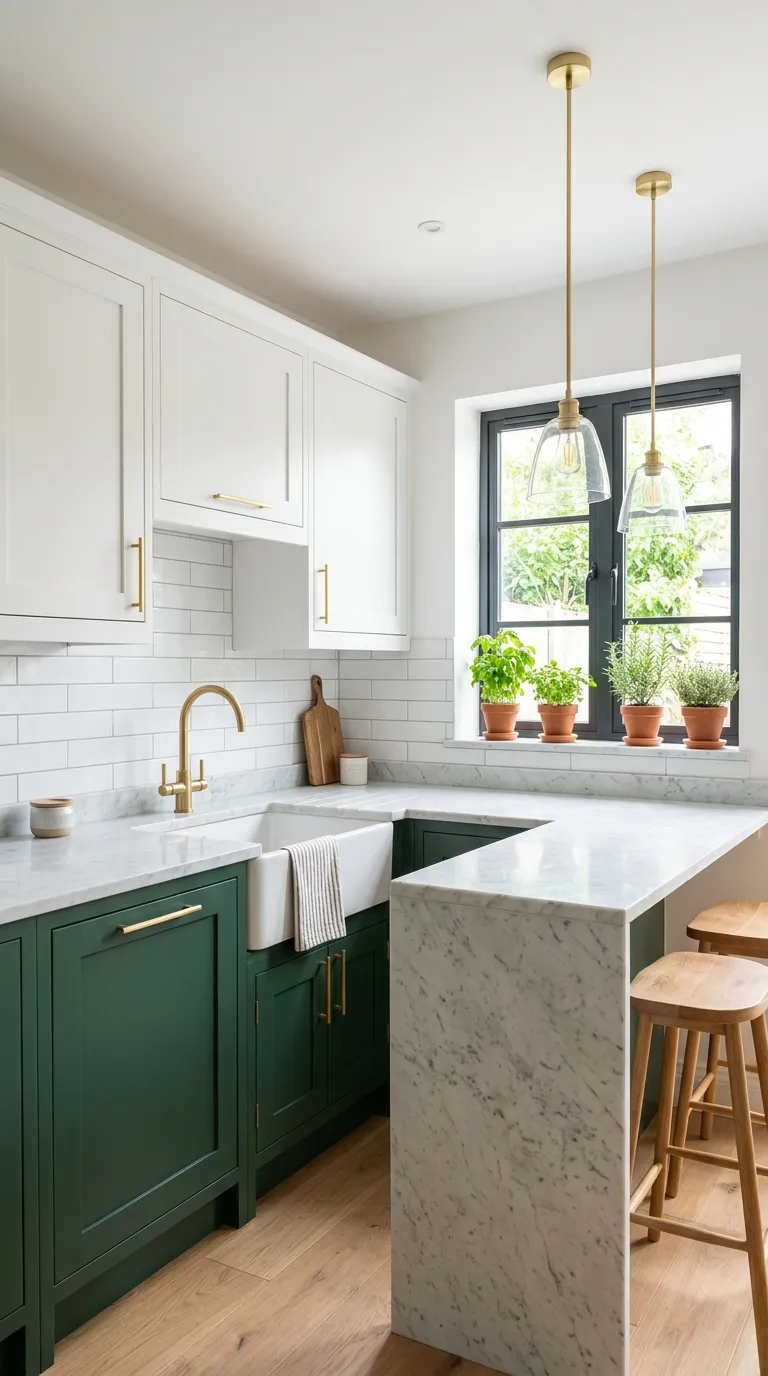
Mixing wood tones is a warmer, more understated take on the two-tone cabinet trend.
Bold & Unexpected Combinations (19-25)
- Black lowers + white uppers — a high-contrast, graphic look
- Deep emerald lowers + blush uppers — an unexpected, jewel-toned pairing
- Terracotta lowers + charcoal uppers — an earthy, moody combination
- Two-tone with a color-matched backsplash bridge — a backsplash that pulls both tones together visually
- Mismatched island color as a bold third accent against a two-tone perimeter
- Ombré-style gradient cabinets — a subtle blend between the two tones rather than a hard line
- Two-tone with mixed metal hardware — brass on the dark half, matte black on the light half, for a layered look
Mistakes to Avoid
- Choosing two competing bold colors instead of one bold tone paired with a neutral
- Mismatched hardware finishes without any intentional pattern, which can look accidental rather than designed
- Splitting the tones in an awkward place — the transition usually looks best at the base-to-upper cabinet line, not mid-cabinet
- Ignoring the countertop and backsplash when choosing colors — they need to bridge both tones, not clash with either
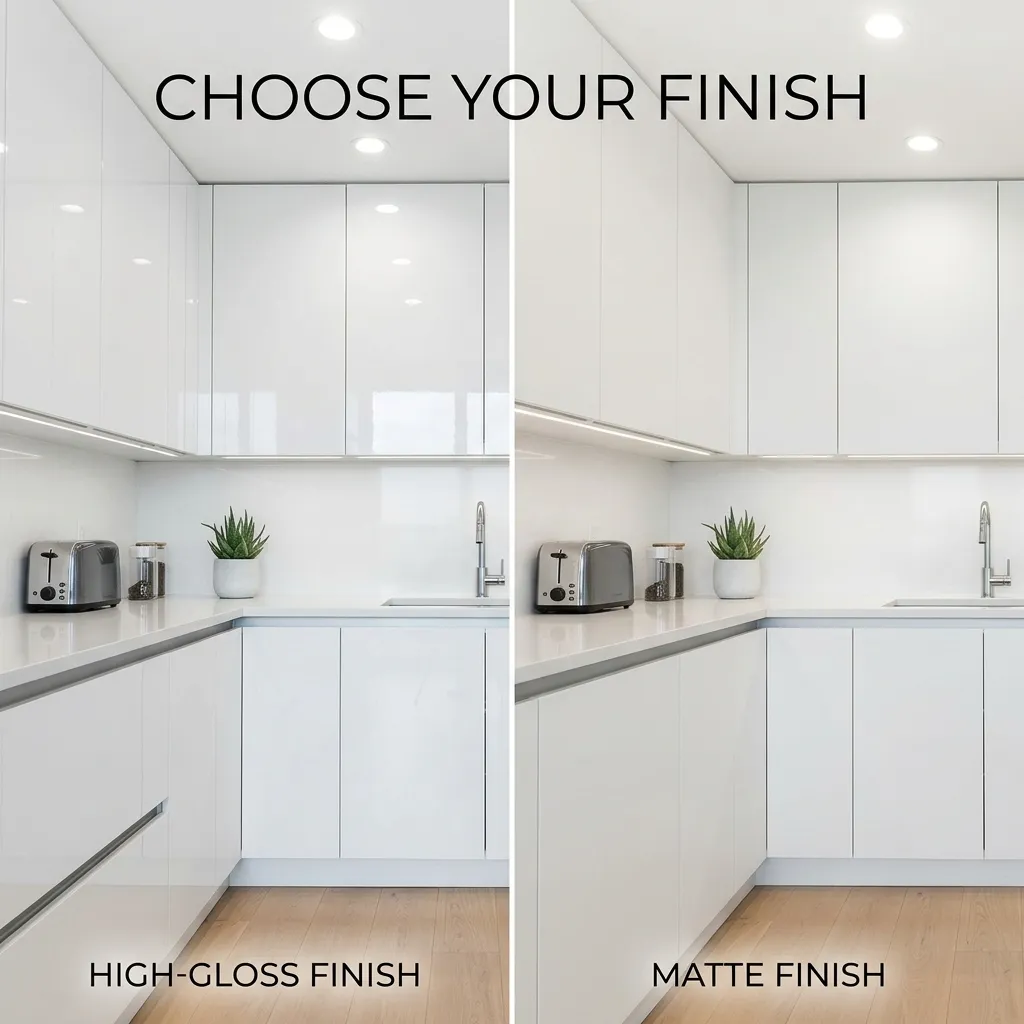
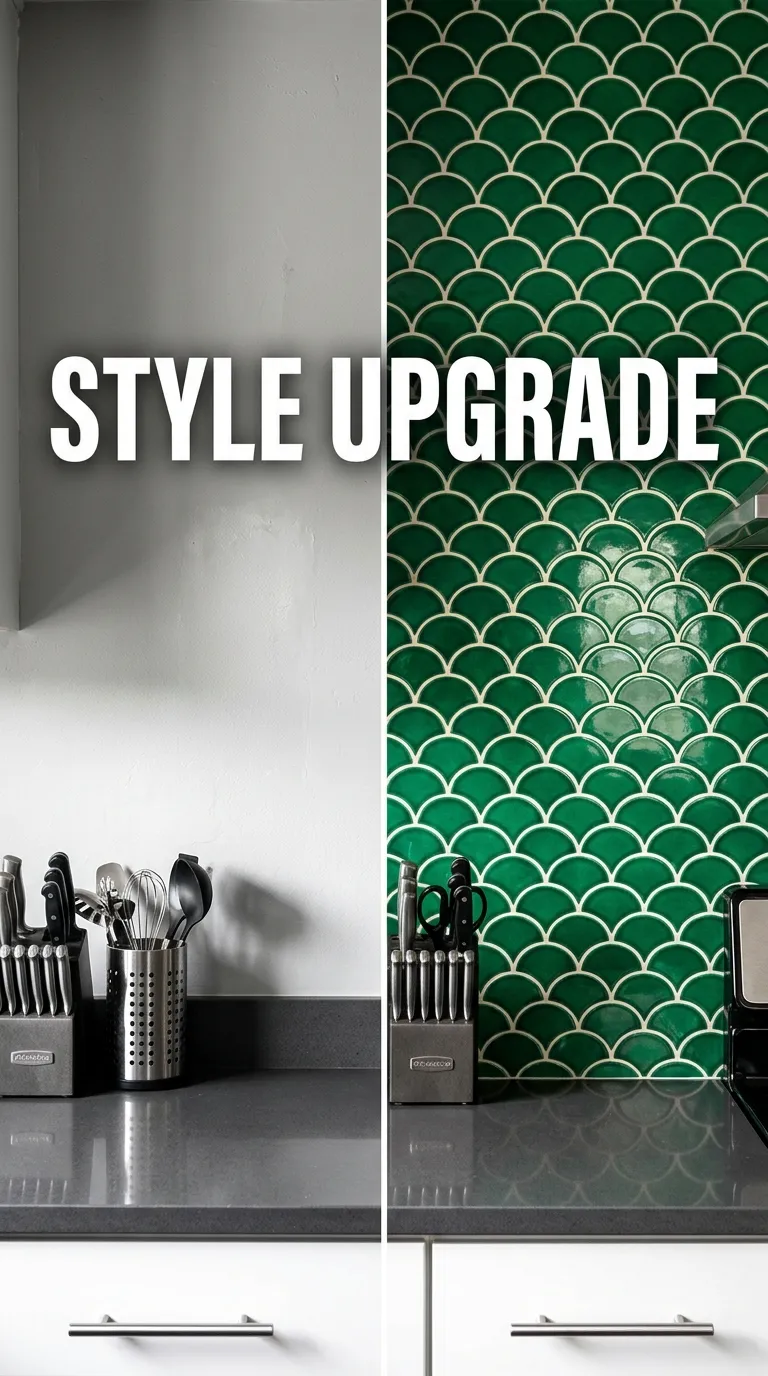
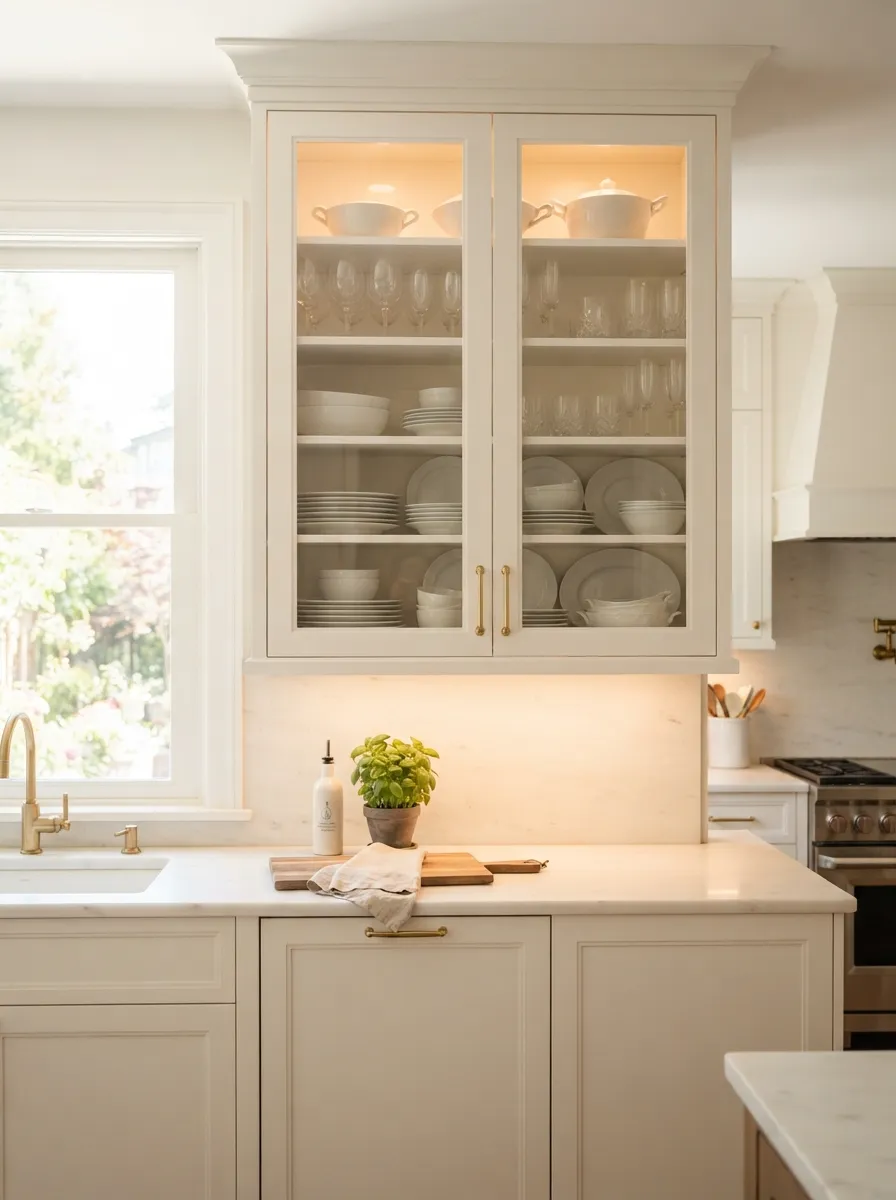
Comparing finishes side by side before committing helps avoid a mismatched, unintentional-looking result.

Frequently Asked Questions
A two-tone kitchen pairs two different cabinet colors, typically a darker tone on the lower cabinets and a lighter tone on the upper cabinets, to add depth without darkening the whole room.
Forest green lower cabinets paired with white uppers is currently one of the most popular two-tone combinations for small kitchens.
Yes, as long as the lighter tone stays on the uppers or walls to keep the ceiling line open — an all-dark two-tone scheme in a very small kitchen can still feel heavy.
If you’re unsure about committing, start with just an island or a single lower cabinet run in the darker tone — it’s easier to expand later than to undo a full repaint.
Consistent hardware across both tones usually looks most cohesive, though intentionally mixing metals (like brass on the dark half and black on the light half) can also work well if done deliberately.
Two-tone cabinetry has remained popular across multiple design cycles because it’s a flexible, timeless technique rather than tied to one specific color trend — the color pairing may shift, but the concept endures.
Two Colors, One Cohesive Look
Two-tone cabinetry gives a small kitchen personality without the visual weight of an all-dark palette. Start with a combination that matches your existing countertop and flooring, keep hardware intentional, and don’t be afraid to start small with just an island before committing to a full repaint.
Explore More Small Kitchen Cabinet Ideas