How Home Insurance Views Small Kitchen Renovations
Quick Answer
Home insurers view a small kitchen renovation mainly as a change in replacement cost: new cabinets, counters, and built-in appliances cost more to rebuild, so your dwelling coverage may need to increase. They also see the project itself as a temporary risk from contractors, open walls, and water, electrical, or gas work. Tell your insurer before you start, then update your coverage when the work is done.
A kitchen renovation can be one of the best investments in a home, but it also changes what your home insurance needs to cover. The cabinets, countertops, flooring, and built-in appliances you install may cost far more to replace than the ones they replaced, and your policy was priced on the old kitchen. This guide explains how home insurance companies look at small kitchen renovations, which projects usually need a call to your insurer, what coverage matters during construction, how your premium may change, and how to document the work so a future claim goes smoothly. It describes typical US homeowners policies; terms differ by insurer, policy, and state, so treat it as general information, not insurance advice.
Quick Takeaways
- Insurers mainly care about two things: the higher cost to rebuild your home with the new kitchen, and the added risk while work is in progress
- Notify your insurer before a significant renovation starts, and again after it finishes
- Your dwelling coverage limit may need to go up, which can raise your premium
- Safety upgrades such as new wiring, plumbing, or leak sensors may help offset costs; ask about discounts
- Check that your contractor carries their own liability and workers’ compensation insurance
- Keep photos, receipts, and permits, because they speed up any future claim
- If you don’t update your coverage, you may be underinsured, and in worst cases a claim could be reduced or denied
What’s In This Guide
- How Insurers Look at a Kitchen Renovation
- Why Small Kitchens Are Different
- Which Projects Usually Need a Call to Your Insurer
- Coverage That Matters Before, During and After
- A Before, During and After Checklist
- What Happens to Your Premium
- What Happens If You Don’t Tell Your Insurer
- DIY Remodels, Condos and Rentals
- Questions to Ask Your Agent
- Frequently Asked Questions
How Insurers Look at a Kitchen Renovation
Insurers don’t care about style; they care about cost and risk. A small kitchen renovation raises three questions in an underwriter’s mind.
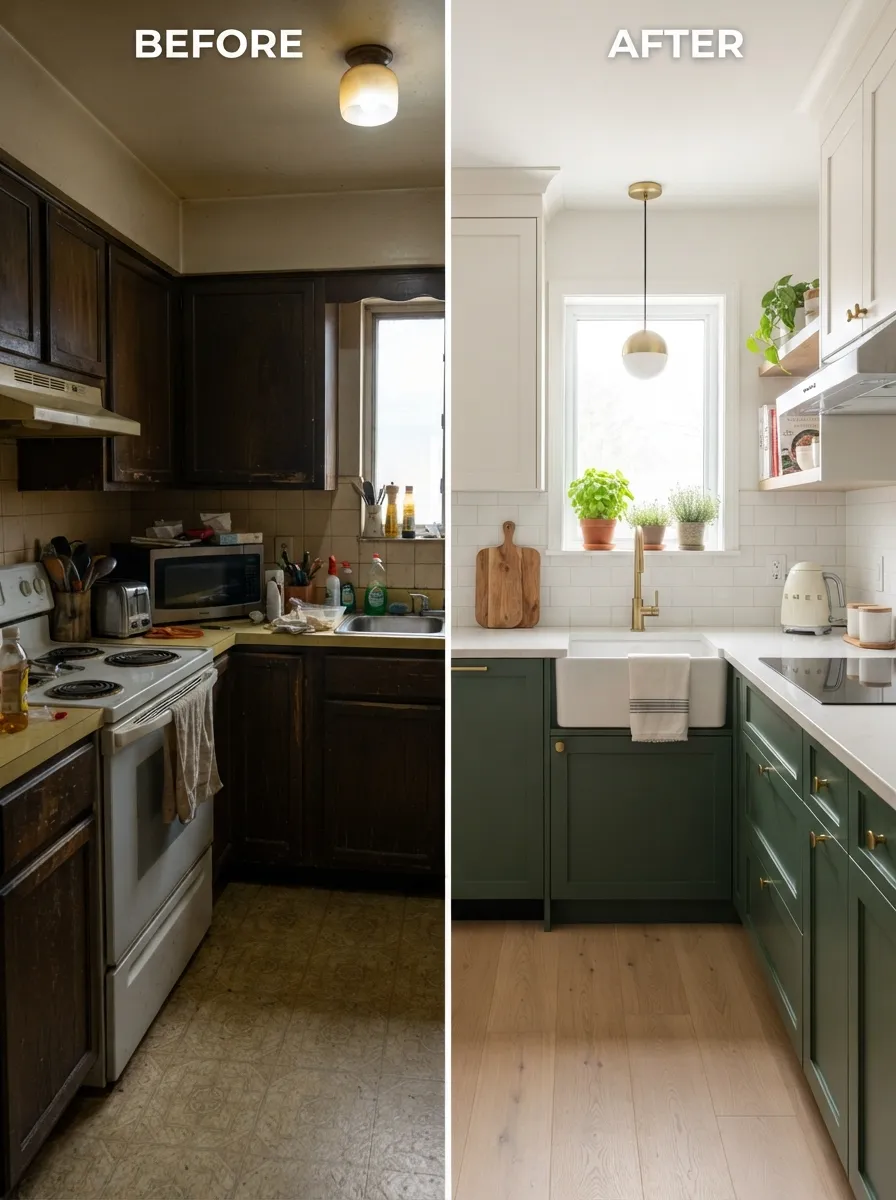
- What would it cost to rebuild? Your dwelling coverage is based on the estimated cost to rebuild your home with similar materials and quality. Upgrading cabinets, counters, and appliances can raise that figure. For example, if a home is insured for $300,000 and a renovation adds $30,000 to its replacement cost, an insurer may recalculate the dwelling limit to $330,000. This is an illustration, not a quote.
- What could go wrong during the work? A renovation brings contractors, tools, open walls, temporary wiring, and plumbing or gas changes. A fire, water leak, or injury during construction is a more likely event than in a finished kitchen, and insurers know it.
- Is the house safer or riskier afterward? New wiring, updated plumbing, GFCI outlets, leak shut-off valves, and modern appliances can lower risk. Poorly done or unpermitted work can increase it.
Why Small Kitchens Are Different
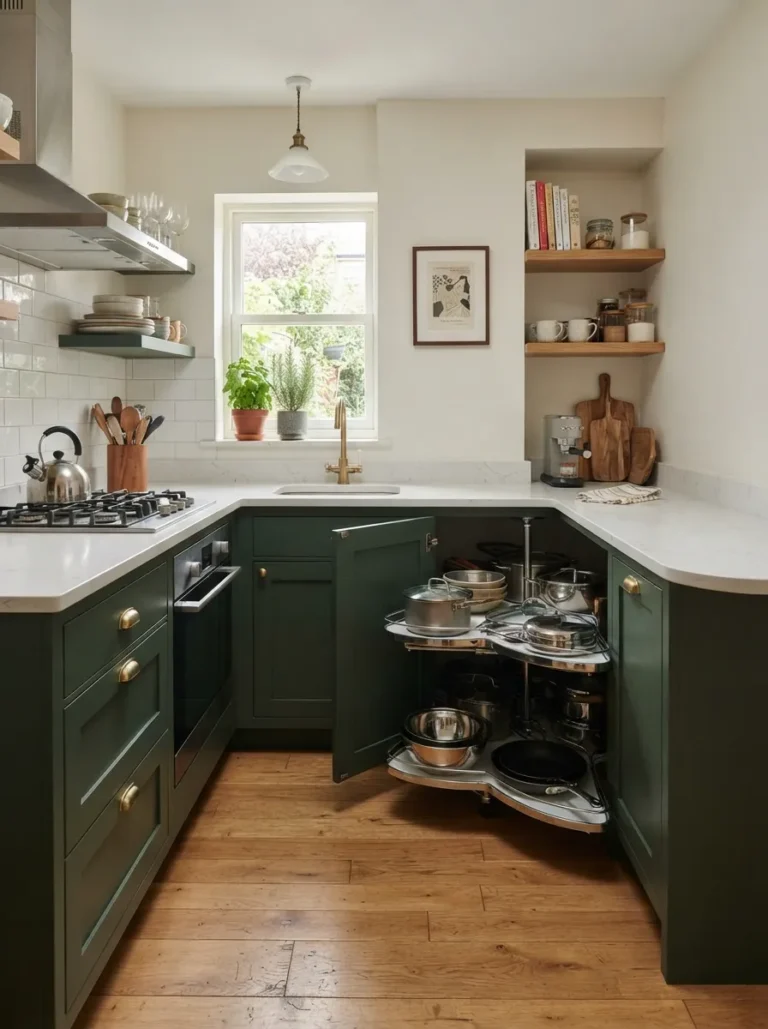
A small kitchen packs a lot of expensive, permanent items into very little floor space: cabinets, countertops, a sink, a range, a refrigerator, and plumbing and electrical connections. That has three insurance implications.
High cost per square foot. Because insurers’ estimates for a home can be influenced by square footage, a compact kitchen with premium finishes may be undervalued in a general estimate. If you upgraded to quartz, custom cabinets, or high-end built-ins, tell your insurer the specifics, not just the room size.
Fire risk is real. According to National Fire Protection Association (NFPA) data for 2013 to 2017, cooking was the leading cause of reported home fires and home fire injuries in the United States, accounting for 49 percent of reported home fires. In a tight kitchen, where a stovetop sits close to cabinets and a microwave, safe wiring, clearances, and ventilation matter even more.
Water damage is common. A new sink, dishwasher, or ice-maker line adds supply and drain connections. Leak detectors and braided supply lines are inexpensive upgrades that insurers appreciate.
Which Projects Usually Need a Call to Your Insurer
| Project | Likely insurance impact | Call your insurer? |
|---|---|---|
| Paint, hardware, new faucet, or a backsplash refresh | Little to none | Usually not, but check if it’s part of a larger project |
| Replacing appliances like for like | Minimal | Usually not; update if you’re moving to high-end built-ins |
| New cabinets, countertops, and flooring | Higher replacement cost | Yes, before you start |
| Layout change that moves plumbing, gas, or electrical | Higher cost and construction risk; permits likely | Yes, before you start |
| Removing or opening a wall | Structural and cost changes | Yes, before you start |
| Electrical panel upgrade or rewiring | May lower risk and may qualify for a discount | Yes, ask about a discount |
| Adding leak sensors or an auto shut-off valve | May lower water-damage risk | Yes, ask about a discount |
One rule of thumb from consumer renovation guides is to notify your agent for changes worth roughly $5,000 or more. Treat it as a minimum prompt to call, not a legal threshold; your policy and insurer decide.

Coverage That Matters Before, During and After
Dwelling coverage (Coverage A). Covers the structure and attached items, including built-in cabinets, countertops, and fixtures. This is the limit that most often needs to rise after a kitchen renovation.
Personal property coverage. Covers movable items such as freestanding appliances, small appliances, cookware, and furniture. If you buy expensive freestanding appliances, check your limits and any sub-limits.
Liability coverage. Protects you if someone is injured on your property. Renovation can change liability risk, especially if you do the work yourself or use unlicensed workers.
Loss of use (additional living expenses). Pays for temporary living costs if a covered loss makes your home unlivable. Ask how it interacts with a renovation in progress.
Renovation or “dwelling under construction” coverage. Some insurers offer an add-on for a home under renovation, for an extra premium. Ask whether you need one, especially if the project is large or a contractor will be working while you’re away.
Vacancy or unoccupied-home provisions. Many policies reduce or limit coverage if a home sits vacant or unoccupied for an extended period, often 30 to 60 days or more depending on the policy. If you move out during a renovation, ask your insurer how it counts and whether a separate vacant-home policy is required. If you buy a separate policy, make sure there is no gap between coverages.
Contractor insurance. A licensed contractor should carry their own general liability and workers’ compensation insurance. Ask for a certificate of insurance and verify it with the issuing company.
💡 Pro Tip: Keep your regular homeowners policy in force during the renovation, and ask your agent in writing which additional coverage is needed. Don’t cancel or pause a policy unless you have confirmed the new coverage starts the same day.
A Before, During and After Checklist
Before the Work Starts
- Call your insurer or agent. Describe the scope, budget, timeline, and whether you’ll live in the home.
- Ask about coverage. Raise dwelling limits, renovation coverage, vacancy rules, and liability.
- Vet your contractor. Confirm the license, ask for a certificate of insurance, and get a written contract.
- Pull permits. Permits help protect you if a claim later involves electrical, plumbing, or structural work.
- Take “before” photos. Photograph the existing kitchen, appliances, and finishes from several angles.
During the Work
- Keep records. Save invoices, change orders, material spec sheets, and receipts.
- Photograph progress. Capture open walls, new wiring, and plumbing before they’re covered.
- Protect valuables. Move or store belongings and appliances you don’t want damaged.
- Check the fire plan. Make sure smoke alarms and a fire extinguisher stay functional, and keep temporary electrical and heat sources safe.
After the Work Is Done
- Notify your insurer. Give them the final cost and the finishes you chose.
- Update your home inventory. Add new appliances and fixtures with model numbers and receipts.
- Review your policy. Confirm your dwelling limit, deductibles, and any new endorsements.
- Ask about discounts. Mention new wiring, plumbing, leak detection, and monitored smoke alarms.
- Store documents safely. Keep digital copies of photos and receipts outside the house.
What to Tell Your Insurer
A short, specific message avoids back-and-forth. Include these details:
- The scope of work (cabinets, counters, appliances, flooring, layout changes)
- The estimated cost and start and finish dates
- Whether plumbing, gas, or electrical work will be moved or replaced
- The contractor’s name, license, and insurance details
- Whether you’ll live in the home during the work
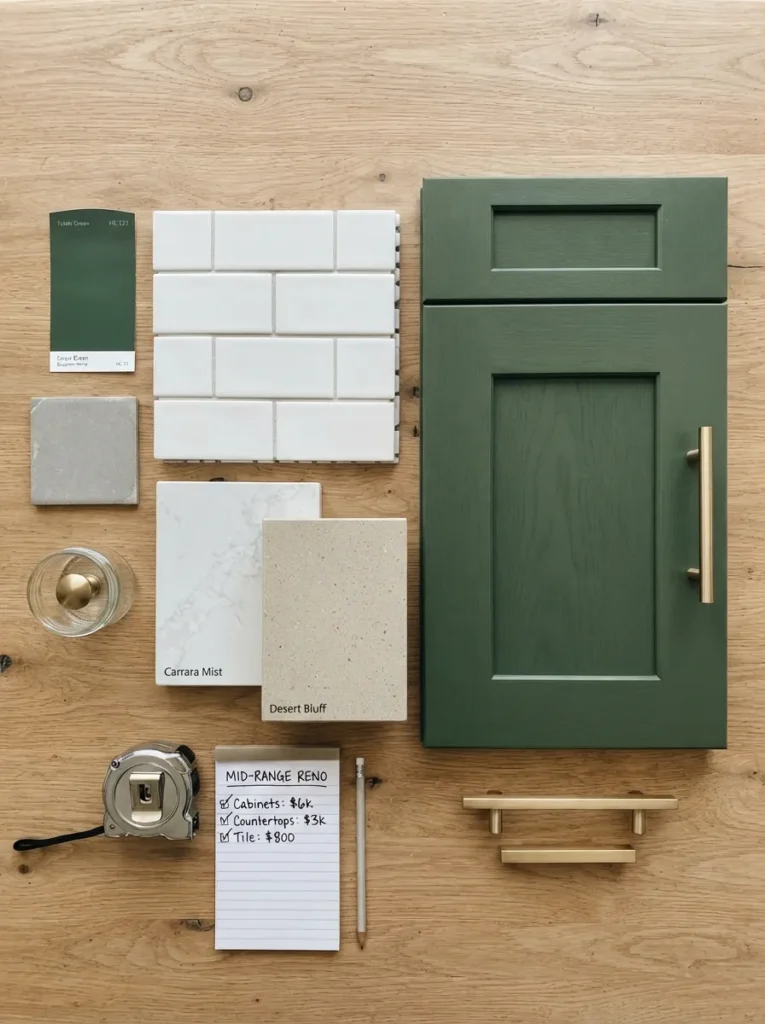
- The materials you’re using (for example, quartz or laminate, custom or stock cabinets)
- Whether permits are being pulled
What Happens to Your Premium
A renovation can raise your premium because a higher dwelling limit means a higher replacement cost for the insurer to cover. Costly materials such as stone countertops tend to push replacement cost up more than basic ones. But the outcome isn’t always an increase. A remodel doesn’t always raise your bill, and safety-related upgrades such as updated wiring or leak protection can help lower risk and may earn discounts. The only way to know is to ask. If your insurer quotes a large increase, compare quotes from other companies, and ask each about discounts for the upgrades you made.
What Happens If You Don’t Tell Your Insurer
If you renovate and say nothing, the insurer’s file still describes your old kitchen. In a loss, the payout is limited by your policy’s coverage limit, which may not account for the upgrades. Here is a simple hypothetical: your kitchen upgrade adds $25,000 in cabinets, counters, and appliances, but your dwelling limit stays where it was. After a major fire, the money available to rebuild may fall short of the real cost, depending on your policy terms and whether it includes extended or guaranteed replacement cost. Some insurers warn that failing to disclose a renovation can, in the worst case, lead to a reduced or denied claim. Whether that happens depends on your policy and your insurer, which is why a short call beforehand is cheap protection.
DIY Remodels, Condos and Rentals
DIY remodels. When you do the work yourself, you generally carry more personal liability, since there’s no contractor’s insurance behind the project. Tell your insurer, and be especially careful with electrical, gas, and plumbing work, which may require permits and licensed professionals in your area.
Condo owners. Your association’s master policy typically covers the building structure, while your own policy (often an HO-6) covers interior finishes and improvements. Review what your policy treats as “improvements,” and update limits after a renovation.
Renters. A renters policy generally covers your belongings and liability, not the landlord’s fixtures. Get written permission from your landlord before altering a kitchen, and ask your insurer whether any improvements you pay for are covered.
Questions to Ask Your Agent
- Will my dwelling coverage limit change after this renovation, and by how much?
- Do I need renovation or dwelling-under-construction coverage for this project?
- What happens to my coverage if I move out during the work?
- Is my contractor’s insurance enough, or do I need additional coverage?
- What discounts apply for new wiring, plumbing, or leak detectors?
- Does my policy include extended or guaranteed replacement cost?
- Do I need to provide receipts or photos after the work is finished?
Common Mistakes to Avoid
Waiting until after the renovation to call. Early communication lets your insurer recommend the right adjustments and tell you about any monitoring or discounts.
Hiring an uninsured contractor. If a worker is injured or the contractor causes damage, you could be left holding the bill.
Cancelling your policy during the work. A gap in coverage is the most expensive mistake on this list.
Skipping permits. Unpermitted work can complicate claims and a future home sale.
Not updating your inventory. New appliances and finishes are easy to forget, and hard to prove without records.
Underestimating small kitchen costs. Compact kitchens often cost more per square foot than people expect, and your coverage should reflect that. See our guide to small kitchen remodel designs for how costs break down.
Frequently Asked Questions
Does a kitchen renovation affect home insurance?
Yes. A renovation can raise your home’s replacement cost, which may mean a higher dwelling coverage limit and premium. It also adds temporary risk during construction. Notify your insurer before you start and after you finish.
Do I need to tell my insurance company about a kitchen remodel?
For significant work such as new cabinets, counters, or layout changes, yes, you should. Minor cosmetic updates such as paint usually don’t require a call, but check with your insurer if you’re unsure.
Will my home insurance premium go up after a small kitchen remodel?
It may, because higher-quality materials raise your home’s replacement cost. But safety upgrades such as new wiring or leak protection may help offset the increase. Ask your insurer for a quote and about discounts.
Does homeowners insurance pay for a kitchen renovation?
Generally no. Homeowners insurance covers damage from covered events, such as fire, not planned improvements. A policy may cover damage that happens during the renovation, depending on its terms.
Do I need builder’s risk or renovation insurance?
It depends on the project size and your insurer. Some insurers offer a dwelling-under-construction add-on for an extra premium. Ask whether your policy and your contractor’s insurance already cover the work.
What if my contractor damages my home or gets hurt?
A licensed contractor should carry general liability and workers’ compensation insurance. Ask for a certificate of insurance before work starts. Without it, you may bear more of the risk.
Do I need to tell my insurer if I only replace appliances?
Usually not for like-for-like replacements. If you’re upgrading to much more expensive built-in appliances, update your coverage and your home inventory.
Can I do the kitchen remodel myself and still be covered?
You’re generally still covered for the covered perils, but your personal liability may be greater without a contractor’s insurance. Tell your insurer and follow permit rules for electrical, gas, and plumbing work.
What if I move out during the renovation?
Vacancy and unoccupied-home clauses may limit coverage after a certain period, often 30 to 60 days or more depending on the policy. Tell your insurer before you move out so they can advise you.
What documents should I keep from my renovation?
Keep before and after photos, contracts, invoices, permits, material spec sheets, and appliance receipts with model numbers. Store copies off-site or in the cloud.
Related Pages
Small Kitchen Remodel Designs
What to prioritize and what to skip when remodeling a compact kitchen.
Small Kitchen Cabinet Design
Cabinet choices are often the biggest cost driver in a small remodel.
Small Kitchen Layout Ideas
Layout changes that move plumbing or gas affect both budget and insurance.
Backsplash Designs for Small Kitchens
Low-risk cosmetic updates that usually don’t require an insurance call.
Final Thought
Insurers look at a small kitchen renovation through two lenses: what it would cost to rebuild afterward, and what could go wrong while the work is under way. The fix for both is simple. Call your insurer before you start, ask the specific questions above, choose a licensed and insured contractor, keep good records, and update your coverage when the kitchen is finished. A short phone call now can save you from a very expensive surprise after a loss.
Planning your remodel budget? See Small Kitchen Remodel Designs
This article is general information, not insurance, legal, or financial advice. Policies differ by insurer and location, so confirm details with your insurance agent or provider.
Sources
- Policygenius, Does Homeowners Insurance Cover Renovations: https://www.policygenius.com/homeowners-insurance/does-homeowners-insurance-cover-renovations/
- Insurify, Does Homeowners Insurance Cover Home Improvements: https://insurify.com/homeowners-insurance/knowledge/home-improvements/
- Insurance.com, How Does Renovating Affect Homeowners Insurance: https://www.insurance.com/home-and-renters-insurance/home-renovation/how-renovations-affect-your-insurance.html
- AAA Northeast, 5 Types of Home Updates and How They Impact Your Insurance: https://magazine.northeast.aaa.com/?p=218289
- The Boston Globe, Renovating? Why your insurance needs an update, too: https://www.bostonglobe.com/2021/01/06/real-estate/renovating-why-your-insurance-needs-an-update-too
- HomeStars, Renovations That Can Impact Your Home Insurance Rates: https://www.homestars.com/blog/renovations-impact-home-insurance-rates
- National Fire Protection Association (NFPA), Home Structure Fires and Home Cooking Fires, 2013–2017 data