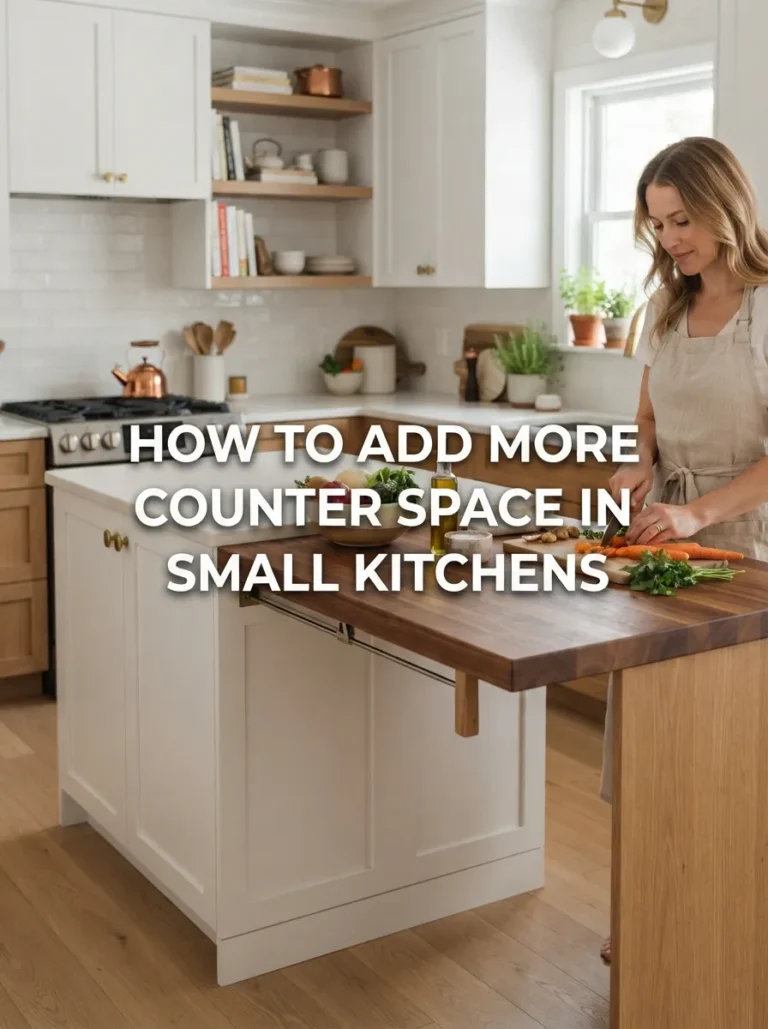
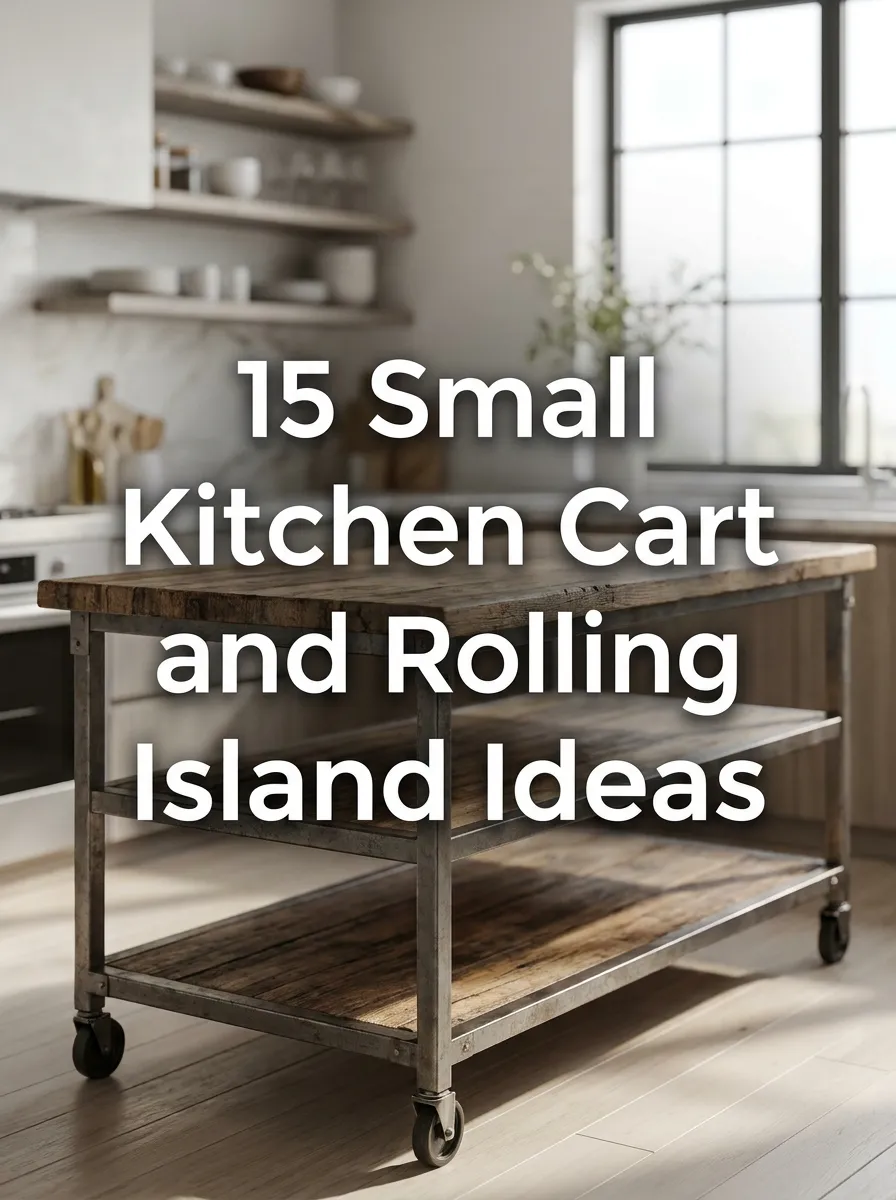
15 Small Kitchen Cart and Rolling Island Ideas
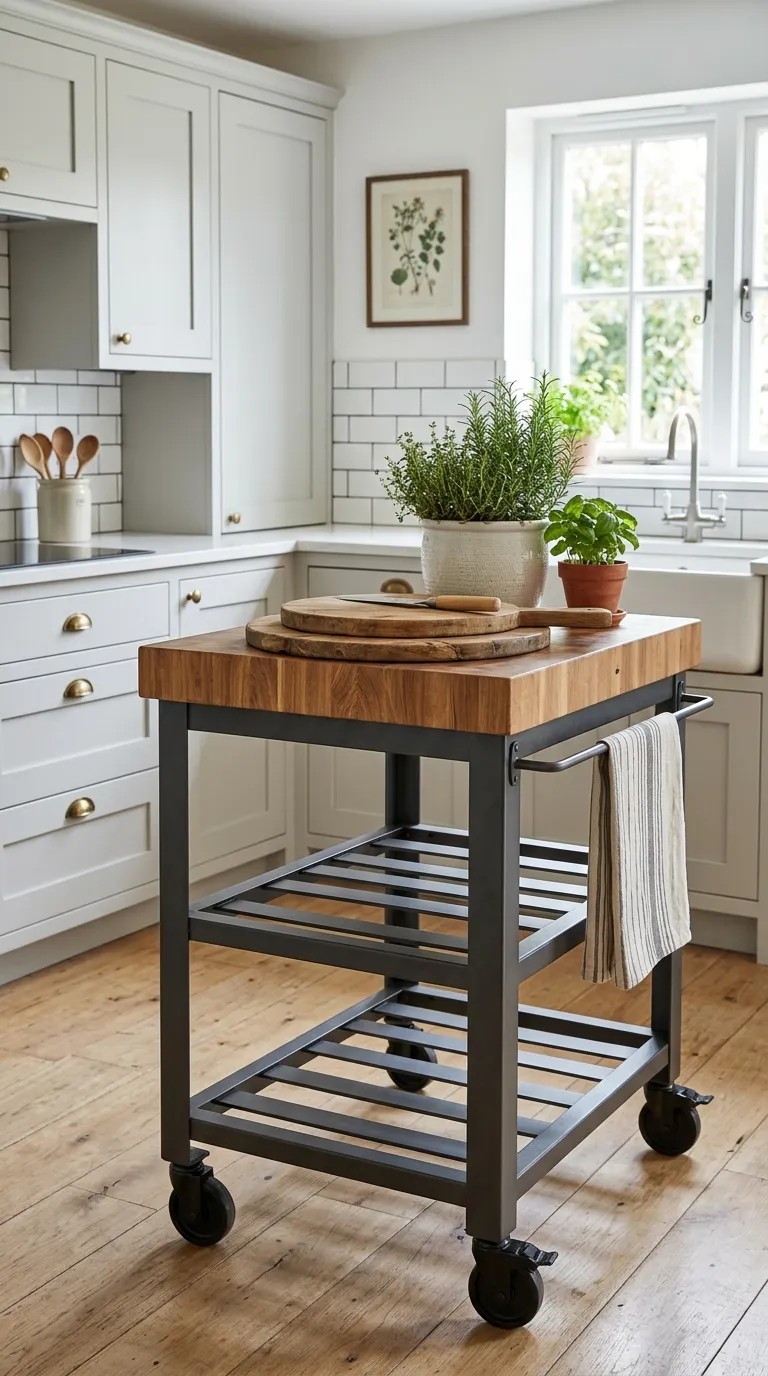
A rolling cart or mobile island solves one of the biggest small kitchen problems — needing more counter space some days and none on others — without committing to a permanent fixture. These 15 small kitchen cart and rolling island ideas cover everything from slim bar carts to full multi-function islands, all designed to roll in when you need them and tuck away when you don’t.
🛒 Quick Takeaways
- A rolling cart adds counter space without the cost or commitment of a built-in island.
- Locking caster wheels are non-negotiable for any cart used as a prep surface.
- Multi-tier carts add storage below the work surface, not just extra counter space.
- Butcher block tops double as both a stylish surface and a functional cutting board.
- A cart under 24 inches wide fits through most standard doorways for true flexibility between rooms.
In This Post
1. Space-Saving Rolling Carts (Ideas 1-5)
These options prioritize a slim footprint, ideal for a small apartment kitchen where floor space is at a premium even when the cart isn’t in use.
- 1. Slim bar cart repurposed as a prep station. A narrow two-tier bar cart under 18 inches wide adds a mobile surface that tucks into a corner when not needed.
- 2. Fold-flat rolling cart. A cart with a drop-leaf top folds down to just a few inches deep for storage against a wall.
- 3. Single-shelf utility cart. A minimalist metal-frame cart with one shelf below adds a mobile surface without visual bulk.
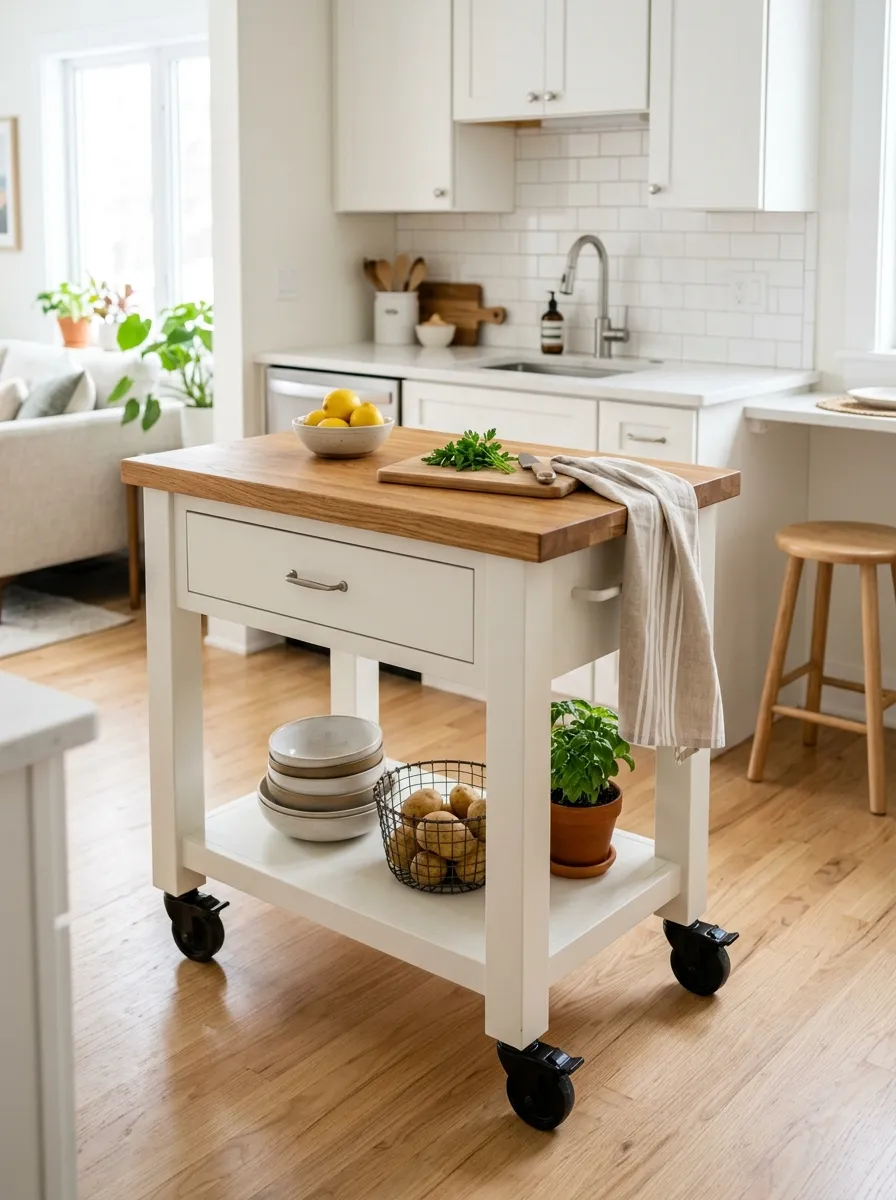
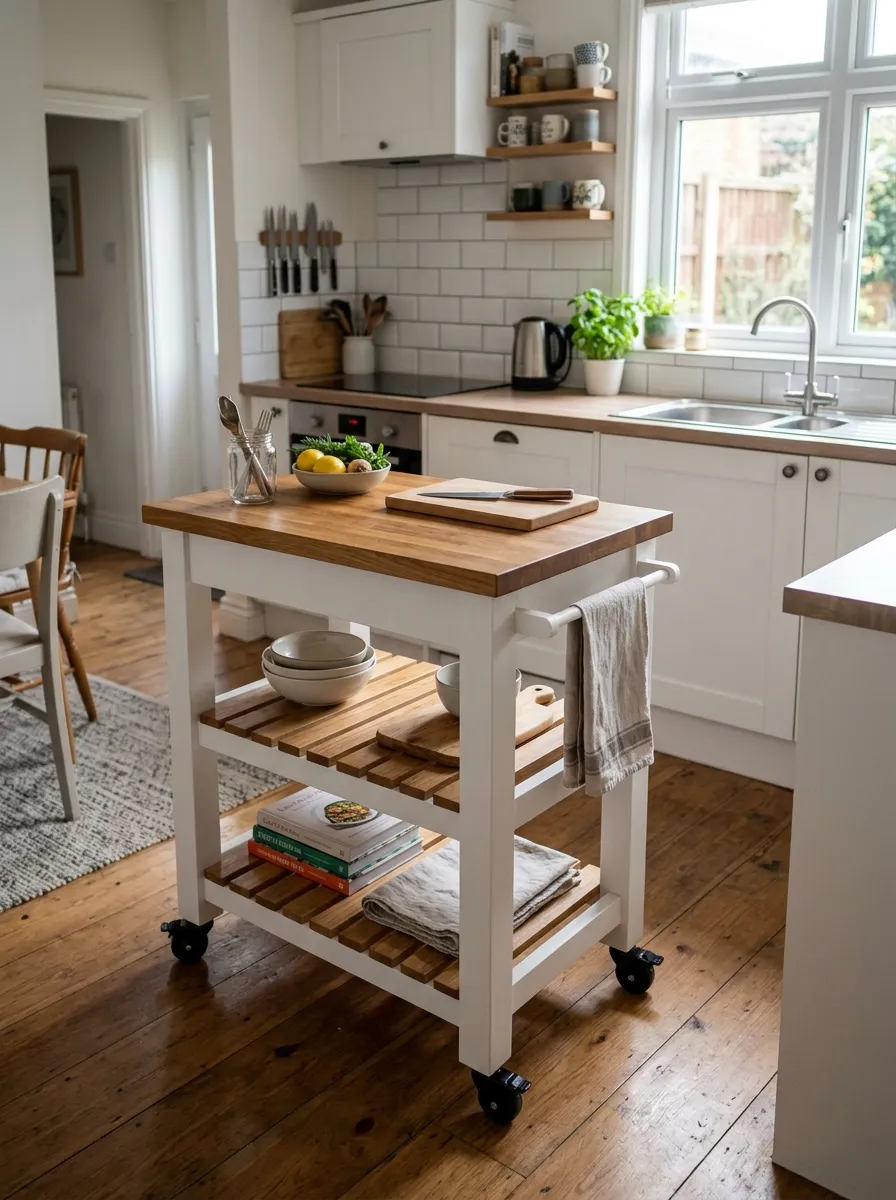
- 4. Narrow butcher block cart. A 16-18 inch wide cart with a solid wood top works as an extra cutting station near the stove.
- 5. Nesting cart set. Two or three carts of graduated sizes nest together when not in use, then separate for extra surface area during meal prep.
2. Multi-Function Mobile Islands (Ideas 6-10)
These larger carts function more like a true kitchen island, just with wheels instead of a fixed base.
- 6. Cart with built-in trash and recycling bins. Pull-out bins built into the base free up a full lower cabinet elsewhere.
- 7. Cart with a fold-out breakfast bar leaf. A hinged extension flips up for extra seating, then folds flat when the space is needed for walking room.
- 8. Cart with built-in wine or bottle storage. A slotted lower shelf holds bottles securely even while the cart is rolling.
- 9. Cart with a towel bar and hook rail. Side-mounted hardware adds functional storage without using the top surface.
- 10. Cart with locking drawer storage. A built-in drawer secures knives or small appliances when the cart moves through a shared space.
3. Style, Material & Storage Add-Ons (Ideas 11-15)
These finishing touches make a rolling cart feel like an intentional design piece rather than a purely functional add-on.
- 11. Marble-top rolling cart. A stone or faux-marble surface elevates the cart’s look enough to double as a serving station for entertaining.
- 12. Two-tone painted cart. A contrasting paint color on the frame versus the shelving adds visual interest without extra cost.
- 13. Cart with a pegboard side panel. A mounted pegboard on one end holds utensils or small tools vertically.
- 14. Vintage-inspired cart with brass casters. Warm metal finishes tie a mobile cart into an otherwise traditional kitchen style.
- 15. Cart topped with a cutting board insert. A removable cutting board that sits flush with the surface protects the cart’s finish during heavy prep.
4. Cart vs. Permanent Island: How to Choose
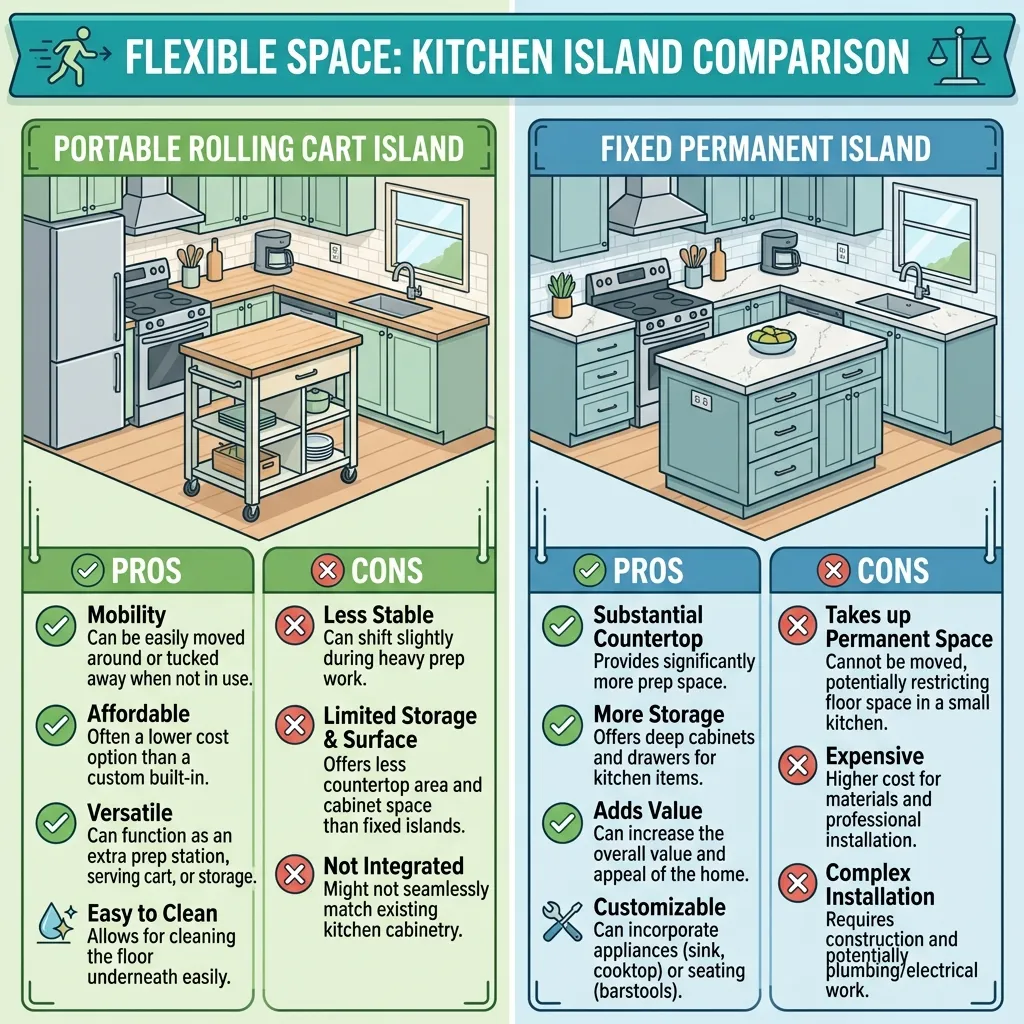
Deciding between a rolling cart and a fixed island comes down to how your kitchen is used day to day, not just its size.
| Factor | Rolling Cart | Permanent Island |
|---|---|---|
| Cost | Lower, often under $300 | Higher, especially with plumbing or electrical |
| Flexibility | Moves or stores away entirely | Fixed in one location |
| Best for renters | Yes, fully portable | Usually not practical |
| Weight capacity | Lower, typically under 150 lbs | Higher, built into structure |
| Best for daily heavy prep | Good for light-to-moderate use | Better for frequent heavy use |
5. Keeping a Rolling Cart Working Long-Term
A few maintenance habits keep a rolling cart functioning as well on day 500 as it did on day one.
- Check caster wheel locks periodically, since they loosen with regular use and rolling weight.
- Wipe down butcher block tops with food-safe mineral oil every few weeks to prevent drying and cracking.
- Avoid overloading the top shelf beyond the manufacturer’s stated weight limit, even briefly.
- Store the cart away from direct stove heat when not in active use to protect finishes and any wood components.
- Tighten shelf brackets and frame joints every few months, especially on carts that move frequently.
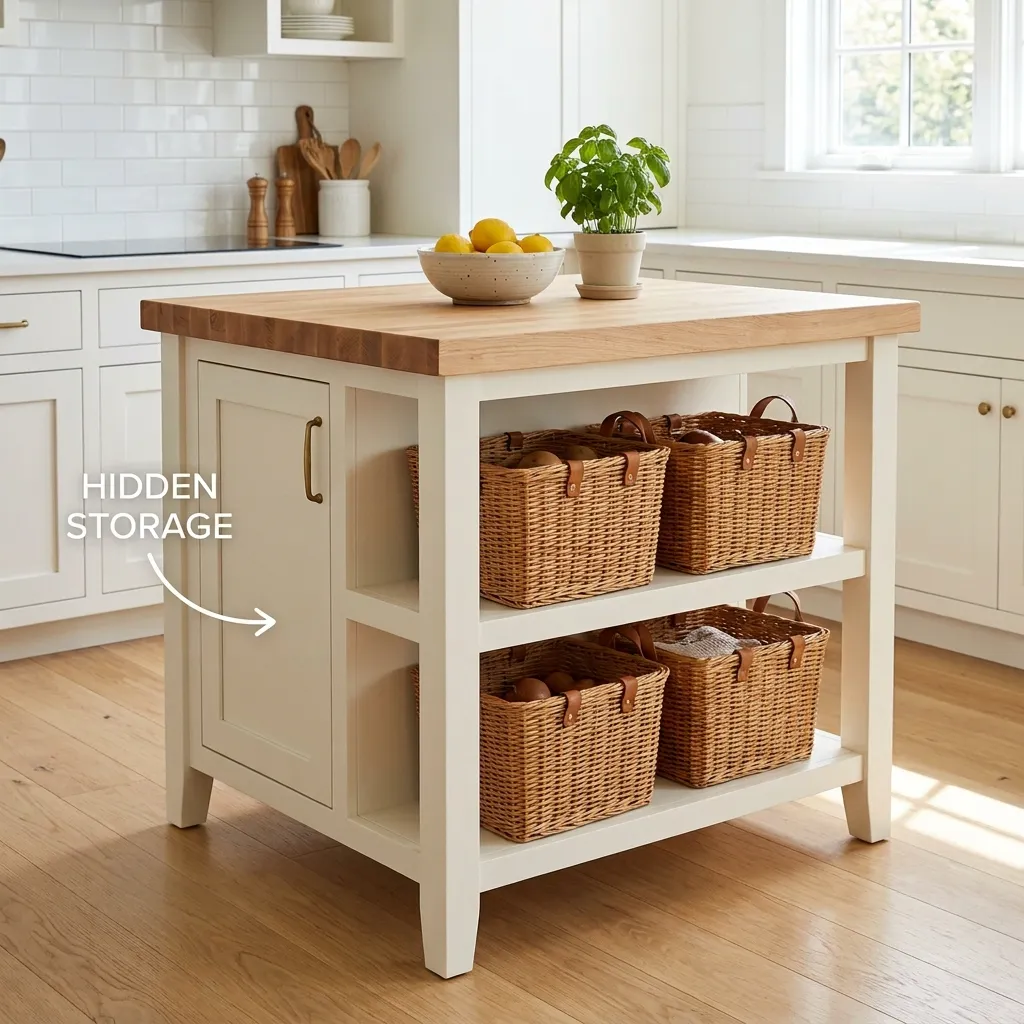
Rolling Cart & Island Gallery
Frequently Asked Questions
Is a rolling cart a good substitute for a kitchen island?
For most small kitchens, yes — a rolling cart adds counter space and storage at a fraction of the cost, though it holds less weight than a built-in island.
What size rolling cart fits in a small kitchen?
Carts between 16 and 30 inches wide fit most small kitchens comfortably, with narrower carts under 24 inches able to pass through standard doorways.
Can a rolling kitchen cart hold a heavy stand mixer?
Check the manufacturer’s weight rating first — most standard carts handle 100-150 lbs total, which comfortably covers a stand mixer plus a few other items.
Are rolling islands good for renters?
Yes, a rolling cart requires no installation and moves with you to a new apartment, making it one of the most renter-friendly ways to add kitchen storage.
How do I keep a rolling cart from sliding around while I’m cooking?
Choose a cart with locking casters and always engage the locks before using it as a stationary prep surface.
What top material is best for a kitchen cart used for food prep?
Butcher block or solid wood tops double as a cutting surface, while stone or laminate tops are better suited to serving and display rather than direct chopping.
Related Pages
Roll In Extra Space When You Need It
A rolling cart or mobile island gives a small kitchen the flexibility a fixed layout can’t — extra counter space on cooking nights, and a clear floor the rest of the time. Start by measuring your tightest doorway and clearest storage spot, then pick a cart style from this list that matches how you actually cook, whether that’s daily heavy prep or occasional entertaining.
For more layout flexibility ideas, see our Kitchen Island Designs guide next.