35 Small Kitchen Drawer Organization Systems
Drawers do more organizational work per square inch than almost any other storage type in a small kitchen, which makes it worth getting the internal layout right. These 35 small kitchen drawer organization systems cover everything from utensil dividers to deep pot drawers and corner solutions, so every drawer earns its keep instead of turning into a junk catch-all.
🗄️ Quick Takeaways
- Deep drawers hold pots and pans more efficiently than lower cabinets with a fixed shelf.
- Adjustable divider systems adapt as your utensil and tool collection changes over time.
- Toe-kick drawers use space that’s completely wasted in most kitchens.
- Corner drawer systems recover storage that swing-door corner cabinets typically lose.
- Labeling and zone-grouping keep a well-organized drawer from drifting back into clutter.
In This Post
1. Utensil & Tool Drawer Systems (1-8)
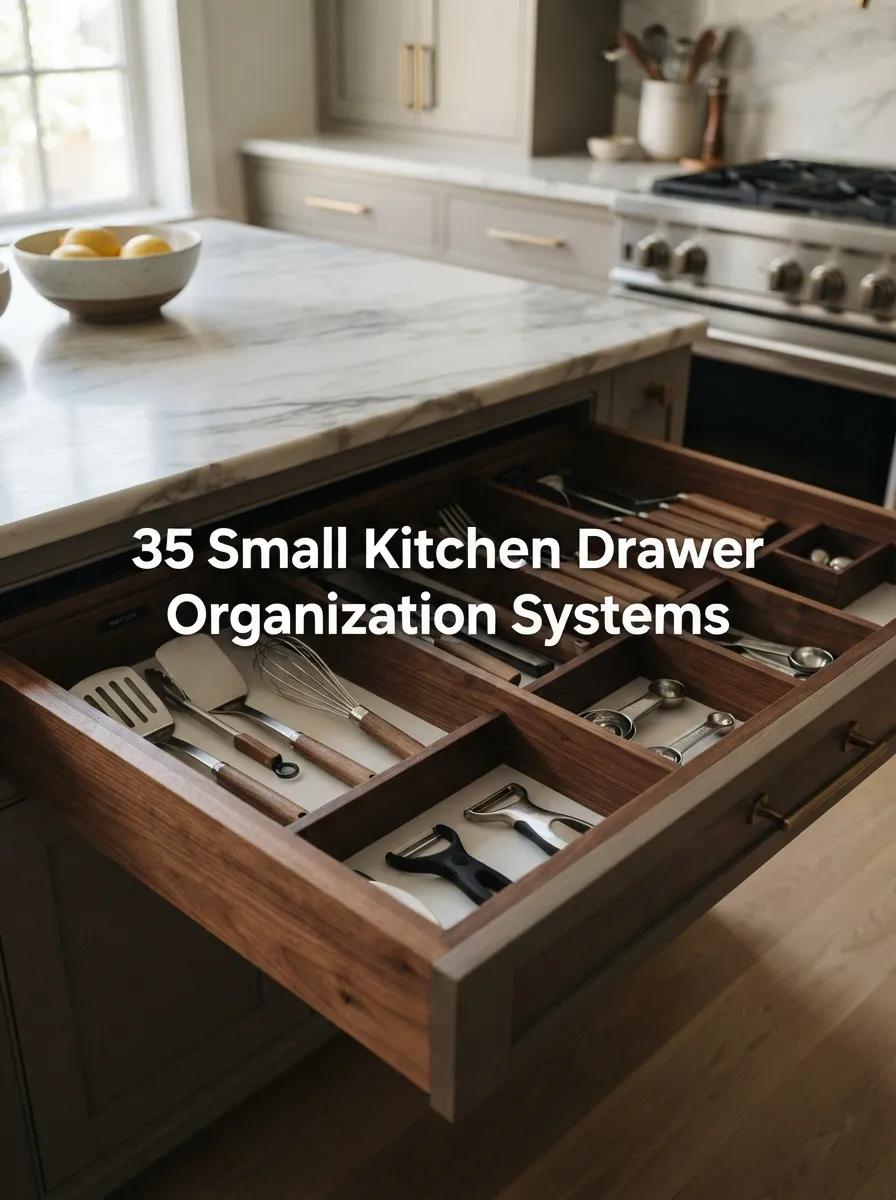
The top drawer in most kitchens sees the heaviest daily traffic, so it benefits most from a dedicated divider system rather than loose storage.
- 1. Adjustable bamboo dividers. Sliding wood dividers expand to fit any drawer width and can be rearranged as tools change.
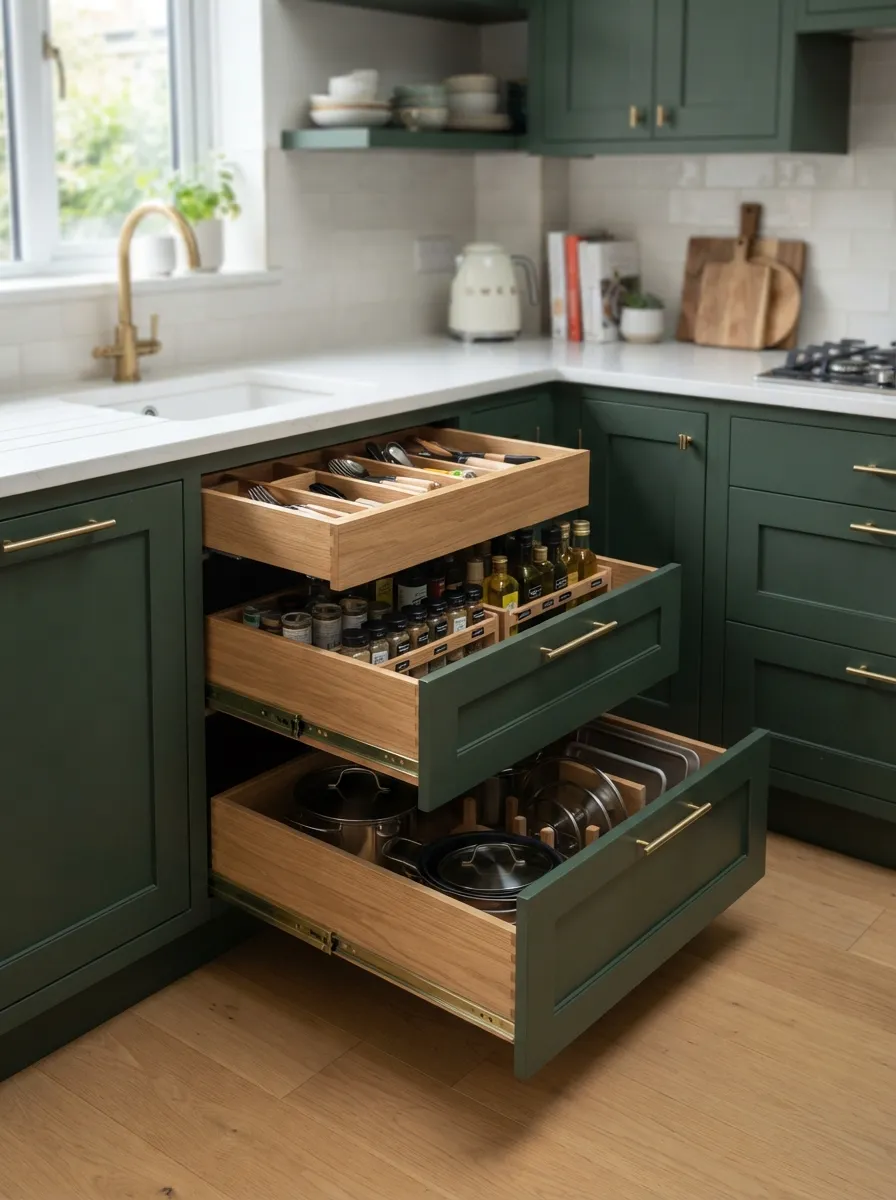
- 2. Two-tier utensil tray. A shallow upper tray for frequently used items sits above a deeper lower section for bulkier tools.
- 3. Knife drawer insert. A slotted foam or wood insert stores knives flat and safely, freeing counter space from a knife block.
- 4. Junk drawer zone dividers. Small modular bins corral loose items like twist ties and batteries into defined sections.
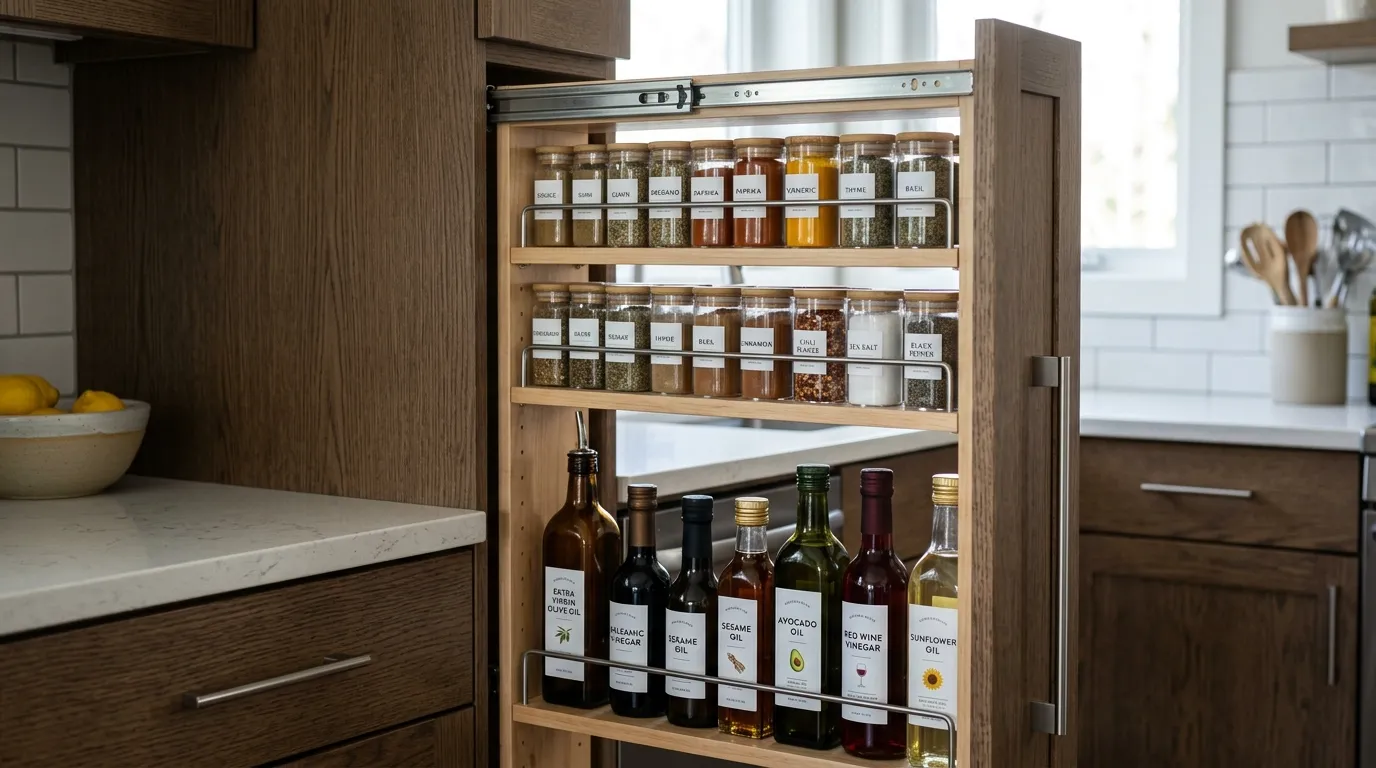
- 5. Spice drawer with angled inserts. A shallow drawer with tiered angled rows lets every spice label face up for quick scanning.
- 6. Measuring cup and spoon rack. A dedicated peg system keeps sets together instead of scattered loose in a drawer.
- 7. Cork-lined drawer liner. A textured liner keeps utensils from sliding around every time the drawer opens and closes.
- 8. Expandable drawer organizer tray. A telescoping tray adjusts to fit narrow or wide drawers across a mismatched cabinet run.
2. Deep Drawer Solutions for Pots & Pans (9-16)
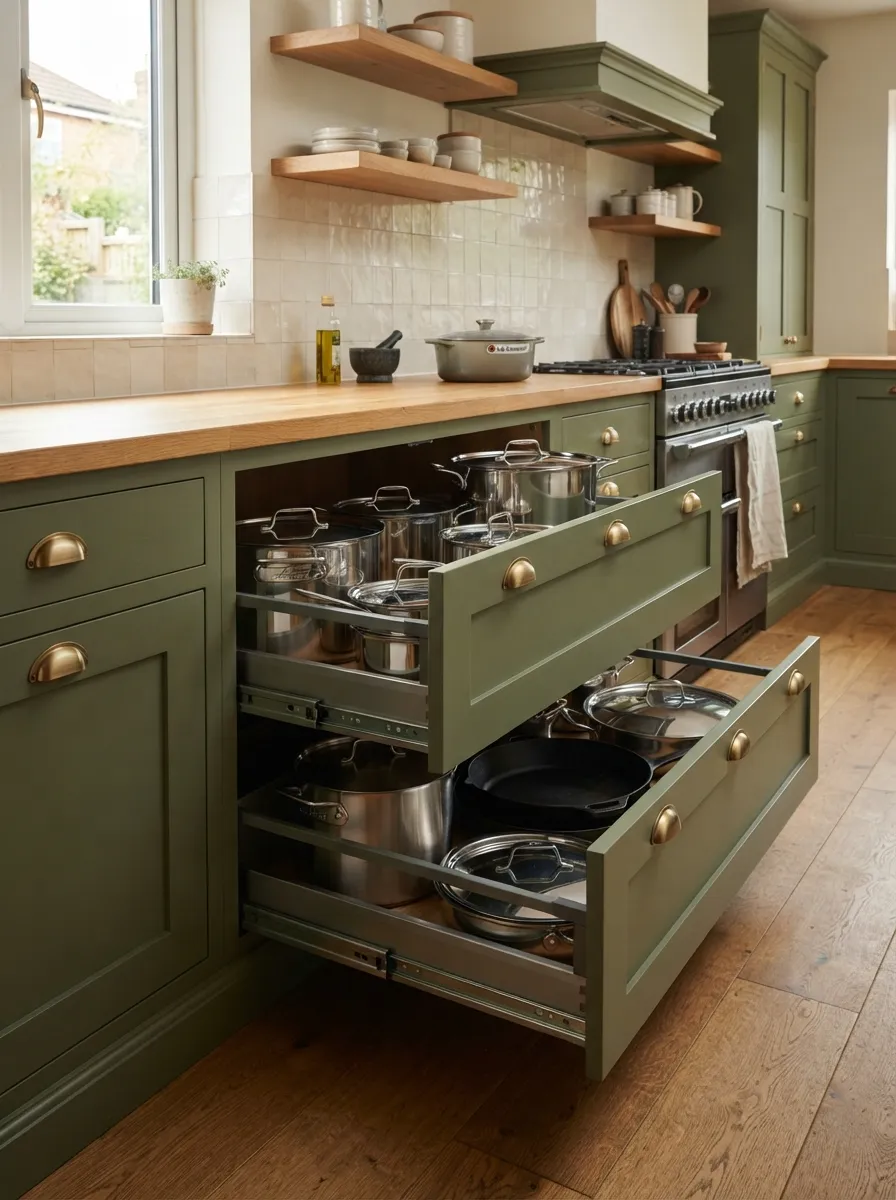
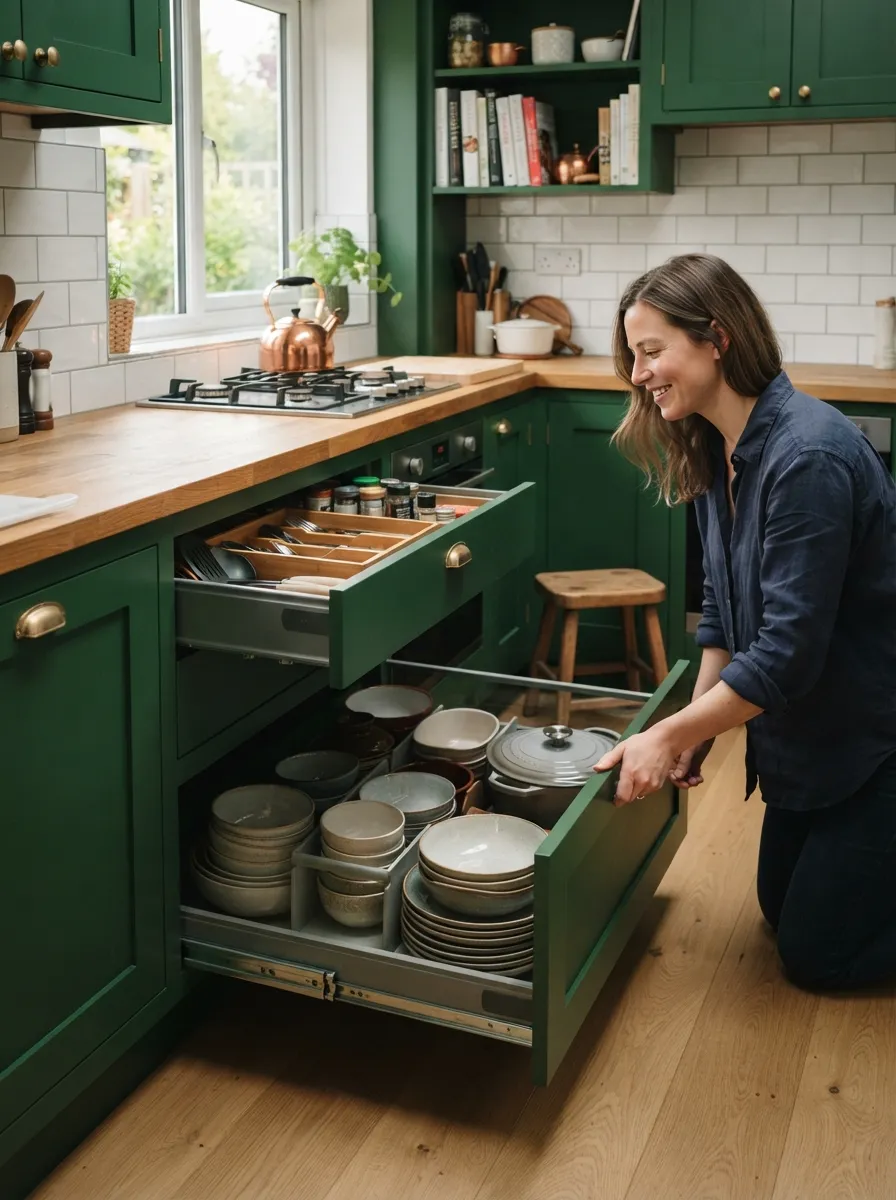
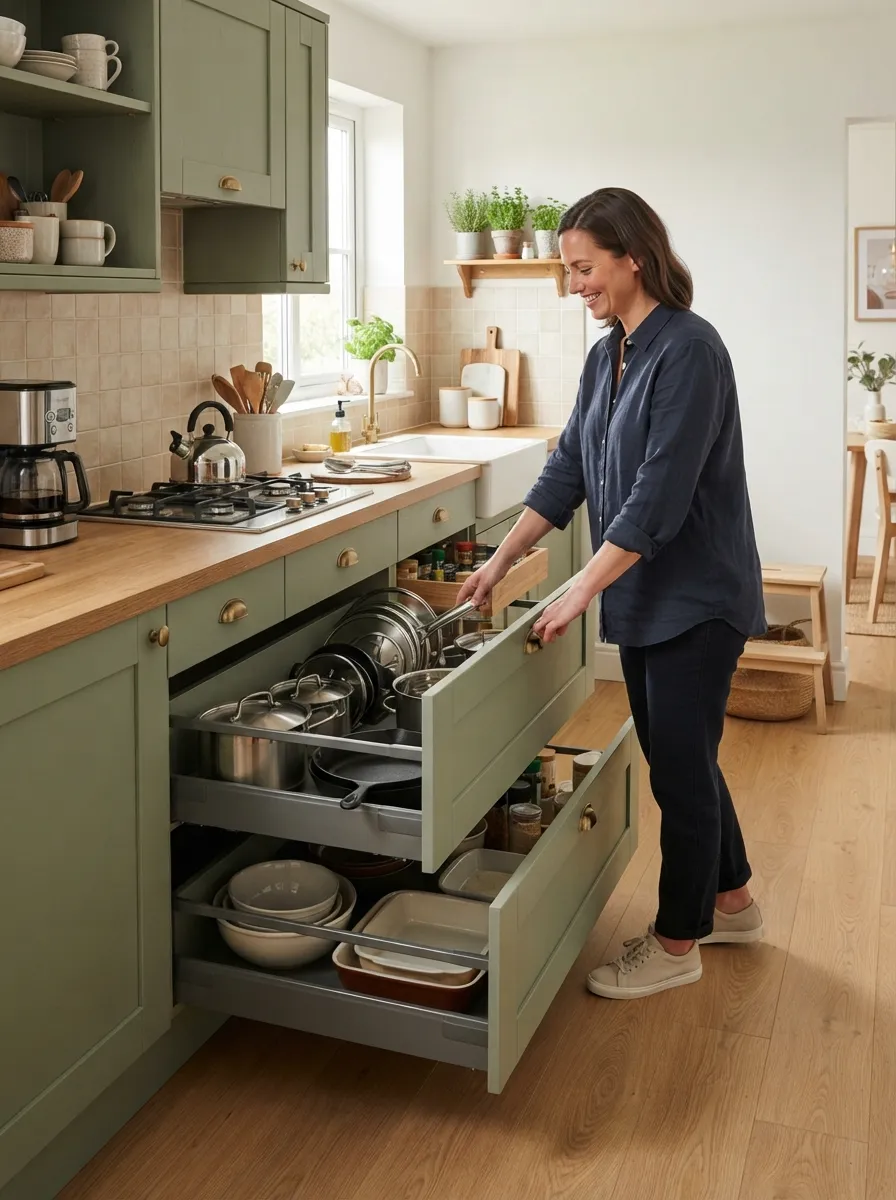
Deep drawers consistently outperform lower cabinets with a single fixed shelf, since nothing has to stack on top of anything else to stay accessible — a key move in any small kitchen cabinet layout.
- 9. Peg-board base drawer. Removable pegs configure to hold pots and pans upright, preventing them from sliding or stacking.
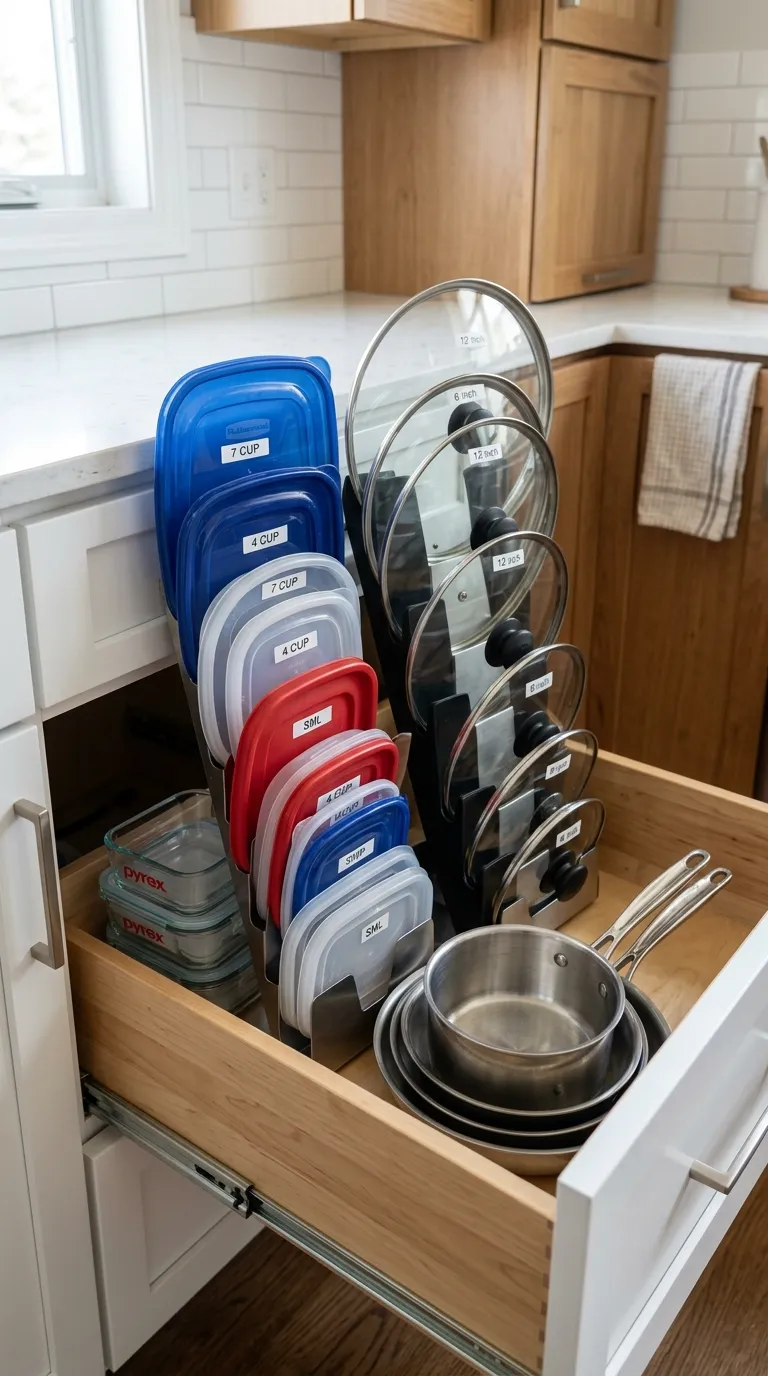
- 10. Pot lid organizer insert. A vertical slotted rack keeps lids separated and visible instead of stacked loose.
- 11. Full-extension drawer slides. Upgrading to full-extension hardware gives access to the entire drawer depth, not just the front half.
- 12. Nesting cookware drawer. Organizing pots by nesting size in a single deep drawer maximizes vertical capacity.
- 13. Baking sheet vertical slots. Slim vertical dividers store sheet pans and cutting boards on edge rather than stacked flat.
- 14. Appliance drawer for small electrics. A deep drawer sized for a blender or food processor keeps countertop appliances stored but accessible.
- 15. Two-tier pull-out drawer. A stacked drawer-within-a-drawer doubles vertical storage in one cabinet footprint.
- 16. Heavy-duty soft-close slides. Reinforced hardware supports the added weight of a fully loaded pot and pan drawer without sagging.
3. Specialty & Corner Drawer Systems (17-24)
These systems solve for the awkward spots — corners and toe-kicks — that standard cabinetry often leaves as dead space.
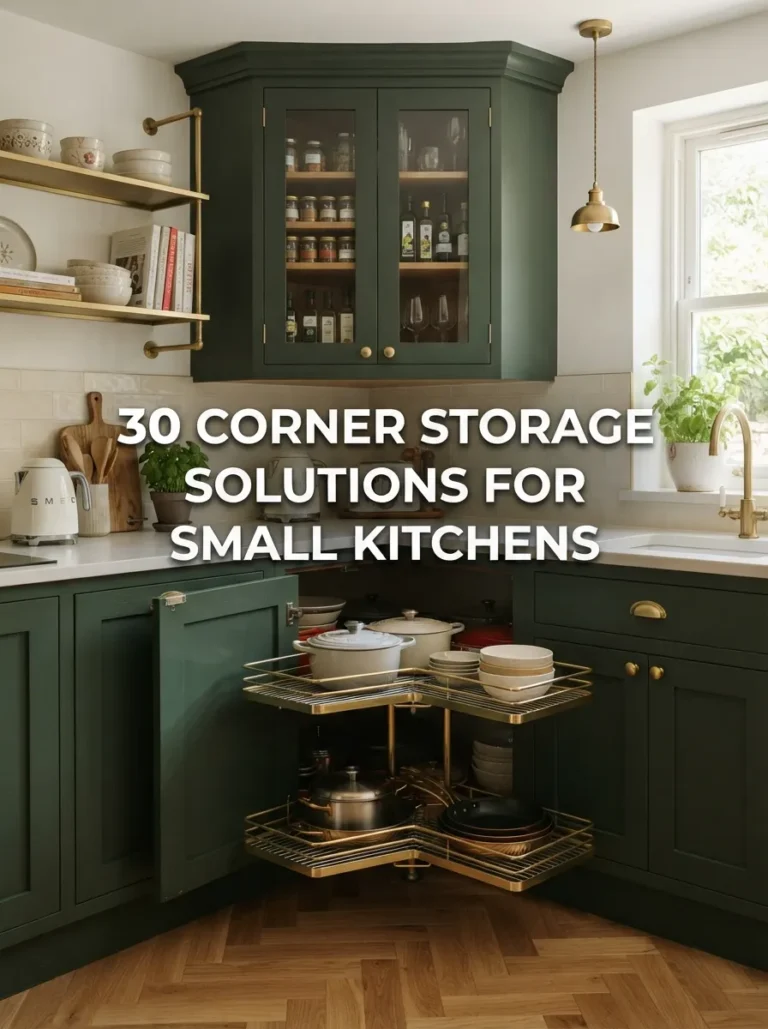
- 17. Corner drawer system. Diagonal drawers that follow a corner cabinet’s angle recover storage a standard swing door typically wastes.
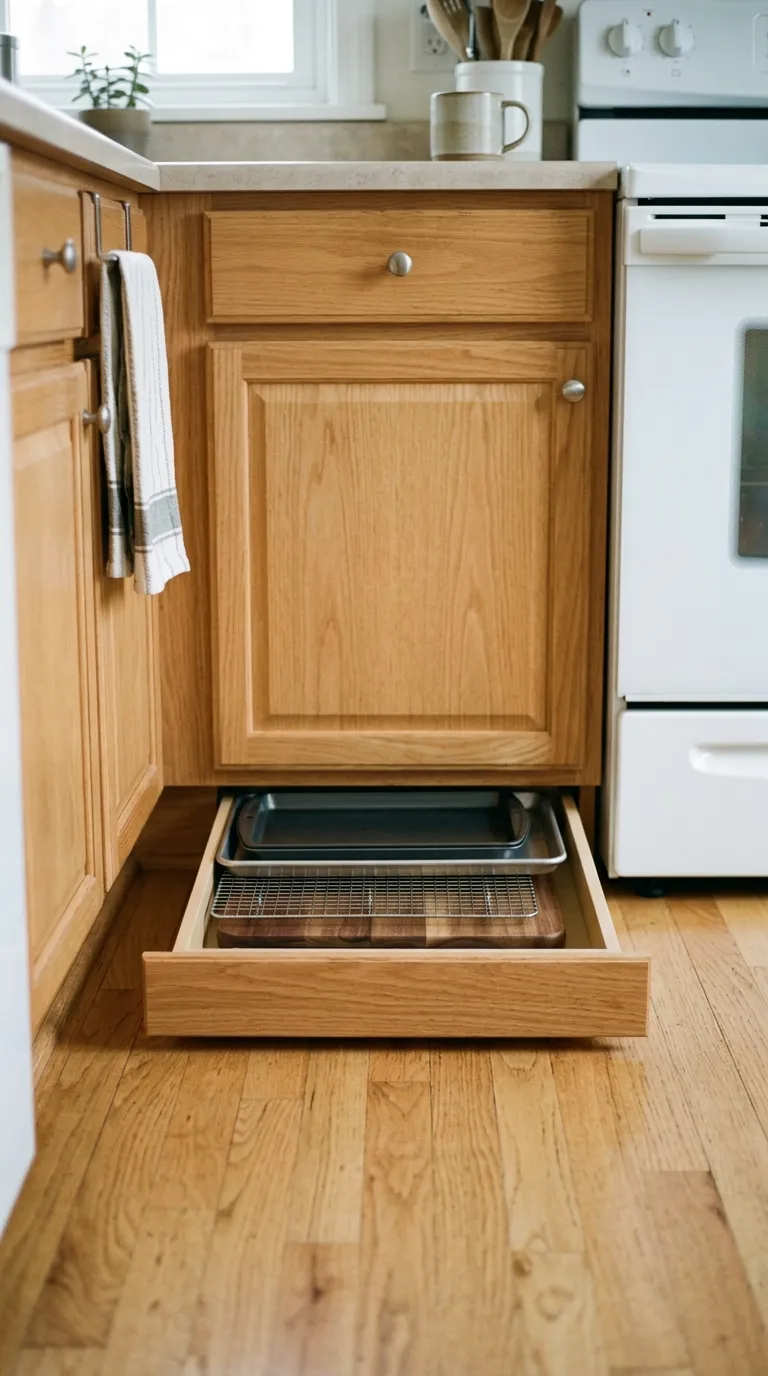
- 18. Toe-kick drawer. A shallow drawer built into the base of the cabinet uses the roughly 4-inch gap most kitchens leave completely empty.
- 19. Pull-out cutting board drawer. A slim drawer stores a cutting board flush against the counter, ready to slide out for prep.
- 20. Wine bottle drawer insert. Angled slots hold bottles horizontally in a drawer instead of taking up shelf space.
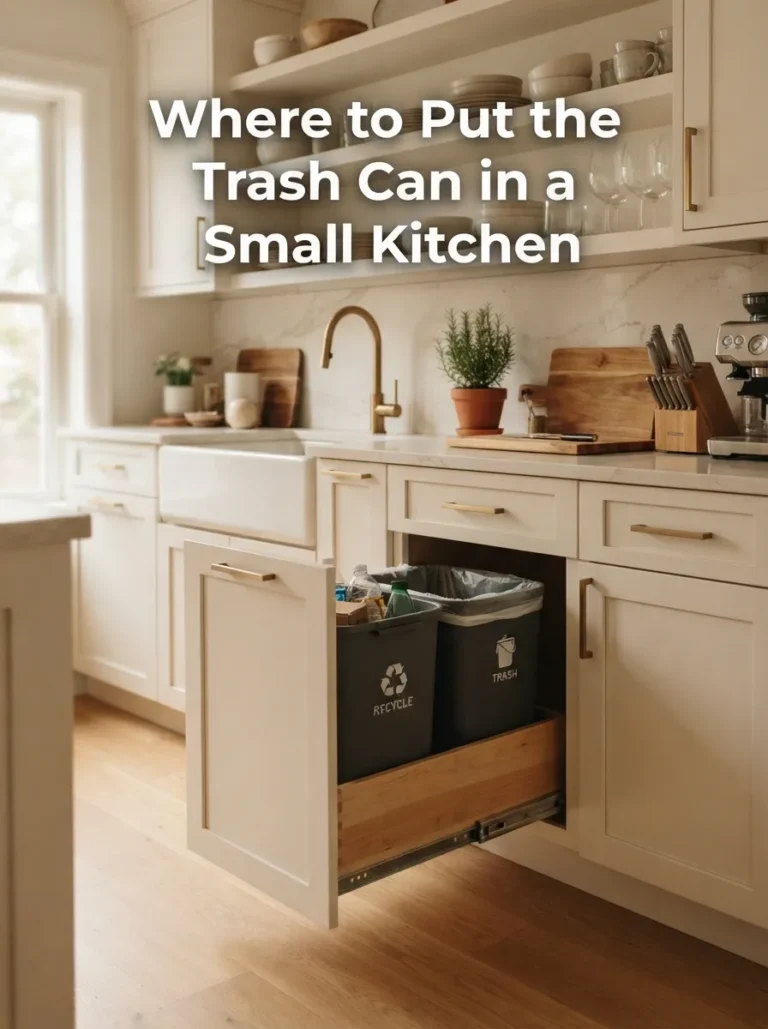
- 21. Trash and recycling pull-out drawer. Bins mounted on a drawer slide keep waste hidden behind a cabinet front rather than sitting on the floor.
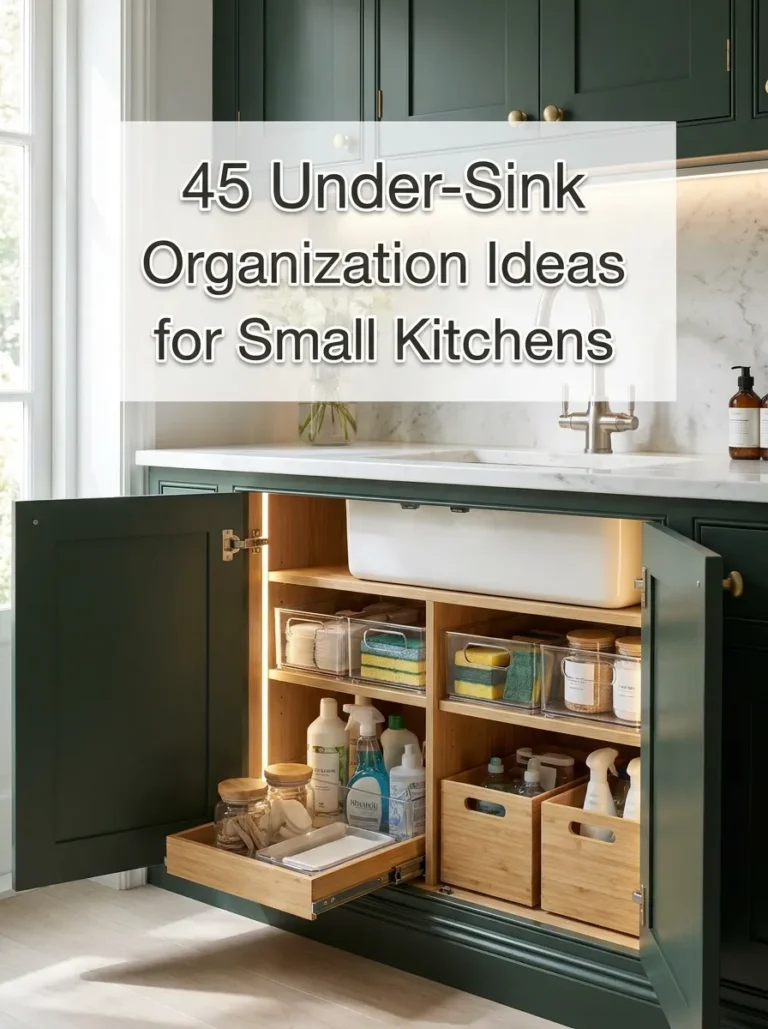
- 22. Under-sink pull-out drawer. A slide-out tray beneath the sink corrals cleaning supplies that would otherwise tip over in a fixed cabinet.
- 23. Charging station drawer. A drawer with a built-in outlet cutout charges devices out of sight.
- 24. File-style document drawer. A shallow drawer with vertical dividers stores mail, manuals, and takeout menus near a kitchen command center.
4. Food & Pantry Drawer Organization (25-30)
Food storage drawers work best with clear, labeled containers rather than original packaging, which keeps everything visible and stackable.
- 25. Clear bin drawer system. Uniform clear bins let you see contents at a glance and keep the drawer looking tidy even when full.
- 26. Tiered can organizer. Angled shelving inside a drawer rolls cans forward automatically as you use the front row.
- 27. Snack drawer with dividers. A dedicated shallow drawer at kid-reachable height keeps grab-and-go snacks contained.
- 28. Produce drawer with ventilation. A ventilated liner extends the life of onions, potatoes, and garlic stored at room temperature.
- 29. Tea and coffee drawer. A shallow drawer near the kettle organizes single-serve pods or tea bags by type.
- 30. Baking supply drawer. Deep bins for flour and sugar with clear labels keep baking staples in one dedicated spot.
5. Keeping Drawers Organized Long-Term (31-35)
An organization system only works if it’s easy to maintain — these habits keep drawers from sliding back into clutter after the first few weeks.
- 31. Label every zone or bin so putting things away is as fast as taking them out.
- 32. Do a quarterly drawer audit to remove duplicate tools or items that migrated to the wrong drawer.
- 33. Assign one drawer as the flexible “catch-all” so loose items have a designated home instead of disrupting organized ones.
- 34. Keep frequently used items in the top drawer and rarely used ones lower, reducing the temptation to just toss things in the nearest drawer.
- 35. Re-measure before buying new inserts whenever you replace cabinetry, since drawer dimensions rarely match exactly between kitchens.
Drawer Organization Gallery
Frequently Asked Questions
What is the best way to organize a small kitchen drawer?
Adjustable divider systems that adapt to changing tool collections work best, paired with clear labeling for any bin-based zones.
Are deep drawers better than cabinets for pots and pans?
Yes, deep drawers give full visibility and access to every item without needing to stack or dig through a fixed cabinet shelf.
What can I store in a toe-kick drawer?
Flat items like baking sheets, cutting boards, or step stools work well, since toe-kick drawers are typically only 3-4 inches deep.
How do I stop my kitchen drawers from turning into junk drawers?
Assign one drawer as a dedicated flexible catch-all and do a quarterly audit on the rest to move stray items back to their designated spot.
How much weight can a kitchen drawer hold?
Standard drawer slides handle roughly 75-100 lbs, but a fully loaded pot and pan drawer can weigh 40-60 lbs on its own, so check the slide’s rating before loading heavy cookware.
Are corner drawer systems worth the cost in a small kitchen?
Yes, corner drawers recover storage that a standard swing-door corner cabinet typically wastes, which is especially valuable when floor space is limited.
Related Pages
Let Every Drawer Earn Its Space
Well-organized drawers turn a small kitchen’s limited storage into something that actually functions the way you cook, rather than just holding things. Start with the drawer you open most — usually utensils or a junk drawer — add one insert or divider system, and expand from there as you see what actually needs a dedicated home.
For more on planning cabinetry around your storage needs, see our Small Kitchen Cabinet Design guide next.