How to Brighten a Small Kitchen With No Windows
Brightening a small kitchen with no windows comes down to replacing what natural light would normally do with a deliberate mix of artificial light and reflective surfaces. Without daylight, a kitchen relies entirely on fixture placement and finish choices to avoid feeling dim or closed in, and a single overhead light rarely does the job on its own. This guide covers the layered lighting, color, and structural options that make the biggest real difference.
Quick Takeaways
- Layer at least three light sources: overhead, under-cabinet task lighting, and one accent light
- Use daylight-temperature bulbs (5000K–6500K) to mimic natural light rather than warm yellow tones
- Light, glossy cabinet and countertop finishes reflect available light far better than matte, dark ones
- A glass-front upper cabinet door or open shelving lets light bounce further into the room
- Borrowing light from an adjacent room, if structurally possible, makes the biggest single difference
What’s In This Guide
Layering Light the Right Way
A single ceiling fixture almost never brightens a windowless kitchen enough on its own, since it creates one central light source with shadows everywhere else. Three layers work together to fix this:
- Overhead/ambient: Recessed lights spread more evenly across the ceiling than one central fixture, reducing shadowed corners
- Task lighting: Under-cabinet LED strips light the counter directly, which matters most since that’s where you actually need visibility
- Accent lighting: A small lamp, puck lights inside glass cabinets, or toe-kick LED strips add a layer that keeps the room from feeling flat and one-dimensional
Choosing the Right Bulb Temperature
Bulb color temperature, measured in Kelvin, matters more in a windowless kitchen than almost anywhere else in the home, since artificial light is doing all the work daylight would otherwise handle.
| Temperature | Look | Best For |
|---|---|---|
| 2700K–3000K | Warm yellow | Cozy, but can feel dim and cave-like without windows |
| 3500K–4000K | Neutral white | A balanced middle ground |
| 5000K–6500K | Daylight/cool white | Closest match to natural daylight; best for brightening |
Sticking to daylight-temperature bulbs (5000K and up) across all three lighting layers is the single easiest change that makes a windowless kitchen feel less artificially lit, since it most closely mimics the light quality a window would otherwise provide.
Reflective Surfaces and Color Choices
Light bounces further in a room with pale, glossy surfaces than it does in one with dark, matte finishes, which matters even more when there’s no natural light adding to the mix.
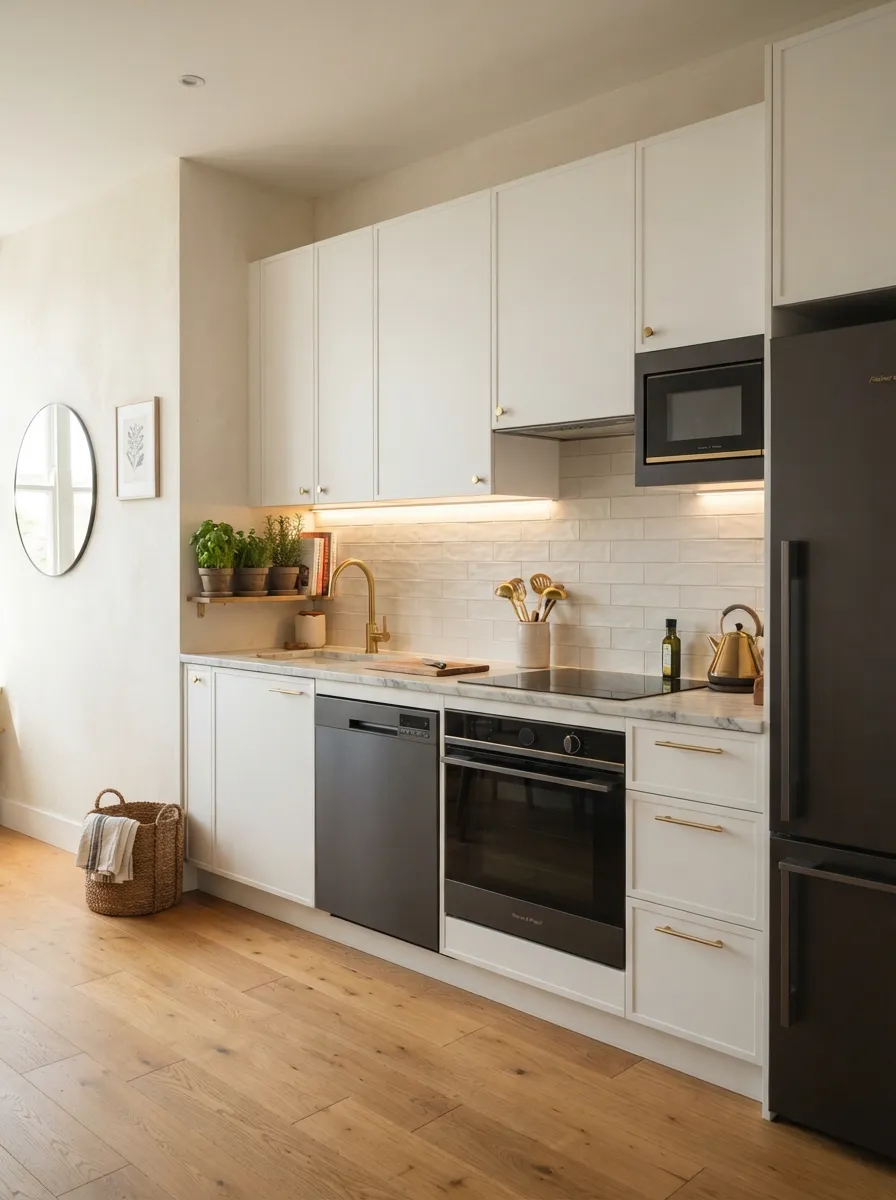
Cabinets: A glossy or semi-gloss white or light-colored cabinet finish reflects far more light than a matte dark finish, which absorbs rather than bounces what light is available.
Backsplash: Glass tile or a glossy ceramic backsplash reflects light across the counter area, while a matte natural stone absorbs it.
Countertops: Light quartz or a polished light stone reflects more than a dark or honed matte surface.
Open shelving or glass-front cabinets: Replacing even one run of solid upper cabinets with open shelving or glass fronts lets light travel further into the room instead of stopping at a solid cabinet door.
Borrowing Light From Nearby Rooms
If structural changes are on the table, borrowing light from an adjacent room is the most impactful single change available. A few common approaches: replacing a solid door to an adjacent hallway or living space with a glass or half-glass door, adding an interior transom window above a doorway, or removing a wall (or part of one) to create an open pass-through into a brighter adjacent room. Even a small glass panel inset into an existing door lets meaningfully more light travel into a windowless kitchen than a fully solid door does.
Even without any structural changes, a consistent lighting routine matters over time. Replace bulbs as they dim or yellow with age rather than waiting until they fail completely, since gradually dimming bulbs are easy to not notice day to day but add up to a meaningfully darker kitchen over several months.
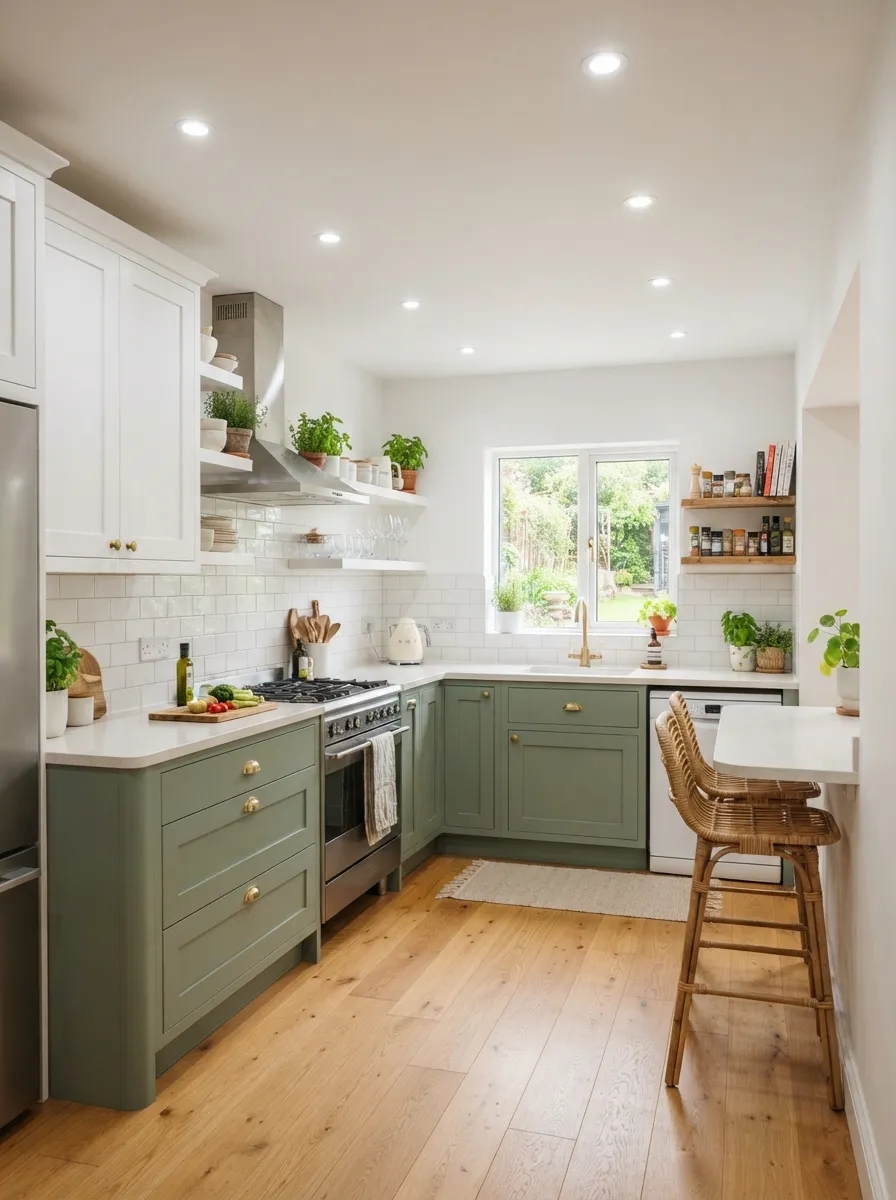
Recessed lighting spreads light more evenly than one central fixture
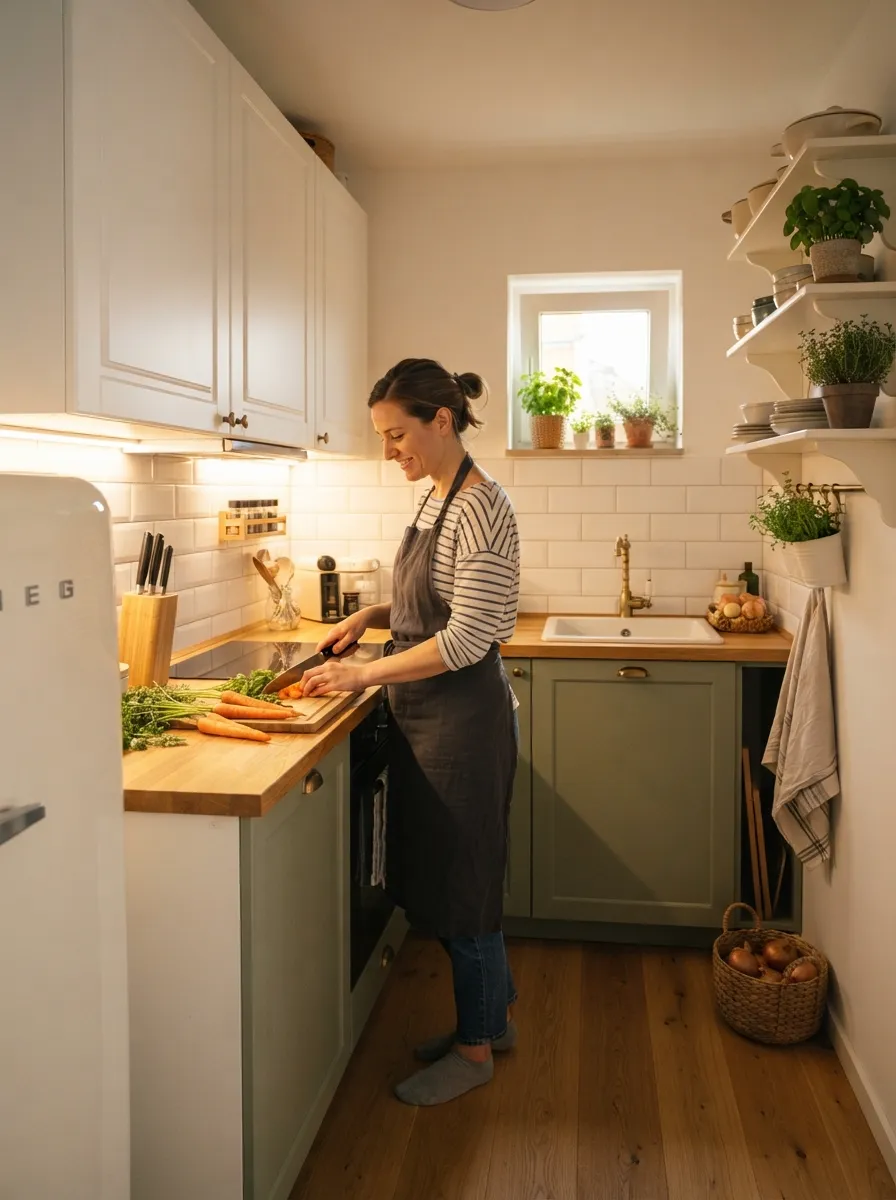
Under-cabinet task lighting brightens the counter directly
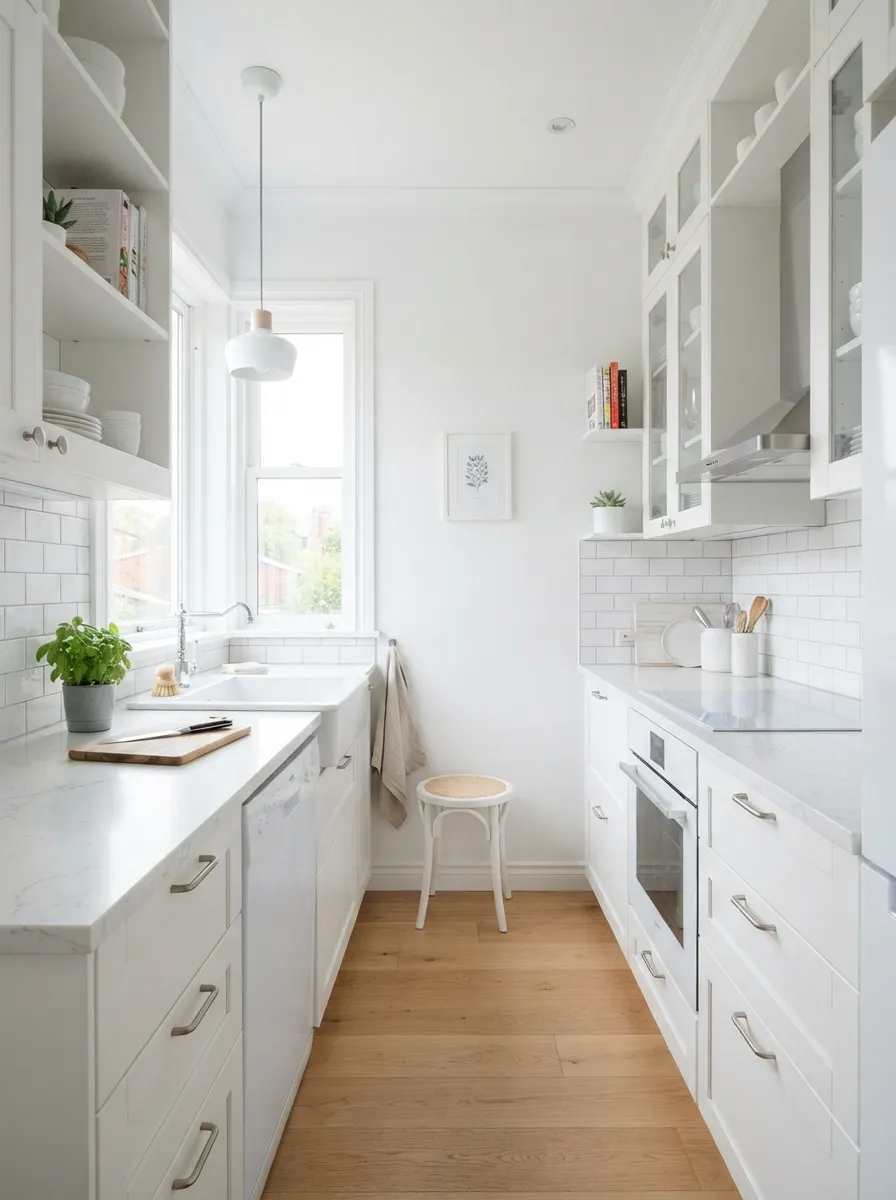
Light, glossy surfaces reflect available light further into the room
Mistakes to Avoid
Relying on one overhead fixture alone. A single central light leaves the rest of the room comparatively dim and creates shadows exactly where you need visibility most, like the counter and stove.
Choosing warm, yellow-toned bulbs throughout. Warm bulbs feel cozy in a living room but can make a windowless kitchen feel more like a dim cave than a bright workspace.
Painting cabinets or walls a dark, matte color. Without natural light to offset it, a dark matte finish absorbs most of the light your fixtures provide instead of bouncing it back into the room.
Does Paint Sheen Matter as Much as Color?
Beyond the color itself, paint sheen affects how much light a wall reflects back into a windowless kitchen. A flat or matte finish absorbs more light than it reflects, while an eggshell, satin, or semi-gloss sheen bounces noticeably more light around the room. For walls in a windowless kitchen specifically, choosing at least an eggshell or satin finish, even in the same color you’d otherwise pick in matte, adds a meaningful amount of reflected brightness at no extra cost beyond the sheen selection itself.
A Few More Quick Wins
Beyond lighting layers, bulb temperature, and surface color, a handful of smaller changes add up meaningfully in a windowless kitchen:
- Remove upper cabinet doors on one section and replace with open shelving, letting light travel further into the room instead of stopping at a solid door
- Add a light-colored or reflective backsplash directly opposite your main light source to bounce light back across the room
- Keep countertops clear of bulky, dark-colored appliances that block light from reaching lower surfaces
- Use a single, cohesive light temperature across all fixtures rather than mixing warm and cool bulbs, which can make the room feel visually inconsistent
Frequently Asked Questions
What’s the best lighting for a kitchen with no windows?
A layered combination of overhead recessed lighting, under-cabinet task lighting, and one accent light source, all using daylight-temperature bulbs (5000K-6500K), works best.
What bulb color temperature makes a kitchen feel brightest?
Daylight-temperature bulbs in the 5000K to 6500K range most closely mimic natural light and make a windowless kitchen feel brightest.
Do light-colored cabinets really make a difference without windows?
Yes, light and glossy cabinet finishes reflect available artificial light far more effectively than dark, matte finishes, which absorb it instead.
Can I add a window to a windowless kitchen?
It depends on the wall’s location and whether it’s an exterior or interior wall; consult a contractor. If a true window isn’t possible, borrowing light through a glass interior door or transom is often a more realistic option.
Are mirrors a good way to brighten a windowless kitchen?
Yes, a strategically placed mirror can reflect existing light sources and make the space feel brighter and larger, similar to how it’s used in small kitchens generally.
Related Pages
Final Thought
A windowless kitchen can still feel bright and open with the right combination of layered lighting, daylight-temperature bulbs, and reflective surfaces. Start with lighting layers and bulb temperature, since those are the fastest, most affordable changes, then consider structural light-borrowing if a bigger renovation is on the table. Paint sheen and surface finish are worth revisiting too, since they cost nothing extra beyond the choice itself but meaningfully change how much of your new lighting actually gets reflected back into the room.
Want more small kitchen lighting ideas?
Explore Small Kitchen Lighting Ideas