30 Open Shelving Ideas for Small Kitchens
Open shelving ideas for small kitchens work best when they replace, not add to, upper cabinets — swapping even one cabinet run for open shelves visually opens up the room while keeping everyday items in easy reach. Done well, open shelving looks intentional and curated; done poorly, it just looks like clutter with nowhere to hide. These 30 ideas cover material, placement, and styling to help you land on the right side of that line.
Quick Takeaways
- Replace one upper cabinet run rather than removing all of them at once.
- Wood shelving adds warmth; metal or glass shelving feels more modern and light.
- Style shelves with a mix of function and a few decorative pieces, not either extreme.
- Leave a little negative space on each shelf — fully packed shelves read as cluttered.
- Keep daily-use items on open shelves and store the rest behind closed doors.
Table of Contents
1. Shelf Material Choices
Material sets the tone for the whole kitchen. Consider these options:
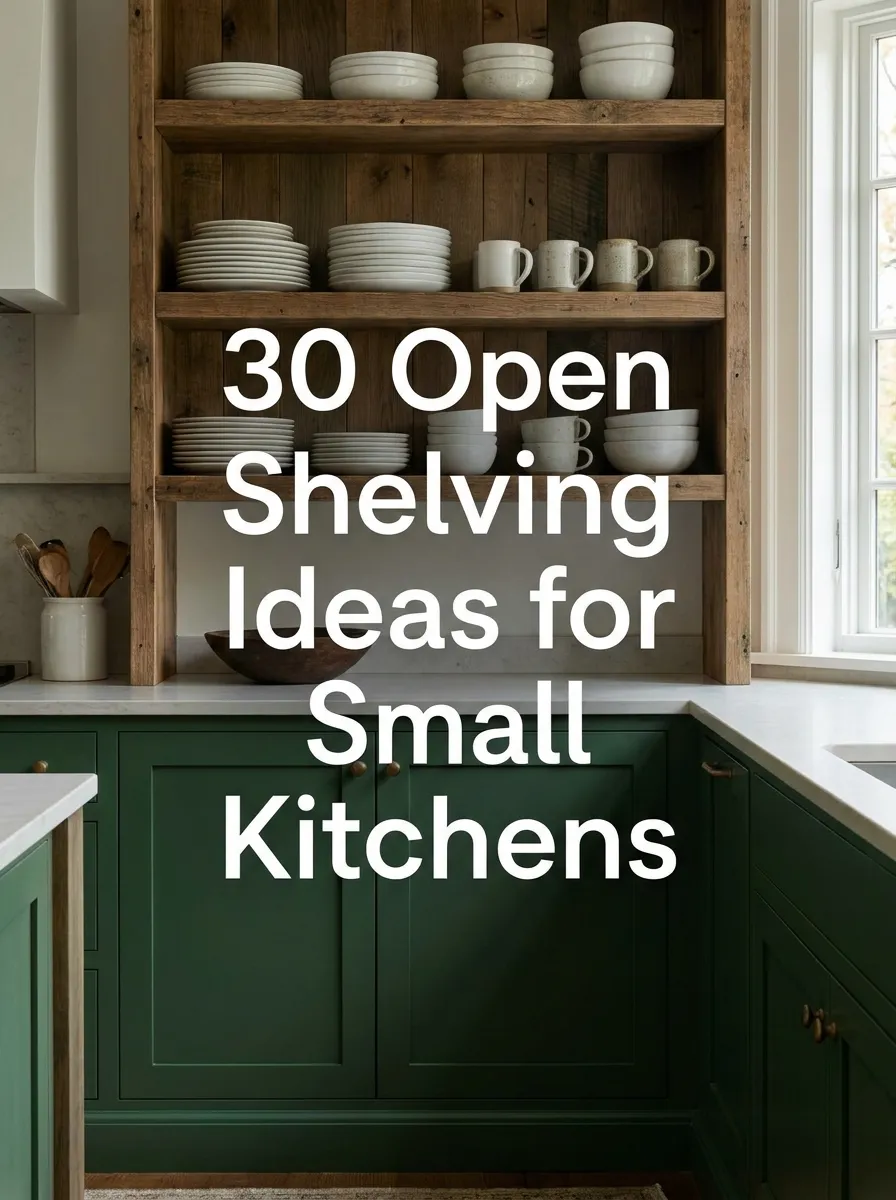
- Natural wood shelves for warmth, especially paired with white or forest green cabinetry.
- Floating shelves with no visible brackets for a clean, minimal look.
- Black metal shelving for an industrial or modern edge.
- Glass shelves to keep the visual weight light in a very small kitchen.
- Reclaimed or distressed wood for a farmhouse or cottage feel.
- Painted shelves that match or contrast your cabinet color for cohesion.
2. Where to Place Open Shelving
Placement affects both function and feel. Strong spots include:
- Directly above the counter where upper cabinets would normally go.
- Flanking a window for a lighter, more open feel near natural light.
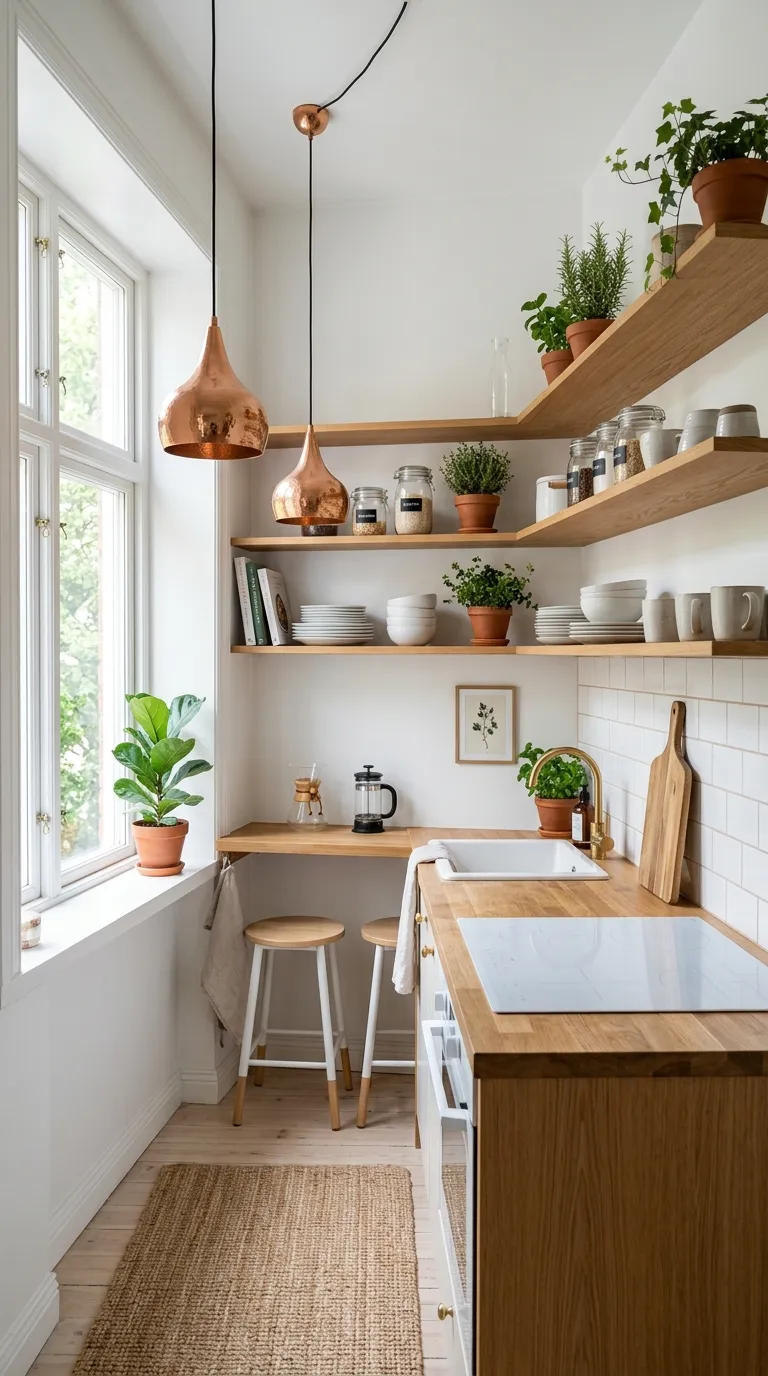
- In a corner that would otherwise sit empty or underused.
- Above a coffee or beverage station for mugs and glassware.
- A single narrow shelf just below the ceiling for display pieces.
- Beside the range for oils, salt, and spices used during cooking.
3. Styling Open Shelves
Good styling makes the difference between “curated” and “cluttered”:
- Stack plates and bowls by size, largest at the bottom.
- Group glassware by type and turn a few pieces to show their best angle.
- Add one or two plants for a natural, lived-in touch.
- Mix textures — ceramic, wood, and metal together read as intentional, not random.
- Leave visible negative space between groupings rather than filling every inch.
- Rotate seasonal pieces occasionally to keep the display feeling fresh.
4. Mixing Open and Closed Storage
Full open shelving isn’t for everyone, and a hybrid approach often works better in practice:
- Open shelves for daily dishes, closed cabinets for small appliances and bulk items.
- Glass-front cabinets as a middle ground between fully open and fully closed.
- One open shelf paired with a closed cabinet on either side for visual balance.
- Open shelving on a shorter wall, closed cabinets on the main run for storage capacity.
5. Keeping It Looking Good
Open shelving requires more upkeep than closed cabinets since everything is visible dust and all:
- Wipe shelves down weekly, since dust and kitchen grease show more than in a closed cabinet.
- Only keep items you’re comfortable having on display all the time.
- Reassess the styling every season rather than letting it become static clutter.
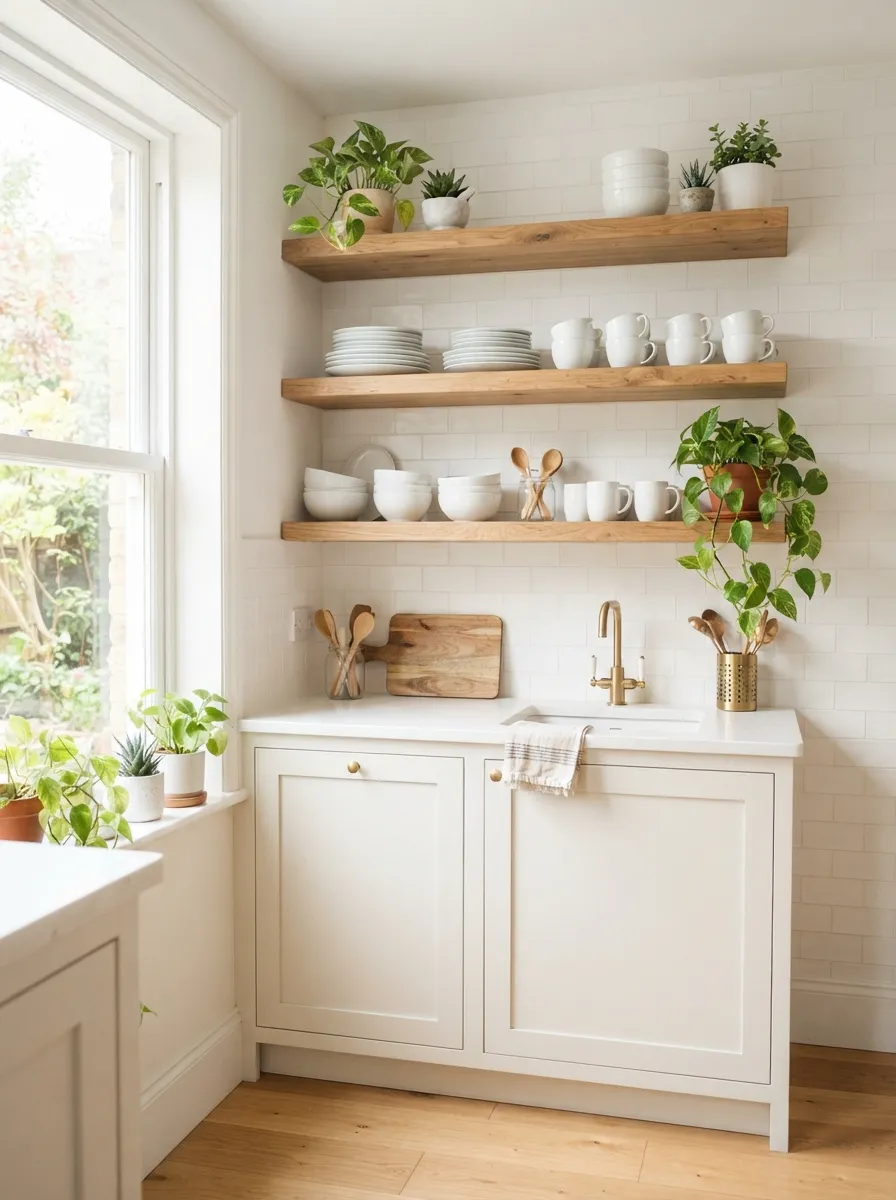
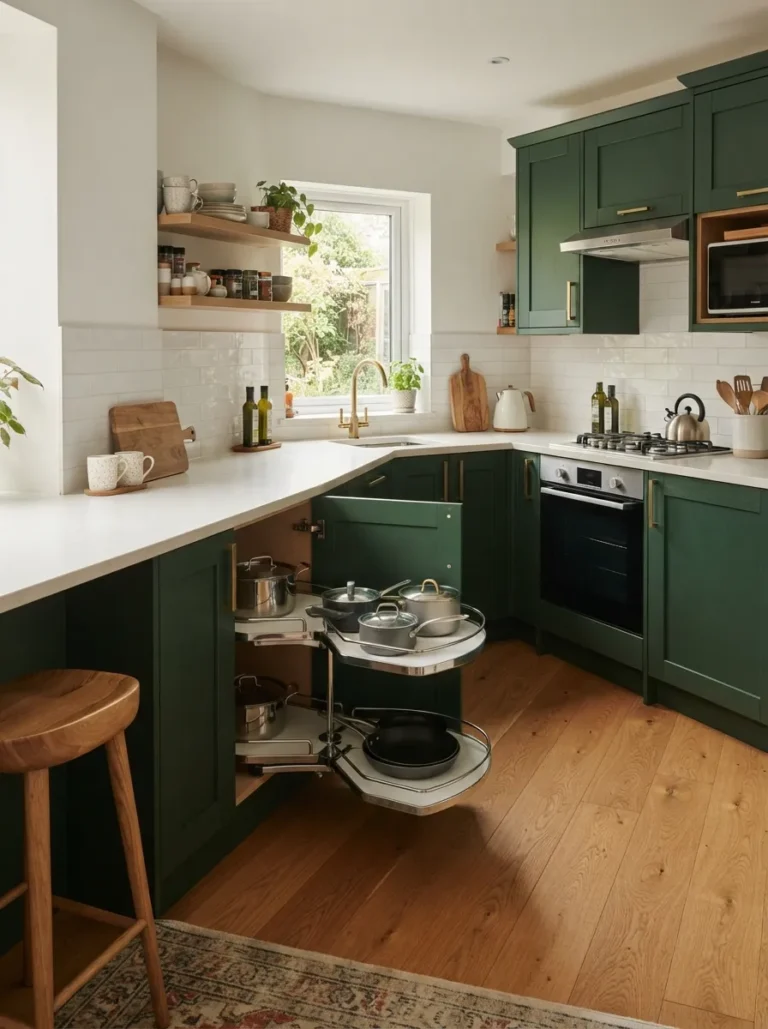
Open shelving styled with dishes and a plant feels curated, not cluttered.
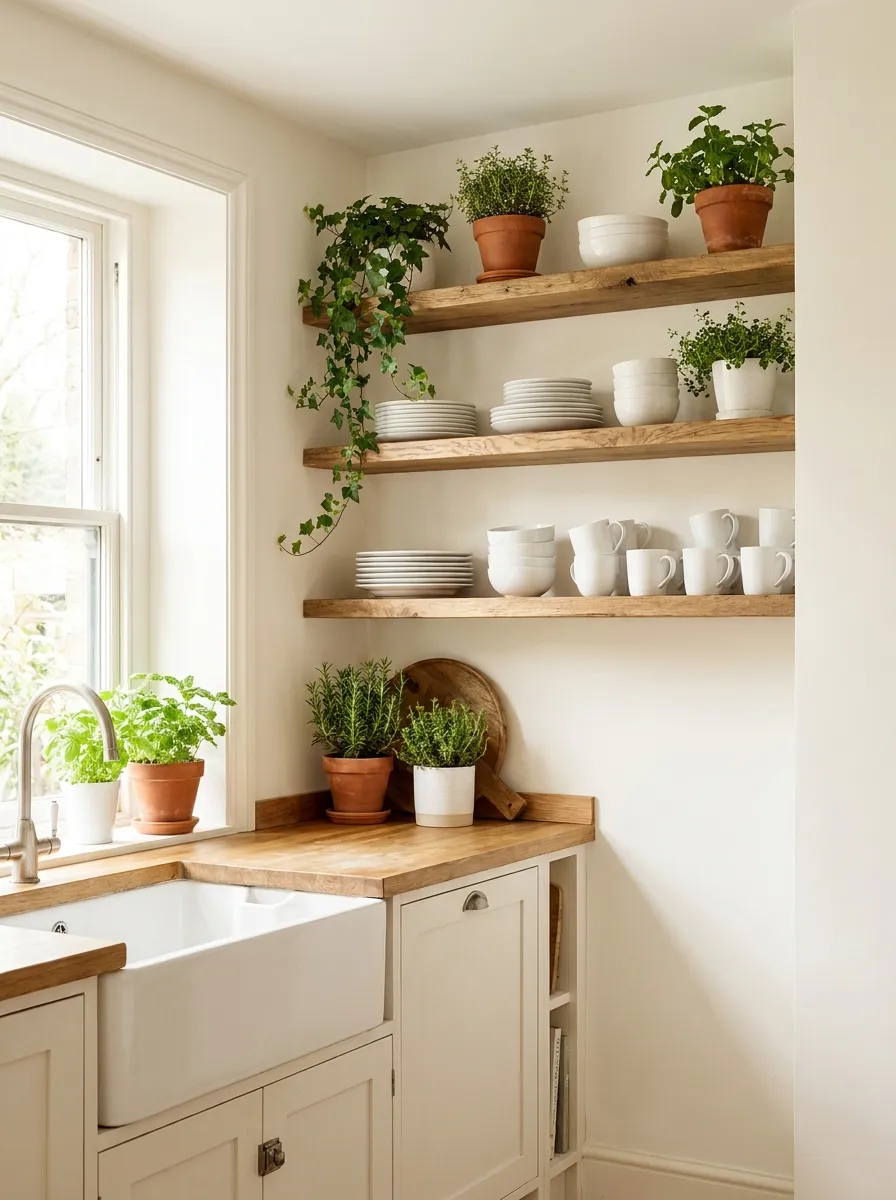
Grouping by texture and leaving negative space keeps shelves feeling calm.
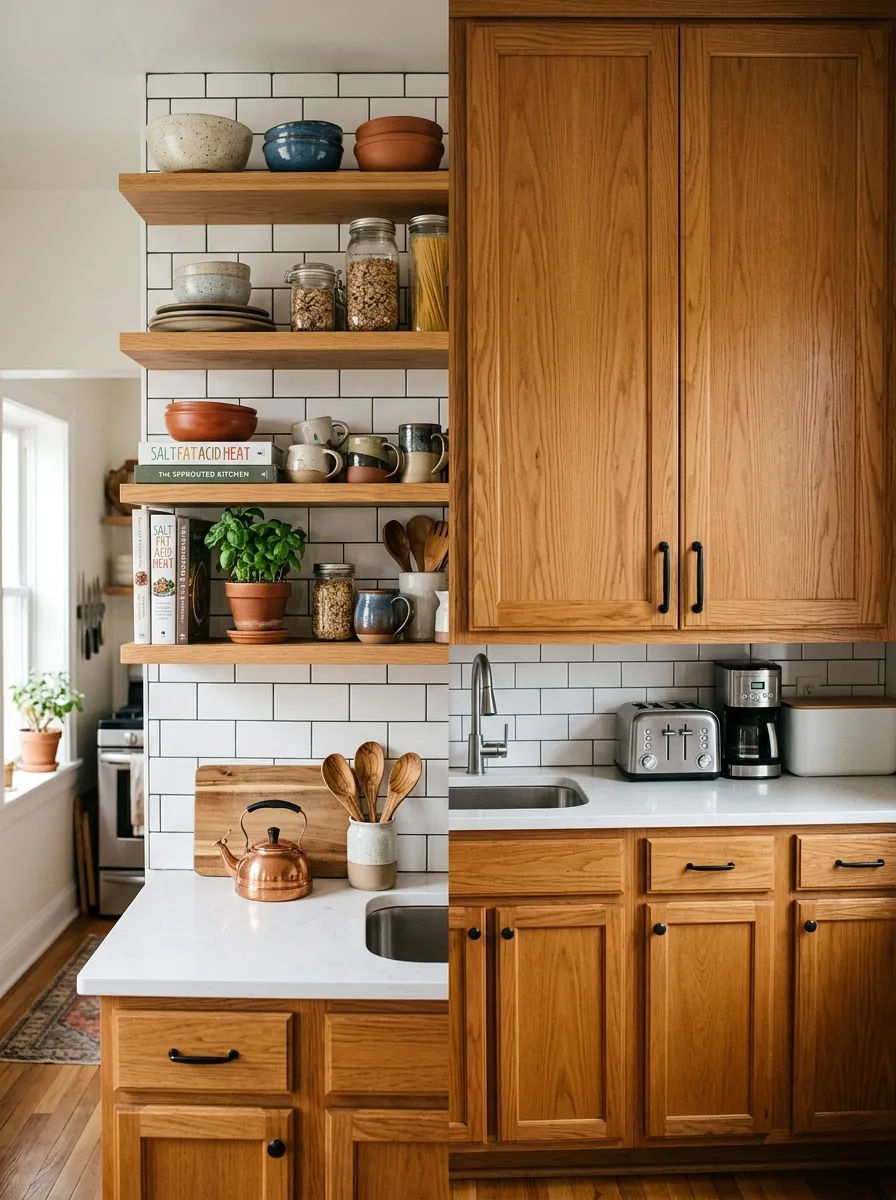
Oak open shelving offers a warmer alternative to closed cabinetry.
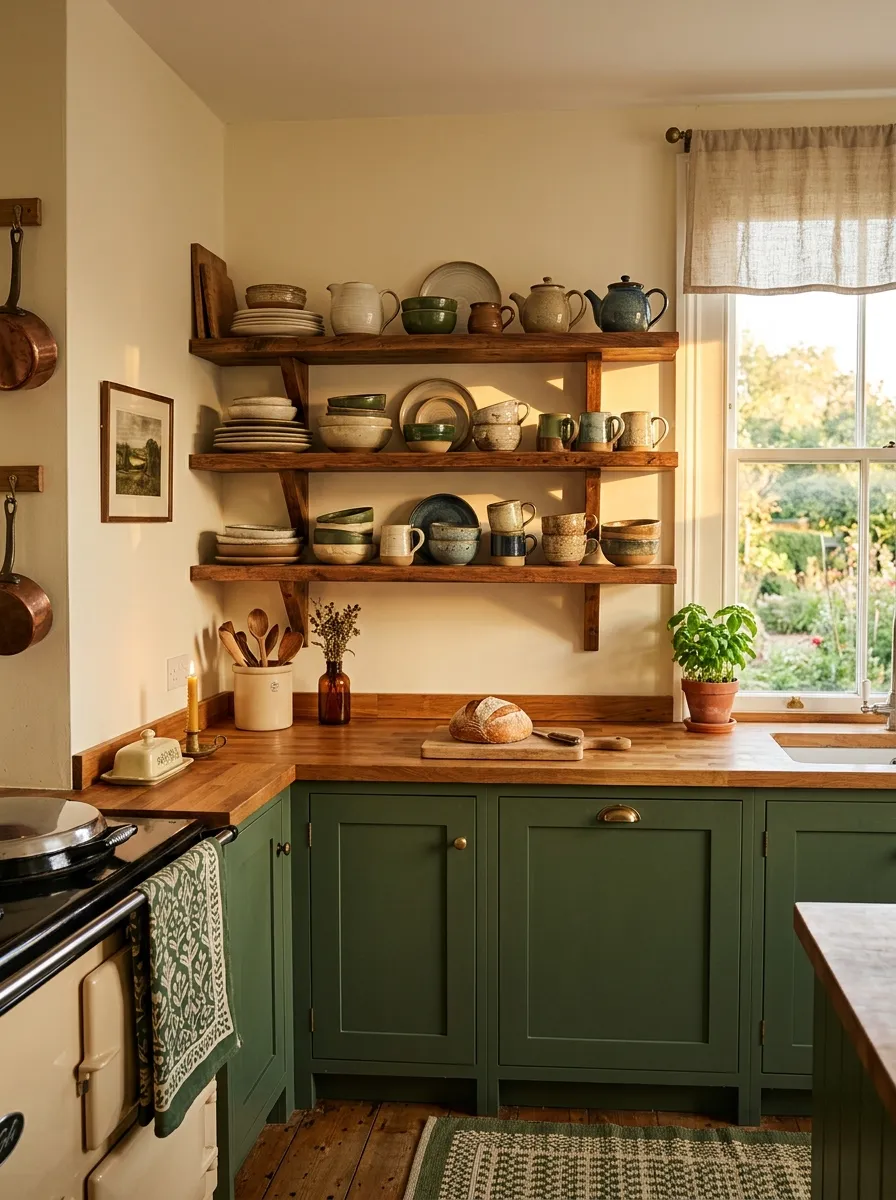
Wood shelving pairs naturally with a warm, small kitchen palette.
Replacing one cabinet run with open shelving opens up the room visually.
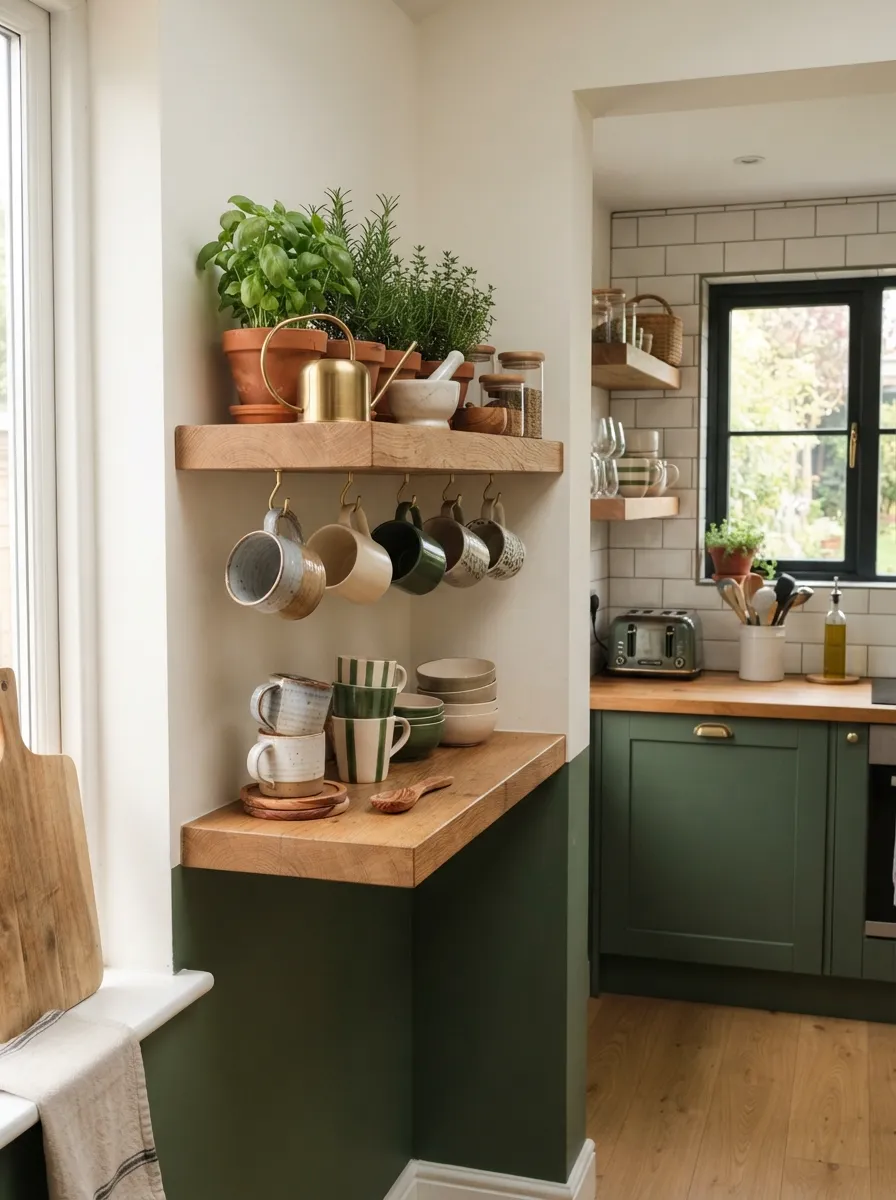
Corner shelving fills an otherwise underused part of the kitchen.
Frequently Asked Questions
Is open shelving practical for everyday use?
Yes, when styled with items you actually use daily — it keeps them visible and grabbable without opening a cabinet door.
Does open shelving require more cleaning?
Yes, dust and grease are more visible than in a closed cabinet, so plan on wiping shelves down weekly, especially near the stove.
Should I replace all my upper cabinets with open shelving?
Not necessarily — a hybrid approach with some open shelving and some closed storage often balances style and practicality better.
What material looks best for small kitchen open shelving?
Wood adds warmth, black metal adds an industrial edge, and glass keeps things visually light — the right choice depends on your overall palette.
How do I avoid open shelves looking cluttered?
Leave negative space between groupings, mix textures intentionally, and only display items you’re comfortable having visible at all times.
Can I try open shelving without a full renovation?
Yes, floating shelves can be installed on their own without removing existing cabinetry, making it easy to test in one section first.
Related Pages
Ready to Try Open Shelving?
Start with one small section before committing to a full cabinet swap. Explore our cabinet design guide for more styling and layout ideas.