Small Kitchen Design for Single Professionals Living Alone
Small kitchen design for single professionals living alone works differently than small kitchen design for a family, mainly because the constraints are different: it’s not about maximizing seating or storing bulk groceries, it’s about minimizing daily friction for one person with a busy, often unpredictable schedule. A kitchen built around solo living can actually be more efficient per square foot than a family kitchen, since every appliance, storage decision, and workflow choice only has to serve one person’s habits, without needing to compromise for a second cook’s preferences or a family’s differing schedules. This guide walks through how to right-size appliances, organize storage around realistic single-person usage, and build a kitchen that works with a demanding schedule instead of against it.
Quick Takeaways
- Right-size appliances (fridge, stove burners, dishwasher) to single-person portions instead of family-sized defaults
- Store only the dishware and cookware you’ll actually use solo — extra place settings just crowd cabinets
- A dedicated grab-and-go coffee or breakfast station saves real time on busy mornings
- Fewer items means you can afford better quality on the pieces you do keep
- Design lighting and workflow around irregular hours, not a standard 6pm family dinner routine
What’s In This Guide
- Why Single-Person Kitchens Can Be Designed Differently
- Right-Sizing Appliances for One
- Storage That Matches How Much You Actually Use
- Workflow Tips for a One-Person Kitchen
- A Grab-and-Go Coffee Station
- Dining Solutions for Solo Meals
- Designing Around an Irregular Schedule
- The Budget Advantage of Designing for One
- Smart Kitchen Tools Worth Considering
- Frequently Asked Questions
Why Single-Person Kitchens Can Be Designed Differently
Most kitchen design advice assumes you’re cooking for a household of two or more, which shapes everything from appliance sizing to storage volume to counter space recommendations. A single professional living alone doesn’t need to work around those assumptions, and trying to anyway usually means living with more empty cabinet space, more unused cookware, and more cleaning surface area than the kitchen actually requires. Designing intentionally for one person means every choice, from fridge size to dish count, can be based on your real habits instead of a generic household average.
Right-Sizing Appliances for One
Full-size appliances are built around family-scale cooking and cleanup, and for a single person, several can be downsized without losing any real functionality.
Refrigerator: A compact or counter-depth fridge (10–14 cubic feet) comfortably covers one person’s groceries and frees up floor space a full-size fridge would otherwise claim, especially useful if your kitchen is on the smaller end of a studio or one-bedroom layout.
Stove and cooktop: A two-burner or compact four-burner range is usually plenty for solo cooking, since most single-person meals don’t require juggling four pots at once the way a family dinner does.
Dishwasher: A countertop or slim 18-inch dishwasher handles a single person’s dish volume easily and takes up meaningfully less space than a standard 24-inch unit, or you may find hand-washing your smaller daily dish count is fast enough to skip a dishwasher altogether.
Microwave: A compact or built-in microwave sized for single-serving reheating (rather than a large family-sized unit) saves counter or cabinet space without sacrificing the appliance itself.
Storage That Matches How Much You Actually Use
A single person genuinely needs less of almost everything, and storage that’s sized for a family of four just sits half-empty or gets filled with things you don’t actually use.
| Item | Typical Family Amount | Realistic Solo Amount |
|---|---|---|
| Dinner plates | 8–12 | 2–4 |
| Drinking glasses | 8–12 | 3–5 |
| Pots and pans | 6–8 pieces | 2–3 pieces |
| Cutlery sets | 8+ settings | 3–4 settings |
Keeping your actual inventory closer to the “realistic solo amount” column, rather than the family-sized defaults most dish and cookware sets come in, frees up real cabinet space you can then dedicate to things you use daily, like a good coffee setup or meal prep containers, instead of storing eight place settings you’ll never use at once.
Workflow Tips for a One-Person Kitchen
Solo cooking workflow benefits from a shorter, simpler version of the classic kitchen work triangle, since there’s no need to coordinate movement around a second cook.
- Keep your most-used pot, pan, and utensil within one step of the stove, since you’re the only person who needs quick access to them
- Store single-serving containers and reusable to-go cups near the door or fridge for fast grab-and-go mornings
- Set up a small “everyday” zone (your one plate, one bowl, one set of cutlery) in the most accessible cabinet, saving the rest for occasional use
- Keep cleanup simple: a small drying rack or mat near the sink handles a single person’s daily dish volume without needing a full-size dishwasher cycle for two items
- If you meal prep, dedicate one shelf or drawer specifically to prep containers so they’re not mixed in with everyday dishware
A Grab-and-Go Coffee or Breakfast Station
For a single professional with a demanding schedule, mornings are often the highest-friction part of the day in the kitchen, which makes a dedicated coffee or breakfast station one of the highest-value small additions you can make. Keep your coffee maker, mug, filters or pods, and a travel cup all within arm’s reach of each other, ideally near an outlet close to the door so your morning routine doesn’t require walking across the kitchen multiple times. If breakfast is usually quick (cereal, toast, a protein bar), keep those items in the same zone so the entire morning routine happens in one compact area rather than scattered across the kitchen.
Dining Solutions for Solo Meals
A full dining table often goes underused when you’re cooking and eating alone most nights, and a small kitchen designed for one person can redirect that space more usefully.
A small counter-height ledge or breakfast bar with a single stool takes up far less floor space than a full table and works well for solo meals, especially if you’re often eating while working or reading.
A fold-down table mounted to the wall gives you full table space on the rare occasions you host a guest, while staying completely out of the way the rest of the time.
A small round bistro table in a corner works if you do want a dedicated dining spot but don’t need seating for more than one or two.
The Budget Advantage of Designing for One
One underrated benefit of a single-person kitchen: since you need fewer of everything, you can often afford noticeably better quality on the items you do keep. A single excellent chef’s knife costs less than a mediocre 12-piece set, and two or three well-made pots and pans, used constantly, are a better investment than a six-piece set where half sits unused. The same logic applies to appliances and even countertop material, since a smaller kitchen footprint and shorter shopping list both stretch a design budget further than they would in a full family kitchen.
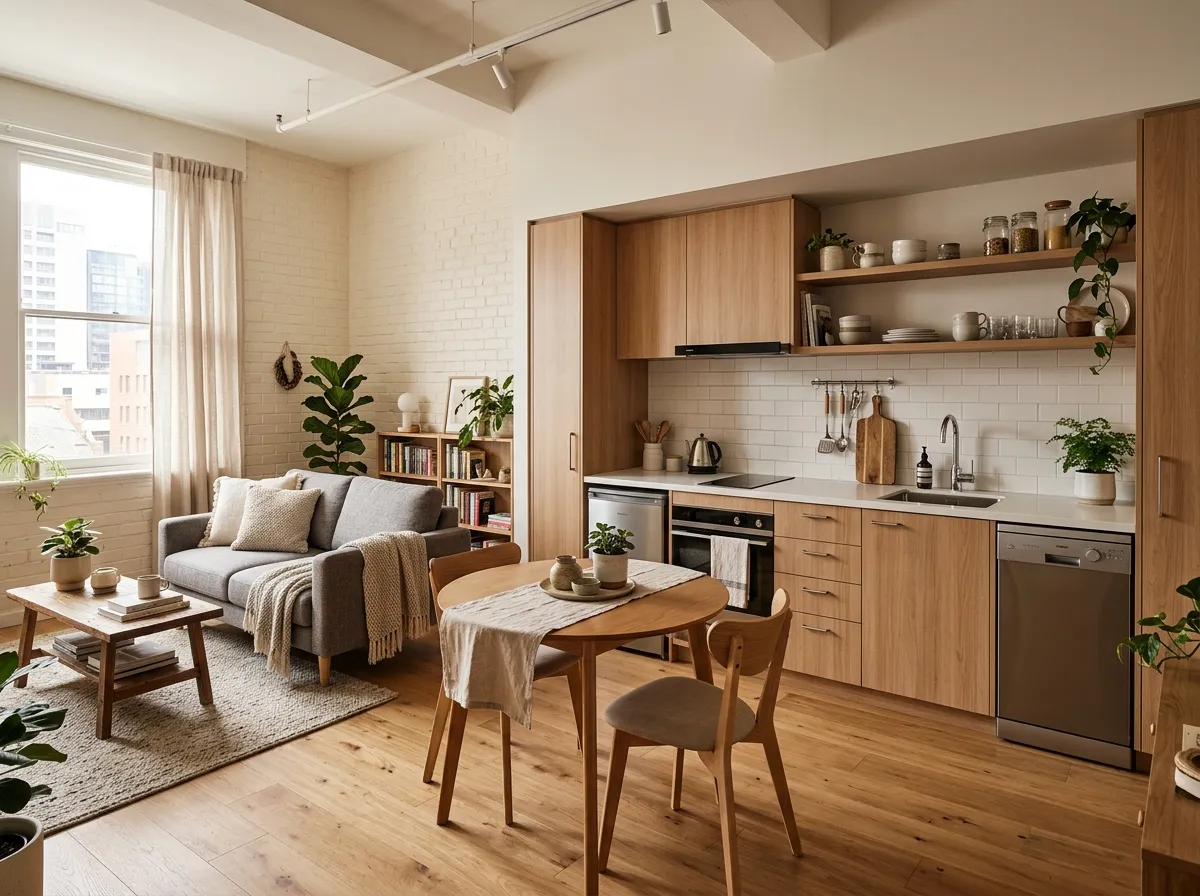
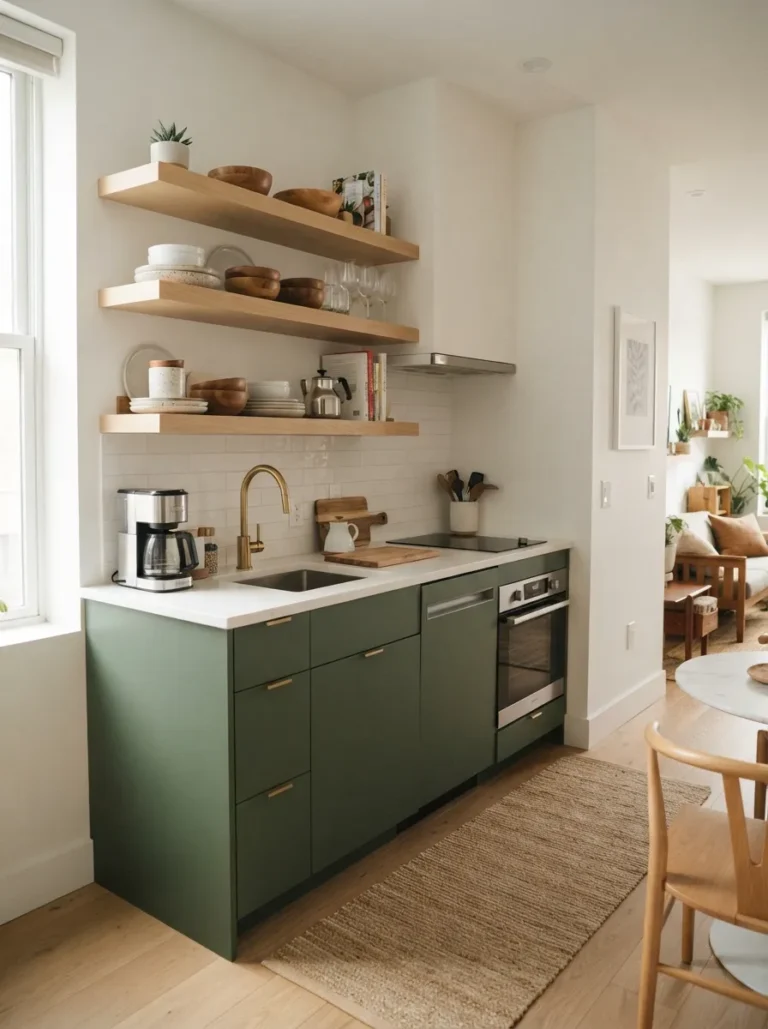
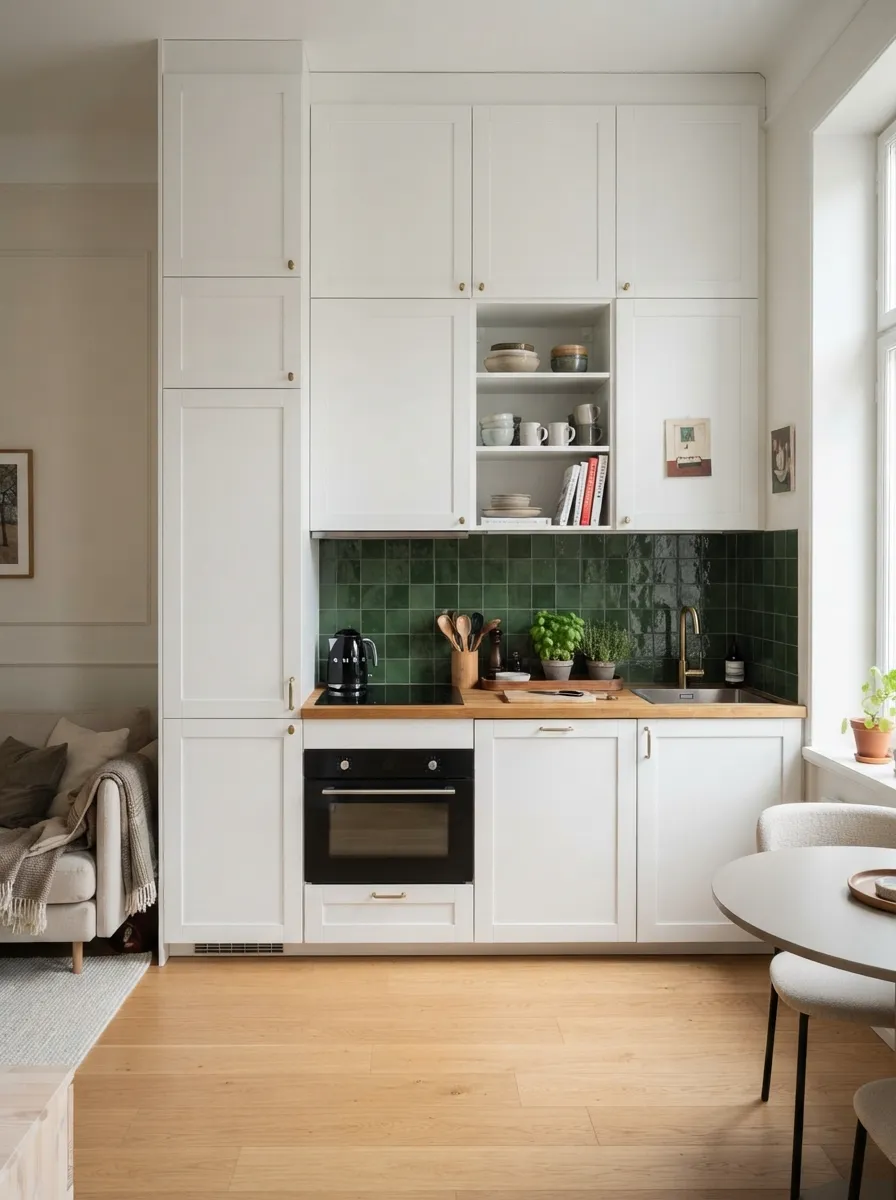
A one-wall layout is efficient for a single person’s daily workflow
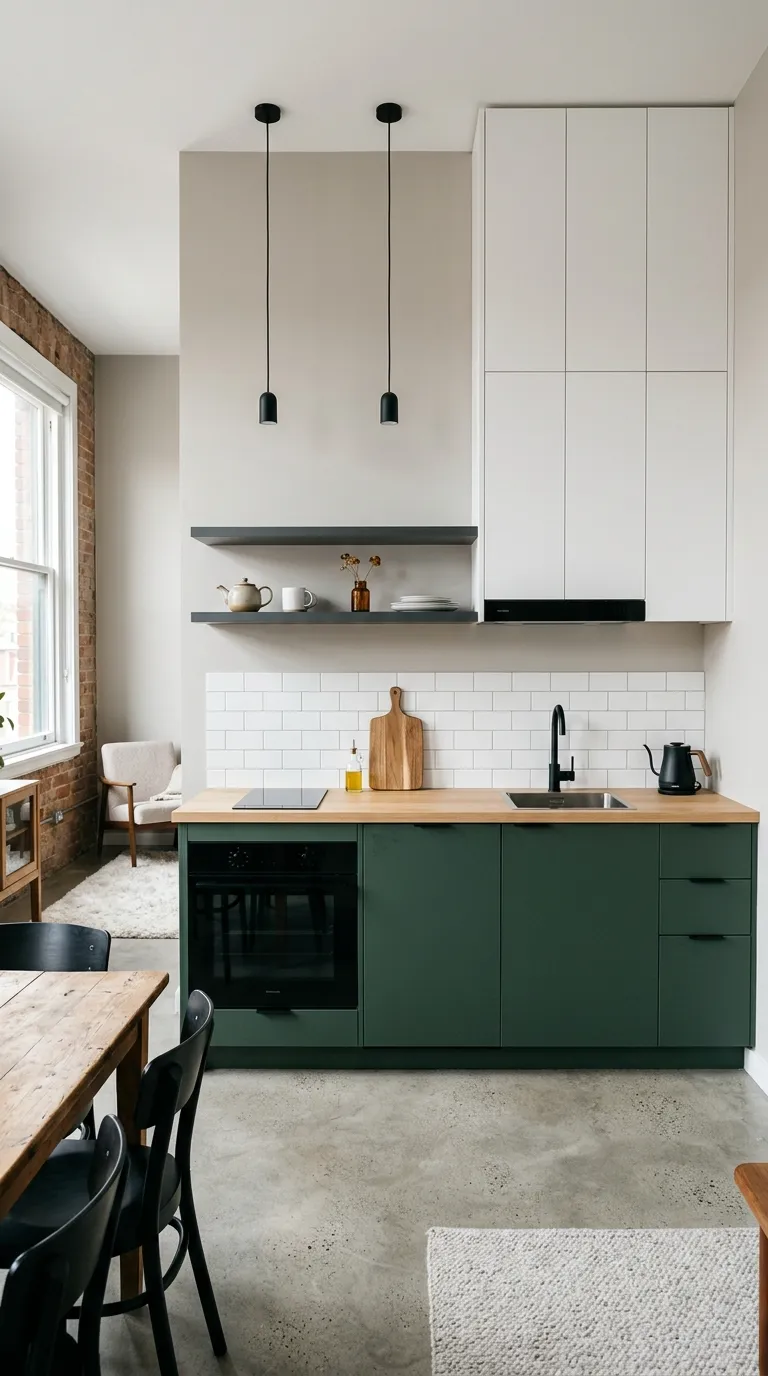
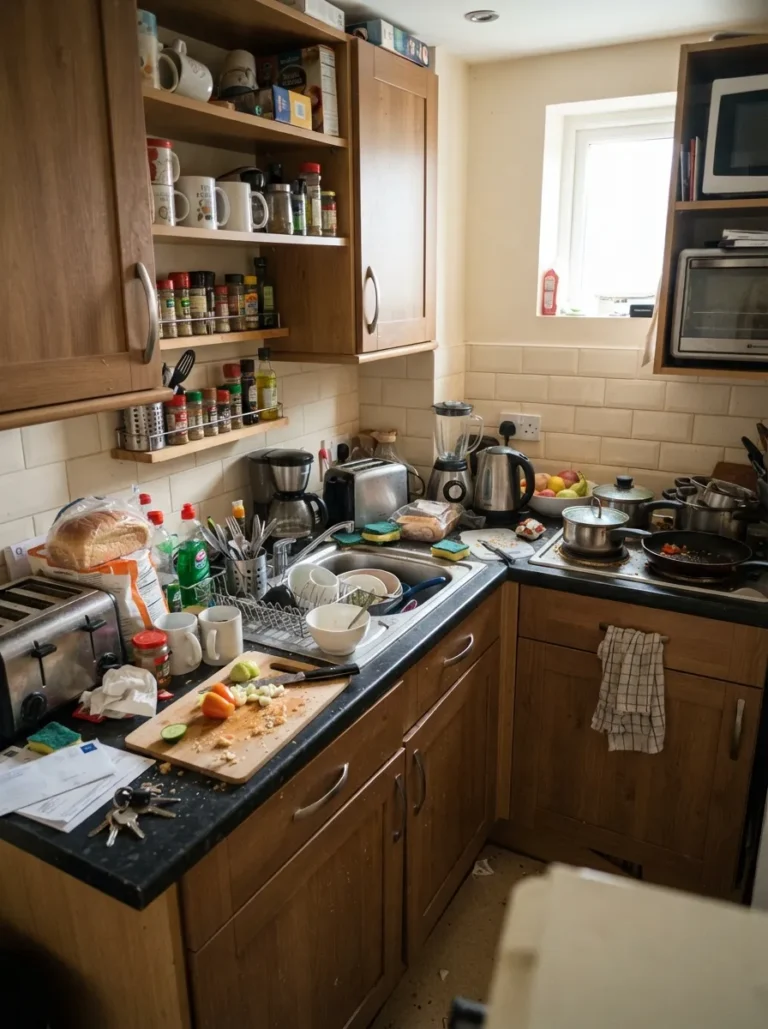
A minimalist layout keeps daily cleanup fast and simple
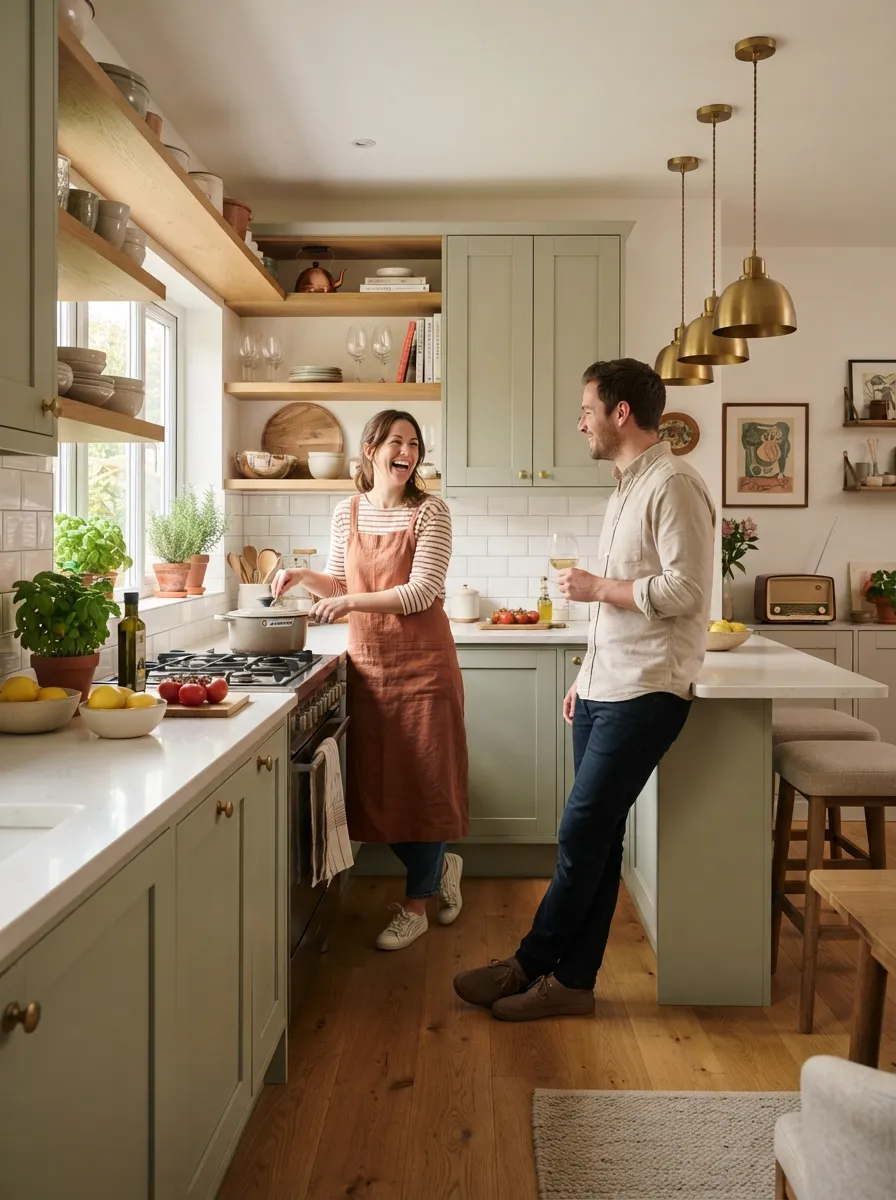
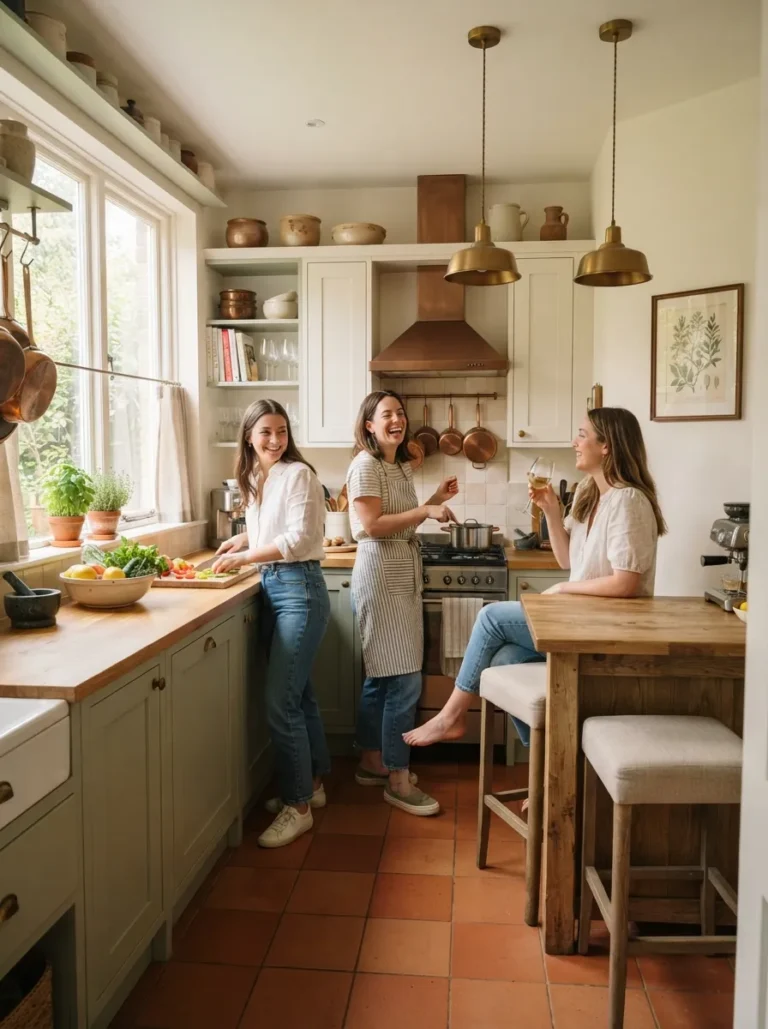
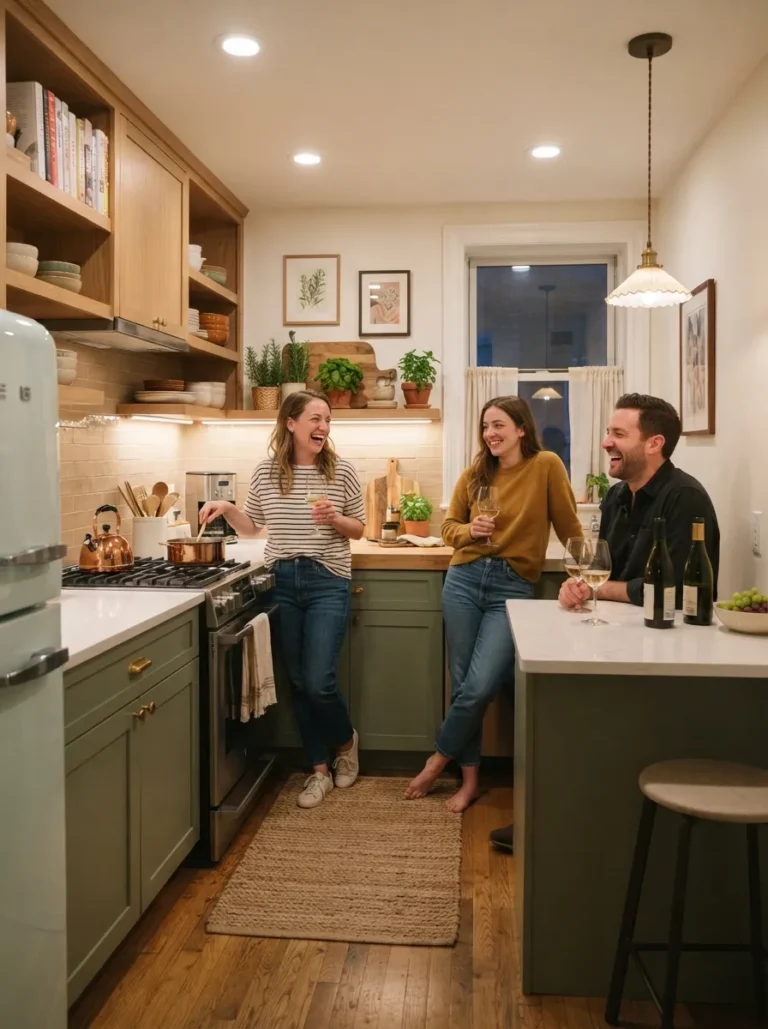
A well-designed solo kitchen still works well for the occasional guest
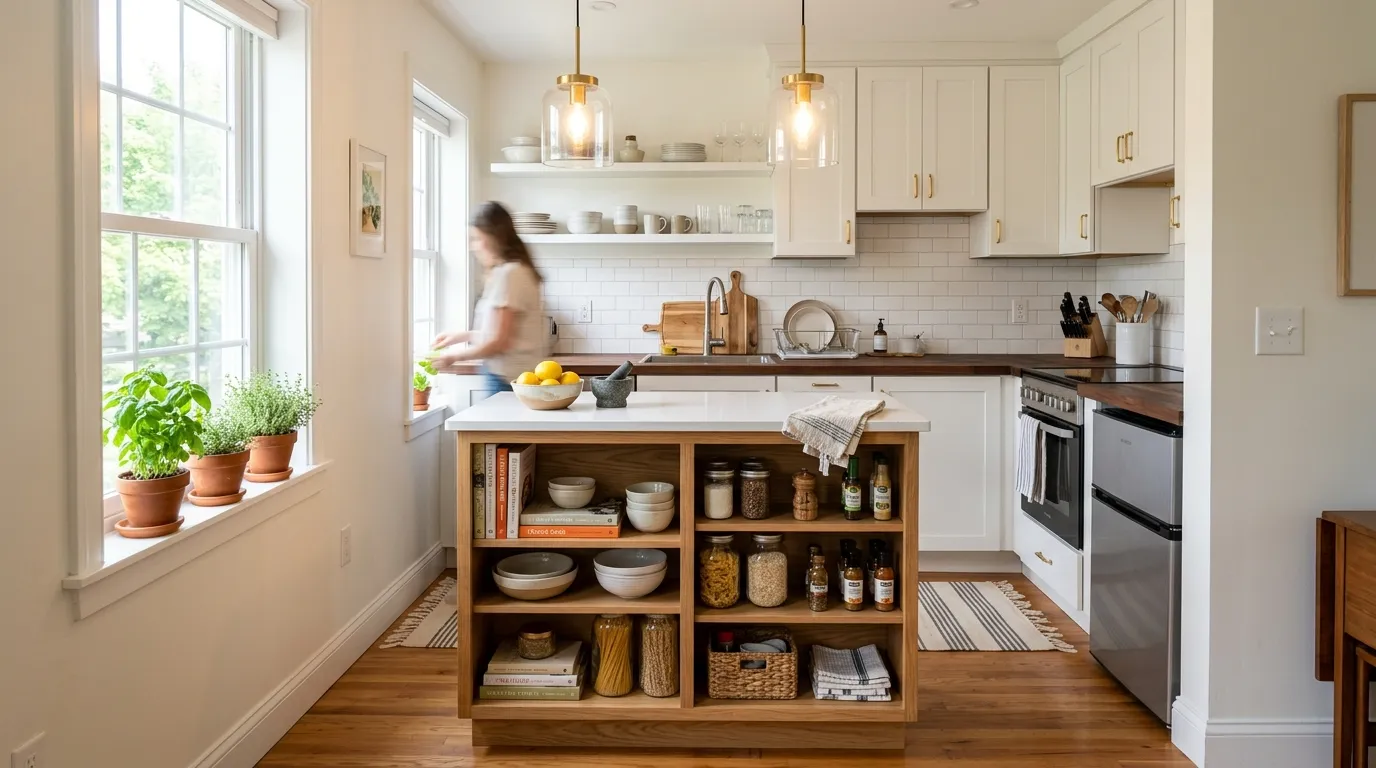
Compact storage keeps only what you actually use within reach
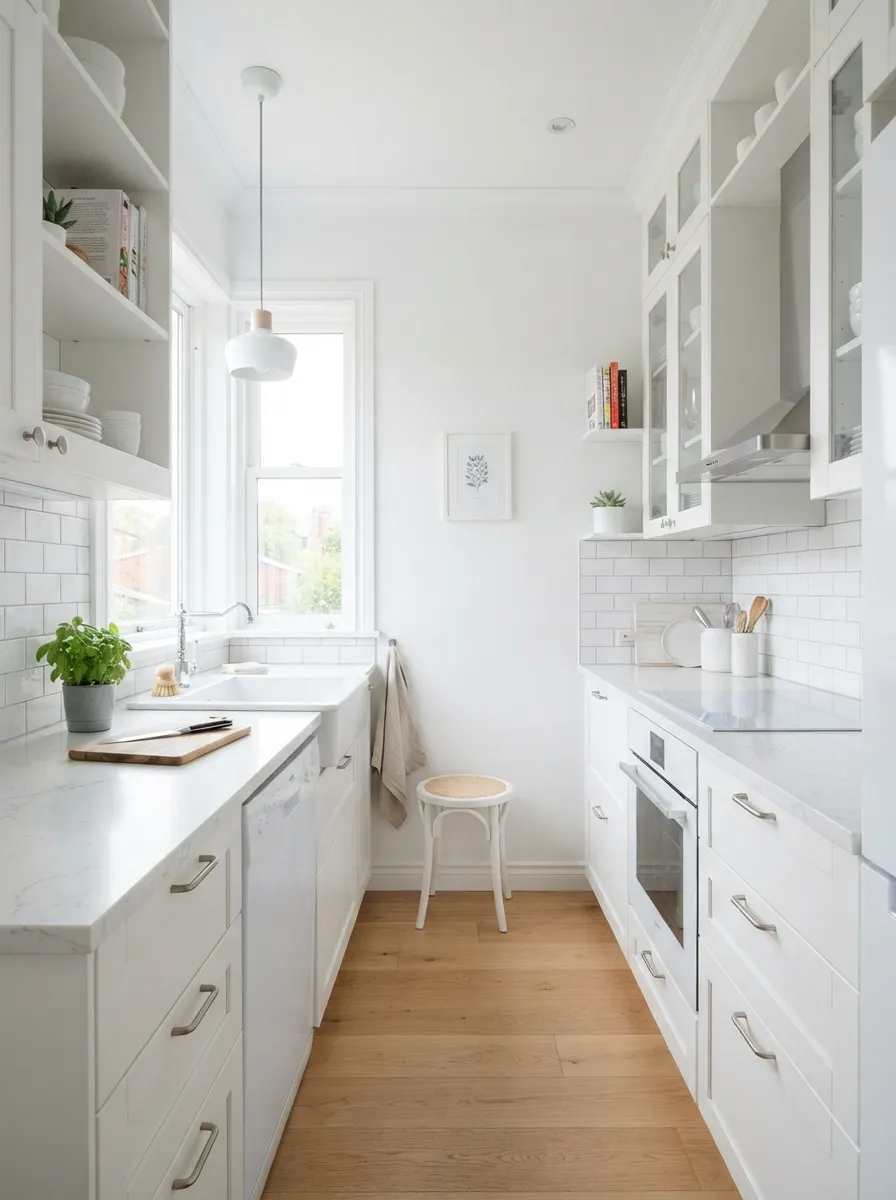
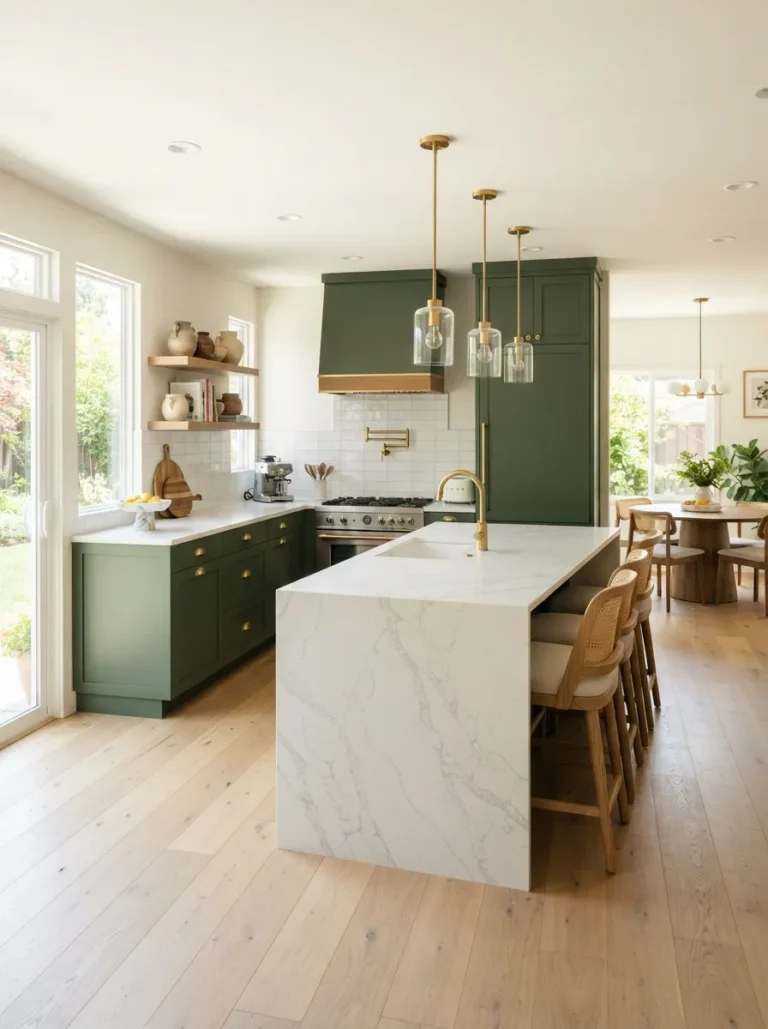
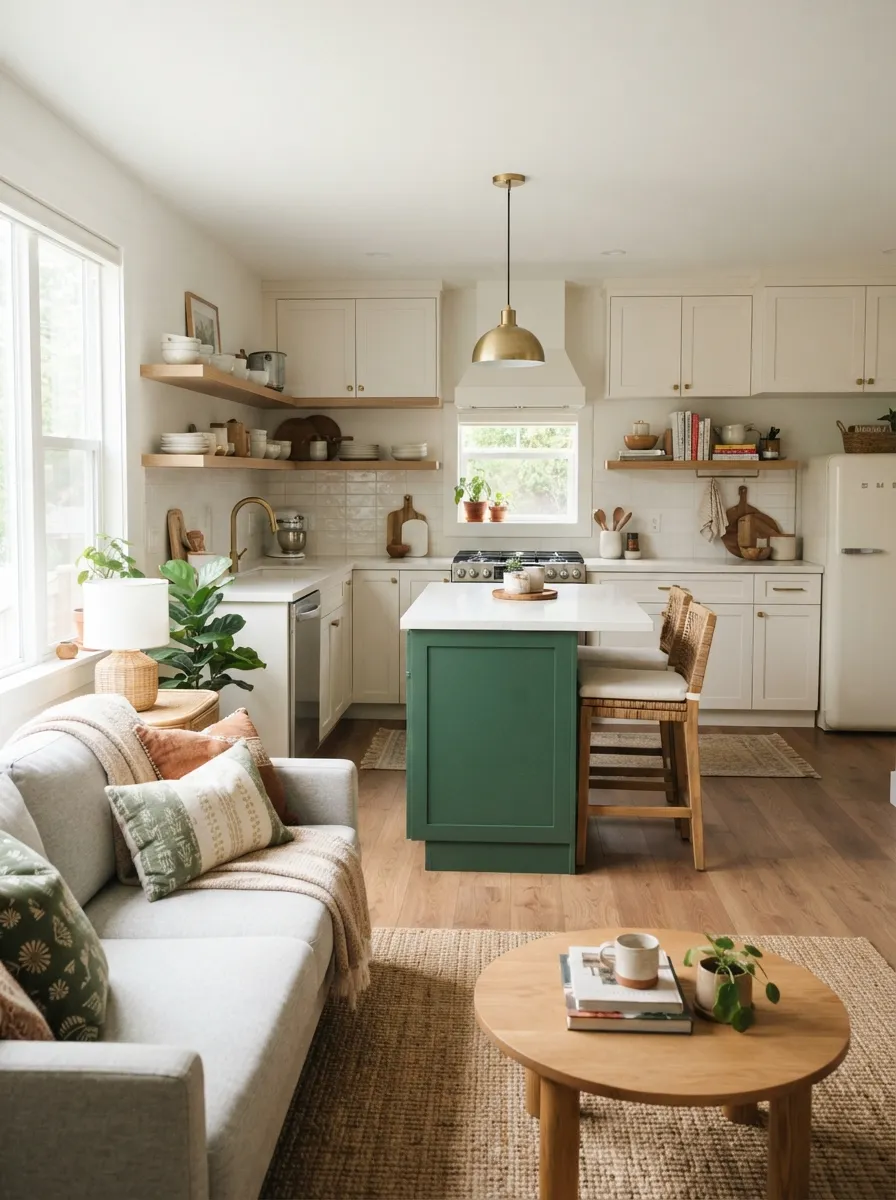
A bright, uncluttered kitchen suits a fast solo routine
A one-wall studio kitchen designed intentionally around solo use
Designing Around an Irregular Schedule
Single professionals, more than most household types, tend to have kitchen routines that don’t follow a predictable daily pattern — early flights, late meetings, unpredictable shift work, or simply a habit of cooking whenever the evening actually allows it rather than at a fixed family dinner hour. A few design choices specifically support this kind of irregular use.
Layered lighting matters more here than in a kitchen used primarily during daylight hours. A single bright overhead fixture is fine at 6pm but can feel harsh at 11pm or overly dim at 5am; a mix of overhead, under-cabinet task lighting, and one warmer accent light lets you adjust the mood and brightness to whatever hour you’re actually cooking or cleaning up.
Quiet-running appliances are worth prioritizing if you live in an apartment with shared walls and often cook or run the dishwasher at unconventional hours, since a loud dishwasher cycle at midnight is a different consideration for someone with a 9-to-5 neighbor than it is in a detached family home.
Pre-portioned, freezer-friendly storage supports the reality that solo cooking often happens in batches on a day off, then gets reheated across a busy week, rather than fresh cooking every single night. Dedicating a specific fridge or freezer zone to these portions keeps them from getting lost behind less time-sensitive items.
Smart Kitchen Tools Worth Considering for Solo Living
A single-person kitchen is also a good place to be selective about smart appliances, since the ones that save the most time for a busy professional are different from what a family kitchen typically prioritizes.
A programmable coffee maker that starts brewing on a schedule removes one step from a rushed morning, especially valuable if your work schedule is consistent enough to set a reliable wake time.
A compact multi-cooker (combining a slow cooker, pressure cooker, and rice cooker in one unit) can replace two or three single-function appliances, which matters more in a small kitchen with limited storage than it would in a larger kitchen with room to spare for each separately.
A smart plug for your coffee maker or kettle lets you start your morning routine from bed with a phone app, a small convenience that adds up over a work week of early mornings.
A single-serve blender with a travel-cup attachment fits a solo routine better than a large pitcher blender, especially if smoothies or protein shakes are part of a regular morning routine before work.
Common Mistakes in Single-Person Kitchen Design
Buying family-sized appliances and dishware out of habit. Most cookware, dish, and appliance sets are sized and marketed for households of four by default. Actively choosing solo-appropriate sizes, rather than defaulting to whatever’s standard, is the single biggest lever for a kitchen that actually fits how you live.
Underestimating how much a grab-and-go zone actually helps. It seems like a small detail, but for a busy professional, a dedicated, always-ready coffee and breakfast zone removes decision fatigue and wasted minutes from the highest-friction part of the day.
Keeping a full dining table you rarely use. If you eat most meals solo, a full table is often the least efficient use of floor space in a small kitchen. A counter-height ledge or fold-down table usually serves the same occasional-guest need with far less daily footprint.
Ignoring irregular schedules when planning lighting. If you often cook late at night or very early in the morning, layered lighting (not just one overhead fixture) matters more than it would for someone cooking primarily during daylight hours.
None of this requires a full renovation to start — even swapping one overhead-only light for a layered setup, or clearing out cookware you don’t use, moves a kitchen meaningfully closer to being genuinely designed around one person rather than just smaller by default.
Frequently Asked Questions
What size refrigerator is right for someone living alone?
A compact or counter-depth fridge in the 10 to 14 cubic foot range typically covers one person’s groceries comfortably while freeing up more floor space than a full-size family fridge.
Do I need a dishwasher if I live alone?
Not necessarily. A single person’s daily dish volume is often small enough to hand-wash quickly, though a compact countertop or slim 18-inch dishwasher is a good middle-ground option if you’d still prefer one.
How much cookware does a single person actually need?
Most solo cooks regularly use only 2 to 3 pots and pans, compared to the 6 to 8 piece sets marketed for families. Buying fewer, higher-quality pieces is usually a better investment than a full set.
What’s the best kitchen layout for someone who cooks alone?
A one-wall or compact L-shaped layout tends to work well, since it keeps everything within a short, efficient reach without needing to coordinate space for a second cook.
Is it worth setting up a dedicated coffee station if I live alone?
Yes, especially for a busy professional. Keeping your coffee maker, mug, and to-go cup all in one compact zone near an outlet saves real time on rushed mornings.
Should I keep a full dining table if I usually eat alone?
Not necessarily. A counter-height ledge with one stool or a wall-mounted fold-down table often serves solo meals just as well while taking up far less daily floor space.
Can a single-person kitchen still work well for hosting guests occasionally?
Yes, as long as a few flexible elements are built in, like a fold-down table for extra seating or slightly-larger-than-minimal cookware for the rare occasion you cook for two or three people.
Related Pages
Final Thought
A small kitchen designed for one person doesn’t have to feel like a scaled-down version of a family kitchen — it can be a genuinely well-optimized space built entirely around how you actually live. Right-size your appliances, keep only the dishware and cookware you use, and put real thought into the parts of your routine (mornings, especially) that matter most to a busy schedule. The result is a kitchen that works harder for you with less clutter to manage along the way.
Ready to plan the rest of your small apartment kitchen?
Explore Small Apartment Kitchen Design